How to Catch Largemouth Bass Year-Round
There’s nothing quite as frustrating as showing up to your favorite Virginia lake or river, convinced it's the perfect day for bass, only to come up empty-handed. Many anglers believe largemouth bass fishing is only good during certain "peak" times, but that's just not true! The truth is, largemouth bass can be caught year-round in Virginia if you understand their seasonal behaviors and adjust your tactics accordingly. This comprehensive guide will walk you through the nuances of targeting these impressive fish no matter the calendar date, helping you turn those frustrating blank days into memorable catches.
Understanding Largemouth Bass Behavior Through the Seasons
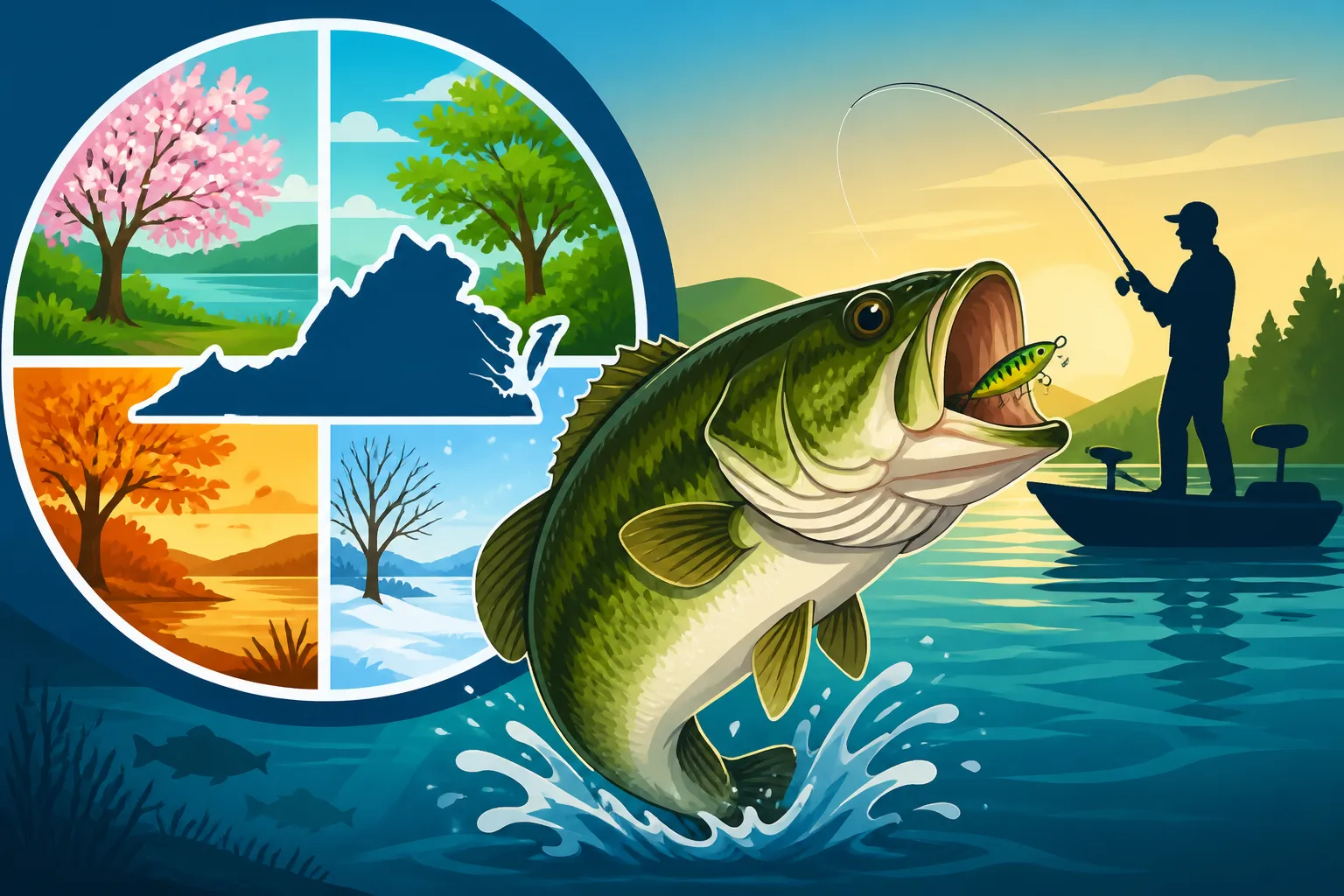
Largemouth bass are fascinating creatures, and their behavior changes dramatically with the seasons, primarily driven by water temperature, available food, and spawning instincts. If you want to consistently catch them, you absolutely must understand these shifts. It's like trying to navigate a new city without a map; you might get lucky, but you're probably going to get lost. Knowing what the bass are doing and where they're likely to be is your map to success.
Spring: Pre-Spawn and Spawn Aggression
Ah, spring! This is often considered prime time for bass fishing, and for good reason. As the water temperatures start to climb into the 50s and low 60s Fahrenheit, largemouth bass shake off their winter lethargy and begin to move into shallower waters. This is the pre-spawn phase, a period of intense feeding as they bulk up for the energy-demanding act of spawning. They become incredibly aggressive, chasing down baitfish and hitting lures with a vengeance.
During the actual spawn, which typically occurs when water temperatures are consistently in the mid-60s, the focus shifts. Male bass create and guard nests, often in protected coves, shallow flats, or around submerged structure, while females lay their eggs. While it might seem like an easy time to catch them since they’re visible on beds, many ethical anglers choose to avoid targeting bedding bass directly to protect the future of the fishery. Even if you don't target bedding fish, the pre-spawn and post-spawn periods offer fantastic action. Knowing your local Bass Spawn Timing on Virginia Lakes is crucial here.
Once the spawn is complete and water temperatures continue to rise into the upper 60s and 70s, bass enter the post-spawn phase. They're often exhausted and hungry, but sometimes a bit finicky as they recover. They'll linger around the spawning areas for a bit before transitioning to their deeper summer haunts. This can be a challenging time, but understanding their recovery patterns can still lead to some great catches.
Summer: Deep Water and Night Feeding
When the Virginia summer sun beats down and water temperatures soar into the 80s, largemouth bass generally move to deeper, cooler water. They'll seek refuge in thermal refuges like deep points, submerged humps, creek channels, and dense cover such as hydrilla beds, standing timber, or brush piles. These spots provide both cooler water and ambush points for prey. It's a common frustration for anglers to find their shallow spring spots completely devoid of bass, but they haven't vanished – they've just gone deep.
However, "deep" is a relative term. On overcast days, or during the cooler parts of the day like early morning and late evening, bass might push up into shallower feeding areas, especially those with good cover. This is when topwater action can explode, offering some of the most exciting bites you'll experience. Another fantastic summer strategy, often overlooked, is night fishing. As the sun sets and the surface temperature drops, bass become much more active, moving into shallower feeding zones where they wouldn't dare venture during the scorching midday heat.
Think about it from their perspective: Would you rather chase food in 90-degree heat or wait for dinner in a cool, dark restaurant? Bass are no different. They become opportunistic feeders, waiting for the best conditions. This deep-water and low-light behavior is a critical pattern for successful summer fishing.
Fall: The Pre-Winter Feeding Frenzy
Fall is a glorious time to be on the water in Virginia. As air temperatures cool and water temperatures slowly begin to drop into the 60s and 50s, largemouth bass sense the impending winter and kick into a major feeding mode. This "fall feeding frenzy" is their last chance to gorge themselves and pack on fat reserves to survive the lean, cold months ahead. They become highly aggressive, chasing schools of baitfish, often shad or bluegill, that are also moving shallower to feed.
You'll often find bass grouped up in predictable patterns, especially around points, creek channels, and the backs of coves where baitfish are congregating. They'll move in and out of shallower water as the day progresses, following the sun and bait. This is a time when covering a lot of water with fast-moving baits can be incredibly effective, as bass are willing to expend energy to chase a meal.
The key to fall fishing is locating the bait. If you find the bait, you'll find the bass. They are relentlessly pursuing schools of forage, and if you can mimic that forage with your lures, you’re in for some thrilling action. This season offers some of the heaviest catches of the year as bass pack on the pounds.
Winter: Slow and Deep Water Tactics
Winter fishing for largemouth bass in Virginia can be the most challenging, but also incredibly rewarding. When water temperatures dip into the low 50s and 40s, bass metabolism slows down drastically. They become lethargic and less willing to chase. Instead of actively hunting, they often suspend or hold tight to deep structure, conserving energy. They're still feeding, but their strikes will be much more subtle, almost imperceptible at times.
During this period, bass will typically be found in the deepest parts of the lake or river, near steep drops, submerged timber, rock piles, or deep channel bends. These spots offer consistent water temperatures and nearby access to schools of baitfish that also seek deeper water. The biggest mistake anglers make in winter is fishing too fast or too shallow. Patience is not just a virtue in winter fishing; it's a necessity.
Your presentation needs to be excruciatingly slow, often "dead sticking" lures or barely moving them. The bite might feel like a spongy weight, or simply the line going slack, rather than a sharp tug. Success in winter comes from finding those deep holding areas and offering a meal right in front of the bass's nose, virtually begging them to eat. It can be a tough grind, but a monster bass pulled from icy waters is a trophy to truly cherish. For more in-depth advice on cold water fishing, check out our guide on How to Catch Bass in Cold Water.
Essential Gear for Year-Round Largemouth Bass Angling in Virginia
Having the right tools for the job is non-negotiable when you're pursuing largemouth bass year-round. You wouldn't use a screwdriver to hammer a nail, and you shouldn't use a light spinning rod for heavy flipping in thick cover. Matching your gear to the season, the technique, and the conditions is paramount for success and avoiding frustration.
Rods, Reels, and Line for Various Conditions
When it comes to rods, reels, and line, variety is the spice of life for a year-round bass angler. You'll want a versatile arsenal that can handle everything from delicate finesse presentations to heavy cover flipping.
For general purpose casting and throwing medium-sized moving baits like crankbaits and spinnerbaits, a 7-foot medium-heavy fast-action baitcasting rod paired with a 7.0:1 gear ratio reel is a fantastic starting point. Spool it with 15-20 lb fluorocarbon line for good sensitivity and abrasion resistance. Fluorocarbon is nearly invisible underwater, which is a huge advantage, especially in clearer Virginia waters.
For heavier cover, punching mats, or flipping jigs, you'll want to step up to a 7'3" to 7'6" heavy-action rod, a faster reel (8.1:1 or higher), and 50-65 lb braided line. Braid has zero stretch, providing maximum power for pulling big bass out of dense vegetation or timber, and its strength is unmatched. When fishing open water or for finesse techniques like drop-shotting or wacky rigging, a 6'9" to 7' medium-light or medium spinning rod with a 2500-3000 series spinning reel and 8-10 lb fluorocarbon or braided line with a fluorocarbon leader is ideal. The lighter line and more forgiving action of a spinning rod allow for greater casting distance with lighter lures and detect those subtle bites. Many reputable brands offer excellent rod and reel combos for various budgets; you can find a wide selection of quality options on Amazon.
Lure Selection: Matching the Hatch and Season
Just like bass behavior, your lure selection needs to evolve with the seasons. What works wonders in spring might get you nothing but a sunburn in summer.
- Spring: During pre-spawn, reaction baits like lipless crankbaits, jerkbaits, and spinnerbaits are incredibly effective for covering water and triggering aggressive strikes. As bass move to beds, soft plastic creature baits or worms can be pitched to visible fish (though remember to consider ethical angling). Post-spawn, a finesse approach with shaky heads or Senkos can entice weary bass.
- Summer: For deep-water bass, jigs, Texas-rigged worms, deep-diving crankbaits, and drop shots are key. Topwater lures like poppers, frogs, and buzzbaits shine during low-light conditions. Swimbaits can also be highly effective when bass are targeting schools of baitfish in deeper water.
- Fall: This is reaction bait heaven! Crankbaits (medium and deep divers), spinnerbaits, bladed jigs (like a Z-Man ChatterBait), and topwater lures (when bait is shallow) are excellent for mimicking fleeing baitfish. Jerkbaits are also deadly when bass are suspended or chasing. Our guide on Best Lures for Summer Bass Fishing offers some tips that also transition well into early fall.
- Winter: Slow, subtle presentations are paramount. Jigging spoons, blade baits, suspending jerkbaits, and small, slow-falling jigs or Ned Rigs are your best bets. Finesse worms on a drop shot or shaky head can also tempt lethargic bass. Color choices often lean towards more natural or muted tones, but sometimes a pop of chartreuse can trigger a reaction.
Electronics and Tools for Success
Modern electronics have revolutionized bass fishing, turning what was once guesswork into precision targeting. A good fish finder with side imaging and down imaging is invaluable for year-round bass fishing, especially for locating deep structure and schools of baitfish in summer and winter. Brands like Lowrance, Humminbird, and Garmin offer excellent units that can help you map contours, identify cover, and even see individual fish. Being able to mark fish on your screen and then drop a lure precisely on them is a game-changer.
Beyond electronics, a few other tools are essential:
- GPS or Mapping App: Whether built into your fish finder or on your phone (like Navionics or C-MAP), a good mapping system helps you mark productive spots, navigate, and understand underwater topography, which is especially important on large lakes like Smith Mountain Lake or Lake Anna.
- Tackle Management System: Having your lures organized by season or technique will save you precious fishing time. Good tackle boxes and bags from brands like Plano or Bass Pro Shops keep your gear secure and accessible. You can explore various tackle storage solutions on Amazon.
- Landing Net: Especially for bigger bass, a good landing net helps protect the fish and makes landing them much easier, reducing the risk of a dropped fish at the boat.
- Pliers/Forceps: For quickly and safely removing hooks.
- Line Cutters: Sharp scissors or clippers are a must for clean knot tying.
- Boat or Kayak: While bank fishing is possible, a boat or kayak significantly expands your access to prime bass habitat, allowing you to reach those secluded coves, deep channels, and offshore structures.
Spring Largemouth Bass Tactics: From Prespawn to Postspawn
Spring is a time of immense change in the bass world, and if you can keep up, you'll be handsomely rewarded. The key is understanding the three distinct phases: pre-spawn, spawn, and post-spawn, and adapting your approach for each.
Targeting Prespawn Bass in Warming Shallows
As water temperatures creep into the upper 40s and low 50s in early spring, largemouth bass begin to make their move from deep wintering holes to shallower staging areas. They're often found along creek channels, points, and secondary ledges leading into protected coves and shallow flats. These fish are looking for two things: warmer water and food to fuel up for the upcoming spawn. They're typically grouped up, so if you find one, you're likely to find more.
This is the perfect time to throw reaction baits that cover water efficiently. Lipless crankbaits, like a Red Eye Shad or an old-school Rat-L-Trap, retrieved with a yo-yo retrieve or steady grind, are deadly. Spinnerbaits, especially those with willow leaf blades for deeper water or Colorado blades for stained water, can also entice aggressive strikes as you burn them over submerged cover or along grass lines. Jerkbaits, like a Lucky Craft Pointer or Megabass Vision 110, are fantastic for suspended bass or those holding on the edge of drop-offs. The erratic stop-and-go action perfectly mimics a struggling baitfish, often triggering vicious strikes. Many anglers will focus on the north-facing banks first, as these receive more direct sunlight and warm up faster.
A common scenario in Virginia lakes like Lake Anna or Kerr Lake might involve targeting a main lake point with a deep channel running nearby. Bass will stage on the point, moving up and down the water column as the sun rises and sets. A medium-diving crankbait could draw strikes as they cruise the flat, while a jig or a slow-rolled spinnerbait might tempt those holding a little deeper on the edge of the channel. Pay close attention to subtle changes in temperature, as even a few degrees can make a big difference in where bass decide to hang out.
Navigating the Spawn: Protecting the Beds
When water temperatures consistently reach the mid-60s, typically late April through May in much of Virginia, largemouth bass begin to move onto their spawning beds. These beds are usually circular depressions fanned out by male bass, often in shallow, protected coves, around submerged brush, lily pad stems, or even alongside dock pilings. You can often spot these beds and the fish guarding them in clear water.
While catching bedding bass can seem easy, it's a contentious topic among anglers. Many experienced bass fishermen, myself included, advocate for leaving bedding fish alone. Repeatedly catching bass off their beds can disrupt the spawning process, leading to abandoned nests and ultimately fewer future bass. Our goal as anglers should be to ensure the health of the fishery for generations to come.
If you choose to fish during this period, focus on the areas around the spawning flats. Often, larger, pre-spawn females or post-spawn males that are not actively on beds will be cruising nearby, still looking for an easy meal. Soft plastics, such as Texas-rigged lizards or creature baits, pitched to cover just off the beds, can be effective. If you do accidentally hook a bedding bass, release it quickly and gently right back into the bed so it can resume its reproductive duties. Remember, adherence to Virginia Fishing Regulations Explained is key to sustainable angling.
Postspawn Recovery: When Bass are Hungry Again
The post-spawn period can be one of the more challenging times to catch largemouth bass, but don't let that deter you. After the rigors of spawning, both male and female bass are often exhausted and a bit lethargic. Water temperatures are typically rising into the upper 60s and low 70s. They're not going to be as aggressively chasing baits as they were in pre-spawn, but they are hungry and looking to recover their energy.
Bass will often linger near the spawning areas for a short time, recovering in nearby cover like docks, brush piles, or weed lines. As they recover, they'll gradually start moving out towards deeper water, often staging on secondary points, submerged humps, or creek channel bends. They're not quite in their full summer patterns yet, making this a transition phase.
Finesse techniques often shine here. Wacky-rigged Senkos, shaky head worms, and small swimbaits can be very effective. A topwater popper or a subtle frog worked slowly around emergent vegetation in the early mornings or late evenings can also draw strikes. The key is often a slower retrieve and smaller, less aggressive presentations. Think about it: after a marathon, you don't want to chase a full meal, but a protein bar handed to you might be welcome. Bass are similar; they want an easy meal. For detailed tips on this transition, consider our article on How to Catch Bass After the Spawn.
Summer Largemouth Bass Strategies: Beating the Heat
Summer in Virginia can be brutally hot, and these high temperatures profoundly impact largemouth bass. They're not just sunbathing; they're actively seeking relief from the heat and adjusting their feeding schedules. Ignoring these patterns is a surefire way to get skunked.
Deep Water Structure and Cover Fishing
When the sun is high and the water is warm, largemouth bass head for the depths. They'll congregate around primary and secondary points, submerged humps, offshore ledges, and deep creek channels. Any deep cover that provides shade and cooler water is a potential hotspot – think standing timber, rock piles, brush piles, or the deep edges of hydrilla beds. On expansive reservoirs like Smith Mountain Lake, knowing how to interpret your electronics to find these structures is paramount.
Jigs, deep-diving crankbaits, and heavy Texas-rigged worms or creature baits are your bread and butter here. A jig, presented with a slow hop or drag along the bottom, can mimic a crawfish or a lethargic baitfish. Deep-diving crankbaits, designed to reach depths of 15-25 feet or more, can be fantastic for eliciting reaction strikes from bass holding on ledges or humps. The key is to make contact with the bottom or cover repeatedly, stirring up sediment and triggering curiosity.
Consider a hot summer day on Claytor Lake. You've located a submerged rock pile on your fish finder in 20 feet of water. You can cast a heavy football jig past it, let it sink, and slowly drag it over the rocks. The "clink-clink" of the jig hitting the rocks will attract attention, and the slow presentation gives hesitant bass time to commit. This is often where you'll find the biggest bass, as they seek refuge in these deeper, stable environments.
Early Morning and Late Evening Topwater Action
Despite their tendency to go deep during the day, summer bass often move shallower during the cooler, low-light periods of early morning and late evening. This is when the water surface temperature drops slightly, and baitfish are more active closer to shore. If you love explosive strikes, these windows are your golden ticket.
Topwater lures like poppers, walking baits (e.g., Heddon Super Spook), buzzbaits, and frogs are incredibly effective. Poppers and walking baits are great for open water, points, and docks, creating a disturbance that draws bass up from below. Buzzbaits are fantastic for covering water over submerged grass or along shorelines. Frogs, with their weedless design, can be thrown right into the thickest lily pads or matted vegetation where other lures would snag. The visual thrill of a bass exploding on a topwater lure is unparalleled.
Imagine yourself on the James River at dawn. The air is still cool, and a light mist hangs over the water. You cast a buzzbait along a grassy bank, the prop gurgling enticingly. Suddenly, a huge splash erupts as a largemouth annihilates the lure! These moments are what summer fishing memories are made of. This type of fishing perfectly exemplifies why timing is everything, as discussed in Best Time of Year for Bass Fishing in Virginia.
Night Fishing for Active Summer Bass
As mentioned, night fishing is a seriously underutilized tactic for summer largemouth bass. The water cools down, boat traffic disappears, and bass often move into shallower water to feed under the cover of darkness. This can be one of the most productive times to target big bass that are too wary to venture out during daylight hours.
Dark-colored spinnerbaits, chatterbaits, large worms (Texas-rigged or Carolina-rigged), and even some topwater lures like Jitterbugs or buzzbaits (especially those that glow or have noisy props) can be effective. A black or dark-colored jig and pig, slowly dragged along the bottom near cover, is a classic night fishing bait. The key is to work your lures slowly, allowing the bass to find them by sound or vibration rather than sight.
When night fishing, focus on the same areas bass would use during low-light day fishing: shallow points, docks, weed lines, and transition areas from deep to shallow. These are the highways bass use to move up to feed. Always be mindful of safety when fishing at night; use navigation lights, a headlamp, and let someone know your plans. Some of the Best Night Fishing Spots in Virginia can be incredibly productive for bass.
Fall Largemouth Bass Patterns: The Feast Before the Famine
Fall is a time of urgency for largemouth bass. They know winter is coming, and they need to pack on as much weight as possible. This means they're often highly aggressive and can be found in predictable patterns, making for some exciting fishing.
Following Baitfish into the Shallows
As water temperatures begin their gradual descent in the fall, typically dropping into the 70s and 60s, baitfish like shad and herring start to school up and move into the backs of coves and shallow flats. Largemouth bass follow them closely, creating a true feeding frenzy. This is a time when the entire food chain shifts, and if you can find the bait, you'll find the bass.
Focus your efforts on the major creek arms and tributaries, looking for large schools of baitfish on your electronics or by observing surface activity (diving birds, splashing bait). Bass will ambush these schools, driving them to the surface or pinning them against shallow cover. Look for points, humps, and channel swings within these areas that offer ambush points.
Crankbaits (both shallow and medium divers), spinnerbaits, bladed jigs, and lipless crankbaits are absolutely deadly during this period. These baits excel at imitating fleeing baitfish and can cover a lot of water quickly. Matching the size and color of your lure to the prevalent baitfish is often a game-changer. For example, if you see small shad, use a small, silver crankbait.
Covering Water with Reaction Baits
Because fall bass are actively pursuing bait and aggressively feeding, this is the season to cover water with reaction baits. You're not trying to tempt a lethargic fish; you're trying to trigger an instinctual strike from an actively hunting one.
Crankbaits are phenomenal. Use a shallow-diving model in the backs of creeks and over shallow flats, and a medium-diving model on main lake points and ledges. Vary your retrieve speed – sometimes a fast, erratic retrieve triggers a chase, while other times a pause or a deflection off cover is what it takes. Spinnerbaits and bladed jigs also excel at covering water and creating vibration that bass can home in on, especially in stained water. Cast them along grass lines, over submerged timber, or parallel to rocky banks.
Jerkbaits become incredibly effective as water temperatures drop into the low 60s and 50s. The suspending jerkbait, which stays at a certain depth during pauses, can be deadly when bass are suspended off points or over deeper structure, waiting to ambush. The prolonged pause gives the bass ample time to commit, even if they're not willing to chase aggressively.
Locating Key Fall Transition Areas
As fall progresses and water temperatures continue to drop, bass will begin their transition towards their wintering grounds. This means they'll move from the very shallow areas back towards deeper water, but they'll often hold on "transition areas" in between. These are typically points, humps, and channel swings that offer easy access to both shallow feeding flats and deeper sanctuaries.
Look for areas where a creek channel sweeps close to a main lake point, or where a deep water flat gradually slopes into a main river channel. Bass will use these contours to move up and down the water column, following baitfish that are also making similar movements. Submerged brush piles or standing timber along these transition lines can be magnets for schooling bass.
Electronics are, once again, invaluable here. Use your side imaging to scan wide areas and identify baitfish schools or submerged cover on these transition zones. Once you mark something promising, switch to down imaging or 2D sonar to pinpoint the exact depth and structure. Then, drop a jigging spoon or a slow-falling jig onto them. Understanding Water Temperature and Fish Feeding Patterns becomes incredibly important as you navigate these fall transitions.
Winter Largemouth Bass Challenges: Patience Pays Off
Winter bass fishing in Virginia requires a different mindset. It's not about speed or power; it's about finesse, precision, and an almost Zen-like level of patience. The rewards, however, can be substantial, as winter often produces some of the biggest and healthiest bass of the year.
Slow Presentations in Cold Water
When water temperatures drop below 50 degrees Fahrenheit, a bass's metabolism slows dramatically. They don't chase, they don't expend unnecessary energy, and they're highly sensitive to cold fronts and sudden temperature drops. Your presentations need to reflect this lethargy. Think slow, slower, and then even slower.
Jigs, especially football jigs or subtle finesse jigs, are excellent choices. Drag them painstakingly along the bottom, pausing frequently. The bite will often feel like a subtle "tick" or simply added weight to your line. Blade baits, like a Heddon Sonar or a traditional Johnson ThinFisher, can also be effective when vertically jigged directly over deep-holding bass. The key is short, sharp lifts followed by a controlled fall, letting the bait flutter seductively.
Suspend your jerkbaits. Cast them out, crank them down to their target depth, and then pause them for 10, 20, even 30 seconds. The bass are often suspended in the water column and will nose up to an unmoving bait. Sometimes, just the subtle vibration of your boat or the cold water currents is enough to make the bait move slightly, triggering a strike. Fishing a Ned Rig, with its subtle mushroom head jig and small worm, is another prime example of a slow, finesse presentation that excels in cold water.
Targeting Deep Structure and Drop-offs
In winter, largemouth bass gravitate towards the deepest, most stable water available. This means focusing on main lake points with steep drop-offs, deep creek channel bends, submerged humps near channels, and offshore rock piles or brush piles. These areas provide consistent water temperatures and typically hold schools of baitfish that the bass can feed on without expending too much energy.
Use your electronics extensively to pinpoint these structures and any bass or baitfish present. Don't be afraid to fish in 30, 40, or even 50 feet of water on some of Virginia's deeper reservoirs like Smith Mountain Lake. Bass will often suspend in these deeper water columns, especially if baitfish are present. Pay attention to contour lines on your map and look for sharp breaks or irregularities that might concentrate fish.
For example, on a reservoir like Lake Gaston, a key winter spot might be a deep channel swing where the main river channel makes a sharp turn, creating a deep pocket. Bass will often stack up on the vertical wall of that channel or suspend just off it. Dropping a jigging spoon or a heavier jig vertically directly onto their heads can be incredibly effective.
Best Virginia Lakes for Winter Bass
While winter bass fishing is tough everywhere, some Virginia lakes offer more consistent action or larger fish during the cold months. Smith Mountain Lake is renowned for its deep, clear water and excellent winter bass fishery, particularly for trophy largemouth and striped bass. Its deep rock formations, standing timber, and abundant forage make it a prime winter destination. Our guide to Smith Mountain Lake's Trophy Largemouth Bass Fishery highlights why it's such a stellar location.
Lake Anna, with its nuclear power plant, has a unique advantage: a warm-water discharge canal. This area stays significantly warmer than the rest of the lake, attracting bass and baitfish year-round, making it a popular (and sometimes crowded) winter fishing spot. The main lake itself can still be good, but you'll need to focus on those traditional deep-water winter patterns.
Other large reservoirs like Kerr Lake (Buggs Island Lake) and Claytor Lake also hold excellent winter bass, but they demand even more patience and a diligent search for those deep-water refuges. The rewards, however, can be immense, with chunky, healthy bass making it worth the cold fingers.
| Season | Typical Water Temperature Range | Key Bass Behavior | Go-To Lure Categories | Retrieve Speed |
|---|---|---|---|---|
| Spring | 50-70°F | Pre-spawn aggression, spawning, post-spawn recovery | Lipless/Squarebill Cranks, Jerkbaits, Spinnerbaits, Jigs, Soft Plastics | Moderate to Fast |
| Summer | 75-85°F | Seek deep, cool water; active at dawn/dusk/night | Deep Cranks, Jigs, Texas Rigs, Topwater, Frogs | Moderate to Slow |
| Fall | 55-75°F | Aggressive feeding (baitfish schools) | Medium Cranks, Spinnerbaits, Bladed Jigs, Jerkbaits | Fast to Moderate |
| Winter | 40-50°F | Deep, lethargic, conserve energy | Jigging Spoons, Blade Baits, Suspending Jerkbaits, Finesse Jigs | Very Slow |
Specific Virginia Hotspots for Largemouth Bass
Virginia is a fantastic state for largemouth bass, boasting an incredible array of lakes, rivers, and tidal systems. Knowing where to go is almost as important as knowing how to fish, and thankfully, the Commonwealth offers diverse opportunities for every kind of angler.
Premier Lakes and Reservoirs for Trophy Bass
If you're dreaming of a trophy largemouth, Virginia has some serious contenders. These larger impoundments offer vast expanses of water, diverse habitat, and ample forage to grow truly massive bass.
- Smith Mountain Lake: Often called "Virginia's Crown Jewel" for bass fishing, Smith Mountain Lake is famous for its clear, deep waters and diverse fishery. It holds an exceptional population of largemouth bass, including many true giants. Anglers frequently catch fish in the 5-8 pound range, with double-digit bass caught every year. The lake's abundant rocky points, main lake humps, and standing timber provide excellent habitat. Beyond largemouth, it's also a world-class striped bass fishery. If you're looking for that bucket-list fish, this is a prime destination. Our comprehensive guide on Why Smith Mountain Lake Grows Such Big Largemouth Bass offers more insights.
- Lake Anna: This central Virginia powerhouse is another top-tier largemouth destination. While known for its unique warm-water discharge area which provides hot action in winter, the entire lake system offers phenomenal fishing year-round. Lake Anna has a healthy population of chunky largemouth, often found around its numerous docks, hydrilla beds, and submerged structure. It’s a fantastic lake for both quantity and quality. You can dive deeper into this fishery with our Lake Anna Fishing Guide.
- Kerr Lake (Buggs Island Lake): Straddling the Virginia-North Carolina border, Kerr Lake is the largest reservoir in Virginia, offering a sprawling 50,000 acres of water. It's a renowned bass factory, especially known for its spring and fall fishing. With countless coves, creek arms, and standing timber, there's endless habitat for largemouth. This lake can be challenging due to its size, but those who learn its patterns are rewarded with consistent action. Consider exploring our Kerr Lake Fishing Guide for Beginners to get started.
- Claytor Lake: While perhaps better known for smallmouth and spotted bass, Claytor Lake also holds a strong population of largemouth, particularly in its shallower, stump-filled coves and creek arms. It's a beautiful mountain lake that offers a different kind of bass fishing experience.
These lakes are consistently producing big bass for anglers willing to put in the time and adapt their techniques to the conditions.
River Systems and Tidal Bass Fisheries
Don't overlook Virginia's incredible river systems and tidal waters for largemouth bass. These fisheries offer a unique challenge and can hold some truly enormous fish, often with less fishing pressure than the popular lakes.
- James River: The tidal stretch of the James River, particularly below Richmond, is an unsung hero for largemouth bass. This dynamic environment, influenced by the Chesapeake Bay's tides, features vast expanses of lily pads, hydrilla, cypress trees, and wood laydowns. Bass here are incredibly powerful due to the constant current. The fishing can be phenomenal, especially in spring and fall, with big fish hitting spinnerbaits, jigs, and frogs. Explore Largemouth Bass Fishing in Virginia's Chesapeake Bay Tributaries for more information on these unique habitats.
- Potomac River (Virginia Side): The lower Potomac River, particularly around Leesylvania State Park and Quantico, offers world-class tidal largemouth fishing. Similar to the James, it features extensive grass beds, lily pads, and shallow cover that harbor abundant bass. Tournament anglers regularly pull in huge limits from these waters. Flipping and pitching soft plastics, fishing frogs, and throwing spinnerbaits are popular and effective techniques here.
- Chickahominy River and Lake: The Chickahominy River, both its upper freshwater lake section and its tidal lower river, is another legendary bass fishery. Known for its abundant vegetation, cypress trees, and oxbow lakes, it's a quintessential Southern bass haven. If you love fishing heavy cover with frogs, jigs, and Texas-rigged plastics, the "Chick" is a must-visit.
These river and tidal systems offer a different flavor of bass fishing, often requiring more nuanced approaches due to current and habitat differences, but the rewards can be incredible.
Conservation and Responsible Angling Practices
As passionate anglers, we have a responsibility to protect our natural resources and ensure that future generations can enjoy the thrill of catching a Virginia largemouth. Responsible angling isn't just a suggestion; it's a commitment.
Catch and Release Best Practices
While Virginia's daily bass limit is 5 fish combined for largemouth and smallmouth, many anglers choose to practice catch and release, especially for larger fish. If you decide to release your catch, doing so properly dramatically increases the fish's survival rate.
- Minimize Handling Time: The less time a fish is out of the water, the better. Have your camera ready if you want a quick photo.
- Wet Hands: Always wet your hands before touching a fish. Dry hands can remove the fish's protective slime coat, making it vulnerable to disease.
- Support the Fish: If you're holding a large bass horizontally, support its belly with one hand and hold the lower jaw with the other. Never hold a large bass solely by the jaw in a vertical position, as this can damage its jaw and internal organs.
- Remove Hooks Quickly and Gently: Use pliers or forceps to remove hooks. If a fish is deeply hooked, especially in the gills or throat, cut the line as close to the hook as possible rather than trying to rip it out. The hook will eventually rust away.
- Revive the Fish: If a fish seems stressed or lethargic, hold it gently in the water, facing into the current (if applicable), until it kicks its tail and swims away on its own. Don't just toss it back; make sure it's strong enough to survive.
Practicing these methods ensures that the bass you catch today can grow larger and spawn, contributing to a healthier fishery for tomorrow.
Understanding Virginia's Bass Regulations
Virginia has specific regulations in place to manage its largemouth bass populations, and it's every angler's duty to know and adhere to them. These rules can vary by water body, so always check the latest Virginia Department of Wildlife Resources (DWR) regulations before you head out.
General statewide regulations for largemouth bass include a daily creel limit of 5 fish, with a 12-inch minimum size limit. However, some lakes, particularly those managed for trophy bass, may have special slot limits or different size restrictions. For example, a lake might have a slot limit where you can only keep fish under 14 inches and over 18 inches, with all fish in between required to be released. These special regulations are designed to protect certain size classes of fish, often to improve trophy potential.
Always ensure you have a valid Virginia Fishing License Guide for the waters you intend to fish. Penalties for fishing without a license or violating regulations can be steep, ranging from fines to confiscation of gear. Ignorance of the law is not an excuse. You can find detailed information on Virginia Fishing Regulations Explained on the DWR website or by picking up a physical copy of the regulations where licenses are sold. Staying informed and compliant is a critical part of being a responsible angler.
Disclaimer
The information provided in this guide is for general informational purposes only and does not constitute professional advice. Fishing conditions, regulations, and fish behavior can change rapidly. Always consult the most current Virginia Department of Wildlife Resources (DWR) regulations and local weather and water conditions before planning any fishing trip. Fishing carries inherent risks, and anglers should always prioritize safety on the water.