How to Fish a Jig for Largemouth Bass
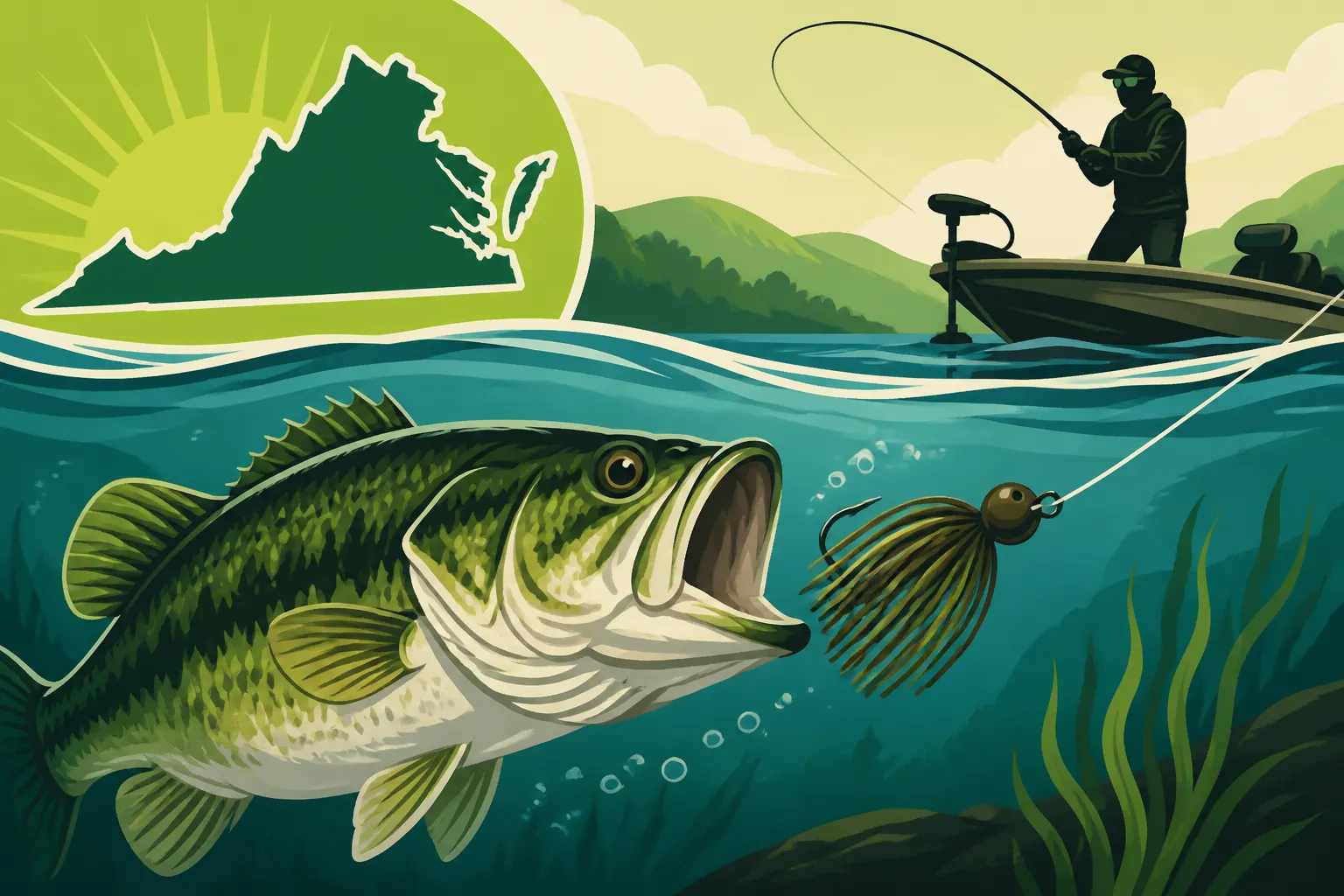
There's nothing quite like the thrill of feeling that subtle "thump" on your line when a big largemouth bass mouths a jig, but for many anglers, fishing a jig can feel like trying to solve a complex puzzle. It's notoriously challenging to master, often leading to frustration with missed bites, constant snags, and a tackle box full of unused jigs. This comprehensive guide will break down everything you need to know about effectively fishing a jig for largemouth bass, making it less intimidating and more rewarding for your Virginia fishing adventures.
Understanding the Largemouth Bass and Their Habitat
Before you even tie on a jig, it's crucial to understand the creature you're targeting. Largemouth bass are ambush predators, meaning they love to hide in places where they can surprise their prey. Knowing their preferred hangouts and behavioral patterns throughout the year will significantly increase your success when jig fishing.
Where Largemouth Bass Hide: Cover and Structure
Largemouth bass are masters of concealment. They gravitate towards areas that offer both protection from predators and prime ambush points for forage. When you're fishing a jig, you're essentially trying to mimic a crawfish or a baitfish scuttling through these hiding spots, so pinpointing them is key.
Think about dense vegetation like lily pads, submerged hydrilla, or thick grass beds. Bass will position themselves within these green jungles, using the cover to stay out of sight while waiting for an unsuspecting meal. Docks, fallen trees (laydowns), brush piles, and rock formations are also prime real estate. These are considered "structure" – physical elements in the water that attract baitfish and, consequently, bass. When fishing docks, for instance, you're not just casting to the dock itself; you're aiming for the shadowy areas under it, or the pilings that extend into the water, which often collect debris and create perfect ambush points. In many Virginia lakes, you'll find submerged timber, remnants of old forests before the lakes were flooded, that are absolute magnets for big bass. Pay close attention to these transitions where different types of cover meet, as these "edges" are often where bass patrol.
Seasonal Bass Movements and Behavior
Largemouth bass behavior shifts dramatically with the seasons, influenced mainly by water temperature and their reproductive cycle. Understanding these annual movements is vital for presenting your jig effectively.
In early spring, during the pre-spawn period, bass move from deeper wintering holes to shallower, warmer waters, often around points and creek channels, looking for food to fuel their spawning activities. This is a fantastic time for jig fishing, as bass are aggressive and feeding heavily. They might be staging in 5-15 feet of water, often associated with harder bottoms or transition areas. Once the water temperature reaches the mid-50s to low 60s Fahrenheit, the spawn begins. Bass will be found on beds in very shallow, protected pockets, often guarding their nests. While you can catch them off beds with jigs, many anglers prefer to let them complete their reproductive cycle undisturbed. After the spawn, during post-spawn, bass are often lethargic but will eventually move to slightly deeper cover to recover, often around secondary points or the edges of spawning flats.
Summer brings warmer water, pushing bass to deeper, cooler areas during the day, often suspending over humps, ledges, or deep brush piles, and moving to shallower feeding flats during low-light hours. Look for them around deeper points, thermoclines, and oxygen-rich cover. In the fall, as water temperatures drop, bass again become highly active, chasing baitfish as they feed up for winter. This is another prime jig fishing season, with bass often found on shallow to mid-depth flats, coves, and main lake points where baitfish congregate. Finally, in winter, bass retreat to the deepest, most stable water they can find, often in large schools near vertical structure like bluff walls or deep channels, requiring a much slower, more subtle jig presentation.
Water Conditions Affecting Bass Activity
Beyond seasons, daily water conditions play a huge role in how bass behave and, consequently, how you should fish your jig. Factors like water clarity, temperature, and even current can dictate where bass are, how active they are, and what color jig they might prefer.
Water clarity is a major factor. In clear water, bass rely heavily on sight, meaning natural-looking jig colors (like green pumpkin, brown, or black and blue) and a more subtle retrieve are often best. You'll want to keep your distance and make longer casts to avoid spooking them. In murky or stained water, bass rely more on their lateral line (which detects vibrations) and scent. Here, darker, more contrasting colors like black and blue, or jigs with rattles, can be more effective. The larger profile of a jig can also be an advantage in low visibility.
Water temperature is perhaps the most significant influence. Cold water means slower metabolism for bass, so they're less active and less willing to chase. You'll need to present your jig slowly, with long pauses, often on the bottom. Warmer water, especially in the spring and fall, means active bass, and you can fish your jig more aggressively with faster retrieves and more erratic movements. You can often find the best time of year for bass fishing in Virginia by observing water temps.
Current is also important, particularly in river systems or areas of large lakes where tributaries flow in. Bass will position themselves out of the main current, often behind rocks, logs, or points, waiting for food to be swept to them. Present your jig so it drifts naturally with the current, mimicking an injured baitfish or crawfish being washed downstream. Understanding these nuances is critical to becoming a more effective jig angler.
Essential Jig Fishing Gear for Largemouth Bass
Fishing a jig isn't just about the jig itself; it's about the entire system. Having the right rod, reel, line, and knowing how to pair your jigs with appropriate trailers can make a world of difference in detecting those subtle bites and successfully landing that trophy bass.
Rod, Reel, and Line Selection
Choosing the right tackle for jig fishing is paramount, as jigs often require specific actions and power to effectively present and hook fish. For most jig fishing applications, especially around heavy cover, a medium-heavy to heavy power casting rod, typically 7 to 7.5 feet long, is ideal. The "heavy" power gives you the backbone to pull big bass out of thick cover and to drive a stout jig hook through a bass's bony mouth. The "fast" or "extra-fast" action at the tip allows for precise casting and better sensitivity to detect subtle bites, while still maintaining that power in the blank. Brands like St. Croix, G. Loomis, or even more affordable options you can find on Amazon, offer excellent jig-specific rods.
Pair this rod with a high-quality baitcasting reel that has a fast gear ratio (7.1:1 or higher is popular). A fast retrieve rate helps you quickly take up slack line, which is crucial for a strong hookset, and allows you to retrieve your jig quickly from a missed strike to get back in the game. Look for reels with a smooth drag system and a comfortable palming design for those long days on the water.
When it comes to line, you have a few options, each with its pros and cons. Fluorocarbon line, in the 15-20 lb test range, is a favorite among jig anglers because of its low stretch and high sensitivity. This allows you to feel the faintest peck and get a solid hookset. Its near-invisibility underwater is also a huge advantage in clear water. Braid, typically 30-65 lb test, is another excellent choice, especially in very heavy cover, thanks to its incredible strength and zero stretch. However, braid is highly visible, so many anglers will tie a fluorocarbon leader (15-25 lb test) to their braided mainline to get the best of both worlds: the strength of braid with the invisibility of fluoro. Monofilament isn't typically recommended for jig fishing due to its high stretch and lower sensitivity.
Choosing the Right Jigs: Types and Colors
This is where the fun begins, and where many anglers get overwhelmed! There's an endless array of jigs out there, but understanding the main types will simplify your choices.
Football jigs are designed for fishing on hard bottoms, like rocky points or ledges. Their wide head allows them to stand up on the bottom, presenting the trailer enticingly, and they resist rolling over. They're excellent for dragging and hopping. Flipping jigs and pitching jigs (often used interchangeably) have a more streamlined head design that allows them to slip through dense cover like grass, brush, and docks with less snagging. They typically feature a stout hook and a brush guard. Swim jigs have a more pointed or tapered head, often with a weed guard, and are designed to be retrieved steadily through the water column, mimicking a swimming baitfish. Finally, finesse jigs are smaller, lighter versions, usually paired with lighter line, used when bass are pressured or in extremely clear water, often imitating a small crawfish or insect.
Choosing the right color can feel like a guessing game, but there are some general rules of thumb. In clear water, natural colors like green pumpkin, brown, or various shades of green with subtle flakes are often effective, mimicking natural forage. In stained or murky water, darker colors tend to produce better contrast and visibility. Black and blue is a classic choice for dark water, as are solid black or junebug. If the water has a slight tint, colors like green pumpkin with blue or black flecks, or even a basic brown and orange, can be excellent. Pay attention to the primary forage in your local Virginia waters – if crawfish are prevalent, match their colors. If shad are schooling, brighter white or shad-patterned swim jigs might be the ticket. Don't be afraid to experiment, but always start with natural tones in clear water and darker, contrasting colors in dirty water.
Pairing Jigs with Trailers
A jig without a trailer is like a burger without a patty – it's just not complete! The trailer adds bulk, action, and can drastically change the profile and appeal of your jig. Think of it as customizing your bait to specific conditions.
Trailers come in various shapes and sizes, primarily made of soft plastics. Crawfish imitations are incredibly popular for bottom-bbouncing jigs. They have claws that flap and undulate as the jig is moved, perfectly mimicking a defensive crawfish. Brands like Berkley, Zoom, or Strike King offer a wide variety of craws. Grub tails or paddle tail swimbaits are excellent for swim jigs, adding a consistent kicking action that imitates a swimming baitfish. Chunk trailers, often resembling a simple block or strip of plastic, add bulk and a subtle kicking action without being too overpowering. These are great for adding bulk to flipping or football jigs.
The key is to match the size and color of your trailer to your jig and the conditions. For instance, a larger, bulkier craw trailer on a football jig can create more vibration and displace more water, which is great in murky conditions or when bass are feeding aggressively. A smaller, more subtle chunk or finesse craw on a finesse jig is perfect for pressured fish or colder water. Color matching is also crucial. Often, you want your trailer to complement or slightly contrast your jig color. A black jig with a blue trailer (black and blue combo) is legendary. A green pumpkin jig might be paired with a green pumpkin, brown, or even a purple craw trailer. Sometimes a flash of contrasting color, like orange or chartreuse, can trigger a strike, especially in dirty water. Experimentation is the name of the game, but generally, try to make your jig and trailer look like one cohesive, irresistible meal. You can find a huge selection of these trailers on Amazon, making it easy to stock up.
Mastering Jig Presentation Techniques
Once you've got your gear dialed in, it's time to learn how to make that jig dance. Jig fishing is highly interactive; it's not just about casting and reeling. It requires feel, cadence, and understanding how to make your bait look alive to a lurking bass.
Flipping and Pitching: Precision Casting
Flipping and pitching are essential techniques for presenting jigs accurately and quietly into tight cover, especially effective when targeting bass in shallow water or around visible structure like docks, laydowns, or dense vegetation. These aren't long casts; they're short, pendulum-like presentations designed for precision.
Flipping involves using the rod to swing the lure, allowing it to free-spool off the reel in a short, underhand motion, usually keeping your hand on the line for control. You literally "flip" the bait with a short pendulum motion of the rod tip, dropping it gently into cover. The goal is a quiet entry, minimizing splash, which is crucial when fishing in close quarters or for wary bass. The retrieve is often vertical, dropping the jig straight down into a brush pile, letting it fall, and then gently lifting it back out, checking for bites on the fall and the lift.
Pitching is similar but involves a slightly longer cast, still using an underhand pendulum motion, but releasing the line more. You hold the lure in one hand, drop the rod tip, and then "pitch" the lure forward while releasing the line to send it sailing quietly under dock pilings or into tight pockets of lily pads. It allows for a bit more distance than flipping while maintaining that crucial quiet entry. Both techniques demand a smooth, controlled motion and a keen eye for where the bass might be hiding. They are extremely effective for picking apart specific pieces of cover rather than just blind casting. For specific spots like on the James River, pitching a jig into submerged logs or under overhanging branches can be incredibly productive for smallmouth bass.
Skipping and Swimming Jigs
Not all jig fishing is about dropping it vertically into heavy cover. Sometimes, you need your jig to move through the water column, mimicking different types of forage.
Skipping is an advanced but incredibly effective technique for getting jigs into hard-to-reach places, particularly under docks or overhanging trees. It involves a low, sidearm cast that makes the jig "skip" across the water surface like a stone. The key is a powerful, low trajectory cast, allowing the jig to bounce multiple times before gliding softly into the dark recesses where big bass often hide. This technique is fantastic for reaching those shady, undisturbed spots that other anglers can't hit, and it requires a bit of practice to master. Once the jig is under the cover, you let it sink, then retrieve it with short hops or drags.
Swimming a jig is a more active presentation, akin to fishing a spinnerbait or a swimbait. This technique uses a swim jig (often with a paddle tail or grub trailer) and involves a steady retrieve, sometimes with slight pauses or twitches, through the mid-water column or just above submerged vegetation. The idea is to imitate a baitfish swimming naturally. Vary your retrieve speed and depth until you find what triggers a bite. This is especially effective in open water areas, along grass lines, or over submerged hydrilla, making it a versatile technique for both largemouth and sometimes even striped bass if you use a larger profile bait. You can apply this technique to find the Best Fishing Spots in Virginia.
Dragging and Hopping: Bottom Contact
When bass are lethargic, cold, or simply glued to the bottom, dragging and hopping a jig becomes your go-to presentation. These techniques are all about maintaining constant bottom contact and imitating a crawfish or a creature slowly moving along the lakebed.
Dragging involves casting your jig out and slowly dragging it along the bottom with your rod tip, typically from the 9 o'clock to the 11 o'clock position, then reeling up the slack as you drop your rod tip back to 9 o'clock, and repeating. This slow, steady movement allows the jig to crawl over rocks, wood, and other bottom irregularities, stirring up sediment and mimicking a feeding crawfish. This is a very subtle technique, and bites are often barely perceptible – just a slight pressure or a mushy feeling. Football jigs are exceptionally good for dragging over rocky areas.
Hopping involves a slightly more aggressive lift and fall. Cast your jig out, let it sink to the bottom, and then use your rod tip to lift the jig quickly a few inches to a foot off the bottom, letting it fall back down on a semi-slack line. The fall is when most bites occur, as the jig looks like a crawfish darting away or a baitfish struggling. Vary the height of your hops and the length of your pauses on the bottom. Sometimes, bass want a longer pause; other times, a quicker, more erratic hop is the key. Both dragging and hopping are excellent for exploring deeper structure like ledges, humps, or creek channel breaks, and are especially effective in colder water or when bass are not actively chasing. Many anglers use these methods to tempt fish on Lake Anna or Smith Mountain Lake when bass are holding deep.
| Jig Type | Best Use Case | Ideal Trailer Type | Key Action / Retrieve | Best Habitat |
|---|---|---|---|---|
| Football Jig | Hard bottoms (rocky points, ledges), deeper water | Crawfish imitations, large chunks | Dragging, slow hopping, crawling over structure | Rocky banks, main lake points, offshore humps |
| Flipping Jig | Dense vertical cover (brush piles, docks, laydowns) | Small-medium craws, compact chunks | Vertical drops, short hops, quiet entry | Docks, fallen trees, brush piles, thick vegetation |
| Swim Jig | Moving through vegetation, open water, mimicking bait | Paddle tail swimbaits, grubs, flukes | Steady retrieve, occasional pauses/twitches | Grass lines, lily pads, open water, sparse cover |
| Finesse Jig | Pressured fish, clear water, subtle presentation | Small craws, tiny chunks, micro grubs | Slow drags, subtle hops, long pauses, precise drops | Clear lakes, highly pressured areas, cold water |
| Arkie Jig | Versatile for various cover (wood, grass, docks) | Craws, chunks, creature baits | Flipping, pitching, light dragging, swimming | Submerged timber, grass lines, docks |
Reading the Bites and Setting the Hook
This is arguably the most challenging, yet most rewarding, part of jig fishing. Jigs are notorious for "finesse bites" – subtle indications that often go unnoticed by inexperienced anglers. Mastering bite detection and the subsequent hookset is what separates the average jig fisherman from the truly successful ones.
Detecting Subtle Bites
Unlike the jarring strike on a crankbait or spinnerbait, a jig bite can be incredibly nuanced. It's rarely a violent "thump." More often, it's a slight change in the feel of your line or rod tip that signifies a bass has picked up your jig. This is why having sensitive tackle, especially a good fluorocarbon line or braided line with a fluoro leader, is so important.
Here are some common ways a jig bite might feel:
- The "Thump": This is the ideal, but less common, bite. It feels like a distinct, sometimes soft, thud against your line or rod.
- Mushy or Heavy Feeling: Your line might suddenly feel "heavy" or "mushy" as if you've snagged a wet rag. The jig feels like it's gained weight.
- Slack Line Jump: You might see a slight twitch or jump in your line where it enters the water, even if you don't feel anything through the rod.
- Tick or Peck: A very light, subtle "tick" that's barely felt, often just a slight vibration.
- Lateral Movement: Your line might start to move sideways unexpectedly when you weren't retrieving.
- The "No Feel" Bite: Sometimes, you just feel nothing. You go to make your next hop or retrieve, and the jig isn't there, or it feels like you're pulling against something. That "something" is often a bass.
The key to detecting these bites is constant focus and feel. Keep your line as taut as possible without moving the jig unnaturally. Watch your line where it enters the water for any subtle movement. Pay attention to every single tap, tick, or change in pressure. It's often said that if something feels "different," set the hook. This leads us to the next critical step.
The Importance of a Strong Hookset
Once you suspect a bite, don't hesitate. A jig hook is thick and needs significant force to penetrate the bony mouth of a largemouth bass. This isn't a gentle wrist flick; it's a power move.
When you feel that bite, immediately drop your rod tip slightly, reel down any slack line, and then execute a powerful, sweeping hookset by thrusting the rod upward and to the side, maintaining constant pressure. For a right-handed angler, this often means setting to the left, and for a left-handed angler, to the right, to maximize leverage and avoid setting straight back, which can pull the bait out of the fish's mouth. Lean into it, putting your full body into the hookset if possible. Don't be afraid to overdo it; it's better to miss an occasional hookset than to not get enough penetration. Remember, that heavy rod and strong line are there for a reason – to drive that big hook home. If you're using braided line, the lack of stretch means your hookset will be incredibly efficient, but you still need that strong, sweeping motion. Practice makes perfect, and with time, you'll develop the muscle memory for a solid hookset.
Dealing with Snags and Hang-ups
Let's be realistic: if you're fishing a jig effectively, you're going to get snagged. It's an inevitable part of fishing where the bass live, which is typically in heavy cover. The goal isn't to avoid snags completely, but to minimize them and retrieve your lure efficiently when they happen.
Most quality jigs come with a brush guard (a collection of synthetic fibers extending from the head) designed to deflect hooks from snags. Always ensure the brush guard is trimmed properly so it's not too stiff (preventing hooksets) or too sparse (not protecting the hook). When your jig hits cover, don't just pull it straight through; try to gently work it over or around the obstruction. A slight slack in the line can allow the jig to "crawl" over obstacles. If you feel a snag, resist the urge to yank immediately. Often, a bass will pick up a jig that feels snagged.
If you do get genuinely snagged, don't despair! First, point your rod tip directly at the snag, engaging your reel's drag, and pull straight back with steady pressure. This often frees the jig. If that doesn't work, give the line a few quick, sharp twangs (like plucking a guitar string) while maintaining tension. The vibration can sometimes dislodge the hook. Another trick is to release tension and let your boat (if you're in one) drift past the snag, then try pulling from a different angle. If all else fails, you might have to break your line, which is why it's wise to carry extra jigs, especially when fishing productive spots like those detailed in a guide to Smith Mountain Lake Fishing. Remember, a snagged jig often means you were in the right area, you just needed to refine your presentation slightly.
Disclaimer
The information provided in this guide is for general informational purposes only. Fishing regulations, license requirements, and local conditions in Virginia can change frequently. Always consult the official Virginia Department of Wildlife Resources (DWR) website or local authorities for the most current rules and regulations before fishing. Adherence to all applicable laws is the sole responsibility of the angler. Fishing carries inherent risks, and caution should always be exercised.