Some Virginia lakes enforce their own bass slot limits
There’s nothing quite like the thrill of a hard hit from a Virginia bass, but that excitement can quickly turn to confusion when you realize the rules aren't always what you expect. Many anglers assume Virginia's bass regulations are a one-size-fits-all deal, only to find out that some of our most popular lakes march to the beat of their own drum, enforcing specific bass slot limits. This guide is here to untangle that confusion, helping you understand why these localized rules exist, where you’ll encounter them, and how to stay on the right side of the law while still enjoying fantastic fishing.
Understanding Virginia's Statewide Bass Regulations: The Baseline
Before we dive into the lake-specific nuances, let’s talk about what most of us are familiar with: the general, statewide bass regulations in Virginia. This is the foundation, and understanding it helps highlight why certain bodies of water need a different approach.
The Standard Daily Limit and Length
Generally, across most of Virginia’s vast freshwater network, the Department of Wildlife Resources (DWR) sets a relatively straightforward daily creel limit for bass. For largemouth and smallmouth bass combined, anglers are typically allowed to keep a total of 5 fish per person per day. This limit is designed to provide ample opportunity for harvest while maintaining healthy overall populations.
When it comes to length limits, the statewide standard can be a little less restrictive on many waters. Often, there isn't a hard minimum length limit for largemouth or smallmouth bass on every single public water body, though some might have a 12-inch minimum or similar. This default setup means you might be able to keep a bass of almost any legal size, as long as it contributes to your 5-fish daily total. It’s this general flexibility that often leads anglers to assume the same rules apply everywhere, which, as we'll see, isn't always the case. For a deeper dive into the broader regulatory landscape, you can check out our comprehensive guide on Virginia Fishing Regulations Explained.
Why We Have Statewide Regulations
These overarching regulations aren't just arbitrary rules; they're the bedrock of conservation efforts. The DWR uses these statewide limits as a blanket measure to protect bass populations across diverse habitats. The goal is multi-faceted: to prevent overfishing, ensure a sustainable breeding population, and provide consistent angling opportunities for everyone. Without these baseline rules, some popular spots could quickly become depleted. It’s about striking a balance, allowing anglers to enjoy their sport while safeguarding the future of our fisheries. These rules are crucial to maintaining the ecological health of our waterways and are supported by the fees from your Virginia Fishing License Guide.
The Nuance of Lake-Specific Bass Slot Limits: Where Things Get Tricky
Now, let's get to the heart of the matter – those individual lakes that break from the mold and have their very own bass slot limits. This is where many anglers, even seasoned ones, can get tripped up if they're not careful.
What Exactly is a Slot Limit?
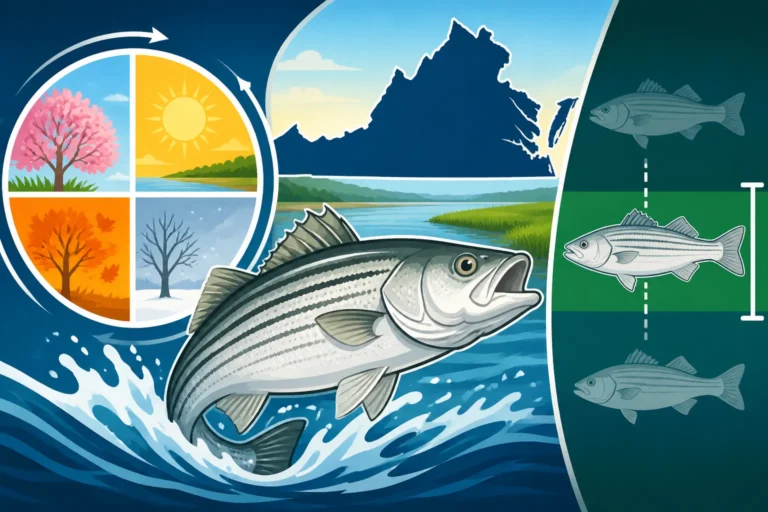
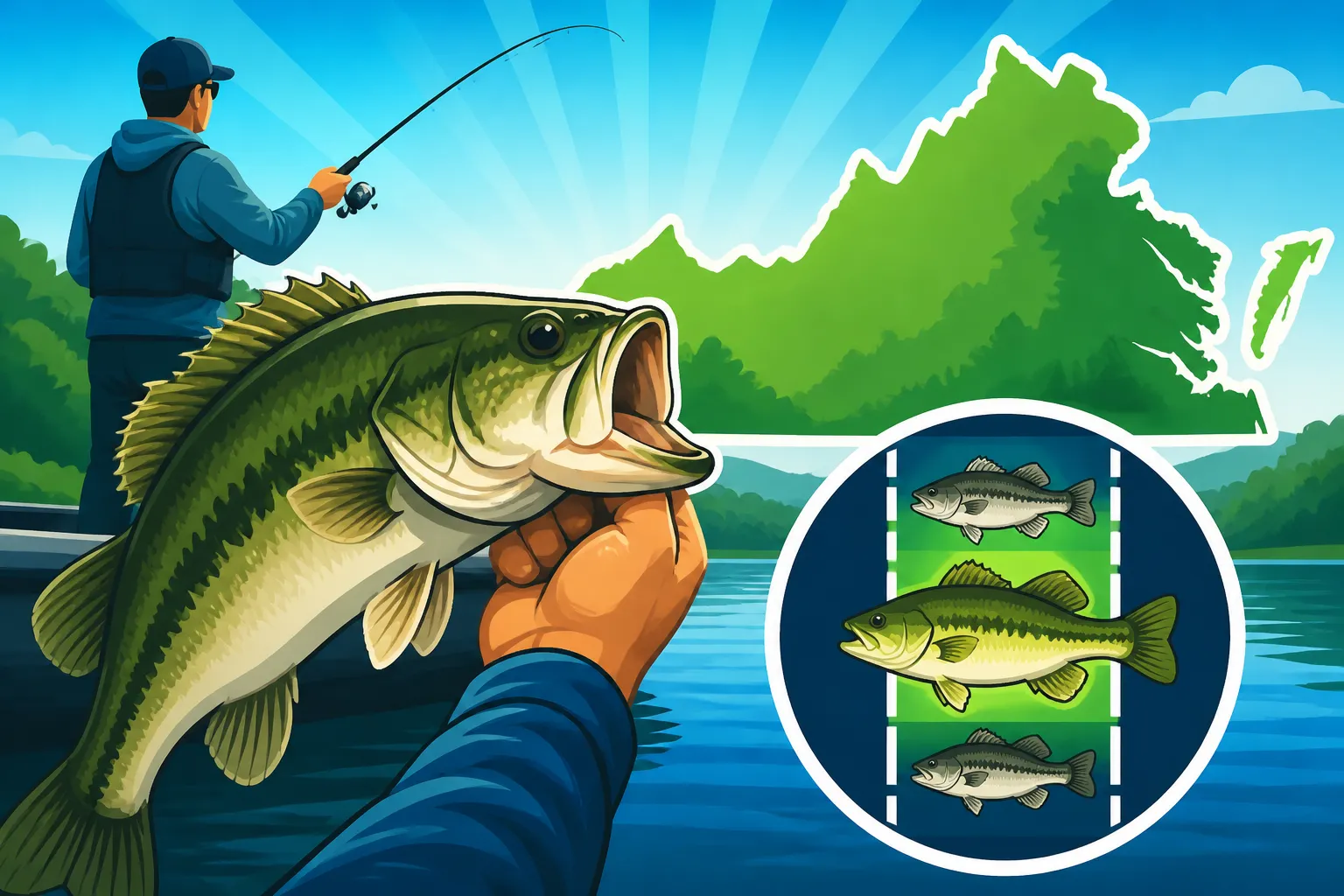
A slot limit is a specialized regulation designed to manage fish populations in a more targeted way than a simple minimum length or daily creel limit. Instead of just saying "fish must be at least X inches," a slot limit specifies a size range—a "slot"—of fish that must be immediately released back into the water. This means fish smaller than the slot can often be kept, and fish larger than the slot can also often be kept, up to a specific daily creel limit. However, any fish whose length falls within that designated slot must be returned to the water, no exceptions.
The primary goal of a slot limit is usually to protect a specific class of fish, often the prime spawning-size adults or those in a rapid growth phase, to enhance the overall health and trophy potential of the fishery. For instance, protecting mid-range fish might mean more big fish in the future, as those protected fish continue to grow. It’s a nuanced tool, and frankly, it can be confusing! You’re not alone if you’ve scratched your head trying to figure out which fish go back and which ones go in the cooler. It adds an extra layer of thought to every catch, requiring precision and a good measuring tape.
Examples of Virginia Lakes with Special Bass Slot Limits
Virginia is home to some incredible bass fisheries, and many of our most renowned lakes utilize slot limits to manage their prized populations. Here are a few prominent examples where you'll encounter specific bass slot limits that deviate from the Statewide Bass Fishing Limits in Virginia:
- Smith Mountain Lake: This iconic lake, a true gem for bass anglers, has a specific slot limit for largemouth bass. Anglers must immediately release any largemouth bass caught between 14 and 18 inches in length. You can keep a daily creel limit of 5 largemouth bass, but only one of those five can be over 18 inches. This regulation aims to protect the strong year classes that contribute to the lake's reputation for growing trophy-sized fish. If you're planning a trip, our Smith Mountain Lake Fishing Guide can give you even more detailed insights.
- Claytor Lake: Known for its diverse bass fishery, including largemouth, smallmouth, spotted, and even Alabama bass, Claytor Lake also employs a slot limit for largemouth bass. Here, any largemouth bass measuring between 12 and 16 inches must be released. The daily creel limit remains 5 fish, but similar to Smith Mountain Lake, only one of those five can be over 16 inches. This helps manage the unique population dynamics of this southwestern Virginia lake. Get more details on specific spots and tips from our Claytor Lake Fishing Spots and Tips article.
- Lake Anna: Another highly popular central Virginia lake, Lake Anna, has its own largemouth bass slot limit. Anglers must release all largemouth bass between 12 and 15 inches. The daily limit is 5 largemouth bass, with only one allowed to be over 15 inches. This helps ensure a robust population structure for this heavily fished impoundment. For more on this productive lake, see our Lake Anna Fishing Guide.
- Buggs Island Lake (Kerr Reservoir): Straddling the Virginia-North Carolina border, this massive reservoir is a bass angler's paradise. It has a largemouth bass slot limit where fish between 14 and 20 inches must be released. The daily creel is 5 fish, but only one of those can be over 20 inches. This slot is designed to protect key spawning and growing fish, contributing to the lake's reputation for producing large bass. You can find useful information in our Kerr Lake Fishing Guide for Beginners.
These are just a few examples, but they illustrate a critical point: always, always check the specific regulations for the lake you intend to fish. Assuming a statewide rule could land you in hot water.
The Rationale Behind Localized Regulations
You might wonder, why can't Virginia just have one set of rules for all its waters? The simple answer is that each lake, river, and reservoir is a unique ecosystem, a microcosm with its own set of challenges and opportunities. What works for a deep, clear mountain lake might not work for a sprawling, fertile impoundment on the piedmont.
Factors like:
- Forage Base: The type and abundance of baitfish or other food sources available.
- Water Body Size and Depth: Larger, deeper lakes can sustain different population densities.
- Habitat Diversity: The presence of submerged timber, aquatic vegetation, rocky outcrops, etc.
- Fishing Pressure: How many anglers are targeting bass and how intensely.
- Bass Genetics and Growth Rates: Some strains of bass in certain lakes naturally grow faster or larger.
- Disease Management: Specific regulations can sometimes help manage or prevent the spread of diseases.
All these variables contribute to the DWR's decision-making process. Fisheries biologists conduct extensive research, including electroshocking surveys, creel surveys (talking to anglers at boat ramps), and studying growth rates and spawning success. They use this scientific data to implement what's called "adaptive management." This means regulations aren't set in stone forever; they can change over time as the fishery evolves, aiming to optimize the health of the bass population and the quality of the angling experience. These localized rules are a testament to the DWR’s commitment to managing Virginia’s Best Bass Fishing Lakes in Virginia for the long haul.
Navigating and Complying with Lake-Specific Rules: Your Angler's Toolkit
Dealing with different rules for different lakes might seem like a hassle, but with a little preparation, it's totally manageable. Think of it as an important part of your angling education.
Your Essential Resource: The DWR Regulations
There is one undisputed champion when it comes to knowing the rules: the official Virginia Department of Wildlife Resources (DWR) regulations. Forget what your buddy's cousin heard at the bait shop – always go directly to the source.
- The DWR Website: The DWR website (dwr.virginia.gov) is your first and best stop. Navigate to their "Fishing" section, then look for "Regulations" or "Lakes & Rivers." They provide detailed information for specific bodies of water, often listed by region or alphabetically.
- The Annual Fishing Regulations Digest: Every year, the DWR publishes a comprehensive digest of all fishing regulations. You can download a PDF version from their website or pick up a physical copy at most DWR license agents, sporting goods stores, or bait shops. Always make sure you have the current year's digest, as regulations can change.
- Go Outdoors VA App: For ultimate convenience on the water, consider downloading the DWR’s "Go Outdoors VA" mobile app. This app often allows you to view regulations right from your phone, making it easy to double-check a slot limit before you decide to keep or release a fish. It's a lifesaver when you're out on the water and that critical question pops into your head. If you need a refresher on how to navigate the DWR's online platform, our guide on Virginia DWR website fishing license purchase steps can walk you through it.
Best Practices for Anglers
Staying compliant and being a responsible angler is simpler than you think if you adopt a few key habits.
- Before You Go, Know: This is perhaps the most crucial advice. Before you even pack your tackle box, take five minutes to look up the regulations for your chosen body of water. Don't assume. A quick check can save you a lot of grief and potential fines.
- On the Water Preparedness: Always have a reliable measuring device with you. A tape measure fixed to your boat's gunwale, a folding ruler, or even a specialized fish measuring board can be invaluable. You can find excellent options for these on Amazon or at your local tackle shop. Keep your phone with the DWR app charged, or a physical copy of the regulations handy in a waterproof bag.
- Proper Catch and Release: For those fish that fall within a "must release" slot, or any fish you choose to release, practice good catch-and-release techniques. Minimize handling, use barbless hooks, and try to keep the fish in the water as much as possible. This ensures the fish you’re releasing have the best chance of survival, contributing to the very fishery the slot limit is designed to protect.
- Understand the Consequences: Violating fishing regulations, whether it’s a slot limit or a daily creel, can lead to significant penalties. Fines can be substantial, and in some cases, you could even lose your fishing privileges. Game wardens are out there, and they're serious about protecting Virginia's natural resources. It’s always better to be safe than sorry. For more on this, read about the Penalties for Fishing Without a License in Virginia.
How to Measure and Understand Slot Limits
Measuring a fish for a slot limit needs to be precise. Always measure the total length of the fish from the tip of its nose (mouth closed) to the very end of its tail, with the tail compressed.
Let’s use an example with a hypothetical 12-16 inch slot limit (must release) with a 5-fish daily creel, only one over 16 inches.
| Fish Caught | Length (inches) | Action Required | Explanation |
|---|---|---|---|
| Bass 1 | 11.5 | Can Keep | This fish is smaller than the 12-inch minimum of the slot. You can keep it. |
| Bass 2 | 13 | Must Release | This fish is within the 12-16 inch slot. It must be immediately returned to the water, regardless of how many fish you've kept or released. |
| Bass 3 | 16.5 | Can Keep | This fish is larger than the 16-inch maximum of the slot. You can keep it, but remember your daily limit is 5 fish, and only one of those can be over 16 inches (in this hypothetical example). |
| Bass 4 | 19 | Can Keep (if one over 16" not already kept) | This fish is larger than the 16-inch maximum of the slot. You can keep it, but if you already have a fish over 16 inches in your possession, you must release this one. |
| Bass 5 | 10 | Can Keep | This fish is smaller than the 12-inch minimum of the slot. You can keep it, provided you haven't reached your total 5-fish daily limit. |
This table illustrates how a slot limit is more complex than a simple minimum length. It demands attention to detail for every single fish you bring to the boat. Always remember to check the specific wording for each lake, as nuances can vary! Also, understand the broader context of Virginia's Rules for Fishing on Public and Private Waters to ensure you're compliant wherever you cast your line.
Contributing to Conservation: Beyond the Rules
Ultimately, understanding and respecting these specialized regulations isn't just about avoiding a citation. It's about being an active participant in the conservation of Virginia’s incredible fisheries.
Why Anglers Should Care About Slot Limits
It’s easy to view regulations as obstacles, but slot limits are designed with a specific purpose: to enhance your fishing experience both now and in the future. Imagine always catching only small bass, or never seeing a truly large fish in your favorite lake. That's a real possibility without thoughtful management.
Slot limits contribute to:
- Healthy Fish Populations: By protecting a certain size class (often the prime breeders), these limits ensure that there are enough mature fish to reproduce, leading to more robust future generations.
- Improved Fishing Quality: More healthy fish mean more fish overall, and often, more opportunities to catch larger, more desirable fish. Who doesn't want to catch that next trophy bass?
- Sustainable Harvest: They allow for a reasonable harvest of fish that are either too small to be prime breeders or have grown beyond the "protected" stage, providing a balance for anglers who enjoy keeping their catch.
When you abide by a slot limit, you're not just following a rule; you're making an active choice to support the long-term health and vitality of that specific fishery.
Supporting Virginia's Fisheries Management
Your role in conservation extends beyond just following the rules on the water. Every time you purchase a fishing license, you're directly contributing to the DWR's efforts in managing and enhancing Virginia's aquatic resources. These funds support scientific research, habitat restoration, stocking programs, and law enforcement – all vital components of a healthy fishery. We talk more about this in How Fishing License Fees Support Wildlife Conservation in Virginia.
Beyond licenses, consider:
- Reporting Violations: If you witness someone clearly violating regulations, report it to the DWR. They have a limited number of wardens, and your vigilance can make a difference.
- Participating in Surveys: If you're approached by a DWR creel clerk at a boat ramp, take a few minutes to answer their questions. Your data is invaluable to their research.
- Practicing Ethical Angling: Beyond the letter of the law, ethical angling means minimizing your impact, respecting wildlife, and leaving no trace behind.
By staying informed about Virginia Fishing Rules Every Angler Should Know, embracing the nuances of lake-specific regulations, and contributing to conservation efforts, you ensure that future generations of anglers can enjoy the same incredible fishing opportunities that Virginia offers today.
Disclaimer
The information provided in this guide is intended for general informational purposes only and is subject to change. While we strive to provide accurate and up-to-date content, fishing regulations, license requirements, and other related laws can be complex and may be updated by the Virginia Department of Wildlife Resources (DWR) at any time. It is the sole responsibility of each angler to consult the official DWR website (dwr.virginia.gov) or the current annual Virginia Fishing Regulations digest before engaging in any fishing activities to ensure full compliance with all applicable laws and regulations. Failure to do so may result in penalties.