Virginia and Maryland fishing license reciprocity rules
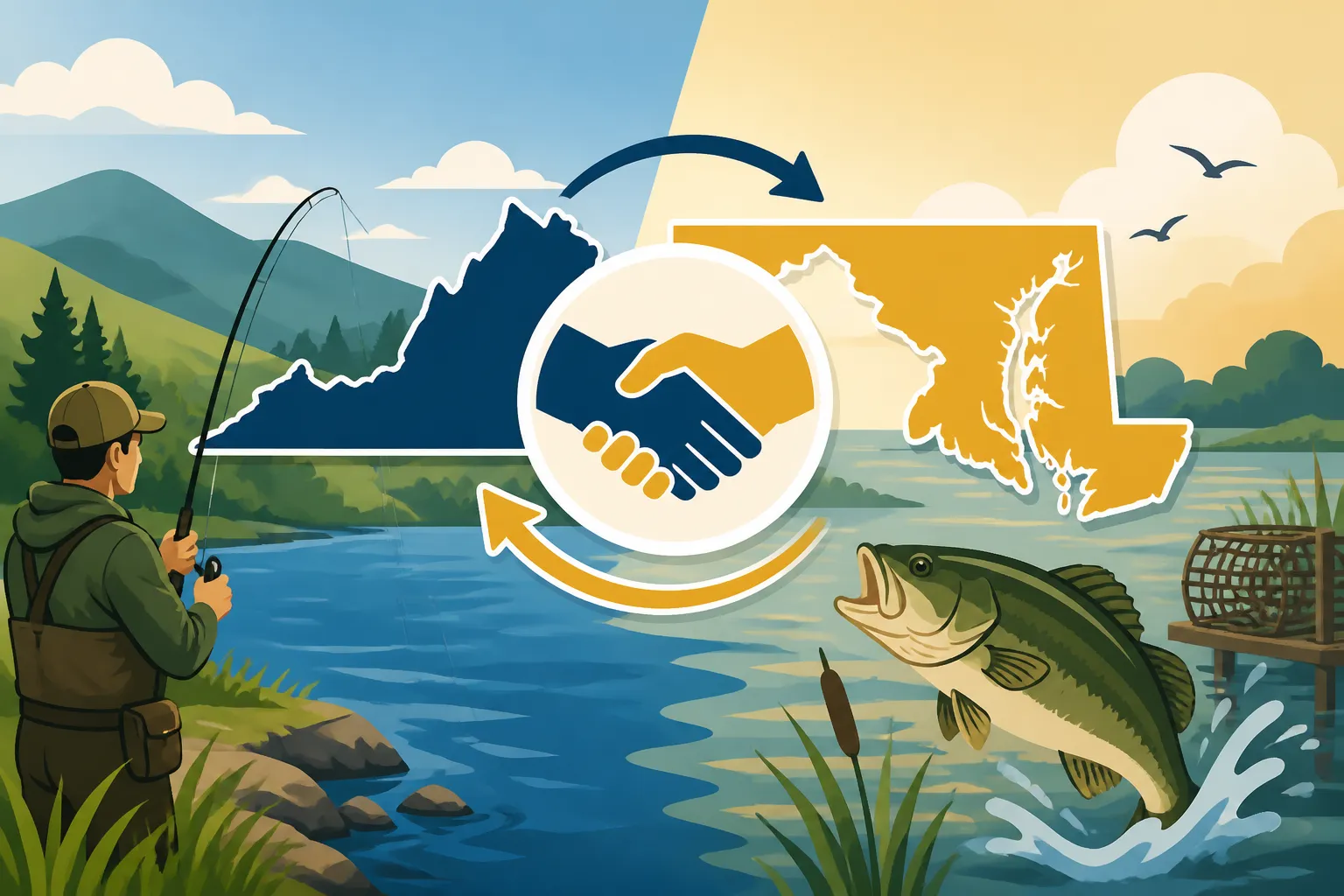
Anglers who love exploring the diverse waters of Virginia and Maryland often hit a snag: understanding which fishing license they actually need. It's frustrating to plan a trip to a prime spot only to realize you're unsure if your Virginia license covers that creek just over the state line, or if your Maryland tag is valid in the lower Chesapeake. This guide will unravel the complexities of fishing license reciprocity between these two fantastic fishing states, ensuring you stay legal and enjoy your time on the water.
Understanding Fishing License Reciprocity Between States
Many people assume that because two states share a border, or even a body of water, that their fishing license from one state will automatically grant them permission to fish in the other. This simply isn't the case, and it's a very common point of confusion and frustration for anglers who just want to enjoy their hobby without inadvertently breaking the law. Each state operates its own independent wildlife management agency, like the Virginia Department of Wildlife Resources (DWR) and the Maryland Department of Natural Resources (DNR), and these agencies have distinct regulations, license structures, and revenue streams.
When you purchase a fishing license, you are essentially buying a permit to fish within the specific jurisdiction of that state. This permit contributes directly to the conservation efforts, fish stocking programs, habitat restoration, and enforcement activities within that state. Therefore, when you cross an invisible state line on the water, you're entering a new legal and administrative territory. True "reciprocity" means that states have a formal, mutual agreement to recognize each other's licenses under specific, clearly defined conditions. Without such an agreement, or if you're outside the scope of one, you'll need the appropriate license for the state whose waters you're in. This distinction is crucial to avoid a costly and disappointing encounter with a game warden.
The reason states maintain separate rules is primarily rooted in their sovereign right to manage their own natural resources. Imagine if everyone could fish anywhere with just one license – how would each state fund its unique conservation projects or enforce its specific harvest limits? Different states have different ecological needs, fish populations, and conservation priorities. The rules are designed to protect the local fisheries and ensure their sustainability, not to inconvenience anglers.
Consider the immense task of managing a shared resource like the Chesapeake Bay or the Potomac River. Each state has its own data, its own scientists, and its own political will guiding its management decisions. Harmonizing these efforts through reciprocity agreements is a complex process. The differing rules are a reflection of these independent management strategies and are ultimately put in place to ensure that the fish populations thrive for future generations. While it can feel like a bureaucratic headache, understanding the underlying purpose helps put the regulations into perspective.
Virginia and Maryland's Specific Reciprocity Rules
When it comes to the intricate details of fishing license reciprocity between Virginia and Maryland, things are thankfully not as complicated as they might seem initially, provided you know where to look and what exceptions apply. It's not a blanket "yes" or "no," but rather a nuanced approach that depends heavily on the specific body of water you're fishing.
Freshwater Fishing in Border Waters
Generally speaking, Virginia and Maryland do not have wide-ranging freshwater fishing license reciprocity beyond one significant exception that we'll discuss next. This means if you're planning to fish in a river, lake, or pond that is entirely within the borders of Virginia, you absolutely need a Virginia freshwater fishing license. The same holds true for Maryland: if you're fishing in a non-tidal freshwater body exclusively within Maryland, a Maryland freshwater license is required.
This can be a point of confusion for anglers who might live near the state line and see a promising fishing spot just across it. For example, if you're angling for bass in Smith Mountain Lake Fishing Guide in Virginia, your Maryland license is useless. Conversely, if you're heading to a lake like Deep Creek Lake in Maryland, a Virginia license won't suffice. It’s always best to be sure of your location and the required license.
The key takeaway for freshwater is to understand that unless an explicit reciprocity agreement exists for a specific border-straddling river, you must have the license for the state whose geographical boundaries contain the water you are fishing. It’s a common mistake for anglers to assume their home state license covers them in any water that eventually flows into their state, but this is a dangerous assumption that could lead to fines.
Saltwater Fishing in the Chesapeake Bay
Here's where we find some good news for those who love the vast expanse of the Chesapeake Bay! For the main stem of the Chesapeake Bay, Virginia and Maryland do have a reciprocal agreement for recreational finfish (meaning any fish with fins, but not crabs, clams, or oysters, which usually require separate permits).
What this means in practice is that a valid Virginia saltwater fishing license will allow you to legally fish for finfish in the Maryland portion of the main Chesapeake Bay. Likewise, a valid Maryland tidal fishing license (their equivalent of a saltwater license) grants you permission to fish for finfish in the Virginia portion of the main Chesapeake Bay. This is a huge convenience for anglers who want to chase species like Virginia Striped Bass Season and Slot Limit Guide (often called rockfish) across the Bay, from the Virginia Beach area up to areas closer to Annapolis, without needing two separate licenses. This reciprocity covers the wide-open waters, making it much simpler to follow the fish wherever they may roam.
However, and this is a critical point that trips up many anglers, this reciprocity does NOT extend to the tributaries of the Chesapeake Bay. If you leave the main channel of the Bay and venture into any river or creek that feeds into it, you are then subject to the licensing rules of the state that river or creek belongs to. For instance, if you're fishing the main Bay with your Virginia license and decide to go up the Choptank River (a Maryland tributary), your Virginia license is no longer valid, and you would need a Maryland tidal license. This crucial distinction highlights why anglers must understand the specific Virginia Fishing Regulations Explained and their Maryland counterparts, particularly regarding tributary boundaries.
The Potomac River Exception
The Potomac River stands out as a unique case in the reciprocity discussion, primarily due to the long-standing authority of the Potomac River Fisheries Commission (PRFC). This commission manages the fishery resources of the main stem of the Potomac River, from its confluence with the Chesapeake Bay all the way upstream to its headwaters.
For the main stem of the Potomac River, anglers who possess a valid fishing license from either Virginia or Maryland are legally covered to fish. This applies to both freshwater and tidal portions of the main river. This agreement simplifies things immensely for anyone fishing this iconic river, eliminating the need to worry about imaginary lines down the middle of the waterway. So, whether you launch from a Virginia ramp or a Maryland marina, your home state's license is likely sufficient for fishing the main channel.
However, just like with the Chesapeake Bay, this reciprocity does NOT extend to the tributaries that flow into the Potomac River. If you decide to explore a feeder creek or a river that flows into the Potomac, such as the Occoquan River (in Virginia) or the Monocacy River (in Maryland), you would then need the appropriate fishing license for that specific state. This is a common oversight, so while the main stem is straightforward, be mindful if you venture into any of the numerous smaller waterways connected to it. Knowing the ins and outs of Fishing the Potomac River in Virginia can be tricky, so always consult the latest PRFC regulations in addition to state guides.
Navigating Shared Waters: Potomac River, Chesapeake Bay Specifics
Fishing shared waters like the Potomac River and the Chesapeake Bay offers incredible opportunities, but it also demands a clear understanding of the specific rules governing each area. It's not enough to know the general reciprocity; the details matter.
Fishing the Main Stem of the Potomac River
The main stem of the Potomac River is a fantastic fishery, offering everything from smallmouth bass in its upper reaches to striped bass and catfish in its tidal sections. Thanks to the Potomac River Fisheries Commission (PRFC), the license situation here is refreshingly simple. If you have a valid fishing license from either Virginia or Maryland, you are legally permitted to fish the entire main stem of the Potomac River. This means you don't need to stress about exactly where your boat is positioned or whether your cast crosses an imaginary state line. This singular authority streamlines enforcement and management across the shared waterway.
This agreement is a huge boon for anglers, allowing them to focus on fishing rather than jurisdictional boundaries. For instance, if you launch from a park like Leesylvania State Park in Virginia, you can fish all the way across to the Maryland side without needing a separate Maryland license, as long as you remain in the main river channel. This covers all recreational finfish species commonly pursued in the Potomac.
However, while your license is reciprocal, the regulations for species within the main stem of the Potomac are primarily set by the PRFC, not the individual states. These PRFC regulations can sometimes differ from Virginia's or Maryland's general state-wide regulations for the same species. Therefore, it's essential to consult the PRFC's official rules in addition to your state's fishing guide. Many anglers keep a printout of the current PRFC regulations in their boat or tackle box. You can often find waterproof charts or even specialized fishing guides for the Potomac River on resources like Amazon which clearly mark boundaries and offer tips specific to PRFC rules.
Chesapeake Bay: A Complex Mosaic
The Chesapeake Bay, the largest estuary in North America, is a treasure trove of fishing opportunities. Its sheer size and the number of rivers feeding into it create a unique and sometimes complicated licensing situation. As previously mentioned, for the expansive, open waters of the main stem of the Chesapeake Bay, there is reciprocity for finfish. This means if you have a current Virginia Fishing License Guide and specifically a saltwater license, you can fish for finfish in Maryland's open Bay waters, and vice versa with a Maryland tidal license. This reciprocity is incredibly helpful for anglers pursuing species like Chesapeake Bay Striped Bass Fishing Guide or flounder, who might move extensively across the Bay.
However, the real complexity arises once you enter any of the countless tributaries that flow into the Bay. The moment your boat or your cast leaves the main stem of the Bay and enters a distinct river or creek, you are immediately subject to the licensing laws of the state that tributary belongs to. For example, if you're fishing near the mouth of the Bay with your Maryland license and decide to motor up the James River, you will need a Virginia saltwater license for those waters. This rule applies to all the major tidal rivers in Virginia, such as the York, Rappahannock, and Elizabeth Rivers, and similarly to Maryland's major tidal rivers like the Patuxent, Choptank, and Nanticoke.
It's not always crystal clear where the main stem of the Bay ends and a tributary begins, especially on larger rivers. This ambiguity can lead to accidental violations. Always consult detailed nautical charts or a reliable GPS unit with detailed mapping to understand jurisdictional lines, especially if you plan to fish near river mouths. Ignorance of these boundaries is not a valid defense if a game warden approaches you.
Specific Tributaries and Their Rules
To help solidify this understanding, let's consider some concrete examples of Chesapeake Bay tributaries:
- Virginia Tributaries: If you're fishing in the James River, York River, Rappahannock River, Elizabeth River, Piankatank River, or any other river system that is wholly within Virginia and flows into the Bay, you must possess a valid Virginia saltwater fishing license. A Maryland license will not cover you in these waters. These rivers are prime locations for species like speckled trout, red drum, and flounder.
- Maryland Tributaries: Conversely, if your fishing adventure takes you into Maryland's Bay tributaries, such as the Patuxent River, Choptank River, Nanticoke River, Chester River, or Miles River, you will require a valid Maryland tidal fishing license. Your Virginia saltwater license will not be recognized here. These waters are renowned for their striped bass (rockfish) and white perch.
The simplest rule of thumb is: if you can name the river or creek, and it's not the main, broad body of the Chesapeake Bay or the main stem of the Potomac, assume you need the license for the state to which that river belongs. This rule extends beyond finfish to activities like crabbing or clamming, which often have even stricter, state-specific licensing and permitting requirements. When in doubt, a quick call to the DWR or DNR, or checking their respective websites, can save you a lot of trouble and ensure you have an enjoyable, legal day on the water.
Practical Tips for Cross-Border Anglers
Navigating the waters shared by Virginia and Maryland can be a fantastic experience, but it requires a bit of homework to stay on the right side of the regulations. Being prepared is key to avoiding frustration and potential legal issues.
Always Double-Check Before You Go
Fishing regulations are living documents; they are not static and can change annually, and sometimes even mid-season, especially for highly managed species like striped bass. What was true last year might not be true today. Relying on outdated information or hearsay is a common pitfall that can lead to fines and a ruined fishing trip. Therefore, before every trip that takes you near or across state lines, make it a non-negotiable habit to check the most current regulations for both Virginia and Maryland.
The Virginia Department of Wildlife Resources (DWR) and the Maryland Department of Natural Resources (DNR) websites are your authoritative sources. Both agencies typically publish comprehensive annual fishing guides that are available for download in PDF format. These guides detail not just licensing requirements but also species-specific creel limits, size restrictions, and open seasons, which can vary significantly between the states and even within different areas of the same state. For example, knowing the latest Virginia Fishing Seasons Explained is critical for planning. Consider subscribing to email newsletters or alerts from both agencies if they offer them; this is an excellent way to stay informed of any critical in-season changes. A few minutes of research before you head out can save you hours of trouble later.
Carrying Proof and Staying Informed
When you're out on the water, you are responsible for proving that you are legally fishing. This means having your valid fishing license (or licenses, if you've opted for both states) readily accessible. While many states now issue digital licenses that can be displayed on your smartphone, it's always a smart move to have a physical, printed copy as a backup. There's nothing worse than being in an area with no cell service or having your phone battery die when a game warden pulls alongside. A laminated copy stored in a waterproof bag in your tackle box or boat's dry storage is a practical solution.
Beyond your license, it's also highly advisable to carry a copy of the current regulations, especially those pertaining to size and creel limits for the species you are targeting. Fishing guides can be dense, but having a quick-reference summary of the most pertinent rules for your specific fishing area can be invaluable in preventing accidental violations. Some anglers even create their own laminated cards with key regulations. You can find useful items like waterproof charts, regional fishing guides, or even small, durable containers for your license on Amazon to help you stay organized and compliant.
Wildlife enforcement officers are crucial for protecting our natural resources and ensuring everyone plays by the rules. If you're approached by an officer, being polite, cooperative, and having your documents readily available will make the interaction smooth and quick. Getting caught without the proper license, or violating regulations, can lead to significant Penalties for Fishing Without a License in Virginia, including substantial fines that far outweigh the cost of an annual license.
Considering Dual Licenses for Frequent Crossings
For the most dedicated anglers who regularly fish both Virginia and Maryland waters, particularly if you venture into the tributaries of both states, the most straightforward and stress-free solution is often to simply purchase fishing licenses for both states. While it represents an additional expense, the peace of mind and flexibility it offers can be priceless. It eliminates all ambiguity, allowing you to fish wherever the bite is best without constantly consulting maps or worrying about invisible state lines.
A comprehensive guide like Virginia Fishing License Requirements for Residents and Nonresidents will outline the various types of licenses available, from annual resident and nonresident options to shorter-term passes. Both states offer convenient online purchasing options. For Virginia, you can typically find instructions on How to Buy a Fishing License Online in Virginia through the DWR website, and Maryland offers a similar system via their DNR portal.
Think of purchasing dual licenses as an investment in your fishing freedom. If you live near the border, or frequently travel between the two states to fish the shared waters of the Chesapeake Bay and the Potomac River, having both licenses ensures complete compliance. This strategy is commonly employed by professional fishing guides and charter captains who need the flexibility to pursue fish across state lines. Ultimately, it allows you to spend more time enjoying the incredible fishing opportunities that Virginia and Maryland offer, and less time stressing about the bureaucracy.
Virginia & Maryland Fishing License Reciprocity at a Glance
To quickly summarize the complex rules surrounding fishing license reciprocity between Virginia and Maryland, this table provides a high-level overview. Remember, this is a general guide, and specific regulations (size, creel limits, seasons) are set by the relevant managing authority for each waterbody.
| Fishing Location | Virginia License Valid? | Maryland License Valid? | Notes |
|---|---|---|---|
| Main Stem Potomac River | Yes | Yes | Reciprocity applies to recreational finfish in the main stem of the Potomac River, from its headwaters to the Chesapeake Bay. Managed by the Potomac River Fisheries Commission (PRFC). This reciprocity does NOT extend to any tributaries of the Potomac River; for those, you need the license for the state the tributary is in. |
| Main Stem Chesapeake Bay | Yes (for finfish) | Yes (for finfish) | Reciprocity applies to recreational finfish only in the main stem of the Chesapeake Bay. This means a valid Virginia saltwater license lets you fish the main Bay in Maryland, and a Maryland tidal license lets you fish the main Bay in Virginia. This reciprocity does NOT extend to any tributaries of the Chesapeake Bay; for those, you need the license for the state the tributary is in. It also does not cover crabbing, clamming, or oystering, which require state-specific permits. |
| Virginia Chesapeake Bay Tributaries | Yes | No | Rivers and creeks wholly within Virginia that flow into the Chesapeake Bay (e.g., James River, York River, Rappahannock River, Piankatank River). A valid Virginia saltwater license is required. Maryland licenses are not valid here. |
| Maryland Chesapeake Bay Tributaries | No | Yes | Rivers and creeks wholly within Maryland that flow into the Chesapeake Bay (e.g., Patuxent River, Choptank River, Chester River, Nanticoke River). A valid Maryland tidal fishing license is required. Virginia licenses are not valid here. |
| Virginia Freshwater (Non-Potomac) | Yes | No | Any non-tidal freshwater body of water entirely within Virginia (e.g., Best Fishing Spots in Virginia such as Smith Mountain Lake, Lake Anna, or the upper Shenandoah River). A valid Virginia freshwater fishing license is required. Maryland freshwater licenses are not valid here. |
| Maryland Freshwater (Non-Potomac) | No | Yes | Any non-tidal freshwater body of water entirely within Maryland (e.g., Deep Creek Lake, Prettyboy Reservoir, or the upper Susquehanna River). A valid Maryland freshwater fishing license is required. Virginia freshwater licenses are not valid here. |
| Virginia Waters (Coastal Ocean) | Yes | No | Virginia's Atlantic Ocean coastal waters out to 3 miles. A Virginia saltwater fishing license is required. Maryland licenses are not valid. |
| Maryland Waters (Coastal Ocean) | No | Yes | Maryland's Atlantic Ocean coastal waters out to 3 miles. A Maryland tidal fishing license is required. Virginia licenses are not valid. For deep-sea fishing beyond 3 miles, federal regulations and permits may apply, but state licenses are still often required to depart/return from state ports. |
| Pier Fishing | Varies | Varies | Some fishing piers in Virginia or Maryland may hold blanket permits that cover all anglers fishing from them, meaning individual licenses are not needed. However, this is not universal. Always check with the specific pier before fishing. |
| Charter Fishing | Varies | Varies | On a licensed charter boat, the vessel's blanket license may cover individual anglers, but this is not always the case. Confirm with your specific charter captain beforehand. It's often safer to have your own license, especially if targeting specific species or considering Where to Buy a Virginia Fishing License after the trip for future independent fishing. |
Disclaimer:
Please be aware that fishing regulations, including those concerning reciprocity and licensing, are subject to change. While every effort has been made to provide accurate and up-to-date information, it is your responsibility to verify all current rules with the official Virginia Department of Wildlife Resources (DWR) and Maryland Department of Natural Resources (DNR) before engaging in any fishing activities. This guide is for informational purposes only and should not be considered legal advice.