How Fishing License Fees Support Wildlife Conservation in Virginia
It's easy to look at the cost of a fishing license and think, "Ugh, another fee." We've all been there, standing at the counter or clicking through an online form, wondering if it's just a tax on our hobby. But what if I told you that every dollar you spend on your Virginia fishing license isn't just a fee, but a direct investment in the very waters and wildlife you love? This guide will dive deep into how those seemingly small amounts add up to big impacts, directly fueling the conservation efforts that keep Virginia's fishing vibrant for generations to come.
Understanding Your Virginia Fishing License Fee
When you decide to cast a line in Virginia, whether it's in the tranquil freshwater rivers or the vast saltwater expanses of the Chesapeake Bay, one of the first things you need to secure is a valid fishing license. For many, this feels like a bureaucratic hurdle, an extra step before the fun can begin. However, that small fee you pay holds a far greater significance than just granting permission to fish; it's the lifeblood of Virginia's extensive wildlife conservation network.
More Than Just a Permit: The Deeper Purpose
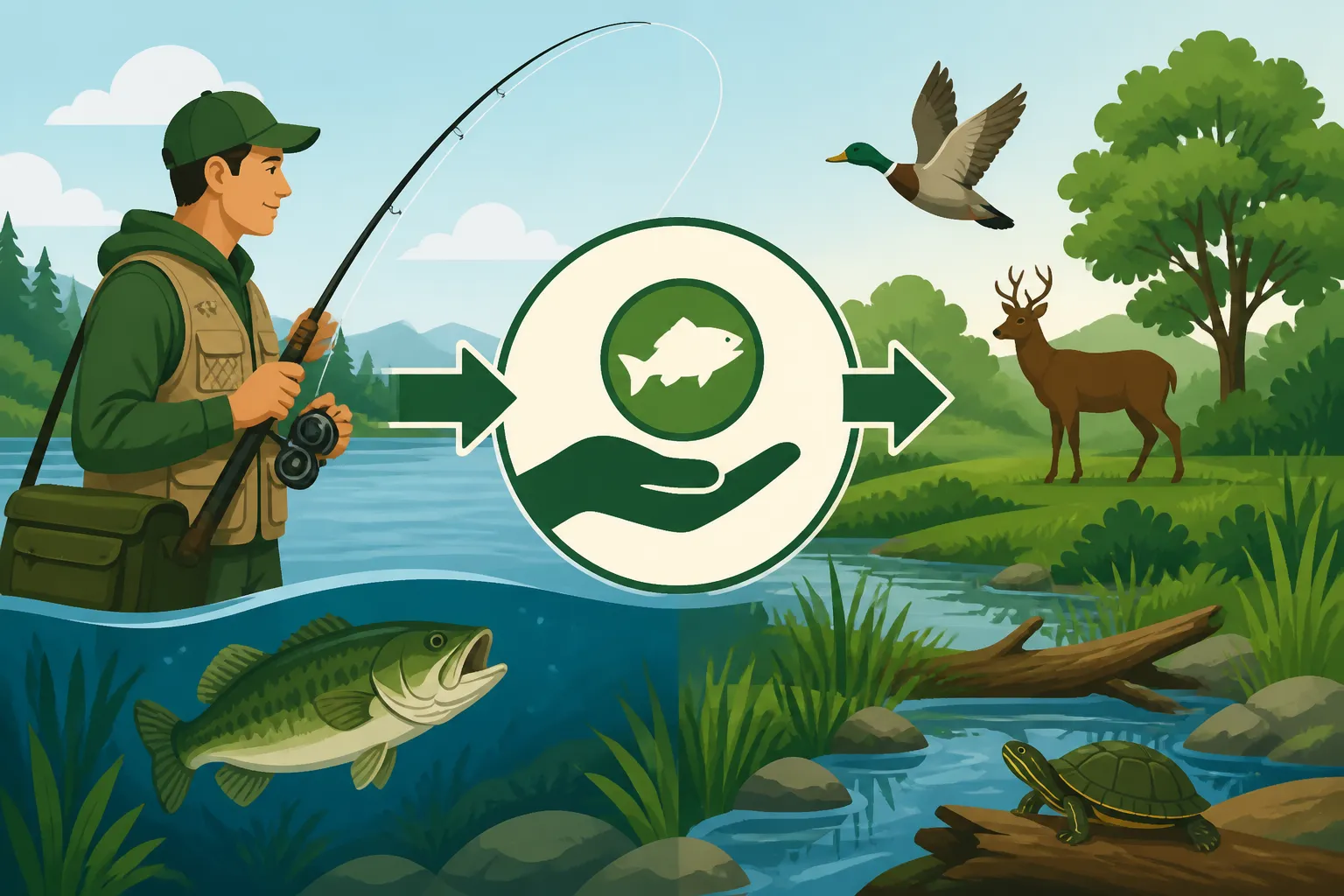
Let's be honest, nobody loves paying fees. You might be standing at a local bait shop, ready to grab some live minnows and your Virginia Fishing License Guide, and the thought crosses your mind: "Where does this money actually go?" It’s a completely valid question, and one that the Virginia Department of Wildlife Resources (DWR) is transparent about. Unlike general tax revenue that gets pooled for a myriad of state services, the funds generated from fishing (and hunting) licenses are specifically earmarked. They go directly back into managing, protecting, and enhancing the very fish populations and aquatic habitats that sustain your passion. It’s a self-sustaining model, driven by the users themselves, for the benefit of all. Think of it less as a fee and more as a contribution to a shared legacy of healthy, thriving ecosystems.
The Virginia Department of Wildlife Resources DWR Funding Model
The Virginia DWR operates primarily on a "user-pays, public-benefits" principle. This means that a significant portion of its funding doesn't come from state general funds, but rather from the sale of licenses, permits, and federal excise taxes on fishing and hunting equipment. Imagine trying to manage thousands of miles of rivers, countless lakes, and a substantial portion of the Chesapeake Bay's rich aquatic life without dedicated funding; it would be an impossible task. This model ensures that those who directly benefit from the resource – the anglers and hunters – are also the primary contributors to its sustainability. When you buy your How to Get a Fishing License in Virginia, you're not just buying access; you're directly funding the scientists, conservation police officers, and habitat restoration specialists who work tirelessly to ensure there are fish to catch for years to come. This unique funding structure is a cornerstone of conservation in Virginia and across the nation, demonstrating a powerful commitment to ecological stewardship.
Direct Conservation Efforts Supported by Your License
It's one thing to say your license fees support conservation, and another to see exactly how. The truth is, the impact is tangible, from the fish swimming in your favorite spots to the health of the waterways themselves. The DWR leverages these funds for a comprehensive suite of programs designed to maintain and improve Virginia's aquatic resources.
Fish Stocking Programs Across the Commonwealth
One of the most visible ways your license fees are put to use is through fish stocking programs. For many anglers, the excitement of catching a freshly stocked trout or a thriving game fish is a direct result of these efforts. The DWR manages numerous hatcheries across the state, raising species like Rainbow, Brown, and Brook Trout, as well as various bass and other popular game fish. These fish are then strategically released into public waters, ensuring robust populations for recreational fishing, especially in areas where natural reproduction might not keep up with angler demand or environmental pressures. For instance, the DWR has specific Virginia Stocked Trout Waters and License Requirements, and your license helps fund the rearing and transportation of those fish to designated streams and lakes, offering fantastic opportunities for anglers throughout the season. These programs aren't just about putting more fish in the water; they're about enhancing the fishing experience, providing opportunities for beginners, and maintaining healthy ecosystems for all.
Habitat Restoration and Protection Projects
Beyond simply stocking fish, a significant portion of license revenue goes toward improving and protecting the actual places fish live. Healthy fish populations depend on healthy habitats. This includes everything from restoring riparian buffers along riverbanks to prevent erosion and runoff, to creating artificial reefs and deploying fish habitat structures in lakes. In Virginia's tidal waters, DWR, often in partnership with other organizations, invests in oyster reef restoration projects which are crucial for filtering water and providing essential habitat for countless marine species. These efforts can involve stabilizing eroding shorelines, removing invasive aquatic vegetation that chokes out native plants, or even acquiring land to protect critical wetlands. Every project, whether large or small, directly impacts the long-term viability of fish populations. Without dedicated funding from your license, many of these crucial, behind-the-scenes projects to protect Virginia's aquatic environments would simply not be possible.
Research, Monitoring, and Population Management
Effective conservation isn't just about reacting; it's about understanding and proactively managing resources. Your fishing license fees directly fund the DWR's extensive research and monitoring programs. This involves biologists conducting fish population surveys, analyzing catch data, and studying fish migration patterns. For example, they track bass populations to inform Statewide Bass Fishing Limits in Virginia and ensure sustainable harvest. This scientific approach allows the DWR to set informed fishing regulations, determine appropriate catch limits, and identify areas where intervention is most needed. Without this vital data, we'd be flying blind, risking overfishing certain species or failing to address declining populations until it's too late. It’s an ongoing process of assessment and adaptation, all aimed at ensuring that Virginia's fisheries remain healthy and productive for generations to come. When you see new regulations for species like striped bass or crappie, know that they are almost always based on the hard work and research funded by anglers like you.
Enhancing Access and Recreational Opportunities
One of the often-overlooked benefits of fishing license fees is how they directly improve your ability to actually go fishing. It's not just about the fish in the water; it's about having safe, well-maintained places to access those waters. The DWR is committed to ensuring that public access to Virginia's diverse fishing grounds remains plentiful and convenient.
Public Access Points and Boat Ramp Development
Picture this: you've got your gear ready, your cooler packed, and you're eager to hit the water. But where do you go? Your fishing license fees play a critical role in developing and maintaining the public access points that make your fishing trips possible. This includes constructing and maintaining boat ramps, fishing piers, and shoreline access points on lakes, rivers, and coastal areas throughout Virginia. Imagine trying to launch your boat on a rough, unpaved bank, or having no safe spot to cast a line from shore. These infrastructure projects, often undertaken by the DWR in cooperation with local governments, remove barriers to participation, making fishing more accessible for everyone, from families with young children to seasoned anglers with their own vessels. Places like the James River and the Chesapeake Bay thrive with public access, thanks to this dedicated funding. You can find many options for Shore Fishing Access Points in Virginia that are maintained thanks to these fees.
Educational Programs and Angler Outreach
Conservation isn't just about fish and habitat; it's also about fostering a community of responsible, knowledgeable anglers. Your license fees contribute to vital educational programs and outreach initiatives, inspiring the next generation of conservationists and ensuring current anglers are informed. The DWR offers workshops, youth fishing events, and provides resources on safe handling practices, ethical angling, and Virginia Fishing Regulations Explained. These programs are designed to teach proper techniques, promote catch-and-release where appropriate, and ensure that everyone understands the importance of sustainable fishing. They are particularly crucial for encouraging young people to get involved; after all, today's young anglers are tomorrow's conservation leaders. You might wonder, Do Kids Need a Fishing License to Fish? – and while there are age exemptions, the programs that teach them how to fish responsibly are funded by existing license holders, creating a cycle of stewardship. Even events like Virginia Free Fishing Days Guide are opportunities to introduce new anglers, with the broader DWR mission supported by license sales.
Federal Aid and the Pittman-Robertson Act Connection
The impact of your Virginia fishing license extends far beyond the state borders, tying into a powerful national conservation funding model that amplifies every dollar you contribute. This system, established decades ago, is a testament to the foresight of early conservationists and anglers alike.
How Virginia Leverages Federal Funding
When you purchase your fishing license, a significant portion of that money doesn't just stay in Virginia; it also unlocks substantial federal matching funds through the Federal Aid in Sport Fish Restoration Act, commonly known as the Dingell-Johnson Act. Here's how it works: an excise tax is levied on fishing equipment, motorboat fuels, and certain other related items. This tax revenue is then collected by the U.S. Fish and Wildlife Service and apportioned back to states based on their land and water area, and the number of fishing licenses sold. So, the more licenses Virginia sells, the more federal money it receives. This means that every dollar you spend on your state fishing license is essentially leveraged, often matched 3-to-1 with federal funds. This critical program helps fund projects like fish management, habitat restoration, angler access, and boating safety. Without the foundation of state license sales, Virginia would miss out on millions of dollars in federal aid, severely limiting the DWR's capacity for vital conservation work. It’s a powerful incentive for states to promote fishing and ensure robust license sales, turning your individual purchase into a far greater collective impact. Many anglers don't realize that when they buy a new fishing rod, a tackle box, or even a fish finder from retailers, whether it's a local tackle shop or a convenient online store like Amazon, a small portion of that purchase directly contributes to this cycle of conservation funding.
The Broader Economic Impact of Fishing
Beyond direct conservation funding, the act of fishing itself, and the associated purchases, create a significant economic ripple effect throughout Virginia. When you gear up for a trip – buying bait, lures, new fishing line, or even a cooler for your catch – you're supporting local businesses. Tackle shops, gas stations, restaurants, and hotels all benefit from angler activity. This economic vitality isn't just good for local communities; it also generates tax revenue that, while not always earmarked directly for DWR, helps support broader state services. When you decide to stock up on essentials, whether you're browsing the aisles of a Bass Pro Shops or finding specific tackle on Amazon, you're contributing to this economic engine. This cycle creates a powerful argument for maintaining healthy fish populations and accessible fishing spots, as thriving fisheries mean thriving local economies. The total economic impact of recreational fishing in Virginia is substantial, supporting jobs and generating revenue that far outweighs the initial cost of a license, demonstrating the value of investing in these natural resources.
What Happens if You Don't Buy a License? The Consequences.
Given all the vital work supported by fishing license fees, you might assume that everyone understands the importance of having one. Unfortunately, that's not always the case, and fishing without a valid license carries significant consequences, both legal and environmental.
Penalties and Legal Repercussions
It might seem like a minor oversight, a quick trip to the water without bothering to grab that Virginia Fishing License Costs and Types Explained or a short-term pass like Virginia's 10-Day Saltwater Fishing License. However, Virginia game wardens take this seriously. Being caught fishing without a valid license in Virginia isn't just a slap on the wrist; it's a Class 3 misdemeanor. This can result in fines, court costs, and in some cases, even the confiscation of your fishing gear. Fines can range from tens to hundreds of dollars, and repeatedly violating regulations can lead to even harsher penalties, including the loss of future fishing privileges. These are not idle threats; Virginia game wardens check for valid fishing licenses on the water regularly, patrolling rivers, lakes, and coastal areas. It's a risk simply not worth taking, especially when getting a license is so straightforward. The penalties are in place not to punish anglers unnecessarily, but to ensure fairness to those who do contribute and to reinforce the importance of the funding model. For more details, you can look into Penalties for Fishing Without a License in Virginia.
Undermining Conservation Efforts
Beyond the personal legal consequences, fishing without a license has a broader, more detrimental impact: it directly undermines the conservation efforts that we've just discussed. Every person who fishes illegally is essentially taking advantage of the system, benefiting from stocked fish, restored habitats, and managed populations without contributing their fair share. This diminishes the pool of funds available for future projects. If too many people opt out of purchasing licenses, the DWR's ability to stock fish, maintain boat ramps, conduct vital research, and protect habitats is severely hampered. It's a direct threat to the very health of Virginia's fisheries. The "user-pays, public-benefits" system only works when the "users" uphold their part of the bargain. So, when you choose to fish responsibly and buy your license, you're not just avoiding a fine; you're actively participating in the stewardship of Virginia's natural resources and ensuring that the joy of fishing can continue for generations to come. Even when you're stocking up on fishing supplies, whether it's bait from a local shop or a new reel from Amazon, remember that it's all part of a larger ecosystem of funding and responsible angling.
Here's a quick look at how your license fees are generally allocated by the DWR:
| Program Area | Estimated Allocation of License Fees | Key Activities Funded |
|---|---|---|
| Fish Stocking & Management | 35-40% | Hatchery operations, fish propagation, stocking efforts, population surveys |
| Habitat & Land Acquisition | 20-25% | Stream restoration, wetland protection, public land acquisition |
| Law Enforcement (Game Wardens) | 15-20% | Patrols, regulation enforcement, public safety on waters |
| Public Access & Facilities | 10-15% | Boat ramp construction/maintenance, fishing piers, access points |
| Research & Education | 5-10% | Scientific studies, angler outreach, youth programs, data collection |
This table provides a general overview, and actual percentages can vary slightly year to year based on specific project needs and funding availability. However, it illustrates the diverse range of initiatives your license supports.
Disclaimer
The information provided in this guide is for general informational purposes only and does not constitute legal advice. While we strive to ensure accuracy, regulations can change. Always consult the official Virginia Department of Wildlife Resources (DWR) website or contact them directly for the most current and specific fishing regulations and licensing requirements before engaging in any fishing activities.