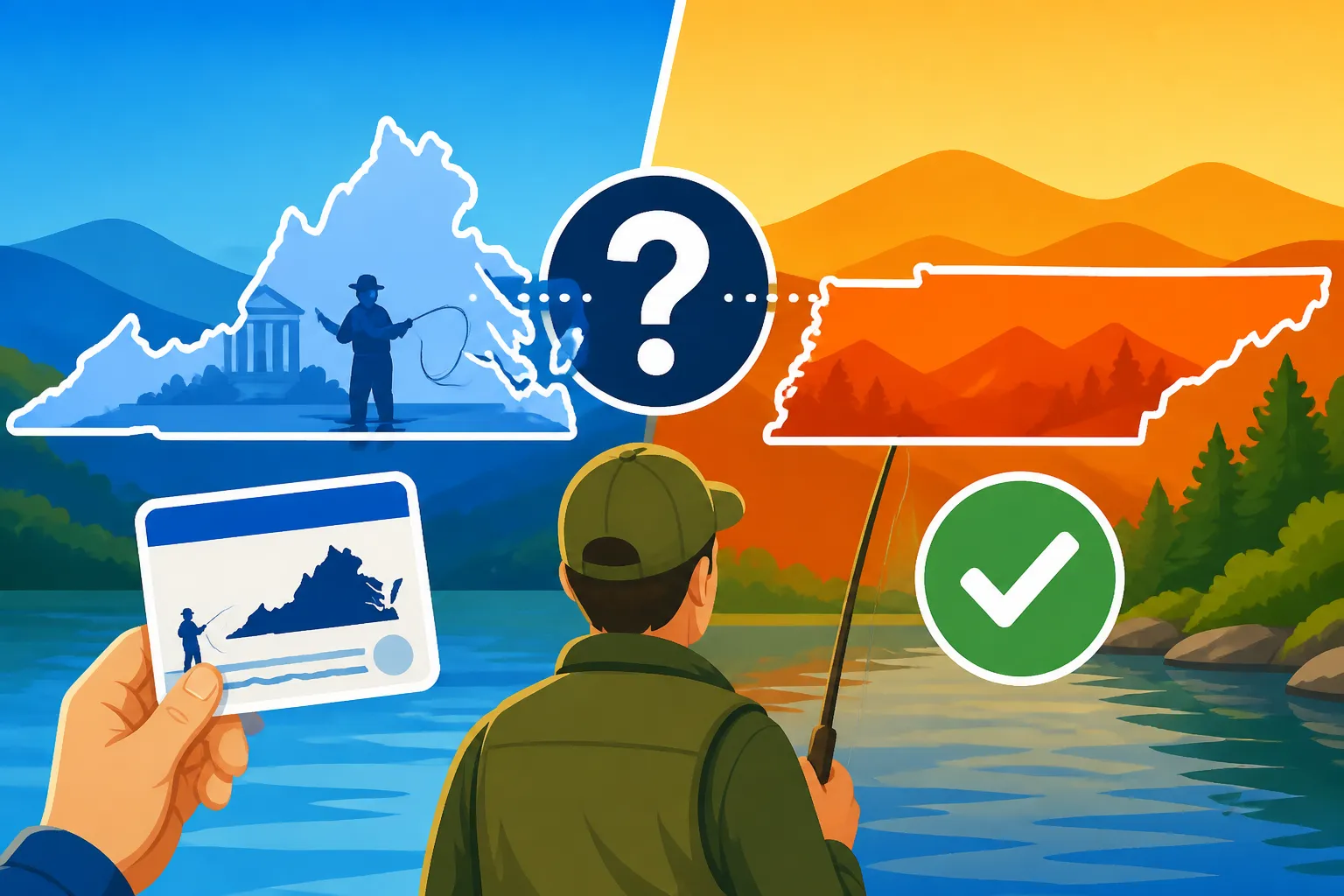
Does Tennessee honor a Virginia fishing license?
It's a really common misconception, and frankly, a frustrating one, when you're planning a fishing trip that spans state lines. Many anglers mistakenly assume that if they hold a valid fishing license in their home state, or even an adjacent one, it automatically grants them permission to cast a line in a neighboring state's waters. Unfortunately, when it comes to Virginia and Tennessee, that's simply not the case, and this guide is here to clear up that confusion and help you navigate the necessary steps to fish legally in both beautiful states.
The Reality of Interstate Fishing Licenses: No Direct Reciprocity
The dream of a single fishing license covering multiple states is appealing, especially for those of us who love to explore different waterways. But the truth is, each state fiercely guards its natural resources and manages its wildlife independently. This means that a fishing license purchased in Virginia, while perfectly valid for all of Virginia's incredible lakes, rivers, and coastal waters, holds no legal weight the moment you cross into Tennessee.
Why Reciprocity is More Complex Than It Seems
States have a vested interest in their fishing license programs. The fees collected from these licenses are the lifeblood of their wildlife and fisheries agencies, directly funding critical conservation efforts, habitat restoration, fish stocking programs, and enforcement activities. If Virginia were to honor a Tennessee license, or vice-versa, without its own license sale, it would essentially be allowing anglers to use its resources without contributing to their upkeep. This financial model is why true reciprocity, where one state's general fishing license is accepted by another, is incredibly rare.
There are a few very specific, often narrowly defined exceptions to this rule, typically involving small stretches of border waters or specific agreements for shared impoundments. For example, some states that share a major river or a large reservoir might have a special reciprocal agreement that allows anglers with a license from either state to fish that specific body of water. However, these are highly specific, often require checking special maps or rules, and absolutely do not extend statewide. For instance, while parts of the Potomac River have some reciprocal agreements, don't assume that applies to all Virginia-Maryland waters, let alone Virginia and Tennessee. The New River, which flows through both Virginia and West Virginia, also has its own set of rules depending on the section, but even then, a Virginia license doesn't let you fish any random river in West Virginia. When it comes to fishing in Tennessee with a Virginia license, or vice versa, no such broad agreement exists for general statewide fishing privileges.
The Legal Requirements for Virginia and Tennessee Anglers
To put it plainly, if you plan to fish in Virginia, you need a valid Virginia fishing license. If you then decide to wet a line in Tennessee, you'll need to purchase a separate, valid Tennessee fishing license. It's really that straightforward. Each state has its own Department of Wildlife Resources (DWR in Virginia, or formerly DGIF) or Wildlife Resources Agency (TWRA in Tennessee), and these agencies have distinct regulations, license types, and enforcement protocols.
Ignoring these rules can lead to some pretty significant headaches and financial penalties. If you're caught fishing in Tennessee without a valid Tennessee license, or in Virginia without a valid Virginia one, you could face fines, court costs, and even the confiscation of your fishing gear. This isn't just a minor slap on the wrist; wildlife officers take these regulations very seriously, as they are crucial for maintaining healthy fish populations and funding conservation efforts. For a deeper dive into what could happen, you might want to read about Penalties for Fishing Without a License in Virginia. Trust me, it's far cheaper and less stressful to buy the correct license upfront.
Navigating Fishing Across State Lines: What You Need to Do
So, you've got your heart set on experiencing the diverse fishing opportunities in both Virginia and Tennessee. Fantastic! But before you load up the truck, it's essential to understand the practical steps you need to take to ensure your trip is legal, enjoyable, and free of any unexpected fines.
Planning Your Multi-State Fishing Adventure
The key to a successful multi-state fishing trip is preparation. Don't just show up and hope for the best. Long before your rod even leaves the case, you should be researching the specific regulations for both states. This means not just checking if you need a license, but also understanding the catch limits, size restrictions, and specific seasons for the species you're targeting in each state. What's legal for largemouth bass in Virginia might be different in Tennessee, or vice-versa. You can find comprehensive information on the Virginia Department of Wildlife Resources (DWR) website and the Tennessee Wildlife Resources Agency (TWRA) website.
Consider your trip duration. Are you just passing through Tennessee for a day or two on your way to a Virginia fishing spot, or are you planning an extended stay in each state? Both states offer various license options, including annual licenses, but also shorter-term permits that might be more cost-effective for a brief visit. For example, Virginia offers Five-day fishing passes for short trips, and Tennessee also has short-term options that cater to tourists or those on a quick stop. These short-term licenses are often a lifesaver for anglers who don't need a full annual permit for a quick cross-state trip. You can even find waterproof regulation books for both states on Amazon to keep handy in your tackle box.
Where to Purchase Your Tennessee Fishing License
Once you've determined you need a Tennessee fishing license, acquiring one is generally quite easy. The Tennessee Wildlife Resources Agency (TWRA) provides several convenient methods for purchase:
- Online: This is often the quickest and most hassle-free method. Visit the official TWRA website, navigate to their license sales portal, and you can purchase your license using a credit card. You'll typically receive an immediate printable copy, which you should carry with you, or have a digital version accessible on your phone. This mirrors the process for How to Buy a Fishing License Online in Virginia.
- Authorized License Agents: Just like Virginia has its network of licensed vendors, Tennessee does too. You can purchase a license in person at various bait and tackle shops, sporting goods stores (like Bass Pro Shops or Academy Sports + Outdoors), county clerk offices, and some Walmarts across the state. These agents can often provide valuable local advice on fishing conditions and hot spots.
- By Phone: Some states offer a phone purchase option. Check the TWRA website or call their main office to see if this is available and what numbers to dial.
When purchasing, you'll need to provide some basic personal information, including your full name, date of birth, physical address, and typically some form of identification. Make sure all your information is accurate to avoid any issues down the line.
Understanding Different License Types and Costs in Tennessee
Just like Virginia, Tennessee offers a range of fishing licenses tailored to different angler needs. The prices can vary significantly between resident and non-resident options, and also depending on the duration of the license.
Here's a general breakdown of what you might encounter when looking for a non-resident Tennessee fishing license, compared to Virginia's typical non-resident options:
| License Type | Virginia Non-Resident (Approx. Cost) | Tennessee Non-Resident (Approx. Cost) | Notes |
|---|---|---|---|
| Annual Freshwater | $47.00 | $50.00 | Covers freshwater fishing for a full year from purchase. |
| Annual Saltwater | $25.00 | N/A (TN is landlocked) | Only applicable for coastal states like Virginia. |
| Annual Combination (FW+SW) | $71.00 | N/A | Again, TN has no saltwater. |
| 5-Day Freshwater | $14.00 | $20.00 | Ideal for short trips, often more cost-effective than an annual. |
| 10-Day Saltwater | $10.00 | N/A | Virginia's popular short-term coastal option. |
| All-Game (Hunting & Fishing) | Not a direct equivalent | $186.00 | Comprehensive license for those doing both. |
| Trout Stamp (additional) | Yes, if targeting stocked trout | Yes, if targeting trout | Required in addition to a general license for trout fishing. |
Note: Prices are approximate and subject to change by state agencies. Always verify current prices on the official DWR and TWRA websites.
As you can see, the Typical Nonresident Fishing License Fees for each state are quite specific. A Nonresident Freshwater Fishing License in Virginia might be slightly less than Tennessee's equivalent, but it's important to look at the short-term options if your visit is brief. If you're planning on fishing for species that require special permits, like trout, remember to budget for the additional trout stamp on top of your general fishing license in both states. You might even find useful guides or tackle organizers on Amazon to help keep your permits and gear in order, which is always a smart move.
Common Misconceptions and Smart Angler Practices
It's easy to fall into traps of misinformation, especially when rules seem to differ from one place to another. Let's clear up some common myths and reinforce some best practices that will serve you well, no matter where your fishing adventures take you.
The "Adjacent Waters" Myth and Border Rivers
One of the most persistent myths is that if two states share a border, particularly along a river or lake, then a license from either state is sufficient. While there are a very few specific exceptions for certain designated border waters (like the main stem of the Potomac River between Maryland and Virginia, or the reciprocal agreement on the Staunton River/Buggs Island Lake for some sections between Virginia and North Carolina), this is generally not the case for the vast majority of shared waters.
For instance, the New River flows through both Virginia and Tennessee. It’s an incredible fishery, but don't assume your Virginia license covers you once you cross into Tennessee territory. Each state manages its own portion, and you will need the appropriate state-specific license to fish in their respective sections. Wildlife officers from both states frequently patrol these border areas, and they know exactly where the lines are drawn. Enforcement isn't just about catching someone on the wrong side of a river; it's about ensuring everyone contributes to the conservation efforts that keep those waters healthy and vibrant. It's really vital to check the specific regulations for any particular body of water you intend to fish, especially if it straddles a state line. For more on this, you can check out details on Fishing License Reciprocity Between Virginia and Neighboring States.
The Importance of Always Carrying Your License
This might seem like a no-brainer, but you'd be surprised how many anglers get caught without their license because they left it in the truck, or thought a picture on their phone was sufficient (it often is, but having a physical backup or ensuring it's clearly visible and accessible is key). Whether you're fishing from the bank, a pier, or a boat, a game warden or wildlife officer can and will ask to see your license.
If you're caught without a valid license, even if you just forgot it at home, the consequences can range from a warning (rare) to a hefty fine, and potentially even the confiscation of your gear. The fines for fishing without a license are often much higher than the cost of the license itself, making it a very expensive oversight. Imagine getting a ticket that's hundreds of dollars just because your license was misplaced. That would definitely ruin a peaceful day on the water. For more information on what to expect, refer to What happens if you get caught fishing without a license. Always keep it with you, preferably in a waterproof wallet or case. Consider checking retailers like Amazon for state-specific regulation books if you prefer a physical copy over digital.
Staying Informed with State Regulations
Fishing regulations aren't static; they change. Seasons, bag limits, and size restrictions can be updated annually, or even mid-season, based on biological data, conservation needs, and public input. Relying on outdated information from a few years ago, or even what a friend told you, could land you in hot water.
Always make it a habit to check the official Virginia Department of Wildlife Resources (DWR) and Tennessee Wildlife Resources Agency (TWRA) websites before each fishing season or before heading to a new body of water. These sites will have the most up-to-date information, including digital versions of their regulation pamphlets, which you can often download to your phone. Many states also offer physical pamphlets at license vendors and DWR/TWRA offices. For a comprehensive overview of what to look out for, brush up on your Virginia Fishing Rules Every Angler Should Know. Staying informed is not just about avoiding fines; it's about being a responsible angler who contributes to the long-term health of our fisheries. A small investment of time in checking the rules can save you a lot of grief and ensure you're part of the solution, not the problem.
Disclaimer
Please remember that fishing regulations and license requirements can change. Always consult the official Virginia Department of Wildlife Resources (DWR) and Tennessee Wildlife Resources Agency (TWRA) websites or contact their offices directly for the most current and accurate information before planning your fishing trip.