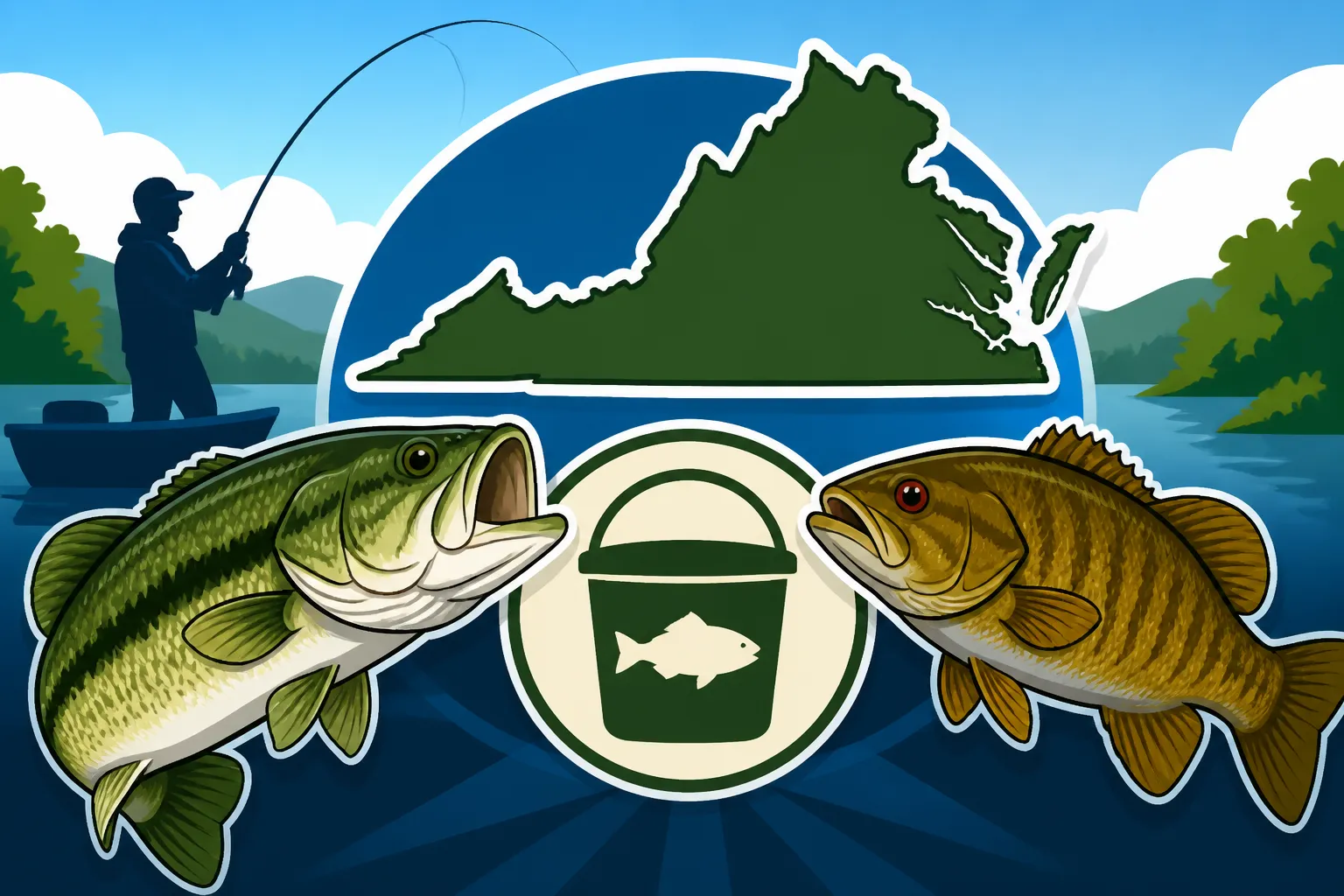
Largemouth and smallmouth bass count toward the same daily limit in Virginia
It can be incredibly confusing out there on the water, can't it? You've got your rod and reel, you're ready to catch some bass, but then you start wondering: "Wait, do I need to keep track of how many largemouth versus smallmouth I'm catching?" This guide is here to clear up that common frustration, explaining Virginia's straightforward rule that both largemouth and smallmouth bass count toward the same daily limit.
Understanding Virginia's Unified Bass Limit
For many anglers, especially those just getting into the sport or visiting from out of state, the idea of different species falling under a single regulation can be a bit of a head-scratcher. You might be used to places with separate limits for different types of bass. But in Virginia, when it comes to the popular largemouth and smallmouth bass, the Department of Wildlife Resources (DWR) has implemented a unified daily creel limit, meaning they're essentially treated as one category when you're counting your catch for the day. This approach isn't just arbitrary; it's rooted in practical conservation and management.
Why a Combined Limit Exists
You might be asking why Virginia would choose to group these distinct species together. The primary reason boils down to effective management and simplifying the rules for anglers. Imagine trying to quickly and accurately identify a bass species in the heat of the moment, especially if you're a beginner or fishing in low light. It can be tough! By combining largemouth and smallmouth into one daily limit, the DWR streamlines enforcement and reduces the chance of accidental violations. This rule helps manage the overall harvest pressure on both species, ensuring that Virginia's bass populations remain healthy and abundant for future generations.
From a conservation standpoint, managing the aggregate bass population rather than micromanaging each species individually allows for a more robust and adaptable framework. It acknowledges that while these species have different habitats and behaviors, they often coexist and contribute to the overall sport fishery. This holistic view helps biologists maintain a balanced ecosystem. Plus, it makes life a little easier for us anglers. When you're out there enjoying the natural beauty of a lake or river, the last thing you want is to be constantly second-guessing your fish identification, worrying about separate limits for similar-looking fish. This unified approach frees you up to focus on the thrill of the catch.
The Specifics of the Daily Creel Limit
So, what does this combined limit actually mean for you, the angler? In Virginia, the statewide daily creel limit for black bass (which includes both largemouth and smallmouth bass) is generally five fish total per person. This means you can catch any combination of largemouth and smallmouth bass, as long as the total number you keep does not exceed five. For example, if you catch three largemouth bass and two smallmouth bass, you've reached your daily limit. Alternatively, you could keep five largemouth bass and zero smallmouth, or vice-versa. The key is that the sum of the two species cannot go over five.
It's crucial to understand that this is a daily limit. Once you've kept your five bass, you must cease fishing for those species for the remainder of that day. The possession limit is usually the same as the daily creel limit, meaning you can't have more than five bass in your possession at any given time, regardless of how many days you've been fishing. This prevents anglers from accumulating a large number of fish over several days, which could put undue pressure on the population. Always remember that these are the general rules, and as we'll discuss, local regulations can sometimes introduce additional complexities. For a deeper dive into the broader regulations, check out our comprehensive guide on Virginia Fishing Regulations Explained.
Navigating Special Regulations and Exceptions
While the statewide daily limit of five combined largemouth and smallmouth bass is a good general rule of thumb, it's never quite that simple, is it? Virginia's diverse waterways mean that local conditions and specific conservation goals often lead to special regulations that can differ from the general statewide guidelines. It's a real headache for anglers who just want to enjoy their time on the water, but these rules are put in place to protect the unique fisheries in different lakes and rivers.
Local Lake and River Slot Limits
This is where things can get a little tricky for anglers, and honestly, it's one of the biggest frustrations. While the statewide rule is 5 bass total, many popular fishing spots in Virginia have what are called "slot limits" or other specific size restrictions that apply to largemouth and smallmouth bass. A slot limit means you can keep fish below a certain size and above another size, but not within the "slot" (e.g., you can keep fish under 12 inches and over 15 inches, but not those between 12 and 15 inches). These are designed to protect medium-sized, reproductively active fish, allowing them to grow larger and contribute to future generations.
For example, certain lakes might have a slot limit where all bass between, say, 14 and 18 inches, must be immediately released. In such a scenario, your five-fish daily limit would then consist only of fish caught outside that slot. This adds a layer of complexity to the general 5-fish rule, making it essential to know the specific regulations for the particular body of water you're fishing. Famous bass fishing destinations like Smith Mountain Lake or Lake Anna often have specific rules in place to manage their trophy fisheries, so what applies in one place might not apply in another. These special regulations are critical for maintaining healthy fish populations and ensuring sustainable angling opportunities, especially when considering Statewide Bass Fishing Limits in Virginia versus local nuances. To understand more about these variations, you might find our article on Special Slot Limits on Certain Virginia Waters particularly helpful.
Here's a quick look at how typical bass regulations might compare:
| Regulation Type | Daily Limit (Total Bass) | Statewide Length Limit | Example Local Slot Limit |
|---|---|---|---|
| Statewide General Rule | 5 | None (unless specified) | N/A |
| Example Lake A | 5 | 1 Fish Over 20 inches | N/A |
| Example Lake B | 5 | All fish between 12-15" released | 1 fish over 20" allowed |
Note: Always verify current regulations for specific bodies of water before fishing.
The Importance of Checking Local DWR Resources
This brings us to one of the most vital pieces of advice for any angler in Virginia: always check the current regulations for the specific body of water you plan to fish before you go. The Virginia Department of Wildlife Resources (DWR) is your absolute best friend here. Their website is a treasure trove of information, providing up-to-date fishing guides, maps, and specific regulations for almost every lake, river, and impoundment in the state. Relying solely on a general statewide rule can get you into trouble, as local exceptions, especially concerning size restrictions or slot limits, are quite common.
Think of it this way: you wouldn't head out on a road trip without checking traffic or directions, right? The same goes for fishing. Before you pack your tackle box and head to your favorite spot, take a few minutes to visit the DWR website or grab a copy of their annual fishing regulations booklet. These resources will tell you if Is there a statewide length limit on bass in Virginia? or more importantly, if the lake you're targeting has any specific rules you need to be aware of. They'll detail catch limits, length limits, and any special bait restrictions. Many anglers even download the DWR Go Outdoors VA app to have regulations handy on their phone, which is a fantastic idea. Being prepared not only keeps you compliant with the law but also helps support the DWR's conservation efforts, which are funded in part by license sales. Learning Why some Virginia waters have special bass length rules can give you a better appreciation for the science behind these regulations too.
Practical Tips for Responsible Bass Angling in Virginia
Beyond just understanding the regulations, being a responsible angler in Virginia means embracing practices that help sustain the fishery for everyone. It’s about more than just numbers; it’s about respect for the fish and the environment. These practical tips can make your fishing trips more successful and ensure you're contributing positively to Virginia's fantastic bass populations.
Identifying Largemouth Versus Smallmouth on the Water
Even though they count towards the same daily limit, being able to distinguish between a largemouth and a smallmouth bass on the water is a skill every Virginia angler should cultivate. Not only does it deepen your understanding of the species you're targeting, but it's also essential for complying with any specific local slot limits that might differentiate between the two. The differences aren't always obvious at first glance, especially when a fish is thrashing, but with a little practice, you'll get the hang of it.
Here are the key things to look for:
- Jaw Line: This is often the easiest tell. For a largemouth bass, if you close its mouth, the corner of its jaw (maxillary) will extend past the back of its eye. For a smallmouth bass, the jaw typically does not extend past the eye. This is a dead giveaway most of the time.
- Dorsal Fin: Largemouth bass have a very deep, distinct notch in their dorsal fin, almost making it look like two separate fins. Smallmouth bass, on the other hand, have a much shallower, more continuous dorsal fin.
- Coloration and Pattern: Largemouth tend to have a pronounced dark, irregular lateral line running down their side, often looking like a jagged stripe or a series of blotches. Their overall color can vary from dark green to almost black on the back, fading to white on the belly. Smallmouth bass generally have vertical bars or splotches on their sides, rather than a solid lateral line, and they often have reddish eyes. Their overall color is typically more bronze or brown.
- Body Shape: Largemouth tend to be a bit more "football" shaped, often thicker through the body, while smallmouth are usually more streamlined and torpedo-shaped, indicative of their preference for moving water.
Practicing identification with photos or even a simple waterproof fish identification card (many helpful guides are available on Amazon) can really boost your confidence. Knowing what you've caught will also help you select the right lure on future trips, as smallmouth and largemouth often respond to different presentations. For more specific guidance, check out our dedicated articles on How to Identify a Largemouth Bass in Virginia and How to Identify a Smallmouth Bass in Virginia.
Catch and Release Best Practices
Even if you plan to keep a few bass for dinner within your five-fish limit, practicing proper catch and release for fish you aren't keeping – especially those that fall within a protected slot limit – is paramount. A poorly handled fish, even if released, might not survive. We want those fish to swim away strong, ready to fight another day and contribute to future spawning.
Here are some best practices to follow:
- Handle with Wet Hands: Always wet your hands before touching a fish. Dry hands can remove the fish's protective slime coat, leaving it vulnerable to infection.
- Minimize Air Exposure: Keep the fish in the water as much as possible. If you must remove it for a quick photo or de-hooking, do so for the shortest time possible.
- Support the Fish Properly: When holding a bass, support its entire body, especially if it's a larger fish. Avoid holding it by the jaw alone, as this can damage its jaw and internal organs, particularly in bigger, heavier bass. A good fish gripper or a large net can help with safe handling. Many anglers find durable, floating measuring boards (like those found on Amazon) to be incredibly useful for quickly measuring their catch without unnecessary stress on the fish.
- Use Barbless Hooks (if practical): Barbless hooks or crushing the barb on your hooks makes de-hooking much easier and less damaging to the fish.
- Use De-hooking Tools: Keep a pair of long-nosed pliers or a dedicated de-hooking tool handy. This allows you to remove hooks quickly and efficiently, especially if the fish has swallowed the hook.
- Revive If Necessary: If a fish seems sluggish after being released, gently hold it in the water, facing into the current, until it regains its strength and swims away on its own.
By following these simple steps, you're not just being a "good sport"; you're actively participating in the conservation efforts that make Virginia one of the best fishing destinations.
Understanding the Broader Impact of Regulations
It's easy to see fishing regulations as just a list of rules designed to make our lives harder, but they serve a much larger purpose. Every single regulation, from the unified bass limit to specific slot sizes on certain lakes, is a carefully considered measure to ensure the long-term health and sustainability of Virginia's fisheries. The DWR uses scientific data, angler surveys, and ecological studies to determine these rules, aiming to balance recreational opportunities with the imperative of conservation.
When you purchase a fishing license, you're directly contributing to these efforts. Your license fees help fund habitat restoration projects, fish stocking programs, scientific research, and the enforcement of regulations that protect fish populations. This is why understanding and adhering to guidelines like the Virginia Fishing License Guide or knowing How to Get a Fishing License in Virginia are more than just legal requirements; they're acts of stewardship. By respecting the combined bass limit and any special local rules, you're playing an active role in preserving the fantastic fishing opportunities that Virginia offers, ensuring that future generations can experience the same joy of reeling in a beautiful largemouth or smallmouth bass. Whether you're targeting a trophy on one of the Best Bass Fishing Lakes in Virginia or just enjoying a quiet afternoon, your actions matter.
Disclaimer
The information provided in this guide is for general informational purposes only and is subject to change. Fishing regulations in Virginia can be complex and are frequently updated by the Department of Wildlife Resources (DWR). Always consult the official Virginia DWR website or their current annual fishing regulations booklet before you go fishing to ensure you have the most accurate and up-to-date information for your specific fishing location and target species. Failure to comply with regulations can result in fines and penalties.