How to Identify a Smallmouth Bass in Virginia
Have you ever reeled in a hard-fighting bass in a Virginia river or lake, convinced it was a largemouth, only to later wonder if it was actually a smallmouth? It’s a common mix-up, and honestly, these bronze beauties can be quite deceptive! This guide is here to untangle the mystery, giving you all the clear, tell-tale signs to confidently identify a smallmouth bass in Virginia waters, so you'll always know exactly what you've got on the end of your line.
The Importance of Accurate Smallmouth Bass Identification in Virginia
Let's be real, many of us started out calling every bass a "bass." It’s easy to do, especially when you’re caught up in the excitement of a tug on the line. But as you spend more time on Virginia’s incredible waterways, from its rushing rivers to its expansive lakes, you quickly learn that not all bass are created equal. Knowing the difference between a smallmouth and its cousins isn't just about bragging rights; it's genuinely important for a few key reasons.
Why Anglers Need to Know Their Bass
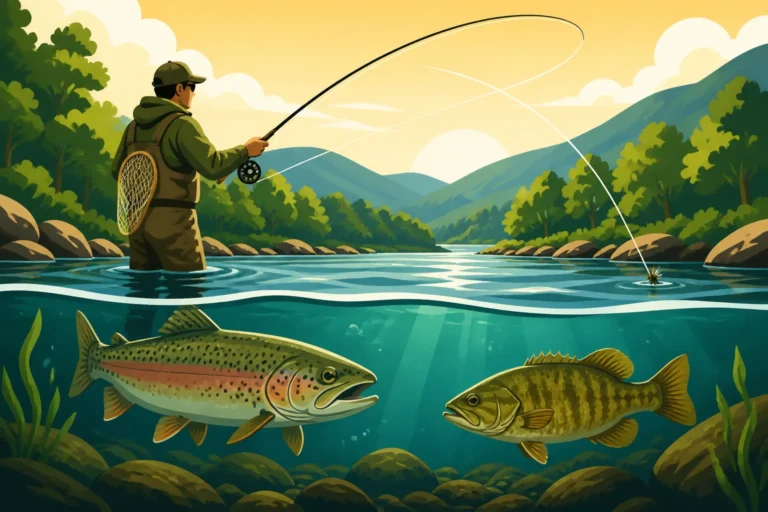
First and foremost, understanding which species of bass you've caught can be crucial for staying on the right side of the law. Virginia, like many states, often has different regulations for different fish. Imagine you’re out on the Shenandoah River Fly Fishing for Trout and Smallmouth Bass in Virginia, and you've had an incredible day. You might assume all bass limits are the same, but that’s rarely the case. Catch limits, size restrictions (often called "slot limits"), and even specific seasons can vary significantly between largemouth, smallmouth, and other bass species. Mistaking a smallmouth for a largemouth, or vice-versa, could lead to accidentally violating a regulation, and nobody wants that kind of trouble with a Virginia game warden. You can find comprehensive details on these regulations by checking out resources like Virginia Bass Fishing: Largemouth, Smallmouth, Spotted, and Alabama Bass.
Beyond the regulations, accurate identification also plays a vital role in conservation efforts. When you participate in angler surveys, or if an agency biologist is collecting data, knowing exactly what you’ve caught contributes to more accurate population monitoring. This data helps wildlife agencies make informed decisions about managing fisheries, ensuring that future generations of anglers can enjoy the same fantastic fishing opportunities we have today. It's like being a citizen scientist every time you hit the water!
Finally, there’s the sheer satisfaction of knowing. There’s a distinct pride in being able to confidently identify your catch, understanding its unique biology, and appreciating the fight it gave you. When you truly grasp the subtle differences, it deepens your connection to the sport and the natural world around you. It turns a simple fishing trip into a more educated and rewarding experience.
The Challenges of Telling Bass Apart
Now, if you've ever felt a bit stumped trying to tell one bass from another, you’re definitely not alone. It’s a common frustration, and there are legitimate reasons why these fish can be tricky. All members of the Micropterus genus (which includes bass) share enough common traits to make casual identification difficult. They're all generally robust, often dark-backed with lighter bellies, and boast powerful fins. Their basic torpedo-like shape is also quite similar at a glance.
Adding to the confusion is the possibility of hybridization. While not super common, bass species can sometimes cross-breed, particularly if their habitats overlap or if they’re stocked together. These hybrids can display a mix of characteristics from both parent species, creating a veritable identification puzzle. It’s like trying to tell two siblings apart when they’ve got features from both mom and dad – sometimes, it’s just tough!
Environmental factors can also play a sneaky role in how a fish looks. The coloration of any fish can vary based on the water clarity, the color of the bottom substrate, and even the fish's stress levels. A smallmouth pulled from dark, tannin-stained water might appear much darker and less bronze than one from a clear, rocky river. Similarly, fish under stress (like after a long fight) can sometimes "wash out" their colors, making their markings less distinct. Even the angle of the light and the condition of the fish's scales can alter its perceived appearance. So, while you might hear about "classic" smallmouth colors, remember there's a spectrum out there.
Distinct Physical Characteristics of the Smallmouth Bass
Alright, let's get down to the nitty-gritty, the hands-on detective work of identifying a smallmouth bass. When you pull one of these feisty fish from the water, there are a few key features that, once you know them, will make identification much clearer. Forget the guesswork; these are your go-to clues.
Mouth Size and Jawline: The Easiest Clue
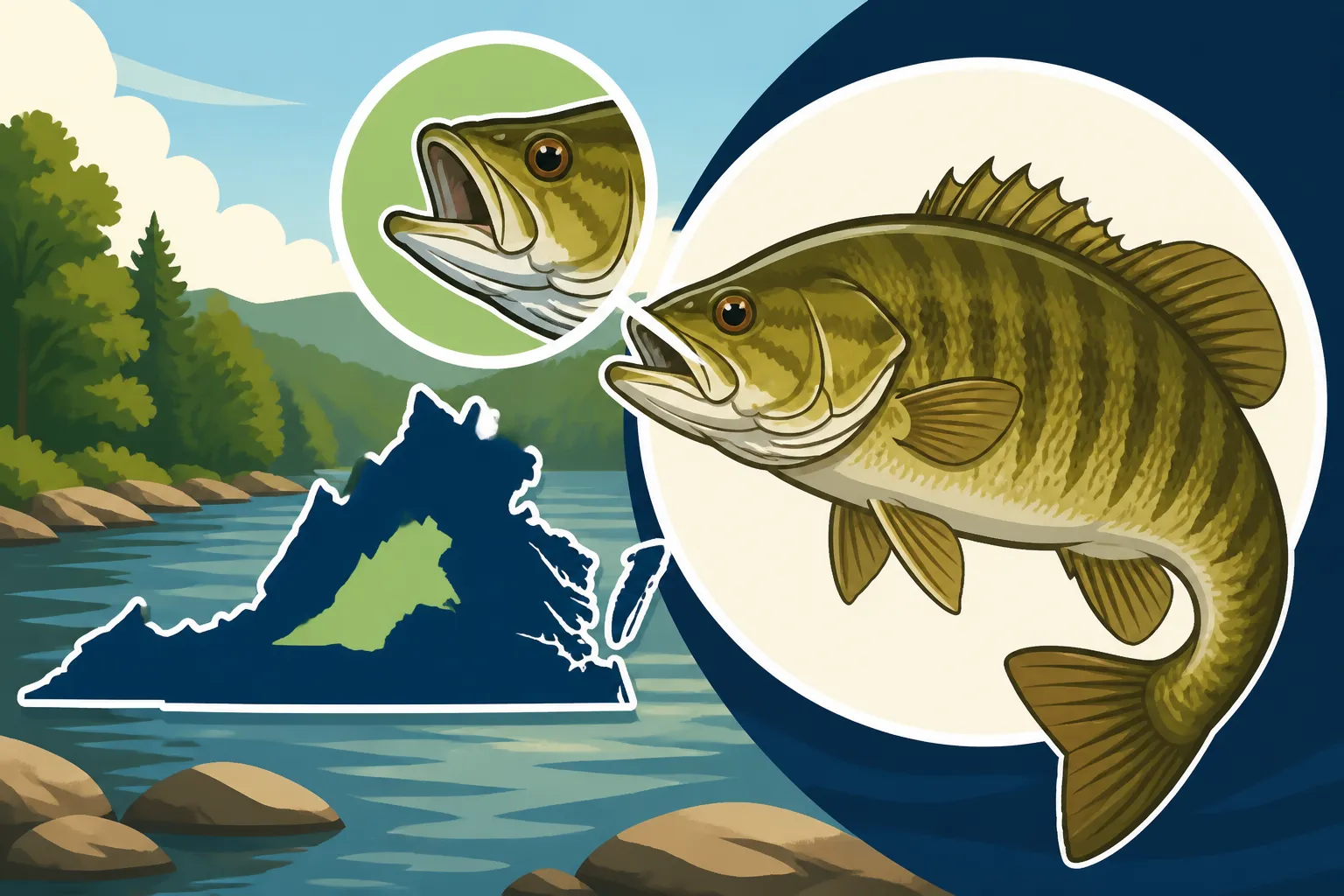
If there’s one golden rule for telling a smallmouth apart from a largemouth, it’s all about the jaw. This is arguably the most reliable and easiest-to-spot characteristic, even for beginners. When you gently close the fish’s mouth, observe where the upper jaw (specifically, the maxilla, which is the bone running along the side of the upper jaw) ends relative to its eye.
For a smallmouth bass, that upper jaw will not extend beyond the back of the eye. In fact, it usually ends directly beneath the middle or front of the eye, sometimes just reaching the back edge. It creates a more compact, "small-mouthed" appearance, which is, quite fittingly, how they got their name! This is a consistent trait, regardless of the fish's size or color. It's an anatomical fact, so no matter how excited you are, take a moment to check this detail.
Now, contrast that with a largemouth bass, whose jaw famously extends well past the back of its eye, sometimes even to the gill plate. This difference is so pronounced that once you've seen it a few times, it becomes second nature. So, next time you're holding a bass, before you do anything else, check that jawline! It’s your primary piece of evidence in the case of bass identification.
Coloration and Markings: Beyond the "Brown Bass" Stereotype
While the jaw is king, a smallmouth’s coloration and markings are often what first catch an angler’s eye, giving them that distinct "bronze" or "brown bass" reputation. The base color of a smallmouth bass is typically some shade of brown, bronze, or golden-olive, which can be absolutely stunning in clear water. This vibrant hue usually fades down to a creamy white or yellowish belly, creating a beautiful contrast. The intensity of this coloration can vary significantly based on the water clarity and substrate color, as we discussed earlier.
What truly sets their markings apart are the distinct vertical bars or blotches along their sides. Instead of the solid, pronounced lateral line you’d expect on a largemouth bass, smallmouth often display a series of broken, vertical bands that sometimes look like tiger stripes. These markings can range from very faint to quite bold, but they are almost always present in some form, providing a camouflaged appearance in rocky, riverine environments. Observing these vertical patterns versus a single horizontal stripe is a strong secondary identifier.
Another subtle but often striking feature is their eye color. Many smallmouth bass have eyes that are noticeably red or reddish-orange, especially when caught from clear, healthy waters. This isn't a guaranteed feature, as it can vary, but if you see those fiery eyes paired with the other traits, you're almost certainly looking at a smallmouth. Combine these visual cues with the jawline check, and your confidence in identification will skyrocket.
Dorsal Fin and Scales: Subtler but Important Details
While not as immediately obvious as the jawline or color patterns, paying attention to the dorsal fin and scales can offer additional confirmation, especially when dealing with fish that might be slightly ambiguous. The dorsal fin, located on the fish’s back, is composed of two parts: a spiny front section and a soft-rayed rear section. In a smallmouth bass, these two parts are typically connected, forming a continuous, relatively smooth-looking fin. There isn't a deep, noticeable notch separating the spiny and soft sections.
This continuous dorsal fin stands in contrast to the largemouth bass, which has a deeply notched dorsal fin that appears almost, or sometimes completely, separated into two distinct fins. It's a detail that might require a closer look, but it's a consistent anatomical difference that helps solidify your identification.
As for scales, smallmouth bass generally have smaller, more uniform scales across their body compared to the larger, more irregularly sized scales often found on largemouth bass. Again, this isn't a primary identifier and might be hard to judge quickly on the water, but it's another piece of the puzzle. Their overall body shape is also typically more streamlined and somewhat torpedo-shaped, a design built for navigating and holding position in flowing currents. This sleek profile, coupled with their strong fins, makes them incredible fighters, known for their acrobatic jumps and powerful runs.
Habitat and Behavior: Where and How Smallmouth Bass Live in Virginia
Beyond their physical appearance, understanding where and how smallmouth bass live in Virginia offers another crucial layer of identification. These fish aren’t just defined by their looks; their entire lifestyle is tailored to specific environments, and knowing these preferences can help you predict where you’re likely to encounter them.
Preferred Habitats: Current, Rocks, and Cooler Waters
If you want to find a smallmouth bass, think moving water, rocky structures, and cooler temperatures. Smallmouth are truly the kings of the current, thriving in the riffles, runs, and eddies of Virginia’s numerous rivers and streams. Iconic Virginia rivers like the Shenandoah and the upper James River are prime examples of this preferred habitat. They love to ambush prey from behind submerged rocks, boulders, and gravel beds where they can expend less energy fighting the current. If you're wading a river and find yourself surrounded by baseball-to-boulder-sized rocks and a good flow, you're probably in smallmouth territory. For more specific location tips, check out How to Catch Smallmouth Bass in Rivers.
They also do exceptionally well in clear, cool lakes that mimic these riverine conditions, offering plenty of rocky bottoms, ledges, and submerged structures. Places like Claytor Lake are renowned for their smallmouth fisheries, largely due to their deep, clear, and rocky characteristics. Unlike largemouth bass, which often prefer the warmer, weedier, and calmer waters of ponds and lower-gradient lakes, smallmouth bass are adapted to environments with higher dissolved oxygen levels and more consistent flow, often necessitating cooler water temperatures. They thrive in temperatures roughly between 60 and 75 degrees Fahrenheit, shying away from the stagnant, bathwater conditions that might attract a largemouth. This strong preference for specific environments is why identifying the fish's habitat is as important as its physical features. Claytor Lake's Diverse Virginia Fish Species Guide offers more insights into the species found there.
Feeding Habits and Lure Preferences
Smallmouth bass are opportunistic predators with a diet that's heavily influenced by their rocky, current-rich habitats. Crayfish are absolutely a staple in their diet, making them suckers for lures that mimic these crustaceans. Beyond crayfish, they'll eagerly feast on various minnows, shiners, darters, and even insects that fall into the water or hatch from the bottom. This diverse diet means they're not too picky, but they do have preferences that can tell you a lot about them.
Their aggressive nature is legendary. Smallmouth are known for their powerful strikes, often hitting lures with a jarring force, and then putting on an incredible aerial display, jumping and thrashing their heads to throw the hook. This acrobatic fight, especially when they're hooked in a river current, is one of the reasons they're such a beloved sport fish. You can tell a lot about a fish by how it fights, and a smallmouth's tenacity is a dead giveaway.
Given their diet and aggressive feeding style, certain lures are particularly effective. Jigs, especially those mimicking crayfish, are perennial favorites. Small crankbaits, spinnerbaits, and topwater plugs (especially in low light conditions) can also be incredibly effective. Soft plastics, rigged to imitate baitfish or crayfish, are another go-to. If you’re looking to stock up on some of these versatile smallmouth lures, a quick search on Amazon for "smallmouth bass lures" will give you plenty of options that these fish find irresistible. For more specific recommendations, check out Best Lures for Smallmouth Bass on the Shenandoah River.
Seasonal Movements and Spawning Behavior
Understanding the seasonal movements and spawning behavior of smallmouth bass provides even more clues to their identity and whereabouts. As temperatures change throughout the year, smallmouth adjust their locations and activity levels, much like any other fish. In the spring, as water temperatures creep into the 58-65°F range, smallmouth move into shallower, rocky areas in rivers and lake tributaries to begin their spawning ritual. Males will meticulously fan out circular nests on gravel or rocky bottoms, aggressively guarding them against intruders. During this time, they are often more visible and can be caught defending their territories.
After the spawn, as the weather warms and enters summer, smallmouth typically disperse. In rivers, they'll often hold in deeper current breaks, behind large boulders, or in the seams where faster water meets slower water. In lakes, they'll seek out submerged rock piles, ledges, and transition areas between shallow and deep water, always preferring clean, oxygenated environments. They're still active feeders but will often move to deeper haunts during the heat of the day.
As fall approaches and water temperatures begin to cool, smallmouth typically go on a feeding frenzy, bulking up for the leaner winter months. They’ll often be found near deeper structure, ambushing baitfish. In winter, their metabolism slows down, and they'll retreat to the deepest, slowest pools in rivers or the deep main lake basins, often congregating in large schools near vertical structure. Knowing these patterns helps you not only identify the fish you’re after but also understand why they're in a particular spot.
How to Distinguish Smallmouth from Common Look-Alikes
Here’s where it gets interesting – and sometimes a little frustrating! Virginia's waters are home to several bass species, and some of them bear a striking resemblance to the smallmouth. Learning to differentiate them is key to truly mastering bass identification. Don't worry, we'll break down the most common imposters.
Smallmouth Bass vs. Largemouth Bass
This is perhaps the most common identification challenge anglers face. We've touched on it already, but let's recap and solidify the differences between the smallmouth and its chunkier cousin, the largemouth bass.
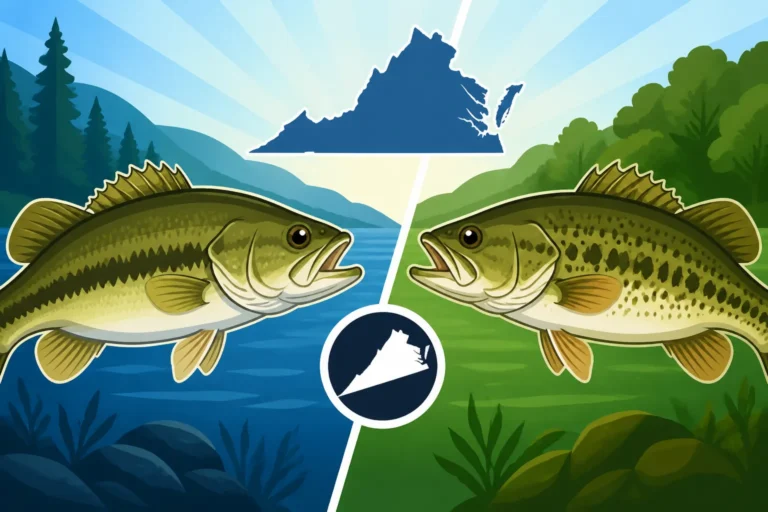
The absolute primary differentiator, as we discussed, is the jawline. On a smallmouth, the upper jaw will not extend past the back of its eye when closed. For a largemouth, that jaw goes way back, well past the eye. This one feature alone can solve most of your identification dilemmas.
Next, look at the lateral line. Largemouth bass are famous for their distinct, often solid, dark horizontal stripe running down their side. It's usually very noticeable. Smallmouth, on the other hand, typically have vertical bars or blotches, creating a broken pattern rather than a continuous line. Sometimes these vertical markings can be very subtle, but they are almost never a solid horizontal stripe like a largemouth's.
Then there's the dorsal fin. Remember how the smallmouth's dorsal fin is connected and continuous? The largemouth bass has a much more pronounced, deep notch in its dorsal fin, making it look almost like two separate fins. This is a subtle but consistent anatomical difference.
Finally, consider their typical body shape and preferred habitat. Largemouth are generally stockier, deeper-bodied fish, built for lurking in dense cover like weeds, lily pads, and submerged timber in warmer, calmer waters. Smallmouth are more streamlined, often bronze, and thrive in rocky, cooler, flowing water. If you’re pulling a fish from a thick weed bed in a warm pond, chances are it’s a largemouth. If it’s from a rocky river rapid, smallmouth is a strong bet. You can dive deeper into this comparison with Largemouth Bass vs Smallmouth Bass: Which Is Harder to Catch?.
Smallmouth Bass vs. Spotted Bass
The spotted bass is another species that can sometimes throw anglers for a loop, as it shares characteristics with both largemouth and smallmouth bass. They are often found in similar riverine habitats as smallmouth, which adds to the confusion.
When looking at the mouth, the spotted bass’s upper jaw is somewhat intermediate. It might extend slightly past the back of the eye, but generally not as far back as a largemouth's. It's often right at the back of the eye or just a hair beyond. This can be tricky, so don't rely solely on this.
The key identifier for spotted bass is their lateral line and texture. While they don't have the distinct solid stripe of a largemouth, they often have horizontal rows of small, dark spots below their main lateral line. These spots are usually quite prominent and give them a "spotted" appearance on their belly and lower sides. More importantly, if you can get a finger in their mouth (carefully!), a spotted bass often has a distinctive rough patch of teeth on its tongue. This is a very reliable identifier that neither largemouth nor smallmouth possess.
Like smallmouth, spotted bass typically have a connected dorsal fin, without the deep notch characteristic of a largemouth. Their body shape is also generally more streamlined than a largemouth. Spotted bass tend to tolerate slightly warmer and more turbid (cloudier) waters than smallmouth, though their preferred habitats often overlap in Virginia rivers. Learning the nuances between these two can be challenging, but the tongue patch is your secret weapon. For more details, check out Spotted Bass vs Largemouth Bass: How Virginia Anglers Tell Them Apart.
Smallmouth Bass vs. Rock Bass
Ah, the rock bass! This little fighter is often mistaken for a juvenile smallmouth, especially by anglers new to river fishing. While they are both part of the sunfish family, they are distinctly different species.
The most immediate clue is size. Rock bass are generally much smaller than smallmouth bass, rarely exceeding 10-12 inches, even in mature populations. A "trophy" rock bass would be a decent-sized smallmouth! So, if you catch a little "bass" that has all the fight of a smallmouth but is clearly not going to reach dinner-plate size, it might just be a rock bass.
Next, look at their eyes. Rock bass are famous for their very large, often prominent red eyes that seem almost too big for their heads. While smallmouth can have reddish eyes, the rock bass's eyes are disproportionately large and intensely red.
Their body shape is also different. Rock bass are much more "panfish-shaped," meaning they have a deeper, more compressed body, giving them a stockier, less streamlined appearance than a smallmouth. Their overall coloration tends to be a mottled, darker pattern, often with irregular blotches, without the distinct vertical bars of a smallmouth. A more technical (and perhaps less practical on the water) identifier is the number of anal fin rays: rock bass typically have 5-7 spines in their anal fin, whereas smallmouth bass only have 3. If you’re encountering these feisty little fish frequently, you might be interested in reading Rock Bass: The Overlooked Panfish-Sized Bass in Virginia Waters.
Best Practices for Confident Identification in Virginia
Even with all the knowledge in the world, sometimes a fish just looks a little "off." That's okay! Fishing is full of surprises, and nature loves to throw us curveballs. The trick to becoming a truly confident identifier is to use a combination of clues and, most importantly, to keep learning and practicing.
Combining Clues for Certainty
Think of fish identification like being a detective. You wouldn't rely on just one piece of evidence to solve a case, would you? The same goes for identifying bass. Don't just look at the jaw, or just the color. Instead, combine all the clues you've learned. Does the jawline match a smallmouth? Are there vertical bars instead of a solid lateral line? Is the dorsal fin continuous? Are you fishing in classic smallmouth habitat – say, a cool, rocky river with good current? When multiple pieces of evidence point to "smallmouth," you can be much more confident in your conclusion.
It’s also incredibly helpful to have a good reference guide. A compact, waterproof fish identification book (you can find excellent ones on Amazon that fit right into a tackle box or vest) can be an invaluable tool. Flip to the bass section, look at the illustrations, and compare directly to your catch. Many seasoned anglers keep one handy because even they encounter unusual specimens. Plus, the more you practice identifying fish, the quicker and more intuitive it becomes. You'll start noticing the subtle differences without even consciously thinking about them! For more general tips, check out Smallmouth Bass Identification Guide for Anglers.
Regional Variations in Appearance
One of the fascinating aspects of fishing in a diverse state like Virginia is seeing how fish can vary slightly from one body of water to another. While the core identifying features of a smallmouth bass remain constant (like that jawline!), their appearance can be influenced by local environmental conditions.
For example, a smallmouth bass caught from the crystal-clear, rocky waters of a mountain stream might exhibit a much brighter, more vibrant bronze or golden coloration with very distinct vertical bars. Its skin might be tougher, its fins more robust, adapting to a life in constant current. In contrast, a smallmouth caught from a lake with slightly stained or deeper, cooler water might appear darker, almost olive-brown, with less pronounced markings. The water's mineral content can also subtly affect pigmentation.
These variations are natural and shouldn't throw you off course, as long as you stick to the anatomical "rules" we discussed. The jawline doesn't change, nor does the dorsal fin structure. But appreciating these regional nuances adds another layer to your angling experience. For instance, smallmouth from the Shenandoah River might have a slightly different average coloration than those found in the New River, reflecting their specific environments. This is why knowing the characteristics of Smallmouth Bass Fishing on Virginia's Shenandoah River can also give you context.
Tools and Resources for Anglers
In this modern age, there are more resources than ever to help you become an expert fish identifier. Don't feel like you have to know everything off the top of your head!
Beyond those physical field guides, Virginia’s Department of Wildlife Resources (DWR) website is an excellent starting point. They often have detailed species profiles, photos, and even distribution maps for fish found in the state. Familiarizing yourself with their resources before you even hit the water can make a huge difference.
There are also a plethora of fishing apps available for smartphones that offer identification features. Some even allow you to upload a photo of your catch and get suggestions based on AI recognition, though it's always good to double-check with your own observations. Having a small, portable camera (like an action camera you can mount to yourself) or just using your smartphone to snap a clear photo can be a lifesaver. If you're unsure, a good photo can be posted to online angling forums or shared with more experienced buddies for confirmation. You can also find high-quality, waterproof smartphone cases on Amazon that protect your device while still allowing you to take photos and use apps on the water.
Finally, don't underestimate the power of community! Joining local angling clubs or online fishing communities can connect you with experienced fishermen who are always happy to share their knowledge and help you identify a tricky catch. The more you learn, the more confident you'll become, turning every bass encounter into a rewarding learning experience.
Here's a quick comparison table to help you keep these bass species straight:
| Feature | Smallmouth Bass | Largemouth Bass | Spotted Bass | Rock Bass |
|---|---|---|---|---|
| Upper Jaw (Maxilla) | Ends before or directly below the back of the eye | Extends well past the back of the eye | Ends at or slightly past the back of the eye | Ends before the back of the eye, small mouth |
| Lateral Line | Vertical bars or blotches; no distinct dark line | Prominent, solid dark lateral line | Distinct lateral line with horizontal rows of small spots below it; rough tooth patch on tongue | Mottled dark pattern; no distinct lateral line |
| Dorsal Fin | Connected, appears continuous | Deeply notched, nearly separated into two parts | Connected, appears continuous (like smallmouth) | Connected |
| Body Shape | Streamlined, torpedo-shaped | Stockier, deeper body | Intermediate between smallmouth and largemouth | Deep-bodied, panfish-like |
| Eye Color | Often red or reddish-orange | Typically gold or yellowish | Gold or yellowish | Very prominent red eye |
| Preferred Habitat | Cool, clear rivers & rocky lakes, current | Warm, calm waters, heavy vegetation, stumps | Rivers and clear lakes; tolerates some turbidity | Rocky bottoms, clear water, near structure |
Disclaimer
This article is for general informational purposes only and does not constitute professional advice. Laws, prices and regulations vary by location and change over time. Consult a qualified professional for guidance on your specific situation.