Virginia’s Rules for Fishing on Public and Private Waters
It’s a common scenario: you’re driving along a scenic Virginia road, spot a beautiful pond or a winding river, and your angler’s heart skips a beat. The immediate thought is, "Can I fish there?" But then the questions start piling up – is it public? Is it private? Do I need special permission? This confusion over where you can legally cast a line without accidentally trespassing or breaking a regulation is a real headache for many, but this comprehensive guide will untangle the complexities of fishing on public and private waters in Virginia, helping you understand your rights and responsibilities.
The Fundamental Divide: Public Versus Private Waters
It seems straightforward, right? Public waters are for everyone, private waters belong to someone. But in Virginia, like many other places, the line can get blurry, especially when you consider things like riparian rights, tidal influence, and the sheer variety of water bodies we have, from mountain streams to the expansive Chesapeake Bay. Understanding this fundamental divide is the very first step to becoming a responsible and law-abiding angler. You don't want to find yourself in a sticky situation with a landowner or, worse, a game warden, just because you misunderstood where you could legally drop a line.
Understanding Navigable Waters and Public Access
When we talk about "public waters" in Virginia, we're often referring to navigable waters. This concept comes from centuries-old common law and essentially means waters that are capable of being used for commercial navigation or transportation. Think major rivers like the James River, the Rappahannock, or the Potomac. If a water body can support commercial traffic, even historically, it's generally considered navigable, and the public has a right to use it for travel, recreation, and fishing, regardless of who owns the land bordering it. This public right usually extends to the high-water mark, meaning you can walk along the banks of these rivers, within reason, as long as you stay below that mark and don't trespass onto privately owned uplands.
Now, this doesn't mean you can just hop out of your boat and set up a picnic wherever you please on the bank. While you have the right to use the navigable water itself, and often to access it via public boat ramps or shorelines, the land underneath and alongside these waters can still be privately owned. The key is to distinguish between the water itself and the surrounding land. For instance, if you're floating down the Shenandoah River, you can fish all you want. But if you decide to step out onto a gravel bar that's clearly part of someone's property, you need permission. It’s a subtle but critical distinction that often trips up even seasoned anglers. Always assume the land is private unless it's clearly marked as public access, like a state park or a designated public fishing area. Even then, know the specific rules for that particular access point, which might include hours of operation or special permits.
Riparian Rights and Land Ownership
On the flip side, we have private waters, or more accurately, waters where the riparian owner (the owner of the land bordering the water) has significant control. This often applies to non-navigable streams, small ponds entirely contained within private property, or even parts of larger rivers where the adjacent land is privately owned and the water itself isn't considered navigable. In these cases, the landowner typically owns the streambed or pond bed, and their property rights extend to the water itself. To fish on such waters, you absolutely need explicit permission from the landowner. Without it, you're trespassing, plain and simple.
It gets even more interesting in Virginia because some historical land grants predate the public trust doctrine, meaning in rare cases, private ownership might extend even into what appears to be navigable water. While these cases are less common, they highlight why research and asking permission are always your best friends. Think about those beautiful, tucked-away farm ponds you might see while driving through rural Virginia. If that pond is entirely on private land, even if it looks inviting, it's off-limits unless you've personally secured permission from the property owner. It’s not enough to assume; you must know. Many farmers or landowners might be happy to let you fish if you just ask politely and respect their property, but showing up unannounced is a recipe for trouble.
Navigating Public Waters: Where and How You Can Fish
Virginia boasts an incredible array of public fishing opportunities, from vast freshwater lakes and meandering rivers to the bountiful tidal waters of the Chesapeake Bay and the Atlantic Ocean. The good news is that these public resources are generally open to anyone with a valid Virginia fishing license. However, even on public waters, there are layers of regulations, specific rules, and often different types of permits or licenses required depending on whether you're chasing bass in a reservoir or targeting rockfish in the Bay.
General License Requirements and State-Managed Areas
The most fundamental rule for fishing in Virginia is having the appropriate license. If you're 16 years of age or older, you absolutely need a license to fish in public waters, with very few exceptions like Virginia Free Fishing Days in June 2026. The Virginia Department of Wildlife Resources (DWR) issues licenses, and they come in various forms: freshwater, saltwater, or a combination. The type of water you're fishing dictates which license you need. For example, if you plan to fish in a mountain stream for trout and then head to a major reservoir for bass, a freshwater license is typically sufficient. But if you then venture into the brackish waters of a tidal river leading to the Bay, you'll likely need a saltwater license or a combined one. It's crucial to understand these distinctions. You can find detailed information on Virginia Fishing License Costs and Types Explained on the DWR website or by checking out guides that cover the topic.
Beyond the basic license, many state-managed areas, such as Virginia State Parks or Wildlife Management Areas (WMAs), offer fantastic fishing. While your general fishing license covers you, some specific activities or access points within these areas might require an additional permit, like an access permit for WMAs or a boat launch fee at certain state parks. Always check the specific regulations for the area you intend to visit. These are often posted at access points or available on the DWR website. For instance, launching a boat at Claytor Lake State Park might incur a small fee, but the fishing itself is covered by your license. These fees often go directly back into maintaining these amazing public resources, so it’s money well spent for future generations of anglers.
National Parks and Federal Lands
Virginia is home to several beautiful national parks and federal lands, including parts of the George Washington and Jefferson National Forests, and of course, the iconic Shenandoah National Park. Fishing in these areas often falls under federal regulations in addition to state laws. While you typically still need your standard Virginia fishing license, there might be specific rules unique to the federal property. For example, Shenandoah National Park has its own set of rules regarding trout fishing, including gear restrictions (fly-fishing only in some areas) and catch-and-release requirements for native brook trout, which are distinct from statewide Wild Trout Stream Rules in Virginia.
It’s not uncommon for federal lands to have stricter environmental protections or different seasonal closures to protect sensitive habitats or spawning fish. Before planning a trip to fish in a National Forest or National Park, it’s always a smart move to visit the specific park or forest’s official website or contact their visitor center. They can provide the most current and accurate information on fishing regulations. Don't just rely on general state rules; always double-check these federal overlays. Many anglers, myself included, have shown up eager to fish, only to realize we missed a crucial federal regulation, leading to a wasted trip or a potential violation. A quick search on Amazon for a waterproof map of the area or a regional fishing guide can also be really helpful for understanding boundaries and specific rules.
Public Lakes, Rivers, and Shorelines
Virginia offers a wealth of public lakes, rivers, and shoreline access points. From the sprawling depths of Smith Mountain Lake to the serene banks of the New River, and the countless piers along the Chesapeake Bay, opportunities abound. Most of these spots are freely accessible with your Virginia fishing license. However, "public access" can sometimes be a bit misleading. While the water is public, the land surrounding it might not be. This is especially true for riverbanks and smaller lakes.
For example, while you can fish from a boat anywhere on Lake Anna (with the appropriate license and boat registration), stepping onto a private dock or a section of the shoreline that is clearly someone's backyard without permission is trespassing. Public access usually refers to designated areas like boat ramps, public piers, fishing platforms in parks, or specific stretches of public land. For example, many towns and cities along major rivers, like Richmond along the James River, have developed public parks and trails that offer fantastic bank fishing opportunities. Always look for signage indicating public access points, and if in doubt, err on the side of caution. It's often the small, seemingly insignificant details that cause problems, so a bit of upfront research on Shore Fishing Access Points in Virginia or Boat Ramps for Fishing in Virginia can save you a lot of hassle.
Respecting Private Property: When You Need Permission
The vast majority of land in Virginia is privately owned, and with that ownership comes the right to control access to any water body completely contained within those property lines. This is where many anglers can inadvertently run into trouble. The key takeaway here is simple: if you're not on clearly designated public land or water, you need permission. It’s a matter of respect, courtesy, and legality.
Obtaining Landowner Permission
Fishing on private property, whether it's a small farm pond, a stream that flows entirely through someone's land, or a private lake, requires the explicit permission of the landowner. This isn't just a polite suggestion; it's the law. Showing up unannounced, even with the best intentions, can be seen as trespassing, and landowners have every right to ask you to leave, or even contact law enforcement.
The best approach is always to ask. Knock on the door, introduce yourself, and politely explain your interest in fishing their pond or stream. Many landowners, especially in rural areas, are friendly and might be happy to grant permission, especially if you promise to respect their property, close gates, pick up any trash, and maybe even offer them some of your catch. Be prepared for a "no," and accept it graciously if that's their answer. A handwritten note left on their door with your contact information might also work if they're not home, giving them a chance to call you back. This respectful approach builds good relationships within the angling community and helps ensure access for everyone in the long run. Remember, a polite request can open up some truly fantastic, often unpressured, fishing opportunities that you won't find on a public map.
Stocked Ponds and Fee-Fishing Operations
Virginia has a number of privately owned stocked ponds and fee-fishing operations where you pay a fee to fish. These are fantastic options, especially for families or beginners, as they often guarantee a catch and require no state fishing license, as long as the pond is entirely enclosed and not connected to public waters. Examples might include local pay-to-fish trout farms or private catfish ponds. These operations usually provide all the necessary gear, bait, and often even clean your catch for you.
While they don't require a state license, you do need to adhere to the rules set by the proprietor. These rules might include specific catch limits, bait restrictions, or hours of operation. Since you're paying for the privilege, it's essentially a contract: you pay, and they grant you access under their terms. These spots are a great way to introduce kids to fishing without the pressure of needing to buy a Fishing License Rules for Kids in Virginia or dealing with the complexities of public regulations. They're also often fantastic for a quick, successful outing when time is limited. Many of these places are community staples, offering a relaxed environment for a fun day on the water.
Private Community Lakes and HOAs
Another common scenario for private water fishing in Virginia involves community lakes or ponds within homeowners' associations (HOAs). These waters are typically considered private, and fishing access is restricted to residents and their guests. If you live in such a community, you likely have access. If you don't, you'll need to be a guest of a resident to fish these waters.
The rules for fishing in HOA-managed lakes can vary significantly. Some HOAs might have strict catch-and-release policies, while others might allow harvesting with specific size or creel limits. Some may even require their own local permit or registration. It's vital to check with the HOA management or a resident to understand their specific rules before you cast a line. Assuming that because you see other people fishing, it's open to everyone is a risky move and can lead to confrontation. These rules are put in place to manage the fishery, ensure fairness among residents, and prevent overfishing, so always respect them. A quick call to the HOA office or a friendly chat with a resident can clarify everything and keep you out of trouble.
Special Considerations for Virginia Anglers
Virginia's diverse geography, from the Appalachian Mountains to the Atlantic coast, means that fishing rules aren't always cut and dry. There are specific situations and types of waters that require extra attention and understanding beyond the general public/private distinction. These nuances are what often make anglers pause and wonder if they're truly on the right side of the law.
Tidal Waters and Riparian Boundaries
The tidal waters of Virginia, primarily the vast Chesapeake Bay and its many tributaries like the James, York, Rappahannock, and Potomac Rivers, present a unique blend of public and private considerations. In these tidal zones, the water itself, and often the submerged land up to the mean low water mark, is considered public property, held in trust by the Commonwealth for its citizens. This means you generally have the right to boat and fish in these waters.
However, the land above the mean low water mark – the beaches, marshes, and riverbanks – is often privately owned. This creates a situation where you can fish from a boat in front of someone's private property, but you cannot typically anchor, wade ashore, or walk along their shoreline without permission. An exception exists for navigation, where you might be able to briefly come ashore if there's an emergency or to portage around an obstruction, but these are specific circumstances. For pier fishing, if a pier extends from private land, you'll need the landowner's permission to be on that pier. If it's a public pier, like those found in Virginia Beach or in various state parks, then your public fishing license covers you, though the pier itself might have an access fee. This distinction is vital for anyone planning to enjoy Chesapeake Bay Striped Bass Fishing Guide or simply dropping a line from a tidal riverbank.
Pier Fishing and Dock Access
Pier fishing is incredibly popular in Virginia, offering easy access to both freshwater and saltwater species without the need for a boat. However, the public/private rules still apply. Public piers, such as those at many state parks (like York River State Park or Leesylvania State Park), municipal piers, or the famous Virginia Beach fishing piers, are generally open to the public. If a pier extends into public waters from public land, you're usually good to go with your Virginia fishing license, though some piers charge a small daily access fee. These fees often cover the pier's maintenance and are well worth it for the convenience and fishing opportunities.
On the other hand, a private dock or pier extending from private property is considered an extension of that private property. To fish from such a structure, you absolutely need permission from the owner. You can't just wander onto someone's dock, even if it's over public water. This applies to both residential docks and docks belonging to private clubs or marinas. Again, politeness goes a long way. If you see an inviting-looking private dock, consider politely asking the homeowner if they mind you fishing from it for a little while. You might be surprised by their hospitality.
Reciprocity Agreements with Neighboring States
Virginia shares borders and bodies of water with several other states, including Maryland, North Carolina, Tennessee, Kentucky, and West Virginia. This often leads to questions about fishing license reciprocity. Can you fish in Virginia with a Maryland license if you're on the Potomac River? The answer is: sometimes, but it’s complicated and highly specific to the body of water.
Virginia does have some reciprocity agreements, primarily on specific border waters. For instance, there's a reciprocal agreement for the main stem of the Potomac River below the D.C. boundary, where a valid Virginia, Maryland, or Potomac River Fisheries Commission license can be honored. However, these agreements rarely extend to all waters of a neighboring state. You generally cannot fish in inland Virginia waters with a North Carolina or West Virginia license, for example. It's critical to check the specific DWR regulations for each border water body you intend to fish. A comprehensive guide on Fishing License Reciprocity Between Virginia and Neighboring States would outline these details, but the safest bet is always to purchase a Virginia license if you're fishing predominantly in Virginia waters, unless you've confirmed a specific, narrow reciprocity agreement applies. This can be confusing, and fines for non-compliance can be steep, so always verify.
Knowing Before You Go: Research and Respectful Practices
It’s easy to get excited about a new fishing spot and just head out, but taking a few minutes to do your homework can save you a lot of grief. Being a responsible angler means more than just catching fish; it means understanding and respecting the land and water you're enjoying.
Researching Your Fishing Spot Ahead of Time
The best defense against accidental trespassing or regulation violations is good old-fashioned research. Before you pack your tackle box and head out, take some time to investigate your chosen fishing spot. You might even find some useful reference books or maps on Amazon to aid your research.
- Online Maps: Use tools like Google Maps, satellite imagery, or even specialized mapping apps for anglers that often show public land boundaries, parcel lines, and access points. Apps like OnX Hunt, though designed for hunters, can be incredibly useful for visualizing land ownership and boundaries for anglers too.
- DWR Resources: The Virginia Department of Wildlife Resources website is a treasure trove of information. They have interactive maps, specific regulations for different water bodies, and lists of public access sites.
- Local Fishing Forums/Groups: Join Virginia fishing groups on social media or online forums. Experienced local anglers are often happy to share knowledge about access points and local etiquette, though always verify information with official sources.
- Direct Contact: If you're eyeing a spot that looks private but potentially accessible, don't hesitate to call the nearest DWR office or local sheriff's department (for non-emergency questions) to clarify public access. For private land, as mentioned, directly contacting the landowner is essential.
Spending 15-30 minutes on this research can prevent hours of frustration, potential fines, or uncomfortable confrontations. Imagine driving two hours to a beautiful stream, only to discover it’s entirely on private property and you have no access. A little planning goes a long way, and a good fishing spot map or guide can be a great investment for understanding the layout of different areas.
Respecting Posted Signs and Property Lines
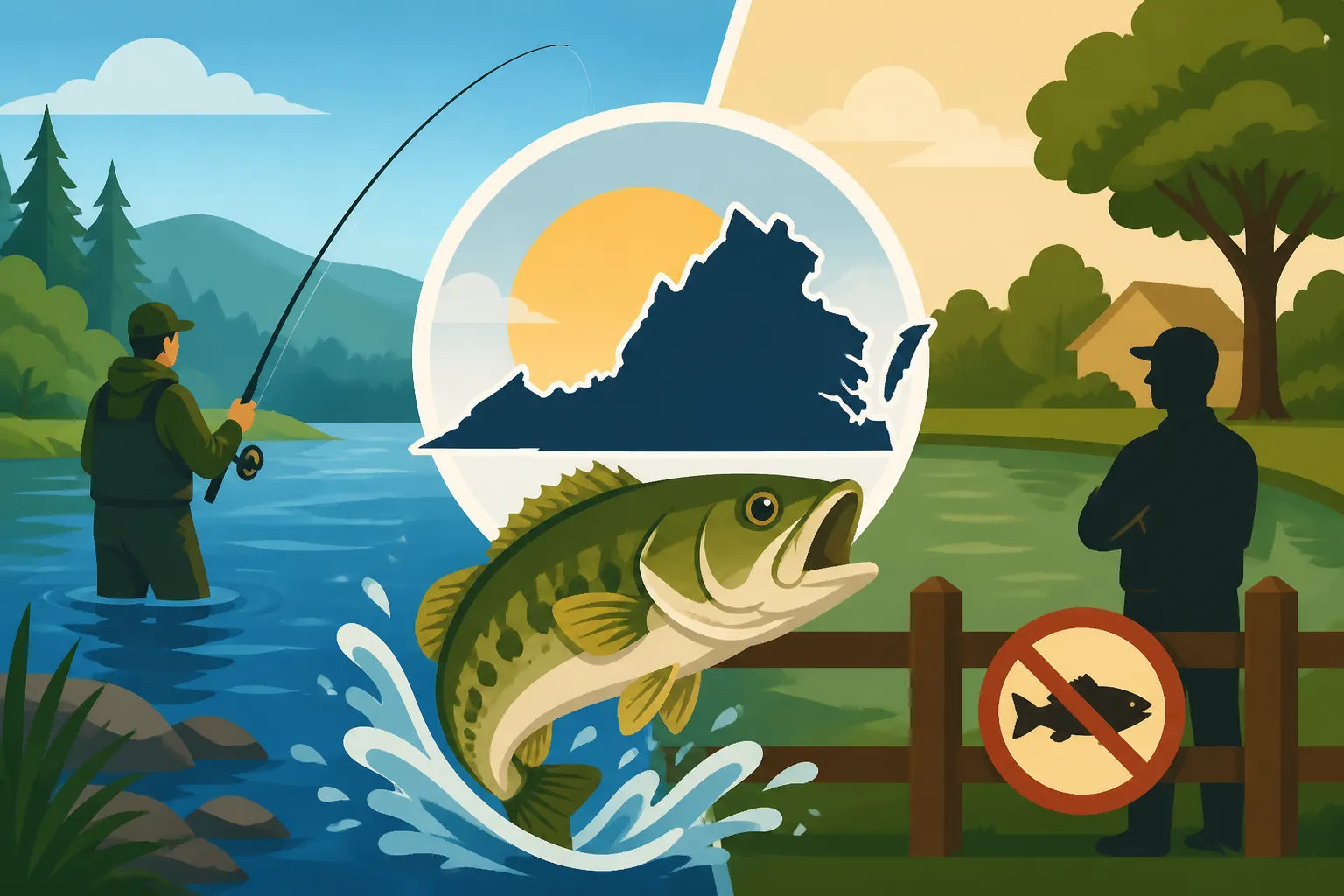
This might seem obvious, but it's worth reiterating: if a property is clearly posted with "No Trespassing," "Private Property," or "No Fishing" signs, do not go there without explicit permission. These signs are there for a reason, and ignoring them is a direct violation of the law. Similarly, respect physical barriers like fences, gates, and obvious property lines. Even if a gate is unlocked, it doesn't mean access is granted. Always assume private land is off-limits unless you have clear permission or it's designated public access.
Beyond the legal aspect, it’s about courtesy and maintaining a positive image for all anglers. A single instance of disrespect or trespassing can lead to landowners closing off access to everyone, even those who ask politely. Always leave no trace, pack out all your trash (and maybe a little extra!), and be mindful of noise and other disturbances. If you're fishing near a residential area, keep your voice down, especially during early morning or late evening hours. Being a good neighbor and an ethical angler helps preserve access for the entire fishing community in Virginia.
The Repercussions: What Happens If You Get It Wrong?
Nobody wants to get into trouble while enjoying a peaceful day of fishing. Unfortunately, misunderstandings about public and private waters can lead to uncomfortable situations, legal issues, and financial penalties. Understanding the potential consequences is just another layer of motivation to always know before you go.
Consequences of Trespassing While Fishing
If you're caught fishing on private property without permission, you can face trespassing charges. In Virginia, trespassing is generally a Class 1 misdemeanor, which can carry significant penalties. This isn't just a slap on the wrist; it can mean fines, court costs, and potentially even jail time, depending on the severity and frequency of the offense. For a first-time, simple trespass, you might just get a warning or a relatively small fine, but it's still a stain on your record and a major disruption to your day.
Furthermore, if you're caught fishing without a valid license, or with the wrong type of license for the waters you're in, you'll also face fines. These penalties can range from a few dozen dollars to several hundred, plus court costs. And here's the kicker: if you're caught trespassing AND fishing without a license, you could face both sets of penalties. It's simply not worth the risk. A single day's fishing trip could end up costing you hundreds of dollars and a lot of headaches, far more than the cost of a Virginia Fishing License Guide or a simple conversation with a landowner. Game wardens and local law enforcement take these regulations seriously because they protect both private property rights and the integrity of Virginia's wildlife management.
Importance of Knowing the Rules
The adage "ignorance of the law is no excuse" absolutely applies here. Claiming you didn't know the property was private, or that you thought your freshwater license covered tidal waters, won't generally get you off the hook. It's the individual angler's responsibility to understand and adhere to all applicable regulations. This includes understanding Virginia Fishing Regulations Explained, specific catch limits for different species, and, crucially, where you're legally allowed to be.
The Virginia Department of Wildlife Resources (DWR) goes to great lengths to make these regulations accessible, through their website, printed guides, and knowledgeable staff. It's an investment of your time to review these resources regularly, as rules can sometimes change from season to season or year to year. Make it a habit to check the DWR website before any significant fishing trip, especially if you're visiting a new area or targeting a different species. Responsible angling ensures that Virginia's beautiful natural resources remain accessible and healthy for everyone, now and in the future.
Here's a quick comparison of common fishing scenarios:
| Scenario | Water Type | License Required (VA) | Landowner Permission Needed? | Key Consideration |
|---|---|---|---|---|
| Fishing from a boat | Public Navigable River | Freshwater or Saltwater (as applicable) | No (for the water itself) | Do not wade or anchor on private banks/streambeds without permission. |
| Fishing from public pier | Public Tidal Water | Saltwater (often) | No | Pier may have its own access fee. Check pier-specific rules. |
| Fishing from a private dock | Public Tidal Water | Saltwater | Yes | Dock is part of private property, regardless of public water. |
| Fishing small farm pond | Private Inland Water | No (if entirely enclosed) | Yes | Ensure pond is truly private and not connected to public waters. |
| Fishing stream through private land | Private (non-navigable) | Freshwater | Yes | If stream is navigable, fishing from boat may be public, but not land access. |
| Fishing in a State Park lake | Public Inland Water | Freshwater | No | Park may have specific rules, boat ramp fees. |
| Fishing in Shenandoah National Park | Federal/Public Water | Freshwater + Park rules | No | Strict federal rules, often fly-fishing only, catch & release. |
| Fishing in a community HOA lake | Private Inland Water | No (often) | Yes (for non-residents) | Check HOA rules for residents/guests, catch limits. |
| Fishing on Free Fishing Days | Public Waters | No | No | All other regulations (size, creel, location) still apply. |
Wrapping Up Your Responsible Angling Journey
Understanding the distinction between public and private waters in Virginia can seem like a daunting task, full of legal jargon and nuanced interpretations. But at its heart, it comes down to a simple principle: respect. Respect for landowners, respect for the law, and respect for the incredible natural resources that Virginia offers. By taking the time to educate yourself, asking questions, and always erring on the side of caution, you can ensure that your fishing adventures are not only productive but also entirely legal and enjoyable.
Remember, the goal isn't to discourage you from exploring new spots, but to empower you with the knowledge to do so responsibly. Virginia has a lifetime of fishing opportunities waiting, from the challenging trout streams in the mountains to the thrilling rockfish runs in the Chesapeake Bay. Be proactive, be polite, and always be prepared with the right licenses and knowledge. Happy fishing!
Disclaimer
Please remember that fishing regulations and property laws can change. This guide is intended for informational purposes only and should not be considered legal advice. Always consult the most current Virginia Department of Wildlife Resources (DWR) regulations and local ordinances, or seek legal counsel, to ensure full compliance before heading out on your fishing trip.