Striped Bass Season and Slot Limit in Virginia
There are few things more frustrating than heading out on the water, full of excitement, only to realize you’ve misunderstood the rules for catching your favorite fish. For many Virginia anglers, the prized striped bass, affectionately known as "rockfish," can be a source of confusion when it comes to season dates and legal sizes. This comprehensive guide is here to clear up all the mystery surrounding Virginia's striped bass season and slot limits, ensuring you're confident and compliant on your next fishing adventure.
Understanding Virginia's Esteemed Striped Bass Fishery
Virginia's waters are truly a paradise for anglers, and the striped bass stands out as one of the most sought-after species. These powerful, silver-sided fish offer an exhilarating fight and make for a delicious meal, making them a top target for both recreational and commercial fishermen alike. From the vast expanse of the Chesapeake Bay to the tidal rivers and the open Atlantic, stripers are a cornerstone of our angling culture.
Why Striped Bass are So Popular in Virginia
The allure of the striped bass is easy to understand once you’ve experienced it. Imagine the adrenaline rush as a powerful striper hits your line, pulling hard, testing your gear and your skill. They're magnificent game fish, growing to impressive sizes and often traveling in schools, which can lead to incredible days on the water. Beyond the thrill of the catch, stripers are also widely recognized for their delectable, flaky white meat, making them a popular choice for the dinner table. This combination of sporting challenge and culinary delight ensures their enduring popularity across the Commonwealth.
Their migration patterns also make them accessible to a wide range of anglers. In spring and fall, huge schools move through our coastal waters and into the Bay, creating fantastic opportunities for shore anglers, pier fishermen, and boaters alike. During certain periods, you can find them in nearly every major tidal river, offering a diverse array of fishing environments. If you're looking for an unforgettable fishing experience, targeting striped bass in Virginia is definitely the way to go.
The Importance of Regulations for Striped Bass Conservation
While the popularity of striped bass is fantastic for our fishing community, it also means these fish face significant fishing pressure. That’s why robust regulations are absolutely critical. Without carefully managed seasons, size limits, and bag limits, populations could quickly decline, impacting the ecosystem and future fishing opportunities. Think of it like this: if everyone took as many fish as they wanted, whenever they wanted, our grandchildren might not have the chance to experience the same joy of catching a trophy striper.
Virginia's Department of Wildlife Resources (DWR) works tirelessly with federal agencies like the Atlantic States Marine Fisheries Commission (ASMFC) to monitor striped bass stocks and implement rules designed to ensure their long-term health. These regulations are not arbitrary; they are based on scientific data, population assessments, and a deep understanding of the striped bass life cycle, including spawning habits and migratory patterns. Adhering to these rules isn't just about avoiding a fine; it's about being a responsible steward of our natural resources and contributing to the sustainability of this incredible fishery for generations to come.
Deciphering Virginia's Striped Bass Seasons
One of the most common sources of confusion for anglers when it comes to striped bass in Virginia is the "split season" concept. It's not always a straightforward opening and closing date; instead, there are specific windows, especially for the larger Chesapeake Bay and its tributaries. These distinct periods are in place for very important biological reasons, primarily to protect spawning fish and allow for population recovery.
The Infamous Split Season for Coastal Waters and the Bay
Virginia's striped bass season is often broken into multiple windows throughout the year, especially for the recreational angler. This means you might find the season open for a few weeks in the spring, close for a period during the summer, and then reopen again in the fall. This approach is designed to balance fishing opportunities with the critical need to protect striped bass during their most vulnerable periods, particularly their spring spawning migrations.
For instance, the Chesapeake Bay and its tributaries typically see a spring season and a fall/winter season. The Atlantic Ocean and its tributaries follow a similar pattern, though the exact start and end dates can vary slightly and sometimes include an earlier winter period. These split seasons can feel a bit like a puzzle when you’re trying to plan a trip, but once you understand the rationale—protecting the fish—it makes more sense. Always double-check the current year's regulations on the Virginia DWR website or by looking up the latest Virginia Striped Bass Split Season Dates Explained to make sure you have the most up-to-date information.
Specific Dates and Zones for Striped Bass Fishing
Let’s dive into the nitty-gritty of the current recreational seasons for striped bass in Virginia, keeping in mind these dates are for the current year (2024) and can change annually, so always verify before you head out.
For recreational anglers in the Chesapeake Bay and its tributaries, the season is divided into two distinct periods:
- Spring Season: May 16 through June 15
- Fall/Winter Season: October 4 through December 31
If you're fishing in the Atlantic Ocean and its tributaries, including federal waters, you also have specific windows:
- Winter Season: January 1 through March 31
- Spring Season: May 16 through June 15
- Fall/Winter Season: October 4 through December 31
As you can see, the Atlantic Ocean zone offers an earlier winter opportunity. It’s absolutely critical to know which zone you are fishing in, as crossing imaginary lines can mean the difference between a legal catch and a hefty fine. For example, if you launch from a Bay tributary but head out into the Atlantic, you'll be subject to the ocean rules, not the Bay rules. It's often helpful to keep a copy of the regulations on hand or downloaded to your phone. If you're ever unsure about where one zone ends and another begins, consult your nautical charts or ask a local tackle shop.
Differences Between Recreational and Commercial Seasons
It's also worth noting that the regulations we're discussing here are primarily for recreational anglers. Commercial striped bass fishing operates under a completely different set of rules, quotas, and licensing requirements. Commercial fishermen typically target stripers for sale, and their harvest is strictly managed through specific permits and seasonal allocations. These regulations are designed to ensure that the total commercial catch remains within sustainable limits set by fishery managers.
As a recreational angler, you don't need to worry about the commercial rules, but understanding that they exist highlights the comprehensive nature of striped bass management. This dual system allows both recreational enjoyment and economic activity to coexist, all while aiming to protect the overall health of the striped bass population. Your Virginia Fishing License Guide is your go-to resource for understanding recreational requirements.
Navigating the Striped Bass Slot Limits
Beyond knowing when you can fish, it’s equally important to know what size fish you can keep. This is where slot limits come into play, and Virginia employs these crucial size restrictions to help manage its striped bass populations effectively.
What is a Slot Limit and Why Does Virginia Use One?
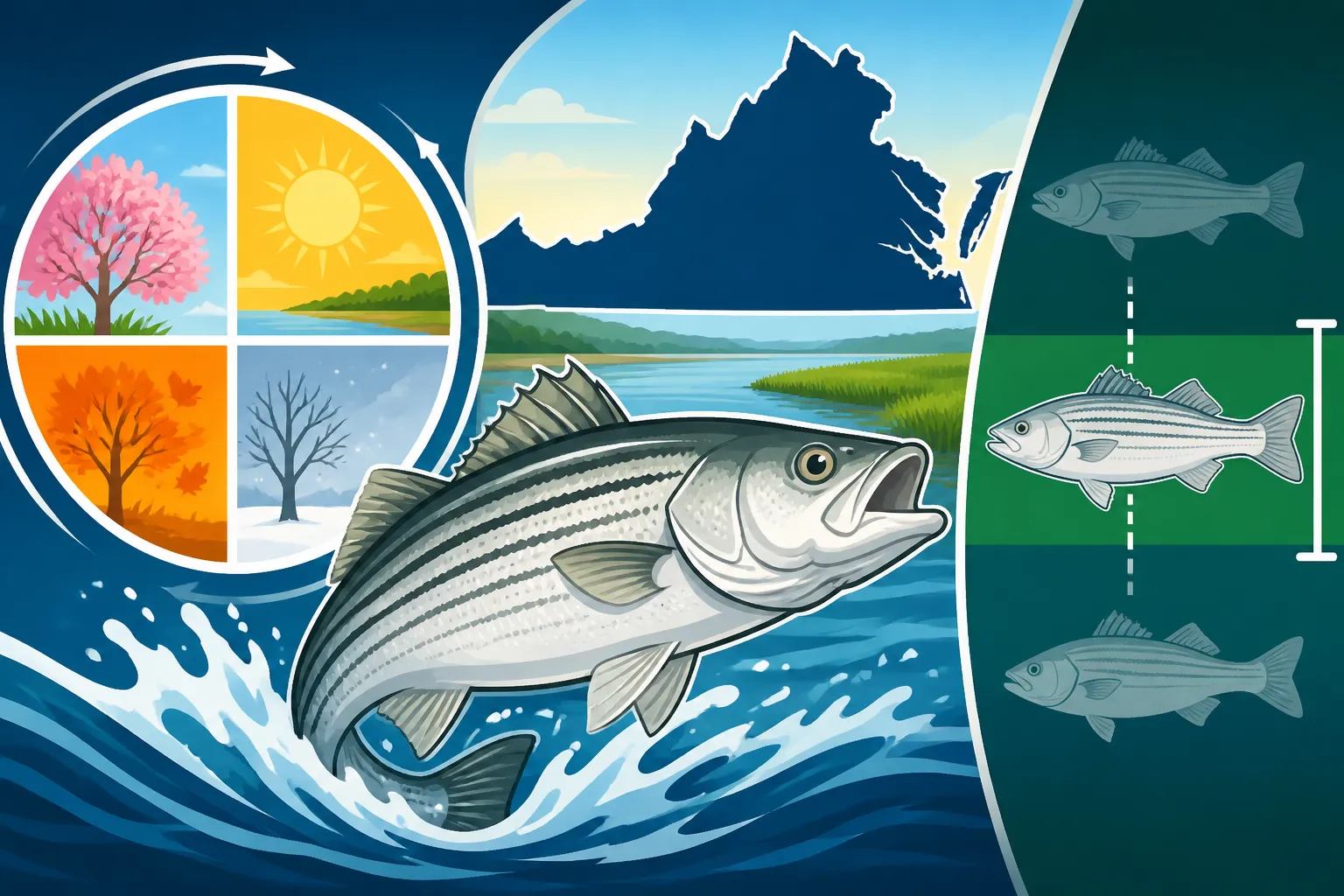
A slot limit means you can only keep fish that fall within a specific size range – not too small, and not too big. For striped bass in Virginia, the current recreational slot limit is 18 to 31 inches total length. This means any striped bass shorter than 18 inches must be immediately released, and any striped bass longer than 31 inches must also be immediately released.
Why this particular range? Smaller fish are often juveniles that need more time to grow and mature into breeding adults. By protecting them, we ensure they have the chance to contribute to future generations. Larger fish, especially those over 31 inches, are often the most productive breeders, carrying a significant amount of eggs. Protecting these "trophy" fish allows them to continue spawning, further bolstering the population. The slot limit, therefore, aims to protect both the young fish entering the fishery and the large, important breeding stock, focusing harvest pressure on the middle-aged, abundant fish that have already had a chance to spawn. This is a critical component of Virginia's strategy to maintain a healthy and sustainable striped bass fishery.
Current Size Restrictions for Keeper Striped Bass
As of the current regulations (2024), the recreational slot limit for striped bass in both the Chesapeake Bay & its tributaries AND the Atlantic Ocean & its tributaries is 18 to 31 inches total length. This means your fish must be at least 18 inches long, but no longer than 31 inches. Along with this, the daily bag limit is one fish per person per day. No matter how many keepers you catch within the slot, you can only retain one. This is a significant change from past years for coastal anglers, who might remember a 28-31 inch slot. Always ensure you are up-to-date with the latest Virginia Rockfish Slot Limit and Possession Rules.
It’s crucial to understand that "total length" means from the tip of the jaw (mouth closed) to the tip of the tail, with the tail compressed. This isn't just a suggestion; it's the precise measurement method. Many anglers carry a designated measuring device, like a bump board or a flexible tape measure. You can find excellent, durable options for these on sites like Amazon, which ensure you get an accurate measurement every time.
How to Measure Your Catch Accurately
Getting an accurate measurement is paramount, and it’s surprisingly easy to make a mistake if you’re not careful. Here’s a breakdown of how to do it correctly:
- Lay the Fish Flat: Place the fish on a flat, level surface. A measuring board (often called a "bump board") is ideal because it has a solid end to butt the fish's nose against. If using a tape measure, try to get the fish as straight as possible against a flat surface like a cooler lid or boat deck.
- Close the Mouth: Ensure the fish's mouth is completely closed. Sometimes a fish's jaw can open slightly, adding an extra fraction of an inch that could make a difference, especially if your fish is right on the edge of the slot.
- Compress the Tail: Gently squeeze or compress the tail fin so that the tips are together and extend as far back as possible. Do not "fan" the tail out.
- Measure to the Longest Point: Measure from the tip of the jaw to the farthest tip of the tail. This is your total length.
It’s wise to invest in a quality measuring device. Many anglers prefer a solid plastic or aluminum bump board for its accuracy and ease of use. You can easily find these on Amazon or at local tackle shops. Having a reliable measurement tool on board means you won't be guessing, and you can release oversized or undersized fish quickly and confidently, minimizing stress on the fish. Remember, quick and careful handling is key to increasing survival rates for released fish.
| Virginia Striped Bass Recreational Regulations (2024) | Chesapeake Bay & Tributaries | Atlantic Ocean & Tributaries |
|---|---|---|
| Spring Season | May 16 – June 15 | May 16 – June 15 |
| Fall/Winter Season | October 4 – December 31 | October 4 – December 31 |
| Additional Winter Season | N/A | January 1 – March 31 |
| Slot Limit (Total Length) | 18 to 31 inches | 18 to 31 inches |
| Bag Limit | 1 fish per person per day | 1 fish per person per day |
Regional Variations and Special Considerations
While the overall framework for Virginia's striped bass season and slot limits is fairly consistent between the Bay and the ocean, there are still nuances and specific regional contexts that every angler should be aware of. Understanding these can help you better navigate the waters and avoid any inadvertent rule-breaking.
Striped Bass Rules in the Chesapeake Bay and Tributaries
The Chesapeake Bay, the largest estuary in North America, is a prime nursery and feeding ground for striped bass. Millions of these fish migrate into the Bay and its numerous tributaries each spring to spawn. Because of its critical role in the life cycle of the species, fishing regulations here are particularly stringent and closely monitored. As discussed, the recreational season in the Bay typically features a spring and a fall window, with a daily bag limit of one fish within the 18 to 31-inch slot.
Fishing the Bay’s tributaries, such as the James River, York River, and Rappahannock River, falls under the same Chesapeake Bay regulations. It's common to find excellent fishing in these rivers, especially during the migratory periods when stripers push upriver. You'll often see anglers using a variety of techniques, from trolling with planer boards to casting soft plastics around structure. Always remember that regardless of where you are within the Bay system, the 18-31 inch slot and one-fish bag limit apply. This focus on protecting the breeding stock, especially the larger females, is essential for the long-term health of the entire fishery. Knowing your specific Virginia Fishing Regulations Explained can save a lot of headaches.
Oceanic Striped Bass Regulations Coastal Zone
When you venture out to the Atlantic Ocean from Virginia's coast, you're entering a different but related part of the striped bass fishery. While the recreational slot limit and bag limit are currently the same as the Bay (18 to 31 inches, one fish per person per day), the seasons differ slightly, offering an additional winter window from January 1 to March 31. This can be a prime time for anglers targeting stripers migrating along the coast.
It's important to remember that these rules apply to the Atlantic Ocean and its tributaries, which typically means waters east of the Chesapeake Bay Bridge-Tunnel and the lower portions of coastal rivers that directly flow into the ocean. Sometimes, confusion arises for anglers fishing near the mouth of the Bay, where the lines can feel a bit blurry. If you're fishing from Virginia Beach or further south along the coast, you're most likely in the oceanic zone. Charters often operate out of places like Rudee Inlet, targeting these coastal stripers. If you're planning a trip with a guide, they'll be well-versed in the specific rules for their area, but it's always good for you to have a grasp of them too. For more specific details on what to expect, refer to a Virginia Beach Striped Bass Charter Season Timing guide.
Special Rules for Freshwater Stripers
While the majority of Virginia's striped bass discussion centers around the saltwater and brackish waters of the Chesapeake Bay and the Atlantic Ocean, it's worth a quick mention of landlocked striped bass. Lakes like Smith Mountain Lake and Lake Anna are home to thriving populations of striped bass, often referred to as "freshwater stripers" or "hybrid stripers." These fish are entirely distinct from their migratory saltwater cousins and, consequently, are governed by different sets of regulations.
For instance, at Smith Mountain Lake, the striped bass regulations are tailored specifically for that impoundment, often featuring different slot limits, bag limits, and seasons. It's a fantastic fishery, and if you plan to target stripers there, you must consult the specific DWR regulations for inland waters. The rules you follow for the Bay or the ocean absolutely will not apply to Smith Mountain Lake. This highlights the importance of checking regulations not just by species, but also by the specific body of water you intend to fish. If you're planning a trip to this popular spot, check out our guide on Smith Mountain Lake Striped Bass Fishing in Virginia.
Gear, Bait, and Techniques for Striped Bass Success
Now that we've covered the crucial regulations, let's talk about the fun part: how to actually catch these magnificent fish within the legal framework. Targeting striped bass in Virginia requires a bit of strategy, and having the right gear and techniques for the season and location can make all the difference.
Recommended Rods and Reels for Stripers
Striped bass are powerful fish, so you need gear that can handle the fight. The exact setup will depend on whether you're casting from shore, trolling from a boat, or jigging in deeper water, but generally, a medium-heavy to heavy action rod is a good starting point.
- For Casting/Jigging: A 7-foot to 8-foot medium-heavy fast-action spinning rod paired with a durable spinning reel in the 4000-6000 size range (like a Penn Spinfisher or Shimano Saragosa) is a versatile choice. This setup allows for long casts and has enough backbone to handle a good-sized striper. Load your reel with 30-50 lb braided line for sensitivity and strength, topped with a 30-40 lb fluorocarbon leader.
- For Trolling: If you’re trolling from a boat, a sturdy conventional rod around 6.5 to 7.5 feet with a medium to heavy action is preferred. Pair this with a conventional reel capable of holding a good amount of 30-50 lb monofilament or braided line, such as a Daiwa Sealine or a Penn Warfare. These setups are designed to handle the drag of lures and the power of a hooked striper at speed.
Having robust gear is an investment that pays off in successful catches and less frustration from broken lines or reels. You can often find great deals on reliable fishing rods and reels on Amazon, making it easy to gear up for striper season.
Popular Baits and Lures for Virginia Stripers
Striped bass are opportunistic feeders, and their diet can vary widely based on what baitfish are available in the area. This means you have a wide array of options when it comes to baits and lures:
- Live Bait: Live eels are legendary for catching big stripers, especially at night or in colder water. Live menhaden (also called "bunker" or "pogies") are also incredibly effective, particularly during their migrations. You can rig them with a large circle hook through the nose or back.
- Cut Bait: Chunks of fresh menhaden, mullet, or spot can be very productive, especially when fishing on the bottom in tidal rivers or near structure. A fish-finder rig with a pyramid sinker is a classic setup for this.
- Soft Plastics: These are incredibly versatile. Paddle tail swimbaits (e.g., those from Z-Man or Gulp!) in white, chartreuse, or natural baitfish colors, rigged on jig heads from ½ oz to 2 oz (depending on current and depth), are deadly. They imitate various baitfish and can be jigged, cast, or trolled.
- Hard Baits: Large lipped crankbaits, topwater poppers or walk-the-dog lures, and pencil poppers are excellent for imitating fleeing baitfish and can draw explosive strikes. MirrOlure and Yo-Zuri are popular brands.
- Spoons and Jigs: Heavier metal spoons (like Hopkins or Kastmasters) can be cast long distances and worked through schools of bait. Diamond jigs are fantastic for vertical jigging when stripers are holding deep. Bucktail jigs dressed with a soft plastic trailer are another classic and effective option, especially around structure or current.
It's a good idea to have a variety of these baits and lures on hand. You never know what the stripers will be keying in on each day, and having options allows you to adapt. Many local tackle shops and online retailers like Amazon carry a wide selection tailored to Virginia's fishing conditions. If you're fishing the Chesapeake Bay, check out the Best Bait for Striped Bass in Chesapeake Bay.
Effective Fishing Techniques During Different Seasons
The best way to catch striped bass often changes with the season and water temperature.
- Spring Season (May-June): As stripers move into the Bay and coastal waters for spawning and feeding, trolling is a highly effective method, especially for boat anglers. Spoons, large plugs, and umbrellas rigs pulled behind planer boards or downriggers can cover a lot of water. Casting soft plastics or bucktails near structure, jetties, or channel edges can also be very productive. Shore anglers might find success casting along beaches or from piers.
- Fall/Winter Season (October-December/March): This is often considered prime time for stripers. Large schools of baitfish, like menhaden, are migrating, and stripers follow them closely, feeding aggressively. Trolling remains popular, but casting to breaking fish (when stripers are herding bait to the surface) with topwater lures, poppers, or swimbaits can be exhilarating. Live-lining menhaden is also incredibly effective. In colder months, stripers tend to hold deeper, so vertical jigging with heavy jigs or fishing live/cut bait on the bottom becomes more prominent.
- Night Fishing: Don't overlook night fishing for stripers, especially during warmer months. Stripers are known to feed actively after dark, often coming into shallower water. Live eels are a favorite night bait, as are dark-colored soft plastics or bucktails fished slowly.
Understanding these seasonal shifts in behavior and preferred techniques will significantly increase your chances of success. It’s a dynamic fishery, and adapting your approach is key.
Common Mistakes and How to Avoid Penalties
Fishing for striped bass in Virginia is a rewarding experience, but misunderstanding or ignoring the regulations can quickly turn a great day into a costly one. It’s not just about knowing the rules, but also about practicing responsible angling that protects the fishery.
Understanding Possession Limits and Bag Limits
This is where many anglers can trip up. Virginia's recreational striped bass regulations currently impose a one fish per person per day bag limit. This means that no matter how many striped bass you catch within the legal slot limit, you can only keep one. If you're fishing with a group of four people, you can collectively keep four fish, but each person is allowed only one.
Furthermore, there are possession limits. This means you cannot possess more than the daily bag limit at any given time. If you keep your one legal striper and then decide to go fishing again later that day or the next day without having consumed or processed your first fish, you could be in violation if you catch another and intend to keep it. The rule is designed to prevent "stockpiling" fish beyond what is reasonably consumed. Make sure you understand How Many Striped Bass Can You Keep in Virginia to avoid any issues.
Penalties for Violating Striped Bass Regulations
The Virginia Department of Wildlife Resources (DWR) and other law enforcement agencies take striped bass regulations very seriously due to the conservation efforts surrounding the species. Getting caught fishing out of season, keeping undersized or oversized fish, or exceeding the bag limit can lead to significant penalties.
Typically, violations can result in:
- Monetary Fines: These can range from a few hundred dollars to over a thousand, depending on the severity of the offense and the number of fish involved.
- Forfeiture of Equipment: In some cases, your fishing gear (rods, reels, boat, etc.) could be seized.
- Loss of Fishing Privileges: You might face a suspension or revocation of your fishing license for a period.
Virginia game wardens are out on the water regularly, checking licenses and ensuring compliance. It’s not a matter of if you’ll be checked, but when. These penalties aren't just an inconvenience; they are serious consequences designed to deter illegal fishing activities that harm the striped bass population. If you're curious about the broader implications, read our guide on Penalties for Fishing Without a License in Virginia.
Best Practices for Responsible Striped Bass Angling
Beyond simply following the letter of the law, there are several best practices that every responsible striped bass angler should adopt to minimize their impact and contribute to the health of the fishery:
- Catch and Release with Care: If you’re releasing fish (and you will be, given the slot limit and bag limit), handle them gently. Use dehooking tools to remove hooks quickly, especially if the fish is gut-hooked. Avoid dragging fish onto dry land or holding them by the jaw vertically, which can damage their internal organs. Keep them in the water as much as possible, support their body horizontally, and revive them until they can swim away strongly.
- Use Circle Hooks: When fishing with natural bait, especially live bait, consider using circle hooks. These hooks are designed to catch in the corner of the fish’s mouth, significantly reducing the chance of gut-hooking, which greatly improves the survival rate of released fish.
- Know Your Regulations: As we’ve emphasized, constantly check the DWR website for the most current regulations. Rules can change from year to year, or even mid-season if circumstances dictate. Don’t rely on old information or hearsay.
- Report Violations: If you witness someone violating fishing regulations, report it to the DWR. Protecting our fisheries is a community effort. You can usually find a hotline number on the DWR website.
- Keep a Valid License: Always ensure you have a valid Virginia fishing license for the waters you are fishing. This is not only a legal requirement but also how your fees contribute directly to conservation efforts. You can usually purchase or renew licenses easily online, or through a vendor often found conveniently on Amazon.
By adhering to these practices, you're not just avoiding penalties; you're becoming a vital part of the solution for a sustainable and thriving striped bass fishery in Virginia.
Disclaimer
The information provided in this guide is for general informational purposes only and is accurate as of the date of publication (2024 recreational striped bass regulations for Virginia). Fishing regulations, including seasons, slot limits, and bag limits, are subject to change at any time by the Virginia Department of Wildlife Resources (DWR) or federal agencies. It is the sole responsibility of the angler to verify and comply with all current and applicable fishing regulations before engaging in any fishing activity. Always consult the official Virginia DWR website or publications for the most up-to-date and specific rules.