Fishing license rules for disabled anglers
It's incredibly frustrating when you just want to enjoy a peaceful day on the water, but the fishing license rules feel like navigating a legal maze, especially when you have specific needs. Many disabled anglers in Virginia face this exact challenge, wondering if there are special provisions or how to even begin applying. This comprehensive guide is here to untangle all those complexities, explaining Virginia's fishing license rules for disabled anglers so you can focus on what truly matters: a successful, relaxing fishing trip.
Understanding Virginia's Disability Fishing License Program
Virginia has made commendable efforts to ensure that fishing remains an accessible and enjoyable pastime for all its residents, including those with disabilities. The state recognizes the therapeutic and recreational benefits of angling and has put in place specific programs to support disabled residents. However, navigating these programs, understanding who qualifies, and knowing what type of license covers your preferred fishing grounds can still feel a bit overwhelming. Let's break down the core components of this program.
Who Qualifies for a Disabled Resident Freshwater Fishing License?
The Virginia Department of Wildlife Resources (DWR) offers a specific license designed to assist permanently disabled residents. It's a fantastic initiative, but the key is understanding the eligibility criteria. Generally, to qualify for a complimentary (free) Virginia Resident Freshwater Fishing License, you must be a Virginia resident and meet certain definitions of permanent disability. This typically means individuals who have been certified as permanently and totally disabled by the Social Security Administration, or those who are 100% service-connected disabled veterans. It's not just a casual acknowledgment of a disability; there's a specific legal and medical threshold that needs to be met.
For example, if you receive Social Security Disability Income (SSDI) and have documentation explicitly stating you are permanently and totally disabled, you're likely on the right track. Similarly, a veteran with a letter from the U.S. Department of Veterans Affairs confirming a 100% service-connected disability rating would also typically qualify. The DWR needs clear, official proof of this status. This program aims to reduce financial barriers for those who often face significant economic challenges due to their condition. Understanding these Virginia Fishing License Requirements for Residents and Nonresidents is the first crucial step in ensuring you meet the criteria for this valuable benefit.
It’s easy to get confused by different state definitions or federal programs, so always cross-reference your specific documentation with DWR's requirements. They're looking for verifiable proof that your disability is indeed permanent and total, as this license is a significant benefit. Don't assume your disability automatically qualifies; having the right paperwork readily available will make the process much smoother and prevent any frustrating delays.
What About Saltwater or Combination Licenses for Disabled Anglers?
This is where it gets a little more nuanced, and it's a common point of confusion for many disabled anglers. While the DWR offers a free freshwater license for qualified permanently disabled residents, saltwater and combination licenses have slightly different provisions. For saltwater fishing, disabled residents (including those who are 65 and older) generally have two primary options that differ from the standard Virginia Fishing License Costs and Types Explained:
First, you can obtain a one-time $5 lifetime recreational saltwater fishing license. This is an incredible value, providing lifetime access to Virginia’s state saltwater waters for a minimal fee. It’s important to note that this specific license, while a lifetime option, doesn’t cover federal offshore waters or certain regulated species where a federal permit might be required. Second, you can also opt for a free Virginia Fisherman Identification Program (FIP) registration. This is also free and covers state waters, but it's not a full license and has limitations compared to the $5 lifetime option, particularly regarding federal waters or certain species requiring specific permits.
If you’re planning to fish both freshwater and saltwater, and you qualify for the free freshwater license, you’ll then need to consider either the $5 lifetime saltwater option or the FIP registration for your saltwater excursions. There isn't a single "disabled combination license" that lumps everything together for free, but rather separate, highly discounted or free options for each environment. This distinction is vital, as being caught without the correct authorization for the type of water you're fishing in could lead to Penalties for Fishing Without a License in Virginia. Always double-check what type of fishing you plan to do and ensure you have the appropriate licensure for both freshwater and saltwater if you venture into both.
The Application Process: Making It Accessible
Once you understand the qualifications, the next hurdle is often the application itself. For many disabled individuals, physical barriers, complex forms, or inconvenient processes can be a deterrent. Thankfully, the DWR strives to make the application process as straightforward and accessible as possible, offering various methods to apply and dedicated staff to help.
Step-by-Step Guide to Applying
Applying for your disabled resident fishing license in Virginia doesn't have to be a headache. The DWR has streamlined the process, providing several avenues to submit your application. First, you'll need to obtain the specific application form for permanently disabled resident fishing licenses. This form is usually available on the DWR website or by contacting their customer service. Once you have the form, fill it out completely, making sure all your personal information is accurate.
The critical next step is attaching your proof of permanent and total disability. As discussed, this could be a letter from the Social Security Administration or the U.S. Department of Veterans Affairs. Make sure these documents are current and clearly state your disability status. You can typically submit your application and supporting documents by mail directly to the DWR headquarters, or, in some cases, you might be able to visit a regional DWR office for assistance. While online purchase is common for standard licenses, special disability licenses often require initial manual verification due to the documentation involved. Getting your Virginia Fishing License Guide early on can help you prepare for these steps.
Don't be afraid to reach out to the DWR directly if you have questions or need assistance with the forms. Their customer service representatives are typically very helpful and can guide you through the specifics. Remember, the goal is to make fishing accessible, so they are there to support you through the paperwork. It’s always a good idea to make copies of all submitted documents for your records before sending anything off.
Necessary Documentation and Verification
The backbone of securing your disabled fishing license lies in providing clear and verifiable documentation. The DWR is diligent about ensuring that these valuable benefits go to those who truly qualify. They will carefully review your submitted proof of disability to confirm it meets their criteria for permanent and total disability. This isn't just a formality; it's how they maintain the integrity of the program and ensure fairness. Common examples of acceptable documentation include an official letter from the Social Security Administration stating "permanent and total disability," a U.S. Department of Veterans Affairs letter confirming a 100% service-connected disability, or other official government agency certifications.
It's absolutely essential that the documentation clearly states "permanent and total" disability or its equivalent based on the agency's language. A general disability statement might not be enough. If your documentation is old, or you've lost it, you'll need to contact the issuing agency (Social Security, VA, etc.) to get an updated or replacement copy. The DWR staff are experts in what they need, so if you're unsure, a quick call to them before submitting can save you a lot of back-and-forth. They might even have specific forms or guidance on their website under How to Get a Fishing License in Virginia that clarify exactly what they require.
Once your application and documentation are received, there will be a verification period. The DWR staff will review everything, and if all is in order, they will issue your license. If there are any discrepancies or missing information, they will contact you, so make sure your contact details on the application are correct. Being proactive and providing all necessary, clear documents upfront is the best way to ensure a smooth and quick approval process, getting you out on the water without unnecessary delays.
Benefits Beyond the License: Accessible Fishing in Virginia
The benefits of Virginia's disability fishing license program extend far beyond just the cost savings. It’s about fostering inclusion and ensuring that everyone, regardless of physical challenges, can experience the joy and therapeutic advantages that fishing offers. This program is a testament to the state's commitment to outdoor recreation for all its citizens.
Cost Savings and Long-Term Value
The financial relief offered by the disabled resident fishing license program is significant. For freshwater fishing, qualifying residents receive a complimentary license, completely eliminating the annual fee. When you compare this to the typical annual resident freshwater license cost, which can be around $23, these savings add up, especially over years of fishing. For saltwater, the option of a one-time $5 lifetime license is an extraordinary value, especially when considering a standard annual resident saltwater license is $17.50. This means after just one year, you've already saved money, and for every year after, it's pure savings.
These cost savings are more than just numbers on a ledger; they directly impact an angler's ability to participate. The money saved on licenses can be reallocated to other essential fishing expenses, like bait, tackle, or even specialized adaptive equipment that might be necessary for a disabled angler. It truly lowers the barrier to entry and ongoing participation. Moreover, knowing that your license is taken care of for little to no cost provides peace of mind, removing one more financial stressor. This long-term value, whether through the free freshwater or the $5 lifetime saltwater option, makes fishing a sustainable hobby for disabled residents, fostering consistent engagement with Virginia’s natural beauty. It's truly a program designed to provide enduring access, contrasting sharply with the standard Virginia Resident Freshwater Fishing License Cost or Virginia Resident Saltwater Fishing License Cost.
Here's a quick comparison of the common resident fishing license types and their general costs, highlighting the benefits for disabled anglers:
| License Type | Standard Resident Annual Cost (Approx.) | Permanently Disabled Resident Cost (Approx.) | Key Benefit for Disabled Anglers |
|---|---|---|---|
| Freshwater Fishing | $23.00 | Free | Eliminates annual cost entirely for qualifying residents |
| Saltwater Fishing | $17.50 | $5.00 (One-time Lifetime) | Significant long-term savings; one payment for lifetime access |
| Freshwater/Saltwater Combo | $39.50 | Free (Freshwater) + $5 (Saltwater Lifetime) | Combined savings on both, greatly reducing overall expense |
| Virginia FIP Registration | Free (required for all saltwater) | Free (also required, separate from license) | Still necessary, but doesn't replace the $5 lifetime license options |
Note: These prices are approximate and subject to change by the DWR. Always verify current costs and requirements.
Accessible Fishing Spots and Resources
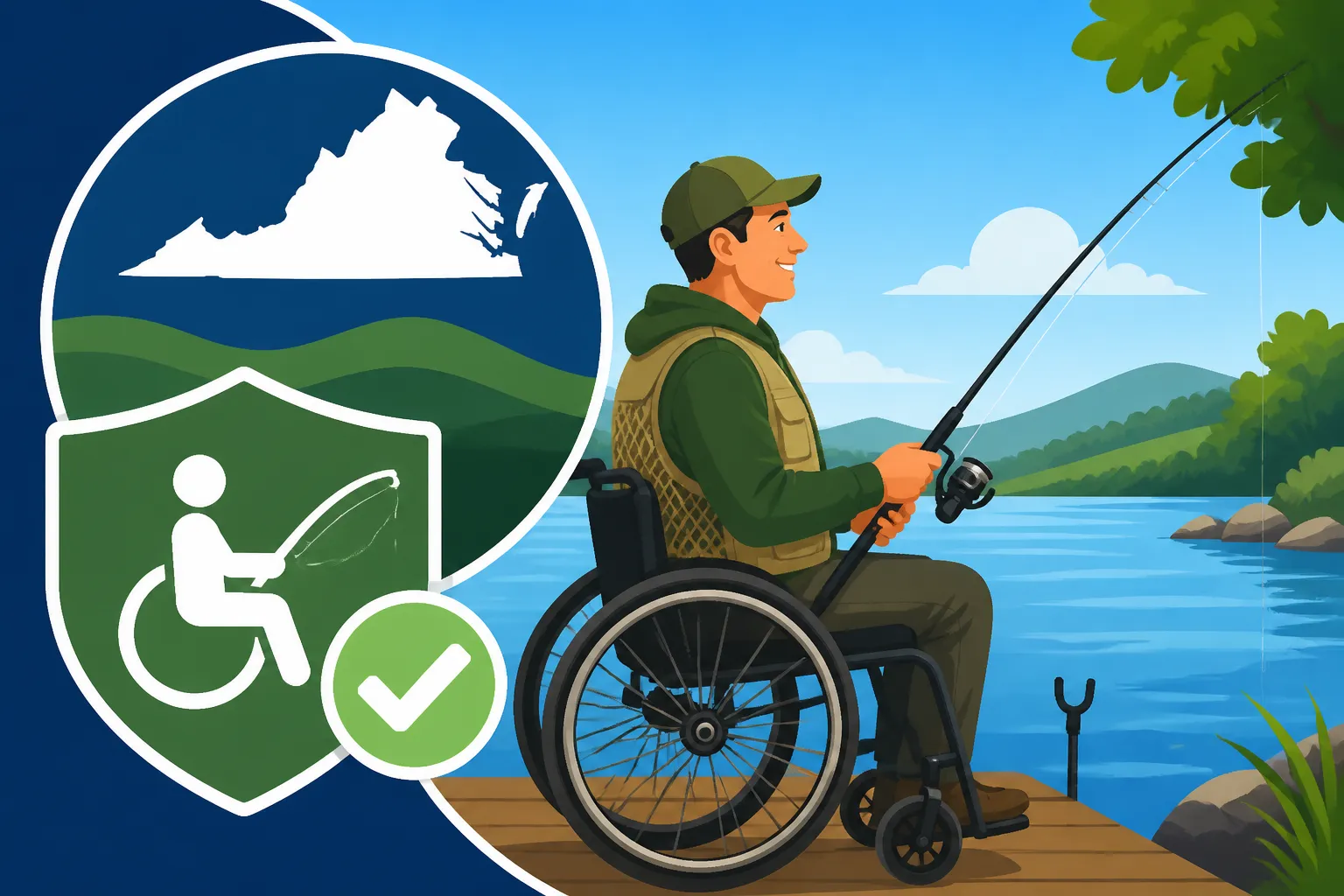
Beyond the license itself, Virginia, through the DWR and its state parks system, is committed to creating physically accessible fishing opportunities. This means more than just a place to cast a line; it means thoughtfully designed facilities that accommodate wheelchairs, walkers, and other mobility aids. Many state parks, like Smith Mountain Lake State Park or Lake Anna State Park, and public fishing areas now feature ADA-compliant fishing piers with railings, spacious platforms, and accessible parking close by. These improvements mean that anglers with mobility challenges can reach prime fishing spots safely and comfortably. For a full breakdown, check out the information on Wheelchair-Accessible Fishing Spots in Virginia.
The DWR's website and publications often highlight these accessible locations, sometimes even detailing the types of fish commonly found there, like excellent opportunities for bass or panfish. They also work to maintain accessible trails leading to riverbanks or shorelines, ensuring that the entire experience, from parking to casting, is as seamless as possible. You might find information on these initiatives within broader guides such as Best Fishing Spots in Virginia or even when looking up Virginia Fishing Regulations Explained for specific areas. These resources are invaluable for planning a trip, helping you identify not just where the fish are biting, but where you can comfortably get to them.
It's a good practice to call ahead to a specific park or DWR office if you have very particular accessibility needs, just to confirm the current conditions and available amenities. While general information is provided, on-the-ground conditions can sometimes vary. The goal is to provide a truly inclusive experience, allowing every angler to connect with nature and the thrill of the catch, regardless of physical limitations. This proactive approach ensures that the spirit of these license programs is fully realized, not just through reduced fees, but through tangible, accessible infrastructure.
Disclaimer
The information provided in this guide is for general informational purposes only and is subject to change. Always consult the official Virginia Department of Wildlife Resources (DWR) website or contact them directly for the most current regulations, requirements, and application procedures for fishing licenses, especially concerning disabled angler benefits.