Why Virginia’s striped bass season splits into two parts
If you're an angler in Virginia, or even just thinking about dropping a line in our beautiful waters, chances are you've encountered a bit of head-scratching when it comes to striped bass season. It's not a simple, straightforward "open season" like you might find for some other species; instead, it's often broken up into different segments throughout the year. This can feel confusing, almost like the rules are intentionally making it harder to plan your trips, but trust me, there's a very good reason for this complexity, and it all boils down to protecting these magnificent fish. This guide will walk you through exactly why Virginia's striped bass season splits into two parts, helping you understand the rationale and navigate the regulations like a seasoned pro.
Understanding Virginia's Striped Bass Fishery
The striped bass, affectionately known as "rockfish" by many Virginia anglers, holds a special place in the hearts of those who fish our coastal and estuarine waters. It's a powerful, exciting catch, and its pursuit drives a significant portion of our recreational and commercial fishing economy. But what makes it so important, and why do its seasons demand such careful attention?
The Allure of Virginia's Rockfish
There's just something about hooking into a striped bass that gets your blood pumping. They're strong fighters, beautiful fish, and catching a legal keeper often means a delicious meal. From the tidal rivers feeding the Chesapeake Bay to the oceanfront of Virginia Beach, rockfish are a premier target. Anglers travel from all over to experience the thrill of the chase, whether they're casting lures from shore, jigging over structure, or trolling open water from a boat. This immense popularity, however, comes with a responsibility to manage the stock sustainably. The sheer number of anglers pursuing them means that without strict regulations, we could quickly deplete their populations, jeopardizing future generations of striped bass and the fishing opportunities we cherish. That's why understanding and respecting the season splits is so crucial for every angler.
The Biology of Striped Bass and Their Migratory Patterns
To truly grasp why the season is split, you need to understand the life of a striped bass. These aren't homebodies; they're highly migratory fish, undertaking incredible journeys throughout their lives. The Atlantic Ocean striped bass stock, which includes the fish found in Virginia, migrates along the East Coast from North Carolina all the way up to Maine.
Virginia's Chesapeake Bay is one of the most vital spawning grounds for the entire Atlantic stock. In early spring, mature striped bass migrate from their overwintering grounds in the ocean and the lower Bay into the freshwater and brackish tributaries of the Chesapeake Bay – rivers like the James, York, Rappahannock, and Potomac. Here, they engage in their annual spawning rituals. After spawning, these fish, often called "post-spawn" or "spent" fish, begin their migration back out to the ocean and northward to their summer feeding grounds. In the fall, a massive "fall run" occurs as fish migrate southward along the coast, with many entering the Chesapeake Bay and its tributaries to overwinter before the next spring's spawn.
This intricate migratory pattern, with distinct periods of spawning, feeding, and overwintering, is the fundamental reason why a single, continuous fishing season simply doesn't work for striped bass. The fish are vulnerable at different times and in different locations, requiring regulations to be tailored to these biological realities.
The Science Behind the Split Season Structure
The split season isn't just a quirky Virginia thing; it's a carefully calculated conservation strategy developed in coordination with other East Coast states. It reflects decades of scientific research and cooperative management efforts aimed at protecting and rebuilding the striped bass population.
Conservation Efforts and Stock Management
Historically, striped bass populations faced severe declines in the late 20th century due to overfishing and habitat degradation. This led to widespread concern and the implementation of stringent management measures by bodies like the Atlantic States Marine Fisheries Commission (ASMFC) and the Virginia Marine Resources Commission (VMRC). These organizations conduct regular stock assessments, which are essentially comprehensive health check-ups of the striped bass population. They look at factors like the size of the spawning stock biomass (the total weight of all mature fish capable of reproducing), recruitment (the number of new young fish entering the fishery), and fishing mortality (the number of fish caught by anglers).
The split season is a direct outcome of these conservation efforts. It's designed to reduce fishing pressure during the most vulnerable periods of the striped bass life cycle, particularly around spawning. By closing fishing during these critical times, we give the fish the best chance to reproduce successfully and ensure a healthy future for the stock. This proactive management prevents a return to the days when striped bass were a rare sight on our lines. For more detail on the broader context of these rules, check out our Virginia Fishing Regulations Explained guide.
Targeting Specific Spawning and Feeding Windows
The core idea behind the split season is to allow fishing during times when striped bass are less vulnerable or when their numbers are bolstered by migratory runs, while imposing closures when they are most susceptible to fishing pressure, such as during the peak of their spawning activity.
The first part of Virginia's striped bass season often occurs in the cooler months, typically in the dead of winter or very early spring, before the mass migration into spawning rivers. During this time, fish might be overwintering in deeper waters or starting their initial movements towards the Bay. The regulations aim to allow some harvest when fish are congregating but not actively spawning.
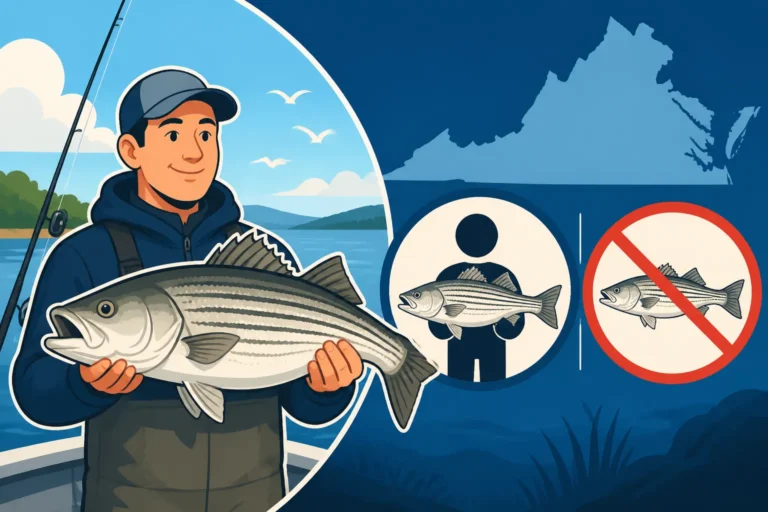
Then comes the critical spring spawning period. This is when the season typically closes in the tidal rivers and often in the Bay itself. Protecting the fish during the spawn is paramount for the health of the entire stock. Once spawning is complete and the post-spawn fish begin to move out of the rivers and into the main stem of the Chesapeake Bay, the season often reopens for a brief window. This allows anglers to target these fish as they recover and begin their northward migration, but usually with very strict limits. The most common of these is the Virginia Rockfish Slot Limit 28 to 31 Inches, designed to protect both juvenile fish and the largest, most reproductively valuable adult fish. Typically, anglers are limited to How Many Striped Bass Can You Keep in Virginia, which is usually just one fish per person.
This strategic opening and closing ensures that we're harvesting fish responsibly, outside of their most vulnerable reproductive phase, and allowing the stock to rebuild and sustain itself.
Navigating Virginia's Striped Bass Seasons
Let's break down the general structure of Virginia's striped bass seasons. Keep in mind that specific dates and regulations can change annually based on stock assessments and management decisions by the VMRC and ASMFC. Always check the current regulations before heading out!
The Early Season (January-March)
This first window often kicks off on January 1st and runs through March. During this period, particularly in the Chesapeake Bay and its tributaries, you're primarily targeting striped bass that have either overwintered in Virginia waters or are early migrants moving into the Bay. The waters are cold, and the fish can be lethargic, often holding in deeper channels or near warmer discharges.
Fishing during this time can be productive, but it requires patience and specific techniques. Trolling with large swimbaits or umbrella rigs can be effective in deeper waters, as can jigging with heavy spoons or soft plastics near structure. Anglers often find success focusing on areas where warmer water from power plants or industrial outflows provides a slight temperature break. The slot limit and one-fish-per-person rule are strictly enforced, so be sure to measure your catch carefully. This early season provides an opportunity to catch some beautiful winter rockfish before the spawning frenzy truly begins. For precise dates, refer to Virginia Striped Bass Season Dates January Through March.
The May-June Window
After the early season closes in late March, there's typically a period of closure throughout April, coinciding with the peak of the striped bass spawn in the Chesapeake Bay tributaries. This closure is absolutely vital for the species' reproductive success.
Then, around mid-May, the season often reopens, running through the first half of June. This is when Virginia Striped Bass Season Reopens May 16, and it's a popular time for anglers to hit the water. By this point, most of the spawning has concluded, and the fish, while potentially a bit "skinny" from their reproductive efforts, are beginning to move out of the rivers and into the main stem of the Bay and towards the ocean. They are actively feeding to regain their strength for the long northward migration.
Fishing during this late spring period can be fantastic. You might find schools of striped bass chasing baitfish near the mouths of the rivers or along the Bay's shoals and drop-offs. Trolling, jigging, and live-lining are all popular and effective methods. The weather is usually beautiful, making for enjoyable days on the water. However, the strict slot limit (28 to 31 inches) and the one-fish-per-person daily limit remain in effect. This brief window is a carefully managed opportunity to harvest some post-spawn fish without unduly impacting the spawning stock.
The Fall/Winter Migratory Season
While not always a distinct "split" in the same way as the early spring and late spring windows, the fall and early winter months represent another incredibly important and often regulated period for striped bass in Virginia. This is when the grand "fall run" occurs.
Starting roughly in October and continuing through December (and sometimes into the early part of the subsequent year's season), vast numbers of striped bass migrate southward along the Atlantic coast. Many of these fish will enter the Chesapeake Bay to overwinter, while others will continue south, passing by the Virginia Beach oceanfront. This period offers some of the most exciting and productive striped bass fishing of the year.
The fish are actively feeding, gorging themselves on baitfish like menhaden, preparing for the colder months. This is when anglers can experience truly epic days, especially in the Bay and off the coast. Trolling, casting large lures, and live-lining are all highly effective. The Chesapeake Bay Striped Bass Fishing Guide is an excellent resource for this time of year. While the specific dates for this period might be continuous with the previous May-June slot, the character of the fishing and the populations of fish present are distinctly different, influenced by this massive migration. The regulations remain crucial, especially concerning the slot limit and daily possession limits. This period is arguably the Best Month to Fish for Striped Bass in Virginia for many anglers, especially for larger, ocean-migratory fish.
To help visualize these different periods, here's a general overview:
| Season Window | Typical Dates (Approximate) | Primary Objective of Regulation | Typical Fishing Activity/Target |
|---|---|---|---|
| Early Spring | January 1 – March 31 | Allow limited harvest of overwintering/early migratory fish. | Deeper channels, trolling, jigging. |
| Spring Spawning Closure | April 1 – May 15 | Protect striped bass during peak spawning period in tributaries. | NO FISHING FOR STRIPED BASS |
| Late Spring/Post-Spawn | May 16 – June 15 | Allow limited harvest of post-spawn fish as they leave rivers. | River mouths, Bay shoals, trolling. |
| Summer Closure | June 16 – September 30 | Protect fish from summer heat stress; allow stock recovery. | NO FISHING FOR STRIPED BASS |
| Fall/Winter Migratory | October 1 – December 31 | Allow harvest of southbound migratory fish in the Bay and ocean. | Coastal trolling, jigging, live-lining. |
Note: These dates are approximate and subject to change annually. Always verify current regulations with the Virginia Marine Resources Commission (VMRC) or Virginia Department of Wildlife Resources (DWR) before fishing.
Practical Implications for Anglers
Understanding why the season splits is one thing, but knowing how to adapt your fishing plans is what really counts. These regulations aren't there to hinder you; they're there to help ensure there are fish for years to come.
Planning Your Virginia Striped Bass Trips
The split season means that planning your Virginia striped bass trips requires a bit more foresight. You can't just decide to go "striped bass fishing" any random weekend. You need to align your trips with the open seasons for the specific waters you intend to fish.
- Check Regulations Annually: The VMRC is responsible for setting and adjusting these dates. These can change year to year based on the latest stock assessments and regional management plans, so always check the most current regulations before you go. A simple search for "Virginia striped bass regulations" will usually get you to the official VMRC site.
- Consider a Charter: If you're new to the area or find the regulations overwhelming, booking a charter with a local guide is an excellent option. Charter captains are intimately familiar with the rules, know exactly where the fish are, and often provide all the necessary gear. For example, Virginia Beach fishing charters are well-versed in the various open seasons and will ensure you're fishing legally. Just remember, even on a charter, the Virginia's One-Fish Striped Bass Limit on Charter Trips still applies per angler.
- Embrace Other Species: When striped bass season is closed, it's a perfect opportunity to target other abundant species in Virginia, such as catfish, crappie, or even various saltwater species like flounder or red drum, depending on the time of year.
- Stay Informed: Follow local fishing reports, join online forums, and talk to bait shop owners. They often have the most up-to-date information on fish movements and the best places to fish within the current regulations. You might also find valuable insights from our overarching Virginia Striped Bass Season and Slot Limit Guide.
Essential Gear for Different Seasons
The gear you'll need can vary slightly depending on which part of the split season you're fishing and where. For example, the techniques for a January striper in the lower Bay are different from a May striper near the spawn.
- Early Season (January-March): Expect cold weather. You'll need warm, waterproof clothing – think good quality insulated waders and a waterproof jacket. Consider layering up with base layers from brands like Under Armour or Columbia to stay comfortable. For tackle, heavier rods capable of handling large lures and jigs are key. Braided line in the 30-50lb test range is common. If you're planning a trip to a tackle shop or looking online, sites like Amazon offer a vast selection of durable cold-weather gear and heavy-duty fishing tackle to prepare you for the elements and the fight.
- Late Spring (May-June): The weather is milder, but rain is always a possibility, so a good lightweight rain jacket is still essential. Lighter to medium-heavy rods are often sufficient, especially for casting. You might be using a variety of lures, from topwater plugs to soft plastics and bucktails. Live bait setups will also require appropriate hooks and weights. A reliable pair of polarized sunglasses (many popular brands are available on Amazon) will help you spot fish activity on the surface and reduce glare.
- Fall/Winter Migratory (October-December): This can be a mix of pleasant fall days and increasingly cold, windy conditions. Again, layering is crucial. You might be trolling offshore or in the deeper parts of the Bay, so heavy-duty tackle capable of handling big fish and heavy lures is a must. Large conventional reels spooled with heavy braided line are common. Many anglers find durable tackle boxes and rod holders essential, which can easily be found on Amazon along with a wide range of fishing electronics like fish finders. Always carry a reliable fillet knife and a cooler with plenty of ice for your catch.
Remember, investing in quality gear, especially appropriate clothing, can make a huge difference in your comfort and success on the water, regardless of the season.
Disclaimer
Fishing regulations, seasons, and licensing requirements can change. Always consult the official Virginia Marine Resources Commission (VMRC) and Virginia Department of Wildlife Resources (DWR) websites or publications for the most current and accurate information before planning your fishing trip. This guide is for informational purposes only and should not be considered a substitute for official regulations.