How to Fish a Pond From the Bank
Trying to enjoy a relaxing day of fishing but feeling intimidated by vast rivers or huge bay waters, especially if you don't own a boat? Many of us have been there, watching anglers with expensive gear and big vessels, feeling like we're missing out. But what if I told you that some of the most rewarding fishing experiences can be found right from the bank of a quiet pond? This comprehensive guide will walk you through everything you need to know to successfully fish a pond from the bank, turning that frustration into pure angling enjoyment.
Choosing the Right Pond and Finding Your Spot
Fishing from the bank offers incredible accessibility and a different kind of challenge, but it all starts with picking the right body of water and then knowing how to "read" it from shore. You don't need a boat to find great fish!
Public vs. Private Pond Access in Virginia
First things first, you've got to find a pond where you're legally allowed to fish. In Virginia, we're lucky to have a wealth of options, but respecting property rights is paramount.
Public ponds are your easiest bet. Think about local or state parks, wildlife management areas run by the Virginia Department of Wildlife Resources (DWR), or community lakes. These spots are often clearly marked with public access points, parking, and sometimes even amenities like picnic tables or restrooms. Many Virginia state parks have excellent ponds that are regularly stocked, offering fantastic opportunities for anglers of all skill levels. Always check the park's specific rules before you go, as some might have special regulations beyond statewide fishing rules. Remember, even in public waters, having your Virginia Fishing License Guide in order is essential, and it's something every angler needs to consider, especially first-timers.
Private ponds are a different story, but they can offer some incredible, often less-pressured fishing. These are typically on private land, perhaps a farm pond or a pond within a private subdivision. The golden rule here is simple: always ask permission. Never assume you can just walk onto someone's property to fish. A friendly knock on the door, a polite request, and an offer to share any fish you catch can go a long way. Building a relationship with a landowner can open up exclusive fishing opportunities that most anglers only dream about. Just make sure you understand Virginia's Rules for Fishing on Public and Private Waters to ensure you're always on the right side of the law, no matter where you cast your line.
How to "Read" a Pond from the Shore
Once you've identified a promising pond, the real skill comes in knowing where the fish are likely to be hiding. Fishing from the bank means you can't just motor around with a fancy fish finder, so you have to rely on your eyes and your intuition.
Look for areas that offer cover or structure. These are fish magnets because they provide shelter from predators, ambush points for prey, and often cooler water or shade. What should you be looking for?
- Submerged vegetation: Patches of lily pads, cattails, submerged grass beds, or even fallen trees are prime real estate for bass, crappie, and sunfish. These areas offer both food and protection.
- Overhanging trees or brush: The shade they cast can attract fish, especially on hot, sunny days. Plus, insects and small critters often fall from these branches, providing an easy meal.
- Docks, piers, or bridges: Any man-made structure offers cover and depth changes. Fish love to hang out under and around these structures. If you're near a community park, check out the fishing pier.
- Inlets and outlets: Where a small stream flows into or out of a pond, it creates current and brings in fresh oxygen and food. These bottlenecks are often highways for fish.
- Depth changes: While harder to see from the bank, look for areas where the bank drops off steeply. This suggests deeper water close to shore, which can be productive, especially in warmer months. On shallower, flatter banks, fish might be found closer to shore in the early morning or late evening.
Spend some time observing the water before you even make your first cast. Look for any signs of fish activity – splashes, ripples, baitfish schooling, or even fish jumping. These observations are your best guides for where to focus your efforts.
Essential Gear for Bank Fishing Success
One of the great joys of pond bank fishing is that you don't need a boatload of expensive gear. A simple, effective setup is often all it takes to have a fantastic day.
Rod, Reel, and Line Basics
For most pond bank fishing scenarios, a medium-light to medium power spinning rod, paired with a matching spinning reel, is your best friend. This setup is versatile enough to handle everything from panfish to decent-sized bass and even catfish.
- Rod: A rod between 6 to 7 feet in length provides a good balance of casting distance from the bank and control. Look for a rod with a comfortable handle and a sensitive tip so you can feel those subtle bites.
- Reel: A 2500 or 3000 series spinning reel is perfect. It holds enough line, casts smoothly, and has a drag system capable of handling unexpected surprises. You can find excellent, budget-friendly spinning combos on Amazon that are ready to go right out of the box, making them perfect for beginners.
- Line: Stick with monofilament or fluorocarbon line in the 6-10 lb test range. Monofilament is forgiving, easy to tie, and has some stretch, which can be helpful when a fish makes a sudden run. Fluorocarbon is less visible underwater and more sensitive, but it can be a bit stiffer. Braided line in the 10-20 lb test range is also an option, especially if you're fishing around heavy cover, as its strength and lack of stretch help you pull fish out of snags. Always match your line test to the general size of fish you expect to catch.
Terminal Tackle and Accessories
This is where the magic happens – the bits and pieces that connect your line to the fish. A small tackle box filled with these essentials will serve you well.
- Hooks: A variety of sizes is key. You'll want small hooks (sizes 8-12) for panfish like bluegill and crappie, medium-sized hooks (sizes 1-4) for bass, and larger, stronger hooks (sizes 1/0-3/0) for catfish. Circle hooks are excellent for live bait fishing, as they often hook fish in the corner of the mouth, making for easy release.
- Weights/Sinkers: Split shots are simple and effective for adding a little weight to your line, while bullet weights are great for Texas-rigging soft plastics, especially when fishing for bass in weeds. Remember, just enough weight to get your bait down is often all you need.
- Bobbers/Floats: These are invaluable, especially for beginner anglers or when fishing for panfish. They suspend your bait at a set depth and signal bites with a dip or disappearance. Slip bobbers are fantastic for fishing deeper water from the bank, allowing you to cast farther and set your depth after the cast.
- Pliers/Forceps: Essential for removing hooks safely from fish and for cutting line. A multi-tool from Amazon with pliers and a knife can be incredibly handy.
- Line Clippers/Scissors: Keep these handy for clean cuts.
- Measuring Tape: Crucial for ensuring your catch meets any length regulations.
- Small Cooler: For keeping drinks, snacks, and any fish you plan to keep fresh.
- Sun Protection: Hat, sunglasses, and sunscreen are non-negotiable for a comfortable day outdoors.
Remember, you don't need every gadget on the market. Start with the basics, and as you gain experience, you'll figure out what other items might make your specific style of bank fishing even better.
Mastering Techniques for Pond Bank Angling
Fishing from the bank requires a slightly different approach than fishing from a boat. You're limited in mobility, so your casting and presentation techniques become even more critical.
Casting Fundamentals and Lure Presentation
Being able to cast accurately and subtly is a huge advantage when fishing from the bank. You want to get your bait or lure into those key fish-holding spots without spooking the fish.
- Overhead Cast: This is the most common and versatile cast. Practice getting a smooth, controlled motion that allows your bait to land softly. Aim for specific targets like the edge of lily pads or under an overhanging branch. A soft landing is crucial, as a noisy splash can send fish scattering.
- Roll Cast/Pitching/Flipping: When fishing in tight quarters with lots of bankside vegetation, these shorter, more controlled casts are invaluable. They allow you to drop your bait precisely into small openings without a big overhead swing.
- Vary Your Retrieve: Don't just cast and reel straight back in. Fish are often enticed by erratic movements. Experiment with different speeds, pauses, twitches, and jigs. For soft plastics, letting them sink and twitching them along the bottom can be incredibly effective for bass. When fishing for How to Catch Bass From the Bank, remember that their strike zones can be small, so precise lure placement and presentation are key.
Patience is also a technique. Make a few casts in one spot, vary your retrieve, and if nothing happens after a reasonable amount of time, move down the bank. Think of yourself as hunting for fish, not just blindly casting.
Bait and Lure Selection for Common Pond Species
Ponds in Virginia are often home to a fantastic variety of fish, and tailoring your bait and lures to what's biting can dramatically increase your success.
| Fish Species | Best Live Baits | Recommended Artificial Lures |
|---|---|---|
| Largemouth Bass | Live minnows, crawfish, worms | Soft plastic worms, jigs, spinnerbaits, crankbaits, topwater frogs |
| Smallmouth Bass | Crayfish, minnows | Small crankbaits, tubes, grubs, finesse worms |
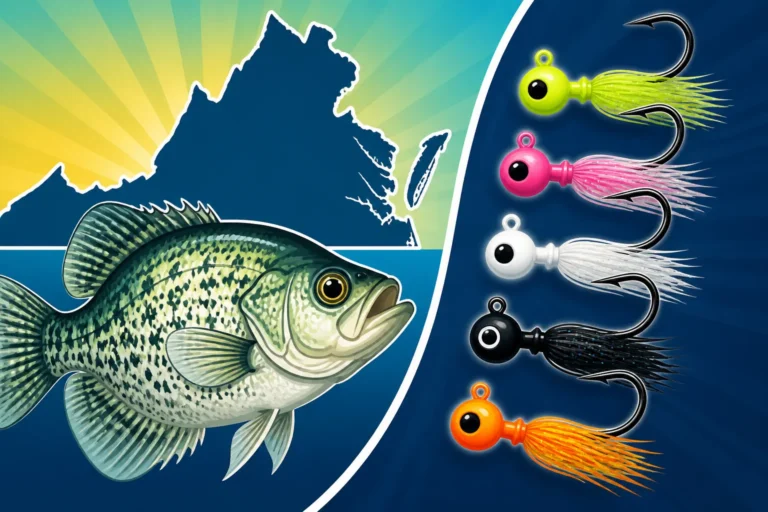
| Crappie | Live minnows, small shiners | Small jigs (1/32 to 1/16 oz) with grub or tube bodies, tiny spinners |
| Bluegill/Sunfish | Worms, crickets, mealworms | Tiny jigs, small poppers (topwater), flies |
| Channel Catfish | Cut bait, chicken livers, worms, dough balls | Scented catfish baits, large jigs tipped with bait |
| Flathead Catfish | Live sunfish, large live minnows | Large jigs with live bait |
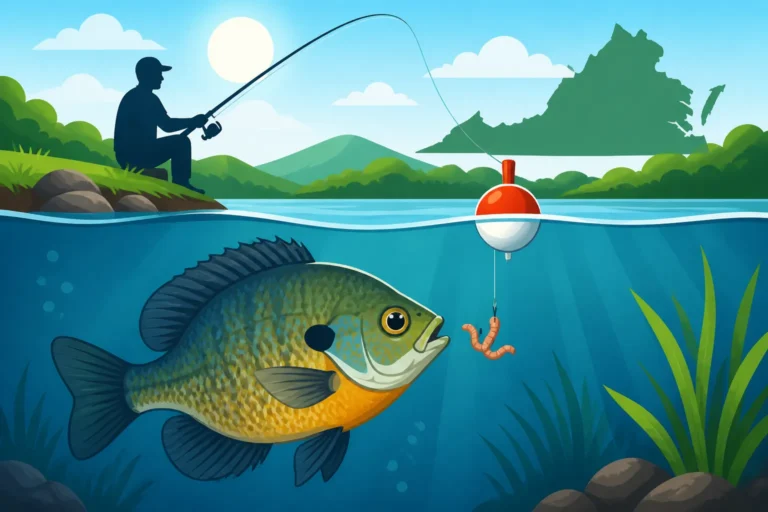
When targeting Bream and Bluegill Fishing for Beginners, a simple worm under a bobber can't be beaten. They're often schooling, so once you find one, you've likely found more. For crappie, small jigs are incredibly effective. Learn some Crappie Fishing Techniques for Beginners and you'll be surprised at how many you can catch. And if you're after those bigger pond residents, like catfish, consider Catfish Bottom Fishing Techniques with cut bait or worms. Many anglers swear by the effectiveness of a good quality worm or minnow bucket, easily found on Amazon, to keep their live bait healthy throughout the day.
Tips for a Successful and Enjoyable Experience
Beyond the gear and the techniques, there are a few extra tips that can make your bank fishing adventures truly special.
Timing Your Trip for Optimal Bites
Fish activity, especially in ponds, is heavily influenced by time of day and weather conditions. Being mindful of these factors can significantly improve your chances of success.
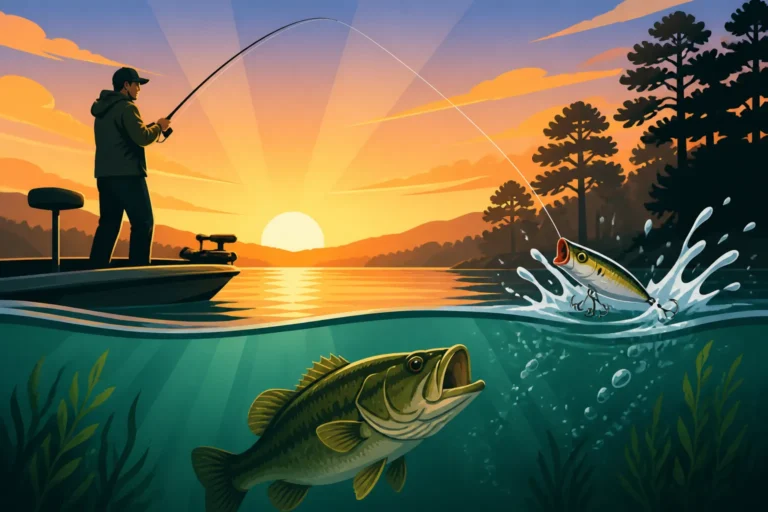
- Dawn and Dusk: These are often the "magic hours" for many fish species, particularly bass and crappie. The light is low, temperatures are cooler, and fish are often more active and willing to feed close to shore. If you're looking to catch bigger bass, these low-light conditions are prime time.
- Overcast Days: A cloudy day can often be just as productive as dawn or dusk, as the reduced light keeps fish more active throughout the day, rather than retreating to deep cover.
- After a Rain Shower: A light rain can sometimes trigger a bite, washing insects and nutrients into the water. However, heavy, muddy runoff can shut down the bite temporarily.
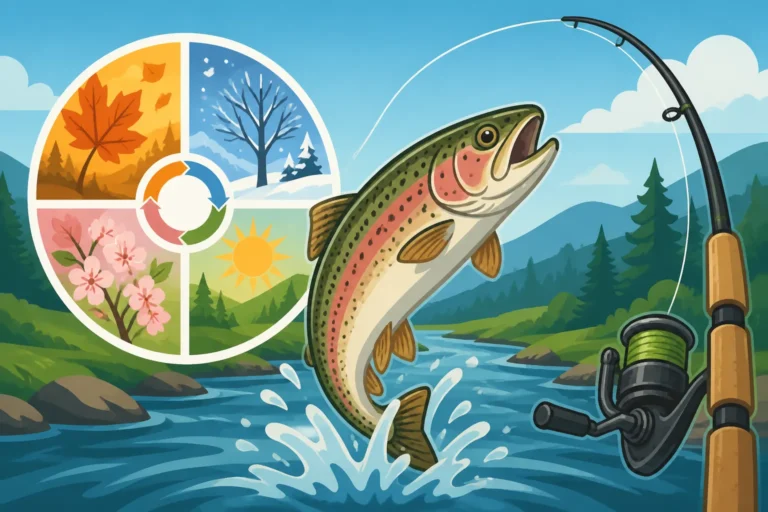
- Seasonal Considerations: Fish patterns change throughout the year. Spring often finds fish shallow, preparing to spawn. Summer sees them retreat to deeper, cooler water or seek shade. Fall brings a feeding frenzy as they bulk up for winter, and winter can mean slower, deeper bites. Knowing the general Best Time of Year for Bass Fishing in Virginia or other species can guide your seasonal efforts.
Always check the local weather forecast before you head out. A little planning goes a long way.
Family-Friendly Approaches and Catch & Release
Pond bank fishing is one of the most accessible and enjoyable ways to introduce newcomers, especially kids, to the sport. Creating positive experiences ensures they'll want to come back.
- Keep it Simple for Kids: Start with simple setups and easy-to-catch fish like bluegill or sunfish. A worm under a bobber is often all it takes. The thrill of catching anything is what matters most. Easy Fishing Techniques for Kids can turn a regular outing into a memorable adventure. Also, be sure to know Do Kids Need a Fishing License to Fish? in Virginia, as rules can vary by age.
- Focus on Fun, Not Just Fish: Celebrate every bite, even if it's a missed one. Emphasize the beauty of nature, the sound of the birds, and the joy of spending time together. Pack plenty of snacks and drinks, and don't make the trip too long.
- Practice Catch & Release: Many ponds, especially smaller ones, benefit from catch and release to maintain a healthy fish population. If you choose to release your fish, handle them gently. Wet your hands before touching them, support their body, and return them to the water quickly. For fish you plan to keep, understand and adhere to all local Virginia Fishing Regulations Explained regarding size and creel limits.
- Leave No Trace: Always pack out everything you pack in. Dispose of old fishing line responsibly, as it can be harmful to wildlife. A clean fishing spot is a happy fishing spot for everyone. For beginners wondering Best Fishing Spots for Beginners Who Don't Own a Boat, pond banks are ideal precisely because they're easy to access and keep clean.
Fishing a pond from the bank isn't just about catching fish; it's about connecting with nature, enjoying the simplicity of the sport, and creating lasting memories. With a little knowledge and the right approach, you'll discover that some of the best fishing adventures are just a short walk from shore.
Disclaimer
This article is for general informational purposes only and does not constitute professional advice. Laws, prices and regulations vary by location and change over time. Consult a qualified professional for guidance on your specific situation.