How to Catch Bass From the Bank
It can feel incredibly frustrating to be standing on the bank, watching boat anglers motor off to their "secret spots," leaving you to wonder if there's any real hope of catching a decent bass without a fancy rig. You're not alone in feeling like you're at a disadvantage, but I'm here to tell you that bank fishing for bass in Virginia can be incredibly rewarding and productive if you know what to look for and how to approach it. This guide is dedicated to helping you unlock the secrets of shore-based bass fishing, transforming those frustrating outings into triumphant tales.
Understanding Bass Behavior from the Shoreline
Successfully catching bass from the bank starts with a fundamental understanding of how these fish behave, especially when they're close enough to shore for you to reach. They're not just randomly swimming; they have reasons for being where they are.
How Bass Use Shoreline Structure
Bass are ambush predators, and they absolutely love cover and structure. From the bank, your advantage is that you can often see and target these key areas directly. Think of a bass as a savvy homeowner: they want shelter, easy access to food, and a good vantage point to spot intruders or prey.
Fallen trees, submerged logs, rock piles, docks, and even dense patches of lily pads or cattails all provide excellent cover. These structures offer shade, protection from predators, and a perfect hiding spot to dart out and ambush unsuspecting baitfish. From the bank, you need to "read" the water and identify these prime locations. Look for areas where the bottom changes – from sandy to rocky, or where a drop-off occurs close to shore. Points that jut out into the water can also be bass magnets, as they act as highways for baitfish, and bass will sit on either side, waiting for a meal to pass. Coves, especially those with warmer water or protective vegetation, can be vital nursery areas and feeding grounds. Even seemingly minor changes like a small culvert or an old tire can hold a bass.
Key Environmental Factors for Bank Anglers
Beyond just visible structure, several environmental factors dictate where bass will be and how active they'll be, especially for the bank angler who has limited mobility.
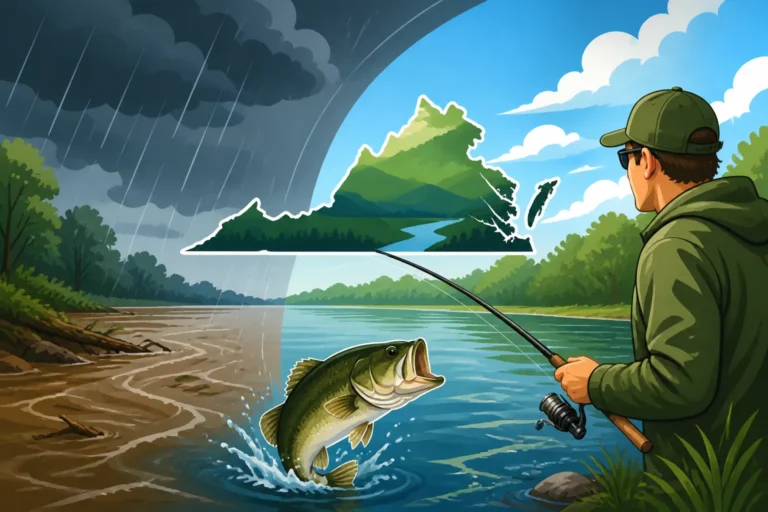
Water temperature is paramount. Bass are cold-blooded, and their metabolism is directly tied to the water temperature. In cooler water (early spring, late fall, winter), they're sluggish and tend to hold deeper or in sun-warmed shallows. As water warms, they become more active, moving into shallower feeding zones. You'll often find bass moving into the shallows during spring when the water temperature hits the mid-50s to low-60s for the Bass Spawn Timing on Virginia Lakes. Water clarity also plays a huge role; in clear water, bass are warier and spook easily, requiring longer casts and more subtle presentations. In murky water, they rely more on vibration and scent, and you can often get away with bolder lures and closer approaches.
Time of day and weather conditions heavily influence feeding patterns. Early mornings and late evenings, or overcast days, are often the best times to fish from the bank. The reduced light makes bass feel more secure, and they'll move into shallower water to feed. Bright, sunny afternoons can push them into deeper water or tight cover, making them harder to reach from shore. Even factors like wind can be your friend, as a chop on the water breaks up your silhouette and pushes baitfish closer to the bank, creating a feeding frenzy opportunity.
Essential Gear for the Shoreline Bass Angler
When you're fishing from the bank, portability and versatility are your best friends. You can't just toss everything into the boat, so every piece of gear needs to earn its spot.
Rods, Reels, and Line Choices
For most bank bass fishing scenarios in Virginia, a medium-heavy power rod with a fast action is a fantastic all-around choice. This setup gives you the backbone to cast heavier lures, pull fish out of cover, and still have enough sensitivity to feel subtle bites. A 6'6" to 7' medium-heavy spinning rod paired with a 2500-3000 series spinning reel is incredibly versatile. It handles a wide range of lure weights and is easy to cast accurately, even for beginners. If you're comfortable with baitcasting, a 7' medium-heavy baitcasting rod and reel combo is equally effective, especially for heavier lures or punching through dense vegetation.
When it comes to line, consider your fishing conditions. Monofilament line (10-14 lb test) is a good choice for topwater lures or crankbaits due to its stretch, which can prevent hooks from tearing out. Fluorocarbon (12-17 lb test) is virtually invisible underwater and has less stretch than mono, offering increased sensitivity – perfect for worms and jigs. Braided line (20-40 lb test) has no stretch, providing maximum sensitivity and incredible strength-to-diameter ratio, making it ideal for fishing heavy cover, but you'll often want a fluorocarbon leader for stealth. For a great all-around bank setup, I usually go with 30lb braid and a 10-15lb fluorocarbon leader, offering strength and invisibility. Many anglers find durable, affordable options for all these line types on platforms like Amazon.
Lures and Baits for Bank Fishing
The key to lure selection from the bank is versatility and minimizing snags. You're not going to be able to retrieve a snagged lure as easily as someone in a boat.
- Soft Plastics: These are arguably the most versatile and effective bank fishing lures. Texas-rigged or Carolina-rigged worms (like a 7-inch PowerWorm or a Zoom Trick Worm) are incredibly weedless and can be fished slowly along the bottom, mimicking a wide variety of prey. Senkos are fantastic for their subtle, shimmying fall. Check out this guide on How to Fish a Plastic Worm for Bass for more in-depth techniques.
- Jigs: Bass jigs (1/4 to 1/2 oz) with a crawfish or creature bait trailer are excellent for pitching into cover or slowly working along rocky bottoms. Their compact profile and weed guard make them relatively snag-resistant. Learn more about How to Fish a Jig for Largemouth Bass.
- Spinnerbaits and Chatterbaits: These lures shine in murky water or when bass are aggressive. The flash and vibration can draw strikes from a distance, and they can be retrieved through moderate cover relatively easily.
- Topwater Lures: When conditions are right (low light, calm water), nothing beats the excitement of a topwater strike. Poppers, walking baits, and frogs (especially in heavy lily pad areas) are excellent choices.
- Shallow Crankbaits: For covering water quickly, a shallow-diving crankbait can be effective, especially when fished parallel to the bank or around points. Just be mindful of snags on the retrieve.
- Live Bait: Don't overlook the effectiveness of live bait. A simple shiner or nightcrawler under a bobber can be deadly, especially when fishing for less aggressive bass. Just make sure to check local regulations for live bait use. You can often find great deals on tackle boxes and various lure kits for a good starting point on Amazon.
Essential Accessories for Shore Anglers
Beyond your rod and tackle, a few accessories will make your bank fishing experience much more enjoyable and efficient.
A good pair of pliers (needle-nose or dedicated fishing pliers) is crucial for removing hooks, cutting line, and general rigging. A small scale and measuring tape are handy for documenting your catches and ensuring they meet any Virginia fishing regulations. A compact tackle bag or backpack is essential for carrying your lures, spare line, and other tools, keeping your hands free for casting and walking. Comfortable, waterproof shoes are a must, as you'll often be walking uneven terrain. Don't forget sun protection – a wide-brimmed hat, polarized sunglasses (which also help you spot submerged structure), and sunscreen are vital, especially during long days on the water. A water bottle and a few snacks are always a good idea. Having a Virginia Fishing License Guide in your bag or readily accessible on your phone is also key.
Mastering Bank Fishing Techniques
Fishing from the bank requires a slightly different approach than fishing from a boat. You're limited by casting distance and angle, which means precision and stealth become even more critical.
The Art of Casting and Presentation
When you're limited to a fixed position, accurate casting is paramount. You need to be able to place your lure exactly where the bass are hiding – under that overhanging branch, along the edge of a weed line, or nestled beside a submerged log. Practice techniques like skipping your lure under docks or low-hanging cover, pitching it silently into tight spots, and fan casting to cover a wide area from a single spot.
Stealth cannot be overstated for bank anglers. Bass are incredibly sensitive to vibrations and shadows. Walk softly along the bank, avoid wearing bright clothing, and stay low if possible, especially when approaching a promising spot. Your shadow falling over the water can instantly spook fish. Make longer casts to avoid spooking bass that might be closer to the bank than you realize. Your presentation also matters; try to make your lure enter the water as quietly as possible, mimicking a natural fall, rather than a loud splash that screams "angler!"
Retrieving Lures Effectively
Once your lure is in the water, the retrieve is where the magic happens. Don't just reel it straight back in. Experiment with varying retrieve speeds, pauses, and twitches to make your lure appear more natural and enticing. For soft plastics, a slow, methodical drag-and-pause retrieve often works best, allowing the lure to sink and then hop along the bottom. For spinnerbaits and chatterbaits, a steady retrieve with occasional jerks or pauses can trigger reaction strikes. Topwater lures require specific actions – "walking the dog" for a Zara Spook or popping for a Rebel Pop-R.
Learning to feel the bite is a skill that develops with practice. Sometimes it's a hard thump, other times it's a subtle tick or just a feeling of "weight" on your line. When you feel anything out of the ordinary, set the hook decisively. Virginia bass, whether they're largemouth, smallmouth, or spotted bass, often have tough mouths, so a strong hookset is critical. If you're targeting Virginia Bass Fishing: Largemouth, Smallmouth, Spotted, and Alabama Bass, understanding how each species might bite differently can also improve your hookup ratio.
Dealing with Snags and Obstacles
Let's be real: snags are an inevitable part of bank fishing. Since you can't just motor over to free your lure, preventing them and knowing how to deal with them is crucial.
- Prevention: Use weedless rigging (like Texas rigs for soft plastics). Choose lures appropriate for the cover you're fishing – a weedless frog for lily pads, a snag-resistant jig for rocky bottoms. Cast accurately to avoid obvious snag hazards.
- Retrieval Techniques: If you feel your lure bumping something, try shaking your rod tip or giving a quick, sharp tug to dislodge it. Sometimes, backing up along the bank and changing the angle of your pull can free a snagged lure.
- The Inevitable Loss: Accept that you will lose lures. It's part of the game. Don't let it ruin your day. Pack a few extra of your favorite lures, especially the more affordable ones. You can find multi-packs of popular soft plastics and jigs at great prices on Amazon, ensuring you're always stocked.
Finding and Approaching Prime Bank Spots in Virginia
You can have the best gear and techniques in the world, but if you're not fishing where the bass are, you won't catch anything. Knowing how to identify and approach productive bank spots is a game-changer.
Identifying Productive Shorelines
The secret to bank fishing success lies in finding public access points that offer good habitat. In Virginia, the Department of Wildlife Resources (DWR) and state parks often provide excellent Shore Fishing Access Points in Virginia. Look for spots that offer a variety of cover and depth changes, even if it's just a small area.
Good indicators of productive shorelines include:
- Abrupt Depth Changes: Bass love transitions. A bank that drops off quickly into deeper water is often better than a long, shallow flat. Use your judgment; if you can see a noticeable change in water color or current that indicates a deeper channel close to shore, that's a good sign.
- Visible Cover: Fallen trees, docks, large rocks, or dense aquatic vegetation are obvious bass magnets. These spots offer shade, ambush points, and a place to hide.
- Inflows and Outflows: Small creeks, culverts, or spillways can concentrate baitfish and oxygen, especially after rain, drawing in hungry bass.
- Rocky Banks and Riprap: Rock provides structure for baitfish and crawfish, and it retains heat, making it attractive to bass, particularly in cooler months.
Don't just look for what's directly in front of you. Observe the entire shoreline. Are there signs of baitfish jumping? Birds diving? These are clues that predatory fish might be nearby.
Stealth and Approach
As mentioned, bass are wary. Your approach can make or break your success. When you've identified a promising spot, approach it carefully. Avoid heavy footsteps that send vibrations through the ground and into the water. Keep a low profile, especially if the sun is high, to prevent your silhouette from casting a shadow over your fishing zone.
Instead of walking right up to the water's edge, try to stay a few feet back and make your first casts parallel to the bank or slightly angled away from you. This allows you to fish water that might be holding bass closer to shore without immediately spooking them. If you spot a bass, try to cast well beyond it and retrieve your lure past it, rather than landing the lure directly on its head, which can startle it. Remember, these fish are wild and smart, especially in heavily fished areas.
Best Types of Virginia Bank Spots
Virginia offers a fantastic variety of water bodies, each with its own prime bank fishing opportunities. Knowing what to look for can significantly increase your chances.
- Docks and Piers: Public docks and fishing piers are often excellent spots. Bass love to hang out under docks, using them for shade and cover. Cast your lure as far under the dock as possible, letting it sink slowly. Many Best Fishing Spots You Can Reach Without a Boat guides will highlight these.
- Fallen Trees and Brush Piles: These are classic bass hideouts. Work your weedless soft plastics or jigs slowly through and around the branches. Be prepared for snags, but the reward can be big bass.
- Bridges and Culverts: The pilings and abutments of bridges provide structure and current breaks that bass exploit. Culverts where water flows into a larger body of water are also prime feeding zones.
- Rocky Banks and Riprap: Found along many lake and river banks, riprap provides endless nooks and crannies for bass and their prey. Jigs and crankbaits worked parallel to these banks can be very effective.
- Vegetation Lines: Lily pads, cattails, and submerged grass beds offer crucial cover. Fish the edges of these lines with spinnerbaits or chatterbaits, and don't hesitate to throw a weedless frog or soft plastic right into the thickest stuff.
- Points and Coves: These geographical features concentrate bass. Cast along the sides of points or into the back of a calm cove, especially if it has good cover. When exploring Best Bass Fishing Lakes in Virginia, always consider how their prominent features translate to bank access.
Seasonal Strategies for Bank Bass Fishing
Bass behavior changes dramatically with the seasons, and your bank fishing approach needs to adapt accordingly. What works in spring might completely fail in summer.
Springtime Bank Bass
Spring is arguably the best time for bank fishing in Virginia because bass move shallow to spawn. During the pre-spawn, when water temperatures are in the mid-50s, big female bass are actively feeding, bulking up for the spawn. They'll be found in shallower coves and flats that warm up quickly, often along creek channels or transitions. Lipless crankbaits, spinnerbaits, and jigs fished slowly can be very effective. These Spring Bass Fishing Patterns are key to early season success.
As the water warms into the high 50s and 60s, the bass move onto their beds to spawn. Look for visible beds in clear, shallow areas with a hard bottom. While tempting to target bedding bass, many anglers practice catch-and-release to protect the spawn. During this period, softer plastics like Senkos or lizards pitched around cover near beds can still entice bites from pre- and post-spawn fish.
Summer Challenges and Opportunities
Summer can be tough for bank anglers. As water temperatures soar, bass often move to deeper, cooler water or seek refuge in dense shade during the day. This is where early morning and late evening become absolutely critical. During these low-light periods, bass will move back into shallower feeding areas. Topwater lures can be incredibly exciting at dawn or dusk.
During the heat of the day, focus on any available shade – under docks, bridge pilings, or deep overhanging trees. Look for areas with deeper water access from the bank, like channel swings or sharp drop-offs. Fishing slower with Texas-rigged worms or jigs can still produce. Oxygen levels can also become an issue in stagnant summer waters, so look for any current or fresh water inflow. This is when understanding Summer Bass Fishing Patterns truly pays off.
Fall Transition and Feeding Frenzy
Autumn is another fantastic season for bank anglers. As water temperatures begin to cool, bass become incredibly aggressive, trying to pack on calories for the upcoming winter. They'll follow baitfish into shallower waters and coves. This is often called the "fall feeding frenzy."
Covering water efficiently with reaction baits like crankbaits, spinnerbaits, and chatterbaits can be highly productive. Bass will often be chasing schools of baitfish, so look for activity on the surface. Don't be afraid to throw topwater lures even into mid-morning if the bass are actively feeding. As fall progresses and water gets colder, bass will start to move into deeper main lake points and humps, but still often within casting distance from a good bank spot.
Winter Persistence
Winter fishing from the bank requires patience and a slower approach. Bass are sluggish in cold water and won't chase a fast-moving lure. They'll hold tight to deep cover or structure, seeking out the warmest available water, often near main lake points, channel swings, or rock piles that absorb heat.
Your best bet is to use slow-moving baits like jigs, shaky heads, or blade baits fished meticulously. Allow your lure to sit on the bottom for extended periods, barely moving it. The bite will often be very subtle – a slight tick or just a feeling of heaviness. Focus on sunny days, and remember that bass will often congregate in schools in winter, so if you catch one, there are likely more nearby.
Here's a quick guide to help you choose your lures based on the season and common Virginia conditions:
| Season | Water Temperature | Preferred Lures (Bank Friendly) | Retrieval Style | Key Spots (Bank Focus) |
|---|---|---|---|---|
| Spring | 50-65°F (10-18°C) | Spinnerbaits, Jigs, Wacky Worms, Shallow Crankbaits | Slow roll (spinnerbait), Hop & pause (jigs), Weightless fall (worms) | Warming coves, flats, creek channels, visible beds, docks |
| Summer | 70-85°F (21-29°C) | Topwater (early/late), Texas-rigged worms, Jigs, Swim Jigs | Walk-the-dog/Pop (topwater), Slow drag (worms), Steady retrieve (swim jigs) | Deep shade, docks, bridge pilings, submerged vegetation edges |
| Fall | 55-70°F (13-21°C) | Crankbaits, Spinnerbaits, Chatterbaits, Jigs, Topwater (early) | Fast retrieve (crankbaits), Burn & kill (spinnerbaits), Pop & walk (topwater) | Main lake points, schooling baitfish, shallow coves, rock piles |
| Winter | Below 50°F (10°C) | Jigs, Blade Baits, Shaky Head Worms | Slow hop, Drag, Dead stick (minimal movement) | Deep cover, rock piles, channel swings, sunny banks |
Disclaimer
The information provided in this guide is for general informational purposes only. Fishing regulations, license requirements, and local conditions can change. Always consult the Virginia Department of Wildlife Resources (DWR) for the most current rules and regulations before heading out on the water. Ensure you have the proper Virginia Fishing License Guide and adhere to all catch limits and size restrictions. Stay safe and enjoy your time fishing!