How to Fish a Spinnerbait for Bass
Many anglers in Virginia, myself included, have stood by the water's edge, scratching their heads after throwing a spinnerbait without a single bite. It's a classic lure, often touted as a bass-catching machine, yet it can feel incredibly frustrating when it doesn't perform as advertised. This guide is here to demystify the spinnerbait, walking you through the ins and outs of fishing this versatile lure to help you finally start reeling in those bass across Virginia's diverse waters.
Understanding the Spinnerbait's Appeal for Virginia Bass
Spinnerbaits are iconic for a reason, but their effectiveness isn't always obvious. They don't look like anything natural in the water, which can sometimes throw new anglers for a loop. However, it's precisely their unique design that makes them so incredibly appealing to various bass species, from largemouth to smallmouth, right here in Virginia.
Why Spinnerbaits Entice Bass in Virginia Waters
Think about what makes a bass strike: it's often a combination of instinct, irritation, and the appearance of an easy meal. Spinnerbaits hit all these notes perfectly. Their main draw lies in the intense vibration and flash they produce as they move through the water. The spinning blades create a pulsating, erratic shimmer that mimics baitfish fleeing or struggling, especially when retrieved quickly. This flash is a huge visual attractant, signaling "food" to a hungry bass. On the other hand, the vibration, created by the blade spinning against the wire arm, sends lateral line senses into overdrive, alerting bass to its presence even in murky or stained water where visibility is low.
Furthermore, spinnerbaits are incredibly snag-resistant. Their unique V-shaped wire arm design pushes obstacles away from the hook, allowing you to confidently cast them into heavy cover like submerged timber, thick grass beds, or rocky bottom structures where bass love to hide and ambush prey. This means you can get your lure into places where other baits would constantly get hung up, giving you access to untouched fish. It's this combination of sensory appeal and weedlessness that makes them such a go-to choice for anglers targeting Virginia Bass Fishing: Largemouth, Smallmouth, Spotted, and Alabama Bass throughout the state.
Anatomy of a Spinnerbait and How It Works
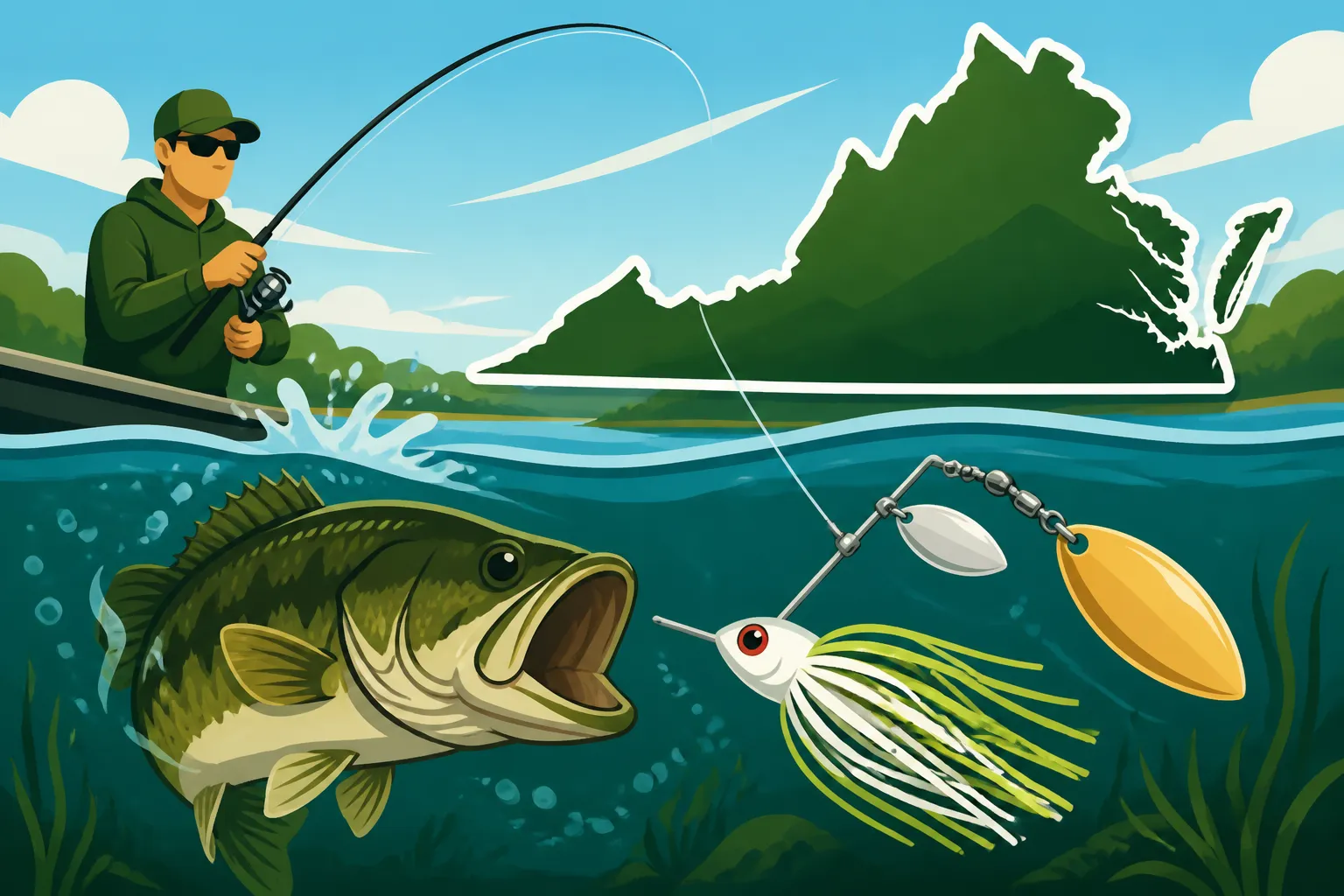
To truly master the spinnerbait, it helps to understand its components and how they work together to create that irresistible presentation. At its heart, a spinnerbait consists of a lead head molded onto a single hook, often adorned with a soft silicone or rubber skirt. Extending from the head is a wire arm, bent into a V-shape. On the upper arm of this 'V' are one or more blades, attached by swivels that allow them to spin freely.
The blades are crucial, and their shape dictates much of the lure's action and vibration.
- Colorado blades are round and wide, creating maximum thump and lift, ideal for slow retrieves and muddy water.
- Willowleaf blades are long and narrow, producing less vibration but more flash, perfect for faster retrieves and clear water.
- Indiana blades offer a compromise, being an oval shape that provides both flash and vibration, a great all-around choice.
When you reel in, water resistance against these blades makes them spin, sending out those enticing vibrations and flashes. The skirt, meanwhile, flares and undulates, giving the illusion of a baitfish's body, adding bulk and lifelike movement. Some spinnerbaits might also feature a single, larger blade with a smaller "thumper" blade trailing behind it, or a series of small, flashy blades – all designed to fine-tune the sensory assault that drives bass wild. You'll find a wide selection of these various blade types and skirt colors available on Amazon if you're looking to stock up.
Mastering Spinnerbait Techniques for Different Virginia Conditions
The real magic of a spinnerbait unfolds when you adapt your retrieve to the conditions. There's no single "best" way to fish a spinnerbait, but rather a spectrum of techniques that excel in different scenarios across Virginia's lakes, rivers, and reservoirs.
The Classic Steady Retrieve and Its Variations
The most basic spinnerbait technique is the steady retrieve, simply casting it out and reeling it back in at a consistent pace. But within this simplicity lies incredible versatility.
-
The Slow Roll: This is perhaps the most common and effective technique, especially when bass are deep, lethargic, or holding tight to bottom structure. Cast your spinnerbait out and let it sink to the desired depth, often near the bottom. Then, retrieve it just fast enough to make the blades spin, allowing the lure to "slow roll" along the bottom, bumping into rocks or timber. This slow, deliberate movement with maximum vibration is excellent in cooler water or when bass are not actively chasing. It's particularly effective for targeting those deeper bass you might find in Smith Mountain Lake Fishing Guide during the colder months.
-
Burning the Bait: When bass are aggressive, actively feeding on baitfish, or positioned in shallow, clear water, a "burned" retrieve can be dynamite. Cast it out and reel it back in as fast as you can, keeping the lure high in the water column. The fast-spinning willowleaf blades create a blur of flash, triggering violent reaction strikes. This is fantastic during warmer periods when fish are more active and willing to chase. This retrieve can also be deadly when trying to catch bass after the spawn, when they are recouping energy and aggressively feeding.
-
Stop-and-Go/Yo-Yo: This retrieve adds an element of erratic movement that often triggers strikes from hesitant bass. Cast, retrieve for a few seconds, then pause briefly, allowing the spinnerbait to flutter and fall. Then, start retrieving again. The sudden change in direction and speed can perfectly imitate a wounded baitfish, making it an irresistible target. This works well around vertical structures like dock pilings, bridge supports, or sharp drop-offs, giving the bass time to react to the falling lure before you speed it up again.
Targeting Specific Cover and Structure
One of the spinnerbait's greatest strengths is its ability to be fished through heavy cover without snagging. This opens up a world of prime bass habitat that other lures can't touch.
-
Grass Beds: Virginia's lakes often feature extensive grass beds, and spinnerbaits are perfect for them. Use a steady retrieve just above, or even slightly through, the top of the grass. If you feel the blades bog down in the vegetation, give your rod a sharp pop to rip it free. This ripping motion often triggers an immediate strike from bass hiding in the grass. For dense hydrilla or milfoil, choose spinnerbaits with willowleaf blades, as they shed grass more easily than the wider Colorado blades. Many anglers find success in these areas, especially in the early morning or late evening.
-
Wood and Timber: Submerged logs, brush piles, and standing timber are bass magnets. Cast your spinnerbait directly into or past the structure, letting it make contact with the wood. The deflection off the timber can create an unpredictable movement that often triggers a strike. Retrieve slowly, feeling for bumps and subtle changes. If it gets hung up, give a slack line pop or slowly pull, and it will often come free. This method is particularly effective in lakes known for their timber, allowing you to present a lure where bass feel safe.
-
Rocks and Riprap: Rocky shorelines, riprap on dam faces, and underwater rock piles are excellent places for smallmouth and largemouth bass to ambush prey. Bounce your spinnerbait off the rocks using a slow roll or stop-and-go retrieve. The metallic clinking and erratic deflections mimic crayfish or baitfish scurrying along the bottom. This technique is especially fruitful during the Virginia fishing seasons explained when bass are active near these transitional areas.
-
Docks and Piers: Docks provide shade, cover, and ambush points for bass. Skip your spinnerbait under docks, allowing it to "walk" along the pilings. A precise cast here can be key. Retrieve with a slow, steady pace, pausing as it passes each piling. The flash and vibration under the dock’s shadow can be irresistible. Consider using a compact spinnerbait for easier skipping.
Water Conditions and Spinnerbait Selection
The conditions on any given day will dictate not just your retrieve, but also the type of spinnerbait you choose. Virginia's weather and water clarity can change quickly, so being prepared is key.
-
Clear Water: In clear lakes or rivers, bass rely heavily on sight. Opt for spinnerbaits with highly reflective willowleaf blades that produce a lot of flash. Silver, gold, or nickel blades are excellent choices. For skirts, natural baitfish colors like white, shad, or pearl are often best. A faster retrieve works well here to capitalize on the visual appeal. Consider a spinnerbait you might find on Amazon with tandem willowleaf blades for maximum flash.
-
Murky or Stained Water: When the water is muddy or stained after a heavy rain, bass primarily use their lateral line to detect prey. This is where vibration is king. Choose spinnerbaits with large, wide Colorado blades that displace a lot of water and create maximum thump. Bright, high-contrast skirt colors like chartreuse, white, or firetiger stand out better in low visibility. A slow retrieve is crucial here, allowing the bass to home in on the vibration. This is often an effective strategy for How to Catch Bass in Muddy Water After Rain.
-
Warm Water: In warmer temperatures, bass are generally more active and willing to chase. You can experiment with faster retrieves and a wider variety of blade and skirt combinations. Often, a combination of flash and vibration works well. Hybrid blades (Indiana-Colorado or Indiana-Willowleaf) can be very effective, offering a balance.
-
Cold Water: When the water gets chilly, bass become more sluggish and prefer slower-moving baits. A slow roll with a large Colorado blade spinnerbait is often the ticket. Darker skirt colors, like black and blue or dark green pumpkin, can also be effective, presenting a larger silhouette. This technique is key when trying to How to Catch Bass in Cold Water as they conserve energy.
Here's a quick reference table for spinnerbait blade types:
| Blade Type | Shape | Vibration Level | Flash Level | Ideal Conditions | Retrieve Speed |
|---|---|---|---|---|---|
| Colorado | Round/Wide | High | Low | Murky water, low light, cold water, slow roll | Slow |
| Indiana | Oval | Medium | Medium | Versatile, balanced conditions, all-around use | Medium |
| Willowleaf | Long/Narrow | Low | High | Clear water, bright light, fast retrieves, current | Fast, medium-fast |
| Tandem | Combo | Varies | Varies | Max versatility, adjust to conditions | Varies with blades |
Essential Gear and Setup for Spinnerbait Success
You can have the best spinnerbait in the world, but without the right rod, reel, and line, you'll be fighting an uphill battle. A properly balanced setup makes all the difference in casting accuracy, lure presentation, and fighting a bass.
Rod, Reel, and Line Choices
Selecting the right tackle for spinnerbait fishing in Virginia is about balance and power. You need a setup that can handle the lure's weight, cast accurately, and provide the backbone to set the hook and fight fish out of cover.
-
Rods: A medium-heavy power, fast-action baitcasting rod is the general go-to. The medium-heavy power provides enough backbone to cast heavier spinnerbaits and horse bass out of dense cover, while the fast action gives you sensitivity to detect bites and make quick, powerful hooksets. A rod length between 6'6" and 7'2" is ideal for most situations, offering a good balance of casting distance and accuracy. A longer rod, like a 7'6" model, can offer better casting distance for covering vast flats or open water, which might be useful in large bodies of water like Lake Anna Fishing Guide.
-
Reels: A baitcasting reel with a gear ratio between 6.4:1 and 7.3:1 is perfect. This range allows for versatile retrieve speeds – you can slow roll by reeling slowly, or burn the bait by cranking faster. A high-quality reel with a smooth drag system is crucial for managing powerful bass runs and preventing line breaks, especially when dealing with the heavy strikes that spinnerbaits often elicit. You can find excellent options for both rods and reels on Amazon that fit these specifications.
-
Line: For spinnerbaits, you typically want a line that offers a good balance of strength, abrasion resistance, and manageability.
- Fluorocarbon (15-20 lb test): This is an excellent all-around choice. It's nearly invisible underwater, providing a stealthy presentation in clear water. It also has low stretch, which translates to better sensitivity and more powerful hooksets. Its abrasion resistance is a huge plus when fishing around wood and rocks.
- Monofilament (14-17 lb test): Monofilament offers more stretch than fluorocarbon, which can be beneficial when bass are striking aggressively, absorbing some of the shock. It's also more forgiving, making it a good choice for beginners. However, it's more visible and less abrasion-resistant than fluorocarbon.
- Braided Line (30-50 lb test with a fluorocarbon leader): Braided line offers superior strength, sensitivity, and casting distance, making it great for punching through heavy grass. However, it's very visible, so tying on a 15-20 lb fluorocarbon leader is recommended to maintain stealth.
Spinnerbait Modifications and Add-ons
Sometimes, a little tweak is all it takes to turn a good day into a great one. Don't be afraid to customize your spinnerbaits.
-
Trailer Hooks: This is almost a non-negotiable for many anglers. Bass often "short strike" a spinnerbait, meaning they nip at the back of the skirt and miss the main hook. A single trailer hook, typically a size larger than the main hook and attached directly to it, significantly increases your hook-up ratio. Just make sure the point of the trailer hook is facing up to reduce snags.
-
Soft Plastic Trailers: Adding a soft plastic trailer to your spinnerbait's main hook can dramatically enhance its appeal. Options include:
- Grub Tails: A single or double-tail grub adds extra bulk and subtle swimming action, mimicking a struggling baitfish.
- Swimbaits: Small swimbaits can be threaded onto the hook for a more pronounced swimming motion and larger profile, especially in clear water.
- Craws or Lizards: These trailers add bulk and a different profile, mimicking crayfish, which can be deadly around rocky areas. The added scent can also draw strikes.
-
Scent Attractants: Applying a liquid or gel scent to your spinnerbait's skirt or trailer can entice hesitant bass to hold onto the lure longer, giving you more time to set the hook. This can be especially useful on tough fishing days or when bass are finicky.
Advanced Tips for Spinnerbait Anglers in Virginia
Once you've got the basics down, you can start to fine-tune your approach and really dial in those bass with spinnerbaits. It's about paying attention to the subtle cues the fish and the environment are giving you.
Reading the Water and Bass Behavior
Understanding seasonal patterns and how bass react to their environment is crucial for consistent spinnerbait success. This isn't just about throwing a lure; it's about anticipating where the fish will be and how they'll be feeding.
-
Pre-Spawn: In early spring, when water temperatures are rising (roughly 50-60°F), bass move from deep wintering holes to shallower staging areas. A slow-rolled spinnerbait can be incredibly effective then. They're looking for substantial meals to fuel the upcoming spawn. Pay attention to warming water in protected coves or along northern banks. Learning How to Catch Bass in Spring Before the Spawn is a game-changer, and spinnerbaits are often a key part of that strategy.
-
Spawn: During the actual spawn (60-68°F), bass are focused on bedding. While not always the primary lure, a spinnerbait can draw aggressive reaction strikes if you bump it near a bed. However, ethical anglers often opt for less intrusive methods during this sensitive time. If you do use a spinnerbait, a stop-and-go retrieve near known bedding areas might entice a protective strike. If you're looking for more details on this period, check out How to Catch Bass During the Spawn.
-
Post-Spawn: After the spawn, bass are often exhausted but quickly become incredibly aggressive as they look to replenish their energy. This is a prime time for spinnerbaits. They'll often be in transition areas, moving from spawning flats to deeper summer haunts. A faster retrieve, or even burning a spinnerbait, can draw powerful strikes from these recuperating fish. This is a great time to experiment with speed. For more insights on this period, explore How to Catch Bass After the Spawn.
-
Summer: In the heat of summer, bass often retreat to deeper, cooler water or seek dense shade. A deep slow roll around offshore humps, ledges, or deep timber can be effective. Early morning and late evening, when bass move shallower, are also excellent times for burning spinnerbaits through grass or around docks. Understanding Water Temperature and Fish Feeding Patterns is paramount here.
-
Fall: As water temperatures cool, bass become very active, feeding heavily to prepare for winter. This "fall feeding frenzy" is a fantastic time for spinnerbaits. Bass often school up and chase baitfish, making a burned or fast-retrieved spinnerbait deadly. Focus on creek channels, main lake points, and deeper flats where baitfish congregate.
Common Mistakes to Avoid
Even with the best gear and knowledge, simple errors can cost you fish. Being aware of these common pitfalls can significantly boost your success.
-
Not Varying Retrieve Speed: This is probably the biggest mistake. Many anglers fall into a monotonous retrieve. If bass aren't biting, change your speed. Go from a slow roll to a burn, then try a stop-and-go. Let the fish tell you what they want. If one retrieve isn't working, don't keep doing it!
-
Using the Wrong Blades for Conditions: As discussed, blade type matters immensely. Using willowleaf blades in muddy water will reduce the vibration bass need to find your lure, just as using large Colorado blades in clear, deep water might create too much drag for a natural presentation. Match your blades to the water clarity and desired retrieve speed.
-
Skipping the Trailer Hook: Bass are notorious for short-striking spinnerbaits. Without a trailer hook, you'll often feel a bump but fail to hook the fish. Adding a trailer hook is a simple, inexpensive modification that dramatically increases your hook-up ratio and reduces frustration.
-
Improper Hookset: With a spinnerbait, you usually want a sweeping side-set, rather than a direct upward jerk. When you feel a strike, drop your rod tip slightly, reel down to take up slack, and then sweep the rod horizontally with power. This ensures the hook digs into the bass's mouth effectively, especially with the single, often larger hook of a spinnerbait.
-
Ignoring the Wind: Wind can be your friend! It creates chop on the water's surface, breaking up light penetration and making bass less wary. It also creates current and concentrates baitfish. Cast your spinnerbait into the wind or along windy banks, letting the wind help you present the lure naturally. Just be mindful of casting into strong crosswinds, which can make accurate presentations challenging.
By keeping these tips in mind and constantly adapting your approach, you'll find yourself much more confident and successful when reaching for that spinnerbait in your tackle box, whether you're exploring the Best Fishing Spots in Virginia or aiming for a trophy on Virginia's Best Lakes for Fishing.
Disclaimer
The information provided in this guide is for general informational purposes only and is not intended as legal or professional advice. Always consult the latest regulations from the Virginia Department of Wildlife Resources (DWR) before fishing, as rules and seasons can change. Fishing involves inherent risks, and personal safety should always be your top priority.