How to Fish After Heavy Rain
Oh, the quintessential angler's dilemma: you've planned your fishing trip, checked the weather, and then BAM! A sudden heavy rainstorm rolls through, turning your clear, calm waters into a muddy torrent. It's enough to make you want to pack it all in and wait for another day. But here's the secret many seasoned Virginia anglers know: heavy rain doesn't always mean game over. In fact, it often shakes things up in a way that can lead to some truly fantastic fishing if you know how to adapt. This guide is all about helping you understand exactly what changes after a downpour and how to adjust your approach to keep those fish biting in Virginia's dynamic waters.
Understanding How Heavy Rain Changes Virginia Waters
Heavy rain isn't just about getting wet; it fundamentally alters the aquatic environment. From the smallest creeks to the expansive Chesapeake Bay tributaries, these changes impact where fish are, what they're eating, and how they behave. Ignoring these shifts is a surefire way to come home empty-handed.
Water Clarity and Color Changes
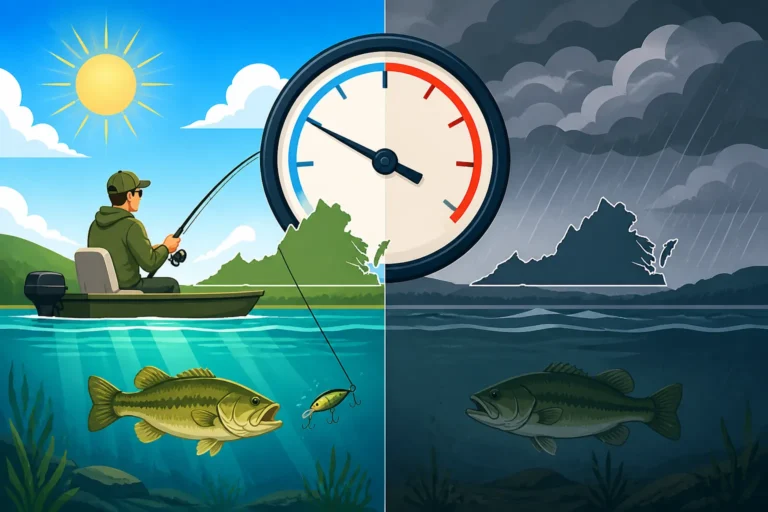
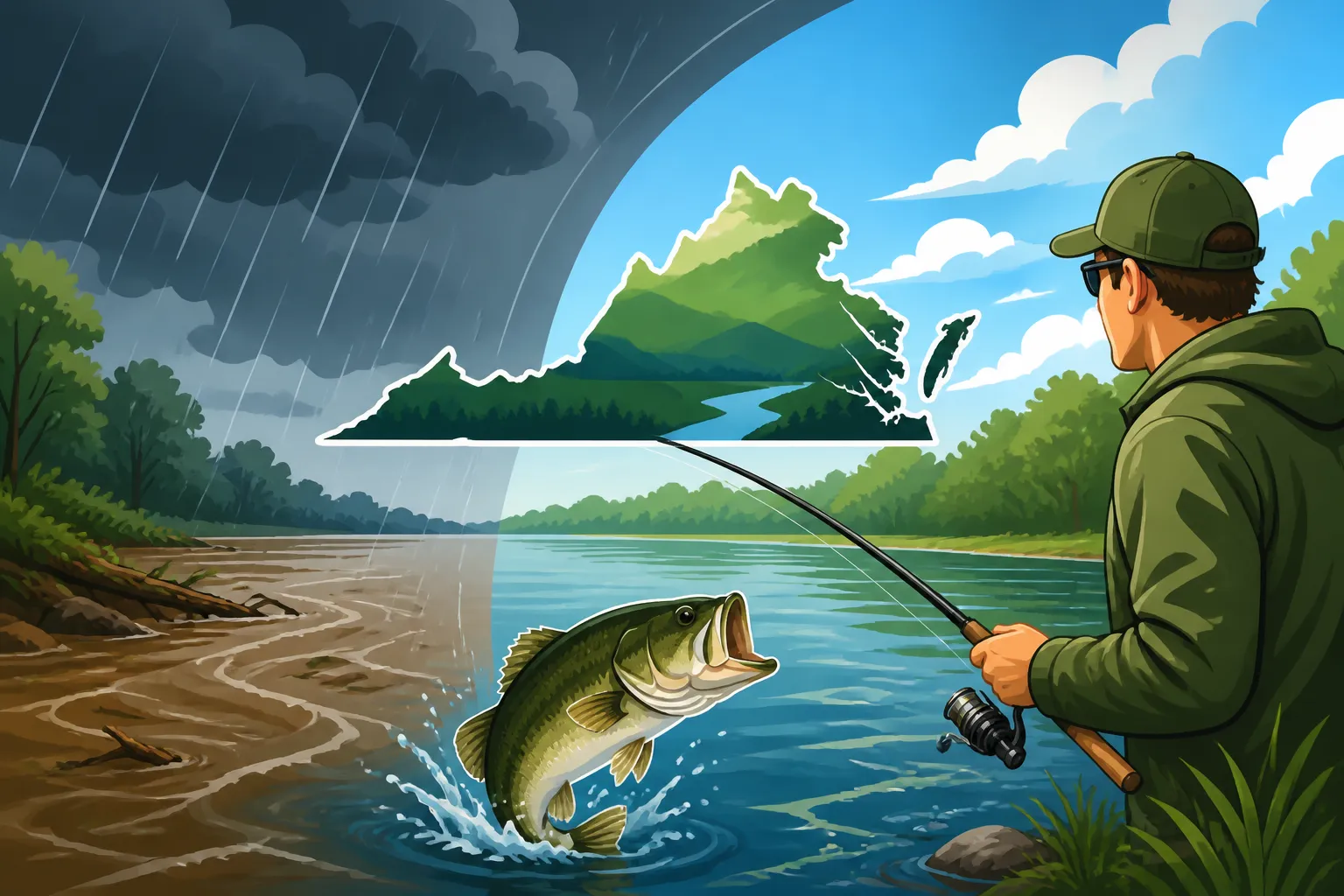
One of the most immediate and noticeable effects of heavy rain is the change in water clarity and color. Runoff from the land carries sediment, dirt, and organic matter into rivers, lakes, and even coastal bays. What was once crystal clear can quickly become stained, murky, or even chocolate milk brown. This isn't just an aesthetic change; it drastically affects how fish perceive their environment.
Fish that rely heavily on sight, like many bass species, can become disoriented or have difficulty finding their prey in cloudy water. Their world goes from a clear panorama to a foggy landscape. Conversely, species like catfish, which rely more on their sense of smell and touch, might actually become more active as the murk provides cover and new food sources are washed in. Understanding this shift is crucial for choosing the right lures and baits. It's why learning How to Choose Lure Color for Murky Water becomes so incredibly important.
Water Levels and Current Fluctuations
Heavy rain means more water, often leading to significantly higher water levels and increased current, especially in rivers and streams. Lakes and reservoirs might see their levels rise, pushing water into areas that were previously dry shoreline. This creates new opportunities for fish to explore and forage in flooded vegetation and cover.
In rivers, the increased current can be a blessing and a curse. While it washes in new food, it also requires fish to expend more energy to hold their position. They'll often seek out calmer areas, eddies, and slack water pockets where they can rest and ambush prey without fighting the main flow. Observing these current breaks is key to locating active fish. On large impoundments like Smith Mountain Lake or Lake Anna, a significant rise in water can flood brush and timber along the banks, creating prime new habitat.
Water Temperature Shifts
Believe it or not, heavy rain can also influence water temperature. If the rain is cold, it can drop the surface temperature of the water, especially in shallow areas. Conversely, if it's warm summer rain falling into cooler water, it can actually raise the surface temperature. These temperature fluctuations, even minor ones, can impact fish metabolism and activity levels.
Fish are cold-blooded creatures, and their activity is directly tied to water temperature. A sudden drop might make them sluggish, sending them to deeper, more stable waters. A rise, especially in a stagnant summer pond, might invigorate them. Pay attention to the air temperature during the rain event and the days following. These subtle changes are part of the larger puzzle, influencing Water Temperature and Fish Feeding Patterns.
Locating Fish After a Downpour
Once you understand the environmental changes, the next challenge is figuring out where the fish have gone. They haven't just vanished; they've simply relocated to areas that offer comfort, safety, and a reliable food source in the altered conditions.
Finding Structure and Cover
After heavy rain, fish often gravitate towards any available structure or cover that offers a break from the current or a place to hide in the murky water. Think about fallen trees, rock piles, submerged brush, bridge pilings, or even docks and boat houses. These spots provide physical protection from strong currents and help break up the current, allowing fish to conserve energy.
In lakes and ponds, rising water levels can inundate shoreline vegetation, creating new flooded cover like grasses, bushes, and even small trees. These areas become excellent ambush points, as baitfish and insects are washed into them. Don't overlook these newly submerged zones; they can be hotspots for bass and other species. Many of Virginia's productive lakes, from Kerr Lake to Lake Gaston, offer abundant flooded timber that becomes even more attractive to fish after a heavy rain event.
Targeting Inflow and Runoff Areas
This is often the golden rule for post-rain fishing. Any area where fresh water is flowing into the main body of water – be it a stream, a culvert, a ditch, or even just a large field runoff – becomes a magnetic attraction for fish. Why? Two main reasons: food and oxygen.
Firstly, these inflows wash in an incredible buffet of food: worms, insects, larvae, small crustaceans, and other organic matter that fish eagerly consume. Think of it as a conveyor belt delivering dinner right to their doorstep. Secondly, the new water often brings a fresh supply of oxygen, which can be particularly appealing in stagnant areas or during warmer months when oxygen levels might be depleted. Fish will stage themselves just outside these inflows, waiting for the current to deliver their next meal. This is where you’ll want to be, understanding Where to Find Fish in High Water After Rain.
Where Fish Seek Comfort and Food
Beyond specific structures and inflows, fish are looking for overall comfort and an easy meal. In high, muddy water, they often move shallower than you might expect, especially if the shallow areas are now flooded with new cover. The reduced visibility makes them feel safer in these areas, and the abundant food being washed in keeps them active.
Look for gradual slopes, points, and coves that are receiving fresh runoff. Areas where the main current is present but has a slight eddy or slack water pocket are also prime. Think about the edges of channels, the backside of islands, or the mouths of creeks that feed into larger bodies of water. Even species like striped bass in the freshwater sections of Virginia’s rivers will hug these current breaks.
Adapting Your Tackle and Techniques
Now that you've got a handle on where the fish are likely hiding, it's time to adjust your gear and presentation. What worked before the rain might be completely ineffective now. This is where your adaptability truly shines.
Lure Selection for Murky Water
When the water turns murky, visibility is severely limited. This means fish aren't relying on sight as much, or they need something incredibly obvious to notice it. Your lure choices should reflect this:
- Vibration and Sound: Lures that create a lot of vibration or noise are paramount. Spinnerbaits, chatterbaits, and crankbaits with rattles send out strong signals that fish can detect with their lateral lines. Consider options from reputable brands or find good deals on Amazon for a variety of rattling crankbaits.
- Color Contrast: Forget natural, subtle colors. You want high-contrast, bright, or dark colors that stand out in the murk. Chartreuse, white, black, and junebug are excellent choices. Combinations like black and blue or chartreuse and white can be incredibly effective. Remember the earlier advice on How to Choose Lure Color for Murky Water – it’s all about creating a distinct silhouette.
- Larger Profiles: Sometimes, a bigger bait means a bigger disturbance. Don't be afraid to size up your lures slightly to create a more noticeable presence in the cloudy water.
Bait Choices for Post-Rain Conditions
Live bait or natural presentations can be absolutely deadly after heavy rain, especially when fish are keying in on washed-in food.
- Worms and Nightcrawlers: These are a natural food source washed into the water during rain. Presenting them on a simple Carolina rig or under a bobber can be incredibly effective for a wide range of species, from panfish to bass and catfish.
- Soft Plastics: Dark-colored soft plastics like junebug or black/blue worms, creature baits, or jigs can imitate washed-in forage. The natural movement and scent (if using scented plastics) can draw strikes even when visibility is poor. This is a common and effective method for How to Catch Bass in Muddy Water After Rain.
- Cut Bait: For catfish, the post-rain rush can be a prime time. Cut bait, particularly strong-smelling options, placed on the bottom near inflows or current breaks can be irresistible. This technique is often highlighted in guides like Best Bait for Catfish in Summer.
Presentation Strategies
How you present your lure or bait is just as important as what you're using.
- Slow Down: In murky water, fish often rely on vibration and scent to locate prey. They might not react as quickly as they would in clear water. Slowing down your retrieve allows them more time to find your offering.
- Target the Edges: Instead of casting directly into the middle of a raging current, cast to the edges of the current, into eddies, or along the seam where clear and muddy water meet. Fish will often stage here, waiting for food to drift past.
- Work the Cover Thoroughly: If you've found promising flooded cover or structure, work it meticulously. Cast multiple times from different angles, letting your bait or lure bump and grind along the structure. Sometimes, a subtle tap against a log is all it takes to trigger a reaction strike from a bass hiding there.
| Post-Rain Condition | Fish Behavior | Angler Adjustment |
|---|---|---|
| Murky Water | Reduced visibility, rely on lateral line/smell | Use high-contrast, vibrating, or scented lures/baits. Slow retrieve. |
| Increased Current | Seek current breaks, cover, or eddies | Target structure (logs, rocks), slack water, and the edges of inflows. Focus on energy conservation. |
| Rising Water Levels | Explore new flooded cover, move shallower | Fish flooded vegetation, points, and newly submerged shorelines. |
| Washed-in Food | Key in on natural forage (worms, insects) | Use live bait (worms), creature baits, or jigs that mimic washed-in food. Target inflows. |
| Temperature Shifts | May seek stable temps (deeper or shallower) | Pay attention to where fish were before rain and how temperature shift might move them. |
Safety First: Important Considerations
While fishing after heavy rain can be rewarding, it's absolutely crucial to prioritize safety. The conditions that make fishing good can also make them hazardous.
Navigational Hazards
Increased water levels and strong currents can create new navigational hazards, especially if you're fishing from a boat. Submerged debris, like logs, branches, and even entire trees, can be dragged into the water and become floating hazards or hidden obstacles just below the surface. Propellers can get fouled, or worse, hulls can be damaged.
Always operate your boat with extreme caution, especially in areas with strong current or unfamiliar waters. Watch for "boils" or unusual currents that might indicate submerged obstacles. Wear your life jacket, and ensure all your safety gear is easily accessible. If you're wondering about boating regulations, make sure you're up to date on questions like Do You Need a License to Fish From a Boat?.
Bank Stability and Wading Risks
For shore anglers and waders, heavy rain can significantly impact bank stability and make wading treacherous. Riverbanks, especially those composed of loose soil or clay, can become saturated and unstable, leading to sudden collapses. Always approach the water's edge with caution and test the ground before committing your weight.
Wading in high, fast-moving water is extremely dangerous. The bottom can be uneven, slippery, and the current can be much stronger than it appears. Hidden rocks, submerged debris, and sudden drop-offs can quickly put you in a perilous situation. If you must wade, use a wading staff, go with a buddy, and know your limits. Avoid wading alone in unfamiliar or rapidly flowing water. If you're fishing rivers like the Potomac River near Alexandria, Virginia, consider safety measures, especially if you're asking Is the Potomac River Safe for Bank Fishing?.
Fishing after heavy rain in Virginia offers a unique set of challenges and rewards. By understanding how the water changes, where fish relocate, and how to adjust your gear and techniques, you can turn what seems like a ruined fishing trip into an epic adventure. Just remember to always put safety first, respect the power of nature, and enjoy the thrill of cracking the code of post-rain fishing.
Disclaimer
This article is for general informational purposes only and does not constitute professional advice. Laws, prices and regulations vary by location and change over time. Consult a qualified professional for guidance on your specific situation.