Where to Find Fish in High Water After Rain
We’ve all been there: you’ve got a fishing trip planned, maybe even taken a day off work, and then the skies open up. Heavy rain falls, rivers swell, and lakes churn with muddy runoff. It’s easy to throw your hands up and assume the fishing will be terrible, but don't despair! This guide is here to unravel the mysteries of finding fish when the waters are high and murky after a significant downpour, turning what seems like a setback into a potential advantage.
Understanding Fish Behavior in High Water After Rain
When the heavens open up and Virginia's waterways swell, it can feel like your carefully planned fishing day just evaporated. Many anglers assume fish go dormant or become impossible to find, but that's often not the case at all. Instead, fish simply relocate and adjust their feeding patterns to the new conditions. Understanding these changes is the first step to turning a rainy-day washout into a successful outing.
The Impact of Increased Current and Turbidity
The most immediate and noticeable effect of heavy rain on rivers and even large lakes is the increase in current and turbidity (murkiness). Rivers can turn into raging torrents, while lake coves become coffee-colored with runoff. This dramatic shift forces fish to seek refuge and adapt.
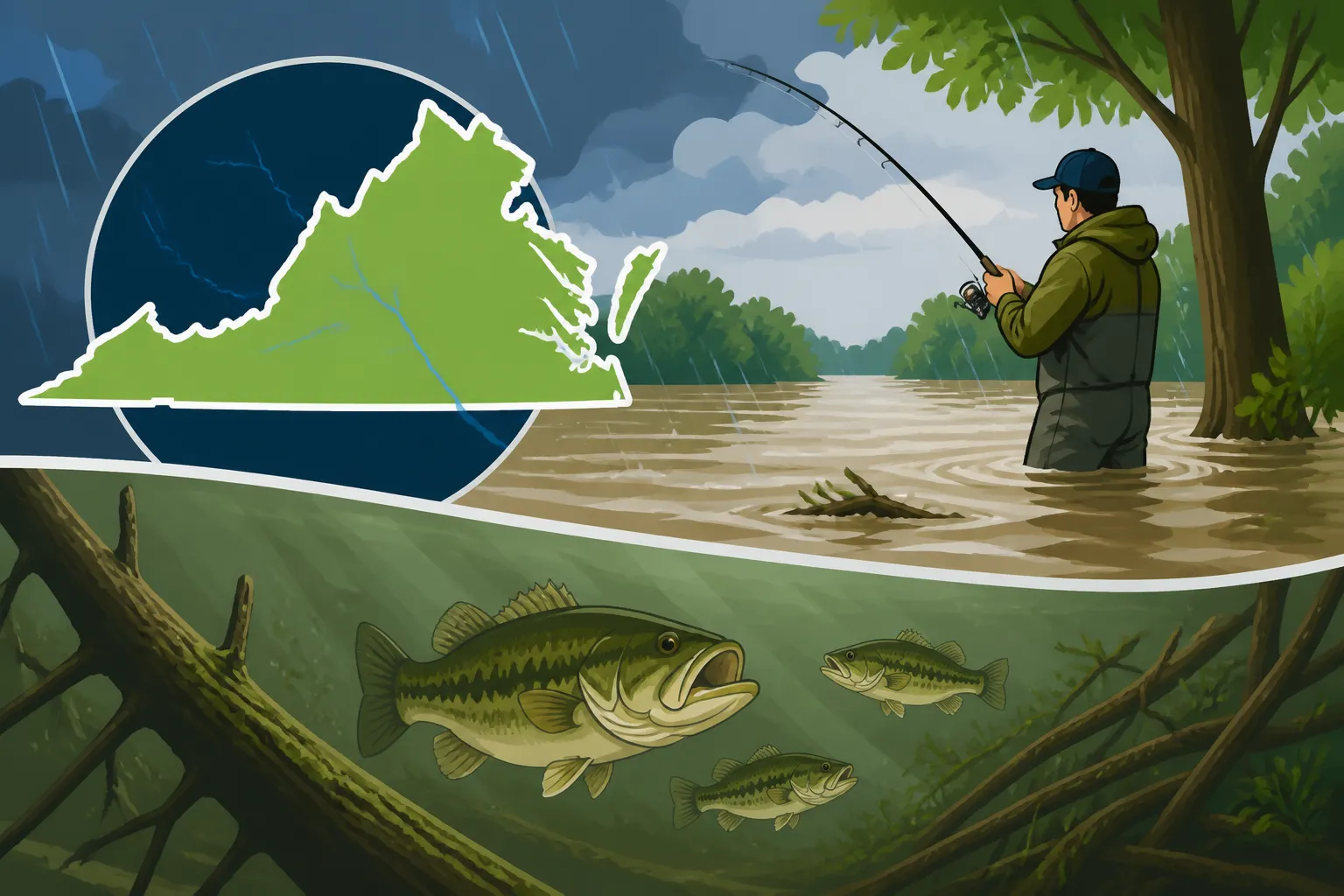
For species like smallmouth bass in the Shenandoah River or trout in mountain streams, strong currents are energy drains. They'll actively move out of the main flow, searching for "current breaks" – areas where the water is calmer, requiring less effort to hold their position. These can be behind large rocks, fallen trees, or in deep eddies along the riverbanks. The increased turbidity, while making it harder for fish to see, also makes it harder for predators (including us!) to see them. This can embolden some species to move into shallower, more vulnerable areas they might avoid in clear water. Think of it as a natural camouflage, giving them a sense of security. The downside for anglers is that our visual lures become less effective, meaning we need to rely on other senses like vibration and scent to entice a strike.
Oxygen Levels and Food Displacement
Another crucial factor after heavy rain is the change in water chemistry. While heavy downpours can initially introduce a surge of cooler, oxygen-rich water from surface runoff, prolonged high water can sometimes lead to decreased oxygen in stagnant backwaters or deeper sections if organic material is swept in and decomposes. However, in flowing rivers and well-mixed lakes, the increased flow generally brings in plenty of oxygen.
Perhaps even more significant than oxygen is the massive displacement of food. Heavy rain washes all sorts of goodies into the water from the surrounding landscape. Worms, insects, grubs, and even small critters living on the bank get swept into the current. This sudden influx of easy meals is like ringing a dinner bell for many fish species. Bottom feeders like catfish, carp, and even opportunistic bass will often move closer to these new food sources. In rivers, this means targeting areas where feeder creeks dump into the main river, or along flooded banks where terrestrial insects are being washed in. This is why a day that seems terrible for fishing can actually present a unique opportunity if you know what the fish are looking for.
Key Locations to Target When Waters Rise
Knowing that fish shift their behavior after rain is one thing, but knowing where they shift to is the real secret. Instead of scattering randomly, fish tend to congregate in specific areas that offer them shelter from strong currents, access to new food sources, or favorable water conditions.
River Hotspots: Eddies, Seams, and Feeder Creeks
Rivers are perhaps the most dramatically affected by heavy rains. The main channel can become a raging torrent, making traditional fishing spots impossible or even dangerous. However, these conditions create prime opportunities in specific areas.
- Eddies: These are pockets of calmer water that form behind obstructions like large rocks, bridge pilings, or fallen trees. Fish use eddies as resting areas, expending less energy while still being close enough to ambush food washing by in the main current. A good strategy is to cast your lure or bait upstream of the eddy and let the current carry it into the calmer water, mimicking a stunned baitfish or dislodged bug.
- Seams: The "seam" is the transition zone between fast-moving water and slower water. This is a classic ambush point. Predatory fish like smallmouth bass or even trout will often sit on the slower side of the seam, waiting for food to drift by in the faster water. Look for visible current lines – often a distinct line where murky water meets slightly clearer water, or where choppy water smooths out. Present your bait or lure along this seam, letting it ride the edge of the current.
- Feeder Creeks and Inflows: This is perhaps the most reliable high-water hotspot. When smaller creeks, drains, or even ditches dump into a larger river, they bring in a rich buffet of food and often slightly warmer or murkier water that fish appreciate. Game fish will stage at the mouth of these inflows, gorging on the worms, insects, and detritus being washed downstream. The James River or the Rappahannock River, for instance, have countless small tributaries that become magnets for fish after a heavy rain. Focus your efforts here, fishing both the main current where it meets the inflow, and slightly up into the feeder creek itself if it’s fishable.
Lake and Reservoir Sanctuaries: Flooded Vegetation and Shallow Points
Lakes and reservoirs, while not experiencing the same intense current as rivers, still undergo significant changes after heavy rain. Runoff can dramatically raise water levels and increase turbidity, pushing fish into new zones.
- Flooded Vegetation: When a lake's water level rises, it inundates shoreline grass, bushes, and even small trees that were previously dry. This creates an instant, submerged habitat rich in cover and food. Terrestrial insects and worms clinging to this vegetation are now underwater, providing an easy meal. Bass, crappie, and panfish will move into these newly flooded areas, often into water that might seem impossibly shallow. Pitching jigs, Texas-rigged worms, or spinnerbaits into this cover can be incredibly effective. Remember that fish in these areas might be extremely close to the bank, so don't overlook those shallow edges.
- Shallow Points and Flats with Runoff: Just like with rivers, any area where runoff water is entering the lake or reservoir can be a goldmine. This includes drainages, ditches, and feeder creeks. Shallow points and flats near these inflows become particularly attractive. The new water brings in food, and the slightly warmer or murkier water can activate fish. For example, on Lake Anna or Smith Mountain Lake, identifying coves or points where significant runoff enters can lead to excellent fishing for bass or even crappie that are congregating to feed. You can check an app like Where to Find Fish in High Water After Rain to pinpoint these areas based on recent rainfall.
Here's a quick comparison of high-water preferences for common Virginia fish:
| Fish Species | Preferred High-Water Locations | Key Attraction | Effective Lures/Baits |
|---|---|---|---|
| Largemouth Bass | Flooded vegetation, feeder creek mouths, shallow points with runoff | New cover, terrestrial food influx, slightly warmer water | Spinnerbaits, Chatterbaits, Texas-rigged worms, shallow crankbaits |
| Smallmouth Bass | River eddies, current seams, confluence of feeder creeks in rivers | Current breaks, ambush points, dislodged food | Jigs, crankbaits, tubes, soft plastic grubs |
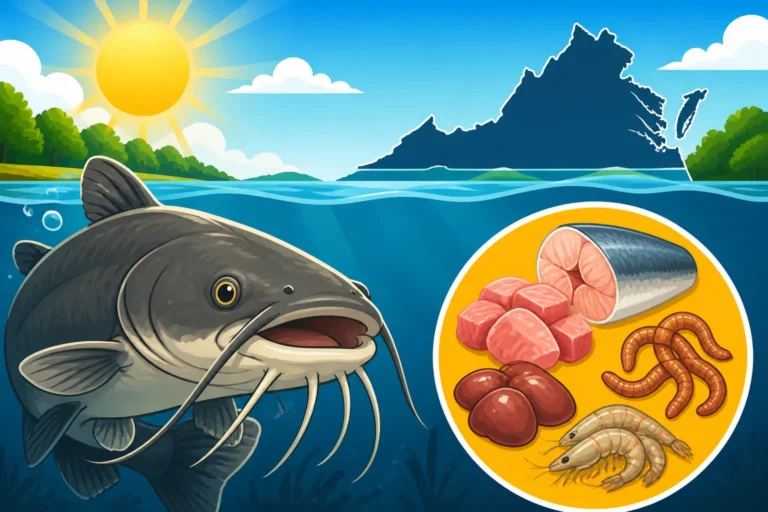
| Catfish | Deep holes near inflows, bottom of current breaks, muddy banks | Strong scent trails, abundant bottom food | Cut bait, chicken livers, stink bait, large worms |
| Trout | Behind large rocks, log jams, inside bends of rivers (current breaks) | Shelter from strong current, easy access to drifting food | Worms, weighted nymphs, small spinners, PowerBait (in stocked waters) |
| Crappie | Flooded brush, submerged trees, slower sections of feeder creeks | New cover, insects washed in, warmer water (often) | Small jigs (dark colors), minnows, spider rigging |
Effective Techniques and Baits for High Water
High water isn't just about finding the right spot; it's also about presenting your bait or lure in a way that triggers a strike when visibility is low and fish behavior is altered. What works in clear, calm conditions might be completely ineffective after a deluge.
Lure Choice: Vibration, Scent, and Color are Key
When the water turns murky, fish rely more on their lateral line (to detect vibrations) and their sense of smell. This means your lure selection needs to prioritize these attributes over visual appeal alone.
- Vibration is Vital: Lures that create a strong thump or wobble are fantastic in stained or muddy water. Think about spinnerbaits with large thumping blades, Chatterbaits, or noisy crankbaits. These send out vibrations that fish can detect from a distance, even if they can't see your lure clearly. They act like a beacon in the murk. When you're fishing in high water, you really want something that fish can feel before they see it, which is often not until it's right on top of them. You can find a huge selection of these types of lures on Amazon, perfect for stocking up before the next big rain.
- Scent Power: For slower presentations or when fish are less active, incorporating scent can make a huge difference. Soft plastics infused with scent (like those from Berkley Gulp! or Yum), or even adding a dab of scent attractant to your jigs and crankbaits, can give hesitant fish that extra nudge to bite. Catfish anglers already know the power of scent, but it's often overlooked by bass and panfish anglers in high-water conditions. Remember that fish are often seeking out dislodged terrestrial food, which naturally has a strong "earthy" smell.
- High Contrast Colors: While exact color choice is often debated, high contrast colors tend to perform well in murky water. Black, blue, chartreuse, and white are often reliable choices. The idea isn't necessarily that the fish see the color accurately, but that the contrast creates a more visible silhouette against the dark background. For instance, a black and blue jig might be much more apparent than a natural green pumpkin. This is why you often hear anglers recommending black/blue or chartreuse/white spinnerbaits when the water is muddy. For more detailed insights, you might want to read our article on How to Choose Lure Color for Murky Water.
Presentation: Slow and Low, with Heavier Tackle
The increased current and reduced visibility also dictate a different approach to your retrieve and rigging.
- Slower Retrieve: Fish in high water are often expending more energy to hold their position or might be slightly disoriented. A fast retrieve might be too difficult for them to track or too much effort to chase. Slowing down your presentation allows fish more time to locate your lure by vibration and scent, and more time to commit to the strike. It also mimics the slower, disoriented movement of natural food items that have been washed into the water.
- Heavier Tackle and Weight: To combat strong currents and ensure your lure gets down to where the fish are holding (often closer to the bottom or in deep eddies), you'll need heavier line and more weight. In rivers, this might mean bumping up your jig weight significantly or using heavier sinkers with your Carolina or Texas rigs. For lake fishing in flooded cover, heavier line also helps you muscle fish out of thick vegetation. Don't be afraid to go up a line size or two and use more lead than you typically would. You're trying to defy the current and reach the fish, not just drift with the flow.
- Targeting Current Breaks: As mentioned earlier, fish often hunker down in current breaks. You need to make sure your presentation reaches these zones effectively. Cast upstream of the current break and allow your lure to drift naturally into the calmer water, or cast directly into the eddy and work it slowly. Sometimes, simply holding your lure in the transition zone between fast and slow water for an extended period can be the trick.
It's also worth noting that species like catfish often thrive in these conditions. They rely heavily on scent and are perfectly adapted to rooting around in murky, debris-filled water for food. Utilizing a technique like bottom fishing with cut bait can be incredibly effective when rivers are running high and muddy. If you're looking for more general tips, check out How to Fish After Heavy Rain.
Gear and Safety Considerations for Post-Rain Fishing
Fishing after heavy rain isn't just about strategy; it's also about preparedness and safety. The conditions that make fishing interesting can also introduce risks if you're not careful.
Essential Gear for Wet and Wild Conditions
Your comfort and ability to stay on the water often hinge on having the right apparel and equipment for adverse conditions.
- Rain Gear and Layers: This might seem obvious, but good quality, waterproof rain gear is non-negotiable. Look for jackets and pants that are truly waterproof, not just water-resistant. Layering underneath is key, as conditions can change rapidly. Start with a moisture-wicking base layer, add insulating layers, and then your waterproof outer shell. Even if the rain has stopped, dampness and cooler temperatures are common. Protecting yourself from the elements means you can focus on fishing, not shivering. Investing in a good pair of waterproof boots is also essential.
- Personal Flotation Device (PFD): High water often means stronger currents and more debris in the water. Whether you're fishing from a boat, kayak, or even wading, a properly fitted PFD (life vest) is a must. Accidents can happen quickly, and a PFD provides invaluable protection. Don't just have it in the boat; wear it. You can easily find comfortable, low-profile PFDs on Amazon that won't hinder your casting motion.
- Heavier Tackle Setup: As discussed, heavier line and weights are important. Consider bringing a separate rod and reel combo spooled with stronger, higher-pound test line than you'd typically use in clear water. This will give you the confidence to fish heavier cover, powerful currents, and larger lures without fear of snapping off. A general rule for river fishing in high water might be to step up your main line by 2-4 pounds from your usual.
- Headlamp and Visibility: If you plan on fishing into dusk or dawn (which can be prime times in these conditions), a headlamp is crucial. The murky water and overcast skies can make visibility poor. Also, consider wearing bright clothing, especially if you're on a river with potential boat traffic or if you're with a group.
Prioritizing Safety in Risky Waters
While the fishing can be fantastic, the conditions themselves demand respect and caution.
- Check Water Levels and Forecasts: Before you even leave the house, check the current water levels and flow rates for the body of water you intend to fish. Many state and federal agencies (like the USGS for rivers) provide real-time data. Understand what "high water" means for your specific spot. A slight rise on a large lake is different from a flash flood warning on a small river. Also, check the forecast for more rain. It’s never worth risking your safety for a fish. You can find information on Virginia's Fishing Rules Every Angler Should Know to ensure you're compliant and safe.
- Wading Cautions: If you're wading, be extremely careful. High water means stronger currents and a higher risk of being swept off your feet. Always use a wading staff for stability and to probe the bottom for drop-offs or hidden obstacles. Never wade alone, and always let someone know where you're going and when you expect to return. The bottom can be slick and treacherous, and the current can be deceivingly strong, especially in rivers like the New River or even sections of the James River.
- Boat and Kayak Safety: For boaters, be aware of increased debris in the water (logs, branches, trash). Navigation can be more challenging with strong currents. Avoid running aground or hitting submerged objects. Kayakers need to be particularly vigilant about currents, strainers (fallen trees that can trap you), and boat traffic. Always keep a close eye on your surroundings. Remember, even if you have a Virginia Fishing License Guide tucked away, it won't protect you from a strong current.
Always err on the side of caution. There will always be another day to fish, but your safety is paramount. High water fishing can be incredibly rewarding, but it demands a heightened sense of awareness and respect for the powerful forces of nature.
Conclusion
Fishing in high water after rain presents a unique set of challenges and opportunities for Virginia anglers. By understanding how fish react to increased currents, turbidity, and food availability, you can turn what often feels like a missed opportunity into a genuinely productive day on the water. Focusing on current breaks, flooded vegetation, and feeder creek inflows will put you where the fish are concentrating. Employing lures with strong vibration and scent, along with a slower, heavier presentation, will help you entice strikes in murky conditions. Most importantly, always prioritize safety by being prepared with the right gear and exercising caution in potentially hazardous waters. So, the next time the rain pours down, don't pack away your rods—grab your rain gear, review your strategy, and head out to experience some of the most exciting fishing Virginia has to offer.
Disclaimer
This article is for general informational purposes only and does not constitute professional advice. Laws, prices and regulations vary by location and change over time. Consult a qualified professional for guidance on your specific situation.