Best Techniques for Windy Day Fishing
Oh, the dreaded windy day! We've all been there, standing on the bank or in a boat, rod whipping around, line tangling, and feeling like you're fighting the elements more than the fish. It's frustrating, plain and simple, and it can turn a promising fishing trip into a battle against gusts and waves. But don't despair! A blustery day doesn't mean you have to pack up and go home. With the right adjustments in gear, technique, and mindset, you can not only survive but actually thrive when the wind howls in Virginia. This guide is all about equipping you with the knowledge to make those windy days productive and, dare I say, even enjoyable.
Understanding How Wind Impacts Your Fishing Day
Wind isn't just an annoyance; it's a powerful force that dramatically alters both the aquatic environment and your ability to fish effectively. Ignoring its effects is a recipe for a disappointing day, but understanding them can give you a significant advantage.
How Wind Affects Water and Fish Behavior
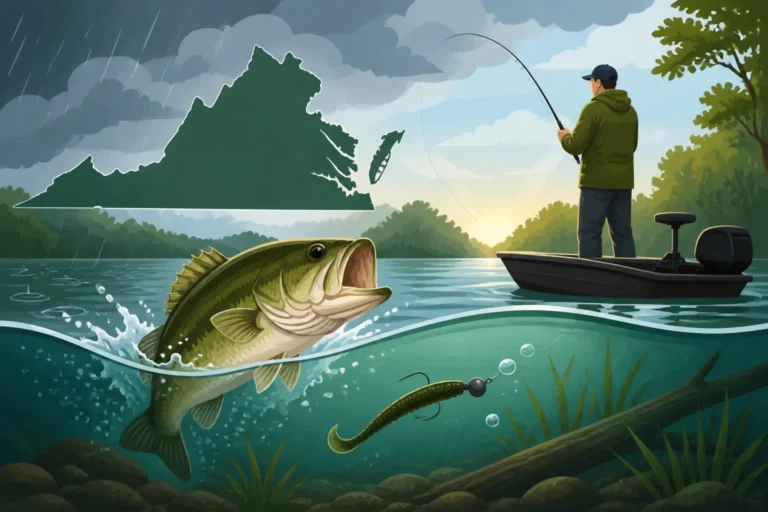
First off, let's talk about what wind actually does to the water. When a strong breeze whips across a lake or river, it creates surface chop. This chop isn't just cosmetic; it pushes water, creating currents that might not otherwise be there. These currents, in turn, can stir up the bottom, especially in shallower areas, affecting water clarity. Think about a day on the Chesapeake Bay or even a large reservoir like Smith Mountain Lake; a strong easterly can really churn things up.
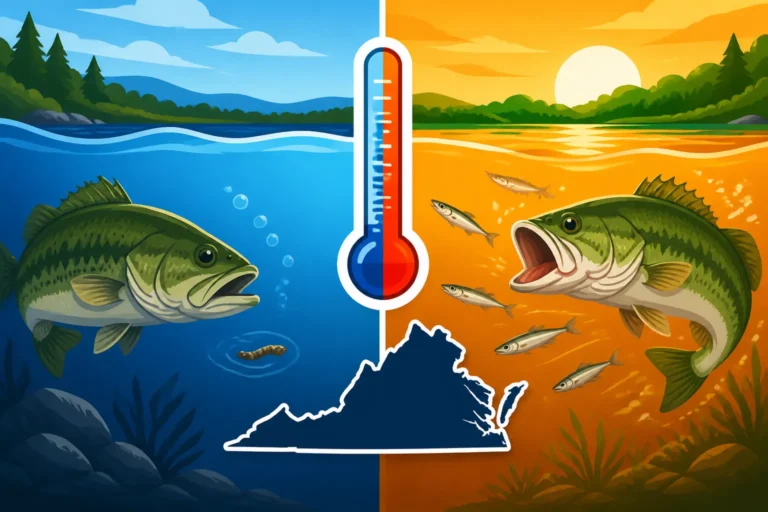
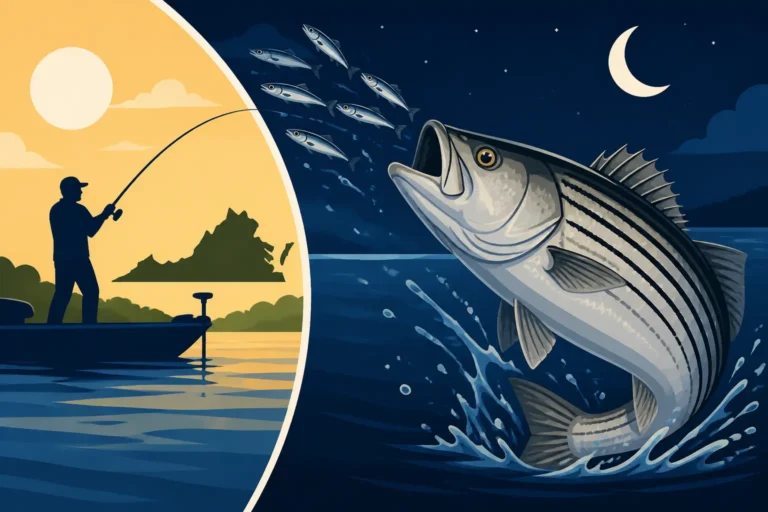
From a fish's perspective, this can be a mixed bag. On one hand, the stirred-up water can be a good thing. It often means increased oxygenation, which can perk up sluggish fish. The turbidity also creates a natural cover, making fish feel more secure as they forage for food. Baitfish, often pushed by the current, might congregate on certain wind-blown banks, creating a buffet for predatory species like striped bass or largemouth bass. These "wind-blown banks" or "wind-swept points" are often prime spots because the food chain gets compressed there. However, too much wind can make it uncomfortable for some species, driving them to seek calmer, deeper water or sheltered coves where the chop is less severe. Understanding how Water Temperature Affects Fish Feeding is also crucial here, as wind can cool surface waters, impacting where fish decide to hold.
The Angler's Struggle Against the Gusts
For us anglers, wind is usually a four-letter word. It impacts almost every aspect of your fishing experience, from casting to controlling your boat. Imagine trying to make a precise cast with a lightweight lure against a stiff headwind on the James River; it's nearly impossible. Your line becomes a sail, catching the wind and dramatically reducing casting distance and accuracy. This can lead to frustrating tangles, wind knots, and lost lures.
Then there's line management. Even if you get your lure out there, keeping a tight line to feel subtle bites becomes a Herculean task as the wind bows your line. This makes bite detection incredibly difficult, especially with finesse techniques. If you're fishing from a boat, controlling your vessel is another major challenge. You might find yourself drifting too quickly, unable to hold a steady position over a promising spot. Even from the bank, trying to walk along a shore with strong crosswinds can be a battle, impacting your footing and casting stance. It’s enough to make anyone want to give up and head home!
Adjusting Your Gear for Windy Conditions
Don't let the wind win! A few smart adjustments to your fishing gear can make a world of difference. It’s all about working with, or at least mitigating, the wind's power.
Rods, Reels, and Line Choices
When the wind picks up, your standard lightweight setup might not cut it. Consider going for a slightly heavier or more powerful rod. A longer rod can sometimes help with casting distance, but it can also act as a sail in heavy wind, making a shorter, sturdier rod a better choice for control. You want something with enough backbone to really load up and punch your lure through the wind.
For reels, a high-quality baitcasting reel with good brakes can be a lifesaver for reducing backlashes when casting into a headwind. Spinning reels are generally more forgiving in the wind, but again, opting for a model with a smooth drag and good line lay is key.
Line choice is perhaps one of the most critical adjustments. Monofilament line has more stretch and a larger diameter, which means it catches more wind, creating a significant "bow" in your line. This bowing makes it harder to feel bites and maintain control. This is where braided line shines. It has a much smaller diameter for its strength, less stretch, and cuts through the wind and water much better. While you might still get some wind-induced bow, it will be significantly less than with mono. I'd definitely recommend investing in good quality braid; you can find excellent options on Amazon. For clear water, consider a fluorocarbon leader for stealth, as braid can be quite visible to fish.
Lures and Baits for Windy Waters
This is where you really need to think about aerodynamics and weight. Lightweight, wind-resistant lures like soft plastics rigged weightless or small spinnerbaits will be a nightmare to cast accurately on a windy day. They’ll sail off course or drop short.
Instead, reach for lures with more mass and a more compact profile. Jigs, especially those with lead heads, are fantastic. They cast well, sink quickly through the choppy water, and stay on the bottom where wind-driven currents might be pushing bait. Similarly, lipless crankbaits, heavy vibrating jigs, and even larger spinnerbaits that have some heft can be excellent choices. These lures can be cast with authority, cut through the wind, and reach your target zone more effectively. You might even find that some of the Best Lures for Summer Bass Fishing, if they are on the heavier side, perform exceptionally well in windy conditions.
If you're using live bait, adding a heavier sinker than usual will help keep your bait down where the fish are, preventing it from being tossed around by surface currents. A Carolina rig or a Texas rig with heavier weights are great choices.
Essential Accessories for Windy Days
Beyond your primary tackle, a few accessories can make your windy day outing much more comfortable and productive.
- Wind-Resistant Clothing: Layering is key in Virginia, especially if you’re out on the water. A good windproof jacket and perhaps a neck gaiter will prevent you from getting chilled, which can quickly turn a fun trip into a miserable one.
- Polarized Sunglasses: Even on overcast, windy days, glare off the choppy water can be intense. Good polarized sunglasses, which you can easily find on Amazon, will help you see through the surface chop to spot structure or even cruising fish.
- Hats/Visors with a Drawstring: A hat keeps the sun out of your eyes and helps retain warmth, but a sudden gust can send it overboard. A hat with a retention strap or drawstring is a simple but invaluable addition.
- Boat Control Devices: If you're in a boat, a powerful trolling motor with GPS Spot-Lock features is a game-changer for holding position. For those without a fancy motor, a drift sock (also known as a sea anchor) can be incredibly useful. It deploys off the side of your boat and acts as a brake, slowing your drift and allowing you to cover water more methodically, which can be invaluable for understanding How to Fish From a Boat With a Fish Finder when conditions are tough.
Mastering Fishing Techniques for Breezy Waters
Now that your gear is dialed in, it’s time to adapt your actual fishing techniques. The wind changes everything, so don't try to fish like it's a calm day.
Casting Against and With the Wind
Casting is probably the biggest challenge on a windy day. When casting into a headwind, try to keep your casts low and aerodynamic. A sidearm cast, keeping your rod parallel to the water, minimizes the amount of line exposed to the wind, helping your lure cut through the air more efficiently. Think of it like skipping a rock across the water rather than throwing a baseball overhand. You might not get maximum distance, but you'll get more accuracy and control.
When the wind is at your back, it becomes your friend. Use it to your advantage! With the wind helping to carry your lure, you can achieve incredible casting distances, sometimes even with lighter baits. Just be mindful of over-casting and letting your line get away from you; you still need to maintain some control. A good way to utilize a tailwind is to make long casts downwind, allowing your lure to drift naturally with the current the wind creates. This can be particularly effective when targeting fish that are holding on current seams or structures.
Boat and Shore Positioning for Advantage
Smart positioning is half the battle on a windy day. If you're on a boat, avoid anchoring directly in the path of heavy wind and waves if possible. Instead, try to find a sheltered side of a point, an island, or a deep cove where the water is calmer. If you have to fish in open water, use your trolling motor or a drift sock to control your drift. Drifting perpendicular to a bank or structure, allowing your lures to sweep across it, can be very effective.
For shore anglers, finding a "lee" shore – the side of the lake or river that's protected from the wind – is often the most comfortable and productive option. Here, the water will be calmer, and fish might congregate, having sought refuge from the turbulent conditions. Even a small bend in the river or a tall bank can provide enough shelter to make fishing much more pleasant. If you have to fish a wind-blown bank, position yourself so you’re casting with a crosswind or a tailwind if possible. Don’t be afraid to experiment with different Bank Fishing Techniques to see what works best in the specific conditions you’re facing.
Reading the Water and Targeting Productive Areas
Wind might make the surface look chaotic, but it also creates patterns that fish key into. Look for areas where the wind is pushing baitfish against a bank, point, or structure. These "wind-blown" areas can be feeding frenzies for larger predatory fish. The churning water also provides excellent cover for ambush predators.
Pay attention to current lines and seams that the wind might create. These are often subtle lines on the surface where calmer water meets choppier water, or where one current meets another. Fish frequently hold along these seams, waiting for food to be swept past them. Also, don't overlook areas just outside the heaviest wind, where the water starts to calm down. These transition zones can be incredibly productive, as fish move back and forth between shelter and feeding grounds. You might find some of the Best Fishing Spots in Virginia become even better when the wind directs fish to specific points.
Safety and Practical Tips for Windy Day Success
Beyond techniques and gear, your personal safety and comfort are paramount. A great fishing day is never worth risking your well-being.
Staying Safe on Blustery Waters
Safety should always be your number one priority. Wind can whip up waves quickly, especially on larger bodies of water like the Chesapeake Bay or vast reservoirs. Always check the weather forecast before heading out, and be prepared for conditions to change rapidly. If you're on a boat, ensure all your safety equipment, including personal flotation devices (PFDs) for everyone onboard, is easily accessible. Wearing your PFD, especially when solo or in rough water, is always a smart choice.
Know your limits as an angler and as a boater. If the wind is truly howling and creating dangerous waves, it's okay to postpone your trip. No fish is worth putting yourself or others at risk. Pay attention to any advisories from local authorities like the Virginia Department of Wildlife Resources (DWR). If you're not sure about the current Virginia Fishing Regulations Explained for safety gear, always check before you leave.
Managing Line and Tackle in the Wind
Wind-induced tangles and wind knots are incredibly frustrating. To minimize these, make sure your reel is spooled properly and not overfilled. When casting, use a controlled motion and try to "feather" the line with your thumb (on a baitcaster) or finger (on a spinning reel) to prevent loose loops.
After each cast, quickly reel in any slack line to minimize the amount of line exposed to the wind. This not only reduces bowing but also makes it easier to detect bites. Before you cast, always check your knots. A strong knot is crucial, especially when you might be putting extra stress on your line trying to fight the wind. When changing lures, take your time and do it in a sheltered spot if possible. Fumbling with tiny tackle on a windy boat deck is an express ticket to losing gear overboard!
Maintaining Comfort and Focus
Being cold, wet, or uncomfortable will quickly diminish your enjoyment and focus. Dress in layers, opting for moisture-wicking materials against your skin and a windproof, waterproof outer shell. Even if it's not raining, spray from choppy water can quickly drench you.
Stay hydrated, even on cooler, windy days. Dehydration can creep up on you, impairing your judgment and energy levels. Snacks are also important to keep your energy up. Protect your skin from sun and windburn; a good quality sunscreen and lip balm are vital.
Finally, manage your expectations. Fishing on a windy day requires patience and persistence. You might not catch as many fish as on a calm day, but the ones you do catch will feel like hard-earned trophies. Embrace the challenge, learn from each cast, and celebrate the small victories. Sometimes, just managing to make a good, accurate cast in challenging conditions is a victory in itself!
Wind-Day Fishing Checklist
To help you get ready for those breezy Virginia fishing days, here’s a quick checklist of adjustments and considerations:
| Category | Calm Day Approach | Windy Day Adjustments |
|---|---|---|
| Rod/Reel | Lighter action, sensitive tip | Heavier power, faster action rod; quality reel with good brakes |
| Line | Monofilament, Fluorocarbon | Braided line (with fluorocarbon leader if desired) |
| Lures | Lightweight soft plastics, topwaters, finesse jigs | Heavier jigs, lipless crankbaits, spinnerbaits, compact lures |
| Casting | Overhead, high trajectory | Low trajectory, sidearm casts, punching through wind |
| Boat Control | Spot-Lock, precise trolling | Use drift sock, anchor on lee side, strategic drifts |
| Comfort | Light clothing, minimal sun protection | Layers, windproof jacket, neck gaiter, hat with chin strap, polarized sunglasses (Amazon has many options) |
| Safety | Basic PFD use | Always wear PFD, check forecasts meticulously, know limits |
| Bite Detect. | Visual cues, light rod tip feel | Focus on line tension, heavier lures for better feel, braided line |
Remember, fishing is about adapting to the conditions. The wind can be your adversary, but with the right approach, it can also be a catalyst for some of your most memorable and rewarding catches in Virginia!
Disclaimer
This article is for general informational purposes only and does not constitute professional advice. Laws, prices and regulations vary by location and change over time. Consult a qualified professional for guidance on your specific situation.