Catfish Trotline Setup and Tips
There's nothing quite like the thrill of pulling up a trotline, especially here in Virginia's rich waterways, hoping for a stringer full of big channel cats or a hefty flathead. But for many, the idea of setting up a trotline can feel a bit daunting, shrouded in old-school secrets and complex rules. You might be wondering where to even start, what gear you truly need, or how to avoid breaking any DWR regulations. This comprehensive guide is designed to demystify the art of trotlining for catfish, giving you all the practical advice and Virginia-specific details you need to set your lines safely, legally, and effectively.
Understanding the Catfish Trotline: A Time-Honored Technique
Trotlining is a method that’s been passed down through generations of anglers, a way to catch multiple fish efficiently, especially those bottom-dwelling giants like catfish. It taps into their natural foraging behaviors and can be incredibly rewarding when done right.
What Exactly Is a Trotline?
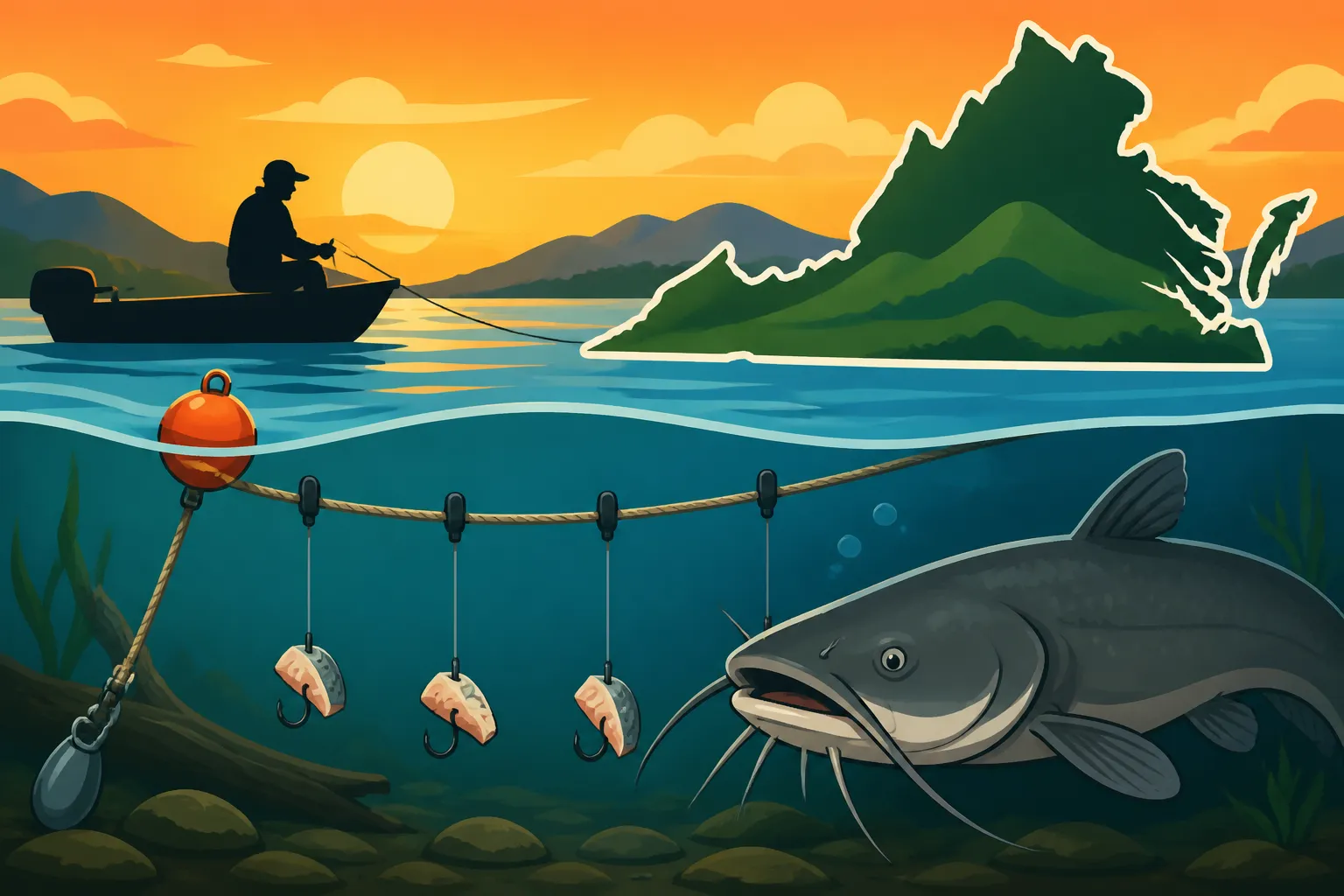
At its heart, a trotline is essentially a long fishing line stretched across a body of water, or anchored at both ends, from which shorter lines (known as gangions or drop lines) with baited hooks are suspended at intervals. Think of it as multiple individual fishing lines working for you simultaneously. Instead of holding one rod, you're deploying a whole system that can be left unattended for periods, allowing fish to find your bait over a wider area. This makes it particularly effective for species like catfish that are always on the prowl for a meal on the bottom. In Virginia, you’ll find anglers using trotlines in a variety of settings, from the vast expanses of Buggs Island Lake to the winding currents of the James River.
Why Anglers Turn to Trotlining in Virginia
There are several compelling reasons why a dedicated catfish angler in Virginia might choose trotlining over traditional rod and reel fishing. First, it's about efficiency. You can cover a much larger area and present many baits at once, significantly increasing your chances of a catch, especially if you're targeting a large quantity for a fish fry. For those who enjoy the harvest aspect of fishing, a well-placed trotline can yield an impressive haul of channel catfish or a monster flathead. Second, it allows for a more passive fishing experience. You set it, let it soak, and come back later to check your bounty. This is perfect for those who want to maximize their time on the water or those who might be setting up camp for a few days and want a continuous fishing effort. Lastly, it’s a technique that often targets larger, more elusive catfish that might not readily take a rod-and-reel bait, especially in deeper or harder-to-reach parts of our Virginia lakes and rivers.
Trotlines vs. Other Catfishing Methods
While trotlining is effective, it’s important to understand how it differs from other popular catfishing techniques like jug fishing for catfish or simple bottom fishing. With conventional rod and reel bottom fishing, you’re actively engaged, casting, and often waiting for bites with immediate retrieval. It's a hands-on approach, great for a few hours of relaxation or targeting specific spots. Jug fishing, on the other hand, involves individual lines attached to floating jugs or bottles. These are free-floating, covering a wide area as they drift with the current, and you pursue them in your boat.
Trotlines offer a more stationary, high-volume approach compared to jug fishing's mobile nature. You set a trotline in a specific area, often between two points, and it stays put. This can be an advantage if you’ve identified a prime catfish highway or a deep hole where fish congregate. However, because trotlines remain in place, they require more careful consideration of placement to avoid interfering with navigation or other anglers. Each method has its strengths, but for consistent, large-volume hauls of catfish from a fixed location, trotlining often comes out on top.
Navigating Virginia's Trotline Regulations and Legalities
Before you even think about buying your first spool of main line, it is absolutely critical to understand and adhere to Virginia's fishing regulations. The Virginia Department of Wildlife Resources (DWR) has specific rules in place for trotlines to ensure sustainable fishing practices and minimize conflicts with other waterway users. Ignoring these rules can lead to hefty fines and confiscation of your gear, which is a headache no one wants. To ensure you're fishing legally, always refer to the most current Virginia Fishing Regulations Explained from the DWR.
Key Rules for Recreational Trotlining
Virginia’s DWR has set clear guidelines for recreational trotlining, and it's your responsibility to know them. Generally, a recreational trotline needs to be clearly marked with the owner's name and address or DWR identification number. This isn't just a suggestion; it's a legal requirement designed to identify responsible parties and prevent lines from becoming abandoned hazards. You're typically allowed a certain number of hooks per line and a maximum number of lines per person or per boat. For instance, in many freshwater areas, you might be limited to 50 hooks per trotline and only one trotline per person. These numbers can vary by water body and specific regulation updates, so always double-check the latest DWR Fishing Guide.
Furthermore, there are rules about how often you must check your trotline. Leaving a line unchecked for days on end is not only illegal but also unethical, as it can lead to wasted fish and potential entanglement for wildlife. Virginia DWR regulations often require trotlines to be checked at least once every 24 hours. Adhering to these rules isn't just about legality; it's about being a responsible angler and respecting the natural resources we all share.
Trotline Tagging and Identification Requirements
Virginia is quite serious about identifying ownership of unattended gear. Every trotline you set must have proper identification. This usually means attaching a durable tag to each end of your main line, visible above the water, clearly displaying your full name and address, or your DWR customer identification number. This customer ID number is often easier and more permanent, and it’s what you get when you purchase your fishing license. You can find robust, weatherproof tags online, often on sites like Amazon, or at local tackle shops. Make sure these tags are securely fastened and legible, even after being exposed to sun, water, and fish slime.
The reason for these strict tagging rules is twofold: accountability and safety. If your trotline becomes a hazard or is found to be in violation of regulations, enforcement officers need to know who is responsible. It also helps prevent disputes between anglers over gear. Imagine a busy weekend on Lake Anna; proper tagging ensures that everyone knows whose line is whose. These requirements apply whether you're fishing a small creek or a large reservoir, making them a fundamental part of proper trotline setup and use in the Commonwealth.
Understanding Restricted Waters and Seasons
Not all waters in Virginia are open to trotlining, and some have specific seasons or size limits that apply. Certain rivers, lakes, or specific sections of waterways might be designated as "no trotline zones" to protect specific fish populations, navigation channels, or areas heavily used by other recreational activities. For example, some heavily trafficked areas or designated public swimming areas would naturally be off-limits. You'll also need to be aware of Virginia's Fishing License and Catch Limit Basics as they apply to the species you're targeting.
It’s also important to check if there are specific seasons for trotlining for certain species or in certain areas. While catfish are generally open year-round, local nuances can always exist. Before you head out, consult the DWR's annual fishing regulations booklet or their website. This is particularly important for larger bodies of water, or those with unique ecological considerations, where rules might be more stringent. Ignoring these restrictions can quickly turn a fun day of fishing into a frustrating and costly legal issue. Always verify that your chosen fishing spot allows trotlines before you deploy your gear.
Gathering Your Essential Trotline Gear and Supplies
Getting your gear together is half the fun! But with trotlining, it’s not just about having any line and any hooks. You need robust, reliable equipment that can withstand the elements, the pull of heavy fish, and the general wear and tear of being in the water. Investing in quality gear upfront will save you headaches and lost fish down the line.
Choosing the Right Main Line and Drop Lines
The backbone of your trotline is, well, the main line! For serious catfishing, you'll want something incredibly strong and durable. Monofilament fishing line is generally too stretchy and prone to tangles for the main line; instead, look for braided nylon or tarred trotline cord. This type of line is exceptionally strong, UV-resistant, and less prone to stretching and abrasion. Sizes typically range from #24 to #72, with higher numbers indicating thicker, stronger lines. For general catfish trotlining in Virginia, a #36 to #60 tarred nylon line is a popular choice, offering a good balance of strength and manageability. You can usually find large spools of this on Amazon or at specialized tackle stores.
Your drop lines (or gangions) are the shorter lines that attach to the main line and hold your hooks. These don't need to be as heavy as the main line, but they should still be strong and abrasion-resistant, perhaps a heavy monofilament (80-150 lb test) or braided nylon. Make sure they are strong enough to handle a fighting fish without breaking or fraying. The length of your drop lines is crucial; they should be long enough for your bait to reach the strike zone (the bottom for most catfish) but short enough to avoid tangling with other drop lines or snagging excessively on bottom debris. A good starting point is 12 to 18 inches.
Selecting Hooks, Swivels, and Anchors
Hooks are arguably the most critical component. For catfish, you'll generally want sturdy, sharp circle hooks. Circle hooks are fantastic for trotlines because they are designed to hook fish in the corner of the mouth, which usually results in a more secure hookset and fewer gut-hooked fish. This is not only better for the fish if you plan to release some, but it also makes removal easier and minimizes bait loss from fish that aren't properly hooked. Sizes from 5/0 to 10/0 are common, depending on the size of catfish you're targeting. For giant flatheads, you might even go larger. Look for high-carbon steel hooks that can handle the power of a large fish.
Swivels are essential for preventing line twist and ensuring your drop lines hang freely. Heavy-duty barrel swivels or three-way swivels are excellent choices. Attach a swivel to the main line, then your drop line to the other end. Some anglers prefer to tie their drop lines directly to the main line with specific knots, but swivels offer more flexibility and reduced tangles.
Finally, anchors. You need something heavy enough to hold your trotline securely in place against currents, wind, and the pull of fighting fish. Concrete blocks, heavy rocks, or dedicated anchor weights (like mushroom anchors) work well. The size and weight will depend on the water you're fishing. For instance, fishing the powerful currents of the Rappahannock River will require heavier anchors than a calm coves in Smith Mountain Lake.
Here’s a quick reference table for some gear considerations:
| Component | Recommended Type/Size | Key Considerations |
|---|---|---|
| Main Line | Tarred Nylon Cord (#36-#60) | UV-resistant, strong, low stretch |
| Drop Lines | Heavy Monofilament (80-150lb) or Braided Nylon | Strong, abrasion-resistant, 12-18 inches long |
| Hooks | Circle Hooks (5/0 – 10/0) | Secure hooksets, less gut-hooking, sharp |
| Swivels | Heavy-Duty Barrel or Three-Way Swivels | Prevents line twist, allows free hang of drop lines |
| Anchors | Concrete Blocks, Heavy Rocks, Mushroom Anchors | Weight dependent on current/water body, secure |
| Floats/Buoys | Large, Visible Buoys (e.g., polyform) | Highly visible, durable, clearly marked |
Floats, Buoys, and Other Must-Have Accessories
You’ll need sturdy floats or buoys for each end of your trotline. These serve two critical purposes: marking the location of your line and helping you retrieve it. They need to be large and brightly colored (think orange or yellow) to be easily visible to boaters and other anglers, preventing accidental encounters. Polyform buoys, often found at marine supply stores or online through retailers like Amazon, are a good durable option. Remember, Virginia DWR regulations require these buoys to be marked with your identifying information, just like the line itself.
Beyond the main components, a few other accessories will make your life much easier:
- Cutting tool: A sharp knife or heavy-duty scissors for cutting lines, especially if you get a snag.
- Heavy-duty gloves: Essential for handling potentially sharp hooks, lines under tension, and slippery fish.
- Pliers/hook remover: For safely extracting hooks from fish, especially larger ones.
- Bucket or cooler: To store your bait and keep your catch fresh.
- Measuring tape: To ensure your catch meets minimum length requirements for species like channel catfish or flatheads in certain waters.
- Lights (for night operations): If you're setting or checking lines in the dark, a reliable headlamp or spotlight is crucial.
Having these accessories readily available will ensure a smoother, safer trotlining experience.
Step-by-Step Guide to Setting Up Your Trotline in Virginia Waters
Now that you've got all your gear, it's time to put it to use! Setting up a trotline might seem complicated at first, but with a systematic approach, you'll be deploying them like a seasoned pro. Remember, safety first, and always be mindful of other waterway users.
Scouting the Perfect Location
Choosing the right spot is paramount to success. Catfish, whether channel, blue, or flathead, have preferred habitats. They love structure – sunken timber, rock piles, ledges, and deep holes. In rivers like the James or the Potomac, look for bends, current breaks, or the mouths of feeder creeks where baitfish might congregate. On large reservoirs like Kerr Lake or Lake Anna, target old creek channels, humps, or the edge of deep flats. A good fish finder can be an invaluable tool for identifying these underwater features. Pay attention to changes in depth, as catfish often patrol transition zones.
Before you even deploy, consider the current. You want your trotline to be mostly stationary, so strong, relentless currents might require heavier anchors or a different location. Also, think about accessibility. Can you safely deploy and retrieve your line from your boat or the bank? Avoid areas with heavy boat traffic or known snag hazards. You don't want to lose your gear or, worse, create a danger for other anglers. Many veteran anglers will do a bit of Night Fishing Techniques scouting because that's when the big cats are often most active.
Anchoring Your Main Line Securely
Once you’ve identified your prime location, the anchoring process begins. You'll need to secure both ends of your main line firmly. If you're running your line across a narrow section of a creek, you might tie one end to a sturdy tree on the bank and the other to an anchor deployed from your boat. For larger bodies of water, you’ll typically use two heavy anchors.
Start by tying one end of your main line to your first anchor and deploying it. Make sure you have enough rope (anchor line) from your anchor to your trotline's main line so that your buoy will float freely on the surface, regardless of water depth or fluctuating levels. Then, slowly motor or paddle across your chosen fishing zone, paying out your main line. As you approach the second anchor point, leave some slack in the main line before tying it to your second anchor. This slack is important, especially in current, as it helps absorb shock from fighting fish and prevents the line from being pulled too taut, which could dislodge anchors. Secure your second anchor, again ensuring enough anchor line for your buoy to float freely. The main line should be relatively taut but not stretched tight like a guitar string; a slight sag is often desirable.
Attaching Drop Lines, Hooks, and Baits
With your main line anchored, it’s time for the business end: the drop lines and hooks. This is where those pre-rigged drop lines with swivels come in handy. Begin at one end of your main line, securing your first drop line at a chosen interval. A common spacing is 3 to 6 feet between drop lines, but this can vary based on local regulations and your target species. Closer spacing might catch more fish if they're schooling, but it can also lead to more tangles.
Secure the swivel end of your drop line to the main line using a strong knot (like a snell knot or clinch knot) or by looping it around the main line and securing it. Make sure the drop line hangs freely without tangling around the main line. Once the drop line is attached, bait your hook. For many Virginia catfish, effective bait choices range from cut bait (shad, bluegill, mullet) to stink baits or chicken livers. For specific advice, check out our guide on the Best Bait for Catfish in Summer. As you attach each drop line, carefully bait the hook, and ensure it hangs freely, positioned to hit the strike zone on the bottom. Work your way down the main line until all your drop lines are attached and baited. This careful, methodical process ensures your trotline is deployed efficiently and ready to catch some fish.
Mastering Baiting, Monitoring, and Harvesting Your Catch
Setting up the trotline is just the beginning. The real art of trotlining comes in knowing what baits to use, how to properly monitor your lines, and how to safely and ethically handle your catches. This is where patience meets payoff.
Effective Bait Choices for Virginia Catfish
The beauty of trotlining for catfish is that they aren't particularly picky eaters, but some baits are definitely more effective than others in Virginia waters. For Channel Catfish, strong-smelling baits are often the ticket. Chicken livers, pieces of cut shad, shrimp, or commercially prepared stink baits all work wonderfully. The strong scent trail these baits leave in the water is irresistible to channel cats. When you're fishing a popular spot like the James River, these strong scents can really draw them in.
For the larger Blue Catfish, especially those found in the tidal rivers of Virginia, cut bait is king. Freshly cut pieces of oily fish like gizzard shad, menhaden, or even carp are incredibly effective. A large chunk of cut bait, presented on a big circle hook, is often what it takes to tempt a trophy blue cat.
Flathead Catfish, on the other hand, have a strong preference for live bait. Small live sunfish, bream, or even sturdy minnows are top choices. Flatheads are ambush predators, and a struggling live baitfish is a siren call they can’t ignore. If you're targeting Claytor Lake's Big Flathead Catfish, live bait is almost a necessity. Regardless of the bait, ensure it's securely attached to your circle hook so it doesn't get easily pulled off by smaller fish or currents.
Checking and Maintaining Your Trotline Safely
Checking your trotline is a crucial step, and Virginia DWR regulations often mandate that you do so at least once every 24 hours. When approaching your trotline, do so slowly and cautiously, especially if you're in a boat. Identify your marker buoys and carefully grab one end of your main line. Don your heavy-duty gloves – this is not the time for bare hands, as hooks, sharp fins, and abrasive lines can cause injury.
Slowly pull the main line, hand-over-hand, towards your boat, inspecting each drop line as it comes up. Be prepared for a fighting fish! When you encounter a fish, handle it carefully. Use a net for larger fish if necessary. Remove the hook with pliers or a de-hooker, and either place your catch in a cooler on ice or release it responsibly if it doesn't meet regulations or you don't intend to keep it. After removing any fish, quickly re-bait the hook and gently lower the drop line back into the water. As you work your way down the line, check for snags, frayed lines, or missing hooks. If you find any damage, repair it immediately if possible, or make a note to address it fully later. Maintaining your line ensures its effectiveness and longevity. Always be aware of your surroundings; keep an eye out for other boats and any potential hazards while you're focused on your line.
Responsible Harvesting and Release Practices
As responsible anglers, we have a duty to practice ethical harvesting and release. If you're keeping catfish, be mindful of Virginia's size and creel limits. These limits are in place to ensure healthy fish populations for future generations. For example, specific length restrictions may apply to certain catfish species in particular bodies of water. Always measure your fish carefully. If a fish is undersized, or if you've already met your creel limit, it must be released.
When releasing fish, do so quickly and gently. Minimize handling, especially by avoiding touching their gills or eyes. If a fish is deeply hooked, it's often best to cut the line as close to the hook as possible rather than attempting to rip it out, which can cause more harm. Ensure the fish swims away strongly before you leave. If you're using a cooler for your harvest, fill it with plenty of ice to quickly chill your fish, preserving their quality. Proper handling ensures that the fish you release have the best chance of survival and that the fish you keep are of the highest quality for consumption. Always remember that conservation is key to continuing our rich Virginia Fishing traditions.
Safety, Ethics, and Environmental Stewardship When Trotlining
Trotlining is a highly effective fishing method, but with its power comes responsibility. As a technique that involves unattended lines and multiple hooks, it requires extra attention to safety, ethical practices, and environmental stewardship to ensure a positive experience for everyone on the water and for the ecosystem itself.
Prioritizing Personal Safety on the Water
Your safety, and the safety of those with you, should always be the top priority. Handling a trotline involves risks that aren't present with single-rod fishing. Here are some key safety considerations:
- Wear a PFD: If you're deploying or checking your trotline from a boat, always wear a personal flotation device (PFD). Accidents can happen quickly, especially when you're leaning over the boat's edge or dealing with a strong fish.
- Gloves are non-negotiable: As mentioned, heavy-duty, puncture-resistant gloves are essential. They protect your hands from sharp hooks, gill plates, and abrasive lines, which can cause severe cuts or puncture wounds.
- Know your boat: Ensure your boat is stable and suited for the conditions. Don't overload it, and make sure you have all required safety equipment on board (flares, horn, fire extinguisher, etc.).
- Weather awareness: Always check the weather forecast before heading out. High winds, storms, or rapidly changing conditions can make trotlining treacherous. Never put yourself in a risky situation.
- First aid kit: Always have a well-stocked first aid kit readily accessible for minor injuries.
- Communicate your plans: Let someone know where you're going and when you expect to return.
These simple steps can prevent a fun fishing trip from turning into a disaster.
Minimizing Impact on Other Anglers and Wildlife
Being considerate of others is a cornerstone of ethical angling. Trotlines, by their nature, can occupy a significant area of water, so careful placement is crucial.
- Avoid high-traffic areas: Never set a trotline in navigation channels, near boat ramps, or in areas heavily used by swimmers, kayakers, or other anglers. This is not only a safety hazard but also a surefire way to upset fellow outdoor enthusiasts.
- Respect private property: If anchoring your line to the bank, ensure you have permission to access private land. Do not trespass.
- Check frequently: Regularly checking your trotline, as required by DWR regulations, minimizes the suffering of caught fish and reduces the chance of non-target species getting entangled. It also means you're quickly removing any potential navigational hazards.
- Proper disposal: Never leave discarded bait, line, or hooks in the water or on shore. This is littering, harmful to wildlife, and an eyesore. Pack out everything you pack in.
- Minimize bycatch: While trotlines are primarily for catfish, other species can sometimes get hooked. Be prepared to release non-target species quickly and gently, especially if they are protected or out of season. Learn to identify the different Catfish Species Found in Virginia Waters to ensure you're compliant.
By being mindful and respectful, you contribute to a harmonious outdoor environment for everyone.
Ensuring Your Trotline Doesn't Become a Hazard
An improperly deployed or abandoned trotline can pose a serious hazard to boats, wildlife, and even swimmers. This is why Virginia DWR regulations are so stringent about identification and regular checking.
- Clear marking: Your buoys must be clearly visible and marked with your identification at all times. This allows others to see your line and helps DWR officials address any issues. Using bright, contrasting colors for your buoys further enhances visibility.
- Secure anchors: Ensure your anchors are heavy enough to hold your line in place. A trotline that breaks loose and drifts can become a ghost fishing hazard, catching fish and wildlife indefinitely, and creating a navigation risk. If you suspect your anchors aren't holding, retrieve and re-anchor your line.
- Maintain your gear: Regularly inspect your main line, drop lines, and swivels for wear and tear. Replace frayed sections or rusty hooks promptly. A well-maintained line is less likely to break or become a tangled mess.
- Retrieve abandoned lines: If you encounter an abandoned trotline that is clearly no longer being used (no identification, severely damaged, or full of dead fish), you may consider contacting the DWR. Never cut or remove someone else's actively used and properly marked trotline.
- Proper storage: When not in use, store your trotline neatly. A tangle of hooks and line can be a nightmare to sort out and a hazard in your garage or boat.
Trotlining is a powerful tool for catching catfish, and when practiced with care and respect, it's a deeply rewarding way to connect with Virginia's rich fishing heritage. Stay safe, be responsible, and enjoy the thrill of pulling in a great catch!
Disclaimer
The information provided in this guide is for general informational purposes only and is not intended as legal advice. Fishing regulations in Virginia are subject to change, and local rules may vary. Always consult the most current Virginia Department of Wildlife Resources (DWR) regulations or contact the DWR directly before engaging in any fishing activities to ensure compliance. The author and publisher are not responsible for any actions taken based on the information provided herein.