How to Fly Fish for Trout in a River
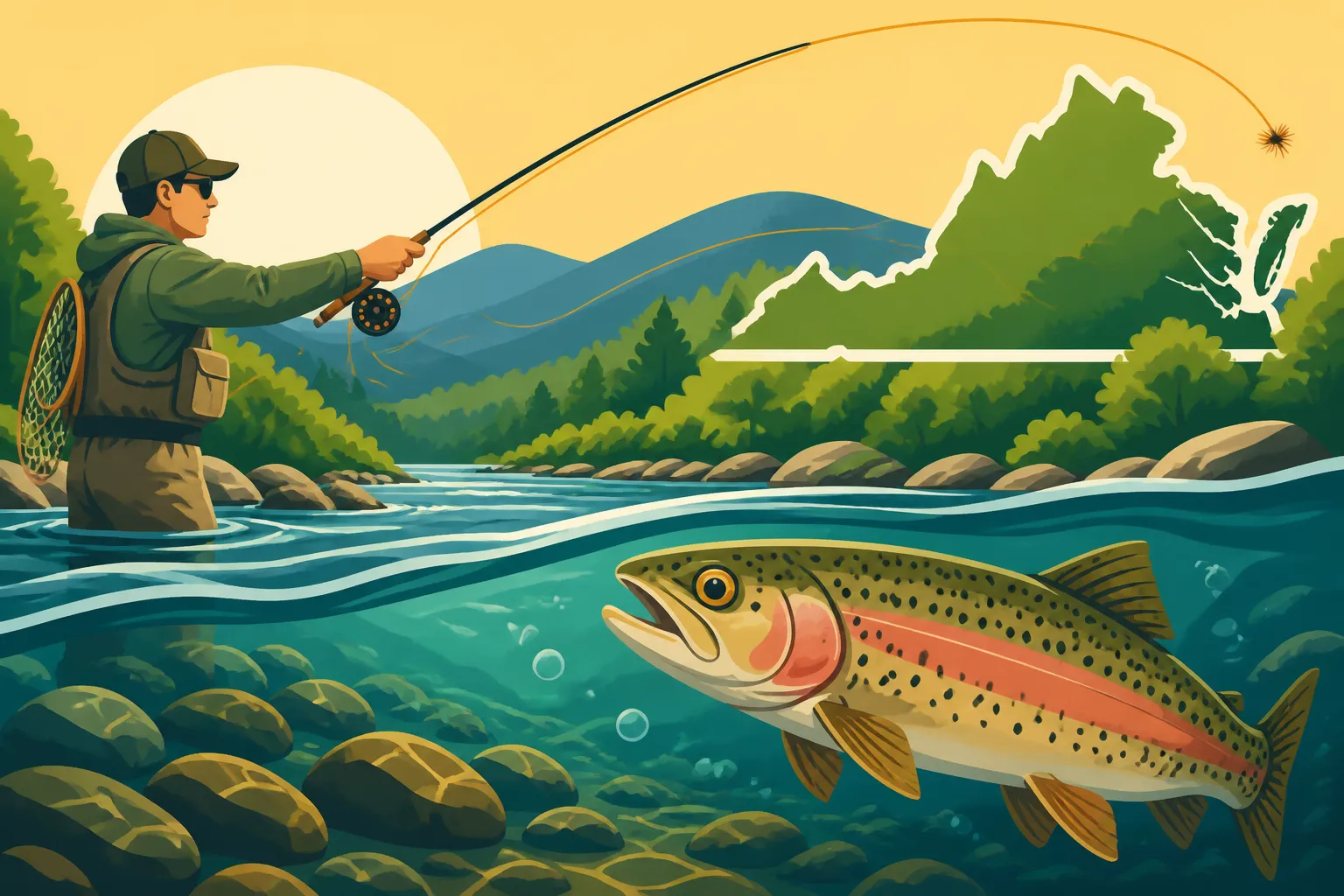
Fly fishing for trout in a river can feel incredibly intimidating when you're just starting out. You see seasoned anglers effortlessly casting graceful loops, and you wonder if you'll ever get a fly to land softly without tangling your line into a bird's nest. The truth is, it’s a journey, and every expert angler started right where you are. This guide is here to demystify the art of river fly fishing for trout, breaking down the steps so you can confidently chase those beautiful fish in Virginia's many picturesque waterways.
Understanding the World of River Trout in Virginia
Before you even think about casting a line, it's crucial to understand the stars of the show: the trout themselves. In Virginia, we're fortunate to have a mix of trout species, each with its own quirks and preferences. Knowing what makes them tick is your first step to success.
Common Trout Species in Virginia Rivers
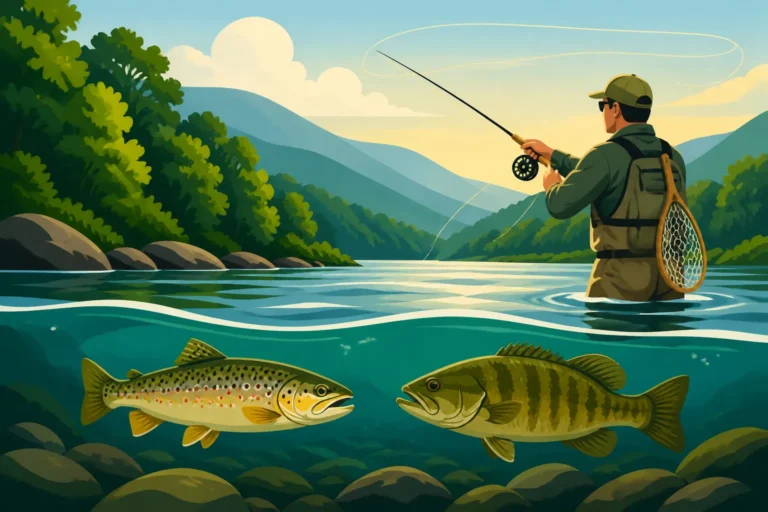
Virginia's rivers and streams are home to some truly stunning trout. The primary species you'll encounter are brook, rainbow, and brown trout.
- Brook Trout: Our native trout, brookies are often found in the colder, higher-elevation streams, particularly in the western and mountainous parts of the state. They're smaller, brilliantly colored, and can be incredibly wary. If you're looking for an authentic challenge and a chance to connect with Virginia's wild heritage, these are your fish. They thrive in pristine, oxygen-rich waters.
- Rainbow Trout: These are a favorite for many anglers, known for their strong fights and willingness to hit a variety of flies. Rainbows are frequently stocked in many of Virginia's public trout waters, making them a great target for those learning the ropes. You'll find them in a wider range of river conditions, often preferring areas with good current and cover.
- Brown Trout: Brown trout are often described as wily and opportunistic. They can grow to impressive sizes and are known for being quite nocturnal, especially the larger specimens. They tolerate slightly warmer waters than brook trout and often inhabit larger rivers with more structure, like fallen trees and deep pools. They're a fantastic fish to target with streamers, especially when other methods aren't producing.
Each of these species has unique feeding habits and preferred lies, but they all share a need for clean, cool, oxygenated water. Understanding these differences will inform your approach, from fly selection to where you choose to cast. For a deeper dive into these species, check out our guide on Trout Fishing in Virginia: Rainbow, Brown, and Brook Trout.
Trout Behavior and River Dynamics
Trout are constantly making decisions based on their need for food, safety, and comfort. This means they're always seeking out areas in the river that provide the best balance of these three things. They'll typically position themselves where food is readily available, but they don't have to expend too much energy fighting the current, and where they have quick access to cover from predators.
This is why "reading the water" becomes so crucial. Trout are cold-blooded, so water temperature plays a massive role in their activity levels. In warmer months, they'll seek out cooler, oxygenated water, often found in riffles or at the mouths of cooler tributaries. In colder weather, they might move into deeper, slower pools where the temperature is more stable. Understanding these basic principles will significantly increase your chances of finding fish, no matter the season.
Gearing Up for Your River Fly Fishing Adventure
Stepping into a fly shop for the first time can feel like walking into a foreign country. So many rods, reels, lines, and accessories! But don't despair. You don't need to break the bank to get started, and many excellent options are available, sometimes even on sites like Amazon.
Essential Fly Fishing Equipment
Let's break down the core pieces of equipment you'll need.
- Fly Rod: For most trout fishing in Virginia's rivers, a 7.5 to 9-foot rod in a 3-weight, 4-weight, or 5-weight is ideal. A 5-weight is a great all-around choice, capable of handling larger trout and casting bigger flies, while a 3-weight or 4-weight offers a more delicate presentation for smaller streams and spooky brookies. You can find dependable entry-level rods from brands like Orvis, Redington, or Fenwick.
- Fly Reel: The reel's primary job is to hold your line and provide drag when a fish runs. For trout, a basic, reliable reel with a smooth drag system is perfectly sufficient. Don't worry about expensive, high-performance reels; a simple click-and-pawl or disc drag reel will serve you well. Many beginner rod and reel combos are available, often offering a good value.
- Fly Line: This is arguably the most important part of your setup, as it's what carries your fly to the target. For most river trout fishing, a weight-forward (WF) floating line is the standard. It has a heavier front taper that helps with casting distance and turnover. Match the weight of your line to your rod (e.g., a 5-weight line for a 5-weight rod).
- Leader and Tippet: The leader is a clear, tapered monofilament or fluorocarbon line that connects your fly line to your fly. It's tapered from thick to thin to help transfer casting energy and present the fly subtly. The tippet is the very end section of the leader, to which you tie your fly. It's thinner and less visible to fish. You'll typically use 4x, 5x, or 6x tippet for trout, with 5x being a good all-around choice. Stocking up on leader and tippet from Amazon before your trip is always a good idea.
- Waders and Wading Boots: Unless you're strictly bank fishing, waders are essential for accessing prime fishing spots and staying comfortable in the water. Breathable chest waders are popular for their versatility. Pair them with sturdy wading boots that provide good grip on slippery riverbeds. Safety is paramount, so consider a wading belt to prevent your waders from filling with water should you take a tumble.
Essential Accessories for the River
Beyond the core gear, a few accessories will make your trip much more enjoyable and productive.
- Fishing Vest or Pack: This is your mobile tackle box, holding all your flies, tools, and extra leader material. Choose one that's comfortable and allows easy access to frequently used items. A waterproof fishing backpack, easily found on Amazon, can keep your essentials dry and organized.
- Net: A small, soft-mesh landing net is invaluable for safely landing and releasing trout. Look for one with a rubberized or knotless mesh to protect the fish's slime coat.
- Nippers and Hemostats: Nippers are small scissors for cutting line, and hemostats (or forceps) are crucial for safely removing hooks from fish without harming them.
- Indicators: These small bobber-like devices attach to your leader and help you detect subtle takes when nymph fishing.
- Split Shot: Small lead-free weights to add to your leader when you need your nymph to sink deeper or faster.
- Sun Protection: Hat, polarized sunglasses (essential for seeing fish and structure in the water), and sunscreen.
Mastering the Art of the Fly Cast
The cast is often the biggest hurdle for new fly anglers, but with practice, it becomes second nature. It's about rhythm and timing, not brute force.
The Basic Overhead Cast
The overhead cast is your bread and butter. It looks complex, but it breaks down into a few key movements.
- The Pick-Up: Start with about 10-15 feet of line extended in front of you. Gently lift the rod tip to "pick up" the slack line off the water.
- The Back Cast: With a smooth, accelerating motion, bring the rod back behind you, stopping abruptly at around 1 o'clock. Imagine you're throwing a dart or shaking water off your hand. Let the line unroll completely behind you. Don't look back; feel the line load the rod. This "loading" is key – it bends the rod, storing energy.
- The Forward Cast: As the line straightens behind you, pause briefly. Then, with a smooth, accelerating forward motion, bring the rod forward, stopping abruptly at about 10 or 11 o'clock. Again, imagine throwing that dart, but now you're aiming for your target. As the line shoots forward, let it unroll.
- The Presentation: As the line unrolls, gently lower your rod tip, allowing the fly to land softly on the water. The goal is to make it look like the fly just drifted there naturally, not like it was slapped down.
Practice this in your yard or an open field without a fly first. Focus on a smooth, controlled motion and feeling the rod load and unload. Consistency is far more important than distance when you're starting out.
Essential River Casting Techniques
While the overhead cast is fundamental, rivers present unique challenges that call for other techniques.
- The Roll Cast: This is your secret weapon for tight spaces, like when trees or bushes behind you prevent a back cast. With the line in front of you, lift the rod tip high, bringing the line into a "D" loop shape behind the rod. Then, with a forward stroke, push the line out in front of you. It's a lifesaver in dense canopy areas that are common on some of Virginia's wild trout streams.
- Mending: This isn't a cast, but it's critical for achieving a natural drift. When your fly line lands on the water, the current immediately begins to pull on it, causing your fly to drag unnaturally. Mending involves repositioning your fly line on the water (either upstream or downstream) to counter the current and allow your fly to drift at the same speed as the natural food items. It's a subtle flick of the wrist that keeps your fly in the "strike zone" longer.
For more casting tips and a deeper dive into techniques, you might find our article on Fly Fishing for Trout on Rivers helpful.
Reading the River: Finding Where Trout Hide
Trout are predictable creatures if you know what to look for. They don't just hang out randomly; they're strategically positioned to maximize feeding opportunities while staying safe. This is where "reading the water" becomes an art form.
Understanding River Structure and Current
Every ripple, eddy, and rock tells a story. Learning to interpret these signs will guide your casts.
- Riffles: These are shallow, fast-moving sections of water where the surface is broken. They're oxygen-rich and often hold a lot of insect life, making them prime feeding grounds. Trout will often sit just downstream of the fastest current, picking off food washed their way.
- Runs: Deeper, more uniform stretches of flowing water, often found below riffles. Trout will hold here, especially larger ones, enjoying a steady food supply in slightly calmer water.
- Pools: Deep, slow-moving areas of the river. These are excellent holding areas for trout, especially big browns, offering safety and stable temperatures. They might be less actively feeding but are good spots to target with nymphs or streamers.
- Eddies and Seams: Eddies are areas where the current circles back on itself, often behind large rocks or obstructions. Seams are the lines where fast water meets slow water. These are gold mines! Trout love to sit in the slower water of an eddy or seam, waiting for food to be swept by in the faster current. They get the benefits of the food conveyor belt without expending much energy.
- Cut Banks and Overhangs: Where the river bank is undercut or has overhanging vegetation, these spots provide excellent cover and shade. Trout will often tuck themselves into these areas, feeling secure from aerial predators.
When you approach a new section of river, take a moment to observe. Look for the interplay of fast and slow water, the presence of rocks, logs, or other structures, and any signs of insect activity. These clues will point you to potential trout lies. A good resource for this crucial skill is How to Read Water When Fly Fishing a River.
Strategic Positioning and Approach
Finding the fish is one thing; getting your fly to them without spooking them is another. Trout have excellent vision and can detect vibrations.
- Stealth is Key: Approach the river quietly. Avoid stomping on the bank or wading carelessly. If you're wading, move slowly and deliberately.
- Upstream Approach: Whenever possible, try to fish upstream, casting your fly to spots above you and letting it drift down naturally. This way, you approach the fish from behind, making you less visible, and your fly drifts toward them first, rather than your line or yourself.
- Sun Position: Pay attention to where the sun is. If your shadow falls over the water you're about to fish, you'll likely spook any trout there. Try to keep the sun at your back or to your side.
- Work the Water Thoroughly: Don't just cast to the obvious spots. Work every potential lie, starting with the closest water and gradually extending your casts further out. Sometimes the biggest fish are holding just a few feet from where you're standing.
Choosing the Right Flies for Virginia's Waters
The world of fly patterns is vast and can be overwhelming. Don't worry, you don't need to know every pattern to catch fish. Focusing on a few versatile types will get you far.
Types of Flies and Their Purpose
Flies imitate different stages of aquatic insects or other food sources.
- Dry Flies: These imitate adult insects that have hatched and are floating on the water's surface or have fallen into the water. Fishing dry flies is incredibly visual and exciting, as you see the fish rise to take your offering. Popular dry flies include the Elk Hair Caddis, Adams, and Parachute Adams.
- Nymphs: These imitate immature aquatic insects (larvae or pupae) that live on the riverbed. Nymphing is often the most productive method, as trout spend the vast majority of their time feeding subsurface. You'll fish nymphs under an indicator or by "tightlining." Common nymphs include the Pheasant Tail, Hare's Ear, and Prince Nymph.
- Streamers: These imitate baitfish, leeches, or other larger prey. Streamers are effective for targeting larger, more aggressive trout, especially brown trout. You fish them by stripping them through the water to mimic a swimming baitfish. The Woolly Bugger is a classic and highly effective streamer.
You can grab a good beginner's fly tying kit from Amazon if you want to make your own, but purchasing pre-tied flies is perfectly fine for getting started.
Matching the Hatch vs. Prospecting
These are two primary strategies for fly selection.
- Matching the Hatch: This is when you observe what insects are actively hatching or emerging from the water and choose a fly pattern that closely imitates them. This can be highly effective during prolific hatches, but it requires some knowledge of entomology and keen observation skills. If you see fish consistently rising and taking something specific from the surface, try to match it!
- Prospecting: This involves using a general, versatile fly pattern that you have confidence in, even if there isn't an obvious hatch. It's about covering water and enticing a fish to strike. Nymphs and streamers are often used for prospecting, as trout are almost always feeding subsurface. On days when fish aren't visibly rising, a reliable nymph or streamer is usually your best bet.
For specific patterns that work well in Virginia, especially during the spring, consult resources like Best Fly Patterns for Trout in Spring.
Seasonal Considerations for River Trout Fishing
Virginia's trout rivers change with the seasons, and so too should your approach. Adapting to conditions is a hallmark of a good angler.
Spring: Waking Up and High Waters
Spring is often seen as prime trout fishing season. As temperatures rise, insect activity explodes, and trout become more active after a sluggish winter.
- Hatches: March Browns, Blue Winged Olives (BWOs), and various caddisflies are common hatches, offering exciting dry fly opportunities.
- Water Levels: Spring often brings higher, sometimes murkier water from snowmelt and rain. This means trout might be less spooky but also harder to find. Nymphs and streamers are excellent choices in these conditions, as they're easier for fish to detect.
- Strategy: Focus on the edges of currents, seams, and areas with cover, as trout will seek refuge from strong flows. Fish weighted nymphs or use split shot to get your flies down to the fish.
Summer: Low Flows and Warm Temperatures
Summer can be challenging for trout, especially in lower elevation rivers, as water temperatures rise and flows decrease.
- Low Water: Fish become incredibly wary in low, clear water. Long, delicate leaders and careful approaches are essential.
- Nocturnal Feeding: Larger brown trout, in particular, may feed more actively at dawn, dusk, or even after dark to avoid warm daytime temperatures and bright sunlight.
- Strategy: Target cooler, oxygenated water like riffles, spring mouths, and higher elevation streams where brook trout thrive. Fish early in the morning or late in the evening. Dry-dropper rigs (a dry fly with a small nymph suspended beneath it) can be very effective, allowing you to cover both surface and subsurface. Don't forget that Wild Trout Stream Rules in Virginia often dictate catch-and-release and specific gear in these sensitive areas.
Fall: The Golden Season
Many anglers consider fall the best time to fish for trout, particularly brown trout.
- Spawning Runs: Brown trout begin their spawning runs, making them aggressive and territorial.
- Cooling Water: Stable, cooler water temperatures invigorate all trout species.
- Hatches: BWOs, Tricos, and various midges can provide dry fly action, but terrestrials (hoppers, ants, beetles) also remain important until the first hard frost.
- Strategy: Streamers are highly effective during the brown trout spawn, as they provoke aggressive strikes. Nymphing remains consistently productive. Focus on targeting larger browns in their spawning lies or deeper pools.
Winter: Slow and Deliberate
Winter fishing can be tough, but rewarding for those willing to brave the cold. Trout activity slows significantly, but they still need to feed.
- Deep and Slow: Trout retreat to deeper, slower pools where water temperatures are more stable.
- Subtle Takes: Bites will be very subtle; a good indicator and keen observation are crucial.
- Small Flies: Midges are often the primary food source in winter. Small nymphs in sizes 18-22 are key.
- Strategy: Fish slowly and deliberately. Focus on dead-drifting tiny nymphs in the deepest parts of pools and runs. Concentrate your efforts during the warmest part of the day. A special consideration for winter fishing is that many areas participate in Virginia Stocked Trout Waters and License Requirements, meaning specific regulations and sometimes an additional permit apply to keep stocked fish.
Fly fishing for trout in a river is a journey of continuous learning, observation, and connection with nature. Don't be discouraged by initial struggles. Every cast is a lesson, and every fish is a reward. So grab your gear, head to one of Virginia's fantastic rivers, and start writing your own fly fishing story.
Disclaimer
This article is for general informational purposes only and does not constitute professional advice. Laws, prices and regulations vary by location and change over time. Consult a qualified professional for guidance on your specific situation.