How to Catch Bluegill With a Bobber
Let's be honest, getting started with fishing can feel incredibly overwhelming. You walk into a tackle shop, and there's an endless array of rods, reels, lures, and lines, making you wonder if you need a master's degree in angling just to cast a line. But what if I told you there’s a fantastic, simple, and utterly joyful way to dip your toes into the fishing world, one that almost guarantees a bend in your rod? This guide is all about simplifying the experience, focusing on the humble bluegill and the timeless technique of bobber fishing, a perfect entry point for anyone wanting to experience the simple pleasure of catching fish in Virginia.
Why Bluegill are the Perfect Starting Fish for Anglers (and Why Bobbers are Your Best Friend)
Fishing isn't always about landing a trophy or battling a monstrous leviathan. Sometimes, it's about the pure, unadulterated fun of a tug on the line, especially when you're just starting out, or introducing someone new to the sport. Bluegill offer exactly that kind of experience, and when paired with a bobber, they create a perfect, low-stress fishing adventure.
The Joy of Bluegill: Accessible, Abundant, and Eager Biters
Bluegill are truly the unsung heroes of freshwater fishing, especially here in Virginia. They're incredibly widespread, inhabiting nearly every pond, lake, and slow-moving creek across the state. You don't need fancy equipment or a deep understanding of complex fish patterns to find them, which is a huge relief for beginners. Their abundance means you're rarely going to be skunked, which is a massive confidence booster, particularly for kids or first-timers.
These feisty little fish might not be huge, but they put up a surprisingly strong fight for their size, making every catch exciting. They're also not particularly picky eaters, which means you don't need a tackle box full of expensive lures to entice them. A simple worm or cricket is often all it takes. This combination of accessibility, abundance, and eager biting makes bluegill an absolutely ideal target species for anyone looking to enjoy the sport without the steep learning curve. If you're looking for Bream and Bluegill Fishing for Beginners, you've found the right place to start.
Understanding the Magic of the Bobber
Now, let's talk about the bobber. For many of us, the sight of a bobber dancing on the water brings back childhood memories. It's not just nostalgia; the bobber is a highly effective and incredibly intuitive tool, especially for panfish like bluegill. Its primary job is twofold: to suspend your bait at a specific depth and to act as a visual strike indicator.
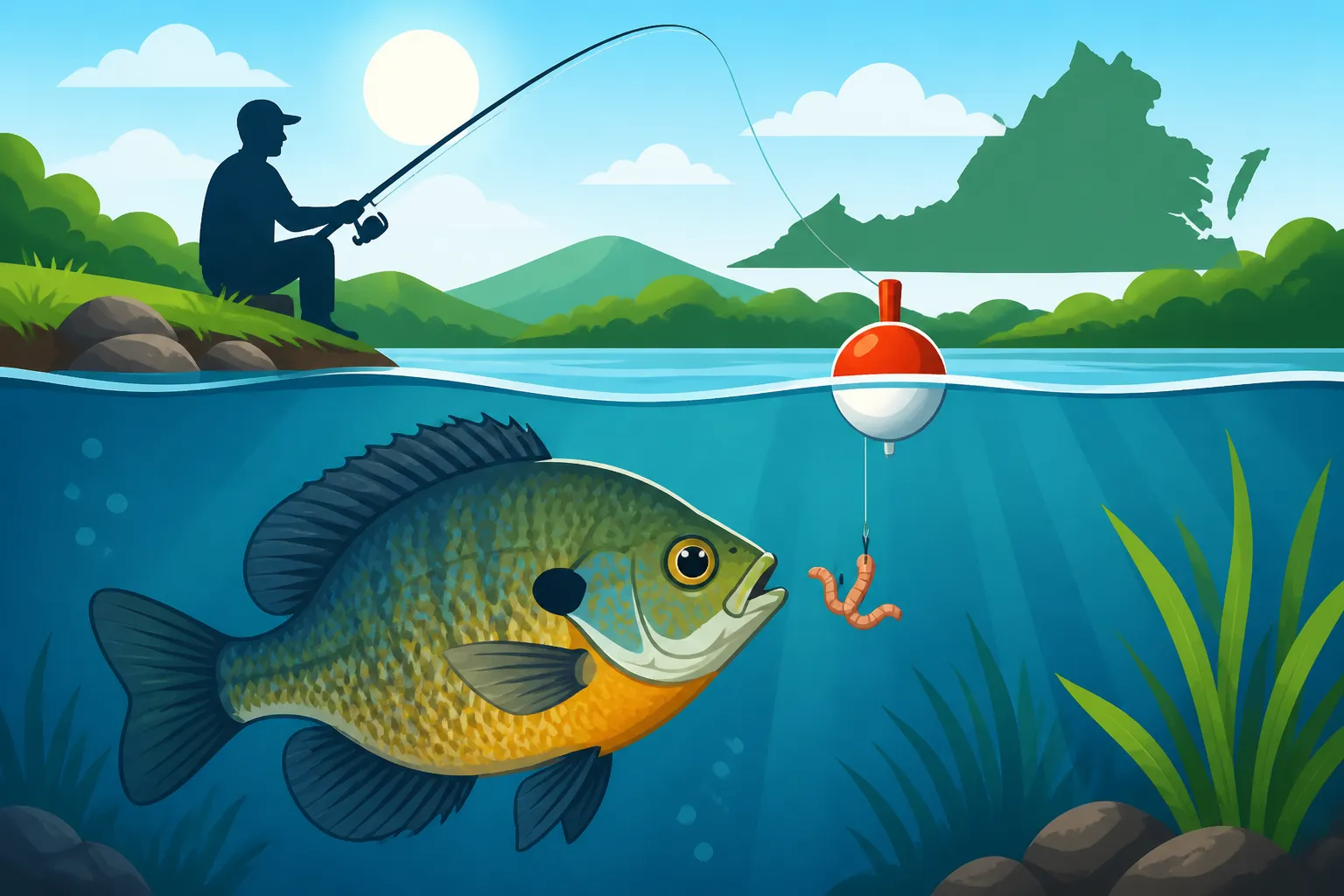
When a bluegill takes your bait, that bobber, whether it's a classic red and white plastic sphere or a slender slip bobber, will suddenly dip, twitch, or disappear beneath the surface. This clear visual signal removes much of the guesswork from detecting a bite, making it perfect for novice anglers who might struggle to feel subtle bites through the line. It transforms fishing into a patient game of observation, building anticipation with every ripple and twitch.
Essential Gear for Bluegill Bobber Fishing in Virginia
You don't need to break the bank to get started with bluegill fishing. In fact, one of the beauties of this particular pursuit is how accessible and affordable the necessary gear truly is. Simplicity is key, and often, less is more when you're chasing these fun panfish.
Rods, Reels, and Line: Keeping It Simple
When it comes to your rod and reel setup, think light. An ultralight or light action spinning rod, typically in the 5 to 6.5-foot range, paired with a small spinning reel (like a 1000 or 2000 size), is absolutely perfect. This setup is sensitive enough to feel the tug of a small bluegill, yet robust enough to handle the occasional larger surprise. The lightweight nature also makes it easy for kids or new anglers to handle comfortably all day.
For fishing line, a monofilament line in the 4 to 6-pound test range is ideal. It's forgiving, easy to tie knots with, and offers enough strength for bluegill without being overly visible to the fish. You can often find decent beginner rod and reel combos for a very reasonable price, sometimes even bundled with a small tackle kit, which can be a great way to kickstart your fishing journey. Many major online retailers like Amazon offer a wide selection of these beginner-friendly combos, making it easy to get everything delivered right to your door.
Choosing the Right Bobber: Size, Type, and Visibility
The bobber is your key communication device with the fish, so choosing the right one matters. You'll typically encounter two main types:
- Fixed/Clip-on Bobbers: These are the classic red and white round bobbers that clip directly onto your line. They're simple, inexpensive, and excellent for fishing in shallower waters (usually less than 4-5 feet) where you don't need to cast very far. Their fixed position means you can't easily adjust your bait depth without moving the bobber.
- Slip Bobbers: These bobbers have a small hole running through them, allowing your fishing line to "slip" through. A small stop knot or bobber stop is used on the line to set your desired depth, and a small bead typically sits between the stop and the bobber. Slip bobbers are fantastic for fishing deeper water, as they allow your bait to sink unimpeded and your bobber to slide down to the stop, making casting much easier. Once the bait is in the water, the bobber floats up to the stop, indicating your depth.
For bluegill, generally opt for smaller bobbers. A small bobber provides less resistance when a fish bites, making the bite feel more natural to the fish and resulting in more hookups. Colors like red, orange, or chartreuse offer good visibility against the water, helping you spot those subtle dips and twitches.
Hooks, Weights, and Bait: The Business End
This is where the real magic happens, enticing those bluegill to bite. You'll need a few small, but crucial, terminal tackle items:
- Hooks: For bluegill, small hooks are essential. Sizes ranging from an 8 to a 12 (the larger the number, the smaller the hook) are perfect. Aberdeen hooks are a popular choice because their fine wire is less damaging to the fish's mouth, making catch-and-release easier, and they're less prone to snagging.
- Weights (Split Shot): A small split shot weight or two, crimped onto your line a few inches above your hook, helps cast your bait and sink it to the desired depth. Use just enough weight to allow your bobber to stand upright in the water, but not so much that it pulls the bobber completely under.
- Bait: Bluegill are not particularly finicky, which is fantastic! Their favorite snacks include:
- Worms: Red wigglers, nightcrawlers (cut into smaller pieces), or garden worms are absolute bluegill magnets.
- Crickets/Grasshoppers: Live crickets are incredibly effective, especially in late spring and summer.
- Corn: Canned corn, especially the sweet variety, works wonders and is easy to handle.
- Bread/Dough Balls: Simple, effective, and readily available. Just pinch a small piece onto your hook.
- Small Artificial Lures: Tiny jigs tipped with a grub or a small spinner can also be incredibly effective, especially when bluegill are more active.
You can often buy bulk packs of hooks and split shot weights, or find small containers with assorted sizes. Again, retailers like Amazon are a convenient place to stock up on these small, yet vital, components before your next fishing trip. Thinking about other options? Check out Best Bait for Bream Fishing for more ideas.
Step-by-Step: Setting Up Your Bluegill Bobber Rig
Getting your fishing setup ready for bluegill with a bobber is straightforward and requires just a few simple steps. You'll be ready to cast in minutes!
Assembling Your Rod and Reel
First things first, let's get your rod and reel ready. If your rod is a two-piece, carefully connect the sections, making sure they're snugly fitted. Next, attach your spinning reel by sliding its foot into the reel seat on the rod handle and tightening the locking nut until the reel is secure and doesn't wobble.
Now, unspool a bit of line from your reel and thread it through all the guides on your rod, starting from the closest guide to the reel and working your way up to the tip. Make sure you don't miss any! Once the line is through all the guides, you're ready for the terminal tackle.
Tying on Your Hook and Adding Weight
This is where your bait will attach, so a good knot is essential. A simple Improved Clinch Knot or a Palomar Knot are both excellent choices for tying your hook to your main line. They are strong, reliable, and relatively easy to learn, even for beginners. Make sure to moisten your knot with a little saliva before cinching it down to ensure it tightens properly and maintains its strength. Once your hook is tied on, you’ll want to add a small split shot weight. Take one or two small split shot weights (the kind that pinch onto your line) and attach them about 6 to 12 inches above your hook. The exact distance isn't critical, but this separation helps keep your bait looking natural and allows for good hook sets. The weight helps your bait sink and makes casting easier, especially with lighter baits.
Attaching and Adjusting Your Bobber
Now for the star of the show: the bobber!
- For a fixed (clip-on) bobber: Simply open the spring clip at the top and bottom of the bobber, place your line in the slots, and release the clips to secure it. It’s quick and easy. To adjust your bait depth, you simply slide the bobber up or down the line. This is great for shallower spots where you know the fish are near the surface or just a few feet down.
- For a slip bobber: First, slide a small bobber stop onto your line. This is usually a small piece of string or rubber that you cinch down. Next, slide a small bead onto your line (this protects the knot from the bobber). Finally, thread your line through the center of the slip bobber. The bobber stop will prevent the bobber from sliding up past your desired depth, while still allowing the bobber to slide freely down the line for easy casting. Adjusting the depth is as simple as sliding the bobber stop up or down your line. This is incredibly useful for fishing deeper water, as the bobber slides down to your weight, making for a much smoother and longer cast without all that extra line and bobber dangling.
Start by setting your bobber so your bait is suspended a couple of feet below the surface. If you're not getting bites, try adjusting the depth. Bluegill often cruise at various depths depending on water temperature, cover, and time of day. Sometimes they're right near the surface, other times they're down closer to the bottom or tucked into underwater vegetation. This flexibility is what makes a slip bobber especially versatile.
Where and How to Fish for Bluegill with a Bobber in Virginia
Virginia is teeming with fantastic spots to catch bluegill, and the beauty of bobber fishing is that it's effective in a wide variety of these environments. You don't need a boat or a special permit for many of these locations, making it truly accessible.
Prime Bluegill Haunts in Virginia
Bluegill are creatures of comfort, often found around structure, cover, and areas with food sources. In Virginia, you can find them in:
- Ponds and Small Lakes: These are classic bluegill hotspots. Look for areas with lily pads, submerged logs, brush piles, or overhanging trees that provide shade and cover. Many local and state parks offer public access to these kinds of waters. Places mentioned in articles like Family-Friendly Fishing Spots in Virginia or Best Panfish Spots for Kids on Claytor Lake are often perfect for bluegill.
- Lake Coves and Shorelines: In larger lakes, bluegill will congregate in shallow, protected coves, especially those with weeds, docks, or rocky banks. They love cruising along shorelines, picking off insects and small critters.
- Slow-Moving Creeks and Rivers: While less common than in still waters, you can find bluegill in the calmer sections of creeks and rivers, particularly in eddies, behind large rocks, or in slow pools with submerged vegetation.
- Docks and Piers: Any man-made structure provides shade and cover, attracting bluegill. Fishing around the pilings of docks or from a public fishing pier can be incredibly productive. You'll want to review Virginia Fishing License Guide and Virginia Fishing Regulations Explained to ensure you're compliant with local laws, especially concerning Virginia's Rules for Fishing on Public and Private Waters.
Remember, bluegill are often schooling fish, so where you catch one, there are likely many more!
Presentation and Patience: The Keys to Success
Once you've baited your hook (a small piece of worm or a single kernel of corn is often plenty), it's time to cast. With a bobber rig, you don't need to make long, powerful casts. A gentle lob is usually sufficient to get your bait out to where the fish are. Aim for areas near structure, cover, or in shady spots.
Once your bait and bobber are in the water, the real work begins – patience and observation. Keep your eye on that bobber. Bluegill bites can range from subtle twitches and small dips to a full-on disappearance beneath the surface. It's like watching a tiny, suspenseful play unfolding right before your eyes. Sometimes the fish will just mouth the bait, causing the bobber to wiggle slightly. Other times, they'll grab it with gusto and take off. This visual feedback is one of the reasons bobber fishing is one of the Easy Fishing Techniques for Kids.
Reading the Bite and Setting the Hook
This is arguably the most exciting part! When you see that bobber move in a decisive way – whether it dips, pulls sideways, or completely submerges – that’s your cue. Don't rush it, but also don't wait too long. A good rule of thumb for bluegill is to wait until the bobber disappears completely or moves consistently for a second or two.
To set the hook, give a gentle, upward sweep of your rod tip. You're not trying to yank the fish out of the water; a firm, smooth motion is all it takes to embed that small hook in the bluegill's mouth. Because bluegill have relatively small mouths, a subtle hook set prevents you from tearing the hook free. Once you feel that satisfying tug, keep a steady bend in your rod and reel in your catch. It's incredibly rewarding, and mastering this technique is a fantastic step in learning How to Teach a Kid to Fish, as it provides instant gratification.
| Bobber Type | Best Use Case | Ideal Depth Range | Advantages | Disadvantages |
|---|---|---|---|---|
| Fixed/Clip-on | Shallow water, close-range casting, still water | 1-5 feet | Simple to attach, inexpensive, easy for beginners | Limited depth adjustment, harder to cast far with depth set |
| Slip Bobber | Deeper water, longer casts, varying depths | 3-20+ feet | Easy long casts, precise depth control, versatile | More components (stop knot, bead), slightly more setup |
Remember to check the local Virginia Fishing Regulations Explained before heading out, especially concerning any specific rules for panfish or the waters you plan to fish. While bluegill typically don't have strict size or creel limits, it's always good practice to be informed. Also, don't forget to inquire about fishing licenses! For example, Do Kids Need a Fishing License to Fish in Virginia? is a common question, and generally, children under a certain age are exempt, but it's always wise to confirm. Understanding Virginia Fishing License Costs and Types Explained will help you prepare for your trip. For a more general overview, a Virginia Fishing License Guide can be incredibly helpful. And if you're looking to catch a variety of species, knowing your Panfish Species Every Virginia Angler Should Know can broaden your horizons!
Disclaimer
This article is for general informational purposes only and does not constitute professional advice. Laws, prices and regulations vary by location and change over time. Consult a qualified professional for guidance on your specific situation.