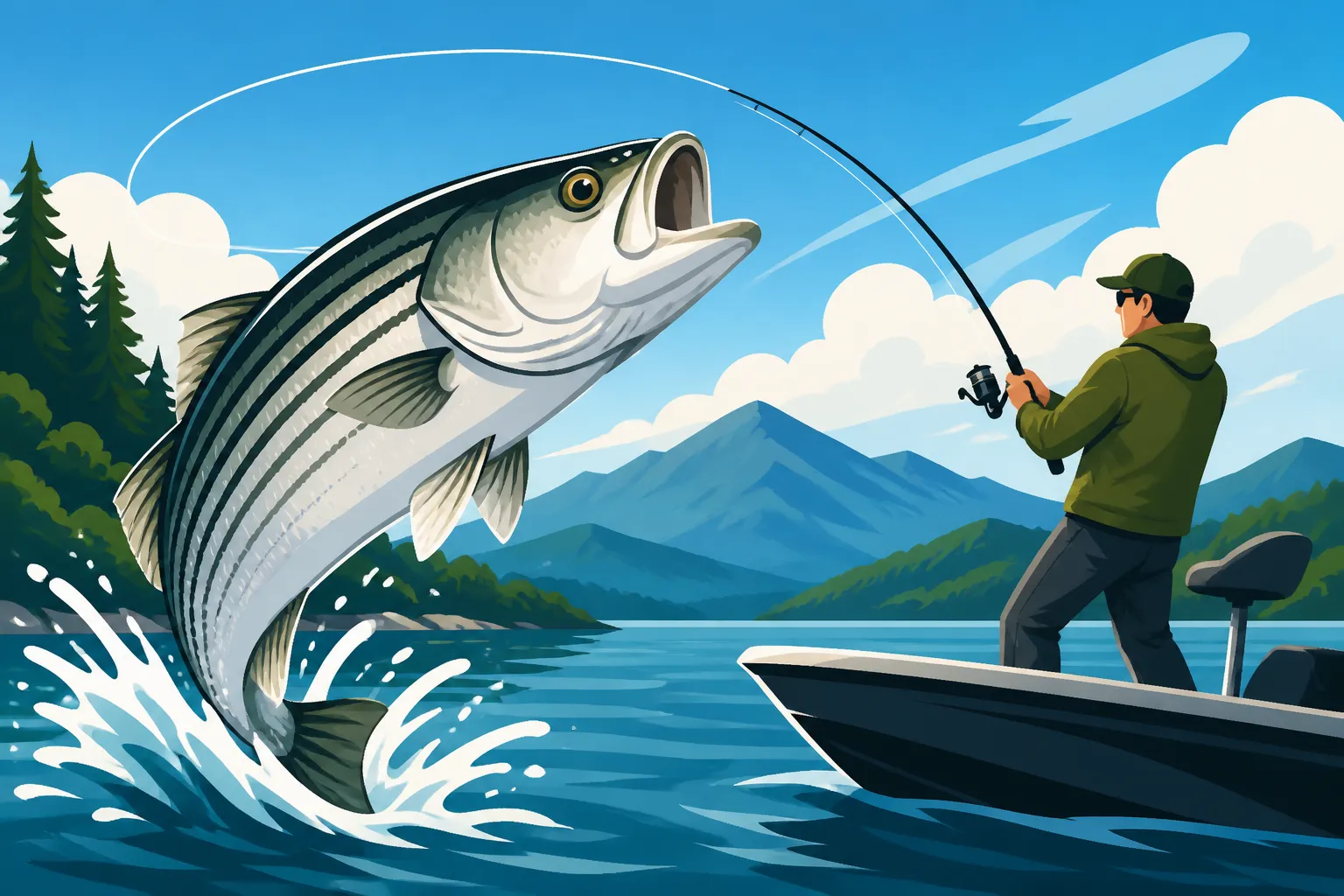
Freshwater Striped Bass Fishing at Smith Mountain Lake
There's nothing quite like the thrill of a striped bass hitting your line, especially when you're on the vast, beautiful waters of Smith Mountain Lake. Many anglers feel a bit intimidated by these powerful fish, wondering how to consistently find and catch them in such a large, diverse freshwater environment. This guide is designed to cut through that confusion, giving you the practical insights and techniques you need to successfully target freshwater striped bass on Smith Mountain Lake, turning those tough fishing days into memorable triumphs.
Understanding Smith Mountain Lake's Unique Striper Fishery
Smith Mountain Lake, affectionately known as SML by locals, isn't just a big body of water; it's a premier destination for freshwater striped bass fishing. The sheer size and depth of the lake, coupled with its consistent stocking program, create an ideal habitat for these hard-fighting fish. It's truly a gem for anglers seeking a challenge and a rewarding catch. Many folks are surprised to learn just how robust this fishery is, making it a standout in Virginia for those chasing stripers. It's not just about the numbers; it's about the quality of the fish here, too.
Why SML is a Striper Paradise
Smith Mountain Lake boasts over 500 miles of shoreline and spans more than 20,000 acres, offering a vast playground for striped bass. The lake's deep, cool waters provide the perfect thermal refuge stripers need, especially during the warmer months. These conditions, combined with a healthy forage base of alewives and gizzard shad, allow stripers to grow to impressive sizes. It’s a complete ecosystem that supports a thriving population, distinguishing SML as one of the best places for Smith Mountain Lake's Elite Virginia Striped Bass Fishery. The lake's structure, with its numerous coves, points, and deep channels, creates endless ambush points and feeding grounds, meaning there's always a new spot to explore and a new challenge to tackle.
The Virginia Department of Wildlife Resources (DWR) manages the striper population here with regular stockings, ensuring that the fishery remains healthy and productive for years to come. This dedicated management, coupled with the lake's natural advantages, makes SML a reliable destination for consistent striper action. Whether you're trolling the main channels or casting near points, the potential for a trophy fish is always there, making every outing an adventure.
Freshwater vs. Saltwater Stripers: The SML Difference
While they share the same name, freshwater striped bass in SML behave a bit differently than their saltwater cousins. The most obvious difference is their environment – no tides, no vast ocean currents. This means freshwater stripers are often more dependent on factors like water temperature, dissolved oxygen levels, and the location of their primary food sources within the lake. Understanding these nuances is key to adapting your saltwater techniques, if you have any, to this inland fishery. You can dive deeper into this topic by exploring Freshwater Striped Bass vs Saltwater Rockfish: Different Virginia Fishing Rules.
Another key distinction is their size potential. While saltwater stripers can reach truly massive proportions in certain areas, SML stripers, while still big, have a slightly different growth curve, largely dictated by the lake's specific ecosystem. However, don't let that fool you; they still put up an incredible fight and can reach significant sizes that will test your tackle and your resolve. For insights into the potential catches, consider reading How Big Do Striped Bass Get at Smith Mountain Lake?. The tactics for catching them also vary; you won't be surf casting or fishing ocean jetties here, but rather focusing on boat-based techniques, often covering large expanses of water.
Essential Gear and Bait for SML Striped Bass
To consistently catch striped bass at Smith Mountain Lake, you really need to be prepared with the right equipment. These fish are powerful, and they demand tackle that can stand up to their strong runs and deep dives. Going out with gear that's too light or poorly maintained will only lead to frustration and lost fish, and nobody wants that after spending a day on the water. Investing in good quality gear isn't just about catching more fish; it's about making the experience more enjoyable and successful.
Rods, Reels, and Line: The Foundation
For SML stripers, a medium-heavy to heavy action spinning or baitcasting rod, typically 6.5 to 7.5 feet long, is a solid choice. You need enough backbone to set the hook firmly and to control a powerful fish in open water, but also enough sensitivity to feel those subtle bites. Pair this with a sturdy reel, size 4000-6000 for spinning or a robust baitcaster, capable of holding a good amount of line and delivering smooth drag. Shimano and Penn are popular choices, and you can often find great deals and reviews on models suitable for striper fishing on Amazon.
When it comes to line, most experienced SML striper anglers opt for 15-30 lb braided line as their main line. Braid offers incredible strength-to-diameter ratio, no stretch for excellent sensitivity, and allows for longer casts. You'll typically want to tie a 20-40 lb fluorocarbon leader to your braid, about 3-6 feet long. Fluorocarbon is nearly invisible underwater and offers good abrasion resistance, which is critical when fishing around submerged structures. Make sure your knots are strong; a good Palomar or uni knot for attaching your leader and lures will save you a lot of heartache.
Lures and Live Bait: What Works Best
Stripers in SML are opportunistic feeders, so having a variety of baits and lures in your tackle box is always a good idea. For artificials, think about what mimics their natural forage. Swimbaits, both soft plastic and hard-bodied, are incredibly effective, especially those in shad or alewife patterns. Topwater lures like poppers and walk-the-dog baits can create explosive strikes during low-light conditions, providing some of the most exciting fishing moments. Bucktail jigs, often tipped with a soft plastic trailer, are also a staple, particularly when stripers are holding deeper. You can explore a vast array of options for these lures by browsing online retailers like Amazon, where customer reviews can often guide your choices.
However, when it comes to consistently putting big stripers in the boat, live bait is often king. Alewives and gizzard shad, which are abundant in SML, are the stripers' preferred meal. You'll need a good cast net or a bait trap to catch your own, and a well-aerated livewell to keep them frisky. If live bait isn't an option, fresh cut bait, particularly shad, can also be very productive, especially when bottom fishing. The key is to present your bait as naturally as possible. Don't forget to check Best Bait for Striped Bass in Chesapeake Bay for some interesting comparisons, although the specifics for freshwater will differ slightly.
Top Techniques for Hooking Stripers at Smith Mountain Lake
Catching freshwater striped bass at Smith Mountain Lake isn't just about having the right gear; it's about mastering the techniques that put you where the fish are and getting them to bite. These fish are constantly on the move, chasing baitfish, so understanding their patterns and employing effective strategies is crucial for success. From covering vast expanses of water to targeting specific structures, a multi-faceted approach will yield the best results.
Trolling for Trophies
Trolling is perhaps the most popular and often the most effective method for locating and catching striped bass on Smith Mountain Lake, especially when you're looking to cover a lot of water. It allows you to present multiple baits or lures at different depths and speeds until you find what the fish are keying in on. Anglers often use planer boards to spread out their lines, making it look like a school of baitfish. Downriggers are also commonly employed to get baits down to precise depths where stripers are holding, particularly in the deeper, cooler waters during summer.
Popular trolling lures include large crankbaits, swimbaits, and even umbrella rigs designed to mimic a school of bait. The speed and depth you troll at will vary depending on the time of year and the conditions, but generally, a speed between 2-4 mph is a good starting point. Keeping an eye on your fish finder to locate bait balls and structure is absolutely vital for successful trolling. When you do get a strike, mark the spot on your GPS; stripers often school together, and where you find one, you're likely to find more.
Live Bait Success
When stripers are being finicky or holding tight to structure, presenting a live bait can often be the game-changer. This technique involves slowly drifting or anchoring near known striper haunts like humps, points, or deep creek channels, and deploying live alewives or shad. You can use a free-line setup, allowing the bait to swim naturally, or use a slip sinker rig to get the bait down to a specific depth. Some anglers also employ balloon rigs to keep baits near the surface or suspend them over deep structure.
The key to live bait fishing is having fresh, lively bait. A struggling baitfish is far less enticing to a predatory striper. Pay close attention to your rod tip; a slight twitch might be a curious fish, while a sudden, strong pull usually signifies a committed strike. It takes patience, but the reward of a powerful striper taking a live bait is truly something else. This method is particularly effective during the warmer months when stripers are often suspended in the water column, keying in on specific thermal layers. Smith Mountain Lake's Striped Bass: Tips for First-Time Anglers often emphasizes the effectiveness of live bait.
Casting and Jigging for Active Fish
While trolling and live bait tactics are highly productive, casting and jigging can be incredibly exciting when stripers are actively feeding on the surface or congregating around specific structures. This often happens early in the morning, late in the evening, or during cloudy weather when baitfish are pushed to the surface. Look for diving birds, splashing water, or schools of bait on your electronics – these are tell-tale signs of active stripers.
When stripers are busting bait on the surface, throwing topwater lures, soft plastic swimbaits, or even a simple bucktail jig into the melee can result in explosive strikes. For fish holding deeper, vertical jigging with heavy spoons or large bucktails can be very effective, especially when positioned directly over a school you've marked on your fish finder. The retrieve is crucial here: experiment with different speeds and jigging motions until you find what triggers a bite. This active style of fishing is very engaging and perfect for anglers who enjoy feeling every bump and strike.
Mastering the Seasons and Times for Smith Mountain Lake Stripers
Understanding the seasonal patterns and preferred feeding times of striped bass at Smith Mountain Lake is paramount to consistent success. These fish are highly influenced by water temperature, light conditions, and the movements of their prey. What works in spring might be completely ineffective in summer, so adapting your strategy throughout the year is essential for any serious striper angler. It's a bit like a puzzle, and putting the pieces together unlocks incredible fishing opportunities.
Seasonal Strategies: Spring, Summer, Fall, and Winter
-
Spring: As water temperatures begin to rise, stripers become very active and move into shallower coves and creek arms to feed on spawning baitfish. This is an excellent time for casting swimbaits, crankbaits, and even topwater lures early and late in the day. Trolling through these areas can also be highly productive. Focus on areas where baitfish are congregating.
-
Summer: This can be the most challenging time due to high surface temperatures. Stripers will typically move to deeper, cooler water, often suspending over the old river channel or around deep humps and points. Trolling with downriggers to present baits at depths of 20-50 feet or more is usually the most effective method. Live bait fishing over deep structure also shines. Early morning or late evening often offers a brief window for shallower fish.
-
Fall: As water temperatures cool down, stripers once again become very active and will chase baitfish aggressively. This is arguably the best time of year for incredible striper action. You'll find them schooling up and busting bait on the surface more frequently. Trolling remains effective, but casting to schooling fish with topwater lures, swimbaits, and jigs can be absolutely phenomenal. Focus on main lake points, humps, and the mouths of larger creeks.
-
Winter: Stripers will continue to hold in deeper water, often congregating in large schools. They tend to be less active but can still be caught. Vertical jigging with heavy spoons or bucktails directly over schools marked on your electronics is a prime tactic. Slow trolling deep-diving crankbaits or presenting live bait slowly can also yield results. Patience is key during the colder months.
This table provides a quick overview to guide your seasonal planning:
| Season | Typical Water Temps (Approx.) | Striper Location & Behavior | Recommended Techniques |
|---|---|---|---|
| Spring | 50-65°F | Shallower coves, creek arms | Casting, Trolling (crankbaits) |
| Summer | 70-85°F+ | Deeper, cooler water, suspended | Trolling (downriggers), Live Bait |
| Fall | 60-75°F | Schooling, busting bait, active | Trolling, Casting (topwater, jigs) |
| Winter | 40-55°F | Deep, congregated schools | Vertical Jigging, Slow Trolling |
For general seasonal fishing advice, consider Best Time of Year for Bass Fishing in Virginia, keeping in mind that stripers have their own specific quirks.
Best Times of Day to Fish for Stripers
Beyond the seasons, the time of day plays a significant role in striper activity. Generally, the low-light hours of dawn and dusk are prime fishing times for striped bass. During these periods, baitfish are more active near the surface, and stripers take advantage of the reduced light to ambush their prey. Topwater action is often at its peak during these windows, offering thrilling visual strikes. If you're looking for that explosive surface bite, these are the times to be on the water.
Overcast days can extend these prime feeding windows, as the reduced sunlight mimics low-light conditions. On bright, sunny days, especially during summer, stripers will typically retreat to deeper, darker, and cooler waters. This is when deep trolling or live bait fishing in the main channels becomes more effective. During any given day, using a good fish finder to locate bait schools and temperature breaks is just as important as the clock, as stripers will follow their food and comfort zones wherever they lead. Always remember that while a good forecast helps, the fish themselves dictate the ultimate "best time." For broader insights into Virginia's fishing seasons, check out Virginia Fishing Seasons Explained.
Understanding Virginia's Striped Bass Regulations
Before you even think about casting a line for striped bass on Smith Mountain Lake, it's absolutely crucial to be familiar with the current Virginia fishing regulations. These rules are put in place by the Virginia Department of Wildlife Resources (DWR) not to make your life harder, but to ensure the sustainability of this fantastic fishery for generations to come. Ignoring these regulations can lead to hefty fines and even loss of fishing privileges, so it's always worth taking a few minutes to review them. This applies to every type of fishing, as detailed in the Virginia Fishing License Guide and Virginia Fishing Regulations Explained.
One of the most important regulations for striped bass at SML involves the slot limit and creel limit. A slot limit means you can only keep fish within a specific length range, designed to protect both juvenile fish and large, spawning adults. For striped bass in inland waters like Smith Mountain Lake, there's typically a specific slot limit, such as Virginia's Striped Bass Slot Limit: 28 to 31 Inches. This means any fish shorter than the minimum or longer than the maximum measurement must be immediately released unharmed. The creel limit dictates how many fish you can keep per person per day. These numbers can change, so always check the latest DWR regulations before heading out.
Additionally, don't forget your Virginia fishing license. Every angler over a certain age needs a valid fishing license. For freshwater fishing at Smith Mountain Lake, a standard freshwater fishing license will suffice. There are different licenses for residents and non-residents, and even short-term options if you're just visiting. You can find comprehensive information on where to get one in Where to Buy a Virginia Fishing License or specific details about Virginia Fishing License Requirements for Residents and Nonresidents. While many of the regulations discussed in Virginia's Fishing License and Catch Limit Basics apply statewide, it’s always wise to double-check for specific lake rules that might apply to Smith Mountain Lake.
Disclaimer
This article is for general informational purposes only and does not constitute professional advice. Laws, prices and regulations vary by location and change over time. Consult a qualified professional for guidance on your specific situation.