Crappie Tightlining Basics
Anglers often get frustrated trying to pinpoint crappie, especially when these subtle biters are hiding deep in thick cover or suspended in vast open water. Traditional casting can feel like a game of chance, leaving you wondering if your bait is even near a fish. This comprehensive guide will illuminate the precise art of crappie tightlining, a highly effective technique designed to present your bait exactly where these elusive fish are, significantly boosting your chances of a successful day on Virginia's beautiful waters.
Understanding Crappie Tightlining and Why It Works
When you hear "tightlining," it might sound overly technical, but it’s actually a straightforward method that gives you incredible control and sensitivity. It’s a technique that has changed my crappie fishing forever, especially on challenging days when the fish are finicky.
What is Tightlining, Anyway?
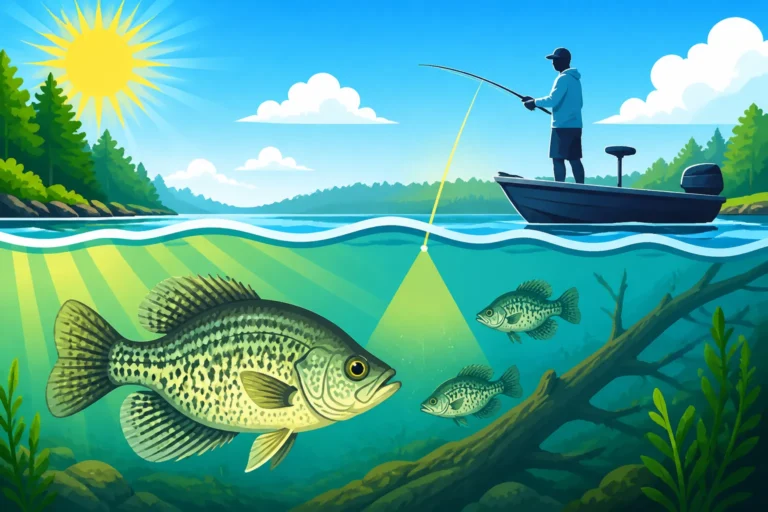
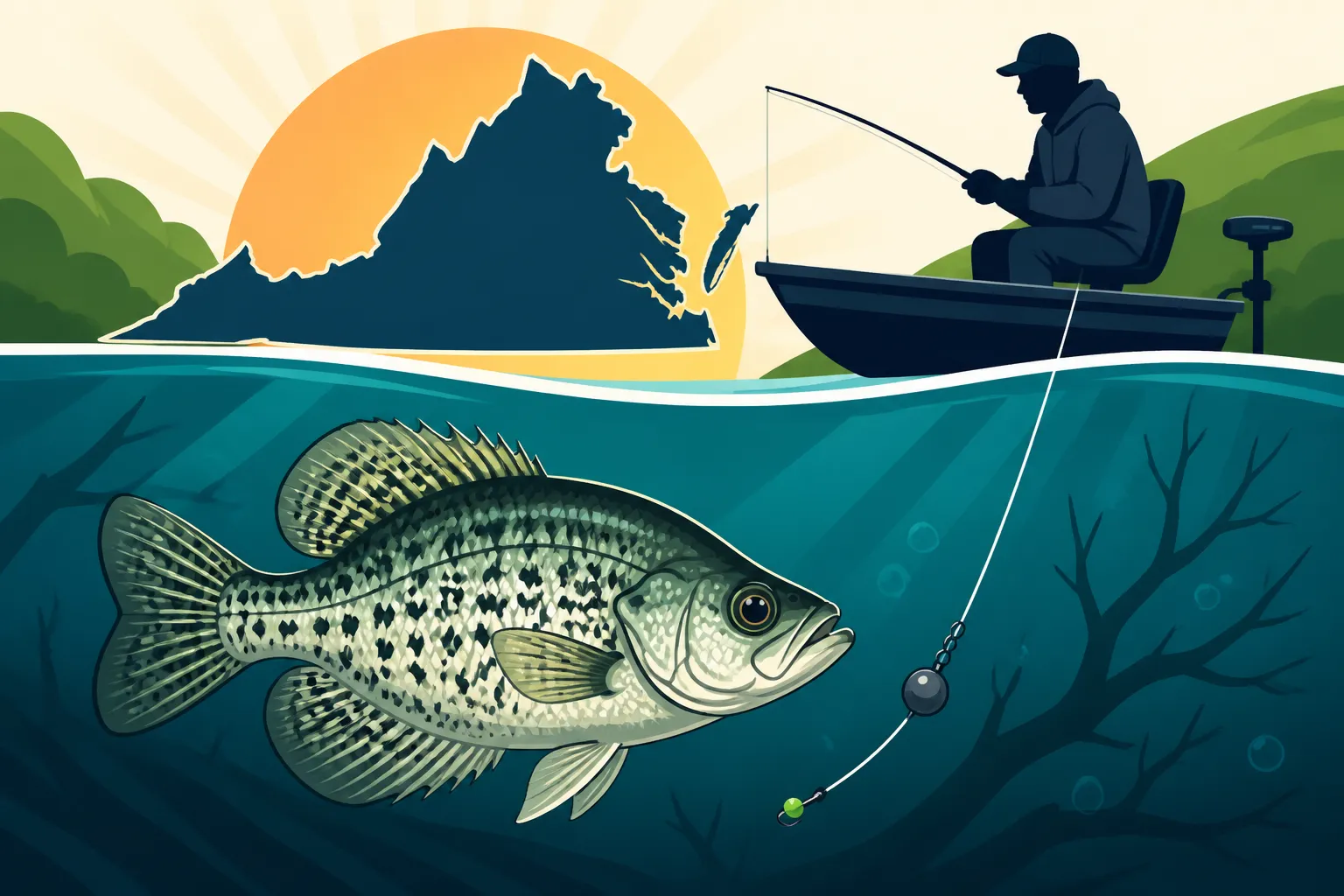
At its heart, tightlining for crappie means fishing with a direct, almost slack-free line from your rod tip straight down to your bait. There's no casting and retrieving in the traditional sense; instead, you're focused on a vertical presentation, often right under the boat. The goal is to feel everything that's happening at the business end of your line, whether it's the subtle weight of your sinker touching a submerged branch or the lightest tap of a crappie inhaling your bait. It’s a completely different mindset than casting a spinnerbait and cranking it in, demanding a more patient, focused approach. This direct connection is what makes it so incredibly effective, especially when crappie are holding tight to structure or aren't aggressively chasing lures.
This method stands in stark contrast to broader casting techniques that cover a wide area. With tightlining, precision is the name of the game. You're not just hoping your bait lands in the right general vicinity; you're actively placing it right in front of a crappie's nose. Imagine a cluster of crappie holding tight in a brush pile: instead of casting over and possibly spooking them, you can gently lower your bait directly into their living room. This precision allows you to work a specific depth, probe individual pieces of structure, and often coax bites from fish that wouldn't react to a faster, more horizontal retrieve. It’s a method that truly allows you to hunt the fish rather than simply waiting for them to find your offering.
For crappie, a fish known for its incredibly delicate bite, tightlining is a game-changer. These fish often "mouth" a bait rather than striking it aggressively, making their take almost imperceptible if there's any slack in your line. With a tight line, even the slightest change in pressure, a tiny tap, or a feeling of weightlessness can signal a bite. This heightened sensitivity means fewer missed opportunities and more fish in the cooler. Once you get the hang of it, you’ll realize just how many bites you might have been missing with other techniques. It's truly an eye-opener and makes you appreciate the subtle nuances of crappie behavior.
The Benefits of a Direct Connection
The most immediate and obvious benefit of tightlining is the instant bite detection. Crappie bites can be incredibly subtle – sometimes it's not even a "bite" so much as the feeling of your bait just stopping or getting slightly heavier. With a direct line, you're almost physically connected to your bait, allowing you to feel these nuanced takes. Many times, you might just feel a slight "thump" or a sudden pressure that wasn't there a second ago. Other times, your rod tip might just slightly load up, or the line will simply stop falling before it reaches the bottom. These are all signs of a crappie that has taken your bait, and with tightlining, you'll be able to react much faster.
Beyond bite detection, tightlining gives you unparalleled control over depth and presentation. Crappie are often suspended at a very specific depth, or they might be holding just off the bottom of a brush pile. With a tight line, you can use your electronics to find that sweet spot, then hold your bait there with incredible accuracy. You can adjust your depth by mere inches, working a structure from top to bottom until you find the fish. This ability to place your bait exactly where you want it, and keep it there, is a massive advantage over casting, which inherently involves a parabolic retrieve path. It's like being able to draw a perfect straight line to your target, rather than a curve.
Finally, tightlining significantly reduces snags, especially when fishing in heavy cover. Because you're fishing directly below your boat and keeping your line taut, you have much better control over where your hook and weight are going. There's less line out to catch on branches or debris, and you can often feel an impending snag before it happens, allowing you to lift your bait clear. This saves you valuable time and money by preventing lost tackle, a common frustration for anyone fishing around submerged trees or thick brush. For those days when you're targeting crappie hunkered down in those messy spots, this control is absolutely invaluable.
Assembling Your Perfect Tightlining Rig
A successful tightlining setup doesn't have to be overly complicated or expensive, but a few key choices in gear will make a world of difference in your comfort, sensitivity, and success. Think of it as building a precision instrument rather than a blunt tool.
Rods and Reels for Precision
When it comes to tightlining rods, length is often your friend. I typically reach for a crappie rod that's anywhere from 9 to 12 feet long, sometimes even longer if I'm "spider rigging" multiple rods off the front of the boat. These longer rods provide a few distinct advantages: they give you greater reach to position your bait away from the boat without spooking fish, they offer better leverage for fighting fish, and their inherent flex acts as a shock absorber for those delicate crappie mouths. Look for rods made from graphite, as this material offers superior sensitivity, allowing you to feel even the most subtle bites.
The action and power of your rod are equally critical. For crappie tightlining, you want a rod with a light power and a fast or extra-fast action. What does that mean in plain English? "Light power" means the rod is designed for lighter lines and lures, and it will bend deeply under minimal pressure. "Fast action" means the rod primarily bends in the top third or quarter of the blank, giving you a sensitive tip for detecting bites while maintaining a strong backbone for setting the hook and fighting fish. This combination is absolutely crucial for feeling those delicate crappie taps and ensuring a solid hookset without ripping the hook out of their soft mouths.
For reels, a small, lightweight spinning reel is usually the go-to choice for tightlining. These reels are easy to operate, allow for smooth line payout, and balance well with longer crappie rods. Look for a reel in the 500 to 1000 series size, as anything larger will be overkill and add unnecessary weight. The key features to consider are a smooth drag system, which is vital for preventing line breaks when a bigger crappie or an unexpected species decides to hit, and decent line capacity, although you won't be making long casts. You can find excellent value in rod and reel combos specifically designed for crappie fishing on platforms like Amazon, which often offer a balanced setup right out of the box.
Choosing the Right Line, Hooks, and Weights
Line choice is paramount for successful tightlining. Most anglers opt for a light monofilament or fluorocarbon line, typically in the 4 to 6-pound test range. Monofilament is a budget-friendly option that offers good stretch and knot strength, making it forgiving for beginners. Fluorocarbon, while a bit more expensive, is nearly invisible underwater, extremely sensitive, and less prone to stretch, giving you even better feel. While braid offers incredible sensitivity, its lack of stretch and high visibility can be a drawback for crappie, who are notoriously line-shy. Ultimately, pick a line that you're comfortable with and that matches the clarity of the water you're fishing.
When it comes to hooks, small, sharp, light-wire hooks are the order of the day. Crappie have relatively small, soft mouths, so you need a hook that can penetrate easily without requiring a massive hookset. For live bait, a size 4 or 6 Aberdeen hook is a classic choice, as its fine wire is less likely to harm a minnow, keeping it lively. If you're using jigs, the jig head itself acts as your hook, and you'll want to ensure it has a sharp, durable hook. Jigs typically range from 1/32 to 1/16 ounce, with some heavier options for deeper water or stronger currents. You can find a vast array of quality fishing line, hooks, and jig heads on Amazon to match any condition.
Weights are essential for getting your bait down to the desired depth and keeping your line tight. Depending on the current and depth, you might use small split shot weights crimped a foot or so above your hook, or a small bell sinker attached to a dropper loop for a true drop-shot style setup. The key is to use just enough weight to get your bait down efficiently without overpowering your presentation. Too much weight can make your bait look unnatural and dull your ability to feel subtle bites. Experimentation is key here to find the perfect balance for the conditions you're fishing.
The Importance of the Right Bait
When it comes to crappie, live bait often reigns supreme, especially for tightlining where a natural presentation is key. Small minnows, often called crappie minnows or shiners, are consistently effective. Hook them lightly through the lips or just behind the dorsal fin to keep them lively and allow them to swim naturally. Crickets and small worms can also be excellent choices, particularly in cooler water or when crappie are targeting smaller insects. The natural scent and movement of live bait can be irresistible to even the most finicky crappie, often prompting them to hold onto the bait longer, giving you more time to detect the bite and set the hook.
Artificial options have come a long way and are incredibly effective, especially when you're actively searching for fish or want to avoid the hassle of live bait. Small jigs, typically 1/32 to 1/16 ounce, dressed with soft plastics like tube baits, grubs, or small curly-tail swimbaits are fantastic. The key is to match the hatch, offering colors and profiles that mimic the baitfish or insects crappie are feeding on. Popular colors include chartreuse, white, pink, and various natural shades. You can learn more about Best Bait for Crappie Fishing in Virginia to fine-tune your selection for local conditions.
Finally, don't underestimate the power of tipping your artificial bait. Adding a small crappie nibbler, a piece of a wax worm, or even just a tiny strip of cut bait to your jig can add extra scent and visual appeal that makes all the difference. This "tipping" strategy often turns hesitant crappie into aggressive biters, as the natural scent profile provides that extra incentive they need. It’s a simple trick that can significantly increase your catch rate, especially on tough fishing days.
Mastering the Technique: From Drop to Catch
Tightlining is as much about finesse and feel as it is about the gear itself. It's a continuous dance between angler, boat, and fish, often happening just below your feet.
Getting Your Bait to the Right Depth
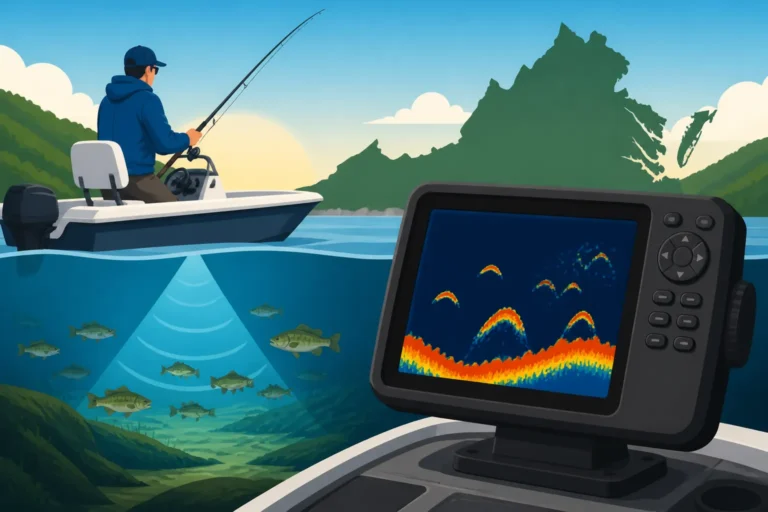
One of the greatest advantages of tightlining is the ability to target very specific depths, and modern electronics are your best friend here. A good depth finder, like those from Humminbird or Lowrance, can show you not only the bottom contour but also schools of baitfish, individual fish arches, and even submerged structure. By identifying where the crappie are holding, you can then precisely lower your bait to that exact depth. Pay close attention to your unit; if you see fish at 15 feet over a 30-foot bottom, that’s exactly where your bait needs to be.
If you don't have a fancy depth finder, or prefer a more old-school approach, you can still accurately gauge depth by "counting down." This involves knowing how fast your bait falls (you can test this beforehand in clear water) and counting the seconds as it drops. For example, if your 1/16 oz jig falls a foot per second, and you see fish at 10 feet on your unit, you can count to 10 as you drop your bait. It takes practice, but it's a reliable method when you don't have electronics or if you're fishing in smaller, less equipped boats.
Crappie love to hang around specific depth zones, depending on the season and time of day. In warmer months, they might be suspended in the thermocline, that layer of water where the temperature changes rapidly. In cooler weather, they might hug deeper holes or channel edges. Understanding these typical depth zones will help you start your search in the right place. For instance, in spring, they'll be shallower as they move toward spawning grounds, while in summer, they often retreat to cooler, deeper water. Knowing these general patterns will help you narrow down your initial target depth and make your tightlining more efficient. For more insights on seasonal patterns, check out Best Time of Year for Crappie Fishing in Virginia.
The Subtle Art of Presentation
Once you've identified the depth, the next step is a perfectly vertical drop. The goal is to lower your bait straight down, directly into the strike zone, with as little swing or drift as possible. This requires good boat control, often using a trolling motor to hold your position over structure or suspended fish. A truly vertical drop ensures your bait spends maximum time in the productive zone and minimizes the chances of snags as you lower it through cover. Think of it like dropping a plumb bob straight down – that's the ideal presentation.
While a vertical drop is key, sometimes a little movement is all it takes to trigger a strike. After your bait reaches the desired depth, try subtle lifts and drops, or gentle twitches of your rod tip. This imparts a natural, enticing action to your bait, mimicking a struggling minnow or insect. The key word here is "gentle" – crappie are often put off by aggressive, jerky movements. A slow, almost imperceptible lift of a few inches, followed by a controlled drop, can be incredibly effective, especially when crappie are lethargic.
Sometimes, less is truly more. After reaching your target depth, simply holding your bait steady, allowing it to hang motionless in the water, can be the most effective presentation. This "dead stick" method is particularly good when crappie are finicky or when fishing in strong currents that impart natural action to your bait. Let the natural movement of your live minnow or the subtle sway of the water give your artificial bait just enough life to entice a bite. Patience is a virtue here, and sometimes the crappie will take their time to investigate before committing.
Detecting Those Delicate Bites
Feeling the bite is perhaps the most challenging, yet rewarding, aspect of crappie tightlining. The classic crappie bite often feels like a subtle "tick" or "thump" on your line, as if a tiny pebble just hit your bait. It can be so light that many anglers mistake it for hitting a piece of structure or just the current. The key is to be constantly aware, holding your rod lightly but firmly, and focusing intently on any abnormal sensation. With practice, you'll start to recognize the difference between a crappie's gentle kiss and a bump against a branch.
Beyond the feel, watching your line is an essential part of bite detection. If you're using a brightly colored line, or even a section of highly visible leader, you might see the bite before you feel it. A subtle jump, a sudden twitch, or even the line just going slack or moving sideways are all indications that a crappie has taken your bait. This is particularly useful on windy days when wave action might mask the subtle feel of a bite. Keep your eyes peeled where your line enters the water, and don't hesitate to investigate any suspicious movement.
Finally, the sensitivity of your rod tip is your ultimate ally. A good crappie rod will have a flexible, responsive tip that translates even the slightest pressure changes directly to your hand. You might feel a momentary weightlessness as a crappie rises to inhale your bait, or a slight increase in pressure as it swims off with it. The moment you feel anything out of the ordinary, even if it's just a fleeting sensation, it's often time to set the hook. Trust your instincts and the sensitivity of your setup; it's often better to set the hook on a "phantom" bite than to miss a real one.
Locating Crappie: Reading the Water
Knowing how to tightline is only half the battle; the other half is knowing where to tightline. Crappie are creatures of habit, and understanding their preferences for structure, cover, and seasonal movements is paramount.
Targeting Structure and Cover
Crappie absolutely adore brush piles and submerged timber. These underwater havens provide shade, ambush points, and protection from predators, making them prime locations for crappie to congregate. When you encounter a brush pile on your fish finder, approach it slowly and drop your bait directly into the densest parts. However, be prepared for snags – it's a trade-off for getting into the heart of crappie territory. A good strategy is to work the edges first, then gradually move deeper into the cover. For more detailed strategies on these hotspots, delve into How to Catch Crappie Around Brush Piles.
Man-made structures like docks, piers, and bridge pilings are also crappie magnets. These structures offer vertical cover, shade during bright days, and often attract schools of baitfish, which in turn attract crappie. Focus on the shady side of docks, the pilings themselves, and any submerged debris around them. Often, crappie will suspend directly under these structures, so a vertical tightline presentation is perfectly suited for picking them off one by one. I've had countless days where slow-rolling a jig under a dock produced fish when nothing else would.
Don't overlook natural bottom structure like rock piles, ledges, and creek channels. These features create underwater contours that crappie use as highways and feeding grounds. Ledges, especially, offer transition zones where crappie can move easily between deep and shallow water, depending on their feeding mood or the time of day. Use your electronics to identify these subtle changes in the bottom, then tightline your bait along the contours, focusing on areas where the depth changes sharply or where baitfish are schooling.
Seasonal Movements and Depth
Crappie, like most fish, are highly influenced by the seasons. In spring, as water temperatures rise, crappie move into shallower waters to spawn. This is a fantastic time for tightlining in coves, around submerged vegetation, and near the banks. Pre-spawn crappie might be staging in slightly deeper water nearby, while post-spawn fish might be recovering in similar areas before dispersing. Understanding these nuances can help you anticipate their movements. I find this time of year is excellent for targeting larger females still holding eggs. To learn more about these patterns, refer to Best Time of Year for Crappie Fishing in Virginia.
As summer heats up, crappie often retreat to deeper, cooler waters. They'll frequently suspend in the middle of the water column, often above the thermocline, or relate to deep structure like submerged creek channels or humps. Finding these suspended schools requires diligent use of your fish finder and precise depth control with your tightlining rig. This can be some of the most challenging, but also most rewarding, crappie fishing. They’ll often suspend at a specific depth for large areas, and once you find that depth, you can really load up. If you're struggling during this period, checking out How to Find Crappie in Summer can offer specific guidance.
Fall sees crappie becoming more active again as water temperatures cool, and they start to feed heavily in preparation for winter. They'll often congregate in larger schools, moving back to structure in slightly shallower waters or along channel edges. In winter, they become more lethargic, holding in deeper holes, often near the bottom of river channels or the deepest parts of lakes. Tightlining becomes even more critical during these cold months, as a slow, precise presentation is often the only way to entice a bite. Understanding How Deep Do Crappie Go in Winter can be invaluable for cold-weather success.
Baitfish Presence and Water Temperature
Crappie are predators, and like all predators, they follow their food. The presence of shad, minnows, or other small baitfish is a strong indicator that crappie are nearby. Look for schools of baitfish on your electronics, or observe visual signs like nervous baitfish on the surface. Where the baitfish are dense, crappie are almost certainly lurking underneath, ready to ambush. Presenting your tightline rig among these baitfish schools can trigger immediate strikes, as your offering appears as just another easy meal.
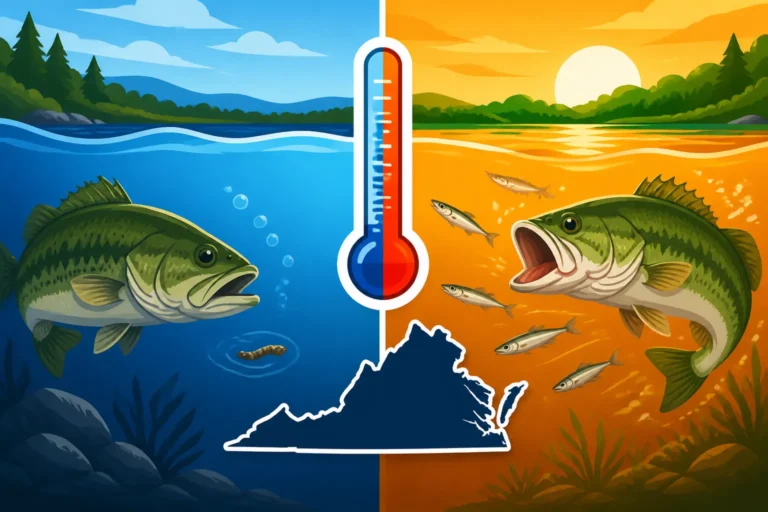
Water temperature is a critical factor influencing crappie activity. They have preferred temperature ranges for feeding, spawning, and simply existing comfortably. Generally, crappie are most active when water temperatures are between 55 and 75 degrees Fahrenheit. Knowing the water temperature of your fishing spot can help you predict where crappie will be holding and how aggressively they might feed. A sudden drop or rise in temperature can cause them to shut down or move, so keep an eye on your boat's thermometer.
Finally, water clarity plays a role in your tightlining strategy. In clear water, crappie can be more line-shy, so opting for fluorocarbon line and more natural bait colors is often a good idea. In murky or stained water, brighter jig colors like chartreuse or orange can be more visible, and the crappie might be less discerning about your line. Adjusting your line and bait choices to match the water clarity will significantly improve your chances of success.
Overcoming Common Tightlining Hurdles
Even with the best gear and knowledge, tightlining has its frustrations. Losing tackle, missing bites, and battling the elements are all part of the game. But with a bit of foresight and technique, you can minimize these headaches.
Dealing with Snags and Break-offs
The frustration of losing tackle in heavy cover is something every tightliner experiences. You've found the perfect brush pile, dropped your bait precisely, felt that tap… then thunk – you're snagged. It's disheartening and costly, especially when you're using your favorite jigs. The key is to understand that fishing tight to cover comes with this inherent risk, but there are ways to mitigate it. Don't let the fear of snags keep you from the best crappie hideouts.
Strategies for snag avoidance start with your gear. Using slightly lighter line, perhaps 4-pound test instead of 6-pound, can sometimes allow the line to break before the hook bends or your jig gets permanently stuck. More importantly, using smaller weights and jig heads can reduce the surface area that gets caught. Crucially, pay constant attention to what you're feeling on the line. If you feel your weight brush against something, gently lift your rod tip to pull your bait over or around the obstruction rather than letting it fall deeper into it. This proactive approach saves countless jigs.
When you do get snagged, resist the urge to violently pull. Often, a gentle "pluck" or a slow, steady pull in the opposite direction from which you snagged can free your bait. If it's a jig, try giving the line some slack, then quickly popping it, sometimes the hook will dislodge itself. If you're using a single hook for live bait, a straight pull might bend the hook just enough to get it free without breaking your line. Knowing the art of the retrieve from a snag is a skill developed over time, but it's worth the effort to save your tackle. Remember, if you’re fishing in Virginia, it’s always good to be aware of Virginia Fishing Regulations Explained for any specific rules on tackle or fishing in certain areas.
Missed Bites and Setting the Hook
Crappie can be incredibly tricky. They have delicate mouths and often "peck" at a bait before fully committing, or they might inhale it and then spit it out in a fraction of a second. This leads to the maddening scenario of feeling a bite, setting the hook, and coming up empty. It happens to everyone, even seasoned pros, and it's one of the biggest frustrations in crappie fishing. Are they just nipping? Is your hook too big? Is your bait too large? These questions can drive you crazy.
When you do feel a bite, the hook set for crappie tightlining is usually a subtle, firm wrist flick rather than a massive, sweeping motion. Because crappie have soft mouths, a powerful hookset can easily tear the hook free. Instead, when you feel that "tick" or added weight, simply lift your rod tip sharply but only a foot or two, applying steady pressure. The sharp, light-wire hooks used for crappie will usually do the work for you with this gentle approach. If you’re getting a lot of bites but no hook-ups, try waiting an extra half-second before setting the hook, allowing the crappie to fully commit to the bait.
If you're consistently getting strikes but not hooking up, it's time to re-evaluate. Is your bait too large for the crappie's mouth? Try downsizing your minnow or using a smaller jig. Is your hook dull? Sharpen or replace it. Are you fishing too fast or too slow? Experiment with your presentation. Sometimes, even changing the color of your jig or adding a crappie nibbler for extra scent can make the difference between a missed strike and a fish in the boat. Don't be afraid to change things up if what you're doing isn't working.
Wind and Current Challenges
Wind can be a tightliner's worst enemy. It makes boat control incredibly difficult, causing your boat to drift too fast, dragging your bait away from structure, or making it impossible to hold over a suspended school. Worse, it creates bow in your line, making it incredibly hard to detect those subtle crappie bites. That direct connection you strive for gets lost, and suddenly, you're back to guessing. I've spent many days battling the wind, feeling like I'm fighting the elements more than the fish.
To counteract the wind, a good trolling motor with GPS Spot-Lock technology (like those from Minn Kota or Motorguide, often available on Amazon) is invaluable. It will hold your boat in place even in strong gusts, allowing you to maintain that crucial vertical presentation. If you don't have a GPS-enabled trolling motor, a drift sock can help slow your boat's drift, giving you more control. In extreme wind, anchoring might be your only option, but it limits your ability to move and search for fish.
Sometimes, however, current can be your friend. Instead of fighting it, learn to work with it. A gentle current can impart a natural, lifelike action to your bait, making it irresistible to crappie. You can often drift your tightline rig along a current seam or channel edge, letting the water carry your bait through productive areas. The key is to use just enough weight to keep your bait at the desired depth without letting the current sweep it away too quickly. It's about finding that delicate balance where the current helps your presentation rather than hindering it.
Elevating Your Tightlining Game
Once you've mastered the basics, there are several ways to take your crappie tightlining to the next level, increasing your efficiency and targeting bigger fish.
Using Multiple Rods and Spreaders
One of the most effective ways to cover more water and different depths when tightlining is to use multiple rods, a technique often called "spider rigging." This involves setting up several rods off the front of your boat, fanned out like a spider's legs, each with a tightline rig. This allows you to present multiple baits at various depths and distances from the boat simultaneously, increasing your chances of finding the crappie's preferred zone. Make sure to check Virginia Fishing Regulations Explained for the legal limit on the number of rods you can use at one time.
Within a multi-rod setup, you can further optimize your spread with various rigs. Spreader bars allow you to present two or three baits at slightly different depths on a single rod, maximizing your chances with minimal effort. You can also experiment with different bait types on each rod – a live minnow on one, a chartreuse jig on another, and a white tube bait on a third. This way, you can quickly identify what the crappie are biting on that particular day.
The advantage of using multiple rods is undeniable: more lines in the water means more opportunities. However, it requires careful boat control and constant vigilance, especially when you have multiple fish on at once or if you snag a line. It’s a rewarding technique that, once mastered, can significantly boost your catch rate and help you become a much more efficient crappie angler.
Interpreting Your Electronics Deeply
Your fish finder is more than just a depth gauge; it's a window into the underwater world. To truly elevate your tightlining, you need to learn to interpret your electronics deeply. Beyond just seeing fish arches, look for bait balls, which indicate active feeding areas. Pay attention to the thermocline (if present), as crappie often suspend just above or within this temperature boundary. Learning to differentiate between crappie and other species can also be a game-changer.
Advanced fish finders featuring side imaging and down imaging technology offer an even clearer picture. Side imaging allows you to scan wide swaths of water to either side of your boat, revealing submerged timber, brush piles, and schools of fish that you might otherwise miss. Down imaging provides a photo-like view directly beneath your boat, making it easier to identify the type of structure crappie are holding on. Top brands like Garmin, Humminbird, and Lowrance offer excellent units that can be found on Amazon, dramatically improving your ability to pinpoint crappie.
Don't forget the power of waypoints and mapping. Whenever you find a productive brush pile, a submerged hump, or a school of suspended crappie, mark it on your GPS. Over time, you'll build a personal map of crappie hotspots, giving you invaluable knowledge for future trips. Observing patterns – such as crappie always holding on the north side of a certain brush pile or at a specific depth along a channel – will turn you into a more consistent and successful angler.
The Art of Vertical Jigging and Finesse
When crappie are finicky, or when you've located a dense school, vertical jigging with small, subtle movements can be incredibly effective. Instead of just holding your bait steady, impart a very slow, gentle jigging motion with your rod tip. Think tiny lifts and drops, just an inch or two at a time. This subtle dance can entice crappie that are hesitant to chase a faster-moving bait, making them think it's an easy meal. This technique is often discussed further in How to Jig for Crappie in Spring.
Sometimes, the crappie simply want the bait to be as motionless as possible. This is where the "dead stick" method truly shines. Drop your bait to the desired depth, then simply hold your rod perfectly still in a rod holder or in your hand. Let the natural currents or the subtle movements of your live minnow do all the work. This method often produces bites from highly pressured or extremely lethargic crappie who might be spooked by any active retrieve. Patience is a virtue with this technique, but the results can be worth the wait.
Ultimately, successful tightlining for crappie is about constant experimentation. Don't be afraid to try different jig colors, vary your retrieve speed, change your depth by a few inches, or switch between live bait and artificials. Crappie moods can change throughout the day, and what worked an hour ago might not work now. Pay attention to the subtle cues from the fish, the water, and your electronics, and be willing to adapt. The anglers who catch the most crappie are often those who are most flexible and willing to try new things until they crack the code.
| Bait Type | Pros | Cons | Ideal Scenario | Where to Buy |
|---|---|---|---|---|
| Live Minnows | Most natural action, highly effective | Requires careful handling, short lifespan | All seasons, finicky crappie | Local bait shops, sometimes on Amazon for containers |
| Soft Plastic Jigs | Versatile, durable, wide color/shape range | Less natural scent, requires angler action | Active crappie, covering water | Tackle shops, Amazon for bulk packs |
| Tube Jigs | Good action, easy to rig, resembles small baitfish | Can tear easily, not always scented | Brush piles, vertical presentations | Local tackle shops, Amazon |
| Crappie Nibblers | Strong scent attraction, visual appeal | Can fall off easily, small size | Tipping jigs, slow bites, adding scent | Bait shops, Amazon |
| Small Worms (e.g., Waxworms) | Natural scent, good for panfish, readily available | Smaller profile, less durable than minnows | Tough bites, panfish bycatch, finesse | Bait shops, Amazon |
Disclaimer
The information provided in this guide is for general informational purposes only. Fishing regulations, license requirements, and local conditions can change frequently. Always consult the Virginia Department of Wildlife Resources (DWR) official website or local authorities for the most up-to-date and specific rules and regulations before heading out on the water. Stay safe and fish responsibly!