How to Catch Catfish at Night
You’ve been out there on the water all day, casting under the hot Virginia sun, maybe getting a few bites, but nothing truly exciting. As the sun dips below the horizon, bringing with it a blessed coolness, many anglers pack up. But for those in the know, the real magic—and the biggest catfish—are just waking up. Night fishing for catfish offers a peaceful escape from crowded daytime waters and an incredible opportunity to land some truly impressive whiskered giants. This guide is your roadmap to navigating the darkness and successfully reeling in those nocturnal trophies.
Why Night Fishing for Catfish is a Game Changer in Virginia
There’s something uniquely thrilling about fishing under the cloak of night. The world quiets down, the air cools, and a different kind of energy settles over the water. For catfish, this isn't just a pleasant change; it's prime time for hunting. They are built for the dark, and understanding their natural inclinations is the first step to becoming a successful night angler.
Understanding Catfish Nocturnal Habits
Catfish, especially the larger species like blue cats and flatheads, are predominantly nocturnal feeders. Think about it: during the day, they often retreat to deeper, cooler water or hide under cover to escape the heat and bright light. They’re not exactly subtle creatures, and bright daylight makes them more vulnerable to predators and less efficient at hunting by stealth. When darkness falls, the game changes entirely.
Their senses are perfectly adapted for the low-light environment. Catfish have an incredible sense of smell, far superior to most other freshwater fish. They use their barbels, those prominent "whiskers" around their mouth, to detect vibrations and chemical cues in the water. At night, with less light pollution from the sun, their highly sensitive chemoreceptors and lateral line systems become even more effective. They can home in on the scent of bait or the subtle movements of prey from a surprising distance. This means they are actively on the prowl, moving from their daytime resting spots to shallower feeding grounds, creek mouths, and other areas where baitfish congregate. It’s like they have a secret world that only truly comes alive when you can barely see your hand in front of your face.
The Tranquility and Thrill of Night Fishing
Beyond the biological advantage, night fishing offers a distinct experience for the angler. The hustle and bustle of daytime boating traffic vanish, replaced by the symphony of crickets, frogs, and the gentle lapping of water against the shore or boat. The air is cooler, offering a welcome reprieve during Virginia’s hot summer months. It’s a chance to truly unwind, enjoy the stars, and feel completely immersed in nature.
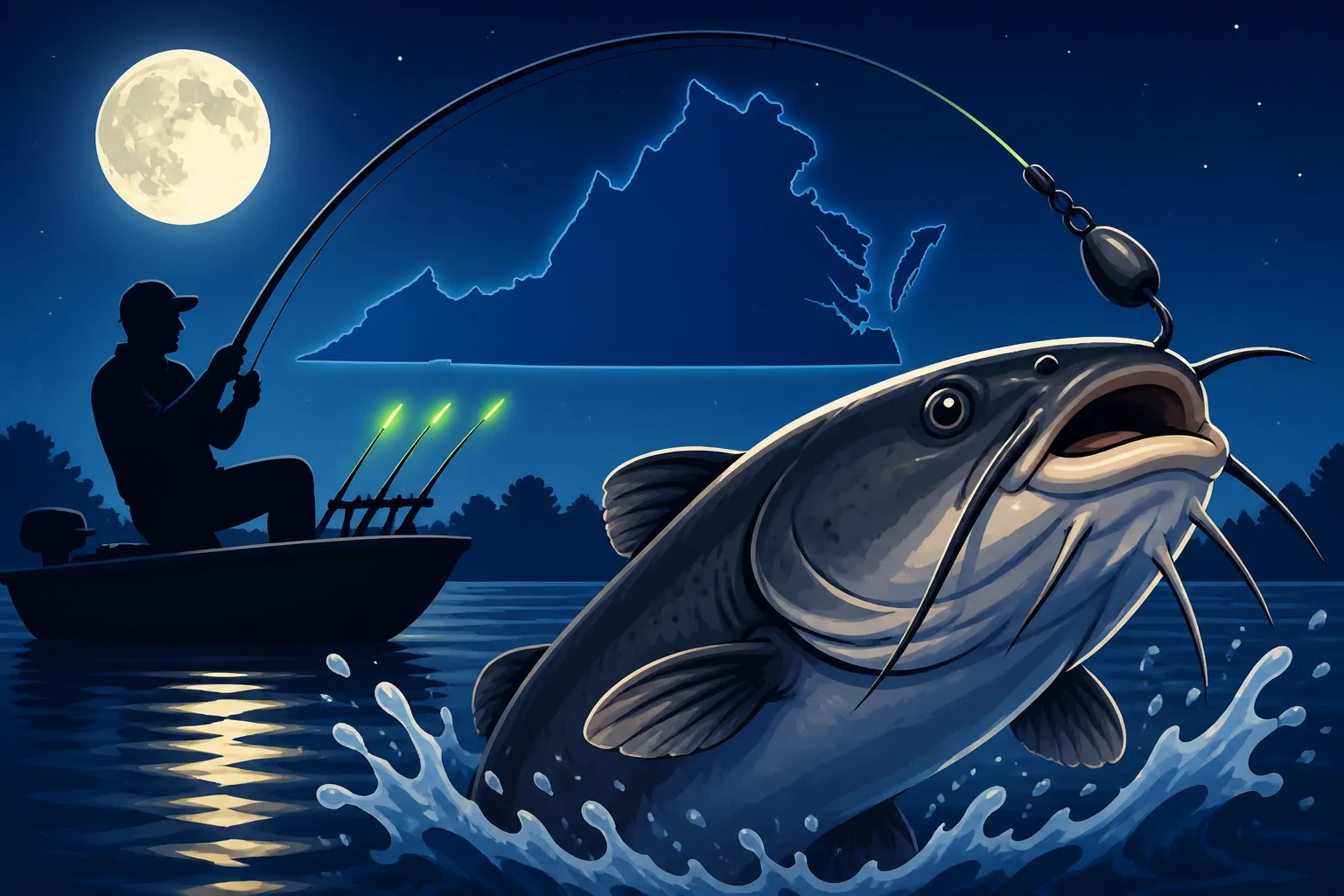
But don’t mistake tranquility for boredom. The thrill of a hard hit in the dark is absolutely unmatched. You rely more on sound and feel – the sudden "thump" of a bite transmitted through your rod, the scream of your drag as a powerful fish makes a run. Without visual cues, every sensation is heightened. Your heart rate jumps when your rod tip suddenly doubles over, illuminated only by your headlamp. It’s a primal, exciting challenge, and often, the reward is a bigger fish. Many trophy catfish in Virginia, whether from the James River or the vast expanse of Kerr Lake, are caught under the cover of darkness, simply because that's when they're most actively feeding and less wary.
Essential Gear for Your Virginia Night Catfish Expedition
Heading out after dark means you need to be prepared. Your daytime fishing kit might get you by, but a few specialized items and smart choices will make your night fishing experience safer, more comfortable, and far more productive. Thinking ahead about what you'll need is crucial when you can't just run back to the truck.
Lighting Up Your Night Fishing Setup
Visibility is, of course, your primary concern. A good light source isn't just about seeing your bait; it's about safety, navigation, and efficiently managing your tackle.
- Headlamps: These are non-negotiable. A quality headlamp with adjustable brightness and a red-light option (which preserves your night vision better and attracts fewer bugs) is paramount. It keeps your hands free for tying knots, baiting hooks, or unhooking a fish. Always carry extra batteries, or a rechargeable model with a portable power bank. There are many robust, waterproof options available on online marketplaces like Amazon.
- Lanterns: For ambient light around your fishing spot, a battery-powered LED lantern is invaluable. It helps you see your tackle box, cooler, and surrounding area without constantly moving your headlamp. If you're fishing from a boat, a boat-specific stern light is a legal requirement in many waters and essential for being seen by other boats, even if traffic is minimal.
- Rod Tip Lights/Bells: For passive fishing (setting your rod in a holder and waiting), small clip-on lights that illuminate your rod tip or glow sticks inserted into the tip are excellent visual strike indicators. Alternatively, old-school bells clipped to the rod tip will alert you by sound. Many anglers find these indispensable for multi-rod setups.
Remember, less is often more with bright white light. Use it when necessary, but switch to red light or lower settings to maintain your night vision and avoid spooking fish or attracting a swarm of insects.
Rods, Reels, and Line for Big Night Cats
Night fishing often means bigger fish, and you need tackle that can handle the fight in the dark. You don't want to be undergunned when that giant blue cat decides to take your bait.
- Rods: Look for medium-heavy to heavy-action rods, typically 7 to 9 feet long. The extra length provides better casting distance and leverage, which is crucial when fighting a powerful fish from shore or a boat. A sturdy backbone is essential to handle the weight and power of a larger catfish. Brands like Ugly Stik offer durable, affordable options that many catfish anglers swear by. You can find a good selection of these heavy-duty rods and reels on Amazon that are perfect for battling those hard-hitting catfish.
- Reels: Baitcasting reels are generally preferred for heavy catfish, offering superior cranking power and line capacity. A good quality reel with a smooth, reliable drag system is key. You'll want a reel that can hold at least 150-200 yards of heavy line. Spinning reels can work for smaller cats, but for true trophy hunters, a robust baitcaster is the way to go.
- Line: Monofilament line in the 20-50 lb test range is a popular choice for its abrasion resistance and shock absorption. Braided line, while having no stretch and incredible strength for its diameter, can be harder to manage in the dark, especially when tying knots, and its lack of stretch offers less forgiveness on hard runs. If using braided line, consider a 30-50 lb test with a monofilament or fluorocarbon leader to provide some shock absorption and abrasion resistance against rough structure. When considering your setup, be sure to check out guides like How to Catch Catfish at Night for more specific gear recommendations.
The Right Bait for Nighttime Catfish
Catfish are primarily scavengers and opportunistic predators, relying heavily on their sense of smell. At night, a stinky, appealing bait is your best friend.
- Cut Bait: This is a classic for a reason. Fresh cut bait from oily fish like shad, herring, or even bluegill (check local regulations on using game fish as bait) works wonders. The scent trail it leaves in the water is irresistible to hungry catfish. Cut strips or chunks, ensuring some skin and scales are left on for added scent and durability.
- Live Bait: For flathead catfish, live bait is often the ticket. Small sunfish, shad, or even creek chubs are excellent choices. Flatheads prefer live prey and will stalk it using their incredible lateral line sense in the dark.
- Worms: Nightcrawlers or large garden worms are universally effective for all species of catfish, especially channel cats and smaller blue cats. Use a generous ball of worms to maximize scent and visibility (even in the dark, fish can detect profile).
- Prepared/Stink Baits: There are countless commercially prepared stink baits, dips, and dough baits designed specifically for catfish. These often come in paste form, meant to be smeared on a sponge or tube bait, or molded around a treble hook. While sometimes less effective for truly huge fish, they can be excellent for consistent action with channel cats.
- Other Options: Chicken livers are another very popular, very stinky, and very effective bait. Just be prepared for them to be messy! Some anglers even use hot dogs or shrimp marinated in garlic. Stocking up on high-quality hooks, weights, and line is easy, with many anglers finding great deals on bulk supplies through online marketplaces such as Amazon.
The key is to use fresh, smelly bait that will release a potent scent into the water column. Catfish will follow that scent trail directly to your hook.
Prime Virginia Spots and Techniques for Night Catfishing
Once you have your gear ready, knowing where to cast and how to present your bait effectively in the dark becomes paramount. Virginia offers an abundance of incredible catfish waters, and understanding their nocturnal movements is key to success.
Locating Catfish Hotspots After Dark
Catfish don't just randomly roam at night; they have specific feeding zones they move to once the sun goes down. Your goal is to intercept them.
- Channel Edges and River Bends: In larger rivers like the James River, the Rappahannock, or the Potomac, catfish often patrol the edges of the main river channel and around deeper bends. These areas provide current breaks and ambush points where baitfish gather. Deeper holes within these channels are also prime holding spots during the day and launching points at night.
- Submerged Structure: Any underwater cover, such as fallen trees, brush piles, rock formations, or old roadbeds, will hold catfish. These provide cover and attract baitfish. Use your electronics (if on a boat) during the day to mark these spots, or rely on maps and local knowledge. Fishing spots near Richmond, Virginia, especially along the James River, are well-known for their catfish populations.
- Creek Mouths and Inflows: Where smaller creeks or drains enter a larger river or lake, they bring in nutrients and baitfish, creating a buffet for catfish. The slightly cooler or murkier water can also be attractive.
- Shallow Flats Adjacent to Deep Water: During the day, catfish might be in 20-30 feet of water. At night, they’ll often move onto shallower flats (5-15 feet) that are rich in forage. These areas can be surprisingly productive. For a comprehensive look at various waters, consider checking out resources like Best Catfish Fishing Spots in Virginia. Lakes like Kerr Lake, for instance, are renowned for their catfish, and knowing how to fish them effectively at night can lead to fantastic results. You can find more targeted information in a Kerr Lake Fishing Guide for Beginners.
When shore fishing, focus on access points near deeper holes, bridge pilings, or areas with visible structure. From a boat, use your sonar to identify these features and anchor upstream, casting your baits down-current into the strike zone.
Effective Night Fishing Rigs and Strategies
Keeping your setup simple and effective is crucial when fishing in the dark. Complicated rigs can lead to frustration and lost time.
- Bottom Fishing Rigs: The most common and effective rigs for catfish are designed to keep your bait on the bottom where catfish feed.
- Carolina Rig: This is a go-to. A slip sinker (egg sinker or no-roll sinker) is threaded onto your main line, followed by a bead (to protect the knot) and a swivel. To the other end of the swivel, tie a leader (12-24 inches) and then your hook. This allows the fish to pick up the bait and run without feeling the weight of the sinker.
- Santee Cooper Rig: Similar to a Carolina rig, but with a peg float (a small, buoyant float) slipped onto the leader between the swivel and the hook. This lifts your bait slightly off the bottom, making it more visible to catfish and keeping it out of snags. This is especially useful in soft, silty bottoms or areas with light vegetation.
- Three-Way Swivel Rig: Use a three-way swivel with your main line tied to one eye, a dropper line with a sinker to another, and your leader with a hook to the third. This rig also keeps your bait off the bottom, which can be advantageous in certain conditions.
- Jug Fishing & Trotlines: While highly effective for catching multiple catfish, these methods are subject to very specific regulations in Virginia and may not be allowed in all waters. Always consult the current Virginia Fishing Regulations Explained and the Virginia DWR website to understand the rules regarding Catfish Trotline Setup and Tips or Jug Fishing for Catfish before attempting these techniques. Generally, these are considered commercial or high-volume recreational methods and have strict tagging, attendance, and location requirements. Stick to rod and reel unless you are fully compliant with all local laws.
- Patience and Stealth: Catfishing at night often requires patience. Set out your baits, get comfortable, and let the scent do its work. Avoid making excessive noise or shining bright lights directly into the water, as this can spook fish. Keep conversation low, and movement to a minimum. Use your rod tip lights or bells to monitor for bites, then grab the rod quickly but smoothly when a fish hits.
Safety First: Navigating the Night Waters
Fishing at night carries inherent risks that you don't face during the day. Prioritizing safety is not just good practice; it's essential.
- Tell Someone Your Plans: Always let a friend or family member know where you are going, when you expect to return, and who you are with.
- Navigation and Awareness: If boating, ensure your navigation lights are working and in use. Have a reliable GPS or chart plotter (with a charged battery) to navigate in the dark. Be extra vigilant for other boats, submerged hazards, or floating debris. Even from shore, be aware of your surroundings, uneven terrain, and potential wildlife.
- Personal Safety Gear:
- Life Jackets: Wear a life jacket, especially if on a boat or near strong currents. Accidents happen fast in the dark.
- First-Aid Kit: A well-stocked first-aid kit is essential for dealing with cuts, hook punctures, or minor injuries.
- Bug Spray: Mosquitos and other biting insects are often out in full force at night. Bug spray is a must for comfort.
- Emergency Communication: A fully charged cell phone (in a waterproof case) or a VHF radio (if boating) is crucial for emergencies.
- Proper Footwear: Sturdy, closed-toe shoes with good grip are important to prevent slips and falls on wet or uneven ground.
- Stay Hydrated and Fed: Even though it's cooler, you can still get dehydrated. Bring plenty of water and some snacks.
Always remember that safety is paramount. No fish is worth risking your well-being. By being prepared and exercising caution, you can enjoy a safe and rewarding night of catfishing.
Maximizing Your Night Catfish Catch
So you've got your gear, found a promising spot, and you're ready to cast into the darkness. Now, let's talk about the finesse and knowledge that separates a good night angler from a great one. It's about more than just putting bait in the water.
Patience and Persistence Pay Off
Night fishing isn't always instant gratification. Sometimes, it takes time for the catfish to move into their feeding zones, or for them to locate your bait. You might experience long periods of quiet, followed by intense bursts of action. Don't get discouraged if the bites aren't immediate.
- Strategic Waiting: Cast your baits to different depths or areas if you’re fishing with multiple rods. Let them sit for a good 15-30 minutes before checking or re-casting, unless you're in a high-current area where your bait might drift into snags. Catfish are smell-driven, and it takes time for the scent plume to spread and attract fish.
- Subtle Bites: In the dark, it can be harder to detect lighter bites. Sometimes a catfish will just "lean" on the bait, or slowly move off with it. Watch your rod tip lights or listen to your bells for any unusual movement, not just aggressive strikes. A slow, steady bend in the rod can often indicate a large fish.
- Adjusting Your Approach: If a particular spot isn't producing after an hour or two, consider moving a short distance, even just 50-100 yards, to try a different piece of structure or a different depth. Sometimes a slight change in location can make all the difference. Don't be afraid to experiment with different baits or bait presentations if one isn't working.
Understanding Seasonal and Weather Influences
While catfish are generally active at night year-round, their behavior, and therefore your success, can be influenced by the season and recent weather patterns.
- Warm Months (Spring/Summer): This is prime time for night catfishing. As water temperatures rise during the day, catfish seek cooler, deeper waters. When night falls, they eagerly move into shallower, warmer feeding flats. The warmer water also means their metabolism is higher, making them more aggressive feeders. Periods after a heavy rain can also be excellent, as the runoff washes nutrients into the water, attracting baitfish and then catfish.
- Cooler Months (Fall/Winter): While less common, night catfishing can still be productive in the cooler months, especially in early fall before water temperatures drop significantly. Catfish will still feed at night, but their activity might be concentrated in deeper holes or areas with stable temperatures. Focus on larger baits as they prepare for winter.
- Barometric Pressure: Many anglers believe that stable or rising barometric pressure often corresponds with better fishing, including for catfish. A sudden drop in pressure (often associated with an approaching cold front or storm) can sometimes put fish off the bite, though this isn't always a hard and fast rule.
- Moon Phases: While anecdotal, some anglers find certain moon phases, like a full moon, can impact night fishing, either by providing too much light or stimulating different feeding patterns. Others find no difference. Experiment to see what works best in your local waters. Generally, darker nights are preferred by many experienced night anglers.
Legality and Regulations for Night Catfishing in Virginia
Before you even tie on your first hook, it is absolutely critical to be aware of and abide by all Virginia fishing regulations. Fishing licenses, catch limits, and specific rules are put in place to manage fish populations and ensure safe, responsible angling.
- Virginia Fishing License: You absolutely need a valid Virginia fishing license. Whether you're a resident or non-resident, freshwater or saltwater, you must have the appropriate license for the waters you're fishing. Penalties for fishing without a license in Virginia can be steep. You can easily obtain one online through the Virginia Department of Wildlife Resources (DWR) website, or from various local vendors. For more details, refer to the Virginia Fishing License Guide or How to Get a Fishing License in Virginia.
- Species-Specific Limits: Catfish species in Virginia, including channel, blue, and flathead, have specific daily creel and possession limits, and sometimes even length limits. These can vary by water body. For example, some lakes might have special slot limits for certain species. Always consult the DWR's annual fishing regulations booklet or their website.
- Method Restrictions: As mentioned earlier, methods like jug fishing or trotlines have strict rules regarding tagging, the number of devices, and whether they can be left unattended. Ensure you understand these thoroughly.
- Private vs. Public Waters: Be mindful of where you are fishing. While public waters are generally open to licensed anglers, private ponds or sections of rivers might require landowner permission. Always check Virginia's Rules for Fishing on Public and Private Waters.
- Seasonal Closures: While catfish seasons are generally open year-round, some specific areas or methods might have seasonal restrictions. Always double-check.
Ignorance of the law is not an excuse. Taking the time to read the latest Virginia Fishing Regulations Explained will ensure your night catfishing adventure is not only successful but also legal and responsible.
Night Fishing Light Comparison
| Light Type | Best Use Case | Pros | Cons |
|---|---|---|---|
| Headlamp | Hands-free illumination for tying knots, baiting, unhooking | Keeps hands free, directional light, often has red-light mode | Can attract bugs if too bright, battery life varies |
| LED Lantern | Ambient light for camp, boat, or shore fishing spot | Wide area illumination, stable, good for general visibility | Not directional, can be bulky, attracts more bugs than red light |
| Rod Tip Light | Visual strike indicator for multiple rods | Clearly shows bites from a distance, easy to attach | Requires one per rod, smaller battery life, only indicates bites |
| Boat Lights | Navigation, safety, and general boat illumination | Essential for legal and safe boating at night | Requires boat power, can be very bright, may spook fish |
Remember, the darkness is part of the challenge and the allure of night catfishing. With the right gear, knowledge, and respect for safety and regulations, you'll find yourself hooked on this unique and rewarding way to pursue Virginia's whiskered giants.
Disclaimer
This article is for general informational purposes only and does not constitute professional advice. Laws, prices and regulations vary by location and change over time. Consult a qualified professional for guidance on your specific situation.