How Deep Do Crappie Go in Winter
As the days shorten and the Virginia air turns crisp, many anglers find themselves scratching their heads, wondering where their favorite crappie have vanished to. It's a common frustration: one day you're pulling them out of brush piles, the next it feels like the lake is empty. The truth is, crappie don't disappear; they simply shift their behavior to cope with the colder temperatures. This guide will dive deep into understanding exactly how deep crappie go in winter, unraveling the mysteries of their cold-weather habits and helping you put more of these tasty panfish in your cooler, even when there's a chill in the air.
Understanding Crappie Behavior in Winter
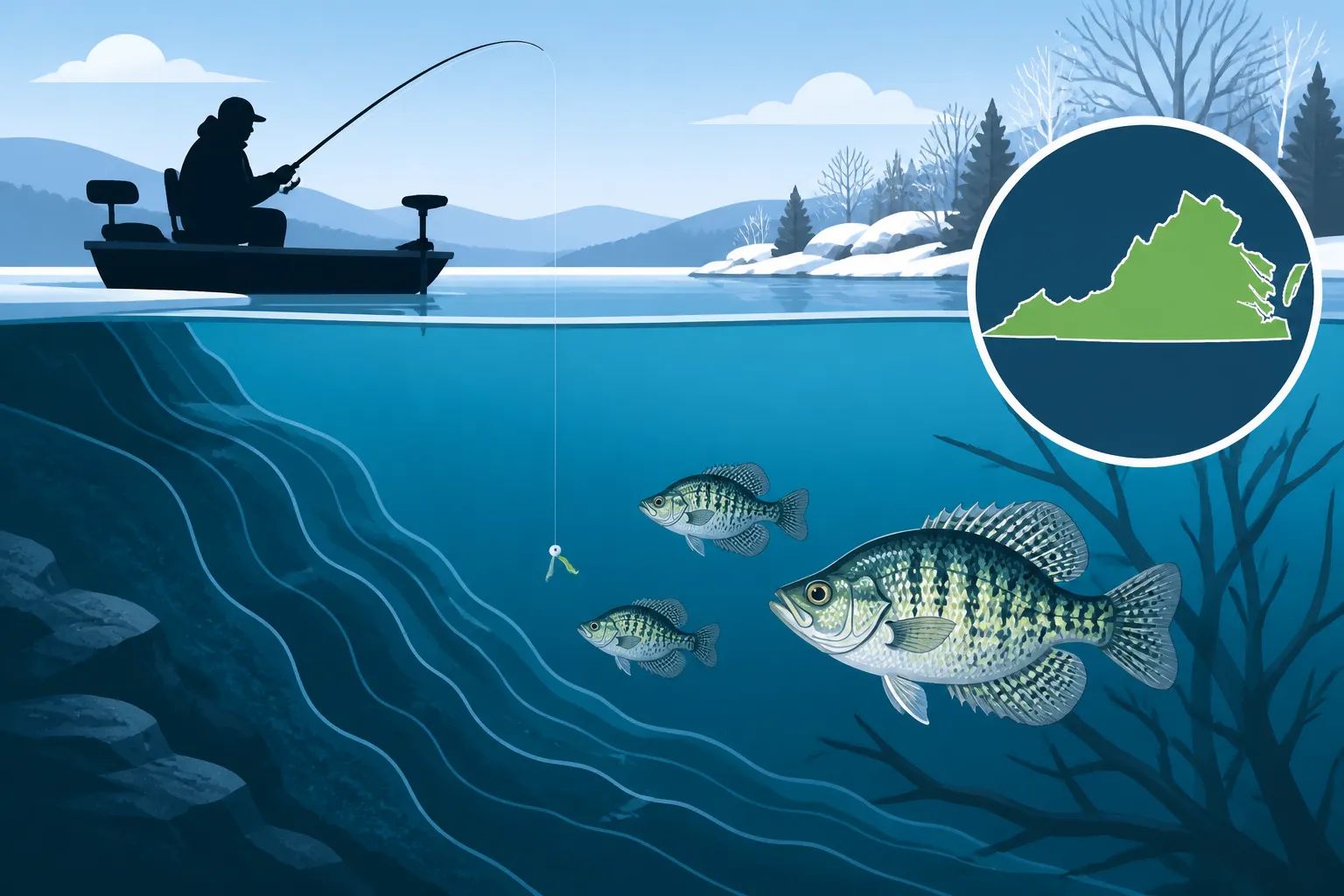
Crappie are ectothermic, meaning their body temperature is regulated by their external environment. When the water temperature drops, their metabolism slows down significantly, and they seek out the most comfortable and stable conditions available. This often means a move to deeper water.
The Cold Truth: Why Crappie Go Deep
You see, water doesn't cool uniformly. As surface temperatures plummet, the warmer, denser water actually sinks. This process, combined with factors like wind and current, leads to a phenomenon where deeper parts of a lake or reservoir tend to maintain a more stable, albeit colder, temperature than the surface. For crappie, this is their refuge. They're not looking for warmth, per se, but rather stability. A sudden drop in surface temperature can shock them, so they'll seek out those deeper, more consistent zones. Think of it like you pulling on a cozy sweater when the temperature dips – crappie are doing the same thing, just in liquid form.
Furthermore, their primary food source, baitfish like shad, also respond to these changes. Baitfish will often congregate in deeper, more stable water columns, sometimes around structure or along channel edges, for the very same reasons. Where the bait goes, the crappie follow. They become less active, certainly, but they still need to eat. This means they’ll be lethargically hanging around these deeper bait concentrations, ready to snap up an easy meal that wanders too close. It’s a survival strategy, plain and simple, and understanding it is the first step to finding them.
Key Factors Influencing Winter Depth
While a general rule of "deeper in winter" holds true, how deep exactly can fluctuate based on several crucial environmental factors. No two bodies of water are exactly alike, and even within the same lake, crappie might be at different depths depending on the specific spot.
Larger, deeper lakes with significant thermal mass will often have crappie holding at much greater depths than smaller, shallower ponds. The sheer volume of water in a place like Smith Mountain Lake or Lake Anna means it takes longer to cool down, providing more extensive deep-water refuges. Water clarity plays a role too; in very clear water, crappie might go deeper to avoid light penetration, especially on bright, sunny winter days. Conversely, in murkier waters, they might not need to descend as far. You might also find them higher in the water column in murky conditions, if the bait is there.
Structure is another massive influence. Even when crappie go deep, they rarely just suspend in open water for no reason. They'll relate to submerged timber, brush piles, rock formations, bridge pilings, or even ledges and humps that offer ambush points and protection. These structures act as magnets in the winter, providing cover and often concentrating baitfish. Knowing how to locate these hidden structures is key to successful winter crappie fishing. Consider checking out tips on how to catch crappie around brush piles for more detailed strategies on this.
Typical Winter Crappie Depths in Virginia Waters
So, what are we talking about in terms of actual feet? It's not an exact science, but we can certainly give you some solid ranges to start your search. Remember, patience and experimentation are your best friends when targeting winter crappie.
Lake and Reservoir Specifics
In Virginia's larger, deeper reservoirs such as Smith Mountain Lake, Lake Anna, or Claytor Lake, crappie can commonly be found anywhere from 20 to 40 feet deep, and sometimes even deeper. It's not uncommon to find them suspended over 60-100 feet of water, but holding at a particular depth within that water column. For example, you might find a school of crappie suspended at 30 feet over a 70-foot channel. This often happens because they are tracking baitfish that are also suspending at that preferred depth. The deepest parts of these lakes, especially near old river channels, creek beds, or submerged timber, are prime locations. If you're looking for specific spots, our guide on Best Crappie Fishing Lakes in Virginia can point you in the right direction.
During periods of stable cold weather, crappie in these deep lakes often form large, tight schools. This makes them easier to locate once you find that first fish, but also means they can be incredibly localized. A few feet in either direction can be the difference between a full livewell and an empty hook. Pay close attention to your fish finder when exploring these depths, looking for distinct arches or blobs that signify these winter congregations.
River and Tidal Water Nuances
River systems, especially the larger tidal rivers like the James or Rappahannock, present a slightly different scenario. While crappie will still seek deeper, more stable water in winter, the constant flow of a river means they'll often relate to current breaks and sheltered areas within those deeper zones. Instead of simply suspending in open water, they might hug the bottom of a deep channel, tuck into an oxbow lake off the main current, or stack up behind large submerged structures that break the flow.
In these environments, depths might range from 15 to 30 feet, depending on the river's overall depth and structure. They'll gravitate towards the deepest holes, eddies, and bends where the current is weakest and baitfish can find refuge. Tidal rivers also mean you need to consider the tide cycle. During a slack tide, crappie might spread out a bit more, but as the current picks up, they'll often consolidate even tighter into those protected, deeper spots. Understanding water temperature and fish feeding patterns can be particularly helpful here. Our article on how to catch crappie in winter offers more generalized techniques suitable for various water types.
| Water Body Type | Typical Winter Depth Range | Key Locating Features |
|---|---|---|
| Large Reservoirs | 20-40+ feet (suspended) | Deep channels, humps, standing timber, main lake points |
| Smaller Lakes | 15-30 feet (closer to bottom) | Creek channels, brush piles, submerged roadbeds |
| Rivers/Tidal | 15-30 feet (bottom-oriented) | Deep holes, current breaks, channel bends, oxbows |
| Clear Water | Deeper, avoiding light | Darker, more shaded structure areas |
| Murky Water | Potentially shallower | Following bait, less light avoidance |
Finding Those Deep-Water Crappie
Knowing they're deep is one thing, but actually finding them is where the real work (and fun!) begins. This requires a combination of the right gear, a strategic approach, and a good dose of patience.
Essential Gear and Techniques for Deep Crappie
To effectively target deep-water crappie, a good fish finder is practically non-negotiable. Modern sonar units can show you not only the depth but also baitfish schools and the distinct arches of individual crappie. Learning to interpret these readings is crucial. You're looking for bait balls, structure, and those tell-tale fish signals often clustered tightly. Many anglers find excellent deals on portable fish finders, even on platforms like Amazon, which makes them accessible for most budgets.
Once you've located them, the technique shifts. Vertical jigging directly over the school is highly effective. Think small, subtle movements. Tiny jigs (1/32 to 1/16 ounce is common) tipped with a minnow or a soft plastic grub are fantastic. The key is to keep your bait in the strike zone for as long as possible. A slow, methodical retrieve is critical, as winter crappie aren't likely to chase. Experiment with colors; sometimes a bright chartreuse will entice a strike, other times a more natural brown or black is the ticket. Check out some detailed Crappie Jigging Techniques for more specifics.
Slow trolling, also known as spider rigging, can also be a winter powerhouse, especially on larger lakes. This involves deploying multiple rods with various bait presentations at different depths, slowly moving over potential crappie holding areas. This allows you to cover more water and quickly identify the preferred depth and bait of the day. A dedicated set of rod holders, often found readily available from retailers like Amazon, can make this setup much more manageable.
Reading the Water and Interpreting Your Electronics
Beyond just seeing fish, it's about understanding the entire picture your electronics are painting. Are the crappie tight to the bottom? Are they suspended in a cloud of baitfish? Are they near a subtle contour change or a massive tree? All these details inform your approach. If you see a thick band of baitfish at 25 feet, and then crappie arches just below or within that band, you know exactly where to drop your jig.
Don't be afraid to circle back over a productive spot multiple times. Sometimes, a boat passing over will spook them temporarily, but they'll often regroup. Keep an eye on your boat speed; too fast, and you'll miss them or pull your bait out of the strike zone. Too slow, and you might not cover enough water to find them initially. It's a delicate balance. And remember, sometimes the "fish" on your sonar could be something else entirely, like a thermocline or debris, so trust your instincts and the feedback from your rod. Our guide on Virginia Crappie Fishing Tips for Beginners covers a broader range of tactics that can also be applied to cold water.
Common Misconceptions and Pro Tips for Winter Crappie
Fishing for winter crappie often challenges traditional thinking. Let's bust some myths and share some wisdom to make your cold-weather outings more fruitful.
Don't Assume They're Always at the Bottom
One of the biggest mistakes anglers make is assuming that because crappie go deep, they must be glued to the lakebed. While they often relate to bottom structure, especially in rivers or smaller lakes, in larger reservoirs, they frequently suspend. They might be 10 feet off the bottom in 40 feet of water, or 20 feet down over 80 feet of water. They follow the bait, and baitfish are often suspending in the water column, rather than just lying on the bottom.
Furthermore, don't overlook "thermal refuge" areas. These are spots where subtle temperature differences might allow crappie to move shallower than expected on certain winter days. This could be a sun-drenched, dark-bottomed cove that warms slightly faster, or the warm water discharge from a power plant (if available and legal to fish). On these rare warmer days, crappie might actually creep up to 10-15 feet, especially if there's structure like brush piles or docks available. Keep an open mind and always let the fish tell you where they are, rather than sticking rigidly to one depth assumption.
The Importance of a Slow Presentation
As mentioned, winter crappie are sluggish. Their metabolism is slow, and they're not expending much energy chasing down food. This means your presentation needs to be incredibly slow and subtle. Think "dead sticking" or barely perceptible jigging movements. A minnow suspended under a bobber with minimal movement can often outperform an aggressively jigged bait.
When using jigs, allow them to fall slowly, enticing a strike on the drop. Many winter crappie bites are incredibly light – just a slight "thump" or the line simply going slack or moving sideways. This requires sensitivity, both in your rod and your attention. A good ultralight rod with a sensitive tip is an absolute game-changer for detecting these subtle strikes. You can find a vast selection of sensitive rods and ultralight reels suitable for crappie fishing on platforms like Amazon, ensuring you have the right tools for the job. Mastering this slow, gentle approach will drastically improve your success rate when crappie fishing in the cold. It's truly a different ballgame than the frenetic bites of spring and summer, so adjust your mindset and your technique accordingly. For a general overview, consider exploring some Crappie Fishing Techniques for Beginners.
Disclaimer
This article is for general informational purposes only and does not constitute professional advice. Laws, prices and regulations vary by location and change over time. Consult a qualified professional for guidance on your specific situation.