How to Catch Crappie Around Brush Piles
There's nothing quite as frustrating as knowing crappie are abundant in a lake or river but not being able to find them. These elusive panfish are notorious for disappearing into cover, especially when water conditions change or fishing pressure is high. But if there's one secret weapon many seasoned anglers swear by, it's fishing around brush piles. These submerged havens offer crappie everything they need for survival and ambush hunting, and knowing how to effectively target them can turn a slow, frustrating day into an epic catch, no matter where you're casting your line in Virginia. This guide will walk you through the ins and outs of deciphering crappie behavior around brush piles and the best ways to catch them.
Why Crappie Absolutely Love Brush Piles
Crappie, whether you're targeting the Black Crappie vs White Crappie in Virginia, are creatures of structure. They don't just hang out randomly in open water; they seek out places that provide safety, shade, and an abundance of food. Brush piles tick all these boxes and then some, making them prime real estate for these delicious panfish.
Shelter and Protection from Predators
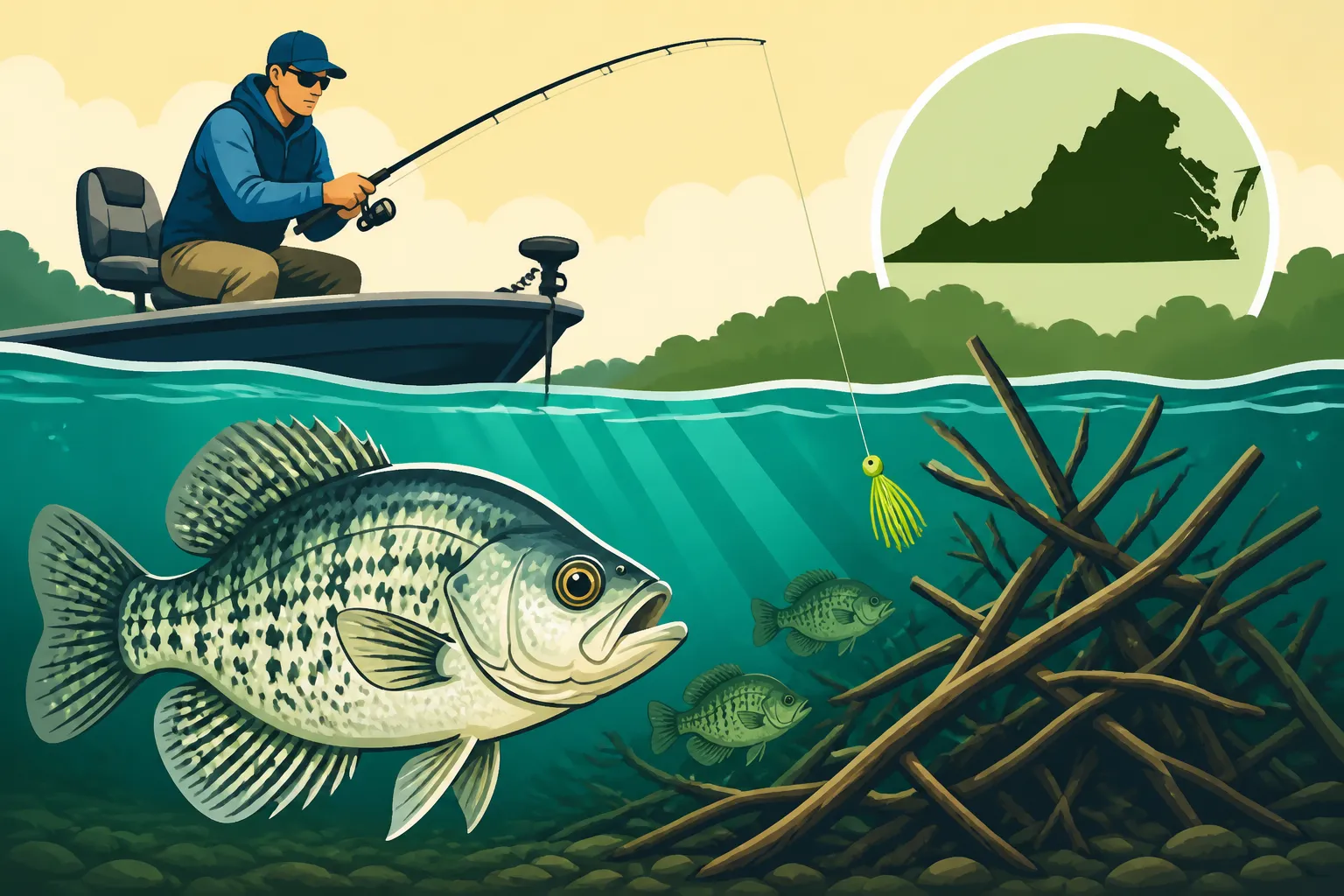
Think about it from a crappie's perspective. They're not at the top of the food chain, and larger predators like bass, pike, or even ospreys are always on the lookout for an easy meal. A dense brush pile offers an intricate network of branches, limbs, and debris that provides excellent cover. This tangled mess creates a natural fortress where crappie can hide from lurking threats.
When you approach a brush pile, remember that the crappie will often be nestled deep within it, feeling secure. This instinct for safety means they're less likely to spook and more likely to hold their ground, offering you a better chance to present your bait effectively. It's their safe zone, a place where they can relax a bit, even if you're dropping a tempting jig right on their heads. This dense cover is especially important in clearer waters, where crappie would otherwise be exposed to airborne and underwater predators.
Ambush Points for Forage
Beyond safety, brush piles are buzzing with life, acting as miniature ecosystems underwater. Smaller baitfish, insects, and crustaceans are all drawn to the cover and food sources that accumulate around these submerged structures. For crappie, this translates into a convenient buffet. They can comfortably wait within the brush pile, camouflaged by the shadows and branches, and dart out to ambush unsuspecting prey as it swims by.
This ambush strategy is key to understanding how to catch them. Crappie aren't chasing their food long distances in a brush pile; they're waiting for it to come to them. Your presentation needs to mimic this behavior – a slow, subtle offering that appears to be an easy meal. The varying depths and densities within a large brush pile also allow crappie to move up and down in the water column, adjusting to light conditions or the movements of their prey. This makes brush piles productive spots for crappie fishing throughout different seasons and times of day.
Finding the Best Crappie Brush Piles
You can't catch crappie from a brush pile if you can't find one first, right? Locating these submerged havens is often half the battle, but with the right tools and a bit of local knowledge, you'll be dropping jigs into crappie hot spots in no time.
Using Sonar and Electronics
Modern fish finders and sonar units are truly game-changers when it comes to locating brush piles. Standard 2D sonar will show you structure as irregular bumps or dense blobs on the bottom, often with fish arches or dots hovering nearby. Down imaging and side imaging technologies, however, take it to a whole new level. Down imaging gives you a photo-like view directly beneath your boat, allowing you to clearly see individual branches and the density of the brush pile. Side imaging can scan out to the sides, revealing brush piles you might have otherwise missed entirely.
When scouting for brush, look for dense, irregular shapes, especially along channel edges, old creek beds, or submerged humps. Sometimes you’ll see fish suspended directly within the brush or just above it. Many portable units are fantastic for this, and you can even find highly-rated, affordable options on Amazon that provide excellent clarity without breaking the bank. Don't be afraid to make several passes over a suspected area, varying your speed, to get a clear picture of what's down there. Mark any productive brush piles on your GPS, so you can return to them easily later, perhaps even during the Best Time of Year for Crappie Fishing in Virginia.
Visual Cues and Local Knowledge
Sometimes, the best brush piles are right in front of you, or at least hinted at by subtle surface signs. Look for areas where old trees have fallen into the water, or where erosion has created a natural collection point for woody debris. Overhanging trees along the bank often have submerged root systems or fallen branches that act like natural brush piles. Pay attention to water depth changes and current patterns; these can indicate where debris might accumulate.
Another invaluable resource is local knowledge. Talk to other anglers at the boat ramp, visit local bait shops, or check out online fishing forums for insights on where anglers have had success. People who have fished a particular lake or river, such as Smith Mountain Lake Crappie Fishing, for years often know about productive brush piles that don't show up clearly on maps or even basic sonar, simply because they've found them through trial and error over time. Sometimes, you'll even spot "community holes" – brush piles marked with buoys or subtle shore markers by other anglers. Just remember to be respectful and share the water!
The Art of Building Your Own Brush Piles
If you're finding a lack of natural structure, or you just want to create your own honey hole, building and deploying brush piles can be a highly rewarding project. This isn't just about dumping a few branches in the lake; there's an art and a science to it. Always check with the Virginia Department of Wildlife Resources (DWR) regulations before deploying any structure, as there might be specific rules or permits required. Generally, evergreen trees, hardwood branches, or even artificial structures designed for fish habitat work well.
The key is to create density and vertical relief. Secure branches together with non-toxic ropes or zip ties, and weigh them down with concrete blocks or heavy rocks so they sink and stay put. Place them near drop-offs, channel edges, or humps, preferably in areas that aren't heavily trafficked by boats. The general idea is to provide shelter at varying depths. Remember that it takes time for brush piles to become established and attract fish, so patience is a virtue here. But once they do, you'll have a consistently productive spot for How to Catch Crappie in Summer, or any other season.
Essential Gear for Brush Pile Crappie
Fishing brush piles effectively means being prepared. The wrong gear can lead to endless snags and frustration, while the right setup will help you navigate the cover and pull those slabs out efficiently.
Rods, Reels, and Line Choices
When you're fishing in dense cover, your tackle needs to be precise and robust enough to handle potential snags and strong fish.
- Rods: Many crappie anglers prefer a sensitive, light-action rod, typically 6 to 8 feet long. A longer rod gives you better reach and leverage for maneuvering around branches and for setting the hook. Look for rods with a fast tip for feeling subtle bites, but enough backbone to pull a fish out of the brush. You can find a fantastic selection of these specialized rods on Amazon, often with great reviews from fellow crappie enthusiasts.
- Reels: A small spinning reel, typically in the 1000 to 2000 series, is ideal. It should be smooth, with a reliable drag system. The smooth drag is crucial because crappie often make a quick run back into the brush once hooked, and you need to be able to apply steady pressure without breaking your line.
- Line: This is where many anglers make mistakes. Forget the ultra-light stuff for brush piles. You want something with a bit more abrasion resistance. Four to 6-pound test monofilament is a popular choice for its stretch and forgiveness, which can prevent break-offs when a fish dives into cover. For even more sensitivity and strength, some anglers opt for 8-10 pound braid with a 4-6 pound fluorocarbon leader. Braid cuts through water beautifully, offers incredible sensitivity for feeling those faint crappie taps, and its lack of stretch gives you more control over the fish. The fluorocarbon leader is nearly invisible underwater and adds another layer of abrasion resistance.
Jigs, Baits, and Lure Selection
When it comes to lures, less is often more around brush piles. You want compact, subtle presentations that mimic small baitfish or insects.
- Jigs: Small jig heads ranging from 1/32 to 1/8 ounce are perfect. Pair these with soft plastic bodies like small tubes, grubs, or crappie minnows. The key is to match the hatch – use colors and profiles that resemble the natural forage in the water you're fishing. Chartreuse, white, black, and natural baitfish patterns are always good starting points. Check out our guide on Best Jig Colors for Crappie Fishing for more detailed advice. Many anglers stock up on their favorite crappie jigs and soft plastics through retailers like Amazon, especially when looking for specific colors or hard-to-find patterns.
- Live Bait: There's an old saying, "nothing beats live bait." A small minnow hooked through the lips or dorsal fin on a plain hook (size 4 or 6) with a tiny split shot or a small bobber setup is incredibly effective. The minnow's natural movement is irresistible to crappie.
- Spinnerbaits (Micro): Sometimes, a tiny "pony head" or "Road Runner" style jig with a small spinner blade can draw attention in dense cover, especially if crappie are active. The flash and vibration can be just enough to trigger a strike when they're not committing to a static jig.
| Jig Type | Ideal Weight | Best for Condition | Key Advantage |
|---|---|---|---|
| Marabou Jig | 1/32 – 1/16 oz | Cold water, Finicky fish | Subtle, natural movement, slow fall |
| Soft Plastic Grub | 1/16 – 1/8 oz | Active fish, All seasons | Versatile, mimics baitfish, easy to rig |
| Tube Jig | 1/32 – 1/8 oz | Dense cover, Vertical jigging | Compact, fewer snags, good profile |
| Hair Jig | 1/32 – 1/16 oz | Clear water, Spooky fish | Very natural, subtle, almost weightless |
| Micro Spinnerbait | 1/16 – 1/8 oz | Aggressive fish, Low light | Flash and vibration for attracting bites |
Must-Have Accessories for Brush Pile Fishing
A few extra items can make your brush pile fishing experience much smoother and more productive.
- Pliers/Forceps: Essential for removing hooks, especially if a crappie swallows the bait deeply or if you need to extract a snagged jig.
- Line Cutter: Small scissors or nail clippers are invaluable for quick re-tying after a snag or break-off.
- Bobbers: Slip bobbers are fantastic for fishing brush piles at precise depths. They allow you to cast easily and then let your bait descend to a pre-set depth right where the crappie are holding. This is particularly effective for Crappie Tightlining Basics.
- Polarized Sunglasses: A good pair of polarized sunglasses, easily found on Amazon, can make all the difference, especially when trying to spot subtle changes in water color or even visible brush just below the surface in clearer conditions.
- Anchor/Trolling Motor: For precise boat positioning, an anchor or a good trolling motor is crucial to hold you over or next to the brush pile, preventing you from drifting off target.
Techniques for Fishing Brush Piles Effectively
So you've found the brush, you've got the gear – now how do you actually get those crappie into the boat? Fishing brush piles effectively requires a blend of patience, precision, and understanding crappie behavior.
Vertical Presentation: The Key to Success
When crappie are buried deep within a brush pile, a horizontal cast and retrieve is often a recipe for snags. The most effective method is almost always a vertical presentation. This means positioning your boat directly over or very close to the edge of the brush pile.
- Jigging: Once positioned, drop your jig or live bait straight down into the brush. Pay close attention to your sonar to see how deep the fish are holding, then adjust your depth accordingly. If fish are suspended at 10 feet in a 15-foot deep brush pile, aim your bait for that 10-foot mark. For more insights on this, refer to our guide on Crappie Jigging Techniques.
- Slow and Steady: Crappie bites are notoriously subtle, often feeling like a slight tap, a spongy weight, or just the line going slack. Keep a tight line and watch it closely for any unnatural movement. Slowly lift and drop your rod tip, just enough to give the jig a little action without pulling it completely out of the strike zone. Sometimes, simply holding it perfectly still within the brush is enough to entice a bite.
- Thumping the Brush: Don't be afraid to let your jig gently "thump" the branches of the brush pile. This can sometimes trigger a reactionary strike from crappie that are hiding deeper within the structure. The subtle vibration and disturbance can mimic a struggling baitfish.
Casting and Retrieving Around Structure
While vertical jigging is often king, there are times when casting around the brush pile can be effective, especially if crappie are staging slightly off the main structure or feeding more aggressively.
- Fan Casting: If you can't get directly over the brush pile without spooking fish, try fan casting around its edges. Cast your jig beyond the brush and retrieve it slowly, letting it tick or graze the outer branches. This can draw out crappie that are patrolling the perimeter.
- Weedless Rigs: For casting into denser areas, consider a small weedless jig head or even a small beetle spin with a weed guard. This will significantly reduce snags while still presenting a tempting offering. Just be aware that weedless hooks might require a slightly more aggressive hookset to penetrate the crappie's papery mouth.
- Varying Depths: Don't just cast and retrieve at one depth. Experiment with different retrieve speeds and count your jig down to different depths on successive casts. Crappie can suspend at various levels within or around a brush pile depending on light, temperature, and baitfish location. This is a great strategy for figuring out How Deep Do Crappie Go in Winter or during other seasons.
Dealing with Snags and Break-offs
Let's be realistic: if you're fishing brush piles effectively, you're going to get snagged. It's part of the game. The key is to minimize frustration and lost tackle.
- Don't Yank: When you feel a snag, resist the urge to violently yank your rod. This often buries the hook deeper. Instead, keep a tight line and try to gently jiggle your rod, or even walk your boat around the snag from different angles. Sometimes, a slight change in angle will free the lure.
- The "Line-Twang" Method: If jiggling doesn't work, point your rod tip directly at the snag, loosen your drag, and reel in slack until your line is taut. Then, pull the line taut by hand, and quickly pluck it like a guitar string. The vibration often dislodges the lure.
- Sacrificial Jigs: Embrace the fact that some jigs will be lost. Carry plenty of extra jigs, hooks, and line. It's far better to lose a few cheap jigs than to give up on a productive brush pile. Preparing for this mentally will reduce your frustration and keep you focused on catching fish.
- Practice Knot Tying: Strong, reliable knots are crucial. A good Palomar knot or improved clinch knot will hold up to the abuse of brush pile fishing and give you the best chance of landing a fish once it's hooked, even if it tries to dive back into the cover.
By understanding why crappie use brush piles, learning how to locate them, preparing the right gear, and employing effective techniques, you'll be well on your way to becoming a brush pile crappie master in Virginia. Tight lines!
Disclaimer
This article is for general informational purposes only and does not constitute professional advice. Laws, prices and regulations vary by location and change over time. Consult a qualified professional for guidance on your specific situation.