Rainbow Trout Identification Guide
There's nothing quite like the thrill of a bending rod and the flash of a beautiful fish emerging from Virginia's cool, clear waters. But for many anglers, especially newer folks or those visiting our beautiful state, a common head-scratcher is telling one trout species from another. You might catch what you think is a rainbow, only to second-guess yourself. This comprehensive guide is designed to cut through that confusion, giving you all the tools you need to confidently identify rainbow trout every single time you're out on a Virginia stream or lake.
The Classic Rainbow: What Makes Them Stand Out?
When most people picture a trout, they're probably envisioning a rainbow. This species is celebrated for its spirited fight and stunning appearance, making it a favorite across Virginia's freshwater systems. But what exactly are those defining characteristics that scream "rainbow trout" and not something else? It's all about paying attention to the details, from the subtle shimmer of their scales to the unique patterns etched along their bodies. Let's dive into those telltale signs.
Spotting the Signature Strip and Speckles
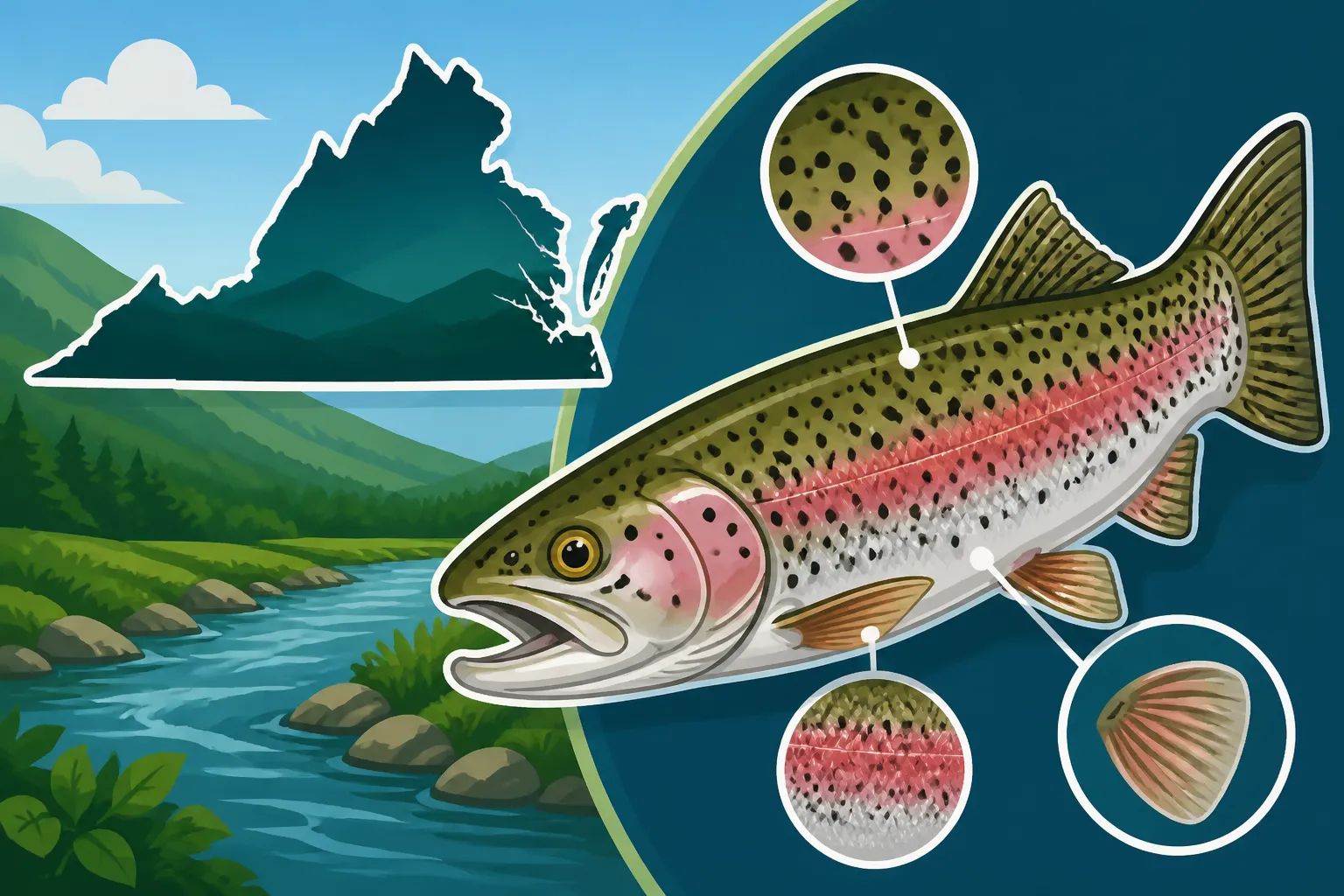
The most iconic feature of the rainbow trout, the one that gives them their very name, is that beautiful iridescent pink or red stripe running horizontally along their flanks. This stripe can range from a faint blush to a vibrant, electric band, often intensifying during spawning season or when the fish is excited. It's a hallmark that usually sets them apart from other trout species found in Virginia, which tend to have different lateral markings or lack this distinct color entirely. When you see that rosy stripe, you're usually looking at a rainbow.
Beyond the stripe, take a close look at their overall coloration and spotting. Rainbow trout typically have a dark, olive-green to blue-green back that fades into silvery sides and a white belly. What really seals the deal, though, are the small, dark spots—often described as a "peppered" appearance—that cover their back, dorsal fin, adipose fin, and especially their tail. These spots are usually uniformly small and numerous, giving them a finely speckled look rather than large, distinct spots. If you're comparing a fish to others, pay particular attention to the tail, as other trout might have spots elsewhere but often lack them as extensively on the caudal fin. It’s this combination of the rainbow stripe and the widespread speckling that forms their unmistakable visual identity.
Sometimes, especially in hatchery-raised fish or those in murkier waters, the stripe might be less pronounced, leading to some momentary doubt. However, those consistent, fine spots on the tail and throughout the upper body remain a strong indicator. Think of it like a secret signature that's always there, even if the main headline isn't shouting as loudly. Observing these markings in good light can make all the difference, and a quick glance at a fish held gently in a net, perhaps a rubberized one from Amazon that protects their slime coat, can confirm your suspicions.
General Body Shape and Fin Characteristics
Beyond color and spots, the overall physique of a rainbow trout also offers valuable clues. They generally possess a sleek, torpedo-shaped body, built for power and speed in currents. This streamlined form allows them to fight with incredible vigor, often leaping out of the water when hooked, a characteristic fight that many anglers cherish. Their head is relatively small in proportion to their body, with a mouth that typically extends back to or just past the middle of the eye. This mouth structure is well-suited for their diverse diet, allowing them to snap up insects, small baitfish, and other aquatic morsels.
Their fins are also worth a close inspection. Like all trout, rainbows possess an adipose fin – that small, fleshy fin located between the dorsal fin and the tail, which is a key trait of salmonids. Their dorsal fin is relatively tall and triangular, and their caudal fin (tail) is typically broad and often only slightly forked or nearly square. The rays of their fins are generally soft, and the overall impression is one of agility and strength. As for size, in Virginia, stocked rainbow trout you'll encounter often range from 10 to 20 inches, though wild populations in pristine mountain streams can be smaller, and some holdover fish in larger waters can grow considerably larger, offering a truly memorable catch. Understanding the typical physical dimensions helps confirm your identification even before you get a closer look at the colors.
It's also worth noting that the firmness and health of their fins can sometimes offer a hint about whether they are wild or hatchery-reared. Wild rainbows often have more perfect, uncrippled fins from navigating natural environments, while some hatchery fish might show slight wear from crowded conditions. This isn't a definitive identification marker, but it can be an interesting observation for experienced anglers. Knowing these physical attributes helps round out your understanding of Trout Fishing in Virginia: Rainbow, Brown, and Brook Trout and how each species adapts to its environment.
Common Confusions: Rainbows vs. Other Virginia Trout
While rainbow trout have their clear identifiers, Virginia's waters are home to other stunning trout species that can sometimes lead to mistaken identity. It's easy to get them mixed up, especially when you're caught up in the excitement of a bite! Learning the distinct differences between rainbows and their cousins, the brown trout and brook trout, is crucial for proper identification and adherence to Virginia Fishing Regulations Explained, which might have different rules for different species.
Rainbows vs. Brown Trout
The most common mix-up often occurs between rainbow trout and brown trout. Both are popular sport fish in Virginia, and they often inhabit similar waters, particularly in many of our stocked streams and larger rivers. However, their appearances, while both beautiful, have some very clear distinctions. The primary identifier for a brown trout is its prominent spotting. Unlike the fine, peppered spots of a rainbow, brown trout display larger, more distinct spots that are often a mix of red/orange with pale halos, and darker brown or black spots. These spots are typically concentrated along their sides and back but generally do not extend as extensively onto the tail as they do on a rainbow.
Another key difference is the coloration of the fish's body itself. Brown trout, as their name suggests, often have a more mottled brown, golden, or olive hue, especially on their back and upper flanks, fading to a creamy or yellowish belly. They usually lack the distinct, iridescent pink or red lateral stripe that is the rainbow's signature. Instead, the lateral line on a brown trout might be subtly marked, but it won't have that vibrant, colorful band. Their tail is also typically less forked than a rainbow's, sometimes appearing almost square, and often has fewer spots, or none at all. This comparison is so important that we dedicated an entire post to it: Rainbow Trout vs Brown Trout in Virginia: How to Tell Them Apart.
When you're comparing the two side-by-side, if you happen to catch both in the same outing, the differences become quite striking. Imagine holding one fish with that unmistakable pink stripe and speckled tail, and then another with those bold red spots ringed in lighter halos, against a background of golden brown. It becomes much clearer then. Even in low light, the presence or absence of that distinct lateral stripe and the type of spotting are your best clues. Many anglers find carrying a simple, waterproof field guide in their tackle box, easily found on Amazon, can be a lifesaver for those moments of uncertainty.
Rainbows vs. Brook Trout
Distinguishing rainbow trout from brook trout (which are actually char, not true trout, but we lovingly call them trout here in Virginia!) is usually a bit easier, as brook trout have very unique and striking features. The most immediate difference you'll notice on a brook trout is the distinct worm-like patterns, known as "vermiculations," on their back and dorsal fin. These intricate, swirling patterns are usually olive green or dark brown against a lighter background and are completely absent on a rainbow trout. If you see these squiggly lines, you've got a brook trout.
Beyond the vermiculations, brook trout also have a distinctive spotting pattern. They possess small, light spots (often yellow or cream) along their sides, interspersed with truly vibrant red spots that are frequently surrounded by distinct blue halos. This combination of yellow, red, and blue is a visual marvel. Rainbows, in contrast, lack these blue halos and the bright yellow spots. Furthermore, one of the most reliable identification marks for brook trout is the presence of bright white leading edges on their lower fins (pectoral, pelvic, and anal fins), often followed by a thin black line. This white-black-red/orange fin coloration is a dead giveaway and is never seen on a rainbow. Brook Trout Identification for Virginia Anglers goes into more detail about these beautiful native fish.
Brook trout also tend to be smaller than the average stocked rainbow you'll encounter in Virginia, especially in their native high-elevation, wild stream habitats. Their body shape is also generally more robust and chunky, rather than the sleek torpedo shape of a rainbow. The colors of a brook trout can be incredibly vivid, especially in males during spawning, who might display fiery orange bellies. When you catch a brook trout, you're looking at a true gem, and its patterns and fin colors make it hard to confuse with a rainbow once you know what to look for.
Habitat Clues and Behavioral Telltales
Knowing what a rainbow trout looks like is half the battle, but understanding where you're most likely to find them and how they behave can give you even more confidence in your identification, sometimes even before you get them to the net. Their preferred environments and feeding patterns influence everything from their coloration to their fighting style.
Where You're Likely to Find Them in Virginia
In Virginia, when you're talking about rainbow trout, you're primarily talking about stocked waters. The Virginia Department of Wildlife Resources (DWR) actively stocks rainbow trout across numerous rivers, streams, and some lakes, making them readily accessible to anglers. These stocked programs ensure a vibrant fishery and are where most people will encounter rainbows. You'll often find them in relatively accessible streams in our mountain regions, within larger rivers that maintain cooler temperatures, and even in some impoundments. Virginia's Stocked Trout Waters and Seasons outlines many of these locations, giving you a great starting point for your fishing adventures. These are usually clear, cold, and well-oxygenated environments, which rainbows absolutely thrive in.
While stocked populations are dominant, Virginia also boasts some truly special, delicate populations of wild rainbow trout. These wild fish typically reside in the colder, pristine headwater sections of mountain streams, often sharing their habitat with native brook trout. These areas are usually more remote, harder to access, and the fish tend to be smaller but are incredibly resilient and beautiful. The key takeaway here is that if you're fishing a designated stocked trout stream, especially during the stocking season, your chances of hooking a rainbow are exceptionally high. Conversely, if you're deep in a remote, high-elevation stream with minimal human impact, you might be catching a wild rainbow, but you should also be keenly aware of the possibility of encountering native brook trout, which often have stricter catch limits or are designated for catch-and-release only under Wild Trout Stream Rules in Virginia.
Understanding these habitat preferences not only aids in identification but also in planning your trip. For instance, if you're heading to one of the Best Trout Streams in Virginia known for its excellent rainbow fishery, you're already narrowing down your identification challenge considerably. It's a bit like knowing the local diner specializes in burgers – you're less likely to expect a fancy sushi roll. The environment often sets the stage for the fish you'll encounter.
Feeding Habits and How They Influence Identification
Rainbow trout are incredibly opportunistic feeders, which contributes to their widespread success in various environments. Their diet is diverse, including aquatic insects (like mayflies, caddisflies, stoneflies), terrestrial insects (grasshoppers, ants), crustaceans, worms, and even smaller baitfish. This varied diet means they'll strike at a wide array of baits and lures, from artificial flies and spinners to powerbait and corn. Their willingness to bite makes them a popular target for anglers of all skill levels.
While their feeding habits don't directly change their physical appearance, they do influence their behavior on the line. Once hooked, rainbow trout are renowned for their spirited fight. They'll often make powerful runs, testing your drag, and famously leap out of the water, shaking their heads in an attempt to dislodge the hook. This acrobatic display is a characteristic trait of the species and is a dead giveaway that you've likely hooked a strong rainbow. While other trout might jump, rainbows tend to do it with a particular vigor and frequency. This fighting style is part of what makes them so much fun to catch!
Observing a fish's feeding behavior can also provide subtle clues. If you're fly fishing and notice fish consistently rising to take insects off the surface, rainbows are often very active surface feeders, especially during hatches. If you're bait fishing and getting bites near the bottom in a stocked area, it's a good bet you're on to rainbows, as they readily take various prepared baits. Ultimately, while feeding patterns aren't a direct identification method for the fish itself, they build a picture of the species you're likely targeting, enhancing your overall fishing experience and intuition. Just remember to ensure you have the proper Virginia Fishing License Guide before you cast out!
Practical Tips for Anglers and Conservation
Responsible angling goes hand-in-hand with accurate fish identification. Whether you're planning to keep your catch within legal limits or practice catch-and-release, knowing exactly what species you've landed is paramount. These practical tips will help you make a positive ID on the water and ensure you're fishing ethically and effectively.
Close Observation on the Water
When you've landed a fish, the moments before you decide to keep it or release it are critical for identification. The best practice is to handle the fish as gently and minimally as possible, especially if you intend to release it. Try to keep the fish in the water or hold it over a net while you observe its key features. Look for that signature pink stripe and the small, dark spots extending onto the tail. Check the overall body coloration and shape. If you're unsure, don't rush the decision.
It's a great idea to take a quick, clear photo of the fish while it's still wet and in or near the water. This allows you to review the markings later or consult a field guide without causing undue stress to the fish. A waterproof phone case can be a lifesaver here! Remember, gentle handling means wet hands when touching the fish to protect its protective slime coat, and minimizing its time out of the water. If you quickly identify it as a rainbow and it's within your legal slot limit and you plan to keep it, then you can proceed. If it's a different species, or undersized, or you simply prefer to release, do so quickly and carefully. Always be mindful of the Virginia's Fishing License and Catch Limit Basics for any specific water body.
| Feature | Rainbow Trout | Brown Trout | Brook Trout |
|---|---|---|---|
| Lateral Stripe | Prominent pink/red iridescent stripe | Absent or faint, no distinct color band | Absent, often mottled sides |
| Body Spots | Small, dark, numerous, extends to tail | Large, distinct, red/orange (with halos) & black | Small, light (yellow) & red (with blue halos) |
| Back Pattern | Fine speckling on olive/blue-green back | Mottled brown/gold, dark spots | Distinct worm-like patterns (vermiculations) |
| Fin Edges | No distinctive colored edges | No distinctive colored edges | White leading edges on lower fins (pectoral, pelvic, anal) |
| Overall Color | Olive green/blue-green back, silvery sides | Brown/golden back, creamy/yellow belly | Dark olive back, colorful speckled sides |
| Tail Shape | Slightly forked or nearly square, often speckled | Slightly forked or square, fewer/no spots | Square or very slightly forked |
Gear That Helps with Identification (and Responsibility)
Having the right gear doesn't just help you catch fish; it helps you identify and handle them responsibly. A crucial piece of equipment is a good landing net. Look for nets with rubberized or knotless mesh, which are much gentler on a fish's scales and slime coat than traditional knotted nylon nets. These minimize injury and make it easier to hold the fish briefly for identification without causing damage, perfect for both catch-and-release and careful handling of keepers. You can find excellent options on Amazon that are designed specifically for fish welfare.
Another helpful tool for identification is a reliable field guide. There are many compact, waterproof guides available, some specifically for freshwater fish in the Mid-Atlantic region, which you can easily stash in your tackle box or fishing vest. Some even come with laminated pages, ideal for wet environments. If you're tech-savvy, there are also fishing apps that can help with fish identification using photos, though always verify with a physical guide or regulations if you're unsure. A good headlamp can also be invaluable for early morning or late evening trips when lighting conditions make subtle differences harder to spot, ensuring you can still clearly see those telltale stripes and spots.
Finally, while not strictly "identification gear," carrying a measuring tape is essential. Once you've positively identified your rainbow trout, you need to ensure it meets any length requirements if you plan to keep it. Regulations can vary by waterbody, so always check the latest Virginia DWR guidelines before heading out. Knowing what you've caught and whether it's legal to keep is part of being a responsible angler and respecting the resource. This proactive approach makes your time on the water more enjoyable and ensures you're contributing to the health of Virginia's incredible fisheries.
Disclaimer
This article is for general informational purposes only and does not constitute professional advice. Laws, prices and regulations vary by location and change over time. Consult a qualified professional for guidance on your specific situation.