Brook Trout Identification for Virginia Anglers
It can be incredibly exciting to hook a beautiful trout in Virginia's pristine waters, but for many anglers, especially those new to the game, telling a native brook trout from its rainbow or brown cousins can feel like trying to solve a cryptic puzzle. This comprehensive guide is here to walk you through the distinct features that make the brook trout a true gem of our streams, ensuring you can confidently identify these stunning fish.
What Makes a Brook Trout Truly Unique?
The brook trout, Salvelinus fontinalis, holds a special place in the hearts of Virginia anglers. While we often call them "trout," they are actually part of the char family, distinct from true trout like rainbows and browns. This biological difference doesn't necessarily change how they look at first glance, but understanding their unique characteristics helps you appreciate these beautiful fish even more. They thrive in the coldest, cleanest headwater streams, often a sign of a healthy aquatic ecosystem.
The Signature Vermiculation Pattern
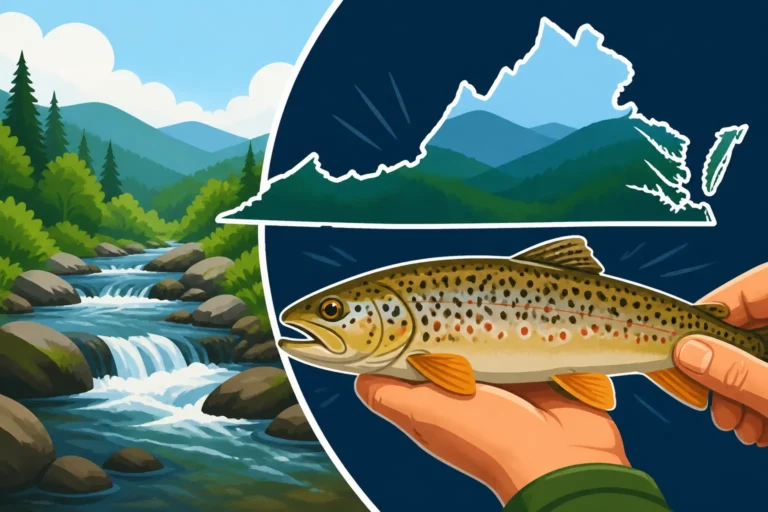
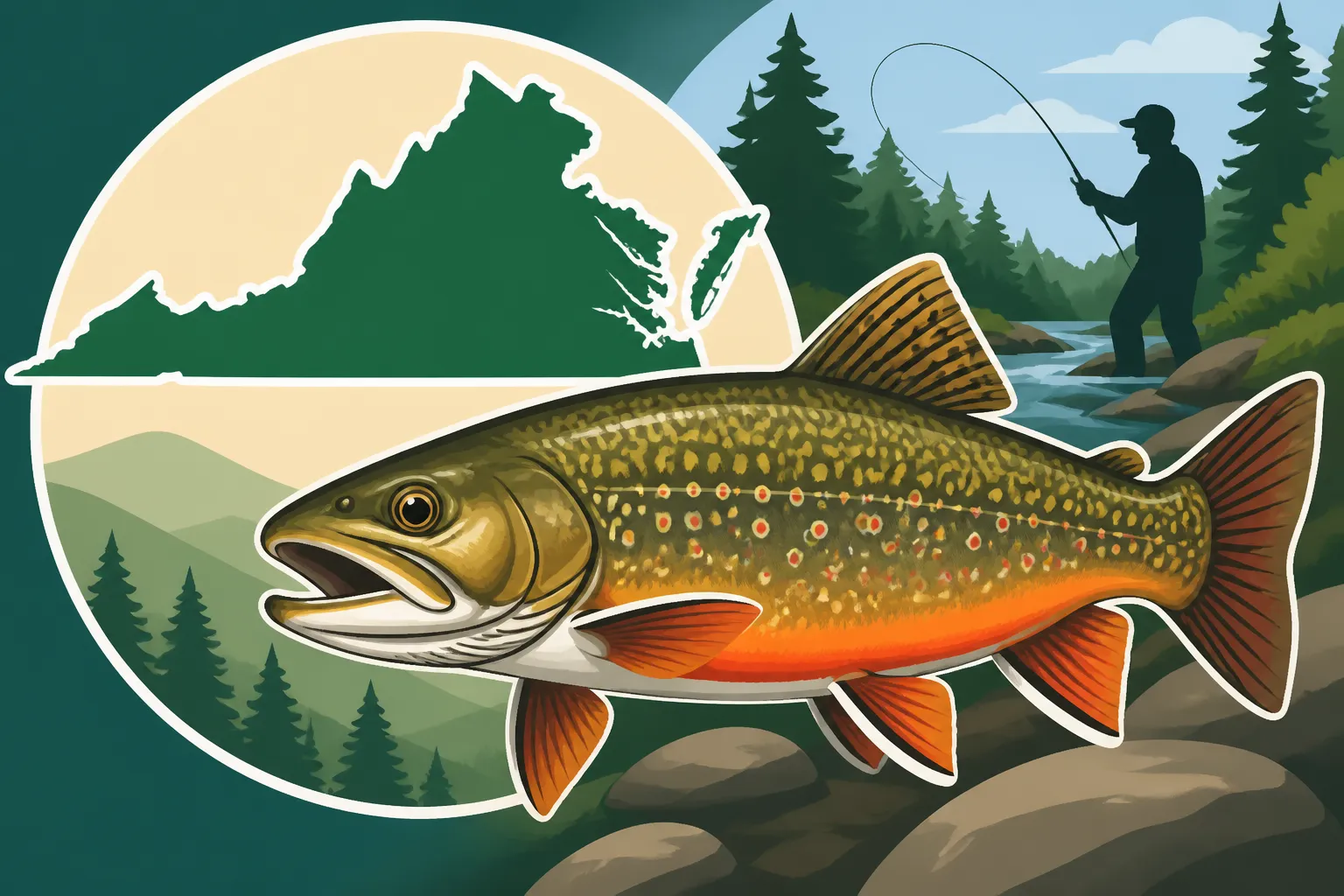
One of the most striking and reliable features for identifying a brook trout is the intricate, worm-like pattern on its back and dorsal fin. These wavy, interconnected lines, often described as "vermiculations," are a light, almost yellowish or cream color, contrasting sharply with the darker olive-green to black background of the fish's upper body. Think of it like a topographical map or a maze drawn on their back. No other trout species in Virginia has this distinct pattern extending so prominently across its back. It's truly their fingerprint, an artistic marvel that helps them blend seamlessly with the dappled light and shadows of their stream habitats. Take a moment to really look at this pattern when you catch one; it's a beauty that signifies a wild, native fish.
Vivid Coloration and Distinct Spots
Beyond the vermiculations, the brook trout boasts a kaleidoscope of colors that can vary in intensity depending on the specific water body, diet, and time of year. Their flanks are often olive-green, fading into a creamy white or yellowish belly. What truly sets them apart are the scattered, vibrant red and yellowish spots along their sides. Many of these red spots are surrounded by a pale blue "halo," a feature often referred to as an "areola." While other trout might have spots, the combination of red spots with these blue halos is a classic brook trout identifier. During spawning season, especially in males, the belly and lower fins can turn a brilliant orange or reddish hue, often with a striking black stripe along the lower fin edges, bordered by a sharp white line. This vibrant display is a sight to behold and makes identification even easier.
Key Identification Markers for Virginia Brook Trout
When you've got a fish in hand, or even just observe it in the water, there are several key anatomical markers that will help you quickly and accurately identify it as a brook trout. These aren't just subtle nuances; they are often definitive features that stand out once you know what to look for.
The Distinctive Leading Edge of Fins
Pay close attention to the lower fins – specifically the pectoral, pelvic, and anal fins. A hallmark of the brook trout is the brilliant white leading edge on these fins, which is immediately followed by a narrow black stripe. This "white-black-rest of the fin" pattern is incredibly consistent and serves as an excellent identifier. It's like they're wearing fancy, white-striped socks! This feature is very pronounced and rarely seen with such clarity on rainbow or brown trout. Even in murky water or low light, if you can glimpse those fins, this white leading edge will often catch your eye. It's a key detail that many experienced anglers rely on for quick identification in the field.
Tail Shape and Mouth Structure
The tail of a brook trout is typically square or only very slightly forked, especially in younger fish. As they get older, it tends to remain fairly straight across or even slightly rounded. This contrasts with the more deeply forked tails often found on rainbow trout or the somewhat squared but less prominent tails of brown trout. While not always the most obvious feature, it's another piece of the puzzle.
Looking at the mouth, brook trout generally have a mouth that extends back to about the middle of the eye, not typically past it. This is a common feature among many char species. Their teeth are relatively small. This might seem like a minor detail, but combined with the other features, it helps complete the picture. You might be able to observe this if you're holding the fish carefully. Sometimes, even from above, you can get a sense of the head shape and mouth size, which for brook trout tends to be quite proportionate to their body, giving them a streamlined appearance.
Distinguishing Brook Trout from Other Virginia Trout Species
In Virginia, anglers are most likely to encounter three primary trout species: brook trout, rainbow trout, and brown trout. While all are beautiful and offer fantastic fishing, knowing how to tell them apart is crucial for adhering to regulations and simply appreciating the diversity of our aquatic environments. Misidentification can lead to accidental harvesting of protected species or simply missing out on the unique charm of each fish. It's a common struggle for beginners, but with a keen eye and these tips, you'll be a pro in no time. For a deeper dive into the broader trout picture, you might want to read Trout Fishing in Virginia: Rainbow, Brown, and Brook Trout.
Brook Trout vs. Rainbow Trout
Rainbow trout (Oncorhynchus mykiss) are probably the most commonly stocked trout in Virginia, making them a frequent catch. The biggest visual difference is the rainbow's namesake: a prominent pink or red band running horizontally along its side, from the gill plate to the tail. This band can be quite vibrant, especially during spawning season. Rainbows also have small, dark spots scattered over their entire body, including their tail fin. Unlike the brook trout's worm-like vermiculations, the rainbow's back is covered in these smaller, more uniform spots. Their tail is typically noticeably forked, especially in younger specimens. If you see a prominent pink stripe and a heavily spotted tail, you've likely caught a rainbow. If you're comparing the two, remember the "white-black" fin edges of the brook trout are absent on the rainbow. Check out Rainbow Trout vs Brown Trout in Virginia: How to Tell Them Apart for more details on these two species.
| Feature | Brook Trout (Salvelinus fontinalis) | Rainbow Trout (Oncorhynchus mykiss) | Brown Trout (Salmo trutta) |
|---|---|---|---|
| Back/Dorsal Fin | Distinct, light worm-like "vermiculations" | Small, scattered dark spots | Scattered dark spots, often with light halos |
| Sides | Olive-green with red & yellow spots, some with blue halos | Pink/red horizontal stripe; scattered dark spots | Yellowish-brown with dark & red spots (often with light halos) |
| Belly | Creamy white, can turn orange/red in males | White to yellowish | White to yellowish |
| Lower Fins | Prominent white leading edge followed by black stripe | No distinctive white leading edge, typically clear | No distinctive white leading edge, often yellowish/brown |
| Tail Fin | Square or slightly forked | Moderately to deeply forked, heavily spotted | Square or slightly forked, few spots (mostly near base) |
| Mouth | Extends to middle of eye, not past | Extends to back of eye or slightly past | Extends well past the eye |
| Biology | A char species | A true trout species | A true trout species |
Brook Trout vs. Brown Trout
Brown trout (Salmo trutta) are known for their resilience and can grow quite large. They typically have a more yellowish-brown or golden-brown body color, often with fewer, larger dark spots than a rainbow. Crucially, many of these dark spots on a brown trout's sides and gill plates are surrounded by a pale halo, which can sometimes be confused with the brook trout's red-with-blue-halo spots. However, the brown trout's spots are generally black or reddish-orange, and they lack the distinct blue halo of the brook trout's red spots. Also, brown trout do not have the vermiculation pattern on their back. Their tail is typically square or very slightly forked, similar to a brook trout, but it generally lacks the heavy spotting of a rainbow and the distinct white leading fin edges of a brook trout. Another key differentiator is the mouth: a brown trout's jaw extends noticeably past the back of its eye, indicating its predatory nature. When you're trying to figure it out, remember, no worm tracks on the back means it's not a brook trout. If you're interested in the subtle differences, you'll find Brook Trout vs Brown Trout: Key Differences enlightening.
Where to Find Brook Trout in Virginia Waters
Knowing what a brook trout looks like is only half the battle; the other half is knowing where to cast your line to find these elusive beauties! Virginia's brook trout populations are a testament to the health of our mountain streams, and targeting them requires a bit of knowledge about their preferred habitats.
Cold, Clean Water Habitats
Brook trout are incredibly sensitive to water quality and temperature. They are the quintessential cold-water fish, thriving in temperatures generally below 68°F, and ideally even cooler. This means you'll typically find them in the higher elevations of Virginia's mountains, particularly in the Appalachian and Blue Ridge mountain ranges. They seek out spring-fed streams, headwater tributaries, and small, pristine creeks where the water remains consistently cold and highly oxygenated year-round. These streams are often characterized by dense forest canopies that provide shade, an abundance of rocky substrate, and plenty of fallen logs and undercut banks for shelter. Look for areas with clear, fast-flowing water, deep pools, and riffles that churn and oxygenate the water. Fly fishing in these remote, picturesque settings is an experience unlike any other. For those passionate about this method, consider reading Fly Fishing for Trout on Rivers.
These aren't generally large, wide rivers. Instead, picture narrow, sometimes barely-a-trickle, streams tumbling over rocks, often requiring careful wading and short, precise casts. Many of these prime brook trout spots are within national forests or state parks, offering breathtaking scenery along with the fishing opportunities. You might need to hike a bit to reach the best spots, but the reward of a wild brook trout in its natural environment is well worth the effort. Bringing a compact, lightweight fishing kit that can handle bushwhacking is often a good idea. You can find some excellent specialized ultralight rods and reels on Amazon that are perfect for tight, overgrown streams.
Native vs. Stocked Waters
It's important to understand the distinction between native (wild) brook trout populations and those that are stocked. Virginia Department of Wildlife Resources (DWR) manages numerous stocked trout streams, and while you might occasionally catch a brook trout in a stocked stream, the vast majority of brook trout in these areas are hatchery-raised. True wild brook trout are found almost exclusively in unstocked, often remote, high-gradient mountain streams. These "wild trout streams" are typically smaller, colder, and less accessible.
There are also specific regulations that apply to Wild Trout Stream Rules in Virginia. Anglers often prize wild brook trout for their vibrant colors, fighting spirit, and the challenge of seeking them out in their natural habitat. If you're fishing in a larger, easily accessible river that's listed as a "stocked trout water," chances are any brook trout you encounter were put there by the DWR. However, if you're deep in the mountains on a tiny, remote creek, you're much more likely to be interacting with a truly native population, making the identification even more meaningful. For more on this, check out Virginia Stocked Trout Waters and License Requirements.
Why Proper Identification Matters for Anglers
Beyond the personal satisfaction of knowing what you've caught, accurately identifying brook trout, and indeed any fish, carries significant weight for responsible angling. It's not just about bragging rights; it's about conservation, legality, and contributing to the health of Virginia's cherished fisheries.
Adhering to Regulations and Catch Limits
Each species of fish, and often specific populations within species (like wild vs. stocked trout), has its own set of regulations regarding season, size limits, and creel limits (how many you can keep). For brook trout, especially in wild trout streams, these regulations are often more stringent than for other trout species, reflecting their native status and delicate populations. For instance, many wild trout streams have special slot limits, or even require catch-and-release only, to protect the spawning population.
Catching a brook trout and mistakenly identifying it as a rainbow could lead to unknowingly violating these rules, which can result in fines or penalties. Knowing the difference ensures you're a responsible angler, playing by the rules designed to protect these fish for future generations. It's your responsibility as an angler to know the current regulations for the specific body of water you're fishing. A waterproof Virginia fishing regulations guide, easily found on Amazon, can be an indispensable tool for every trip.
Supporting Conservation Efforts
Proper identification is a cornerstone of conservation. When anglers can accurately distinguish between native, wild brook trout and other species, it helps promote an understanding and appreciation for these unique fish and their habitats. This awareness translates into more careful handling, thoughtful adherence to catch-and-release principles in sensitive areas, and support for habitat preservation initiatives.
Brook trout are indicator species; their presence signifies a healthy, undisturbed cold-water ecosystem. By valuing and protecting them, we are also safeguarding the pristine streams and forests they call home, which benefits countless other species, including ourselves. Every angler who takes the time to learn and respect these distinctions becomes an ambassador for conservation, helping to ensure that the vibrant colors of the brook trout continue to grace Virginia's waters for many years to come. Recognizing a truly wild brook trout is a special moment, a connection to the wild heart of Virginia.
Disclaimer
This article is for general informational purposes only and does not constitute professional advice. Laws, prices and regulations vary by location and change over time. Consult a qualified professional for guidance on your specific situation.