How to Identify a White Perch
It's happened to all of us: you're out on the water, reeling in what you think is one thing, only to pull it closer and realize it might be something else entirely. The white perch is a prime example of a fish that can easily be confused with other popular species in Virginia's waters, often leaving anglers scratching their heads. This guide is here to clear up that confusion, giving you all the details you need to confidently identify a white perch and understand its unique characteristics.
The Basics: What Makes a White Perch, a White Perch?
When you’re out fishing the tidal rivers or brackish estuaries of Virginia, chances are you’ll encounter a white perch. These often-underestimated fish are incredibly common and a lot of fun to catch, but they do have some distinct features that, once you know them, make identification much easier. Forget the generic "silver fish" description; let's dive into the specifics.
Distinguishing Features: Shape, Size, and Color
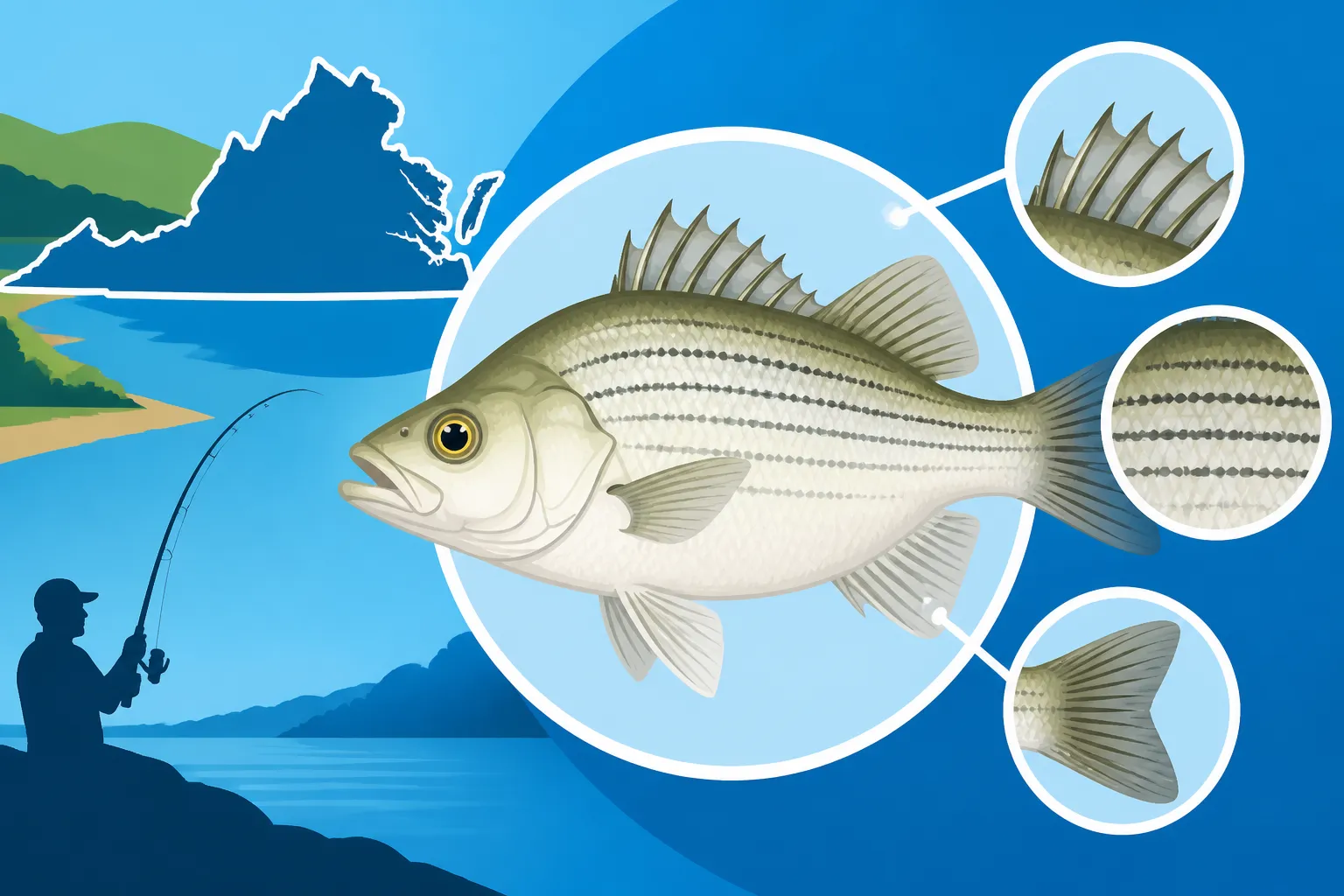
The first thing you’ll notice about a white perch is its body shape. They have a fairly deep, compressed body, meaning they're taller than they are wide when you look at them head-on. They're not as streamlined as a trout, nor as slab-sided as a sunfish, but somewhere in between. Think of a slightly oval shape, a bit thicker than a dinner plate. Their dorsal profile (the top of their back) tends to be smoothly arched. Most white perch you'll catch in Virginia will be somewhere in the 6 to 10-inch range, though they can certainly grow larger, sometimes pushing up to 12 or 15 inches in prime conditions. While they might not be trophy fish in terms of sheer size, they're plenty big enough for a tasty meal, and honestly, they put up a surprisingly good fight on light tackle.
When it comes to color, white perch are predominantly silvery on their sides and belly, which helps them blend into the water column. Their backs typically show a greenish-grey hue, which can vary in intensity depending on the water clarity and their specific habitat. Sometimes, especially in clearer water, you might notice very faint, almost indistinct horizontal lines along their sides, but these are often so subtle they're easily missed or only visible in certain light. These subtle markings are a key differentiator we'll talk more about later. Don't expect vibrant colors; their beauty is in their understated, metallic sheen.
Fin Details: Dorsal, Pectoral, and Caudal Fins
The fins are often the most telling features when trying to identify a fish, and the white perch is no exception. Pay close attention to their dorsal fin – that's the one on their back. White perch have two distinct dorsal fins, though they are usually connected at the base. The front dorsal fin is spiny, meaning it has sharp, rigid rays, while the rear dorsal fin is soft-rayed, made up of flexible rays. This two-part dorsal fin is a really important clue that helps set them apart from other species that might only have one long dorsal fin or two completely separate ones. It’s a classic trait of the temperate bass family, to which white perch belong.
Their pectoral fins, located just behind their gills, are relatively small and fan-like, as are their pelvic fins, found on their underside below the pectorals. These fins are generally translucent or a light silvery color. The caudal fin, or tail fin, is moderately forked. It’s not deeply split like a mackerel's, but it's clearly indented, allowing for quick bursts of speed when chasing prey or escaping predators. When you're handling a white perch, take a moment to gently feel those spiny dorsal rays; they're quite noticeable and a good indicator.
Mouth and Eye Characteristics
Finally, let's look at their face. The white perch has a relatively small mouth that is slightly upturned. It's not a large, cavernous mouth designed for swallowing big prey whole, but rather suited for snatching up smaller insects, crustaceans, and tiny baitfish. Their lower jaw usually protrudes just a tiny bit beyond the upper jaw, giving them a bit of an underbite appearance. If you're looking to purchase a reliable guide to fish identification, many excellent books are available on Amazon that include detailed illustrations of these mouth and jaw structures.
Their eyes are of moderate size, proportional to their head, and are typically located on the sides of their head. This placement gives them a good field of vision for spotting both food and danger. There’s nothing particularly flashy about their eyes; they’re just another functional part of a very efficient predatory design. Looking closely at these features – the mouth, jaws, and eye placement – can often provide that final confirmation when you're still debating between a couple of similar-looking fish.
Common Look-Alikes: Avoiding Confusion on Virginia Waters
It's easy to mistake a white perch for a few other popular fish species found throughout Virginia's lakes, rivers, and coastal waters. Even seasoned anglers can sometimes pause and double-check, especially with juvenile fish. Knowing the key differences can save you from misidentifying your catch and ensure you're adhering to any specific regulations for each species. It’s also just good angling practice to know exactly what you’ve got on the end of your line!
White Perch vs. Yellow Perch
This is perhaps the most common confusion point for anglers in Virginia. Both "perch" are often found in similar habitats, especially in freshwater and brackish areas. However, there are some very clear ways to tell a white perch from a yellow perch. The easiest way to start is with coloration and body shape. Yellow perch, as their name suggests, typically have a distinct yellowish or golden hue to their sides, especially on their belly and lower flanks. More importantly, they boast several prominent, dark vertical bars running down their sides – usually between six and eight of them. These bars are unmistakable and are almost always the first thing you'll notice. White perch, as we discussed, are silvery and lack these strong vertical bars, though they might have faint horizontal ones.
In terms of body shape, yellow perch are generally more elongated and cylindrical than white perch. Think of a yellow perch as being more "torpedo-shaped" compared to the white perch's deeper, more compressed body. When you hold them side-by-side, the difference in body depth is quite apparent. Their dorsal fins are also a bit different; while yellow perch also have two dorsal fins, the spiny one is typically much more pronounced and often has a darker blotch or spot at the very back. The Yellow Perch Identification for Virginia Anglers post goes into even more detail on these distinctions, but for now, remember: yellow equals bars, white equals silver and no bars. If you are struggling with this identification, consider consulting a good field guide, many of which can be found on Amazon for quick reference on the water.
White Perch vs. Small Striped Bass (Rockfish)
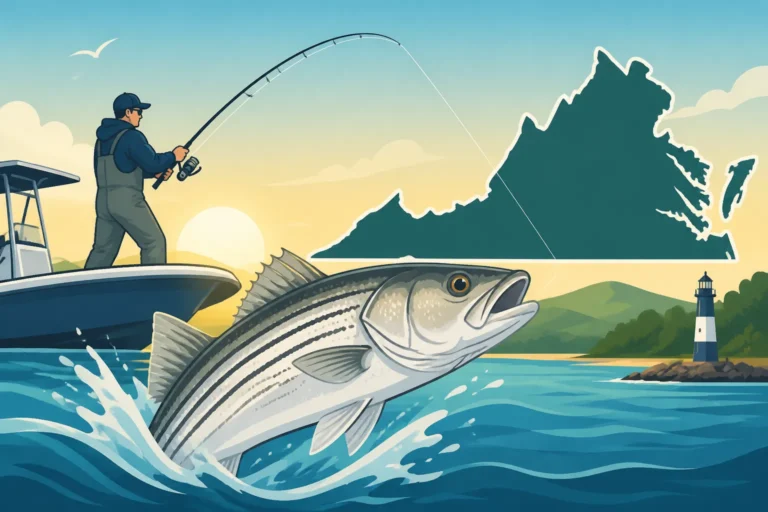
Another frequent mix-up, especially for anglers new to tidal waters, is mistaking a juvenile striped bass, often called a rockfish in Virginia, for a white perch. Both are members of the same family (Moronidae, or temperate basses), and young stripers can be silvery and roughly the same size as adult white perch. However, there's a critical difference that, once you see it, is impossible to un-see: the lateral lines. Striped bass, even small ones, have very distinct, dark, unbroken horizontal lines running along their sides from head to tail. These lines are much bolder and more defined than any faint markings you might see on a white perch. Most stripers will have between 7-8 of these prominent stripes.
White perch, on the other hand, either have no lateral lines or only very faint, often broken, horizontal lines that fade into their silvery bodies. Their lines, if present, won't be as dark or as continuous as those on a striped bass. Furthermore, while both have two dorsal fins, the spiny dorsal fin of a striped bass tends to be more pronounced and separate from the soft-rayed fin than on a white perch. Always count those stripes carefully! Getting this identification right is crucial because Virginia's Striped Bass Season and Slot Limit Guide has very specific rules that differ significantly from white perch regulations. For a deeper dive into their genetic differences, check out Striped Bass vs Hybrid Striped Bass in Virginia: Key Differences.
White Perch vs. Young Crappie
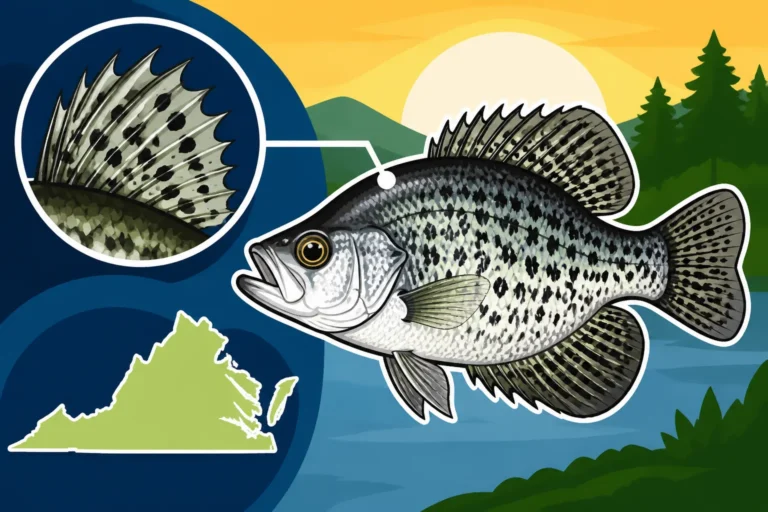
Less common but still possible, particularly for inexperienced anglers or with very small fish, is confusing a white perch with a young crappie (either black crappie or white crappie). Crappie are also popular panfish in Virginia, typically found in freshwater lakes and slow-moving rivers. The main differentiator here is body shape and dorsal fin structure. Crappie have a much more compressed, disc-like body shape compared to the white perch. They are often described as looking like a "dinner plate" or "pancake." White perch, while compressed, are still noticeably deeper and thicker through the shoulders.
The dorsal fin of a crappie is also quite different. Crappie have a single, long dorsal fin that appears somewhat unified, whereas white perch have those two distinctly separated (though connected at the base) dorsal fins. Crappie also have a distinct pattern, with black crappie having irregular splotches and white crappie having more organized vertical bars, which again differs from the mostly silvery white perch. Understanding these visual cues is key. You can find more specific details on distinguishing these two by looking at Crappie Identification: Black Crappie vs White Crappie in Virginia. Always take a moment to really look at the fish you’ve caught; it makes you a better angler!
| Feature | White Perch | Yellow Perch | Juvenile Striped Bass (Rockfish) | Crappie (Black/White) |
|---|---|---|---|---|
| Body Shape | Deep, compressed, moderately thick | More elongated, cylindrical | Elongated, streamlined | Very compressed, disc-like |
| Coloration | Silvery sides, greenish-grey back | Yellow/golden sides, dark bars | Silvery, distinct dark horizontal lines | Silvery, splotches or faint bars |
| Lateral Lines | Faint or absent, usually broken | Absent (vertical bars instead) | 7-8 prominent, unbroken horizontal lines | Absent (splotches or bars instead) |
| Dorsal Fins | 2 distinct, connected at base | 2 distinct, spiny one prominent | 2 distinct, often more separated | 1 long, unified dorsal fin |
| Mouth Position | Slightly upturned, small | Terminal, moderate size | Terminal, large | Slightly upturned, large |
Habitat and Behavior: Where to Find and Confirm Your Catch
Knowing what a white perch looks like is one thing, but understanding where they live and how they behave can greatly improve your chances of catching them. Plus, it helps confirm your identification if you're catching them in their preferred stomping grounds. These fish are remarkably adaptable, which is part of why they're so widespread and beloved by anglers across Virginia.
Preferred Habitats in Virginia
White perch are truly versatile residents of Virginia's waters. They thrive in both freshwater and brackish (slightly salty) environments, making them a common target in a huge variety of fishing spots. You'll often find them congregating in the tidal rivers and estuaries that feed into the Chesapeake Bay, such as the James River, Rappahannock River, York River, and Potomac River. In these areas, they'll move with the tides, often seeking out deeper channels, oyster beds, and submerged structures like old pilings or docks where they can ambush smaller prey. Our article White Perch Fishing Along Virginia's Tidal Rivers has more specific details on how to target them in these spots.
But their presence isn't limited to brackish water. Many of Virginia's larger freshwater lakes and reservoirs, especially those with good fertility and ample forage, also hold healthy populations of white perch. Places like Lake Anna, Smith Mountain Lake, and Kerr Reservoir can be hotspots for them. In these freshwater settings, look for them around submerged brush piles, creek channels, points, and humps. They generally prefer slightly deeper, cooler water during the warmer months, often moving into shallower feeding flats during dawn and dusk. This adaptability is part of their charm; you don't need highly specialized gear or boats to find success. A simple rod and reel with some basic bait can often do the trick.
Schooling and Feeding Habits
If you catch one white perch, chances are you'll catch more! These fish are notorious schoolers. They tend to stick together in groups, sometimes quite large ones, which makes for exciting fishing when you locate a school. This schooling behavior is a survival mechanism, offering safety in numbers against predators, and it also helps them to more efficiently hunt for food. They are primarily bottom feeders, but they will readily rise in the water column to chase baitfish or insects.
Their diet is quite varied, reflecting their adaptable nature. White perch are opportunistic feeders, consuming a mix of aquatic insects, small crustaceans (like shrimp or small crabs in brackish water), worms, and tiny baitfish. This makes them fairly easy to catch on a wide range of baits and lures. Small jigs, spinnerbaits, pieces of shrimp, bloodworms, or even just a simple worm under a bobber can be incredibly effective. When you're fishing for them, if you get a bite and miss it, don't move your bait too quickly – another perch from the school might be right behind the first one, eager for a meal.
What to Do Once You've Identified Them
Once you've confidently identified your catch as a white perch, the next step is to understand the regulations. Luckily, white perch are generally less regulated than many other game fish in Virginia. Often, there aren't strict size or creel limits for white perch, making them an excellent target for anglers who just want to catch a lot of fish to take home for dinner. However, it's always a good idea to double-check the latest Virginia Department of Wildlife Resources (DWR) regulations, as rules can change. You can usually find the most up-to-date information on their website or by grabbing a fishing regulations pamphlet from a license agent.
And yes, if you're wondering, Is White Perch Good to Eat? – absolutely! They have firm, flaky white meat with a mild flavor, making them a popular table fish. Many anglers consider them quite delicious, whether fried, baked, or grilled. Catching a mess of white perch for a fish fry is a classic Virginia angling experience, perfect for a family outing. You can even find specialized filleting knives on Amazon designed to make quick work of cleaning your catch. So, next time you feel that distinctive tug on your line in a Virginia waterway, you’ll be ready to identify that silvery flash as a bona fide white perch and enjoy all the fun and flavor they have to offer!
Disclaimer
This article is for general informational purposes only and does not constitute professional advice. Laws, prices and regulations vary by location and change over time. Consult a qualified professional for guidance on your specific situation.