Channel Catfish vs Flathead Catfish: How Virginia Anglers Tell Them Apart
For many anglers casting lines into Virginia's diverse waters, the thrill of hooking a big catfish is undeniable. But here's the thing: Virginia is home to a few different species of catfish, and it can be genuinely tricky to tell them apart once they're out of the water, especially for those new to the sport. Two of the most common, and often confused, are the Channel Catfish and the Flathead Catfish. This guide will walk you through the distinct features and habits of each, helping you confidently identify your catch and deepen your understanding of these powerful bottom dwellers.
Understanding the Virginia Catfish Landscape
Virginia's rivers, lakes, and reservoirs offer fantastic fishing opportunities for various catfish species. The Channel Catfish and Flathead Catfish are arguably the most popular targets, known for their fighting spirit and delicious table fare. However, they are distinct species with different preferences and characteristics. Misidentifying them can sometimes lead to confusion about regulations or even impact how you approach fishing for them in the future. Knowing the subtle (and not-so-subtle) differences will not only make you a more informed angler but also increase your success on the water.
When you're out there on the James River or perhaps the broad expanse of Smith Mountain Lake, you might reel in a fish that looks like a catfish but leaves you wondering exactly which one it is. It's a common dilemma, and one that seasoned anglers eventually learn to overcome by paying close attention to specific details. Let's dive into those details.
Key Physical Characteristics for Identification
One of the most reliable ways to distinguish between Channel and Flathead Catfish is by carefully examining their physical attributes. These differences are consistent and, once you know what to look for, become quite apparent.
Head Shape and Mouth Structure
This is often the first place to look for clues, and it's where the Flathead truly earns its name.
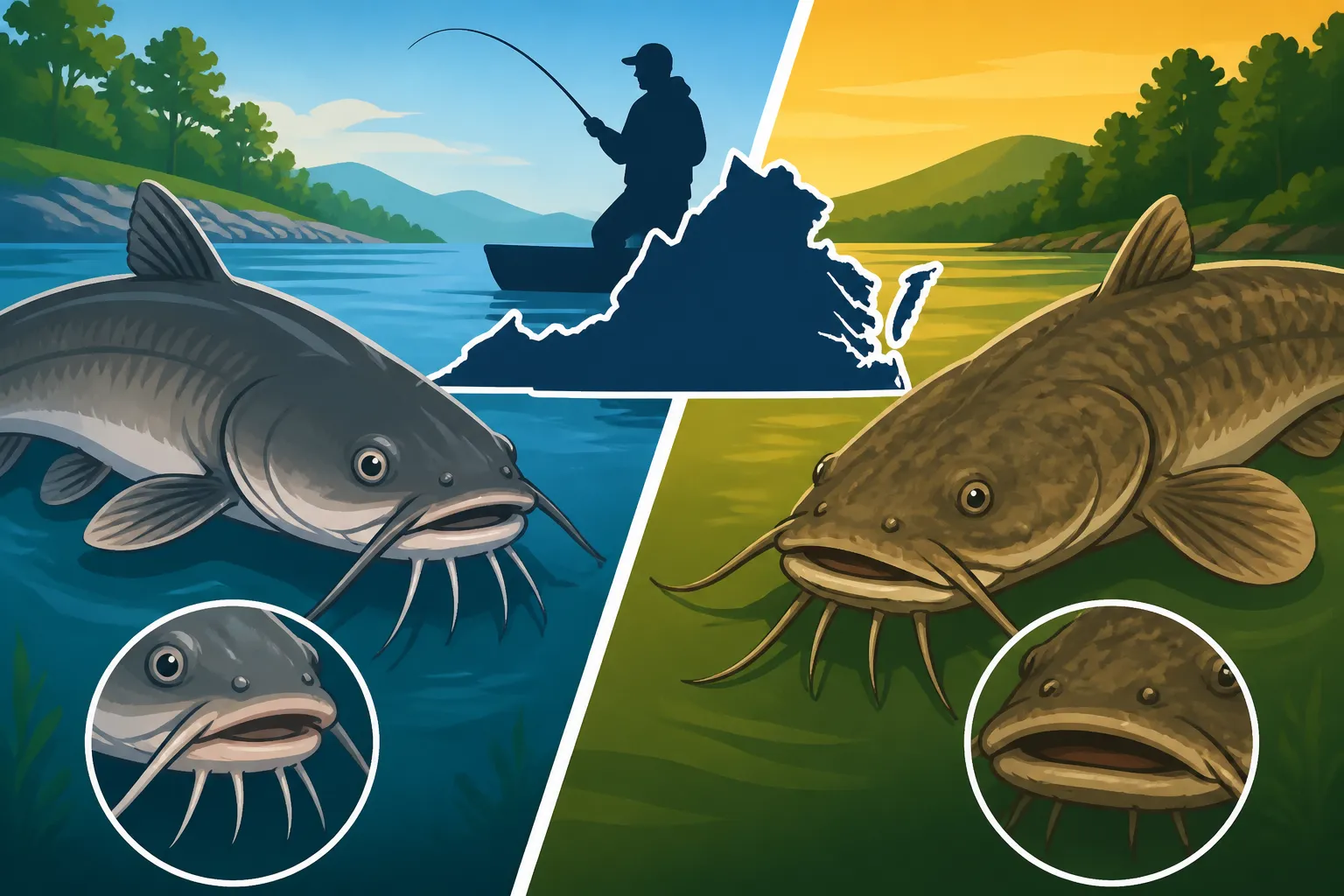
The Flathead Catfish has a distinctly broad, flattened head, almost shovel-like, especially when viewed from above. Their eyes are relatively small and sit high on their head. Their lower jaw protrudes noticeably beyond the upper jaw, giving them a grumpy, underslung look. This mouth structure is perfectly adapted for ambushing live prey, as they tend to be predatory feeders. If you gently feel around their mouth, you'll notice a robust, wide gaping maw designed for engulfing small fish.
In contrast, the Channel Catfish sports a more tapered, conical, and rounded head. It's not nearly as flat or wide as its Flathead cousin. Their eyes are usually larger and more centrally located on the sides of their head. The upper jaw typically extends slightly beyond the lower jaw, or both jaws might be relatively even. Their mouth is smaller and more terminal (at the end of the snout), better suited for scavenging and sucking up various food items from the bottom. Think of it more like a vacuum cleaner compared to the Flathead's pincer-like strike.
Body Shape and Coloration
Beyond the head, the body offers more telling signs, though coloration can sometimes vary based on habitat.
The Flathead Catfish tends to have a more robust, chunky body, particularly towards the front, tapering slightly towards the tail. Their coloration is usually a mottled brown, yellow, or olive green, often with dark brown or black spots and streaks, giving them a camouflaged, almost reptilian appearance. This blotchy pattern helps them blend in with submerged logs, rocks, and muddy bottoms where they love to hide and ambush prey. Their belly is typically a creamy white or pale yellow. These fish can grow incredibly large, often looking like thick, powerful torpedoes when you pull them from the water. You might be surprised at the sheer bulk of a large Flathead, especially compared to a Channel of similar length. Claytor Lake's Big Flathead Catfish are a testament to how large these fish can grow in Virginia's waters.
The Channel Catfish has a more slender, elongated, and typically "streamlined" body shape. Their body is generally silver-gray to olive-green on the back, fading to a lighter, silvery side, and a white belly. Younger Channel Cats, in particular, will often display distinct dark spots along their sides, which tend to fade as they mature. This spotting is a key identifier for many anglers and is what gives them their "channel" name – like spots of a channel marker. However, older, larger Channel Cats might lose most of their spots, making identification a bit trickier, but their overall sleeker body and head shape usually remain.
Fin Distinctions
Don't forget to examine the fins; they hold crucial clues!
The Flathead Catfish has a unique, rounded caudal (tail) fin. Unlike the deeply forked tail of a Channel Cat, the Flathead's tail is either slightly emarginate (gently indented) or completely straight, giving it a paddle-like appearance. Their dorsal (back) fin and pectoral (side) fins are strong and can have sharp spines, so always exercise caution when handling them. The anal fin (underneath, towards the tail) is relatively short and rounded.
The Channel Catfish, on the other hand, is most famously recognized by its deeply forked caudal fin. This distinct, V-shaped tail is a dead giveaway for a Channel Cat. Their dorsal and pectoral fins also have sharp spines, similar to the Flathead, but the overall structure of their body and tail fin is very different. Their anal fin is longer and more rounded than the Flathead's, and it contains more rays. If you count the rays on the anal fin, a Channel Catfish typically has between 24 and 30 rays, while a Flathead will have fewer, usually 14 to 17. This technical detail can be a definitive identifier if you're ever in doubt.
Here's a quick comparison table to help visualize these differences:
| Feature | Channel Catfish | Flathead Catfish |
|---|---|---|
| Head Shape | Rounded, conical, tapered | Broad, flattened, shovel-like |
| Mouth | Upper jaw slightly overlaps lower, terminal | Lower jaw protrudes beyond upper, wide, underslung |
| Body Shape | Slender, streamlined, often with dark spots | Robust, chunky, mottled brown/yellow/olive with streaks |
| Caudal (Tail) Fin | Deeply forked, V-shaped | Rounded or slightly emarginate (straight to mildly indented) |
| Anal Fin Rays | 24-30 rays, longer | 14-17 rays, shorter |
| Eyes | Larger, centrally located | Smaller, higher on head |
| Primary Diet | Omnivorous (scavenger, insects, small fish) | Piscivorous (ambush predator of live fish) |
Habitat, Diet, and Behavior
Beyond their looks, these two catfish species have quite different lifestyles, which influence where and how Virginia anglers target them. Understanding these behavioral patterns can significantly increase your chances of success. Virginia Catfish Species: Channel, Flathead, and White Compared further details the variety you might encounter.
Where to Find Them: Preferred Habitats
Channel Catfish are incredibly adaptable and can be found in a wide range of freshwater environments across Virginia. They thrive in rivers, lakes, reservoirs, and even larger ponds. They prefer waters with moderate to slow current, often congregating in deeper holes, around submerged structure like fallen trees, brush piles, or along ledges and drop-offs. You'll also find them patrolling open water areas, especially at night, as they are active feeders. They are quite tolerant of varying water conditions, making them a common catch in many of Virginia's major waterways, from the Shenandoah River to Lake Anna. Anglers often find success near dams and spillways where current provides abundant food.
Flathead Catfish, by contrast, are more particular about their living arrangements. They are primarily found in larger rivers and reservoirs with significant current and deep, murky water. They absolutely love heavy cover, such as logjams, rock piles, undercut banks, and deep holes with strong current breaks. These are ambush predators, and they prefer to hide in these dark, secluded spots, waiting for unsuspecting prey to swim by. While you might catch them in some lakes, they are predominantly a river fish in Virginia, with the James River, Rappahannock River, and even parts of the Chickahominy River being prime Flathead territory. They tend to be less active during the day, holding tight to cover, and become much more active hunters at night.
What's on the Menu: Dietary Preferences
The differences in their mouths and lifestyles directly translate to their diets. This is a critical distinction for anglers choosing bait.
The Channel Catfish is a true omnivore and a opportunistic scavenger. They'll eat just about anything they can fit in their mouth! Their diet includes insects, crustaceans (like crayfish), small fish, snails, aquatic plants, and even decaying organic matter. This wide palate is why they are so readily caught on a variety of baits, from stink baits and prepared concoctions to chicken livers, worms, and even hot dogs. If it smells strong or looks edible, a Channel Catfish is likely to give it a try. This versatility makes them a favorite target for casual anglers and families. You can grab a variety of tempting baits from your local tackle shop or easily order them from Amazon.
The Flathead Catfish, on the other hand, is almost exclusively a piscivorous (fish-eating) predator, especially as they grow larger. They prefer live bait. Small sunfish, bluegill, live minnows, and small suckers are their preferred meals. They will also eat large worms and crayfish, but live fish are their primary target. This is why targeting Flatheads often involves different tactics and baits than targeting Channels. If you're using cut bait for Flatheads, it's typically fresh, bloody chunks of fish, rather than the heavily scented prepared baits favored by Channel Cats. When targeting these formidable fish, using robust circle hooks and strong line is essential – gear you can easily find on Amazon.
Behavioral Tendencies
Observing how these fish behave can also help in identification and targeting.
Channel Catfish are known for their strong, steady pull when hooked. They'll often make powerful runs, especially in current, and can be quite acrobatic. They tend to be more active feeders in low light conditions, such as dawn, dusk, and throughout the night, but they can be caught during the day, especially in deeper, cooler waters or when they're actively schooling. They are also known to school up, making it possible to catch several from one productive spot.
Flathead Catfish are truly built for power. When you hook a Flathead, especially a big one, prepare for a serious battle. They're known for their powerful, stubborn fights, often hugging the bottom and using their flat bodies to leverage against the current or structure. They tend to be solitary creatures, rarely schooling, preferring to hold their own territory. As mentioned, they are primarily nocturnal predators, often moving out of their daytime cover to hunt during the darkest hours. This makes night fishing a particularly effective technique for targeting larger Flatheads. How to Catch Flathead Catfish at Claytor Lake offers more specific advice for hooking these heavyweights.
Effective Fishing Techniques for Each Species
Understanding the differences in appearance and behavior leads naturally to different fishing strategies. Virginia anglers often employ specific techniques to maximize their chances of catching either a Channel or a Flathead. Catfish Fishing Techniques and Bait Guide provides a broader overview of how to approach these fish.
Targeting Channel Catfish
Given their omnivorous diet and widespread habitat, Channel Catfish are generally easier to catch and are often the preferred target for beginners or family fishing trips.
Bait Choices: The versatility of Channel Cats means you have a vast array of bait options.
- Prepared Baits (Stink Baits): These are extremely popular and effective. They come in various forms – dough balls, dip baits, or punch baits – and their strong scent attracts Channels from a distance.
- Cut Baits: Chicken livers are a classic and highly effective bait. Small pieces of cut shad or other oily fish also work well.
- Natural Baits: Worms (nightcrawlers, red wigglers), shrimp, corn, and even hot dogs can entice hungry Channel Cats. You can find a wide selection of these, or the tackle to rig them, on Amazon.
Rigging and Presentation:
- Bottom Rig: A simple slip-sinker rig (Carolina rig) with a weight sliding on the main line above a swivel, then a leader and a hook, is standard. This allows the fish to take the bait without feeling the weight immediately.
- Float Rig: In shallower water or when fishing near submerged vegetation, a slip bobber rig can be effective, suspending your bait just above the bottom.
- Location: Target deeper holes, channel edges, submerged timber, and areas with slower current in rivers and lakes. Best Catfish Fishing Spots in Virginia will point you to some promising areas.
Time of Day: While night fishing can be excellent, Channel Cats can be caught throughout the day, especially during overcast conditions or in early morning and late evening.
Targeting Flathead Catfish
Flatheads require a more specialized approach due to their predatory nature and preference for heavy cover. Patience and stout tackle are key.
Bait Choices: Live bait is king for Flatheads.
- Live Fish: Small sunfish (bluegill, green sunfish), live shad, creek chubs, or suckers are incredibly effective. The size of your bait should match the size of the Flatheads you're targeting – often 4-6 inches for good results.
- Fresh Cut Bait (Large): While live bait is preferred, large, fresh chunks of oily fish like shad or mullet can sometimes work, especially if they are bleeding slightly. Avoid rancid or old cut bait; Flatheads are picky.
Rigging and Presentation:
- Heavy Bottom Rig: A strong, heavy-duty slip-sinker rig is essential. You'll need substantial weight to hold your bait in current and on the bottom, especially near snaggy cover.
- Strong Tackle: Flatheads demand robust rods, reels, and line. Use heavy mono or braided line (at least 20-30 lb test, often much more for trophy hunting) and strong hooks, such as 5/0 to 8/0 circle hooks. Circle hooks are highly recommended as they usually hook the fish in the corner of the mouth, reducing gut-hooking. All these specialized items are readily available from online retailers like Amazon.
- Location: Focus on logjams, deep holes with current, bridge pilings, and undercut banks. Be prepared to lose some tackle to snags; that's where Flatheads live.
Time of Day: Night fishing is by far the most productive for Flatheads. They become much more active and leave their daytime hiding spots after dark to hunt. Setting up just before sunset and fishing through the night is a common strategy.
Culinary Qualities and Preparation
After the excitement of the catch, many anglers wonder about the culinary aspect. Both Channel and Flathead Catfish are excellent eating fish, but they do have distinct flavor and texture profiles.
Channel Catfish: A Southern Classic
Flavor and Texture: Channel Catfish are widely regarded as a delicious table fish. Their flesh is typically white, flaky, and firm, with a mild, slightly sweet flavor. The taste can vary slightly depending on their diet and the water quality, but generally, it's very appealing. They rarely have a "muddy" taste, especially when caught from clean, flowing waters. Is Channel Catfish Good to Eat? delves deeper into this topic.
Preparation: Channel Catfish are incredibly versatile in the kitchen. They are fantastic pan-fried, deep-fried, grilled, baked, or even used in stews and gumbos. Many prefer to skin them before cooking, which is relatively easy to do. Their mild flavor makes them a great canvas for various seasonings, from simple salt and pepper to Cajun spices or lemon-herb marinades. Given their size, Channel Cats provide good fillets without being excessively large or difficult to handle.
Flathead Catfish: A Richer Experience
Flavor and Texture: Flathead Catfish also boast delicious white, firm, and flaky flesh, but their flavor is often described as richer and slightly more robust than that of a Channel Catfish. Some describe it as having a "cleaner" or "nuttier" taste, which is likely due to their predatory, live-fish diet. Because they eat live fish, they tend to have very clean-tasting meat. Like Channel Cats, their flavor is best when caught from clean, flowing waters. Is Flathead Catfish Good to Eat? explores the culinary delights of this species.
Preparation: Flathead Catfish are also excellent fried, grilled, or baked. Many anglers consider them superior to Channel Catfish for certain preparations due to their firmer texture and richer flavor. Because they can grow to much larger sizes, cleaning a Flathead can be a bit more involved, but the substantial fillets are well worth the effort. They also skin easily, and their meat holds up well to grilling or smoking. If you catch a truly massive Flathead, consider portioning it out for various meals!
Conservation and Regulations in Virginia
Virginia's Department of Wildlife Resources (DWR) manages catfish populations to ensure sustainable fishing for future generations. It's crucial for every angler to understand and abide by these regulations. While general guidelines exist, it's always best to check the latest DWR fishing regulations, as they can change annually and may vary by specific water body.
General Regulations for Catfish
Both Channel and Flathead Catfish are subject to general statewide regulations concerning creel (daily possession) limits and minimum length limits. However, specific lakes or river segments might have special regulations in place to protect local populations or manage trophy fisheries. For instance, some lakes might have a slot limit for certain species to encourage the growth of larger fish. Always consult the DWR website or a current regulations pamphlet before heading out.
One common question is whether a fishing license is required. Absolutely, unless you're fishing on designated Virginia Free Fishing Days in June 2026, you'll need a valid Virginia freshwater fishing license. This applies to both resident and nonresident anglers of appropriate age. These license fees directly support conservation efforts, stocking programs, and habitat management, ensuring that Virginia's waters remain healthy and productive for catfish and other species. Virginia Fishing License Requirements for Residents and Nonresidents outlines who needs a license and when.
Responsible Angling Practices
As powerful and prolific as catfish are, practicing responsible angling is vital:
- Catch and Release: If you're not planning to eat your catch, or if you've already met your daily limit, practice proper catch and release techniques. Minimize handling time, use wet hands, and revive the fish gently before releasing it. This is especially important for larger, older fish that are valuable for spawning.
- Respect Length and Creel Limits: These limits are in place for a reason – to maintain healthy fish populations. Taking more than your legal limit or keeping undersized fish depletes the fishery.
- Avoid Littering: Always pack out what you pack in. Leave no trace of your fishing trip. Litter can harm wildlife and degrade the beauty of Virginia's natural resources.
- Report Poaching: If you witness illegal fishing activity, report it to the Virginia DWR. Protecting our fisheries is a community effort.
Knowing the difference between a Channel Catfish and a Flathead Catfish is more than just academic; it influences your bait choices, your fishing spots, and your expectations for the fight. It connects you more deeply to the intricate ecosystems of Virginia's waterways. So, the next time you feel that distinctive tug on your line, you'll be better equipped to identify, appreciate, and properly handle whichever magnificent catfish you reel in. Good luck out there, and happy fishing!
Disclaimer
This article is for general informational purposes only and does not constitute professional advice. Laws, prices and regulations vary by location and change over time. Consult a qualified professional for guidance on your specific situation.