Best Time of Year to Catch Largemouth Bass at Smith Mountain Lake
Figuring out the absolute best time to hit the water at Smith Mountain Lake for largemouth bass can feel like solving a complex puzzle. You’ve got seasons changing, water temperatures fluctuating, and those elusive bass constantly moving. This guide is here to untangle that complexity, helping you understand the seasonal patterns and key factors that will put you on the fish, no matter the time of year.
Understanding the Largemouth Bass Life Cycle at Smith Mountain Lake
To truly master largemouth bass fishing on Smith Mountain Lake, you need to think like a bass. Their entire year revolves around a cycle driven by water temperature, food availability, and the urge to reproduce. Understanding these phases is crucial for predicting where they’ll be and what they’ll be willing to bite. It's not just about throwing a lure; it's about presenting the right lure in the right place at the right time.
Pre-Spawn Excitement: The Build-Up to Big Bites
As winter’s chill slowly recedes and the waters of Smith Mountain Lake begin to warm, typically starting in late February and picking up steam through March and April, largemouth bass enter their pre-spawn phase. This is arguably one of the most exciting times to target these fish. Their metabolism ramps up, and they start migrating from their deeper winter haunts towards shallower, sun-warmed coves and creek arms where they'll eventually spawn. Think of it as a feeding frenzy before the big event.
During this period, bass are incredibly focused on feeding to build up energy reserves for spawning. They’re often aggressive, hitting larger, more active baits. You'll find them cruising along channel swings, points, and staging areas adjacent to spawning flats. This is a fantastic time to throw search baits like lipless crankbaits, spinnerbaits, and even jerkbaits, as they’re actively looking for a meal. Many anglers consider this a prime window for catching trophy-sized bass because the females are at their heaviest, full of roe. It's a time of immense anticipation and potential, where the promise of a big bite hangs in the air with every cast. Learning about Best Time of Year for Bass Fishing in Virginia can really help you dial in your approach during this crucial period.
The Spawning Season: Fragile and Fickle
The main event for largemouth bass, the spawn, typically occurs when water temperatures in Smith Mountain Lake consistently reach the mid-60s Fahrenheit, usually from late April through May. During this time, male bass prepare nests (known as "beds") in shallow, protected areas, often near submerged cover like docks, stumps, or rocks. Once a female lays her eggs, the male guards the nest fiercely until the fry hatch and disperse.
Fishing during the spawn can be a bit more challenging and often calls for a different approach. Bass that are actively on beds are often more interested in protecting their territory than eating. They might "mouth" a bait to move it away, rather than aggressively striking it. Anglers often employ sight fishing techniques, looking for beds and presenting baits like soft plastics (tubes, lizards, senkos) directly onto or near the nest. It's a delicate dance, trying to entice a strike without spooking the fish entirely. It's also a time when many anglers practice catch-and-release to ensure the successful reproduction of the species. Understanding When Do Bass Spawn in Virginia Lakes is vital for ethical and effective fishing during this sensitive period.
Post-Spawn Recovery: The Hunger Returns
Once the spawn is complete, typically late May into June, both male and female bass enter the post-spawn phase. This is often characterized by a period of recovery. The females, especially, can be exhausted and may retreat to slightly deeper water to recuperate. They're often lethargic, sometimes referred to as "ghost fish" because they can be tough to locate and tempt.
However, this doesn't mean fishing is off-limits. After a week or two of rest, their hunger returns, and they start to feed aggressively again to regain lost weight and energy. They'll often move to transitional areas like secondary points, submerged brush piles, and creek channel edges, seeking deeper water access but still close to shallower feeding grounds. Jerkbaits, shaky heads, drop shots, and Carolina rigs are excellent choices for these suspended or deeper-holding fish. Targeting them now requires patience and often a slower presentation, but the rewards can be significant as these bass are looking for a substantial meal to get back to full strength. Knowing How to Catch Bass After the Spawn can make a huge difference in your success during this transitional period.
Seasonal Strategies for Largemouth Bass Success on Smith Mountain Lake
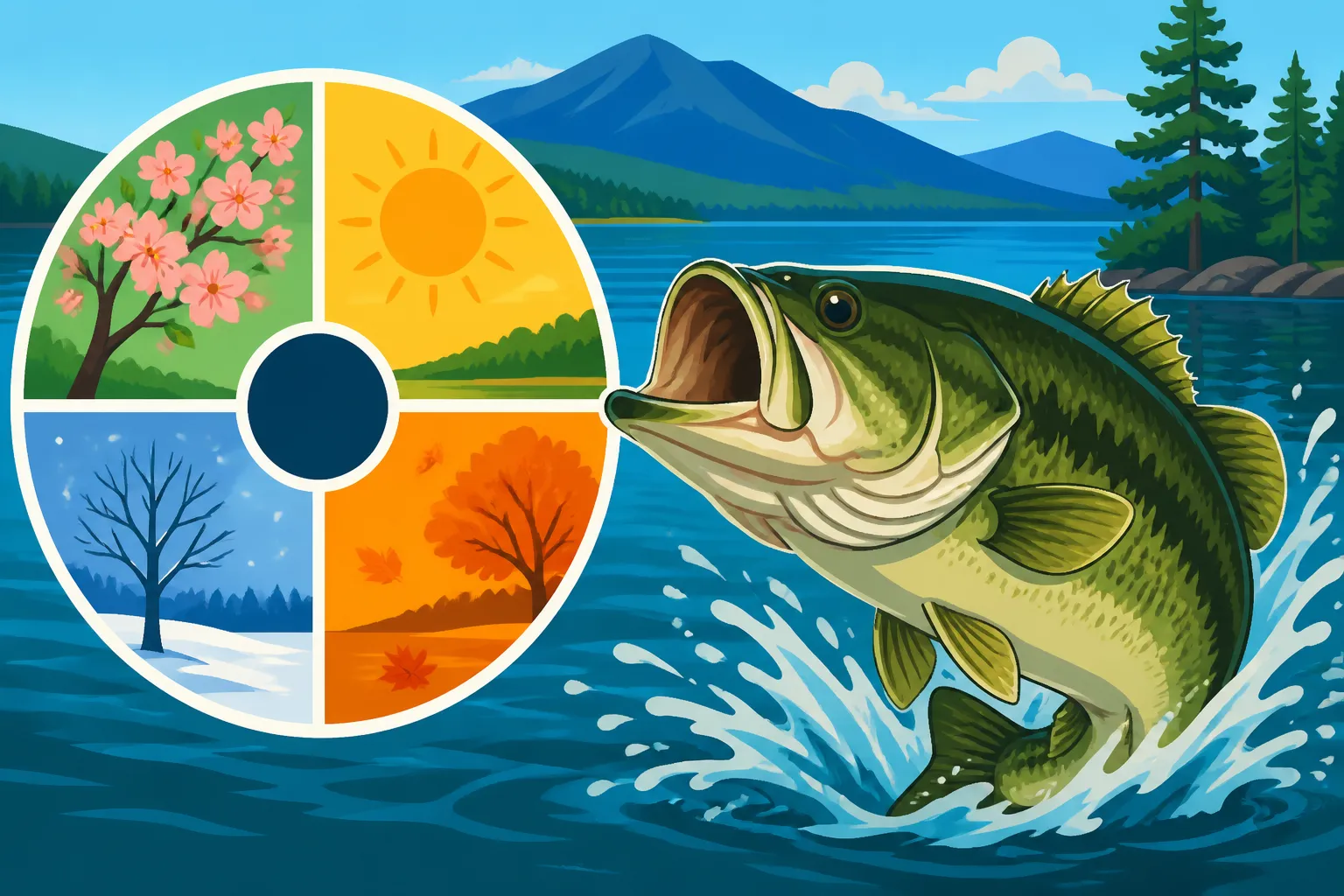
Smith Mountain Lake offers fantastic largemouth bass fishing opportunities almost year-round, but your strategy absolutely needs to shift with the seasons. What works like a charm in spring will likely get you skunked in the dead of winter. It's all about adapting to the bass's natural rhythms.
Spring: The Golden Window (March-May)
Spring truly is the "golden window" for many largemouth bass anglers on Smith Mountain Lake. From early March to late May, the lake transitions from cold winter waters to the bustling activity of the spawn and beyond. Early spring, when water temperatures are climbing from the high 40s into the low 50s, sees bass starting to move out of their deepest winter holes. They'll stage on main lake points and channel swings, often hitting crankbaits and jig-and-trailer combos as they start their pre-spawn migration.
As the water warms into the upper 50s and low 60s, the pre-spawn bite really takes off. This is when those larger, aggressive females push into the backs of coves and creek arms, gorging themselves on baitfish. Spinnerbaits, chatterbaits, and squarebill crankbaits fished around docks, submerged brush, and emergent grass can be incredibly effective. By the time the water hits the mid-60s, you're in the peak of the spawn. Look for bass on beds in shallow, protected areas, often visible in clear water. Post-spawn, as temperatures climb into the 70s, bass will transition back out of the shallowest spawning areas, often suspending around offshore structure or retreating to deeper cover to recover. This is when topwater lures can be exciting during early mornings and evenings. For more localized tips on finding them, check out Where to Catch Largemouth Bass on Smith Mountain Lake.
Summer: Deep Water and Early Mornings (June-August)
When summer fully arrives at Smith Mountain Lake, typically from June through August, water temperatures can soar into the 80s, especially in the shallower areas. This often sends largemouth bass looking for cooler, more stable conditions. They tend to move deeper, seeking thermoclines, submerged timber, humps, and ledges. This can be a challenging time for anglers, but it's far from impossible.
The key to summer success often lies in targeting bass during low-light conditions – think dawn, dusk, or even night fishing – when they might move shallower to feed. Topwater lures like poppers, frogs, and buzzbaits can produce explosive strikes in these conditions, especially around heavy cover. During the brighter, hotter parts of the day, you'll need to go deep. Carolina rigs, Texas rigs with heavy weights, deep-diving crankbaits, and shaky head jigs are excellent for probing those deeper structures. A good fish finder is invaluable for locating submerged brush piles and depth changes where bass might be holding. Don't forget to pack plenty of water and sunscreen if you're out during the day! You can find some great tools and accessories for deep-water fishing on Amazon to enhance your summer setup. If you're really committed, exploring How to Catch Bass at Night in Summer could open up a whole new world of opportunities.
Fall: The Feeding Frenzy Before Winter (September-November)
Ah, fall at Smith Mountain Lake – a favorite for many bass anglers, and for good reason. From September through November, as air and water temperatures begin to cool, largemouth bass enter another major feeding period, often referred to as the "fall turnover." As the surface water cools, it becomes denser and sinks, mixing with deeper water. This brings baitfish from deeper parts of the lake back up to the shallows, and the bass follow.
This is a time of incredible opportunity, as bass are actively chasing bait to fatten up before the leaner winter months. You'll often find them schooling up and actively pushing baitfish against shorelines or into creek mouths. Power fishing techniques shine here: crankbaits, spinnerbaits, jerkbaits, and ChatterBaits can be deadly when retrieved aggressively through schools of bait. Pay close attention to areas where creek channels meet main lake points, or where you see baitfish flickering on the surface. These are tell-tale signs of hungry bass. Fall fishing can be incredibly dynamic, with fast action and strong fish. For more specific techniques to apply, check out Best Bass Fishing Techniques for Fall.
Winter: Slow and Subtle (December-February)
Winter bass fishing on Smith Mountain Lake, typically from December through February, is definitely a test of patience and skill. The lake's waters become cold, often dropping into the 40s. Bass metabolism slows dramatically, and they become much less active, preferring to conserve energy. They generally move to their deepest, most stable wintering areas, often suspended over deep creek channels, main lake humps, or near prominent vertical structures like bridge pilings.
While you won't experience the fast-paced action of spring or fall, winter fishing can still yield some truly impressive catches for the dedicated angler. The key is to slow everything down. Extremely slow presentations of baits like jigging spoons, blade baits, suspending jerkbaits, and finesse jigs are often the most effective. Look for bass congregated in tight schools using your electronics. Once you find them, present your lure slowly and precisely, often letting it sit motionless for extended periods. It’s a game of inches and patience, but catching a big, healthy largemouth in the dead of winter is incredibly rewarding. For detailed cold-water tactics, consider reading How to Catch Bass in Cold Water. Even in winter, a reliable portable fish finder from Amazon can be a game-changer for locating those deep-holding bass.
Key Factors Influencing Largemouth Bass Activity at Smith Mountain Lake
Beyond the general seasons, several specific environmental factors play a huge role in how and when largemouth bass will bite at Smith Mountain Lake. Paying attention to these details can help you fine-tune your approach for any given day on the water.
Water Temperature: The Ultimate Decider
If there’s one single factor that dictates largemouth bass behavior more than any other, it's water temperature. Bass are cold-blooded, meaning their body temperature mirrors that of their environment, directly affecting their metabolism, activity levels, and where they choose to hang out.
- Below 50°F: Bass are sluggish and deep. Think winter patterns – slow, deep presentations.
- 50-60°F: Pre-spawn staging. Bass begin to move shallower, becoming more active and feeding heavily. This is where you see aggressive strikes on moving baits.
- 60-70°F: Spawning activity. Bass are focused on reproduction in shallow, protected areas. This is the peak of the spring "golden window."
- 70-80°F: Post-spawn recovery and summer patterns. Bass disperse to slightly deeper water, eventually moving to offshore structure or seeking shade as temperatures rise.
- Above 80°F: Summer heat. Bass are typically deep, seeking cooler water, or very active only during low-light hours.
Always carry a good water thermometer, easily found on Amazon, to monitor surface temperatures. It's the first clue to what the bass might be doing. Understanding Water Temperature for Bass Fishing in Virginia is foundational for consistent success.
Weather Patterns: Fronts, Rain, and Sunlight
The weather overhead has a direct and immediate impact on the water below, and thus, on the bass. A sunny, calm day versus a cloudy, windy one, or the aftermath of a cold front, will completely change how you approach the lake.
- Approaching Fronts (Pre-Frontal Conditions): Often, just before a significant weather change, like a cold front, bass become very active. The dropping barometric pressure can trigger a strong feeding frenzy as they sense the change. This is a great time for aggressive power fishing techniques.
- Cold Fronts: After a cold front passes, the bluebird skies and high-pressure system can shut bass down fast. They often move deeper, cling tighter to cover, and become much harder to entice. You'll need to slow down your presentation, downsize your baits, and work areas thoroughly. Learning How to Catch Bass After a Cold Front is essential for these tough days.
- Rain and Overcast Days: Overcast conditions, especially a light, steady rain, can be fantastic for bass fishing. The clouds reduce light penetration, making bass feel more comfortable moving into shallower water or staying active longer. Rain can also wash nutrients and bait into the lake, attracting fish. This is often a great time for topwater lures and spinnerbaits, even during the middle of the day. A guide on How to Fish After Heavy Rain can offer specific tips for these conditions.
- Bright Sunlight: On bright, sunny days, especially during summer, bass will often seek shade and cover. Look for them tucked under docks, deep in submerged brush, or holding tight to shaded banks. Flipping and pitching jigs or soft plastics into these areas can be productive.
Forage Availability: Following the Food
Largemouth bass are apex predators in Smith Mountain Lake, and their movements are heavily influenced by the availability and location of their primary food sources. The main forage for largemouth bass in SML includes various species of shad (gizzard and threadfin), bluegill, other panfish, and crayfish.
- Shad Migration: Shad are schooling baitfish, and their movements dictate much of the bass behavior. In spring, shad move into shallower coves to spawn, bringing bass with them. In summer, shad often move to deeper, cooler water, and bass follow. In fall, as water temperatures cool, shad once again congregate in the backs of creeks and coves, triggering a major bass feeding spree.
- Crayfish: Crayfish are a protein-rich food source, especially prevalent in rocky areas. Bass will often key in on crayfish in spring and fall. Jigs and creature baits that imitate crayfish can be highly effective around rocky points and riprap.
- Panfish: Bluegill and other panfish are a year-round food source. Bass will often ambush panfish around docks, weed lines, and submerged brush. Swimbaits or bladed jigs that imitate panfish can be productive.
If you can locate schools of baitfish, you're usually not far from hungry bass. Keep an eye on your fish finder for bait balls, and watch for surface activity like schooling bass pushing shad to the surface – that’s a sure sign of a feeding frenzy!
Here's a quick summary of the best times to target largemouth bass at Smith Mountain Lake:
| Season | Months | Typical Water Temp | Bass Behavior | Recommended Techniques |
|---|---|---|---|---|
| Spring | March – May | 50-70°F | Pre-spawn feeding, spawning, early post-spawn | Crankbaits, spinnerbaits, jigs, soft plastics (tubes, senkos), topwater (late spring) |
| Summer | June – August | 75-85°F | Deep water retreat, nocturnal feeding | Deep crankbaits, Carolina rigs, Texas rigs, shaky heads, drop shots, topwater (early/late), night fishing |
| Fall | September – November | 60-75°F | Aggressive feeding, following baitfish schools | Crankbaits, spinnerbaits, jerkbaits, ChatterBaits, lipless crankbaits |
| Winter | December – February | 40-50°F | Deep, lethargic, schooling | Jigging spoons, blade baits, suspending jerkbaits, finesse jigs, slow presentations |
Ultimately, while spring and fall offer the most consistent and often most aggressive largemouth bass action at Smith Mountain Lake, the lake provides fantastic fishing opportunities all year long. It just requires adjusting your strategy, understanding the bass’s current stage, and paying close attention to the environmental cues. With a little planning and the right techniques, you can enjoy successful largemouth bass fishing on Smith Mountain Lake in any season. Whether you're a seasoned angler or just starting out, remember that How to Catch Largemouth Bass Year-Round is within reach if you adapt to the conditions.
Disclaimer
This article is for general informational purposes only and does not constitute professional advice. Laws, prices and regulations vary by location and change over time. Consult a qualified professional for guidance on your specific situation.