How to Target All Four of Claytor Lake’s Bass Species in One Trip
It's a common angler's dream to hit a lake and truly master it, to understand its depths and its fish so intimately that you can target virtually anything swimming within its waters. But let's be honest, trying to catch every major species of bass on a single trip to a sprawling lake like Claytor Lake in Virginia? That sounds less like a dream and more like a heroic feat! Many anglers struggle to even distinguish between the different bass species, let alone develop a strategy to land them all in one outing. This guide is here to break down the distinct behaviors, preferred habitats, and hunger patterns of Claytor Lake's four prominent bass species – Largemouth, Smallmouth, Spotted, and the elusive Alabama Bass – and equip you with a game plan to target each one, potentially all in a single, memorable day.
The Unique Bass Tapestry of Claytor Lake
Claytor Lake, nestled in the scenic New River Valley, isn't just another pretty body of water in Virginia. It's a truly special fishery, a diverse aquatic ecosystem that boasts not one, not two, but four distinct bass species. This unique situation presents both an exciting challenge and an incredible opportunity for anglers. If you’re looking to truly test your skills and expand your understanding of bass behavior, Claytor Lake is your classroom.
Introducing Claytor Lake's Four Bass Species
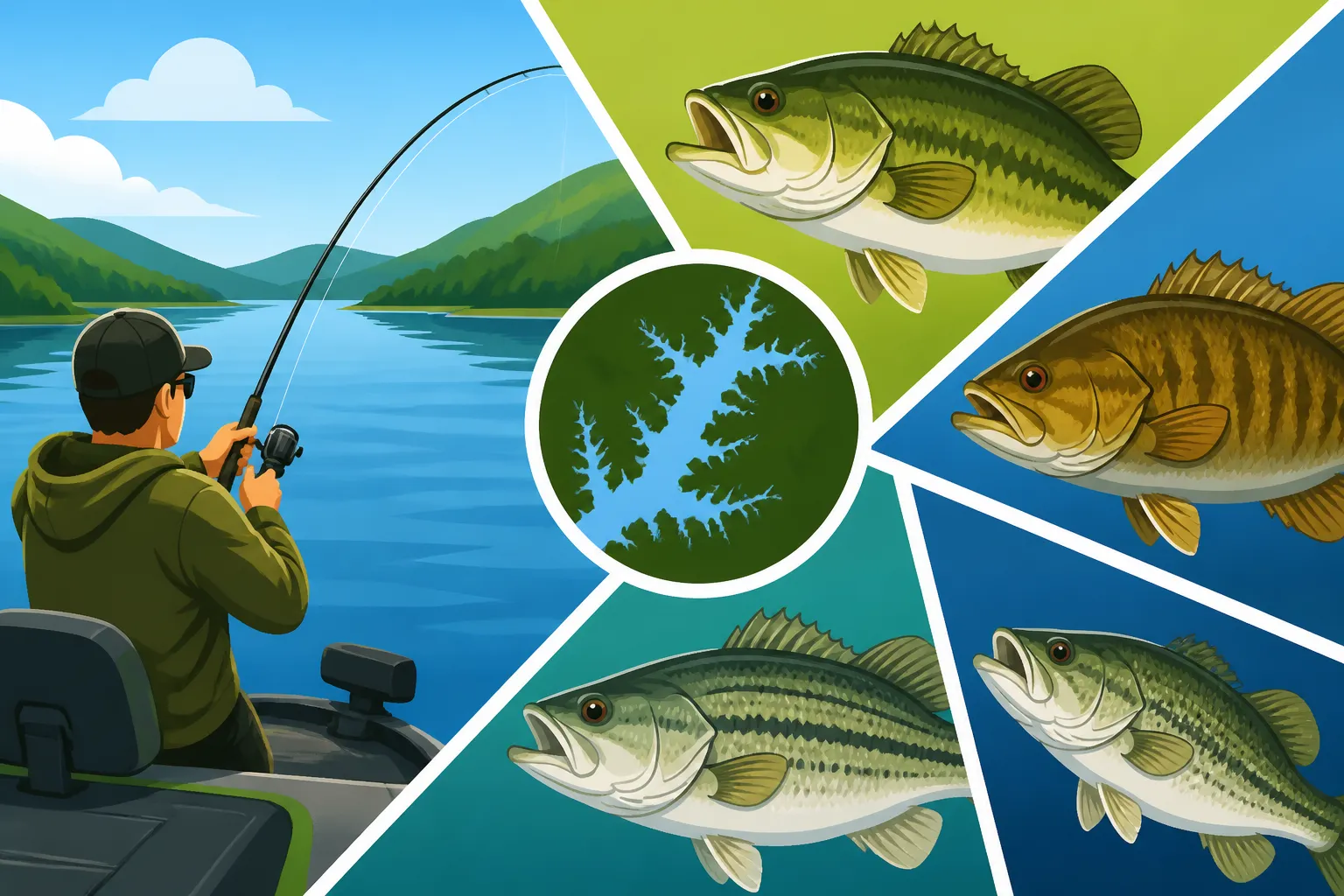
Before we dive into tactics, let's get acquainted with the players. You've got your familiar faces, of course. The Largemouth Bass, with its classic green hue and mouth extending past the eye, is a widespread favorite. Then there's the feisty Smallmouth Bass, a brown beauty with a smaller mouth and distinct vertical barring, known for its powerful fights in rocky, current-swept areas. But Claytor Lake also introduces two other intriguing cousins: the Spotted Bass (often mistaken for largemouth due to similar coloring, but with a distinctive "spot" pattern on its belly and a mouth that doesn't extend past the eye) and the less common, but equally exciting, Alabama Bass. The Alabama Bass is relatively new to many anglers' radar in this region, and it shares many characteristics with the spotted bass, often preferring deeper, more open water. Claytor Lake's Mixed Bass Fishery: Largemouth, Smallmouth, Spotted, and Alabama offers an even deeper dive into distinguishing these fish.
Why Targeting Them All Can Be a Challenge and a Reward
The real trick, and where many anglers get stumped, is that these four species often have different preferred habitats, feeding behaviors, and even temperature tolerances. A largemouth might be tucked deep into a weed bed, while a smallmouth is lurking on a rocky point, a spotted bass schooling over a deep hump, and an Alabama bass suspending far below. Trying to catch them all means constantly adjusting your location, presentation, and even your mindset.
It's tempting to just stick to what you know works, especially when one species is biting. But the reward for branching out is immense. Imagine the bragging rights, the satisfaction of unlocking the lake's secrets, and the sheer joy of experiencing the varied fights each bass provides. It’s not just about catching fish; it’s about becoming a more adaptable and knowledgeable angler. Plus, understanding where and how each species lives makes you a more effective angler in any body of water, not just Claytor Lake.
Decoding Each Species: Habits, Habitats, and Hunger
To successfully target all four bass species in one trip, you need to think like each one. What makes them tick? Where do they hang out, and what makes them decide to strike? Let's break down each member of Claytor Lake's bass quartet.
Largemouth Bass: The Classic Cover King
The largemouth bass is often the most sought-after species, and for good reason. They're aggressive, grow to impressive sizes, and love to ambush prey from cover. On Claytor Lake, you'll find largemouth bass closely associated with visible structure. Think fallen timber, boat docks, thick weed lines, brush piles, and shallow coves. They are creatures of comfort, preferring warmer, shallower water compared to their smallmouth and Alabama cousins.
Their feeding habits are largely ambush-oriented. They'll lurk patiently, waiting for an unsuspecting baitfish or crawfish to swim by, then explode on it. This means your presentations should often be slow and methodical, allowing your lure to sit in their strike zone. Early mornings and late evenings often find them actively hunting closer to the surface. Best Largemouth Bass Spots on Claytor Lake, Virginia can give you some excellent starting points for these fish.
Smallmouth Bass: The Rocky Rebel
Smallmouth bass are known for their strong fights and preference for clear, cooler water. At Claytor Lake, these bronzebacks will be primarily found around rocky areas. This includes main lake points, rocky outcroppings, submerged humps, ledges, and transition zones where rock meets mud or sand. They often relate to current, especially if there's any water movement, using it to their advantage to ambush prey.
Unlike largemouth, smallmouth are often more nomadic, cruising larger areas in search of food. They feed heavily on crawfish, but also target shad and other baitfish. Their strikes can be incredibly aggressive, often feeling like a solid thud on the end of your line. Don't be surprised to find them a bit deeper than largemouth, especially during the brighter parts of the day. Best Smallmouth Bass Spots on Claytor Lake, Virginia highlights areas where you're likely to encounter these hard-fighting fish.
Spotted Bass: The Schooling Subtlety
Spotted bass, or "spots," offer a fascinating blend of largemouth and smallmouth characteristics, but with their own unique quirks. They tend to prefer water that's slightly deeper than largemouth but not as deep or current-oriented as smallmouth. On Claytor Lake, you'll find them around points, humps, creek channel swings, and often suspended in open water over deeper structure. They love a defined edge or drop-off.
What makes spotted bass unique is their schooling behavior. Where you find one, you'll often find many. They are less particular about heavy cover than largemouth, preferring more open, often vertical structure like standing timber or bridge pilings. They're avid baitfish eaters, and their tendency to suspend means a good fish finder is your best friend. Their fight is spirited, often with powerful dives, and they can pull surprisingly hard for their size.
Alabama Bass: The Deepwater Dynamo
The Alabama Bass is the newest addition to Claytor Lake's bass scene and, for many, the most elusive. Visually, they are very similar to spotted bass, often requiring a careful examination of specific fin ray counts or tooth patches to definitively identify. However, their behavior and preferred habitat typically differ. Alabama bass tend to favor the deepest, most open water on the lake, often suspending over significant depths or congregating on main lake humps and points far from shore.
They are pelagic by nature, meaning they spend a lot of time chasing baitfish in open water. This makes them a bit harder to pinpoint without good electronics. They can be found deeper than the other three bass species, often relating to thermoclines or schools of shad. Targeting Alabama bass requires patience and a willingness to fish away from obvious cover, focusing instead on subtle changes in depth and baitfish schools shown on your sonar. They put up an incredible fight, often described as a longer, more enduring battle than even a smallmouth of similar size. If you're looking for a true test, the Alabama bass is it.
Your Multi-Species Tackle Box and Techniques
Successfully targeting all four species in one trip means having a versatile tackle selection and being ready to switch tactics at a moment's notice. You don't need a boatload of rods, but a thoughtful selection will serve you well.
Essential Lures and Baits for Claytor Lake's Bass Quartet
The beauty of multi-species bass fishing is that many lures can be effective for more than one type of bass. The key is knowing how and where to present them.
- Jigs (Football and Skirted): A must-have. Football jigs excel on rocky bottom for smallmouth and spotted bass, mimicking crawfish. Skirted jigs, especially those with weed guards, are deadly for largemouth in cover. You can find a great variety of jig sizes and colors on Amazon.
- Plastic Worms (Carolina Rig, Texas Rig, Shaky Head): These are incredibly versatile.
- Texas Rigged Worms: Perfect for largemouth in heavy cover, slipping through weeds and brush.
- Carolina Rigged Worms: Excellent for covering water, especially deeper areas, targeting smallmouth, spotted, and Alabama bass that might be cruising or suspended near the bottom.
- Shaky Head Jigs with Finesse Worms: A fantastic finesse option for all four species, especially when the bite is tough. Smallmouth and spotted bass absolutely crush these.
- Crankbaits (Shallow, Medium, Deep Diving):
- Shallow Divers: Great for largemouth around shallow cover and for reaction strikes.
- Medium/Deep Divers: Ideal for working points, ledges, and humps where smallmouth, spotted, and Alabama bass might be holding or chasing bait. Different lip designs help you get to various depths, so having a few options on hand is smart.
- Spinnerbaits/Chatterbaits: Excellent for largemouth in stained water or around sparse cover, but don't count them out for an aggressive smallmouth or spotted bass.
- Swimbaits (Paddle Tail and Boot Tail): Paddle tail swimbaits, either weighted or rigged on a jig head, are phenomenal for spotted and Alabama bass that are chasing shad in open water or suspending over structure. They also tempt opportunistic largemouth and smallmouth.
- Topwater Lures (Poppers, Walking Baits): While primarily a largemouth weapon in low-light conditions, an aggressive smallmouth or even a schooling spotted bass will smash a topwater bait. Always have one tied on for those magical dawn and dusk hours.
Rod, Reel, and Line Choices for Versatility
You don't need a dozen rod and reel combos, but having a few setups that cover different presentations will make your day much smoother.
- Medium-Heavy Casting Rod (7'0" – 7'6") with a Baitcaster: This is your workhorse for Texas rigs, jigs, spinnerbaits, and medium/deep diving crankbaits. Spool it with 15-20 lb fluorocarbon or monofilament, or 30-50 lb braided line with a fluorocarbon leader for heavier cover. This setup is perfect for muscling largemouth out of cover and handling the aggressive strikes of smallmouth.
- Medium Spinning Rod (6'6" – 7'0") with a Spinning Reel: Essential for finesse techniques. Think shaky heads, drop shots, weightless worms, and smaller crankbaits. Spool with 6-10 lb fluorocarbon or 10-15 lb braid with a fluorocarbon leader. This lighter setup gives you the sensitivity needed for subtle bites, often crucial for spotted and Alabama bass that can be finicky. Look for quality fluorocarbon lines on Amazon.
- Optional: Crankbait Specific Rod: If you really love throwing crankbaits, a medium action fiberglass or composite rod (7'0" – 7'6") will absorb the shock of hard strikes and prevent hooks from tearing out.
Line Selection: Fluorocarbon is generally preferred for its invisibility and sensitivity, especially for deeper presentations and clearer water, which Claytor Lake often offers. Monofilament can be good for topwater or when you need a bit of stretch. Braided line offers incredible strength and sensitivity but requires a leader for stealth.
Mastering Your Electronics for Deeper Bass
When chasing smallmouth, spotted, and especially Alabama bass, your fish finder isn't just a nice-to-have; it's a game-changer. These species often suspend or relate to subtle deepwater structure that you can't see with your eyes.
- Sonar (2D and Down Imaging): Use 2D sonar to identify baitfish schools, individual fish arches, and significant depth changes. Down Imaging provides a more photographic view of what's directly beneath your boat, helping you distinguish between rock piles, brush, and suspended fish.
- Side Imaging: This is invaluable for scanning wide areas quickly to find offshore humps, points, and schools of fish. You can spot a school of spotted or Alabama bass off to the side of your boat and then cast to them without driving directly over them and spooking them.
- GPS and Mapping: Mark waypoints where you catch fish or see promising structure. This helps you return to productive spots and build a pattern throughout the day. Claytor Lake's contours are complex, so detailed mapping is essential. How to Find Fish From a Boat With a Fish Finder elaborates on maximizing your electronics.
Crafting Your Day: A Strategy for Four Bass Species in One Trip
Now for the fun part: how do you actually put this all together and target all four species in one outing? It's about having a plan, but also being flexible and letting the fish tell you what they want.
The Early Bird Gets the Largemouth (and More!)
Start your day early, right at dawn, focusing on areas known for largemouth bass. These are typically the shallower coves, docks, weed lines, and fallen timber. Largemouth are often most active in low light, cruising for an easy meal.
- Strategy: Begin with topwater lures, spinnerbaits, or shallow crankbaits to capitalize on their morning aggression. Fish these quickly around visible cover.
- Transition: As the sun gets higher, largemouth will often retreat deeper into cover. Switch to Texas-rigged worms, jigs, or slow-rolled spinnerbaits, pitching and flipping them into the densest areas.
- Why this works: You're hitting the most active largemouth window. While you're targeting largemouth, don't be surprised if an opportunistic smallmouth or spotted bass strikes a spinnerbait or crankbait, especially if the cover is near a deeper drop-off.
Mid-Day Transitions: Chasing Smallmouth and Spotted Bass
Once the sun is up and the shallow bite slows, it's time to transition to deeper, rockier structures where smallmouth and spotted bass thrive.
- Strategy: Focus on main lake points, rocky humps, ledges, and creek channel swings. Use your electronics to locate these features and identify any schools of baitfish or bass.
- Lures: This is prime time for football jigs, shaky heads with finesse worms, drop shots, and medium to deep-diving crankbaits. For smallmouth, present these lures on or near the bottom, mimicking crawfish or bottom-dwelling baitfish. For spotted bass, try retrieving swimbaits or crankbaits through suspended schools you mark on your sonar.
- Covering water: Smallmouth and spotted bass can be nomadic, so don't be afraid to move and fish several similar spots. A Five-day fishing passes for short trips or a Ten-day saltwater licenses explained might even come in handy if you're exploring for a few days.
Deepwater Dives for Alabama Bass Success
As the day progresses, especially in the afternoon or during warmer periods, you might find the other bass species becoming less active. This is when you can dedicate time to searching for the elusive Alabama bass.
- Strategy: Move to the deepest sections of the main lake. Look for offshore humps, deep points that drop into significant depths, and large areas of open water where baitfish might be congregating. Your electronics are absolutely crucial here.
- Lures: Vertical presentations are often key. Drop shots, spoons, and swimbaits fished on a jig head are excellent choices. Watch your sonar for suspended fish or schools of bait at specific depths, and then present your lure at that exact depth. Alabama bass often prefer a slower, more subtle presentation.
- Patience is a virtue: Alabama bass aren't always easy to find, but when you do, they can be grouped up and provide thrilling action.
Reading the Water: Adapting Your Approach Throughout the Day
No matter how well you plan, fishing is always about adaptation. The most successful multi-species angler at Claytor Lake will be the one who pays attention to the conditions and the fish.
- Weather Changes: A passing cloud cover might temporarily reactivate the shallow largemouth bite. A sudden cold front could push all bass deeper and make them less active, requiring even slower, more subtle finesse presentations. Fishing Techniques After a Cold Front offers more guidance here.
- Baitfish Activity: Observe where you see baitfish. Surface activity suggests active feeding near the top, while dense schools on your sonar indicate where fish are holding. "Match the hatch" by using lures that imitate the size and color of the local baitfish.
- Listen to the Lake: Sometimes, the fish will tell you what they want. If you're getting short strikes on a crankbait, try slowing down to a jig or worm. If you're marking fish deep but they won't bite a drop shot, try a spoon or a vertically jigged swimbait. The lake is a dynamic environment, and your approach should be too. Don't be afraid to experiment, and remember that sometimes, the simplest presentations are the most effective.
| Bass Species | Preferred Habitat (Claytor Lake) | Primary Lure Types | Key Identification Feature |
|---|---|---|---|
| Largemouth | Shallow cover: docks, weeds, brush, timber | Jigs, plastic worms, spinnerbaits, topwater | Mouth extends past eye, dark lateral band |
| Smallmouth | Rocky points, humps, ledges, clear water | Tube jigs, shaky heads, drop shots, small crankbaits | Mouth does not extend past eye, vertical bars |
| Spotted | Points, humps, creek channels, often suspended | Finesse worms, swimbaits, small crankbaits | Small "spot" pattern on belly, mouth not past eye |
| Alabama | Deep, open water, offshore humps, suspended | Drop shots, spoons, deep jigs, vertically jigged swimbaits | Very similar to spotted, often deeper habitat; requires careful inspection for ID |
This article is for general informational purposes only and does not constitute professional advice. Laws, prices and regulations vary by location and change over time. Consult a qualified professional for guidance on your specific situation.