White Catfish vs Channel Catfish: Key Differences
It’s a common scenario for Virginia anglers, especially those new to the exciting world of catfishing: you reel in a feisty bottom-dweller, and you’re pretty sure it’s a catfish, but which one? The lines can get a little blurry between the ever-popular Channel Catfish and its often-mistaken cousin, the White Catfish. Understanding the subtle yet distinct differences between these two fantastic fish is key to not only identifying your catch but also refining your fishing techniques and appreciating the unique qualities of each. This guide will help you confidently tell them apart, ensuring you know exactly what you’ve got on the end of your line.
The Basics: White Catfish vs. Channel Catfish in Virginia
Virginia waters are a fantastic playground for catfish enthusiasts, with several species calling our rivers, lakes, and tidal tributaries home. Among the most frequently encountered are the Channel Catfish and the White Catfish. While both offer a thrilling fight and make for excellent table fare, they possess distinct characteristics that set them apart. Anglers often group them together under the general "catfish" umbrella, but once you know what to look for, you'll see why distinguishing them can elevate your fishing game.
A Tale of Two Catfish: Why the Confusion?
The confusion between White Catfish and Channel Catfish isn't some angler's failing; it's genuinely easy to make the mistake, especially if you're pulling them out of muddy or turbid water. Both are relatively common, both are bottom feeders, and both have that classic whiskered profile. They often occupy similar habitats, particularly in the slower-moving sections of rivers and larger impoundments across Virginia. For instance, in a river like the James, you might catch both within a short distance of each other. Their diets can also overlap, meaning they might be attracted to the same baits. This overlap in habitat and feeding behavior, combined with some superficial similarities, means that many a spirited discussion has broken out on boat docks and riverbanks about which species just got landed. But fear not, armed with a little knowledge, you'll be a catfish identification pro in no time!
Virginia's Catfish Culture: Where They Fit In
Catfish hold a special place in Virginia's angling heart. They're accessible, they fight hard, and they taste delicious, making them a favorite target for everyone from seasoned veterans to kids on their first fishing trip. The Channel Catfish, in particular, is widely distributed and thrives in a variety of environments, from the larger impoundments like Lake Anna to the extensive tidal rivers. They're a staple for many anglers, whether they're fishing from the bank with a simple bottom rig or drifting cut bait from a boat. The White Catfish, while perhaps not as ubiquitous as its Channel counterpart, is also a highly valued game fish, particularly in the eastern and tidal regions of the state. Its presence often signifies a slightly different water type, sometimes tolerating more brackish conditions than the Channel Catfish. Both species contribute significantly to the rich tapestry of Catfish Species Found in Virginia Waters, offering diverse fishing experiences throughout the Old Dominion.
Visual Identification: How to Tell Them Apart on the Bank
Okay, let's get down to brass tacks: how do you actually tell these two apart once you've got one flopping in the net? It's all in the details, and once you know what to look for, it becomes much easier. You don't need a fancy fish identification guide every time; a keen eye will do the trick.
Fin, Face, and Body Shape: The Dead Giveaways
When you're comparing a White Catfish to a Channel Catfish, start by looking at their overall body shape, the profile of their head, and the unique characteristics of their fins.
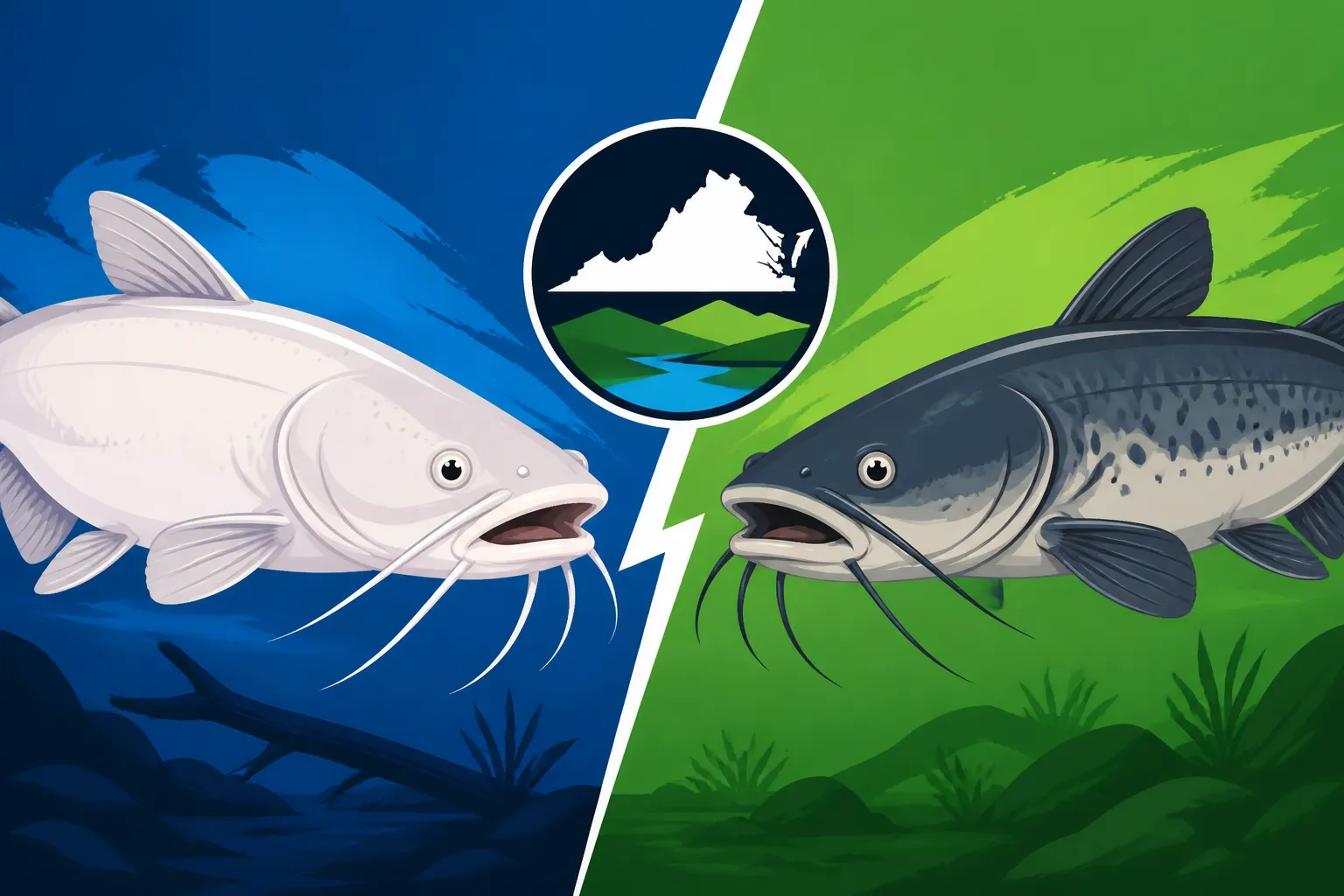
The White Catfish (scientific name Ameiurus catus) generally has a shorter, stockier body. Imagine a fish that looks a bit more compressed or "thicker" from top to bottom. Its head is usually broader and somewhat flatter, with eyes that are relatively small compared to its head size. Perhaps the most telling fin feature is its tail fin, which is typically straight or slightly rounded at the rear. It might have a very subtle notch, but it will never be deeply forked like a Channel Catfish. Their dorsal and pectoral fins can be quite stout.
Now, let's look at the Channel Catfish (Ictalurus punctatus). These guys are often described as having a more elongated, sleeker body. Their head is narrower and more conical, almost bullet-shaped, and their eyes tend to be larger and more prominent. The absolute dead giveaway for a Channel Catfish is its deeply forked tail fin. Think of a swallow's tail or a pair of scissors; it's unmistakable. This is the single most reliable feature to distinguish it from a White Catfish. Their dorsal and pectoral fins often appear a bit more streamlined than those of the White Catfish.
Spotting the Spots (Or Lack Thereof): A Key Indicator
This is another super helpful clue, but it comes with a caveat.
Channel Catfish are famous for their dark spots scattered across their sides, particularly when they are younger or in certain water conditions. These spots can be quite pronounced, almost like freckles. However, here’s the caveat: as Channel Catfish get older and larger, these spots often fade or disappear entirely. So, while a spotted catfish is almost certainly a Channel Catfish, a large, unspotted catfish could still be a Channel Catfish. Don't let the absence of spots fool you completely if other features point to a Channel.
White Catfish, on the other hand, rarely, if ever, have spots. Their coloration is typically uniform, usually a grayish-blue or olive green on top, fading to a creamy white or yellowish belly. Sometimes, they might have a slightly mottled appearance, but it won't be the distinct dark spots you see on a younger Channel Catfish. If you see a catfish without spots and a straight or slightly rounded tail, you've likely found yourself a White Catfish.
The Whisker Test: Barbels and Their Clues
Both species are catfish, so they both have barbels (whiskers) around their mouths, which they use to navigate and find food. But even here, there are subtle differences.
For Channel Catfish, the barbels are usually dark, ranging from black to dark grey. They are relatively long, with the maxillary (upper jaw) barbels often extending well past the eyes.
The White Catfish typically has lighter-colored barbels, often a pale grey or even white, sometimes matching the lighter coloration of their belly. Their barbels are generally shorter than those of a Channel Catfish, often not extending much beyond the back of the head. This might seem like a minor detail, but when combined with the other features, it helps paint a clearer picture.
Here's a quick reference table to help you keep these distinctions straight:
| Feature | White Catfish | Channel Catfish |
|---|---|---|
| Overall Body | Shorter, stockier, more compressed | More elongated, sleeker, often "torpedo-shaped" |
| Head Shape | Broader, flatter, somewhat wider | Narrower, more conical, often bullet-like |
| Tail Fin | Straight or slightly rounded, sometimes with a very shallow notch | Deeply forked, unmistakable "swallow-tail" |
| Body Spots | Generally absent, uniform coloration | Prominent dark spots (especially when young), fade with age |
| Barbel Color | Lighter, pale grey or white | Dark, black to dark grey |
| Barbel Length | Shorter, often not extending far past head | Longer, maxillary barbels often past eyes |
| Eyes | Relatively small | Relatively larger and more prominent |
Habitat and Behavior: Where to Find Them and How They Act
Beyond their physical appearance, White Catfish and Channel Catfish also tend to prefer slightly different environments and exhibit varying behaviors, which can be useful information when you're out on the water trying to target one over the other. Knowing their habits can help you choose the best spots and techniques.
Where They Call Home: Preferred Waters
Channel Catfish are incredibly adaptable and, frankly, one of Virginia's most widespread freshwater fish. You'll find them in a huge variety of habitats: large rivers like the James and Rappahannock, sprawling lakes such as Lake Anna and Smith Mountain Lake, smaller ponds, and even some creeks. They prefer water with moderate current, deeper holes, and areas with structure like submerged logs, rock piles, or ledges where they can hide and ambush prey. They can tolerate a wide range of water clarity and temperatures, which is why they're so prevalent across the state. They are truly at home in a classic freshwater setting. For those looking to target them, finding the deeper sections of The James River in Virginia or exploring the structures of a large reservoir is often a good starting point.
The White Catfish tends to be a bit more selective in its habitat, though it's still quite common. You'll primarily encounter them in the slower-moving, often murky waters of tidal rivers and estuaries, particularly along the eastern parts of Virginia. This means they're more likely to be found in waters that have some degree of salinity – what we call brackish water. Think of the lower sections of the James, York, and Rappahannock Rivers, especially where they begin to widen and feel the influence of the Chesapeake Bay Striped Bass Fishing Guide. They also inhabit many impoundments and ponds but show a stronger affinity for those with a connection to tidal influence or a slightly higher nutrient load. They often prefer muddy or silty bottoms where they can scour for food.
Feeding Habits and Diet: What They Munch On
Both species are opportunistic bottom feeders, but their diets can vary slightly based on their habitat and what's available. This distinction can sometimes guide your bait choices.
Channel Catfish have an incredibly diverse diet. They'll eat just about anything they can get their mouths around! This includes insects (aquatic and terrestrial), crustaceans (like crayfish), small fish, mollusks, and even plant matter and detritus. They're also notorious scavengers, which is why baits like cut bait, chicken livers, and various "stink baits" are so effective. They rely heavily on their sense of smell and their barbels to locate food in murky water or low light conditions. If you're looking for Best Bait for Channel Catfish in Rivers and Lakes, you'll find a huge array of options that reflect their varied diet.
White Catfish also have a broad diet, but they tend to consume more insect larvae, crustaceans, and mollusks than their Channel Catfish cousins, especially in their preferred brackish environments where different food sources might be more prevalent. While they will certainly take cut bait and various prepared catfish baits, some anglers find that baits with a strong natural scent, like shrimp, clam, or small pieces of fish, can be particularly effective when targeting White Catfish in tidal waters. They're still happy to scavenge, but their dietary preferences can lean a bit more towards natural forage found on the bottom of those specific habitats.
Size and Growth: Who Gets Bigger?
When it comes to size, there's a pretty clear winner between these two.
Channel Catfish are the larger of the two species. While most anglers catch them in the 1 to 10-pound range, they can grow significantly bigger, with trophy specimens in Virginia regularly exceeding 20 pounds, and occasionally pushing towards 30 or even 40 pounds in prime waters. They are a powerful, hard-fighting fish that can put a serious bend in your rod, especially the larger ones. Their longer, sleeker body is built for speed and power in a fight.
White Catfish are generally smaller. A good-sized White Catfish typically weighs between 1 and 3 pounds, with fish over 5 pounds considered a very respectable catch. While they don't reach the same behemoth sizes as Channel Cats, they are still incredibly strong for their size and provide an excellent fight on light tackle. Their stockier build makes them feel robust on the line, even if they aren't setting any state records for weight. If you're hoping for sheer size, the Channel Catfish is your target. If you're looking for a good fight on lighter gear and delicious fillets, the White Catfish is a fantastic option.
Fishing for Both: Tactics and Techniques in Virginia
Now that you know how to tell them apart and where they like to hang out, let's talk about how to actually catch them! While many catfishing techniques will appeal to both species, understanding their nuances can increase your success rate and lead to more consistent catches.
Best Baits and Rigs for Each Species
Given their slightly different dietary preferences and preferred habitats, tailoring your bait and rig can make a difference.
For Channel Catfish, versatility is key. As mentioned, they're not picky!
- Baits: Chicken livers are a classic, as are cut baits (strips of shad, bluegill, or other oily fish), shrimp, nightcrawlers, and commercially prepared "stink baits" or dip baits. Many popular brands of prepared baits can be found readily on Amazon or at your local tackle shop. Even hot dogs or bits of cheese can work in a pinch, especially in farm ponds.
- Rigs: A simple Carolina Rig is hard to beat for bottom fishing. This involves a slip sinker (egg sinker or bullet weight), a bead, a barrel swivel, and a leader (12-24 inches) tied to a hook. The slip sinker allows the fish to take the bait without feeling immediate resistance. Another effective rig is the Santee-Cooper Rig, which adds a float above the hook to keep your bait slightly off the bottom, preventing it from getting buried in silt or snags. For fishing in current, a three-way swivel rig can also be effective, keeping your bait flowing naturally.
For White Catfish, while they'll often hit Channel Catfish baits, sometimes a more refined approach pays off, especially in tidal waters.
- Baits: Fresh cut bait (smaller pieces), live or dead shrimp, chunks of clam, and worms like bloodworms or nightcrawlers tend to be very effective. Since they often forage on crustaceans and mollusks, these baits mimic their natural food sources. Prepared baits can still work, but fresh, natural offerings might give you an edge.
- Rigs: A simple bottom rig with a weight on the end and one or two dropper loops for hooks works well, especially if you're trying to keep your bait close to the muddy bottom they prefer. A small, weighted float rig can also be good in areas with slower current or over light vegetation, again keeping your bait just off the bottom where it's visible. Keep your hooks relatively smaller than what you might use for trophy Channel Cats, matching the smaller mouth of a White Catfish.
Remember, both species have excellent senses of smell, so fresh bait is almost always better. If you're fishing in murky water, don't be afraid to use baits with a strong scent trail.
Targeting Specific Catfish: Strategy Differences
If you're dead set on catching a big Channel Catfish, focus your efforts on larger rivers and reservoirs with significant structure. Look for drop-offs, submerged timber, bridge pilings, and creek channel junctions. These are prime ambush points. Fishing during the early morning, late evening, or even at night can be highly productive, as Channels are often more active feeders during low light. Using a sturdy rod and reel, perhaps one you scouted on Amazon for its heavy-duty performance, will serve you well. How to Catch Catfish at Night can be a game-changer for landing larger specimens.
When pursuing White Catfish, shift your attention to the tidal sections of Virginia's rivers and estuaries. Target areas where freshwater meets saltwater, especially around docks, piers, and natural cover like marsh grasses or oyster beds. They often congregate in deeper holes or channels within these tidal flats. Since they are generally smaller, using lighter tackle can enhance the fight and make the experience more enjoyable. A medium-light spinning rod paired with 6-10 lb test line is often perfect for White Catfish. Look for fishing gear that offers sensitivity and strength, and don't hesitate to check out reviews on Amazon for gear that fits the bill for lighter catfishing.
Cooking Your Catch: Taste and Texture
Both White Catfish and Channel Catfish are considered excellent eating fish, but some anglers perceive subtle differences in their taste and texture.
Channel Catfish fillets are typically firm, white, and flaky with a mild, slightly sweet flavor. The taste can vary somewhat depending on the water quality of where they were caught; fish from cleaner, clearer waters tend to have a milder flavor. They are incredibly versatile in the kitchen, lending themselves well to frying, baking, grilling, or even being used in stews and gumbos. Many swear by a classic cornmeal breading and deep fry.
White Catfish also offer firm, white, flaky meat, but some connoisseurs describe their flavor as being a little stronger or "fishier" than Channel Catfish, especially if caught from brackish waters. This isn't necessarily a bad thing; it just means they might stand up to bolder seasonings or cooking methods. They are equally delicious when fried, baked, or broiled, and are a popular choice for fish fries in the regions where they are prevalent. If you enjoy a robust fish flavor, you'll love a White Catfish. Either way, preparing your Is Channel Catfish Good to Eat? or White Catfish quickly and properly after the catch will ensure the best possible flavor.
Whether you're after a trophy Channel Catfish or a pan-sized White Catfish, understanding these key differences will make you a more informed and successful angler in Virginia's diverse waters. Knowing your target helps in choosing the right spot, the right bait, and ultimately, making the most of your time on the water.
Disclaimer
This article is for general informational purposes only and does not constitute professional advice. Laws, prices and regulations vary by location and change over time. Consult a qualified professional for guidance on your specific situation.