Best Bait for Catfish in Summer
Oh, summer catfish fishing in Virginia! It's a truly special experience, isn't it? But let's be honest, chasing those whiskered beauties when the sun is blazing and the water is warm can be a real head-scratcher. What worked so well in spring might suddenly feel like dead weight on your hook. The frustration is real when you're out on a beautiful day, tackle box brimming, and the fish just aren't biting. This guide is all about cutting through that confusion, helping you understand why summer catfishing demands a shift in strategy, and revealing the very best baits to entice those lazy summer cats to strike.
Why Summer Catfish Fishing Demands a Different Approach
You know that feeling when you've had a big, heavy meal on a hot day? You just want to relax, maybe take a nap, and certainly not chase after anything too strenuously. Well, our finned friends, the catfish, often feel a bit the same way during the peak of summer in Virginia. The warm water impacts their metabolism, their activity levels, and even where they choose to hang out. Simply put, what worked in cooler months might not cut it now, and understanding why is your first step to a more successful summer outing.
Understanding Summer Catfish Behavior
As surface water temperatures rise across Virginia's lakes and rivers, from the sprawling waters of Kerr Lake to the winding James River, catfish begin to adapt. Their metabolism speeds up, requiring more food, but they also seek out cooler, more oxygenated water. This often means they'll move deeper during the day, congregating in thermal refuges or shaded areas. Think about the cool, dark bottom of a deep channel or the shadow cast by a large fallen tree. They might also become more nocturnal, feeding heavily during cooler nighttime hours. Knowing that they're often seeking comfort means your bait needs to be presented right in their comfort zone, or be so overwhelmingly tempting that they can't resist.
When the sun is high and the water feels like bathwater, those big flatheads and channel cats aren't going to expend a lot of energy chasing down a fast-moving lure. They're conserving energy. This is why scent, presentation, and persistence become even more critical during the summer months. They might be sluggish, but they're still hungry, and a well-placed, irresistible bait is exactly what they're waiting for.
Challenges of Warm Water Catfishing
Beyond just the fish's behavior, warm water brings its own set of challenges for anglers. For one, bait can spoil much faster in the heat. Imagine leaving fresh cut bait out in the sun for an hour – it won't be as appealing. You need to keep your baits cool and fresh to maximize their appeal. This often means investing in a good cooler and plenty of ice, especially if you're out for a full day.
Another challenge is that warm, often clearer, water can make fish more wary. They might be able to see your line or smell your human scent more easily. This means paying closer attention to your tackle, perhaps opting for slightly lighter lines or leaders if conditions allow, and handling your bait as little as possible with bare hands. The good news is that catfish are naturally driven by scent, so if your bait is potent enough, many of these challenges can be overcome. It simply reinforces the idea that picking the "best bait for catfish in summer" isn't just about what you put on the hook, but how you manage and present it.
Natural Baits: The Unbeatable Power of the Real Thing
When it comes to catfish, nothing quite beats the natural offerings. These are the baits that catfish naturally encounter in their environment, making them inherently attractive. In the summer, when fish can be a bit more selective, leaning on these tried-and-true natural options often provides the most consistent results.
Cut Baits for Big Catfish
Ah, cut bait! This is arguably the reigning champion for trophy-sized channel, blue, and even flathead catfish during the summer. The secret lies in the blood, oil, and intense natural scent that a freshly cut piece of fish releases into the water, creating an irresistible chum trail. Imagine a big blue catfish cruising the bottom of the Chesapeake Bay tributaries or a deep hole in the James River; that scent will draw them in from a surprising distance.
The key to effective cut bait is using fresh, oily fish common to the local waters. Shad, herring, sunfish, or even carp are excellent choices. You can often net or cast-net these smaller baitfish yourself, ensuring peak freshness. Cut them into chunks or strips about 1 to 3 inches long, making sure each piece has some skin and scales to help it stay on the hook and continue emitting scent. When rigging, consider a sturdy circle hook that exposes the bait well. For a comprehensive guide on preparation, check out How to Rig Cut Bait for Catfish. The goal is to provide a mouthful of potent, natural goodness that a sluggish summer cat can easily find and inhale.
Live Baits for Active Predators
While many catfish are scavengers, flathead catfish are primarily predators, and they absolutely adore live bait. If you're targeting big flatheads in Virginia's larger rivers or reservoirs like Claytor Lake, a lively baitfish is often your best bet. A struggling live bait sends out vibrations and distress signals that mimic a natural prey item, triggering that predatory instinct even in warm water.
Good choices for live bait include small sunfish (like bluegill or bream), shiners, or creek chubs. Make sure to check local regulations on baitfish size and species allowed. Hook your live bait through the back, just behind the dorsal fin, or through the lips, ensuring it can swim naturally and freely. This presentation works wonders when fished near submerged structure, fallen trees, or deep ledges where flatheads like to ambush their meals. Remember, these larger species often put up a serious fight, so make sure your tackle is up to the task. If you're wondering about the strength of your quarry, you might be interested in our comparison: Channel Catfish vs Flathead Catfish: Which Fights Harder?.
Classic Worms and Nightcrawlers
Never underestimate the power of a classic nightcrawler! While they might not scream "trophy catfish" bait, worms are incredibly versatile and effective, especially for channel catfish and smaller blues, and are fantastic for family fishing trips. They are easy to acquire, simple to use, and have a natural wiggling action and earthy scent that catfish find irresistible.
In the summer, when fish might be scattered or finicky, a juicy nightcrawler presented effectively can often tempt bites when other baits fail. You can fish them whole, threaded onto a hook, or even in clumps for a larger offering. They are particularly effective when targeting smaller channels in ponds, creeks, or quieter river stretches. Plus, they’re readily available at almost any bait shop, making them a convenient choice. For beginners or those just looking to enjoy a relaxing day, a bucket of nightcrawlers from your local tackle shop or even gathered from your garden after a summer rain can provide hours of fun.
Prepared Baits: Convenience, Scent, and Catfish Attraction
Sometimes, convenience and concentrated scent are exactly what you need, especially when targeting hungry channel and blue catfish in warmer waters. Prepared baits, whether store-bought or homemade, offer a powerful olfactory punch that can draw fish in even when their natural appetite might be somewhat dulled by the heat. They often excel in scenarios where you need a strong, sustained scent trail without the hassle of keeping live bait or fresh cut bait perfectly cool.
Stink Baits: The Olfactory Advantage
Stink baits are, as their name suggests, designed to release an incredibly strong and often pungent odor that catfish simply can't ignore. These baits are a game-changer for channel and blue catfish, especially in warm water where their sense of smell is highly active. They come in various forms: dip baits, punch baits, and paste baits, each with its own consistency and method of application.
Dip baits, for example, are thick, gooey concoctions you "dip" a special bait holder or sponge into. Punch baits have a fibrous consistency that allows you to simply "punch" a treble hook into the container, and the bait will cling to it. Brands like Catfish Charlie or Secret 7 (these are common examples, but specific formulations change) leverage ingredients that break down slowly, continually releasing scent. This makes them ideal for bank fishing or when casting to a specific spot, letting the current carry the scent downstream. You can find a huge variety of these commercial stink baits, along with bait holders and specialized hooks, readily available through online retailers like Amazon, making it easy to stock up before your next trip. They truly offer an advantage by creating a massive scent footprint in the water.
Dough Baits and Other Home Brews
For those who enjoy a bit of DIY or want a more budget-friendly option, homemade dough baits are a fantastic choice for summer catfish, particularly channel cats. These baits allow for endless customization, letting you experiment with different scents and consistencies. The basic recipe often includes cornmeal, flour, and a strong-smelling ingredient like cheese, garlic, anise oil, or even Kool-Aid powder for color and sweetness.
The beauty of dough baits is their simplicity. Mix the ingredients with water until you get a firm, workable dough that stays on your hook. You can add things like hot dogs, tuna, or even chicken liver for an extra kick. These baits are especially effective in ponds or calmer river sections where you don't need extreme casting distances. They offer a sustained scent release and are usually soft enough for catfish to easily mouth and swallow. The process of making them can be a fun activity in itself, and the satisfaction of catching a fish on your own concoction is unparalleled!
Pellets and Processed Baits
Beyond the pungent stink baits, there's a wide world of commercially processed baits designed for convenience and effectiveness. These often come in pellet form, compressed blocks, or pre-formed nuggets. Many of them are made from fish meal, grains, and other attractants that mimic the diet of farm-raised catfish, making them highly palatable to wild ones.
These processed baits are incredibly easy to transport and store, making them a grab-and-go option for impromptu fishing trips. While they might not have the raw, visceral appeal of fresh cut bait, their consistent scent and texture can be very effective, especially for smaller to medium-sized channel catfish. Some anglers even use them as a chum, tossing a handful into their fishing area to attract catfish before casting their baited hook. Like many specialized fishing supplies, a good selection of these convenient baits can be ordered online through platforms like Amazon, saving you a trip to a specialty store.
Bait Presentation and Strategy for Summer Catfish
Having the best bait in your cooler is only half the battle. How you present that bait, where you cast it, and your overall strategy become incredibly important during the summer months when catfish behavior can be a bit more nuanced. Thinking like a catfish will dramatically increase your success rate.
Targeting Different Catfish Species
Virginia is home to several fantastic catfish species, and while there's overlap in their preferences, understanding their individual quirks can help you fine-tune your bait choice.
- Channel Catfish: These are the most common and widespread. They're opportunistic eaters and will readily take a huge variety of baits. For summer channel cats, stink baits, dough baits, chicken livers, and nightcrawlers are top choices. They cruise flats, channel edges, and structure.
- Blue Catfish: Often the largest catfish in Virginia, especially in tidal rivers like the James or Rappahannock. Blue cats are primarily fish eaters. Cut bait (shad, herring, mullet) is king for these giants. They prefer deeper channels and large river bends.
- Flathead Catfish: The true predators of the catfish world. Flatheads overwhelmingly prefer live bait—small sunfish, shiners, or large minnows. They're ambush predators, typically found near heavy cover like fallen trees, rock piles, or log jams in rivers and reservoirs.
Knowing which species you're most likely to encounter in your chosen Best Catfish Fishing Spots in Virginia will help you select the most effective bait and rig. For a deeper understanding of what each species looks like and where they prefer to hang out, check out Virginia Catfish Species: Channel, Flathead, and White Compared.
Rigging and Placement
Effective rigging ensures your bait stays on the hook, is presented naturally, and attracts attention. In summer, catfish are often hunkered down on the bottom, so bottom fishing rigs are paramount. A simple Carolina rig or a three-way swivel rig are excellent choices for presenting cut bait, live bait, or even large worms on the bottom. The Carolina rig allows your bait to move more naturally with the current, while the weight keeps it in the strike zone. For an in-depth look at setting up your tackle, our guide on How to Bottom Fish for Catfish covers all the essentials.
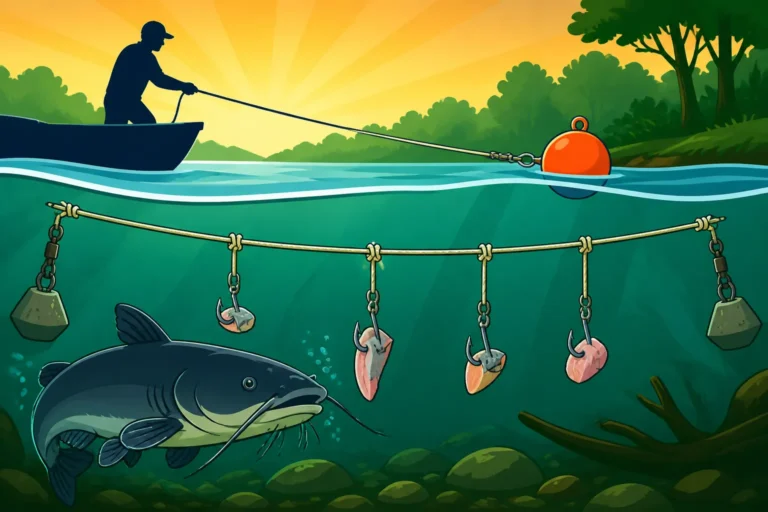
For flatheads using live bait, focus on placing your bait right next to submerged cover. For channel and blue cats, casting into deeper channels, along ledges, or near current breaks where food might collect is a solid strategy. Don't be afraid to cast multiple lines with different baits and at varying depths if regulations allow, to cover more water and see what the fish prefer on any given day. If you’re feeling adventurous, exploring methods like Catfish Trotline Setup and Tips can be incredibly effective for covering larger areas, especially at night.
Prime Fishing Times and Locations
During the scorching summer months, catfish often become more active during periods of low light and cooler temperatures. This means dawn, dusk, and especially night fishing can be incredibly productive. As the sun dips below the horizon, the water cools, and catfish often move out of their deep, daytime haunts to forage in shallower areas. Learning How to Catch Catfish at Night is a crucial skill for summer success.
During the day, focus on areas that offer shade and cooler water. This could be the deep side of a boat dock, under bridges, in the deepest part of a river channel, or where a cool spring feeds into a lake. Areas with submerged timber or rock piles also offer refuge and ambush points. Always be aware of water temperature and look for areas where cooler water might congregate. Understanding Best Time of Year to Catch Catfish in general helps, but summer specifically highlights these low-light periods.
Bringing It All Together: Choosing Your Summer Catfish Bait
Alright, so we've talked about a lot of fantastic options, and you might be wondering, "Which one should I actually use?" The truth is, there's no single magic bait for every situation, but by considering a few factors, you can make an informed choice that puts you ahead of the game.
Matching Bait to Conditions and Target Species
Think about where you're fishing and what you hope to catch.
- If you're after trophy blue cats or flatheads in a large river or reservoir, especially during the day, fresh cut bait or live bait is almost always your best bet. The potent scent or lifelike action is what those big fish crave. Keep it fresh and present it near deep channels or heavy cover.
- For channel catfish in smaller lakes, ponds, or calmer river sections, especially when you're bank fishing or fishing with kids, stink baits, dough baits, chicken livers, or good ol' nightcrawlers are fantastic. They offer a strong scent and are easy to use.
- If you're fishing at night, when catfish are actively foraging, a strong-smelling stink bait or cut bait can create a scent trail that draws them in from a distance. The diminished light means visual appeal is less important, and scent becomes king.
Consider the water clarity, too. In murkier water, scent is even more critical. In clearer water, a natural presentation of live or cut bait might be more effective.
Bait Freshness and Storage
This cannot be stressed enough: freshness matters, especially in summer heat! Catfish have an incredible sense of smell, and they can detect subtle differences. Stale, spoiled bait is far less effective than fresh bait.
- Keep cut bait and live bait on ice in a cooler. Change out the water for live bait frequently if you're using a bait bucket or aerator.
- Store prepared baits properly. Many commercial stink baits and dough baits come in sealed containers designed to retain their potency. If you buy a large tub, transfer smaller amounts to a bait jar for your trip, keeping the main supply cool and sealed.
- Don't leave bait sitting in direct sunlight. Even a few minutes can degrade its quality. A good cooler, like those you can find on Amazon, is your best friend here.
Comparing Top Summer Catfish Baits
Let's break down some of the most popular summer catfish baits to help you make your choice.
| Bait Type | Primary Target Species | Key Advantage in Summer | Best Presentation | Scent Power | Ease of Use |
|---|---|---|---|---|---|
| Fresh Cut Bait | Blue, Channel, Flathead | Intense natural scent & oil | Bottom rig, fished fresh | High | Medium |
| Live Bait | Flathead, Large Blue | Natural action, predatory draw | Bottom rig, near cover | Medium | Medium |
| Stink Baits | Channel, Blue | Overwhelming, sustained odor | Dip tube, punch bait holder | Very High | High |
| Nightcrawlers | Channel, Smaller Catfish | Versatile, natural wriggle | Bottom rig, slip float | Medium | Very High |
| Chicken Liver | Channel, Smaller Blue | Strong scent, soft texture | Bottom rig, treble hook | High | High |
| Dough Baits | Channel | Customizable, strong odor | Bottom rig, small hooks | High | High |
Remember, the goal is to get that bait in front of a hungry catfish, and in the summer, that often means going to where they are (deeper, shadier, or nocturnal spots) and offering them something so enticing they can't possibly say no. The warm water makes them a little more particular, but with the right bait and strategy, you'll be wrestling those whiskered beauties onto the bank or into your boat in no time. And don't forget, if you're planning a trip to catch and keep, it's good to know Is Channel Catfish Good to Eat? so you can prepare for a delicious meal!
Disclaimer
This article is for general informational purposes only and does not constitute professional advice. Laws, prices and regulations vary by location and change over time. Consult a qualified professional for guidance on your specific situation.