How to Set Up a Catfish Trotline
Trying to land those elusive big catfish can sometimes feel like an endless waiting game, especially when you're relying on a single rod and reel. The truth is, while patience is a virtue in fishing, sometimes you need a strategy that covers more ground and increases your chances exponentially. If you're tired of sitting around wondering if a monster flathead or a hefty channel cat will ever bite, this comprehensive guide will walk you through everything you need to know about setting up a catfish trotline efficiently and effectively in Virginia waters.
Understanding What a Catfish Trotline Is (and Why It's Effective)
When you hear "trotline," you might envision something complicated, but at its heart, it's a wonderfully simple and incredibly effective method for catching multiple catfish. It's designed to cast a wide net, so to speak, presenting several baited hooks over a larger area simultaneously. This increases your odds of encountering active fish, especially those nocturnal feeders that roam extensively.
The Basic Anatomy of a Trotline
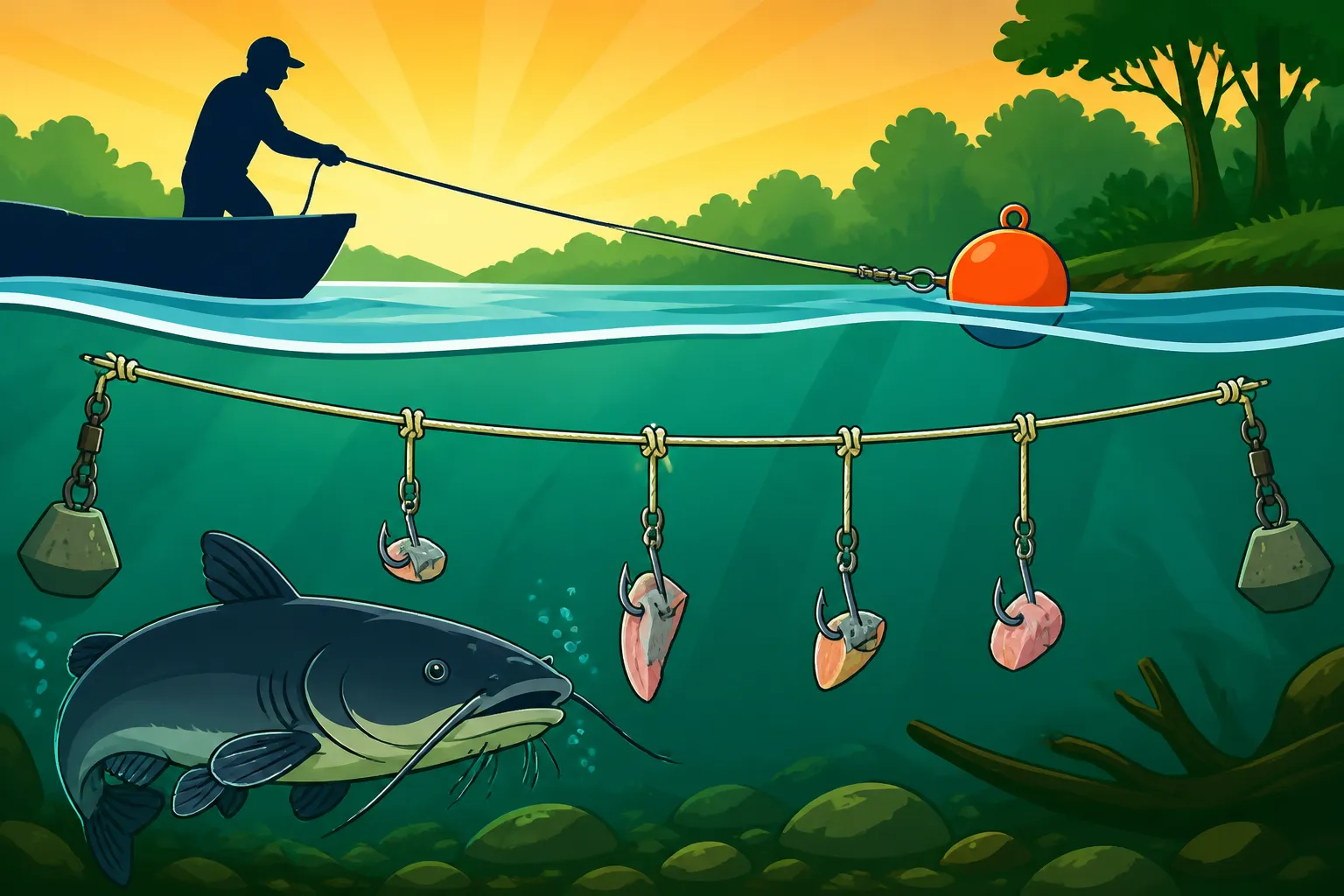
Imagine a very long, sturdy main fishing line stretched across a body of water, either near the surface or along the bottom, held in place by anchors. From this mainline, shorter lines, called droppers or snoods, hang down at regular intervals, each terminating in a baited hook. It’s like setting up a whole fleet of individual fishing poles all at once, but with far less hassle. The beauty of a trotline lies in its passive nature; once set, it does the work for you, allowing you to target larger fish that might be less inclined to bite a stationary bait presented by a single rod. This method is particularly popular for species like channel catfish and flathead catfish due to their feeding habits and their tendency to cruise expansive areas. If you're curious about different approaches, you might also be interested in how to Jug Fish for Catfish, which offers another effective, albeit more active, multi-hook strategy.
Why Trotlines Excel for Catfish Anglers
Trotlines offer several distinct advantages for the dedicated catfish angler, especially in Virginia's diverse waterways. First, they dramatically increase your chances of a catch. Instead of one hook, you're deploying a dozen or more, each a potential meal ticket. This is especially useful when fish are dispersed or when you're trying to locate a school. Secondly, trotlines are incredibly efficient for overnight fishing. Catfish are often most active after dusk, and a trotline can be set in the evening and checked in the morning, maximizing your fishing time without requiring you to be present for every bite. Thirdly, they often attract larger, more cautious fish that might shy away from areas with heavy boat traffic or frequent human presence. By setting a trotline in a less disturbed area, you can tap into a population of bigger, warier catfish. Furthermore, trotlines can be very effective in reaching fish in deeper channels or across wide flats that might be difficult to fish effectively with traditional casting methods. This allows you to present bait directly in prime catfish habitat without needing specialized deep-dropping gear for every single hook.
Essential Gear for Your Virginia Catfish Trotline Expedition
Before you even think about dropping a line, you need to gather the right equipment. The gear doesn't have to be overly complex or expensive, but it does need to be sturdy and reliable. After all, you're hoping to haul in some serious fish! Having the right components on hand is crucial for both successful deployment and safe retrieval.
Mainline, Droppers, and Hooks
The backbone of your trotline is, well, the mainline. You'll want something incredibly strong and abrasion-resistant, typically a braided nylon or polypropylene rope. A diameter of at least 1/8 to 1/4 inch is usually sufficient, capable of withstanding the pull of multiple large fish and the forces of water current. Length can vary widely, from 50 feet for smaller creeks to several hundred feet for expansive lakes or tidal rivers. You can find excellent quality rope suitable for this purpose on Amazon, often in bulk spools, which can be more economical.
The droppers, or snoods, are the shorter lines that connect your hooks to the mainline. These should be strong monofilament or braided line, slightly lighter in breaking strength than your mainline. This way, if a hook gets snagged, you might only lose a dropper, not the entire line. Droppers typically range from 12 to 24 inches long and are spaced anywhere from 3 to 10 feet apart along the mainline. The distance depends on how many hooks you plan to use and the potential for entanglement.
For hooks, you'll generally want sturdy circle hooks or J-hooks, sized from 5/0 to 10/0, depending on the size of catfish you're targeting. Circle hooks are often preferred because they are "self-setting" and typically hook fish in the corner of the mouth, reducing gut-hooking and making release easier if you encounter an undersized fish or a species you don't intend to keep. Make sure they are sharp and robust enough to handle powerful catfish.
Weights, Floats, and Anchors
To keep your trotline where you want it – either suspended or on the bottom – you'll need a combination of weights, floats, and anchors.
- Anchors: At each end of your mainline, you'll need sturdy anchors to hold the line in place. Depending on the bottom composition and current, these could be cinder blocks, heavy rocks, mushroom anchors, or specialized river anchors. Ensure your anchor lines are strong and long enough to provide ample scope.
- Weights: If you want your trotline to lie on the bottom, you'll need additional weights along the mainline to keep it submerged. Heavy lead sinkers, chunks of rebar, or even small bags of rocks tied to the mainline can serve this purpose. These are especially important in areas with strong currents that might lift the line.
- Floats: Conversely, if you want your trotline to suspend near the surface or at a specific depth, you'll need floats. These are often bright-colored buoys or jugs, attached at intervals along the mainline and at the ends. Not only do they keep your line afloat, but they also serve as markers so you can easily locate and retrieve your trotline. A good robust float can also be found on Amazon or at your local tackle shop. Having a few extra floats on hand is never a bad idea, as they can sometimes break away in rough conditions or get pulled under by a particularly strong fish.
Choosing the Right Bait for Catfish
The effectiveness of your trotline hinges largely on your bait selection. Catfish are opportunistic feeders with a keen sense of smell, making scent a crucial factor.
- Cut Bait: This is a classic for a reason. Freshly cut pieces of oily fish like shad, herring, mullet, or even panfish work wonders. The scent trail they release in the water is irresistible to hungry catfish. Cut bait is particularly effective for larger flatheads and channel cats.
- Live Bait: For trophy flatheads, live bluegill, sunfish, or small carp are top choices. Flatheads are predatory, preferring live or freshly killed prey. Ensure your live bait is legal in Virginia and properly handled to keep it lively.
- Prepared Baits: While sometimes less effective for truly enormous fish, prepared "stink baits" or "punch baits" can be very good for channel catfish. These come in various forms and are designed to emit a powerful odor. You can easily find a wide array of options on Amazon if you prefer the convenience of ready-made baits.
- Natural Baits: Worms, crickets, and chicken livers also make excellent catfish bait, especially for smaller channel cats and bullheads. Chicken livers are particularly pungent and popular, though they can be soft and challenging to keep on a hook in strong currents.
Remember, variety can be your friend. Sometimes, deploying different baits on different droppers can help you pinpoint what the catfish are hitting on that particular day or in that specific location. For a deeper dive into what works best, check out our guide on Catfish Fishing Techniques and Bait Guide.
Step-by-Step Guide to Setting Up Your Trotline
Setting up a trotline isn't just about throwing a bunch of baited hooks into the water. Strategic placement and proper rigging are key to maximizing your catch and adhering to local regulations.
Finding the Ideal Location
Choosing the right spot is paramount for trotline success. You're looking for areas where catfish naturally congregate or travel.
- Deep Channels and River Bends: Catfish often seek deeper water, especially during the day, and use channel edges and river bends as travel corridors. Look for drops-offs, humps, and submerged structure.
- Confluence Points: Where two rivers or a river and a major creek meet, food sources are often concentrated, making these prime catfish feeding grounds.
- Submerged Structure: Sunken trees, brush piles, rock formations, and old bridge pilings provide cover and ambush points for catfish. Be careful, however, as too much snag potential can lead to lost gear.
- Current Breaks: In rivers, catfish will often hold in slower water just out of the main current, waiting for food to drift by. Setting your trotline along these current breaks can be highly productive.
- Mouths of Creeks: During and after rains, creeks flush nutrients and baitfish into larger bodies of water, attracting catfish.
- Regulations First: Always, always check the Virginia Fishing Regulations Explained regarding trotlines for specific bodies of water. Some areas might have restrictions on trotline length, the number of hooks, or even prohibit them entirely. Knowing Virginia's Rules for Fishing on Public and Private Waters is crucial before you even start looking for a spot. For example, some areas like certain sections of the James River or Lake Anna might have specific guidelines.
Anchoring and Rigging Your Mainline
Once you've identified your ideal location, it's time to set the mainline.
- Prepare Your Boat: Trotlines are typically deployed from a boat. Make sure you have enough space to work and that your anchors, floats, and baited hooks are easily accessible.
- Attach the First Anchor: Start by securing one end of your mainline to an anchor, using a strong knot like a bowline. Attach a highly visible buoy or float to this end with an extra length of rope (often called a "trip rope" or "anchor buoy line") to make it easy to locate later. This initial anchor can be dropped near a shoreline, a submerged log, or even a designated anchor point if you're fishing a very specific structure.
- Deploy the Mainline: Slowly move your boat across your chosen fishing area, paying out the mainline as you go. Try to keep the line as straight as possible. If you want the line suspended, attach your floats at intervals as you go. If you want it on the bottom, attach heavier weights periodically.
- Attach the Second Anchor: Once you've reached the desired length for your trotline, attach the second anchor to the other end of the mainline, again with a strong knot and a visible buoy. Drop this anchor, ensuring the mainline is taut but not overly strained. The idea is to have some slack to allow for current and fish movement, but not so much that it sags excessively or creates too much entanglement.
Attaching Droppers and Baiting Your Hooks
Now comes the exciting part – getting those baits in the water!
- Prepare Droppers: Before deployment, it’s best to have all your droppers pre-tied with hooks. This saves a lot of time and fumbling on the water. You can use swivels to attach droppers to the mainline, which helps prevent line twist. Some anglers prefer to tie the dropper directly to the mainline with a knot like a snell knot or a dropper loop. Make sure your knots are secure and tested.
- Attach Droppers to Mainline: As you deploy or after your mainline is set, attach your droppers at your predetermined intervals. If you're setting the mainline first, you can go back over the line by boat, stopping at each interval to tie on a dropper. Many seasoned trotliners will have their droppers already attached to the mainline, with the hooks either secured to the mainline itself or in a separate container for safety during deployment.
- Bait Your Hooks: This is where your chosen bait comes into play. Thread your cut bait, live bait, or prepared bait onto each hook. Ensure the hook point is exposed for a solid hookset. For live bait, hook it in a way that keeps it alive and swimming naturally, perhaps through the back or lips. For particularly soft baits like chicken livers, some anglers use small pieces of pantyhose or netting to help secure the bait to the hook.
Deploying and Managing Your Trotline Responsibly
Setting a trotline is just the beginning. Responsible deployment, regular checks, and adherence to regulations are essential for a successful and ethical fishing experience.
Best Practices for Deployment and Retrieval
- Safety First: Always wear a PFD (personal flotation device) when deploying or retrieving a trotline from a boat, especially if you're working alone. Keep a sharp knife handy in case you need to cut a line in an emergency.
- Clear Visibility: Ensure your end buoys are clearly visible to other boaters, especially in high-traffic areas. Bright colors and reflective tape can help. You don't want your trotline to become a hazard.
- Check Regularly: Don't just set it and forget it! Check your trotline frequently, ideally every few hours or at least once in the morning after an overnight set. This allows you to remove fish, re-bait hooks, and address any tangles or snags. Leaving fish on the line for too long can lead to mortality or predation.
- Handle Fish Carefully: When retrieving, approach your trotline slowly. Have a sturdy net or gaff ready for larger fish. Handle fish with care, especially if you plan to release them. A pair of pliers or a de-hooking tool can be invaluable for removing hooks safely and quickly.
- Clean Up: Always retrieve all parts of your trotline when you're done fishing. Lost lines can become "ghost fishing" hazards, continuing to catch and kill fish and ensnare other wildlife. This includes any broken droppers, floats, or anchor lines. A pristine environment ensures good fishing for everyone.
Regulatory Considerations for Trotlines in Virginia
Virginia has specific rules and regulations governing the use of trotlines, and it’s critical to understand and follow them. These rules are in place to ensure sustainable fishing practices and to prevent conflicts with other water users.
- Licensing: While a general Virginia fishing license is required for most fishing activities, trotlines may sometimes have additional stipulations. Always confirm your Virginia Fishing License Requirements for Residents and Nonresidents.
- Identification: Most states, including Virginia, require trotlines to be clearly marked with the angler's name, address, and DWR (Department of Wildlife Resources) customer ID number. This helps authorities identify the owner and ensures accountability. The floats marking the ends of your trotline are typically where this information should be securely displayed.
- Number of Hooks and Length Limits: There are often limits on the maximum number of hooks you can deploy on a single trotline and the overall length of the line. For example, Virginia's rules for Catfish Trotline Setup and Tips might specify a certain maximum number of hooks per angler or per trotline, and limitations on overall length. It's not uncommon for limits to be around 25 or 50 hooks per person, but these numbers can vary, so a quick check of the DWR website or a current regulations pamphlet is always prudent.
- Water Body Restrictions: Certain bodies of water might have specific prohibitions or modified regulations for trotlines. For example, some smaller lakes, trout streams, or high-traffic recreational areas might completely forbid their use. Always consult the DWR regulations booklet or website for the specific water you intend to fish.
- Commercial vs. Recreational: The regulations for recreational trotlining can be very different from those for commercial fishing operations. Ensure you are operating within recreational guidelines if you do not hold a commercial fishing license.
- Check Local DWR Information: The Virginia Department of Wildlife Resources (DWR) website is your go-to source for the most current and accurate information. Changes can occur annually, so staying informed is vital. Penalties for Fishing Without a License in Virginia or for violating trotline regulations can range from fines to confiscation of gear.
Setting up a catfish trotline can be an incredibly rewarding way to harvest fish efficiently and enjoy the bounties of Virginia's waters. By understanding the equipment, choosing strategic locations, and always adhering to regulations, you can enjoy a productive and responsible trotlining experience for years to come.
Disclaimer
This article is for general informational purposes only and does not constitute professional advice. Laws, prices and regulations vary by location and change over time. Consult a qualified professional for guidance on your specific situation.