Best Bait for Flathead Catfish in Virginia Rivers
Few things in freshwater fishing are more maddening than sitting on a muddy riverbank at midnight, watching a glowing rod tip remain dead still while bugs devour you alive. You packed the stink bait, loaded up on liver, and expected a trophy flathead catfish, only to catch a few palm-sized bullheads or come home completely empty-handed. This guide solves that exact problem by breaking down the specific, live-bait strategies required to entice river flatheads across Virginia, helping you convert quiet nights into epic battles with true river monsters.
The Predatory Nature of Virginia River Flatheads
To catch flathead catfish consistently in Virginia’s moving waters, you first have to purge everything you know about traditional catfishing from your mind. Channel catfish and blue catfish are scavengers by nature, happy to vacuum up dead fish, rotting chicken livers, and smelly commercial doughs off the river floor. Flatheads are an entirely different animal. They are apex, solitary predators that hunt live prey, relying on their lateral lines and powerful senses to detect the vibrations of a struggling, distressed fish in dark or turbid water.
Understanding Channel Catfish vs Flathead Catfish: How Virginia Anglers Tell Them Apart isn’t just an exercise in identification; it is the foundation of your bait strategy. While a channel cat will happily cruise a mudflat eating stink bait, a mature flathead wedges itself inside dense logjams, undercut banks, or rock ledges during the day, waiting for the cover of darkness to ambush lively prey. If your bait isn’t moving, kicking, and sending distress signals through the water column, a big flathead will simply ignore it and swim right past.
Why Flatheads Ignore Stink Bait and Dough Balls
It is a common sight along the banks of the James or the New River: well-meaning anglers casting out globbed-on prepared baits, hoping for a giant. While you might occasionally snag a small, aggressive juvenile flathead on cut bait, big adult flatheads almost exclusively feed on living aquatic life. Their large, flattened heads and wide mouths are structurally built to engulf giant, moving prey whole.
When a flathead approaches a potential meal, it uses its sensitive whiskers and lateral line system to feel aquatic vibrations. Stink baits and prepared pastes drop to the bottom and create a scent trail, but they lack the physical presence and thrashing movement that trigger an aggressive strike from a flathead. If you want to bent-double your heavy catfish rods, you must offer them something alive that is actively trying to break free from your rig.
Matching the Local River Forage
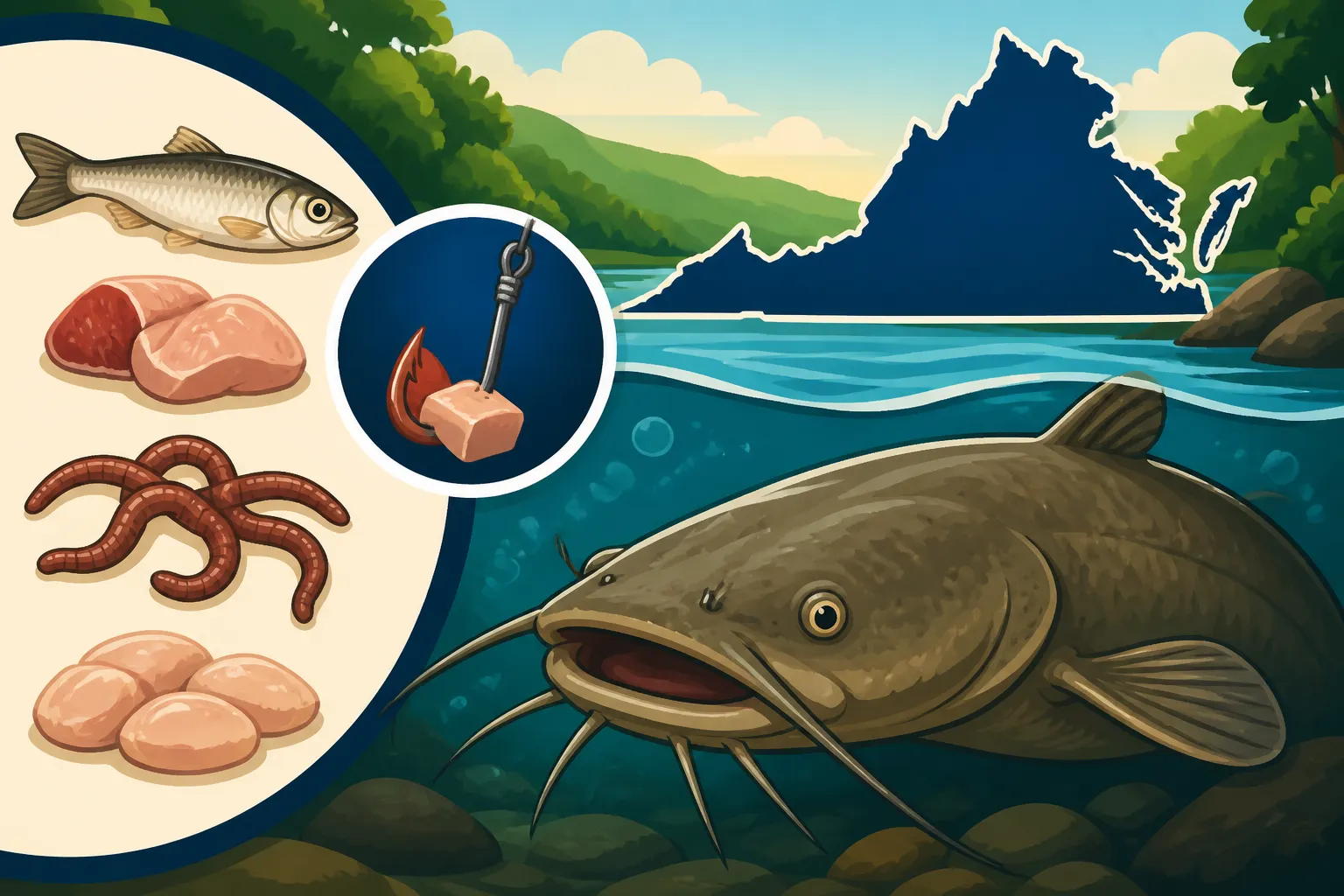
Virginia’s diverse river systems offer a rich buffet of native forage that flatheads target every night. In tidal rivers like the lower James, Rappahannock, and Potomac, flatheads gorge on gizzard shad, river herring, and white perch. In non-tidal, rocky rivers like the Upper James, New River, and Shenandoah, their primary diet consists of panfish such as bluegill, redbreast sunfish, rock bass, and native chub species.
To maximize your success, you should always try to harvest your bait directly from the same body of water you intend to fish. A native bluegill pulled from a James River backwater will carry the exact scent and swimming motion that local flatheads have been hunting their entire lives. When you match the native forage, you eliminate any artificial guardrails between the predator and your hook.
The Top Live Baits for River Flathead Catfish
Selecting the right live bait involves balancing availability, hardiness on the hook, and overall attraction power in moving current. While flatheads will eat almost any native fish small enough to swallow, a few specific species stand head and shoulders above the rest when fishing Virginia rivers.
| Bait Type | Ideal Size Range | Hook Durability | Best River Environment | Primary Target Season |
|---|---|---|---|---|
| :— | :— | :— | :— | :— |
| Live Bluegill / Sunfish | 4 to 7 inches | High | Rocky pools, logjams, eddies | Late Spring through Fall |
| Gizzard Shad | 6 to 10 inches | Low to Moderate | Deep river bends, tidal channels | Early Spring and Late Fall |
| White Perch | 5 to 8 inches | Very High | Tidal river stretches, brackish lines | Summer and Early Fall |
| Creek Chub / Suckers | 5 to 9 inches | High | Fast-moving rocky rivers, creeks | Spring Pre-Spawn |
| Live Bullhead Catfish | 4 to 6 inches | Extremely High | Silt-bottom pools, river eddies | Peak Summer Nights |
Live Bluegill and Sunfish
Live bluegill, green sunfish, and redbreast sunfish are the absolute gold standard for river flathead fishing across Virginia. They are resilient, easy to catch with a simple light-tackle setup or a panfish trap, and they kick relentlessly when pinned to a heavy circle hook. A 5- to 7-inch bluegill strikes the perfect balance: big enough to deter smaller fish, but manageable enough for a 20-pound flathead to inhale without hesitation.
When using bluegill, pay close attention to state regulations regarding sportfish harvested for bait. In Virginia, bluegill and sunfish caught on hook and line can legally be used as live bait on the same water body, provided you adhere to daily creel limits. Their thick bodies hold hooks remarkably well, allowing them to remain active for hours even in steady river currents.
Live Gizzard Shad and White Perch
In larger tidal river stretches, live gizzard shad are flathead magnets. Their silvery scales reflect ambient light, and their oily flesh gives off a potent scent trail alongside their high-frequency swimming vibration. However, gizzard shad are notoriously delicate. Keeping them alive requires a dedicated aerated livewell or an insulated bait cooler, which you can easily source through gear sellers on Amazon to keep oxygen levels high during long summer drives.
White perch, on the other hand, offer the best of both worlds in tidal rivers. They are tough as nails, highly abundant, and live for extended periods on the hook. Anglers frequenting Best Catfish Holes on the James River often rely heavily on live white perch during the heat of summer when delicate shad tend to die quickly in warm, low-oxygen water.
Creek Chub and Live Bullheads
If you are fishing smaller, faster-flowing rivers like the Shenandoah, Upper James, or Dan River, native creek chubs and white suckers are unbeatable choices. These long, slender fish are natural river swimmers that navigate heavy current with ease, making them look completely natural to cruising predators.
Yellow and brown bullheads are another secret weapon for dedicated flathead hunters. Because flatheads share structure with bullheads, they view them as a natural food source. Bullheads possess leathery skin that locks onto hooks effortlessly, and their ability to survive in low-oxygen environments makes them practically indestructible in your bait bucket.
Rigging and Presenting Live Bait in Heavy River Current
Having the ultimate live bait won’t do you any good if your presentation spins in the current, tangles your main line, or drags your bait down into impassable river bottom snag hazards. Presenting live bait for flatheads requires heavy gear and specialized rigging designed to keep the bait struggling just above the substrate.
The Carolina Rig and Sinker Slides for Live Bait
The premier rig for river flathead catfishing is a modified Carolina rig, often referred to as a fish-finder rig. This setup consists of a heavy main line (typically 60- to 80-pound braided line) running through a plastic sinker slide, attached to a heavy-duty barrel swivel. Below the swivel, run a 12- to 24-inch leader of 50- to 80-pound monofilament or fluorocarbon tied to a sharp 8/0 to 10/0 circle hook.
Using a sinker slide is critical because flatheads are highly sensitive to resistance when they initially engulf a prey item. When a flathead grabs your live bluegill, the main line slides freely through the weight slide without letting the fish feel the heavy weight of your sinker. To master the mechanics of bottom presentations, reviewing Catfish Bottom Fishing Techniques will help you match your weight size to the speed of the river current.
Hooking Strategies to Keep Bait Swimming Naturally
How you hook your live bait dictates how naturally it behaves in moving water. There are two primary methods for hooking flathead live bait:
- Through the Back: Insert the hook point just beneath the dorsal fin, taking care not to pierce the lateral line or spine. This hooking method encourages the baitfish to swim downward toward the river bottom, creating a panicked thrashing motion that drives flatheads wild.
- Through the Lips or Nostrils: Pass the hook up through the roof of the mouth and out through the upper lip, or directly through the nostrils. This is the preferred method when fishing heavy river current, as it prevents the bait’s mouth from getting forced open and drowned by the flow, ensuring it stays alive much longer.
Before throwing your rig out into deep water, ensure you have dialed in your terminal tackle. Many anglers stock up on bulk packs of heavy-duty circle hooks and sinker slides from Amazon so they can re-rig quickly after losing gear to snaggy river bottoms.
Gear Essentials and Bait Maintenance
Targeting giant river flatheads requires heavy-duty tackle that can pull a 30-pound fish out of a submerged tree trunk before it wraps you up. Heavy-action catfish rods paired with high-capacity baitcasting reels are standard equipment. Bank anglers should invest in heavy-duty metal rod holders—like the bank-stick models easily found on Amazon—to keep rods locked down securely when a massive fish strikes.
Proper bait care is equally crucial. Never crowd your livewell or bait bucket with too many fish. Keep a battery-operated aerator running constantly, and periodically refresh the bucket water with cool river water to keep water temperatures low and oxygen levels high. Healthy, hard-kicking bait gets bit; lethargic, half-dead bait gets ignored.
Seasonal Bait Shifts and Night Fishing Tactics
Flathead behavior changes dramatically as river temperatures fluctuate throughout the year. Adapting your bait choices and fishing locations to match these seasonal cycles is the key to year-round flathead success in Virginia.
Spring Pre-Spawn vs. Summer Night Feeding
During early spring, when river temperatures hover in the 50s and low 60s, flatheads wake up from their winter dormancy hungry and aggressive. During this pre-spawn period, water levels are often high and murky from spring rains. Flatheads move into surprisingly shallow water along flooded river margins to feed heavily. Large live baits like 8-inch gizzard shad or suckers excel during this time. Adjusting to Best Bait for Catfish in Summer becomes essential as water temperatures rise into the 70s and 80s, shifting flatheads into a strict nocturnal feeding pattern.
In peak summer, flatheads spend hot sunny days tucked deep inside dark logjams, undercut rock banks, or deep holes. Once the sun drops below the horizon, they slip out of cover and cruise shallow gravel bars, riffle edges, and island points in search of feeding panfish. Setting up on a sandbar or deep pool tail-out at dusk with a fresh tank of live bluegill is classic summer flathead strategy.
Locating Deep Holes, Logjams, and River Bends
To find flatheads consistently in rivers, you must learn to read the water structure. Look for areas where the main river channel swings directly against a high bank, creating a deep pool anchored by fallen trees, timber jams, or large boulders. Flatheads will sit directly inside the heaviest wood cover during the day.
At night, cast your live baits right along the outer edges of these logjams or slightly upstream of the structural cover. The scent and vibrations of your kicking bait will drift downstream into the timber, coaxing the flathead out of its lair to hunt. If you prefer fishing impoundments and reservoir setups over moving water, exploring How to Catch Flathead Catfish at Claytor Lake provides great insights into targeting flatheads around stationary deepwater structure like rock bluffs and submerged creek channels.
Handling River Flatheads Safely and Responsibly
When you finally get that crushing strike and drag a heavy river flathead onto the bank or into your boat, proper handling is important for both your safety and the fish’s well-being. Flatheads do not have sharp teeth like walleye or pike, but their jaws possess powerful crushing pads lined with rough sand-paper teeth that can shred skin if you are unprepared.
Use a heavy rubberized landing net or a set of mechanical fish grippers to secure the fish at the water’s edge. If you lip the fish with your hand, wear a heavy pair of fishing gloves to protect your fingers from getting clamped down on. Keep the fish horizontal when lifting it, supporting its body weight under the belly to avoid damaging its internal organs.
While some anglers enjoy taking smaller catfish home for a fish fry, releasing large trophy flatheads is crucial for preserving Virginia’s world-class river fisheries. A 30- or 40-pound flathead can take over fifteen to twenty years to reach that size in a river ecosystem. Taking quick photos, keeping the fish wet, and releasing it carefully back into the river ensures that another angler—or you, on a future trip—can experience the heart-pounding thrill of hooking a true Virginia river giant.
If you ever wonder about the culinary value of these fish compared to other species, reading Is Flathead Catfish Good to Eat? covers the flavor profiles and harvest ethics associated with targeting wild catfish across state waters. Additionally, if you fish diverse waters like the New River system, checking out Claytor Lake’s Big Flathead Catfish highlights how rich forage bases support trophy flathead growth in both river and reservoir environments. Finally, mastering How to Rig Cut Bait for Catfish remains a great backup skill to have in your back pocket for those rare nights when live bait is tough to come by and blue catfish or channels are your main backup plan.
Disclaimer
This article is for general informational purposes only and does not constitute professional advice. Laws, prices and regulations vary by location and change over time. Consult a qualified professional for guidance on your specific situation.