Best Catfish Holes on the James River
There’s nothing quite like the thrill of feeling that heavy, thumping fight on the end of your line, signaling a big Virginia catfish has decided to take your bait. But let's be honest, the James River is vast, and knowing where to drop your line for those monster flatheads or a mess of channel cats can feel like searching for a needle in a haystack. This guide is all about cutting through the guesswork, sharing the best catfish holes on the James River, and giving you the insider tips to make your next outing a resounding success.
Understanding James River Catfish Behavior and Preferred Habitat
Before we dive into specific locations, it’s crucial to understand what makes a good catfish hole on the James River. Catfish, whether they're the whiskered bottom-dwellers or the more predatory flatheads, aren't just swimming around aimlessly. They're drawn to specific conditions that offer food, shelter, and a break from strong currents. The James River, with its diverse stretches from rocky mountain flows to wide, tidal estuaries, provides a variety of these ideal habitats.
Channel Catfish Preferences in the James River
Channel catfish are often the most common species encountered by anglers on the James, and for good reason—they're plentiful and aggressive eaters. These guys love variety in their diet and aren't afraid to scavenge. When you're looking for channel cats, think about areas with a good mix of deeper holes, current breaks, and underwater structure. They'll often school up in these spots, especially where there's a good food source nearby.
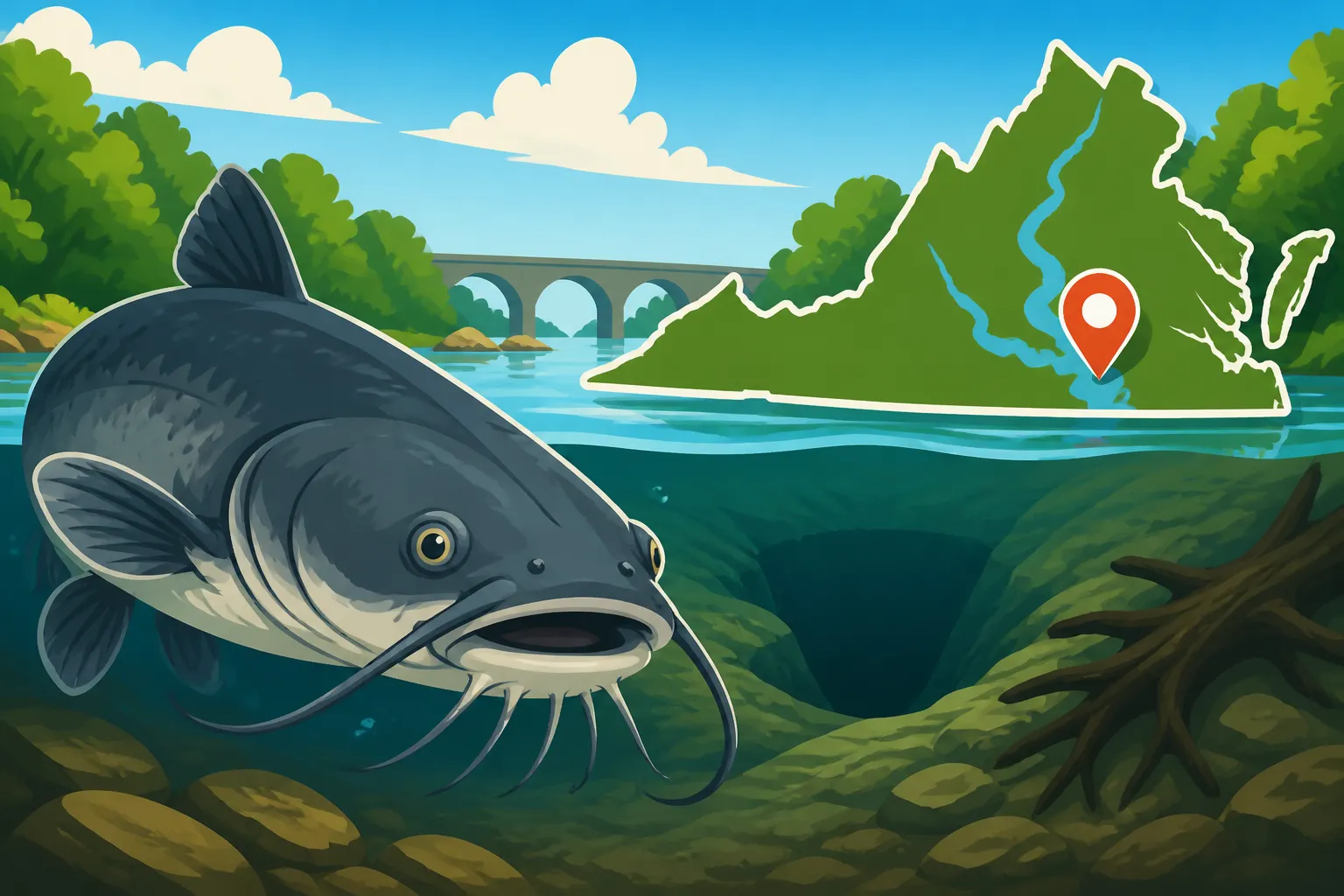
Look for places where the river flow slows down, creating eddies behind obstacles like large rocks, submerged logs, or even bridge pilings. The channel cats use these pockets of slack water to rest and ambush food as it drifts by. Deeper scour holes, often found on the outside bends of the river, are also prime real estate. These areas collect debris and organic matter, attracting smaller baitfish and invertebrates, which in turn attract the hungry channel cats. Don't overlook the mouths of smaller creeks or tributaries either, particularly after a rain, as they wash nutrients and food into the main river, creating a feeding frenzy.
Flathead Catfish Hideouts Along the James
Flathead catfish are a different beast altogether. These solitary, ambush predators prefer live prey and love to hide in heavy cover, waiting for an unsuspecting fish to swim by. If you're targeting flatheads on the James, you need to think about structure, and the heavier, the better. Log jams, dense submerged timber, and deep, rocky crevices are their preferred haunts. They often stake out a territory and will aggressively defend it.
The middle and lower sections of the James River, especially where the river widens and deepens, offer excellent flathead habitat. Look for large piles of fallen trees or old dock pilings that have collapsed into the water. These "woody debris" areas provide perfect ambush points and dark retreats during the day. Rock ledges and significant drop-offs near deep holes are also worth exploring. Flatheads will often lie at the bottom of these features, using the contours to hide from the current and surprise their prey. The key is to get your bait right into their living room, which often means fishing directly in or very close to heavy snags. For some good information on distinguishing different species, check out our guide on Channel Catfish vs Flathead Catfish: How Virginia Anglers Tell Them Apart.
White Catfish Hotspots in the Tidal James
While perhaps not as glamorous as their larger cousins, white catfish offer fantastic fishing, especially in the tidal sections of the James River. These smaller, but no less delicious, catfish tend to thrive in slightly brackish water and areas with slower currents. They are often found in larger schools than flatheads and will readily take a variety of baits.
Focus your efforts on the wider, lower sections of the James, particularly downstream from Richmond where the tidal influence becomes more pronounced. Tributary mouths, coves, and backwater areas with softer bottoms are often teeming with white cats. They'll congregate around oyster reefs (if present), docks, and channel edges. These areas provide abundant food sources, from small crustaceans to baitfish. Even simple bank fishing spots with access to deeper water and some structure can produce excellent results for white catfish. They're a great target for anglers looking for steady action and delicious table fare.
Prime Catfish Holes Along the James River
The James River is a long and winding waterway, offering diverse fishing opportunities. From the upper stretches near the mountains to the wide, tidal expanse heading towards the Chesapeake Bay, there are distinct areas that consistently produce excellent catfish action.
Tidal James River: Richmond to the Chesapeake Bay
This section of the James River, particularly from just below the fall line in Richmond all the way down to the confluence with the Chesapeake Bay, is a true catfish paradise. The river here is wide, deep, and heavily influenced by tides, which constantly churn up food and create dynamic fishing conditions.
One of the absolute classic areas is the stretch around Dutch Gap Conservation Area and Osborne Landing in Chesterfield County. These areas feature deep channels, extensive submerged structure from old pilings and riprap, and numerous creek mouths feeding into the main river. The deep holes here hold large flatheads and channel cats, especially during the warmer months. Osborne Landing also provides excellent boat access if you're looking to explore the deeper river channels and target structure more effectively. Further downstream, the confluence with the Appomattox River near Hopewell is another renowned hotspot. The mixing currents and varied depths where these two rivers meet create a nutrient-rich environment that catfish absolutely love. This area is particularly famous for its larger channel and flathead catfish. Anglers often anchor up in the deeper channels or drift along the edges, targeting the significant drop-offs and ledges. For those without a boat, many Bank Fishing Access Points on the James River, Virginia can be found in this tidal zone, especially around public parks and landings. Remember to pay attention to the tides here; fishing during the outgoing tide can often concentrate baitfish and thus, catfish, in specific areas.
Upper James River: Above Richmond to Lynchburg
As you move upstream from Richmond, the James River takes on a different character. The rapids and fall line above the city give way to a winding river with a more pronounced current, rocky stretches, and numerous deep pools and eddies. While you might not find the sheer volume of fish as in the tidal sections, the upper James offers incredible scenic beauty and fantastic opportunities for large, hard-fighting channel and flathead catfish.
Areas around Columbia and Scottsville are particularly notable. Here, the river features extensive rock structure, including ledges, boulders, and deep scour holes carved out by the current. These rocky areas provide perfect ambush points for flatheads, which will often lurk in the shadows. Look for sections where the river narrows and deepens, creating strong currents that then abruptly slow down, forming deep eddies. These current breaks are prime holding areas for both species. Navigating this section often requires a jon boat or kayak due to shallower water in some areas and rapids, but the reward of a powerful fight against the current is well worth the effort. Access points can be found at various public boat ramps and canoe launches along this stretch. The clarity of the water here also means that patience and precise bait placement are often rewarded.
Notable Structures and Deeper Pockets
Beyond general regions, specific types of structure consistently hold catfish on the James. Bridge pilings, especially those supporting major highways like I-95 or Route 5, create fantastic current breaks and deep scour holes that are magnets for channel and flathead catfish. The concrete and rebar provide cover, and the eddies created by the pilings offer a resting spot where catfish can wait for food.
Any significant submerged structure, like old dock ruins, sunken barges, or even large debris fields from storms, are prime targets. Catfish love to hide in these complex environments. When using a fish finder, look for dramatic depth changes – sudden drop-offs from shallower flats into deeper channels. These transition zones are often high-traffic areas for both baitfish and predators. Furthermore, the numerous bends in the James River often have deeper water on the outside curve. These outside bends, especially if they have some form of structure, are always worth exploring. You can often see local anglers using services like FishingBooker to find guides who specialize in these types of structural fishing, which can be invaluable for pinpointing specific hotspots.
Essential Techniques and Baits for James River Catfish
Successfully landing a big catfish on the James River isn't just about finding the right hole; it's also about presenting the right bait with the right technique. Catfish are opportunistic eaters, but tailoring your approach to their preferences can significantly increase your success.
Rigging for Success
For bottom-dwelling catfish, keeping your bait on the bottom where they feed is paramount. The Carolina rig is a time-tested favorite and incredibly effective. It consists of a leader (typically 12-24 inches) tied to a swivel, with a weight (egg sinker or no-roll sinker) sliding freely on the main line above the swivel. This setup allows the fish to pick up the bait without feeling the resistance of the weight, giving them time to commit before you set the hook. Use a strong, sharp circle hook (sizes 4/0 to 8/0 are common, depending on your target species and bait size). Circle hooks are fantastic because they usually hook the fish in the corner of the mouth, making for easy release if you're not keeping your catch, and reducing harm to the fish.
Another useful rig, especially in moderate currents, is the three-way swivel rig. This setup involves tying your main line to one eye of the swivel, a short leader (6-12 inches) with a pyramid or bell sinker to the second eye, and a longer leader (18-36 inches) with your hook and bait to the third eye. This keeps your bait slightly suspended above the bottom, often in the current, making it more visible to cruising catfish. For deep holes or areas with strong current, consider a heavier sinker to ensure your bait stays put. Our guide on How to Rig Cut Bait for Catfish can give you more detailed instructions.
Top Baits for Each Species
The James River catfish have a varied palate, but certain baits consistently outperform others.
- Cut Bait: For both channel and flathead catfish, cut bait is a top choice. Freshly cut pieces of oily fish like gizzard shad or even white perch (if legal to use as bait in Virginia) are incredibly effective. The scent trail they release is a powerful attractant. Size your cut bait according to your target: smaller chunks for channel cats, larger strips or even half a fish for flatheads.
- Live Bait: If you're specifically targeting those trophy flatheads, live bait is often the king. Small sunfish (bluegill, redear sunfish) or creek chubs are excellent choices. Hook them through the back or lips, allowing them to swim naturally and attract the attention of a predatory flathead. Ensure your live bait is healthy and active.
- Prepared Baits: For channel catfish, stink baits, chicken livers, and commercially prepared dough balls can be incredibly effective, especially in slower currents or when you're targeting a large school. The strong odor of these baits is a powerful draw. Be prepared for messy hands, but the results can be worth it!
- Nightcrawlers/Worms: While perhaps not the bait for a record-breaking flathead, a big wad of nightcrawlers can be irresistible to channel catfish and white catfish, especially smaller ones. They're easy to use and readily available, making them a great option for casual trips or when fishing with kids.
Fishing Strategies: Bottom Fishing, Anchoring, and Drifting
Your strategy will depend on the section of the river and the species you're targeting.
- Bottom Fishing (Anchoring): This is the most common and often most effective method. Find a promising spot – a deep hole, a log jam, bridge pilings – and anchor up current from it. Cast your baits directly into or just upstream of the target area, letting the scent drift down to the waiting fish. This is particularly effective for flatheads holding tight to cover and for channel cats that are schooling up. Be patient; sometimes it takes a while for fish to locate your bait.
- Drifting: If you're struggling to locate concentrations of fish or want to cover more water, drifting can be a powerful tactic. Using a boat, let the current slowly carry your baited rigs downstream. This allows you to present your bait to a wider area of potential catfish holes. This method is especially good for covering long stretches of river with varying depths and structures. Adjust your weight as needed to ensure your bait stays near the bottom during the drift. Many guides found on platforms like FishingBooker excel at this technique for efficiently finding active fish.
- Night Fishing: Catfish are primarily nocturnal, especially the larger flatheads. How to Catch Catfish at Night can significantly improve your chances of hooking into a trophy fish. They become more active and venture out of their heavy cover to feed under the cloak of darkness.
| Bait Type | Target Species | Best Conditions | Pros | Cons |
|---|---|---|---|---|
| Cut Bait | Channel, Flathead, White Catfish | Moderate to strong current, murky water, day/night | Strong scent trail, attracts large fish | Can be messy, needs refrigeration, attracts bait stealers |
| Live Bait | Flathead Catfish (primarily) | Clearer water, slack to moderate current, day/night | Highly effective for trophy flatheads, natural | Requires baitfish, less appealing to channel cats |
| Chicken Livers | Channel, White Catfish | Slower current, warmer water, day/night | Very strong scent, readily available | Extremely messy, falls off hook easily, attracts smaller fish/turtles |
| Stink Bait | Channel, White Catfish | Slower current, warmer water, day/night | Designed for catfish, easy to use (on sponges) | Less effective for flatheads, can be smelly |
| Nightcrawlers | Channel, White Catfish, smaller Flathead | Any conditions, good for panfish too, day/night | Easy to find, clean, good for beginners | Attracts many non-target species, less selective for large fish |
Seasonal Considerations for James River Catfish
Just like any other fish, catfish behavior on the James River is heavily influenced by the seasons and water temperature. Understanding these patterns will help you adjust your tactics and maximize your catch throughout the year.
Spring and Summer Patterns
Spring: As the water begins to warm in spring, catfish become increasingly active. They'll start moving out of their deeper wintering holes and into shallower areas to feed heavily in preparation for the spawn. This is a fantastic time for both numbers and size. Look for them in areas where tributaries dump warmer water into the main river, or on shallow flats adjacent to deep channels. The pre-spawn period sees them aggressively chasing down food.
The spawn itself, typically occurring when water temperatures are consistently in the mid-70s Fahrenheit (late spring to early summer), can be a bit tricky. Catfish become very focused on reproduction and guarding their nests, often in hollow logs, undercut banks, or rock crevices. They may be less interested in actively feeding. However, post-spawn, they will once again go on a feeding binge to recover, making them vulnerable to well-placed baits. This is a great time to target them in somewhat deeper water adjacent to their spawning areas.
Summer: The heat of summer pushes catfish, especially larger ones, into deeper, cooler water during the day. They'll often seek refuge in the deepest holes, beneath log jams, or under bridge pilings. As mentioned earlier, How to Catch Catfish at Night really comes into its own during the summer months. Catfish become much more active and will move into shallower feeding flats and along channel edges under the cover of darkness. Daytime summer fishing is still possible, but focus on fishing slow and deep, perhaps vertically jigging live bait or presenting cut bait right into heavy cover. Look for cooler water near springs or deep eddies.
Fall and Winter Tactics
Fall: As water temperatures cool down in the fall, catfish embark on another feeding spree, fattening up for the lean winter months. This can be one of the best times of year to catch large numbers of active fish. They'll often move out of the deepest summer holes and become more widespread, foraging heavily in a variety of depths. Target them in similar areas to spring, focusing on channel swings, drop-offs, and structure near abundant baitfish populations. The shad run in the fall can be an especially productive time to use fresh cut bait, as catfish will follow the migrating bait schools.
Winter: Winter fishing on the James River for catfish requires patience and a slower approach. Catfish become much less active as water temperatures drop significantly. They'll congregate in the deepest, most stable holes in the river, often in large schools. Your best bet is to find these wintering holes and present your bait directly to them. Use heavier weights to keep your bait on the bottom and be prepared for subtle bites. Live bait, presented slowly, or very fresh cut bait can still entice a strike. Fishing on warmer, sunny days can sometimes coax them into a more active feeding mood. While it's a tougher season, dedicated winter anglers can still pull out some impressive fish from the depths of the James. Our guide on Best Time of Year to Catch Catfish provides even more detailed seasonal advice.
Disclaimer
Fishing conditions and regulations in Virginia can change. Always check the latest Virginia Department of Wildlife Resources (DWR) regulations before heading out on the water. This guide is for informational purposes only and does not supersede official DWR rules.