Best Croaker Fishing Spots on the York River, Virginia
If you've ever spent a beautiful day out on the water, only to come home empty-handed and wonder where all the fish went, you're not alone. It's especially frustrating when you're targeting a species like croaker, known for their abundance, but they seem to be playing hide-and-seek. This guide is all about cutting through that frustration, revealing the secrets to finding those elusive croaker in the productive waters of the York River in Virginia, and ensuring your next trip is a success.
Understanding the York River's Croaker Fishery
The York River is a gem in Virginia's fishing landscape, but it can be a bit intimidating if you don't know its nuances. It’s a tidal river, fed by the Mattaponi and Pamunkey Rivers, and its brackish waters are a prime habitat for a wide variety of species, including the much-loved Atlantic croaker. These aren't just any fish; croaker are known for their distinct "croaking" sound, especially when handled or during spawning, and for providing consistent, enjoyable action for anglers of all skill levels. They're also quite tasty, making them a popular target.
Why the York River is a Croaker Haven
The York River boasts several features that make it particularly attractive to croaker. First, its salinity levels fluctuate, creating that perfect brackish environment that croaker absolutely thrive in. They're not keen on purely fresh or overly salty water, so the York's constant ebb and flow of tides, mixing fresh river water with saltwater from the Chesapeake Bay, hits that sweet spot. Secondly, the river bottom is often a mix of sand, mud, and shell, which is ideal for the small crustaceans, worms, and baitfish that make up the croaker's diet.
Beyond the natural conditions, the York River also benefits from less fishing pressure compared to some of the more intensely fished spots closer to the mouth of the Chesapeake Bay. This can translate into more productive fishing, especially if you know where to look. While many anglers focus on bigger game like striped bass, the humble croaker often gets overlooked, leaving plenty of opportunity for those who target them specifically. For newcomers to the area, understanding the specific environmental factors that attract croaker is key to unlocking the river’s full potential.
Croaker Behavior and Seasonal Patterns
Croaker are generally more active in warmer water, so their presence in the York River really ramps up from late spring through early fall. You'll start to see them appearing in numbers around May, and they’ll remain a strong presence until water temperatures drop significantly in late October or November. During the peak summer months, they are abundant and aggressive, providing fantastic action.
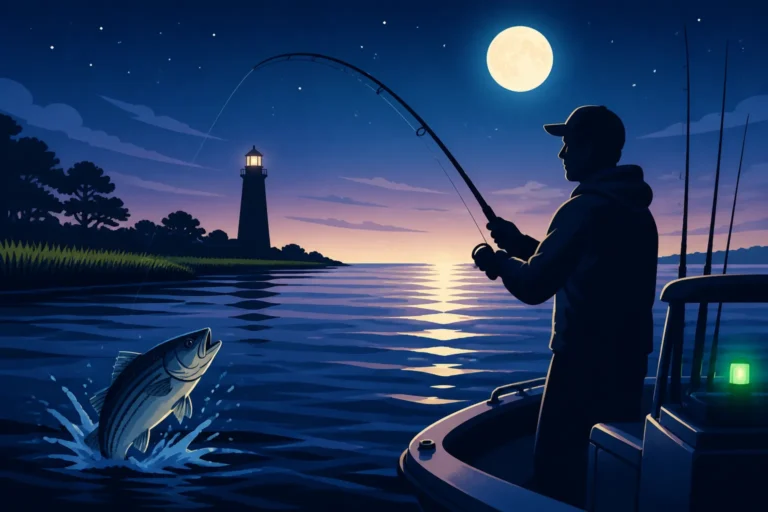
Their feeding behavior is largely tied to the tides. As bottom feeders, they often move into shallower areas on an incoming tide, following baitfish and foraging for food dislodged from the riverbed. During an outgoing tide, they tend to retreat to deeper channels and holes, where they can ambush prey as it gets swept out. Understanding these tidal movements is crucial for positioning yourself in the right place at the right time. They also tend to feed more actively during dawn and dusk, and often throughout the night, especially during the warmer parts of summer when the water is cooler. Many anglers who swear by night fishing techniques for other species find similar success with croaker after dark.
Top Croaker Hotspots on the York River
Now that we understand a bit about why croaker love the York, let’s talk about where to find them. The York River is rich with areas that consistently produce good numbers of croaker, from busy bridge pilings to quieter, deeper channels.
Fishing Near Yorktown and Gloucester Point
The stretch of the York River around Yorktown and Gloucester Point is arguably one of the most accessible and productive areas for croaker. The Coleman Bridge, which connects these two points, creates a significant amount of structure and current breaks that croaker adore. The bridge pilings themselves are magnets for baitfish, which in turn attract croaker.
- Coleman Bridge Pilings: If you're fishing from a boat, anchoring upcurrent from the bridge pilings and letting your bait drift back towards them can be incredibly effective. The currents here can be strong, so be prepared with heavy enough sinkers to hold your bait on the bottom. You'll often find croaker clustered in the calmer water immediately downstream of the pilings, waiting for an easy meal. This area is a classic for a reason, drawing both seasoned anglers and those new to the river.
- Yorktown Public Pier: For those without a boat, the Yorktown Public Pier offers excellent shore access to the deeper waters of the river. Anglers fishing from the pier consistently report good catches of croaker, especially during peak season. You can cast out into the channel or try fishing closer to the pilings of the pier itself. It’s a great spot for families and beginners, and you'll often find local anglers willing to share tips. Keep an eye on the tides, as fishing success often correlates with the moving water.
- Gloucester Point Beach Park: On the Gloucester side, the beach park offers opportunities for bank fishing, though you might need to cast a bit further to reach the deeper channels where the croaker prefer to hang out. It's a fantastic spot for a relaxing day, and while the fishing might require a bit more patience than from a boat, it can still yield a rewarding catch.
Deep Channels and Creek Mouths
Croaker, especially the larger ones, love to hang out in the deeper channels that snake through the York River. These channels provide cooler water, stable temperatures, and a natural highway for baitfish. You'll often find them congregating along the edges of these channels, particularly where the bottom transitions from shallow flats to deeper drops.
- Main River Channel: The main shipping channel that runs through the York River is a prime target. Look for areas where the channel narrows or bends, as these create natural choke points where fish tend to funnel. Using a good depth finder on your boat will be invaluable here, helping you pinpoint those crucial depth changes and underwater structures that hold fish. Consider exploring the deeper sections when planning a trip to the Fishing the York River in Virginia article for more general river insights.
- Mouths of Tributaries: Creeks and smaller rivers feeding into the York, such as Sarah Creek, Aberdeen Creek, and Felgates Creek, often have excellent croaker fishing at their mouths. As the tide pushes in and out, these areas become active feeding grounds. The outflow of fresh or brackish water from these creeks can also concentrate baitfish, making them irresistible to croaker. Anchor your boat just outside the mouth of these creeks, especially on a falling tide, and cast into the outgoing current. You might also find other species like white perch here, so consider what's the Best Bait for White Perch Fishing if you want to broaden your catch.
Artificial Reefs and Oyster Beds
Like many bottom-dwelling species, croaker are drawn to structure. Artificial reefs and natural oyster beds provide shelter, attract bait, and offer prime foraging opportunities. The Virginia Marine Resources Commission (VMRC) has established several artificial reef sites in the lower Chesapeake Bay and its tributaries, and while specific croaker-focused reefs on the immediate York River might be less publicized, historical oyster beds and natural bottom irregularities act in a similar way.
- Identifying Structure: Keep an eye out for navigation markers that indicate deeper holes or channel edges, as these often correlate with underwater structure. Many local charts will also show historical oyster beds, which are fantastic places to drift or anchor. If you're using a fishing app or a chartplotter, zoom in on the bottom contours and look for sudden changes or "lumps" that could indicate prime habitat. Sometimes, just a slight rise or depression on an otherwise flat bottom is enough to hold a school of croaker. This is where apps like FishingBooker can be incredibly helpful for planning your trip, as they often have mapping features that highlight productive areas or list guides familiar with these spots.
Best Times and Techniques for York River Croaker
Knowing where to fish is only half the battle; when and how you fish can make all the difference between a memorable day and a frustrating one.
Timing Your Trip for Peak Croaker Action
As mentioned, late spring through early fall is prime time. Within this window, certain conditions consistently lead to better catches:
- Tidal Movements: Always, always check the tide chart! The two hours leading up to and the first hour of a slack tide (both high and low) are often the most productive. This is when the current slows, allowing croaker to feed more easily, and also when they might move into shallower feeding areas. Conversely, the stronger currents during mid-tide can concentrate fish in deeper, more protected areas.
- Time of Day: Early mornings and late evenings, or even fishing at night, are excellent, especially during the hot summer months. The cooler water temperatures and lower light levels encourage croaker to feed more aggressively. If you're looking for more general insights, our guide on Night Fishing Techniques offers broader strategies applicable to many species active after dark.
- Weather Conditions: Overcast days can be surprisingly good, as the reduced light penetration encourages fish to be more active throughout the day. A light chop on the water can also be beneficial, breaking up the surface and making your presentation seem more natural. Avoid extremely windy days, not just for comfort, but because strong winds can make boat control difficult and muddy the water, impacting fishing success.
Effective Techniques and Rigging
Croaker aren't overly complicated to catch, which is part of their charm. Simple, effective methods often yield the best results.
- Bottom Fishing: This is the bread and butter of croaker fishing. A simple bottom rig, often called a "top-and-bottom rig" or "two-hook bottom rig," is incredibly effective. It typically consists of a sinker at the very bottom (often a pyramid or bank sinker, heavy enough to hold bottom in the current), with two dropper loops above it, each with a small hook. The hooks should be between sizes #4 and #2, depending on the average size of the croaker you're encountering.
- Bait Presentation: The key here is to keep your bait on or very near the bottom. Croaker are constantly rooting around in the substrate for food. When fishing from a boat, you can anchor and cast, or if the current is light, you can drift slowly, bouncing your rig along the bottom. For more on this, check out How to Bottom Fish for Catfish, as many of the principles apply to croaker too.
- Fish Finder Rigs: While less common for croaker than for species like red drum or striped bass, a fish finder rig (a sliding sinker above a swivel, then a leader and hook) can also work, especially if you want your bait to move a bit more naturally with the current. This rig keeps the bait near the bottom but allows the fish to take the bait without immediately feeling the weight of the sinker.
- Light Tackle: You don't need heavy gear for croaker. A light to medium-light spinning rod and reel combo, spooled with 8-12 pound test monofilament or braided line, is perfect. This setup allows for good sensitivity to feel those subtle croaker bites and makes the fight more enjoyable.
| Location Type | Recommended Tides | Best Time of Day | Typical Rig | Primary Bait | Notes |
|---|---|---|---|---|---|
| Coleman Bridge Pilings | Incoming/Outgoing (strong current) | Anytime, especially dawn/dusk | Heavy Bottom Rig | Squid, Bloodworms, Peeler Crab | Use heavy sinkers, target eddies behind pilings |
| Yorktown Public Pier | Incoming/Outgoing | Anytime, good at night | Light Bottom Rig | Squid, Bloodworms, Shrimp | Cast to deeper channels or near pilings |
| Deep Channels | Slack High/Low Tide | Early Morning/Late Evening | Bottom Rig | Squid, Bloodworms, Cut Bait | Use depth finder, target channel edges |
| Creek Mouths | Outgoing Tide | Dawn/Dusk, Night | Light Bottom Rig | Squid, Gulp! Shrimp, Fish Bites | Fish where creeks meet main river |
| Artificial Reefs/Oyster Beds | Incoming/Outgoing | Anytime | Bottom Rig | Squid, Bloodworms, Clams | Look for subtle bottom structure on charts |
Essential Gear and Tips for a Successful York River Croaker Trip
Being prepared with the right gear and a few insider tips can elevate your croaker fishing experience from a good day to a fantastic one.
The Right Bait Makes All the Difference
Croaker are not picky eaters, which is great news for anglers. However, some baits are definitely more effective than others.
- Squid: This is a classic croaker bait for a reason. It's tough, stays on the hook well, and croaker absolutely love it. You can buy it frozen at most bait shops. Cut it into small, thin strips, about 1/2 to 1 inch long and 1/4 inch wide. Don't use big chunks; croaker have relatively small mouths.
- Bloodworms: These are perhaps the most potent croaker bait available, but they can be a bit pricier and harder to find. Their natural scent is irresistible. Thread a small piece onto your hook, making sure to cover the point.
- Fish Bites / Gulp!: These artificial baits mimic natural worms and shrimp, and they can be incredibly effective, especially when real bait is scarce or when you want something that lasts longer on the hook. The "Fish Bites Bag O' Worms" or small "Gulp! Shrimp" are popular choices.
- Shrimp: Small pieces of fresh or frozen shrimp (peeled) can also work wonders. Just be aware that smaller "bait stealers" might pick at it quickly.
- Clams: If you can get your hands on fresh surf clams or hard clams, chopped up and presented on a small hook, they are an excellent, natural offering.
Remember, for all these baits, keep your pieces small. A common mistake is using too large a bait, which makes it harder for the croaker to get the hook in its mouth.
Navigating the River and Boat Access
If you're heading out on the York River by boat, safety and access are paramount. The river can get choppy, especially on windy days or with heavy boat traffic.
- Boat Ramps: There are several excellent boat ramps along the York River. For instance, York River State Park offers good access, as do several public and private ramps around Yorktown and Gloucester Point. Before you head out, it's always wise to check on the condition of the ramps and any potential fees. Our guide on Boat Ramps on the York River for Fishing Access can give you more specific locations and details.
- Navigation: Pay attention to navigation markers, especially in the deeper channels. The York River can have submerged structures and shallow areas, particularly outside the main channel. A good GPS and depth sounder are your best friends.
- Regulations: Always ensure you have the proper Virginia Fishing License Guide for saltwater fishing. Even if you're fishing for smaller species, regulations are regulations! You can purchase one easily online through the Virginia Department of Wildlife Resources (DWR) website, or through a platform like FishingBooker if you're booking a charter. Make sure to understand Virginia Fishing Regulations Explained as well, paying attention to any specific creel or size limits for croaker, although they are generally quite liberal due to their abundance.
Booking a Guided Trip for Best Results
Sometimes, the best way to crack the code on a new fishing spot or species is to go with an experienced guide. They know the river like the back of their hand, understand the local nuances, and can put you on fish quickly.
- Local Expertise: A local guide who specializes in light tackle or bottom fishing on the York River will know exactly where the croaker are biting on any given day, what baits they prefer, and how to navigate the tides. This can save you hours of searching and experimenting.
- Gear Provided: Guides typically provide all the necessary gear, bait, and often even your fishing license for the day, which is a huge convenience. This is especially helpful if you're traveling or are new to fishing. You can often find reputable guides for the York River area through platforms like FishingBooker, which allow you to filter by species, location, and even reviews.
- Learning Opportunity: A guided trip isn't just about catching fish; it's a fantastic learning experience. You can pick up tips on rigging, bait presentation, reading the water, and identifying productive areas that you can then apply to your future solo trips. While a guide might focus on bigger game like striped bass, many will happily put you on croaker if that's your target, offering a great chance to learn about Boat Fishing Techniques generally.
Disclaimer
Please note that fishing conditions, regulations, and fish behavior can change. Always consult the latest Virginia Department of Wildlife Resources (DWR) regulations before your trip. The information provided here is for general guidance and educational purposes. Ensure you have the proper licenses and adhere to all local and state laws. Fishing involves inherent risks; always prioritize safety on the water.