Wild Trout Streams in Virginia: What to Know Before You Go
Oh, the call of those crystal-clear mountain streams, the thrill of stalking a truly wild fish – there's nothing quite like it in Virginia. But let's be honest, venturing into the wild trout streams of our beautiful Commonwealth can feel a bit daunting, especially if you're used to the more accessible, heavily stocked waters. The regulations are different, the fish are notoriously finicky, and the terrain often demands a bit more effort. This guide is here to cut through the confusion and equip you with everything you need to know before you even think about wetting a line in these pristine, secluded fishing havens.
Understanding Virginia's Wild Trout Streams
Virginia is blessed with a surprising number of wild trout streams, mostly tucked away in the western mountains, and they offer an angling experience that's truly distinct. These aren't your typical easy-access, heavily stocked ponds or rivers. No, these are places where nature still largely dictates the rules, and the fish are a testament to their rugged environment.
What Defines a "Wild" Trout Stream?
When we talk about "wild trout streams" in Virginia, we're not just talking about streams that are not stocked. We're talking about specific waters that are managed to support naturally reproducing populations of trout. This means the fish you catch here were born and raised in that very stream, often descendants of generations of wild fish. They haven't seen a hatchery truck, nor have they been fed pellets. Their survival relies entirely on the natural food web, water quality, and habitat conditions of their home stream. This natural selection process makes them incredibly resilient, smart, and often more vibrant in color and fight than their stocked counterparts. They've earned their wild status!
The Virginia Department of Wildlife Resources (DWR) designates these streams, often based on biological surveys that confirm sustainable spawning populations. This designation isn't just a label; it comes with very specific management strategies, including specialized regulations designed to protect these self-sustaining populations. It's about preserving a precious natural resource, not just providing a put-and-take fishery.
The Unique Ecosystems of Virginia's Wild Trout Waters
Fishing a wild trout stream is about more than just catching fish; it's about immersing yourself in a unique, often fragile, ecosystem. These streams typically originate high in the mountains, fed by springs and snowmelt, which keeps their water temperatures consistently cold—a vital requirement for trout survival. The water is usually exceptionally clear, offering a challenging but rewarding sight-fishing experience. You'll find a substrate of rocks, gravel, and sand, often interspersed with fallen timber and undercut banks, all providing essential cover and feeding lies for trout.
The surrounding forests are equally crucial. They provide shade, which helps maintain those critical cool water temperatures, and their leaf litter and insect life are the foundation of the stream's food chain. Think about the abundance of terrestrial insects like ants, beetles, and caterpillars that fall into the water, or the aquatic insects like mayflies, caddisflies, and stoneflies that hatch from beneath the rocks. It’s a delicate balance, and any disturbance, from sedimentation due to erosion to pollution, can have a devastating impact on the wild trout population. Understanding this ecosystem fosters a deeper appreciation for the fish and the environment they call home, and reminds us of our role as stewards.
Where to Find These Hidden Gems
Virginia's wild trout streams are predominantly found in the western part of the state, nestled within the George Washington and Jefferson National Forests, as well as several state parks and wilderness areas. These aren't typically waters you'll drive right up to; access often involves hiking, sometimes for miles, through dense forest or rugged terrain. That's part of the appeal for many anglers—the journey itself is an adventure.
Common regions include the Blue Ridge Mountains and the Allegheny Mountains, where the topography supports the cold, clean water necessary for wild trout. You'll find these streams tucked away in places like Bath, Highland, Augusta, Rockingham, Shenandoah, and Giles counties, among others. Specific examples include various tributaries of larger river systems, often small, freestone streams that flow through steep-sided valleys. Checking the Virginia DWR website or local fly shops is always a good starting point, as they often have maps and specific regulations for designated wild trout waters. Just remember, solitude is often part of the wild trout experience, so be prepared for a peaceful, uncrowded day on the water.
Key Regulations for Wild Trout Anglers
Stepping onto a wild trout stream in Virginia means stepping into a different regulatory framework than you might be used to in other fishing scenarios. These rules are designed with conservation at their core, ensuring the longevity of these precious natural populations. Ignorance of the law is never an excuse, and a DWR conservation police officer will absolutely check your compliance, so it's critical to know the specifics before you cast a single line.
Differences from Stocked Trout Waters
The most significant difference between wild trout and stocked trout waters in Virginia boils down to management philosophy. Stocked waters are often managed as "put-and-take" fisheries, meaning fish are introduced primarily for anglers to harvest. They might have more liberal creel limits and less restrictive tackle requirements because the goal is to provide recreational opportunity through a steady supply of hatchery fish.
Wild trout waters, on the other hand, prioritize the protection and enhancement of naturally reproducing populations. This means regulations are much stricter, focusing on minimizing stress to the fish and ensuring enough healthy individuals remain to spawn and perpetuate the population. For instance, catch-and-release is often mandatory or strongly encouraged, and tackle is typically limited to artificial lures with single hooks to reduce injury to the fish. Understanding these distinctions is paramount to fishing legally and ethically in Virginia's diverse trout waters. Remember to always consult the current DWR fishing regulations guide for the specific stream you plan to visit, as rules can vary even between wild trout streams. For more on the other kind of trout stream, check out Virginia Stocked Trout Season Guide.
Size and Creel Limits: What You Need to Know
For most wild trout streams in Virginia, you'll encounter a combination of restrictive size and creel (possession) limits, if harvest is allowed at all. Many of the designated wild trout waters operate under "catch-and-release only" regulations, meaning any fish you catch must be immediately and carefully returned to the water unharmed. This is the ultimate form of conservation, ensuring every wild fish gets to live another day and contribute to the stream's ecosystem.
When harvest is permitted on certain wild trout waters, the rules are typically very conservative. You might find a very small daily creel limit, perhaps one or two fish per day, and often a minimum size limit that is higher than general trout regulations, such as a 7-inch minimum length. This ensures that smaller, younger fish have a chance to grow and spawn before being harvested. For example, Wild Trout Stream Rules in Virginia specifies certain length minimums. Always check the current DWR regulations for the specific stream you intend to fish, as these can change annually and are site-specific. These strict limits are in place to ensure that the delicate balance of wild populations is not disrupted by overfishing.
Gear Restrictions and "Single Hook, Artificial Lure Only"
This is perhaps the most defining regulatory feature of many Virginia wild trout streams: the "single hook, artificial lure only" rule. What does this mean in practice? It means no live bait, no scented baits, and no treble hooks. You're typically limited to flies, lures, or jigs that do not incorporate any natural bait or attractant. The hooks must be single-pointed and barbless, or have the barbs completely pinched down.
The reasoning behind this restriction is simple: it significantly reduces mortality rates for released fish. Fish caught on natural bait are more likely to swallow the hook deep, leading to internal injury and a much lower chance of survival upon release. Treble hooks also inflict more damage to the fish's mouth and can be harder to remove quickly. Using artificial lures with single, barbless hooks allows for easier, quicker, and less damaging hook removal, dramatically increasing the survival rate of released trout. It also levels the playing field, making the angling experience more about skill and presentation rather than simply bait attraction. For those new to this, you'll find a great selection of compliant lures and flies on Amazon, ensuring you're ready for the challenge. Always carry a pair of pliers or forceps to aid in hook removal, making sure to handle the fish as little as possible.
Essential Gear and Techniques for Success
Fishing wild trout streams isn't just about adhering to regulations; it's about adapting your gear and approach to the unique challenges these waters present. The fish are warier, the terrain can be tougher, and often, you'll be dealing with smaller, more intimate water. Being prepared with the right tools and knowing how to use them can make all the difference between a frustrating day and a truly memorable one.
Fly Fishing: The Preferred Method
For many seasoned wild trout anglers, fly fishing isn't just a technique; it's practically a philosophy when it comes to these pristine streams. The delicate presentation of a fly, mimicking natural insects, is often the most effective way to fool wary wild trout. A lightweight fly rod, typically a 2-weight to 4-weight, between 6 and 8 feet long, is ideal for the tight casting conditions often encountered on small mountain streams, where overhead casting room is limited by trees and brush. Pair this with a matching fly reel and floating line, and you're set for most conditions.
Your fly selection will be crucial. Common patterns include small dry flies like Adams, Elk Hair Caddis, or Parachute Adams for surface feeding trout, especially during hatches. For subsurface action, small nymph patterns such as Pheasant Tail Nymphs, Hare's Ear Nymphs, or caddis larvae imitations are often deadly. Streamers, while less common on very small wild trout streams, can be effective for larger wild brown trout in deeper pockets. Learning to "match the hatch" – identifying what insects are active and selecting a fly that imitates them – is a skill that greatly enhances your success. There are countless books and videos available, and many anglers find great starting sets of flies on Amazon to get their collection going. Remember, the presentation needs to be subtle and accurate, often requiring short, precise casts into tight spots. You'll find more insights on this with Fly Fishing for Trout on Rivers.
Light Spinning Tackle for Wild Trout
While fly fishing holds a special place, don't feel discouraged if you're a spinning tackle enthusiast. Light spinning gear can be incredibly effective for wild trout, especially if you focus on finesse and stealth. The key is to downsize everything: use an ultralight spinning rod (4-6 foot range) paired with a small spinning reel spooled with light monofilament or fluorocarbon line, typically 2-4 pound test. This lighter line is less visible to wary fish and allows for longer, more accurate casts with small lures.
Your lure selection should also reflect the "artificial lure only" rule and focus on small, natural presentations. Tiny inline spinners, like those from Panther Martin or Mepps (sizes 0-1), can be very productive, especially when cast upstream and reeled just fast enough to get the blade spinning. Small spoons, micro jigs (1/32 to 1/16 ounce) tipped with tiny soft plastics, or even small, thin-profile crankbaits can also entice a strike. The trick is to present these lures as naturally as possible, working them through pools, riffles, and undercuts where trout might be holding. Avoid heavy hardware that spooks fish and clunky retrieves. It's about subtle movements and light tackle to make those wild trout believe your offering is a natural meal.
Stealth and Approach: Mastering the Art of the Stalk
This is arguably the most important "technique" for wild trout fishing, regardless of your chosen tackle. Wild trout, especially in clear, shallow mountain streams, are incredibly wary. They've survived by being acutely aware of their surroundings, and a heavy footfall, a shadow cast over the water, or bright clothing can send them darting for cover.
Your approach should always be slow, deliberate, and low-profile. Wear natural, muted colors that blend into the environment. Move upstream whenever possible; this keeps you behind the fish's natural feeding position and any sediment you kick up will drift away from them. Use stream-side vegetation, rocks, and the contours of the bank as cover. When you spot a likely holding lie – a deep pocket, an undercut bank, or a current seam – pause, observe, and plan your cast. Often, your first cast is your best chance. If you spook a fish, move on and come back to that spot later, or simply move to the next promising area. It's a game of hide-and-seek, and patience and careful movements will significantly increase your success rate. Think of yourself as a hunter, stalking your prey, rather than just a casual angler.
Conservation and Etiquette on Wild Trout Streams
Fishing these pristine wild trout waters isn't just a recreational activity; it's a privilege that comes with a responsibility to protect these fragile ecosystems. The wild trout populations we cherish are a testament to healthy habitats and careful management, and every angler plays a role in their preservation.
Catch and Release: Protecting Our Precious Resource
For many wild trout streams in Virginia, catch-and-release is not just a suggestion; it's a mandatory regulation, and for good reason. These populations are self-sustaining, and every fish, especially the larger, more experienced ones, contributes genetically to the next generation. Removing even a few fish can have a disproportionately large impact on a small, isolated population.
When practicing catch-and-release, handling fish properly is crucial for their survival. Here are some key tips:
- Minimize handling: Try to keep the fish in the water as much as possible. If you must lift it for a quick photo, do so gently, supporting its body.
- Wet hands: Always wet your hands before touching a fish. Dry hands can remove the protective slime layer, leaving the fish susceptible to disease.
- Barbless hooks: This is often required, but if not, pinch down the barbs on your hooks. Barbless hooks come out easily and cause less damage.
- Use forceps/pliers: Carry a good pair of forceps or needle-nose pliers to quickly and gently remove hooks.
- Avoid prolonged fights: While exciting, long fights can exhaust a fish. Land it as quickly as possible without horsing it in.
- Revive gently: If a fish seems sluggish, hold it gently in the current, facing upstream, until it swims away under its own power. Don't push it or move it back and forth.
By following these practices, you ensure that the fish you catch today can be caught again tomorrow and can continue to contribute to the stream's health. For more on specific species and their importance, consider Trout Fishing in Virginia: Rainbow, Brown, and Brook Trout.
Tread Lightly: Minimizing Your Impact
The remote beauty of wild trout streams is often due to their inaccessibility and lack of heavy human impact. As anglers, it's our duty to maintain that pristine condition. "Leave No Trace" principles are paramount here. This means packing out everything you pack in, including all trash, fishing line, and any other refuse. Even biodegradable items like orange peels or apple cores can take a long time to break down and detract from the wilderness experience for others.
Beyond trash, consider your physical impact on the stream and its banks. Avoid trampling delicate vegetation along the banks, which helps prevent erosion. If you need to enter the water, do so carefully, trying to disturb the streambed as little as possible. Excessive wading can dislodge aquatic insects and sediment, impacting the trout's food source and water quality. Stick to established trails or the least impactful path. The goal is to leave the stream looking as if you were never there, preserving its natural integrity for both the wildlife and future anglers.
Supporting Virginia's Wild Trout Programs
Our wild trout resources don't exist by accident; they are the result of dedicated conservation efforts and thoughtful management by organizations like the Virginia DWR. As anglers, we can actively support these programs and help ensure the future of wild trout fishing in the Commonwealth.
One of the most direct ways is through your fishing license purchase. A portion of every fishing license fee goes directly to fund wildlife management and conservation efforts, including trout research, habitat protection, and stream restoration projects. So, when you buy your Virginia Fishing License Guide, know that you're contributing to a larger cause. Beyond licenses, consider joining local conservation groups or chapters of national organizations like Trout Unlimited. These groups often engage in volunteer stream cleanups, habitat improvement projects, and advocacy for policies that protect coldwater fisheries. Education is also key; sharing your knowledge and passion for conservation with new anglers helps foster a responsible community. By being proactive, we help ensure that the unique experience of fishing for wild trout remains a vibrant part of Virginia's natural heritage.
Identifying Virginia's Wild Trout Species
Virginia's wild trout streams are primarily home to two species: the native Brook Trout and the introduced Brown Trout. While Rainbow Trout are also found in some wild settings, especially further downstream from stocked areas, their self-sustaining populations are less common in the headwater streams typically designated as wild trout waters. Being able to identify these species isn't just about curiosity; it helps you appreciate the unique characteristics of each fish and understand the specific regulations that might apply.
Brook Trout: The Native Gem
The Brook Trout (Salvelinus fontinalis) is Virginia's only native trout species, and finding a truly wild "brookie" in its natural habitat is a special experience. They are often smaller than their brown or rainbow counterparts, typically ranging from 6 to 10 inches in wild streams, though larger specimens are occasionally found. Their beauty is undeniable: a dark, olive-green back mottled with worm-like patterns (vermiculations), leading down to bright red spots, often ringed with blue halos, along their sides. Their lower fins are distinct, edged with white and followed by a black stripe, and their belly can range from white to a vibrant orange or red, especially during spawning season.
Wild brook trout thrive in the coldest, cleanest headwater streams, often in dense forest canopies. They are true indicators of excellent water quality. Catching a native brookie, with its iridescent colors, is a moment to cherish. They tend to be less wary than brown trout but can be incredibly fast and aggressive in their strikes. Because they are native and often inhabit more fragile environments, their streams frequently have the strictest conservation regulations, often being catch-and-release only. Brook Trout Identification for Virginia Anglers offers a deeper dive into these beautiful fish.
Brown Trout: A Hardy Survivor
The Brown Trout (Salmo trutta) is an introduced species in North America, originally from Europe and Asia, but it has adapted remarkably well to many of Virginia's wild trout streams, particularly in slightly larger or less pristine waters where brook trout might struggle. Wild brown trout are known for their hardiness and ability to tolerate warmer water temperatures and slightly less pristine conditions than brook trout. This makes them excellent survivors in many diverse stream environments.
In terms of appearance, brown trout typically have a golden-brown or olive-brown back, fading to yellowish sides and a cream-colored belly. They are characterized by distinct dark spots, often with pale halos, scattered over their body and fins. Many of these spots are reddish-orange, particularly on their sides, giving them a rich, earthy appearance. Wild browns can grow significantly larger than wild brook trout, often reaching 12-18 inches in good habitat, making them a formidable quarry. They are also notoriously wary and challenging to catch, demanding a stealthy approach and precise presentations. Rainbow Trout vs Brown Trout in Virginia: How to Tell Them Apart can help you differentiate them from other species you might encounter.
Rainbow Trout in Wild Settings (and how they differ from stocked)
Rainbow Trout (Oncorhynchus mykiss), while extensively stocked throughout Virginia, also establish wild, self-sustaining populations in certain streams, particularly in the lower reaches of wild trout waters or in streams with strong, consistent cold springs. However, true wild rainbow trout populations are less common in Virginia's designated wild trout streams compared to brook and brown trout. When you do encounter a wild rainbow, it's often a testament to exceptional habitat conditions.
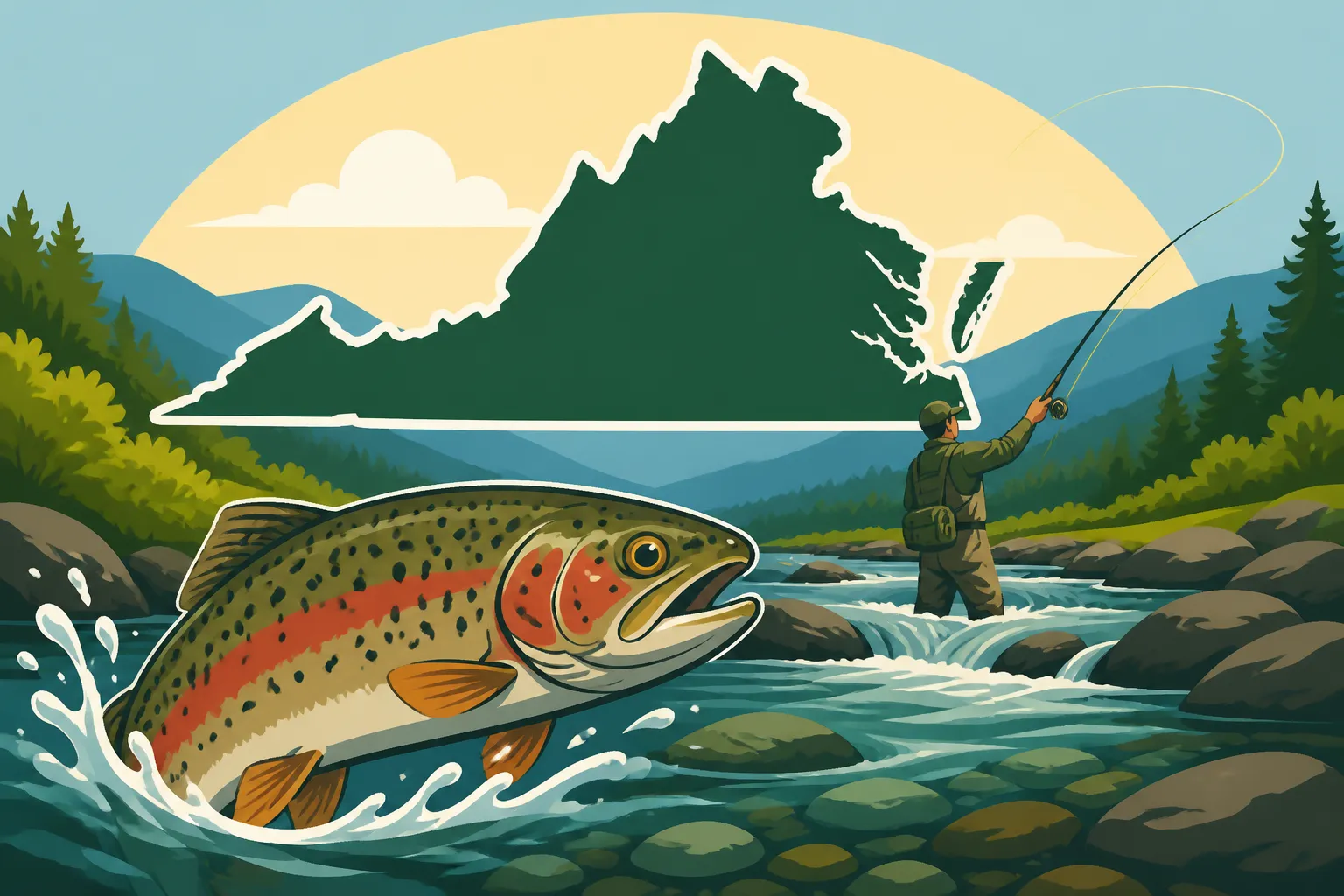
Visually, wild rainbow trout will often appear leaner, more streamlined, and display more vibrant, natural coloration than their hatchery-raised counterparts. Their namesake iridescent pink or red band along the lateral line will often be more pronounced. Their spots, typically black, will be well-defined and spread evenly across their back and tail, which tends to be more square-shaped than a brown trout's. They are known for their acrobatic fights once hooked, often leaping clear of the water. Distinguishing a truly wild rainbow from a "holdover" stocked fish (one that has survived for a season or two after stocking) can sometimes be tricky. Generally, wild fish will have perfectly formed fins, vibrant colors, and no signs of wear or damage that might come from a hatchery environment.
Planning Your Wild Trout Adventure
Embarking on a wild trout fishing trip in Virginia isn't something you just decide to do on a whim. These adventures require thoughtful planning, from understanding the best times to go to ensuring your personal safety in often remote and rugged terrain. A little preparation goes a long way to making your experience enjoyable and successful.
Best Times of Year to Go
The seasons play a huge role in wild trout fishing success and comfort. Generally, spring and fall are considered the prime times for wild trout in Virginia.
- Spring (March-May): As snow melts and temperatures rise, streams become more active. Insects begin to hatch, and trout become more aggressive feeders after the leaner winter months. Water levels can be higher and sometimes off-color early in the spring due to rain, but as things stabilize, the fishing can be fantastic. This is often a great time for dry fly fishing as hatches become more consistent.
- Summer (June-August): Summer can be challenging, especially in lower elevation streams, as water temperatures can become too warm for trout. Focusing on higher elevation streams or fishing early in the morning or late in the evening when temperatures are cooler is crucial. Terrestrial insects falling into the water can be a key food source. Always carry a stream thermometer; if the water temperature is consistently above 68°F (20°C), it's best to leave the trout alone, as catching and releasing them in warm water can be lethal.
- Fall (September-November): Fall offers some of the most beautiful and rewarding fishing. Water temperatures cool down, often leading to increased trout activity. Brown trout, in particular, become very aggressive as they prepare for spawning. The vibrant fall foliage makes for stunning scenery. This is often a great time for both dry flies and nymphing. Many anglers find the fall truly special. For more on seasonal changes, see Best Times to Fish in Virginia Throughout the Year.
- Winter (December-February): Winter fishing is tough but can yield rewards for the dedicated angler. Trout are less active, and hatches are minimal. Deep nymphing or slow presentations with small lures in slower, deeper pools are often the only way to entice a bite. Be prepared for cold weather, icy conditions, and shorter fishing windows.
Navigating Remote Access Points
Unlike many stocked waters with paved parking lots and easy paths, accessing wild trout streams often means hitting the trail. Many of these streams are located within national forests or wilderness areas, requiring hikes that can range from a short walk to several miles over uneven terrain. This means good hiking boots are essential, as are comfortable clothing layers appropriate for the weather.
Before you go, do your research. Use topographical maps, online resources from the DWR, or even satellite imagery (though not real-time, remember!) to understand the layout of the land, potential access points, and the length/difficulty of any necessary hikes. GPS devices or mapping apps on your phone can be invaluable, but always carry a physical map and compass as a backup, especially in areas with no cell service. Be aware that designated parking areas might be limited or unmaintained, so plan accordingly. If you're going deep into the backcountry, consider backpacking in to spend a night or two, extending your fishing time and allowing you to explore more remote sections of the stream.
Safety First: Preparing for the Backcountry
Because wild trout streams are often in remote, rugged areas, safety should always be a top priority. Cell service can be spotty or nonexistent, so you can't rely on your phone for emergencies. Always tell someone where you're going and when you expect to return.
Essential gear to carry for backcountry safety includes:
- First-aid kit: For scrapes, cuts, and minor injuries.
- Plenty of water: Even if you plan to filter stream water, carry an initial supply.
- Snacks/food: Energy bars, trail mix, etc.
- Rain gear: Mountain weather can change rapidly.
- Headlamp or flashlight: Even if you plan to be back before dark, delays happen.
- Knife or multi-tool: Always handy to have.
- Whistle: For signaling if you get lost or need help.
- Bear spray: A wise precaution in some wilderness areas, especially during certain seasons.
- Map and compass: And know how to use them!
Be aware of wildlife, including bears, snakes, and ticks. Know basic wilderness first aid and how to react in an emergency. Fishing with a buddy is always a good idea, but if you go solo, be extra cautious and prepared. These streams offer incredible solitude and beauty, but that also means you're largely on your own if something goes wrong. A little extra planning and preparation will ensure your wild trout adventure is safe as well as successful.
Virginia's Wild Trout Waters: A Quick Look at Regulations
Understanding the general framework for Virginia's wild trout streams helps manage expectations and ensures compliance. While specific stream regulations can vary, the table below offers a common overview. Always consult the current Virginia DWR regulations before fishing any specific stream, as these can and do change.
| Feature | Wild Trout Stream (Typical) | Stocked Trout Stream (Typical) |
|---|---|---|
| Management Goal | Protect natural reproduction | Provide harvest opportunities |
| Primary Species | Brook, Brown Trout | Rainbow, Brown, Brook Trout |
| Creel Limit | Often Catch & Release Only (C&R) | 6 fish/day |
| Size Limit | Often C&R, or 7-9 inch minimum | None on stocked fish |
| Tackle Restriction | Artificial Lures/Flies, Single Barbless Hooks | Any legal bait/lure |
| Access | Often remote, hiking required | More accessible, often roadsides |
| Water Quality | Pristine, cold, clear | Varies, but often less stringent |
| Fishing Pressure | Low to moderate | Moderate to high |
This table highlights the fundamental differences in approach. Wild trout streams are about the pursuit of a native, self-sustaining fishery, demanding respect and a conservation-minded approach. For instance, Wild Trout Stream Rules in Virginia delves deeper into these specific regulations, which are crucial for every angler to understand.
Disclaimer
This article is for general informational purposes only and does not constitute professional advice. Laws, prices and regulations vary by location and change over time. Consult a qualified professional for guidance on your specific situation.