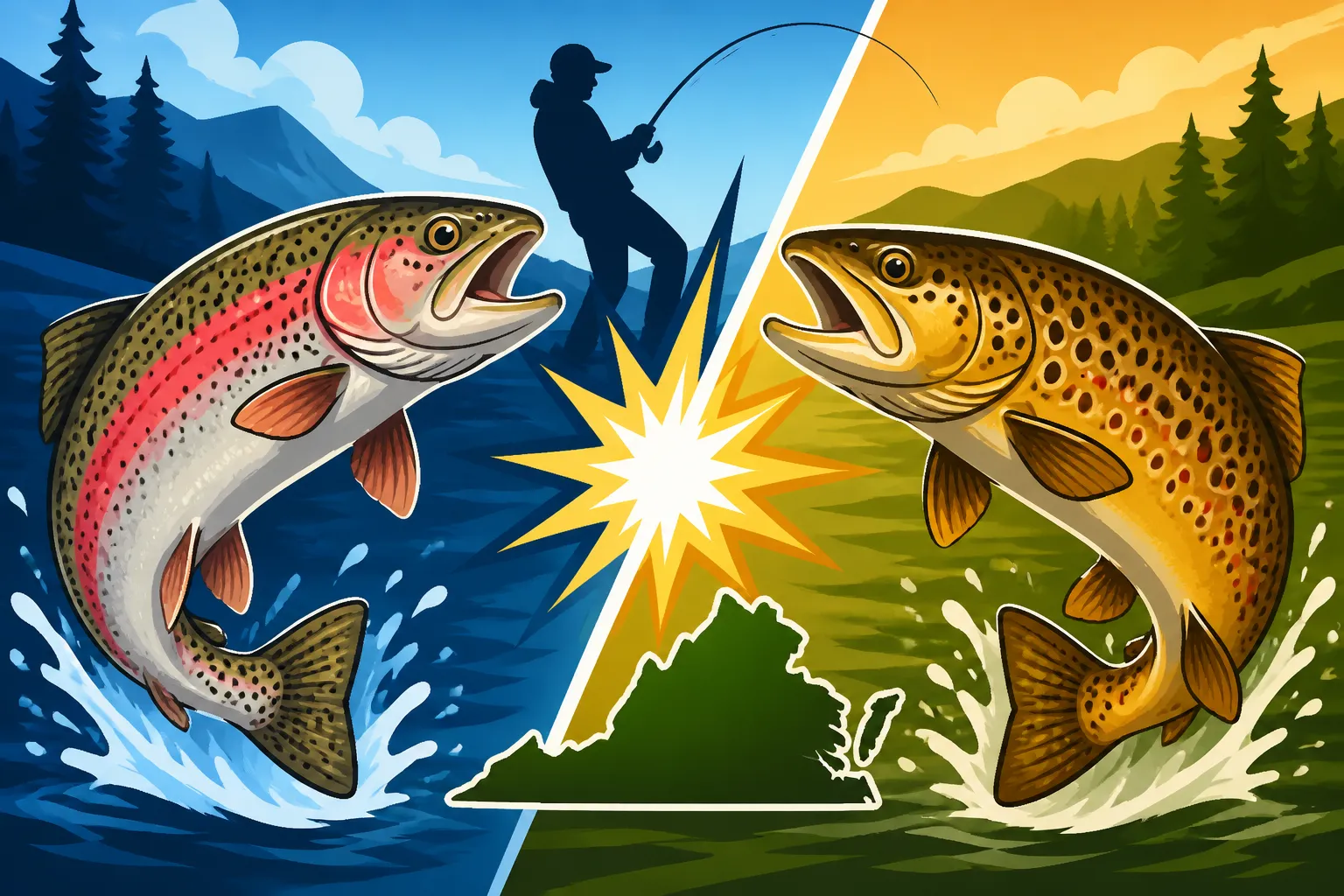
Rainbow Trout vs Brown Trout: Which Fights Harder on the Line?
Every angler who's spent time on Virginia's beautiful trout streams has likely heard, or even participated in, the lively debate: which trout puts up a better fight on the line, the rainbow or the brown? It's a question that sparks passionate arguments around campfires and on tackle shop floors, often without a definitive answer. This guide isn't here to declare a single "winner" in a universal sense, because the truth is, every fish is an individual. Instead, we're going to dive deep into the typical fighting characteristics of both rainbow and brown trout, exploring what makes each species a thrilling adversary and what factors beyond just the species itself can truly influence how hard a fish fights when you hook into it.
The Acrobatic Aerialist: Understanding the Rainbow Trout's Fight
When you think of a trout that puts on a spectacular show, often jumping clear out of the water, a rainbow trout is probably what comes to mind. These fish are renowned for their high-energy, acrobatic displays that can truly test an angler's reflexes and knot strength.
The Signature Leaps and Head Shakes
Hook into a good-sized rainbow, and get ready for some aerial fireworks. One moment you're feeling a solid tug, the next your line is screaming as the fish bursts upwards, twisting and shaking its head violently mid-air, trying to throw the hook. This isn't a rare occurrence; it's a signature move for many rainbows, especially in colder, well-oxygenated water. Their powerful tails and streamlined bodies are perfectly built for these sudden, explosive runs and leaps. It’s an incredibly exciting moment, but it’s also when many anglers lose their fish. The slack created by a jump, combined with a vigorous head shake, is a prime opportunity for the hook to come free.
Sometimes, after a few jumps, a rainbow might dig deep, making strong, short runs before deciding to go airborne again. They seem to use every ounce of their energy in these bursts, putting immense pressure on your rod and reel. This fight style often leads to a quicker conclusion than with a brown trout, simply because they expend so much energy so rapidly. You'll definitely feel it in your arm, and your heart will be pounding, but it might not be a prolonged tug-of-war. For a visual and adrenaline-fueled battle, the rainbow is hard to beat. If you're looking to upgrade your tackle to handle these spirited fighters, a quick browse on Amazon can show you some excellent fast-action rods perfect for rainbow trout.
The Subsurface Slugger: Decoding the Brown Trout's Battle
In stark contrast to the rainbow's theatricality, the brown trout is often described as a more powerful, stubborn, and even deceptive fighter. They prefer to stay deep, using their strength and the surrounding environment to their advantage, making for a different but equally challenging experience.
Deep Runs and Structure-Seeking Tactics
When a brown trout feels the hook, its first instinct is often to head for the nearest cover. Think submerged logs, undercut banks, deep pockets, or dense weed beds. They're not looking for glory in the air; they're looking for an escape route where they can snag your line or rub off the hook. This "bulldogging" tactic means you'll feel a sustained, heavy pull, often without the visual confirmation of the fish until it's much closer to the net. Their strong, muscular bodies are built for these deep, powerful runs, and they will absolutely test the drag on your reel.
A typical brown trout fight often involves longer, more determined runs, and a refusal to give up easily. They'll swim into the current, leveraging its power against your line, or make sudden, unexpected changes in direction. It’s less about spectacle and more about sheer, raw power and endurance. Many anglers find this type of fight more challenging to land, as preventing them from reaching snags requires quick reactions and assertive rod work. There's a certain satisfaction that comes from patiently working a big brown out of a tricky spot.
Beyond the Species: What Really Influences a Trout's Fight
While both rainbow and brown trout exhibit general fighting tendencies, it's crucial to remember that a fish isn't a robot. Many factors can dramatically alter how any individual trout, regardless of its species, decides to fight.
Size, Age, and Condition of the Fish
One of the most obvious factors is simply the size and age of the trout. A small, young rainbow might put up a few spirited jumps, but it won't have the same staying power as a truly large specimen. Similarly, a trophy brown trout will fight with a ferocity that a smaller one can only dream of. The overall condition of the fish also plays a role. A healthy, well-fed trout in prime condition will have more energy reserves to put up a prolonged struggle than a skinny, stressed fish. This is why you might sometimes catch a fish that feels surprisingly lethargic, or one that fights like a torpedo, far exceeding your expectations for its size.
Furthermore, consider the fish's history. Has it been caught before? A trout that has been previously hooked and released might be warier and fight differently, perhaps attempting new evasive maneuvers learned from past experiences. It’s like they develop a street-smarts about angling pressure. Anglers often discuss how the fishing pressure on a particular stream can make fish much smarter. This is especially true in popular areas often mentioned in guides like Best Trout Streams in Virginia.
Water Temperature and Oxygen Levels
Water conditions are perhaps one of the most significant, yet often overlooked, factors in a trout's fighting prowess. Colder water typically holds more dissolved oxygen, and fish in highly oxygenated water are generally more energetic and aggressive. Imagine trying to run a marathon in thin air versus crisp, cool air – the difference is palpable. This means a rainbow trout caught from a swift, cold mountain stream in early spring might fight with more vigor than a similar-sized rainbow pulled from a warmer, slower moving section of a river in late summer.
Brown trout, while generally more tolerant of warmer water than rainbows, will also be more sluggish when temperatures rise. When the water gets too warm, fish become stressed, their metabolism slows down, and they simply don't have the energy for a prolonged, powerful fight. This is why many experienced anglers pay close attention to water temperatures, often consulting specialized thermometers found on Amazon to find the optimal conditions for aggressive fish. Understanding this relationship can help you predict the kind of fight you're in for and adjust your tactics accordingly. For more on trout fishing specifics, check out Trout Fishing in Virginia: Rainbow, Brown, and Brook Trout.
Current Strength and Available Cover
The environment in which you hook a fish can also dictate its fight. A trout caught in a strong current has a built-in advantage. It can use the force of the water to generate drag against your line, making even a modest-sized fish feel like a monster. This is particularly true for brown trout, who are masters at leveraging current to their benefit, often digging in and letting the water do most of the work to keep them from you.
Likewise, the availability of cover is paramount. If a fish is hooked in open water with no snags nearby, it has fewer options for escape, often leading to a more "honest" fight. However, if that same fish is hooked near a fallen tree, a rock pile, or an undercut bank, its instinct will be to bolt for that sanctuary. A brown trout, in particular, will make a beeline for cover, turning what might have been a straightforward retrieve into a nail-biting tug-of-war where a snapped line or a lost fish is a very real possibility. Fly fishermen wading in places like the Shenandoah River, as discussed in Fly Fishing for Trout on Rivers, know how quickly a strong current and abundant structure can complicate a fight.
Angler's Tackle and Technique
Finally, let's not forget the angler's role. The tackle you choose and how you wield it directly impact the perception and reality of a fish's fight. A light rod, delicate line, and well-tuned drag on your reel will make any fish feel like a harder fighter than if you're battling it with heavy gear and locked-down drag. Part of the thrill for many anglers is to push the limits of their light tackle, making every fish feel like a trophy.
Your technique also plays a huge role. Applying constant, steady pressure, anticipating runs, and skillfully guiding the fish away from snags can shorten a fight. Conversely, slack lines, improper drag settings, or panicking can prolong the fight and exhaust the fish more than necessary, or worse, lead to a lost catch. Learning more about different techniques, like those found in Brown Trout Fishing Tips for Virginia Anglers, can help you maximize your success. Whether you're using conventional spinning gear or fly fishing, the balance between finesse and brute force is what truly brings a fish to the net.
The Verdict: It's All in the Experience
So, which one fights harder, rainbow or brown trout? After diving deep into their characteristics and the multitude of influencing factors, it becomes clear that there's no single, definitive answer that applies to every single fish. Both offer unique and thrilling challenges, and both can be the fish of a lifetime on any given day.
| Feature | Rainbow Trout (On the Line) | Brown Trout (On the Line) |
|---|---|---|
| Primary Fight Style | Acrobatic leaps, explosive surface breaks, strong runs. | Deep, powerful runs, head shakes, seeks heavy cover. |
| Initial Reaction | Often a dramatic, immediate burst of speed and jumps. | Strong, sustained pull, often digging deep or hugging bottom. |
| Energy Expenditure | High-energy bursts, can tire more quickly with aerial displays. | Sustained, relentless power, can fight for longer durations. |
| Visibility of Fight | Highly visual with jumps and thrashing on the surface. | Primarily subsurface, less visual, more about feel. |
| Tactical Challenge | Maintaining line tension during jumps, quick rod recovery. | Preventing snags, turning the fish from cover, testing drag. |
| Typical Environment | Often found in faster, well-oxygenated water. | Can be found in a wider range of habitats, often near structure. |
For those who love a visual spectacle and the heart-stopping moment of a fish leaping, the rainbow trout is probably your champion. The adrenaline rush of seeing that silver flash against the sky is unparalleled. Just be sure your knots are solid!
If you prefer a raw test of strength, a chess match where you battle a fish's cunning and brute force against your skill and tackle, then the brown trout might be your preferred adversary. Their deep, dogged runs and relentless pursuit of cover demand precision and patience. Learning to differentiate these species is also key, so you might find Rainbow Trout vs Brown Trout in Virginia: How to Tell Them Apart helpful.
Ultimately, both fish contribute to the rich tapestry of Virginia fishing, providing endless opportunities for excitement and challenging anglers of all skill levels. The next time you're out on the water, perhaps exploring some of the wild trout streams, like those mentioned in Wild Trout Stream Rules in Virginia, or casting for stocked trout, which may require you to consider Virginia's Stocked Trout Waters and License Requirements, remember that every tug on the line is a unique conversation with the wild. Embrace the experience, learn from each encounter, and enjoy the ongoing debate! You can even find some great resources for learning more about trout behavior and fight tactics on Amazon to deepen your understanding.
Disclaimer
This article is for general informational purposes only and does not constitute professional advice. Laws, prices and regulations vary by location and change over time. Consult a qualified professional for guidance on your specific situation.