Best Striped Bass Fishing on the Potomac River
If you've ever tried to chase striped bass on the Potomac River, you know it can be a real head-scratcher. One day they're everywhere, and the next, it feels like they've vanished into thin air, leaving you wondering if you're even in the right spot. It’s frustrating when you’re passionate about landing those hard-fighting rockfish but can’t seem to crack the code. Well, take a deep breath, because this guide is all about demystifying striped bass fishing on the Potomac River, giving you the insider knowledge to find those elusive fish and enjoy some epic days on the water.
Understanding Potomac River Striped Bass Behavior
Before you can even think about casting a line, it's crucial to get inside the head of a Potomac River striped bass. These fish aren't just swimming around aimlessly; they have distinct patterns tied to seasons, water conditions, and their menu preferences. Once you understand their rhythm, it becomes a lot easier to predict where they'll be and what they'll be willing to bite.
Seasonal Movements and Prime Times
Striped bass, often affectionately called "rockfish" in Virginia, are migratory fish, and their presence in the Potomac River is highly seasonal. This means that a spot that's red-hot in April might be completely barren in August.
In spring, typically from late March through May, the Potomac River comes alive with migrating stripers pushing upriver from the Chesapeake Bay to spawn. This is a truly incredible time to fish. The water temperatures start to climb into their preferred range, usually between 50 and 68 degrees Fahrenheit, triggering their instincts to move and reproduce. Early spring might see them staging in deeper channels and around major points near the river's mouth, but as the water warms, they'll push further up, sometimes as far north as the Washington D.C. area, especially during the spawning run. Post-spawn, they often hang around for a bit to recover, feasting on abundant baitfish before gradually retreating back towards the Bay for the summer. It's an intense, but relatively short, window of opportunity.
Fall is another fantastic season, usually from September through December, as stripers migrate back downriver. As the water cools, these fish become incredibly aggressive, trying to pack on calories before the lean winter months. They’ll chase baitfish in vast schools, often creating spectacular surface busts that can be seen from a distance. This is when you'll find them holding in transitional areas, moving between shallow feeding grounds and deeper holding spots as they make their way towards the Bay. Understanding these patterns is key to finding them. You’ll want to keep an eye on temperature fluctuations; a sudden cold snap can send them deeper, while stable, mild weather often keeps them active in shallower feeding zones. You can learn more about specific dates by checking out our guide on Virginia Striped Bass Season and Slot Limit Guide.
Preferred Habitats and Structure
Striped bass are ambush predators, and they love structure. Think of them as underwater architects, always looking for features that break the current, offer cover, or create a natural buffet line for baitfish.
In the Potomac, these structures can be diverse. Channel edges and drop-offs are prime real estate, especially when there’s a strong current pushing bait along. Stripers will position themselves just outside the main current, waiting for an easy meal to drift by. Look for bends in the river where the current scours out deeper holes, or where a flat suddenly drops off into a main channel. Submerged pilings, old bridge abutments, and even wreckage (like those found in Mallows Bay, a fascinating spot with a "ghost fleet" of WWI-era ships) provide excellent cover and current breaks. These spots can hold large schools of fish.
Points and humps are also critical. A point that extends out into the river can funnel baitfish, making it an ideal ambush point. Underwater humps or ledges provide depth changes that stripers love to patrol. Even subtle changes in bottom contour, detectable with a good fish finder, can be holding zones. During the spring and fall runs, these fish often congregate in specific areas as they prepare for their journey, often near the confluence of smaller tributaries where baitfish might be seeking shelter or spawning. Keep an eye on your sonar for bait balls and any larger arches underneath them – those are often hungry stripers.
Forage and Feeding Habits
What stripers eat largely dictates what baits and lures will be effective. In the Potomac, their diet is pretty diverse, but it often centers around abundant schooling baitfish.
Alewives and herring are major food sources, especially during their own migrations in the spring. These small, silvery fish are prime targets for hungry stripers. When stripers are feeding on these, small profile lures that mimic their appearance and swimming action are often incredibly successful. Bunker (menhaden), both juvenile and adult, are also a staple, particularly in the lower tidal Potomac and towards the Chesapeake Bay. Bunker are fattier, oilier fish, and when stripers are on bunker, cut bait or larger lures that imitate these slow-moving baitfish can be deadly.
Perch, particularly white perch, are also on the menu. These smaller fish are prevalent throughout the river and provide a consistent food source. This means that smaller jigs or even live white perch can be effective baits. Stripers are opportunistic feeders, so they'll also consume crabs, shrimp, and even smaller bottom-dwelling fish. When you’re out on the water, pay attention to any birds diving or baitfish flickering on the surface – these are tell-tale signs of a feeding frenzy, and where there's bait, there are usually stripers. Matching the hatch, as they say, by using baits or lures that resemble what the stripers are currently feeding on, is one of the most consistent ways to get a strike.
Top Spots for Striped Bass on the Potomac River
The Potomac River is a vast waterway, and knowing where to focus your efforts can make all the difference. While stripers can be found throughout the tidal stretches, some areas consistently produce better results due to their unique combination of depth, current, and structure.
Tidal Potomac Hotspots
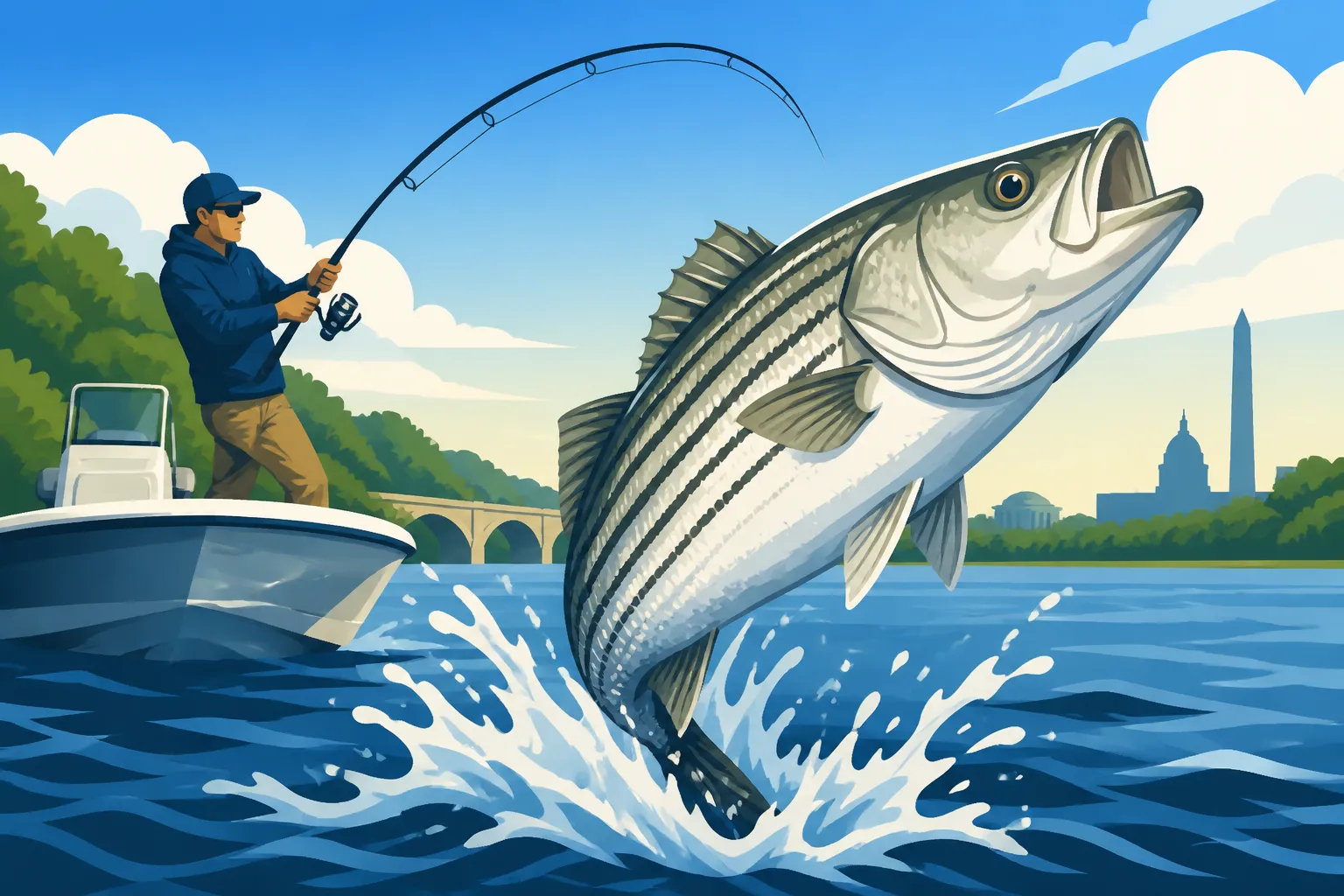
The lower, tidal portion of the Potomac River, especially from Washington D.C. down to its mouth at the Chesapeake Bay, is where you'll find the most consistent striped bass action.
One of the most popular and productive areas is around the Woodrow Wilson Bridge. The bridge pilings themselves offer incredible structure, creating current breaks and ambush points for stripers. The surrounding deep channels and flats near National Harbor also hold fish. Anglers here often target the pilings with jigs or live bait, or troll along the channel edges. Further south, Fort Washington National Park offers a unique blend of historical significance and excellent fishing grounds. The deep water near the fort and the confluence of creeks provide good holding spots, especially during migration. This area is great for boat anglers but also offers some limited shore access opportunities.
Mallows Bay, famous for its "Ghost Fleet" of sunken WWI-era ships, is another fantastic, albeit challenging, spot. The underwater wreckage creates a massive artificial reef system, providing endless cover for baitfish and predators. Navigating this area requires caution due to the shallow wrecks, but the rewards can be substantial. Jigging or casting soft plastics around the edges of the wreck fields can be incredibly effective. Finally, as you move further south towards the river's mouth, areas around Colonial Beach and Point Lookout see heavy concentrations of stripers, particularly during the fall migration when they are staging before entering the Chesapeake Bay. This is where you'll often find big schools of bunker, and consequently, big schools of stripers. Our comprehensive guide on Fishing the Potomac River in Virginia delves deeper into these and other key locations.
Shore and Pier Access Points
Not everyone has a boat, and that's perfectly okay! The Potomac River offers several fantastic opportunities for land-based anglers to get in on the striped bass action. While shore fishing can sometimes be more challenging than boat fishing for stripers, patience and the right approach can yield great results.
Belle Haven Park in Alexandria, Virginia, provides excellent access to the tidal Potomac. With ample parking and accessible shoreline, you can cast lures or soak bait near the main channel. The key here is often timing – dawn and dusk, or periods of strong tidal flow, tend to be most productive. Similarly, Leesylvania State Park in Woodbridge, Virginia, offers a fishing pier and extensive shoreline. The pier can be a great place to cast out live bait or a bottom rig with cut bait, especially during the spring and fall runs when stripers are moving through. Look for deeper water access points or areas with current.
Further south, various public boat ramps and small parks along the Virginia side of the Potomac, like those near Dahlgren or Colonial Beach, can offer sporadic shore fishing opportunities. Always check local signage for specific regulations and access points. For those who want to maximize their chances from shore or pier, consider using longer rods to cast further, and focus on periods of incoming or outgoing tide when stripers are more likely to be actively feeding close to shore.
Utilizing Charter Services for Potomac Stripers
Sometimes, the best way to crack the code on a tough fishery, or simply to enjoy a hassle-free day targeting trophy fish, is to enlist the help of a professional. Fishing charters on the Potomac River are a fantastic option, especially for striped bass.
A good charter captain will have years of experience on these specific waters, knowing exactly where the fish are holding based on recent reports, weather patterns, and tidal conditions. They provide all the necessary gear, bait, and most importantly, the expertise to put you on fish. This is particularly valuable when chasing migratory stripers that can be here today and gone tomorrow. Charters can range from half-day trips, perfect for beginners or those with limited time, to full-day excursions designed for serious anglers looking for a trophy.
Websites like FishingBooker make it incredibly easy to find and compare reputable Potomac River fishing charters. You can read reviews, check availability, and book directly, often seeing what's included in the trip, like bait, tackle, and even fish cleaning services. They offer an array of options, from light tackle casting for aggressive fall stripers to trolling massive umbrella rigs for larger fish in deeper channels. Booking a charter is a great way to learn new techniques, discover secret spots, and significantly increase your chances of a successful striped bass outing on the Potomac.
Essential Techniques and Tackle for Potomac Stripers
Catching striped bass on the Potomac requires a versatile approach. These fish can be finicky one day and ravenous the next, so having a few techniques up your sleeve and the right tackle to execute them is paramount.
Live Bait and Cut Bait Strategies
When stripers are being a bit sluggish or prefer a natural presentation, live bait or fresh cut bait can be absolutely deadly. This is often the case during slower periods of the tide or when the fish are holding tight to structure.
Live bait, such as herring, eels, or large minnows, is incredibly effective. The natural action of a struggling baitfish is often irresistible to a hungry striper. You can rig live bait in several ways: free-lining it with minimal weight if the current allows, using a fish finder rig with a sliding sinker to keep the bait near the bottom, or suspending it under a bobber in shallower areas or around docks. Using a circle hook is highly recommended, as it significantly reduces gut-hooking, which is critical for releasing fish, especially those outside the legal slot limit. Always check local regulations for baitfish restrictions, as some areas may prohibit the use of certain species.
Cut bait, typically fresh bunker (menhaden) or shad, also works wonders. The scent trail that cut bait leaves in the water can attract stripers from a distance. A standard bottom rig with a weight, swivel, and a snelled circle hook (or a Kahle hook) is a common setup. You’ll want to adjust your weight based on the current – just enough to hold bottom without constantly snagging. Casting cut bait to channel edges, around bridge pilings, or near submerged structures can be very productive. Remember, freshness is key; old, stale bait rarely gets results.
Lure Fishing Tactics
For those who prefer active fishing, lures offer an exciting way to target Potomac stripers. The challenge and reward of enticing a strike on artificials are hard to beat.
Soft plastics on jig heads are arguably one of the most versatile and effective lures. Paddle tail swimbaits, jerk shads, and curly tail grubs in sizes ranging from 4 to 7 inches, rigged on jig heads from 1/2 oz to 2 oz (depending on depth and current), can be fished in countless ways. You can cast them to structure, retrieve them with a slow, steady swim, or hop them along the bottom. Popular colors include chartreuse, white, pearl, and darker hues like "bomber" or "motor oil" for murkier water. Brands like Z-Man, Bass Assassin, and Bobby Garland make excellent soft plastics that stand up to multiple striper bites.
Topwater plugs provide some of the most exhilarating strikes, especially at dawn, dusk, or on overcast days when stripers are shallow and actively feeding. Walk-the-dog style baits, poppers, and pencil poppers can create a commotion that draws stripers from a distance. When the fish are schooling and busting on the surface, casting a topwater into the melee is pure adrenaline.
For deeper water or when trolling, diving crankbaits or umbrella rigs can be highly effective. Umbrella rigs, often adorned with multiple soft plastic shad or bucktails, mimic a school of baitfish and are incredibly tempting to larger stripers. They are often trolled slowly along channel edges or over submerged humps. When selecting lures, consider water clarity and light conditions. Brighter colors tend to work better in murky water, while natural, translucent colors are often preferred in clear conditions. Don't forget to explore our article on Best Bait for Striped Bass in Chesapeake Bay, many of the same principles apply to the Potomac.
Kayak and Boat Fishing Advantages
While shore fishing offers accessibility, having a kayak or boat significantly opens up your options for targeting Potomac River striped bass. These vessels allow you to access prime, otherwise unreachable, areas and employ more diverse techniques.
Boats provide the ultimate versatility. With a powerboat, you can quickly cover vast distances of the Potomac, following bait balls or moving from one hotspot to another. This is crucial during migratory runs when fish can be on the move. Boats also allow for effective trolling, a highly productive method for stripers. You can deploy multiple rods with umbrella rigs, large swimbaits, or deep-diving crankbaits, covering different depths until you find where the fish are holding. With a good fish finder, you can identify structure, baitfish, and even individual stripers, making precise presentations much easier. Anchoring up-current from a promising piece of structure and casting live or cut bait into the strike zone is another powerful boat tactic. For a successful trip, remember to check out What to Bring on a Virginia Fishing Charter, as many of the essentials translate to private boat trips too.
Kayaks offer a more stealthy and intimate fishing experience. They can access shallower waters and tight creeks that larger boats can't, allowing you to target stripers that might be feeding in skinny water during high tide or in areas with heavy cover. Kayak anglers often excel at sight fishing or making precise casts to visible structure. Peddle-drive kayaks, like those from Hobie or Old Town, are particularly advantageous as they allow you to maintain position or slowly troll hands-free while actively fishing. While kayaks might not cover as much water as a powerboat, their stealth and access to untouched spots can lead to some incredible catches, especially for light tackle enthusiasts.
Navigating Regulations and Conservation Efforts
Fishing for striped bass on the Potomac River means you're operating in a complex regulatory environment, with rules often set by both Virginia and Maryland, as well as federal agencies. Staying informed isn't just about avoiding fines; it's about protecting this incredible fishery for future generations.
Virginia's Striped Bass Regulations
Virginia's Department of Wildlife Resources (DWR) sets specific regulations for striped bass (rockfish) that are crucial for anglers to follow. These regulations can change frequently based on stock assessments and management goals, so always, always double-check the latest DWR guidelines before heading out.
Currently, Virginia employs a slot limit for striped bass in most waters, including the Potomac River. This means you can only keep fish within a specific size range, for example, 28 to 31 inches. Fish smaller than the minimum or larger than the maximum must be immediately released. This is a common conservation measure designed to protect younger, immature fish and larger, older breeding fish, ensuring a healthy spawning population. Additionally, there is a daily creel limit, typically one fish per person per day. It’s a pretty strict rule, but it helps manage the overall harvest.
Perhaps one of the most important aspects to understand is Virginia's split striped bass season. This means there are specific open windows for fishing and keeping striped bass, often in the spring and fall, with a closed period in between. For example, the season might run from January 1 through March 31, then close, and reopen from May 16 through June 15, and then perhaps again in the fall. These seasons are designed to protect the fish during critical spawning periods and to manage harvest levels. Getting caught fishing outside these seasons or keeping an undersized/oversized fish can result in significant penalties. You can find more details in our guides like Virginia Striped Bass Season Dates January Through March and Second striped bass season in Virginia opens May 16. And for a complete overview, be sure to review Virginia Fishing Regulations Explained.
Importance of Catch and Release
Given the conservation status of striped bass in many areas, including the Potomac, practicing responsible catch and release is not just good etiquette—it's essential for the fishery's long-term health. Even if you plan to keep a legal-sized fish, you'll undoubtedly encounter many that fall outside the slot limit or that you simply choose to release.
When practicing catch and release, minimizing stress and injury to the fish is paramount. Here are a few key practices:
- Use appropriate tackle: Don't go too light, as an over-matched fish will be exhausted before release.
- Use circle hooks: As mentioned, these greatly reduce the chances of gut-hooking.
- Minimize handling time: Get the fish in, get a quick picture (if desired), and get it back into the water as quickly as possible.
- Handle with wet hands: Dry hands can remove the fish's protective slime layer, making it more susceptible to disease.
- Support the fish horizontally: Avoid holding a large fish vertically by its jaw, as this can damage internal organs. Support its belly.
- Revive the fish: If a fish seems sluggish, hold it gently in the water, facing into the current, until it can swim away strongly on its own.
These practices significantly increase the chances of a released fish surviving to spawn another day. Remember, the future of Potomac River striped bass fishing depends on all of us being good stewards of the resource.
Resources for Anglers
Staying current with regulations and getting local insights can drastically improve your fishing success and ensure compliance. There are several excellent resources available to anglers.
The Virginia Department of Wildlife Resources (DWR) website is your authoritative source for all fishing regulations, including specific rules for striped bass on the Potomac River. They publish annual fishing guides, provide real-time updates on regulation changes, and offer detailed information on various species and conservation efforts. It's a non-negotiable stop before any fishing trip. You can also get your Virginia Fishing License Guide directly through their platform or check Where to Buy a Virginia Fishing License.
Local tackle shops along the Potomac River in communities like Colonial Beach, Stafford, or Alexandria are invaluable resources. The folks who work there are often avid anglers themselves, and they hear daily reports on what's biting, where, and on what. They can offer advice on local conditions, bait preferences, and even point you to less-known spots. Plus, supporting local businesses is always a good thing!
Finally, for those looking for guided expertise, platforms like FishingBooker connect you with experienced Potomac River fishing charters and guides. These professionals are not only intimately familiar with the fishing grounds and techniques but are also up-to-date on all the latest regulations. Booking a trip through them ensures you're fishing legally and with maximum efficiency. They can even clarify details like Virginia's One-Fish Striped Bass Limit on Charter Trips or the implications of the Virginia's 28 to 31 Inch Striped Bass Slot Limit for Charter Anglers. Using these resources will ensure you have a safe, legal, and highly productive time chasing striped bass on the Potomac.
Potomac River Striped Bass Fishing Overview
Here’s a quick overview to help you plan your next striped bass adventure on the Potomac:
| Season | Prime Time | Best Locations (Virginia side) | Recommended Techniques | Key Regulations |
|---|---|---|---|---|
| Spring | Late March – May | Wilson Bridge area, Fort Washington, Mallows Bay, lower river mouth | Live/cut bait, soft plastics, trolling | Split season (check DWR), 28-31" slot, 1 fish/day |
| Summer | June 16 – August 31 | Typically closed season for harvest in mainstem Potomac | Catch & release only; focus on lower tidal tribs. | Closed for harvest; check DWR for specific dates |
| Fall | September – Dec | Colonial Beach, Point Lookout, lower river channels, Mallows Bay | Trolling, soft plastics, topwater, live/cut bait | Split season (check DWR), 28-31" slot, 1 fish/day |
| Winter | Jan 1 – March 31 | Deeper channels, power plant discharges | Live/cut bait, deep jigging, trolling | Split season (check DWR), 28-31" slot, 1 fish/day |
Note: Regulations are subject to change. Always consult the Virginia DWR website for the most current rules.
Disclaimer
Please remember that fishing regulations, seasons, and licensing requirements can change. Always consult the official Virginia Department of Wildlife Resources (DWR) website or relevant local authorities before your trip to ensure you have the most current and accurate information. Fishing involves inherent risks, so always prioritize safety on the water.