State Park Fishing Spots in Virginia
It can be incredibly frustrating trying to find a good fishing spot in Virginia – one that's not overcrowded, offers diverse species, and provides amenities for a comfortable day out. Many anglers, especially families or those new to the area, struggle to pinpoint locations that are both productive and accessible. This guide is here to unravel that mystery, focusing specifically on Virginia's incredible state parks, which often hide some of the best, most well-maintained, and surprisingly diverse fishing opportunities our beautiful Commonwealth has to offer.
Why Virginia State Parks Are Angler Havens
Virginia's state parks are more than just pretty places for a hike; they're meticulously managed natural areas that often include significant bodies of water, making them prime destinations for fishing enthusiasts. What makes them so special for anglers? Well, it boils down to accessibility, careful management, and a wide array of amenities that enhance your fishing experience.
Managed Ecosystems for Thriving Fish Populations
One of the biggest advantages of fishing in a Virginia State Park is the commitment to ecological health and fish management. The Virginia Department of Wildlife Resources (DWR) works hand-in-hand with park staff to ensure these waters are healthy habitats. This often means regular stocking programs, especially for popular species like trout, and diligent monitoring of water quality. You're not just casting a line into any old pond; you're often fishing in a carefully maintained ecosystem designed to support robust fish populations. This targeted management often translates to better catch rates and healthier fish, which is a win-win for everyone involved. For instance, many parks participate in trout stocking programs, which means anglers have a great chance to reel in some feisty rainbow or brown trout, especially during the cooler months.
Abundant Amenities and Family-Friendly Access
Another fantastic benefit is the sheer convenience. State parks are built with visitors in mind, which means paved parking, clean restrooms, picnic areas, and often boat launches or fishing piers. This makes them incredibly family-friendly and accessible for anglers of all ages and abilities. Imagine taking your kids for their first fishing trip; having easy access to a safe pier, nearby facilities, and perhaps even a visitor center to ask questions, takes away so much of the usual stress. Plus, many parks offer kayak or canoe rentals, making it easy to get out on the water even if you don't own a boat. This focus on visitor experience truly sets state park fishing spots apart from more rugged, less developed public access points.
Diverse Fishing Opportunities Across the Commonwealth
Virginia is blessed with an incredible variety of aquatic environments, and our state parks reflect that diversity. Whether you're dreaming of reeling in a trophy largemouth bass from a serene mountain lake, casting for striped bass in a vast reservoir, or trying your luck with flounder in brackish tidal waters, there's likely a state park ready to deliver. From the rolling Blue Ridge Mountains to the sandy shores of the Chesapeake Bay, these parks offer everything from small, peaceful ponds perfect for panfish to expansive lakes and tidal rivers. This means you can tailor your trip not just to the type of fish you want to catch, but also to the kind of scenery and overall experience you're looking for. It's a fantastic way to explore different facets of Virginia Fishing while enjoying the outdoors.
Top Virginia State Parks for Freshwater Fishing Adventures
Virginia's freshwater state parks are truly gems for anglers seeking a peaceful retreat and abundant catches. These parks are strategically located near some of the state's most productive lakes and rivers, offering incredible opportunities for bass, crappie, catfish, and more.
Smith Mountain Lake State Park: A Striper and Bass Paradise
Nestled on the shores of the massive 20,600-acre Smith Mountain Lake, Smith Mountain Lake State Park is an absolute Mecca for freshwater anglers, especially those targeting striped bass and largemouth bass. This park offers fantastic access to one of Virginia's premier fisheries. Anglers can utilize the park's multiple boat ramps to launch their vessels, giving them access to the lake's vast expanses, deep channels, and countless coves where fish love to hide.
For those without a boat, the park boasts excellent bank fishing opportunities and a fishing pier, perfect for casting a line into prime waters. The lake is famous for its robust striped bass population, with many anglers specifically visiting for the thrill of hooking these powerful fighters. Techniques like trolling deep-diving crankbaits or live bait are often highly effective here. Beyond stripers, the lake is a nationally recognized spot for big largemouth bass. Early mornings and late evenings, especially around submerged structures and brush piles, can be incredibly productive. You can find more detailed information in our Smith Mountain Lake Fishing Guide. It's also a great spot for crappie, particularly around submerged timber and bridge pilings, especially in spring.
Lake Anna State Park: Largemouth Bass and Crappie Hotspot
Lake Anna State Park provides direct access to the warm waters of Lake Anna, a 13,000-acre reservoir renowned for its excellent largemouth bass fishing and healthy crappie populations. This park is a favorite for local and visiting anglers alike, offering a comfortable and convenient fishing experience. The park's main boat launch is a gateway to both the public side of the lake and the private side, though fishing is mostly concentrated on the public waters where there's plenty of room to roam.
Bank fishing is readily available along the park's extensive shoreline, and there are several coves and points that hold fish. Lake Anna is celebrated for its consistent bass fishery, with anglers often finding success with spinnerbaits, plastic worms, and jigs around docks, fallen trees, and rocky points. Crappie also thrive here, and during the spring spawn, they can be found in shallower waters, often congregating around submerged brush and stumps. The park offers picnic areas and swimming beaches, making it a perfect spot for a multi-purpose family outing where fishing is just one part of the fun. Our Lake Anna Fishing Guide has even more tips for maximizing your visit.
Claytor Lake State Park: Walleye, Bass, and Catfish Haven
Located in the scenic Appalachian Mountains, Claytor Lake State Park provides premier access to the 4,500-acre Claytor Lake, a reservoir known for its unique mix of game fish, including a thriving walleye population, various bass species, and hefty catfish. This park is a true standout for anglers looking for something a little different from the typical Virginia lake. The park offers multiple boat launches and a well-maintained fishing pier that extends into productive waters, making it easy for everyone to get a line in.
Claytor Lake is one of the few places in Virginia where walleye fishing is consistently good, particularly in the cooler months. Anglers targeting walleye often find success by trolling crankbaits or jigging with live bait near the lake's deeper channels and rocky ledges. The lake also boasts an impressive array of bass, including largemouth, smallmouth, spotted, and even Alabama bass, offering a diverse challenge for any bass enthusiast. And let's not forget the catfish! Channel and flathead catfish grow large here, with many anglers specifically coming for the thrill of a nighttime catfishing adventure. For more in-depth advice on what to target, check out our Claytor Lake Fishing Spots and Tips guide. The park’s camping facilities and cabins also make it an ideal destination for an extended fishing getaway.
| State Park | Water Body | Primary Fish Species | Water Type | Key Features for Anglers |
|---|---|---|---|---|
| Smith Mountain Lake State Park | Smith Mountain Lake | Striped Bass, Largemouth Bass, Crappie | Freshwater | Multiple boat ramps, fishing pier, extensive shoreline access |
| Lake Anna State Park | Lake Anna | Largemouth Bass, Crappie, Catfish | Freshwater | Boat launch, bank fishing, coves and points |
| Claytor Lake State Park | Claytor Lake | Walleye, Largemouth/Smallmouth Bass, Catfish | Freshwater | Multiple boat launches, fishing pier, unique walleye fishery |
| Mason Neck State Park | Belmont Bay, Occoquan River | Largemouth Bass, Catfish, White Perch | Brackish/Freshwater | Canoe/kayak launch, fishing pier, tidal river access |
| First Landing State Park | Broad Bay, Narrows | Flounder, Speckled Trout, Red Drum, Striped Bass | Saltwater/Brackish | Fishing pier, kayak launch, tidal creek access |
| False Cape State Park | Back Bay, Atlantic Ocean | Flounder, Speckled Trout, Red Drum, Surf Fish | Saltwater/Brackish | Remote surf fishing, kayak access to Back Bay |
Best Virginia State Parks for Saltwater and Brackish Water Fishing
While many state parks are known for their pristine freshwater lakes, Virginia also offers fantastic state parks with access to saltwater and brackish environments, providing a completely different fishing experience. These parks are your gateway to the tidal rivers and the vast Chesapeake Bay.
First Landing State Park: Bay and Inlet Fishing Near Virginia Beach
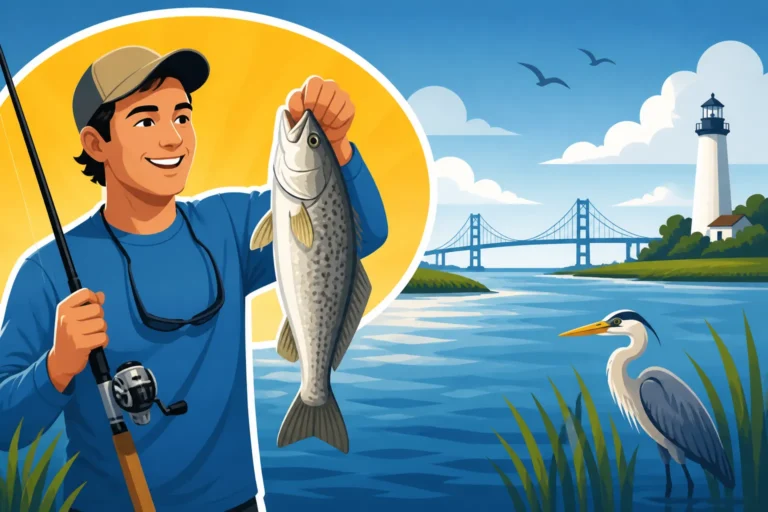
First Landing State Park, located right in Virginia Beach, offers a unique opportunity to fish both the brackish waters of Broad Bay and the saltwater inlets that connect to the Chesapeake Bay. This park is a fantastic option for anglers looking for easy access to diverse coastal fishing without needing to head far offshore. The park’s fishing pier is a popular spot, where anglers often target croaker, spot, flounder, and even speckled trout depending on the season. It’s also a great place to try crabbing, which can be a fun activity for the whole family.
For those with kayaks or smaller boats, the park offers convenient launches that provide access to the calm waters of the bay and its intricate network of tidal creeks. These areas are excellent for casting artificial lures for speckled trout and red drum, especially during the spring and fall migrations. You might even hook into a striped bass during their seasonal runs. The park’s proximity to Virginia Beach means you can combine your fishing trip with other coastal activities, making it a versatile choice. This park is definitely one of Virginia's Best Saltwater Fishing Spots.
Mason Neck State Park: Potomac River Tidal Fishing
Situated on a peninsula between Belmont Bay and the Potomac River, Mason Neck State Park offers unparalleled access to tidal freshwater and brackish water fishing. This park is a true haven for anglers seeking largemouth bass, catfish, and white perch in a beautiful, natural setting, especially convenient for those in Northern Virginia. The park features a dedicated canoe/kayak launch that leads directly into Belmont Bay, a known hotspot for largemouth bass. The extensive shoreline provides plenty of bank fishing opportunities, particularly around the many small coves and submerged structures.
The Occoquan River, which borders part of the park, is also an excellent fishery. Anglers can expect to find a healthy population of largemouth bass, often lurking around lily pads and fallen timber. Catfish, including channel and blue catfish, are abundant in these tidal waters and can be caught using cut bait or stink baits, especially during evening hours. White perch are another popular target, often schooling in large numbers and providing fast action, perfect for younger anglers or those looking for consistent bites. If you're looking for Fishing Spots Near Richmond, Virginia or the surrounding tidal rivers, Mason Neck offers a tranquil, productive escape.
False Cape State Park: Remote Surf and Back Bay Fishing
For the adventurous angler seeking a more rugged, remote experience, False Cape State Park offers incredible surf fishing along the Atlantic Ocean and brackish fishing in the tranquil Back Bay. This park is unique because it's only accessible by foot, bicycle, or tram through Back Bay National Wildlife Refuge, which means you need to plan your trip carefully and be prepared for a bit of a journey. However, the effort is well worth it for the pristine, uncrowded fishing opportunities it provides.
Along the Atlantic coastline, surf anglers can cast into the waves for species like bluefish, croaker, spot, and even red drum, especially during the spring and fall. A long surf rod and heavy tackle are essential here, as is an understanding of tidal movements and bait presentation. In the calmer waters of Back Bay, accessible by kayak or canoe (which you'll need to bring in yourself), anglers can target speckled trout, flounder, and various panfish. The shallow, grassy waters of the bay are ideal for light tackle and artificial lures. Remember that a Virginia Fishing License is essential, and always check the specific park regulations and refuge access rules before heading out to this remote paradise.
Planning Your State Park Fishing Trip
A successful fishing trip to a Virginia State Park requires a bit of planning. From understanding regulations to choosing the right time of year, being prepared will significantly enhance your experience.
Understanding Virginia Fishing Licenses and Regulations
Before you even pack your tackle box, the most crucial step is to ensure you have the proper Virginia fishing license. Virginia has different license types for freshwater and saltwater, as well as combination licenses and short-term options for visitors. Generally, if you're fishing in a state park, you'll need a state-issued license. Kids under a certain age (typically 16) usually don't need a license, but it's always best to check the current regulations.
Beyond the license, each park or water body might have specific rules regarding catch limits, size restrictions, and bait use. For example, some stocked trout waters might have a special Stocked Trout License Requirements in Virginia in addition to a general freshwater license. Always consult the Virginia Department of Wildlife Resources (DWR) website for the most up-to-date information on Virginia Fishing Regulations Explained and specific park rules. It’s also wise to check for any special slot limits on certain species, like the Virginia Rockfish Slot Limit is 28 to 31 Inches. Being informed will help you avoid penalties and ensure you're contributing to sustainable fishing practices.
Best Times to Visit for Optimal Fishing
The "best" time to fish in a Virginia State Park largely depends on what species you're targeting and the specific park's location. Generally, spring and fall offer the most consistent fishing across the board for many species.
Spring (March-May): This is prime time for many freshwater species as they move into shallower waters for spawning. Largemouth bass, crappie, and panfish are highly active. Trout fishing is also excellent in stocked waters during spring. For saltwater and brackish areas, speckled trout, red drum, and striped bass begin their migrations and become more active. The weather is usually mild and comfortable for a full day outdoors.
Summer (June-August): While fish activity can slow down during the hottest parts of the day, early mornings and late evenings can be incredibly productive, especially for bass, catfish, and saltwater species like flounder. Night fishing for catfish is a popular and effective technique in many freshwater parks. During Virginia's Virginia Free Fishing Days in June 2026, you can even fish without a license, making it a great time to try out new spots.
Fall (September-November): Many species enter a "feeding frenzy" in the fall, bulking up for winter. This is a fantastic time for striped bass, both freshwater and saltwater, as well as a second peak for largemouth and smallmouth bass. Trout stocking often resumes in the fall, making it a great season for those cold-water species. The cooler temperatures and beautiful foliage make for a very enjoyable fishing trip.
Winter (December-February): Don't count out winter! While some species are less active, others, like walleye (especially at Claytor Lake) and certain trout species, can be fantastic. Deep-water jigging for crappie is also effective. Anglers targeting striped bass in freshwater lakes like Smith Mountain Lake often find success during the colder months when these fish school up. For a more detailed breakdown of seasonal patterns, refer to our guide on Virginia Fishing Seasons Explained.
Utilizing Park Facilities and Services
Virginia State Parks offer a range of facilities and services that can make your fishing trip even better. Many parks have well-maintained boat ramps, often with ample parking for trailers, which is a huge convenience for boat owners. Some parks even offer boat rentals, usually canoes or kayaks, if you prefer a more paddle-powered approach to your fishing.
Fishing piers are common and provide excellent, safe access for anglers of all ages, including those with limited mobility. These piers often extend into deeper water, giving you a shot at a wider range of fish species. Park stores sometimes sell basic bait and tackle, as well as snacks and drinks, which can be a lifesaver if you forget something. Don't forget to check if the park has a visitor center; the staff there are usually incredibly knowledgeable about local fishing conditions and can offer tips on hot spots and effective baits for that particular time of year. If you're traveling a distance, many parks also offer camping, cabins, or lodges, turning a day trip into a memorable fishing vacation.
Essential Gear and Techniques for State Park Fishing
Having the right gear and knowing a few key techniques can significantly boost your success when fishing in Virginia State Parks. While the specific setup will vary based on your target species and chosen park, some general principles apply.
Freshwater Essentials for Lake and River Angling
For most freshwater fishing in Virginia State Parks, a medium-light to medium-action spinning rod and reel combo is a versatile choice. This setup can handle everything from panfish and crappie to most largemouth and smallmouth bass. Spool your reel with 6-10 lb test monofilament or fluorocarbon line.
Baits and Lures:
- Live Bait: Worms, crickets, and minnows are universal favorites that catch a wide variety of freshwater fish. Worms are excellent for panfish, bass, and catfish, while minnows are deadly for crappie and larger bass.
- Soft Plastics: Plastic worms, creature baits, and swimbaits are incredibly effective for bass. Learn to Texas rig or Carolina rig a plastic worm for fishing around cover.
- Jigs: Small jigs with grub bodies are fantastic for crappie (our Crappie Jigging Techniques guide has more), while larger jigs with skirted trailers work wonders for bass around structure.
- Crankbaits and Spinnerbaits: These are excellent for covering water and enticing aggressive bass.
- Topwater Lures: Poppers, walk-the-dog baits, and frog imitations are thrilling to use for bass, especially during low-light conditions.
Terminal Tackle: Always carry a variety of hooks (sizes 1-6 for panfish/crappie, 1/0-3/0 for bass), split shot weights, and bobbers. A small tackle box with essential tools like needle-nose pliers (for hook removal) and a line clipper is a must. If you're targeting catfish, heavier tackle and our Catfish Fishing Techniques and Bait Guide can be invaluable.
Saltwater and Brackish Water Gear Considerations
Fishing in saltwater or brackish environments requires gear that can withstand corrosive conditions. A medium to medium-heavy spinning or baitcasting rod with a reel spooled with 10-20 lb braided line is a good starting point. Braided line offers superior sensitivity and casting distance, especially important when surf fishing or working artificial lures.
Baits and Lures:
- Live Bait: Live shrimp, fiddler crabs, and various small baitfish (like mullet or spot) are irresistible to flounder, red drum, and speckled trout. You can often purchase these from local bait shops near coastal parks.
- Cut Bait: Pieces of fresh cut bait (fish or squid) are excellent for targeting croaker, spot, bluefish, and bottom-dwelling species.
- Soft Plastics: Paddle tail swimbaits, jerk shads, and Gulp! shrimp imitations are incredibly effective for speckled trout, red drum, and flounder when jigged or retrieved slowly.
- Spoons and Jigs: Metal spoons are great for casting to schooling bluefish or stripers, while bucktail jigs tipped with a soft plastic can catch almost anything.
Terminal Tackle: You’ll need a variety of hooks (circle hooks are often preferred for saltwater to minimize gut-hooking), sinkers of different weights (pyramid sinkers for surf fishing, egg sinkers for bottom fishing), and swivels. Leader material (fluorocarbon in 20-30 lb test) is crucial to prevent fish from biting through your main line. Don't forget a landing net or a fishing gaff for larger fish, and always have a rag or towel handy for handling slippery, sometimes toothy, catches.
Finding Local Guides and Charters
Even with all the right gear, sometimes a local expert can make all the difference, especially if you're exploring a new park or targeting a challenging species. Many Virginia State Parks are close to towns where experienced fishing guides operate. These guides know the water intimately, understand seasonal patterns, and can provide all the necessary gear and licensing, taking the guesswork out of your trip.
Platforms like FishingBooker are excellent resources for finding and booking local fishing guides and charters in Virginia. You can search by specific locations, target species, and even read reviews from other anglers to find the perfect match for your trip. For instance, if you're interested in pursuing striped bass at Smith Mountain Lake, a quick search on FishingBooker might reveal several highly-rated guides specializing in that fishery. Similarly, if you're at First Landing State Park and want to try a guided inshore trip for speckled trout, FishingBooker can connect you with guides operating out of Virginia Beach or Lynnhaven Inlet. A guided trip can be an invaluable experience, not only for catching fish but also for learning new techniques and understanding the local ecosystem from a true pro.
The Broader Impact of Fishing in Virginia State Parks
Fishing in Virginia State Parks offers far more than just the thrill of the catch. It's an activity that connects us with nature, supports conservation efforts, and builds lasting memories. These parks are vital for the health of Virginia's ecosystems and provide invaluable recreational opportunities for everyone.
Supporting Conservation Through Recreation
Every time you purchase a fishing license, a significant portion of that fee goes directly into conservation efforts managed by the Virginia Department of Wildlife Resources. These funds are crucial for fish stocking programs, habitat restoration, scientific research, and law enforcement that ensures sustainable fishing practices. By choosing to fish in state parks, you're enjoying the benefits of these efforts while simultaneously contributing to their continued success. It’s a wonderful cycle where your enjoyment directly fuels the protection and enhancement of Virginia's natural resources for future generations. This is How Fishing License Fees Support Wildlife Conservation in Virginia works – your dollars make a tangible difference.
Creating Lasting Family Memories and Outdoor Education
There's something truly special about introducing a child to fishing. The patience required, the excitement of the first bite, and the wonder of seeing a fish up close create memories that last a lifetime. Virginia State Parks, with their safe environments, accessible piers, and general family-friendly atmosphere, are ideal places for these experiences. Many parks even offer educational programs or events designed to introduce kids to fishing and wildlife. It’s a hands-on way to teach respect for nature, understand ecological principles, and foster a love for the outdoors. Imagine spending a peaceful afternoon at Lake Anna State Park, teaching your grandchild to cast for bluegill, or watching your child reel in their first white perch from a pier at Mason Neck State Park. These are the moments that truly matter. For more tips on getting kids involved, read our guide on Fishing License Rules for Kids in Virginia.
A Peaceful Retreat for Mind and Body
Beyond the fish you catch, the act of fishing itself offers immense benefits for mental and physical well-being. Spending time in the tranquil settings of Virginia's State Parks, surrounded by nature, can be incredibly restorative. The rhythmic casting, the quiet anticipation, and the fresh air provide a much-needed escape from the hustle and bustle of daily life. It’s an opportunity to de-stress, clear your mind, and simply enjoy the peace that only nature can offer. Whether you’re fly fishing a serene river within a park or casting into a vast lake at dawn, these moments of quiet reflection are just as valuable as the biggest catch of the day.
Disclaimer
Please note that fishing regulations, license requirements, and park amenities can change. Always verify the latest information with the Virginia Department of Wildlife Resources (DWR) and the individual Virginia State Park you plan to visit before heading out. Safety should always be your top priority.