Fishing License Reciprocity Between Virginia and Neighboring States
Few things are more confusing for an angler than trying to figure out which state's fishing license you need when the water you're casting into happens to be on a state border. It’s a common frustration to plan a day on a beautiful lake or river, only to realize you might be breaking the law because the rules change mid-stream. This guide aims to clear up the confusion surrounding fishing license reciprocity between Virginia and its neighboring states, ensuring you understand your obligations and can fish with complete peace of mind.
Understanding Fishing License Reciprocity: The Basics
Navigating the waters that straddle state lines can feel like trying to solve a complicated riddle, especially when it comes to fishing licenses. You're out there to relax, not to become a legal scholar, right? But understanding the basics of reciprocity is key to avoiding an unexpected conversation with a game warden.
What is Fishing License Reciprocity?
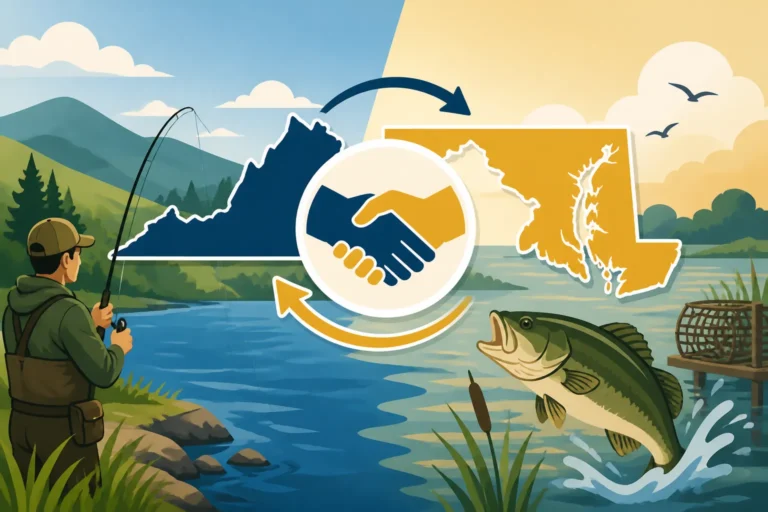
At its heart, fishing license reciprocity means that a valid fishing license issued by one state can be recognized as valid in certain, specific waters shared with another state. It's not a blanket pass to fish anywhere in the neighboring state, nor does it typically extend to all waters that happen to touch the border. Instead, these are formal agreements, almost like treaties, established between the wildlife agencies of adjacent states. The primary goal is to make life easier for anglers who frequent these shared resources, preventing the need to buy two separate licenses for the same body of water. Imagine a lake that’s split right down the middle by a state line; without reciprocity, you’d need a license for each half, which is just impractical and, frankly, ridiculous.
These agreements exist because our fish don't exactly respect invisible state boundaries drawn on a map. They swim freely, and managing shared populations requires cooperation. Reciprocity aims to streamline the experience for you while still ensuring that license fees contribute to conservation efforts in both states, even if you only hold one state's paper. It’s a thoughtful solution to a common problem, but it’s crucial to remember that it applies only to designated border waters, not the entirety of a neighboring state.
Common Misconceptions About Border Water Rules
The biggest misconception I hear from anglers is the idea that "if I have one state's license, I can fish anywhere that touches the other state." This is simply not true. Reciprocity agreements are very specific about which waters they cover. You can't, for example, buy a North Carolina license and expect it to be valid in every Virginia river that eventually flows into North Carolina. The agreement usually only applies to the mainstem of the border water itself. If you duck into a tributary that's entirely within one state, you're back to needing that state's specific license.
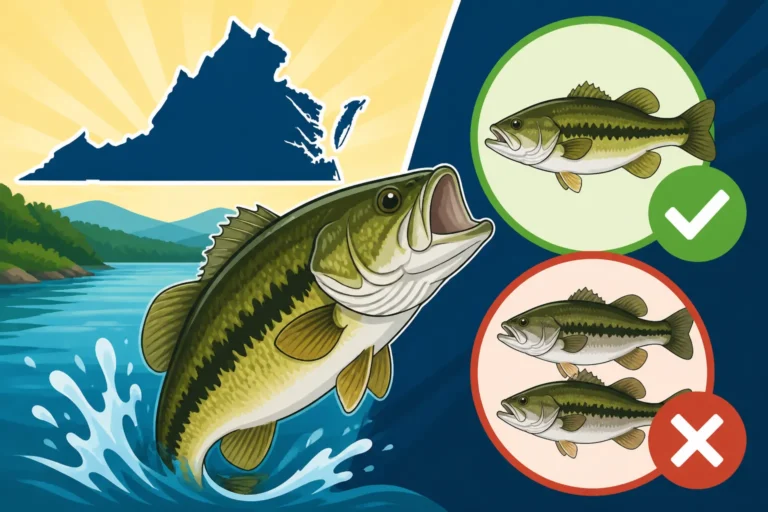
Another common misunderstanding is that reciprocity means "all rules are the same." While the license might be honored, the regulations for species, size limits, and creel limits can sometimes still be dictated by the state in whose specific waters you are fishing, or even by the state that issued your license. For instance, Virginia's daily bass limit is 5 fish combined might apply to you even if you're fishing a shared lake where the other state has a slightly different limit. This complexity often requires anglers to review both states' regulations for the specific border water they plan to fish, just to be absolutely certain. It’s an added layer of homework, but it beats a citation.
How Reciprocity Agreements Are Formed
These agreements aren't just decided over a casual chat between state wildlife officials. They are carefully negotiated and formalized processes, often involving years of discussion, scientific data collection on fish populations, and public input. State agencies, like the Virginia Department of Wildlife Resources (DWR) and its counterparts, consider geographic boundaries, ecological factors, species migration patterns, and angler usage when drafting these agreements. They want to ensure fair access for residents of both states while maintaining sustainable fisheries.
Once established, these agreements are usually enshrined in state law or administrative code. However, it's vital to understand that they are not set in stone forever. Changes in fish populations, environmental concerns, or shifts in conservation strategies can lead to amendments or even termination of these agreements. This is precisely why staying current with the latest regulations is so important. A rule that was valid last year might have changed, making your annual check of Virginia Fishing Regulations Explained and those of the neighboring state an absolute must before heading out.
Virginia and North Carolina: Sharing the Waters
The border between Virginia and North Carolina is a popular fishing destination, offering fantastic opportunities in both freshwater lakes and the vast Atlantic Ocean. However, the rules for license reciprocity differ significantly between these environments, making it crucial to understand the specifics.
Specific Reciprocity on Border Lakes and Rivers
For freshwater enthusiasts, the good news is that Virginia and North Carolina have well-established reciprocity agreements for their major shared border lakes: Lake Gaston and Kerr Reservoir, often affectionately known as Buggs Island Lake. If you possess a valid Virginia freshwater fishing license, you are generally permitted to fish the entire main body of both Lake Gaston and Kerr Reservoir, even in the sections that are geographically within North Carolina. The same holds true for North Carolina licensed anglers fishing the Virginia portions of these lakes. This is a huge convenience, allowing anglers to roam freely across these expansive waters without worrying about crossing an invisible line and needing a different license.
These reciprocal agreements extend to the main channels of the lakes. However, if you venture into tributaries or arms of the lakes that are entirely within one state's territory, you might need that specific state's license. It’s a common scenario where a creek or small river feeding into Lake Gaston, if wholly within Virginia, would require a Virginia license, even if you hold a North Carolina one for the main lake. It's always best to carry a map or use a GPS app on your phone that clearly delineates state lines on the water, just to be sure. Many anglers consider a good quality GPS chartplotter, perhaps even one found on Amazon, an essential tool for navigating these border waters.
The Nuances of License Requirements on Shared Lakes
While the license itself might be reciprocal on Lake Gaston and Kerr Lake, the specific fishing regulations can still be a point of confusion. Generally, anglers are expected to follow the size and creel limits of the state that issued their license. So, a Virginia resident fishing Kerr Lake with a Virginia Fishing License Guide would adhere to Virginia's regulations for bass, crappie, and other species, even when casting in North Carolina waters. Conversely, a North Carolina resident on the same lake would follow North Carolina's rules. This distinction means that anglers fishing side-by-side could potentially be operating under different rules, which can seem odd but is the agreed-upon standard.
It’s not just about the species you’re targeting; it can also extend to specific tackle restrictions or bait regulations. Always take the time to review the most current regulations from both states, especially if you're targeting specific fish or participating in a tournament. This information is readily available on the Virginia DWR website and the North Carolina Wildlife Resources Commission site. Knowing the rules beforehand ensures a smooth and legal fishing trip, preventing any unpleasant surprises from a vigilant game warden.
Ocean and Coastal Reciprocity Challenges
The Atlantic Ocean presents a different, and generally more complex, picture when it comes to reciprocity between Virginia and North Carolina. Unlike the freshwater lakes, there is no broad reciprocal agreement for saltwater fishing licenses in the open ocean. If you are fishing in Virginia's coastal waters (which extend three nautical miles from shore), you must possess a valid Virginia Resident Saltwater Fishing License Cost or the appropriate nonresident equivalent. If your boat drifts into North Carolina's territorial waters, you are technically required to have a North Carolina saltwater license. This can be a real headache for anglers who enjoy fishing near the state line, such as in the waters off Sandbridge or near the Outer Banks.
This lack of reciprocity means that many avid coastal anglers who fish frequently near the border opt to purchase both a Virginia and a North Carolina saltwater license to avoid any potential issues. While this adds to the expense, it offers peace of mind. For offshore fishing beyond three nautical miles, federal regulations often take precedence, and depending on the species, specific federal permits might be required in addition to state licenses. Always confirm the latest rules for your specific target species and fishing location, especially if you're chartering a boat near the border. It's an investment, but knowing you're fully compliant means you can focus on catching fish rather than worrying about paperwork.
Virginia and Maryland: Chesapeake Bay Challenges
The Chesapeake Bay, an iconic body of water, forms a significant portion of the border between Virginia and Maryland, creating a unique and often complex set of rules for anglers. While some reciprocity exists, it's far from a simple "one license fits all" situation.
Chesapeake Bay's Unique Reciprocity Situation
The main stem of the Chesapeake Bay itself offers a degree of fishing license reciprocity between Virginia and Maryland. Generally, a valid Virginia saltwater fishing license is honored for fishing in the Maryland waters of the mainstem Chesapeake Bay (south of the Potomac River's mouth), and vice-versa. This is a welcome relief for anglers pursuing popular species like striped bass (also known as Rockfish in these parts), flounder, and croaker in the vast open waters of the Bay. It allows for greater freedom of movement without the constant worry of inadvertently crossing into different licensing zones.
However, this is where the simplicity ends. This reciprocity does not extend into the tributaries of either state. If you are fishing in Virginia's tidal rivers and creeks, such as the James, York, Rappahannock, or Potomac (below the fall line), you must have a Virginia fishing license. Similarly, if you venture into Maryland's tributaries like the Patuxent, Choptank, or Severn rivers, your Virginia license is no longer valid, and you would need a Maryland license. This distinction can be incredibly frustrating for anglers, as the rules can literally change the moment you turn a corner into a creek. It truly highlights the importance of understanding Virginia and Maryland fishing license reciprocity rules before you head out.
Striped Bass and Specific Species Regulations
Striped bass, or Rockfish, are a prized species in the Chesapeake Bay, and their management is a complex dance between Virginia and Maryland, as well as federal authorities. While your reciprocal license might allow you to fish for them in the main Bay, the specific regulations regarding Striped Bass Season and Slot Limit in Virginia, daily creel limits, and size restrictions can still differ between the two states. Typically, you are required to adhere to the regulations of the state in which you are licensed, or, in some cases, the regulations of the state whose waters you are physically fishing. This means you need to be acutely aware of both sets of rules.
For example, Virginia and Maryland might have slightly different open seasons or slot limits for striped bass, even if you're fishing in the main Bay with a reciprocal license. A fish that's legal to keep under Virginia's rules might be illegal under Maryland's, and vice versa. It’s a situation that demands careful attention to the latest advisories from both the Virginia DWR and the Maryland Department of Natural Resources. Ignoring these nuances can lead to fines, illustrating why knowing every detail of Virginia Fishing Rules Every Angler Should Know is so important.
Potomac River Special Agreement
The Potomac River presents its own unique regulatory landscape, being a shared border with Maryland. Unlike the main stem of the Chesapeake Bay, the tidal Potomac River is governed by a special interstate compact and regulated by the Potomac River Fisheries Commission (PRFC). This means that a standard Virginia or Maryland fishing license alone might not be sufficient to fish its waters.
To fish in the tidal Potomac River, anglers typically need a PRFC license, or a valid Maryland or Virginia tidal fishing license with a specific PRFC endorsement or stamp. This adds an extra layer of complexity that can often catch anglers off guard. The PRFC exists to manage the resources of this vital river jointly, ensuring consistency in regulations and conservation efforts. Before heading to the Potomac, it's imperative to check the PRFC's regulations and ensure you have the correct licensing to avoid any issues. This specialized requirement is a perfect example of why getting a general A Complete Guide to Fishing Licenses in Virginia isn't always enough for specific border waters.
Virginia and West Virginia: Mountain State Connections
Virginia shares a mountainous border with West Virginia, leading to shared rivers that offer excellent freshwater fishing opportunities, especially for smallmouth bass and various trout species. While these connections exist, understanding the reciprocity agreements is crucial for anglers.
Reciprocity on the Shenandoah and Potomac Headwaters
Along the border between Virginia and West Virginia, some reciprocal agreements are in place, primarily on sections of the mainstem Potomac River and its forks that form the state line. For specific stretches of these rivers, a valid Virginia freshwater fishing license can be honored in West Virginia waters, and a West Virginia license in Virginia waters. This is particularly beneficial for anglers who enjoy floating or wading these scenic rivers, as it allows them to cross between state jurisdictions without needing to purchase multiple licenses for the main river itself.
However, just like with other border agreements, this reciprocity generally does not extend into tributaries. If you decide to explore a feeder creek or a stream that flows into these shared rivers, and that creek is entirely within one state, you will need the appropriate fishing license for that specific state. So, if you're fishing a smallmouth bass hotspot on the main Potomac with your Virginia license, but then decide to check out a productive-looking side creek that's wholly in West Virginia, you'd need a West Virginia license for that creek. It requires a bit of planning and awareness, but it opens up a lot of fishing potential.
Smallmouth Bass and Trout Fishing Considerations
The shared waters between Virginia and West Virginia are renowned for their exceptional smallmouth bass and trout fishing. Anglers from both states flock to these rivers for the chance to hook into these feisty species. The Shenandoah River, in particular, is famous for its Fly Fishing for Trout and Smallmouth Bass on the Shenandoah River. While the general license reciprocity might cover basic fishing for these species on the mainstem rivers, specific rules for certain types of fishing or waters can still differ.
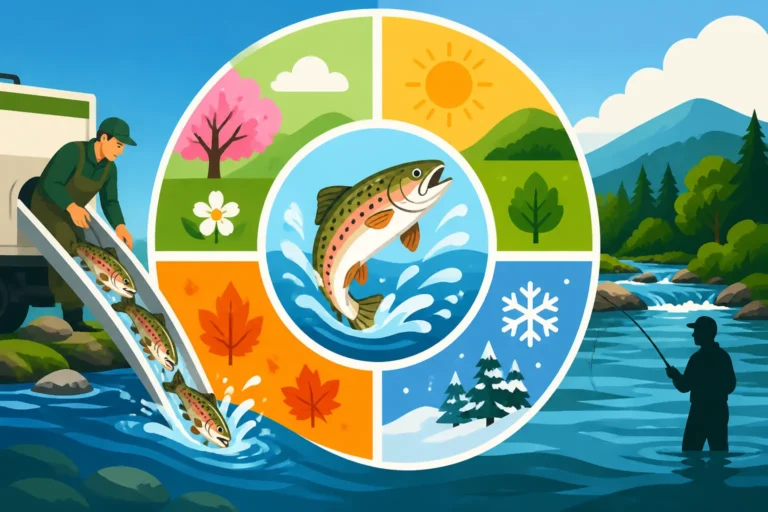
For instance, if you're targeting trout in designated wild trout streams or state-stocked trout waters, each state will have its own specific requirements, including potential special trout stamps or endorsements, regardless of general reciprocity. Wild Trout Stream Rules in Virginia outline specific regulations for Virginia's wild trout areas, and similar rules apply in West Virginia. So, even if your Virginia freshwater license is valid on a reciprocal section of the Potomac, if you then decide to pursue trout in a West Virginia-designated trout stream, you'd likely need a West Virginia trout stamp. It’s an extra layer of planning, but the reward of landing a beautiful native brook trout or a hard-fighting smallmouth bass makes it worthwhile. You can find specialized trout fishing gear, from fly rods to waders, available through retailers like Amazon, helping you prepare for these diverse fishing opportunities.
Navigating Access and Launch Points
A practical consideration for border water fishing, even with reciprocity, involves access points and boat launches. Often, these facilities are managed by individual states. This means that while your Virginia license might be valid to fish the shared waters of the mainstem Potomac, if you plan to launch your boat from a ramp located entirely within West Virginia, you are subject to West Virginia's rules for boat registration, launch fees, and any specific ramp usage regulations. The same applies in reverse.
It's not uncommon for anglers to launch from their "home" state and then fish across the border using reciprocity. However, being aware of the rules and potential fees for launching in the neighboring state is important. Always check the websites of both the Virginia DWR and the West Virginia Division of Natural Resources for information on public access points, boat ramps, and any associated permits required. A little research upfront can save you a lot of hassle and potential delays when you're eager to get on the water.
Virginia and Kentucky/Tennessee: Western Border Waters
Virginia's western borders with Kentucky and Tennessee also feature valuable fishing resources, with specific reciprocity agreements in place that benefit anglers in these regions. These agreements are crucial for fishing shared rivers and reservoirs.
The Virginia-Kentucky Reciprocity on the Levisa Fork
Along Virginia's far western border with Kentucky, specific reciprocal agreements exist for certain sections of the Levisa Fork of the Big Sandy River system. This river, winding through the rugged Appalachian landscape, provides excellent fishing for species such as smallmouth bass, muskie, and various panfish. For those designated border sections of the Levisa Fork, a valid Virginia freshwater fishing license will generally be honored, allowing you to fish the Kentucky side of the river, and a Kentucky license will be valid on the Virginia side.
This agreement is a significant benefit for local anglers and visitors alike, as it eliminates the need to purchase two licenses just to fish this one river. However, as with other reciprocal agreements, this typically applies only to the main stem of the border water itself. If you decide to explore any tributaries or impoundments that are entirely within one state's jurisdiction, you would need the appropriate license for that specific state. Always verify the precise boundaries of the reciprocal waters to ensure you remain compliant with local regulations.
The Virginia-Tennessee Border and South Holston Lake
One of the most well-known and appreciated reciprocity agreements exists along the Virginia-Tennessee border, specifically for the beautiful South Holston Lake. This large reservoir is a premier fishing destination renowned for its excellent smallmouth bass, walleye, and striped bass populations, drawing anglers from both states. The agreement here is wonderfully straightforward: a valid Virginia freshwater fishing license allows you to fish the entire main body of South Holston Lake, including the sections that lie within Tennessee. Conversely, a valid Tennessee freshwater fishing license allows you to fish the Virginia portions of the lake.
This broad reciprocity for the main lake is a huge convenience, making it easy for anglers to navigate and fish the entire reservoir without licensing concerns. However, it's a critical point to remember that this agreement typically does not extend to the tributaries that feed into South Holston Lake. If you fish a stream or river that is entirely within Virginia and flows into the lake, you need a Virginia license for that specific tributary. The same rule applies to tributaries wholly within Tennessee. So, while the main lake is covered, always be mindful when exploring feeder streams.
Understanding Which State's Rules Apply
For reciprocal waters like South Holston Lake and certain sections of the Levisa Fork, a common question arises: "Which state's fishing regulations (size limits, creel limits, seasons) do I follow?" The answer can vary depending on the specific agreement, but often, anglers are expected to adhere to the fishing regulations of the state that issued their license. So, if you're a Virginia resident fishing the Tennessee side of South Holston Lake with your Virginia license, you would generally follow Virginia's length and daily limits for the fish you catch.
However, some agreements might specify that the regulations of the state in which the fish was caught, or the state from which you launched your boat, take precedence. This is why it is absolutely paramount to consult the most up-to-date regulations from both state wildlife agencies (Virginia DWR, Kentucky Department of Fish and Wildlife Resources, and Tennessee Wildlife Resources Agency) before heading out. These details are typically outlined in their annual fishing guides. You can often find compact, waterproof copies of these regulations that fit right into your tackle box, and sometimes even on Amazon, making it easier to keep them handy on the water.
Practical Tips for Border Water Anglers
Fishing across state lines can be incredibly rewarding, offering access to diverse fisheries and new challenges. However, it also demands a proactive approach to understanding and adhering to regulations. Don't let confusing rules spoil your day on the water!
Always Verify Current Regulations
This cannot be stressed enough: rules change. State wildlife agencies, including the Virginia Department of Wildlife Resources, regularly update their fishing regulations. These updates can occur annually, or sometimes even mid-season, especially for highly managed species like striped bass or certain trout populations. Relying on outdated information is one of the quickest ways to find yourself in hot water with a game warden.
Before every single trip to a border water, take a few minutes to visit the official websites of both Virginia DWR and the equivalent agency in the neighboring state (e.g., North Carolina Wildlife Resources Commission, Maryland Department of Natural Resources). Look specifically for sections detailing reciprocal agreements and the regulations for the particular body of water you plan to fish. You'll find valuable information on Virginia Fishing License Costs and Types Explained and specific species limits. Downloading digital copies of the most current regulations to your phone or printing out relevant sections to keep in your tackle box is a smart practice. This vigilance ensures you're always operating within the law, allowing you to focus on the thrill of the catch.
Essential Gear and Documentation for Border Fishing
Beyond your actual fishing rod and tackle, there's some vital "gear" that every border water angler should carry. First and foremost, ensure you have your physical fishing license (or a valid digital copy if accepted by the state) readily accessible. This includes any necessary endorsements or stamps, such as those for fishing stocked trout waters, as outlined in Stocked Trout License Requirements in Virginia. Game wardens will invariably ask to see your license, and fumbling around for it or not having it at all is never a good start to the interaction.
Secondly, always carry a valid photo ID, such as your driver's license. This helps wardens verify your identity and residency, which can be crucial for confirming license validity and any resident-specific regulations. Consider investing in a waterproof wallet or holder for your license and ID, as things tend to get wet on a fishing trip. Having a fully charged phone with internet access is also invaluable for quickly looking up a regulation or confirming a reciprocal agreement on the fly. This way, if there's any doubt about Freshwater and Saltwater Fishing Licenses in Virginia, you have the tools to clarify it instantly.
When in Doubt, Buy Both Licenses
Despite your best efforts to research and understand complex reciprocity agreements, there might still be situations where you feel uncertain. Perhaps the specific wording of an agreement is ambiguous, or you plan to fish widely across various main stems and tributaries. In these scenarios, the safest and most stress-free approach is to simply purchase fishing licenses for both Virginia and the neighboring state.
While it's an additional expense, consider it an investment in peace of mind. The cost of a second license almost always pales in comparison to the potential fines, court costs, and even confiscation of gear you could face for fishing without a proper license. Penalties for Fishing Without a License in Virginia can be substantial, making the small upfront cost of an extra license a very wise decision. For example, if you're a nonresident frequently fishing both Virginia and North Carolina waters, purchasing a Nonresident Freshwater Fishing License in Virginia and its North Carolina equivalent might be your best bet to cover all your bases, ensuring every cast is a legal one. You can typically find information on How to Buy a Fishing License Online in Virginia for both states through their respective DWR/DNR websites.
Border Water Fishing Reciprocity Summary
| Border State | Key Border Water(s) | Reciprocity Status | Notes on Rules & Considerations |
|---|---|---|---|
| North Carolina | Lake Gaston, Kerr Reservoir (Buggs Island Lake), Atlantic Ocean | Yes (Lakes), No (Ocean) | Lakes: Valid VA or NC freshwater license accepted on main bodies. Anglers typically follow state of origin regulations. Ocean: Generally requires specific state's saltwater license for its territorial waters. |
| Maryland | Mainstem Chesapeake Bay, Potomac River | Yes (Main Bay), Special (Potomac), No (Tributaries) | Main Bay: Valid VA or MD saltwater license accepted. Potomac River: Regulated by PRFC; often requires PRFC license or state license + endorsement. Tributaries: Require specific state's license. |
| West Virginia | Mainstem Potomac River, Shenandoah River (upper sections) | Yes (Main Potomac/Shenandoah) | Reciprocity primarily for mainstem rivers forming the border. Tributaries: Require specific state's license. Separate trout stamps or permits may apply for wild/stocked waters. |
| Kentucky | Levisa Fork (Big Sandy River System) | Yes (Specific border sections) | Applies to designated sections of the Levisa Fork. Anglers typically follow state of origin regulations. Tributaries: Require specific state's license. |
| Tennessee | South Holston Lake | Yes (Entire main body of the lake) | Valid VA or TN freshwater license accepted on the entire main lake. Anglers typically follow state of origin regulations. Tributaries: Require specific state's license. |
Disclaimer
The information provided in this guide is for general informational purposes only and is not intended as legal advice. Fishing regulations, license requirements, and reciprocity agreements are subject to change by state and federal agencies. Always consult the most current official regulations from the Virginia Department of Wildlife Resources (DWR) and the relevant wildlife agencies of neighboring states before engaging in any fishing activities. Compliance with all applicable laws and regulations is the sole responsibility of the angler.