Freshwater and Saltwater Fishing Licenses in Virginia
There's nothing quite like planning a perfect day out on the water in Virginia, only to realize you're completely unsure which fishing license you actually need. Is it freshwater? Saltwater? Both? The confusion is real, and the last thing anyone wants is a run-in with a game warden. This comprehensive guide is here to clear up all that head-scratching, breaking down everything you need to know about navigating Virginia's freshwater and saltwater fishing licenses.
Understanding the Core Need for a Fishing License
It’s easy to feel like fishing licenses are just another hoop to jump through, another fee to pay. You might think, "I'm just casting a line from the bank, what's the big deal?" But the truth is, these licenses are far more than bureaucratic red tape; they're the bedrock of healthy aquatic ecosystems and sustainable fishing opportunities for everyone. Without them, our beloved Virginia waters would quickly suffer.
The 'Why' Behind the License
Imagine if everyone could just fish whenever and however they pleased, with no limits or regulations. Our rivers, lakes, and coastal waters would be quickly overfished, habitats would be destroyed, and future generations wouldn't have the same incredible resources we enjoy today. Fishing licenses provide the essential funding for the Virginia Department of Wildlife Resources (DWR) and the Virginia Marine Resources Commission (VMRC) to manage fish populations, conduct scientific research, restore habitats, enforce regulations, and provide public access. Think of your license fee as an investment in the very thing you love to do. It ensures that the bass are still biting in Smith Mountain Lake, the trout are thriving in the Shenandoah River, and the rockfish are running in the Chesapeake Bay for years to come. This vital funding helps keep our waterways clean and our fish strong. You can learn more about how these funds are used in our article on How Fishing License Fees Support Wildlife Conservation in Virginia.
Consequences of Fishing Without One
It’s tempting, especially if you’re only planning a quick trip, to just "chance it" without a license. But trust me, it's not worth the risk. Virginia game wardens and wildlife officers are out there, they're highly trained, and they know the waters. Getting caught fishing without a valid license can lead to some pretty significant headaches. We’re not just talking about a stern lecture; you could face hefty fines, potentially ranging from hundreds of dollars, and even the confiscation of your fishing gear. Nobody wants to see their rod and reel taken away! Beyond the immediate financial penalty, you're also damaging the integrity of the system that protects our natural resources. It's simply not fair to the anglers who do follow the rules and contribute to conservation. Understanding the Penalties for Fishing Without a License in Virginia can help you appreciate the importance of compliance.
Distinguishing Freshwater from Saltwater Licenses
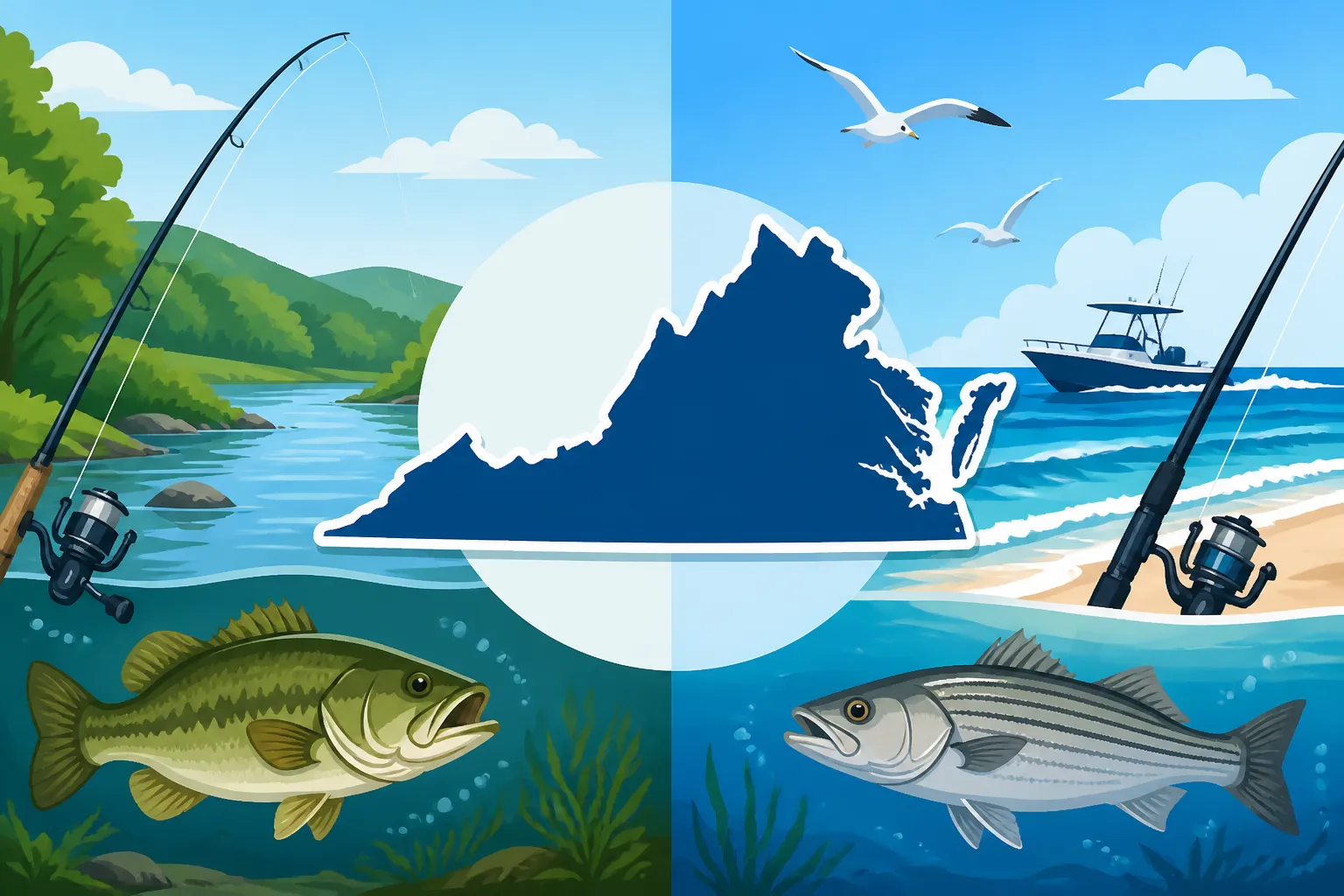
One of the most common sources of confusion for anglers in Virginia is figuring out whether they need a freshwater, saltwater, or even a combination license. It seems straightforward, but Virginia's diverse geography, with its vast network of rivers, lakes, and tidal estuaries leading to the Atlantic Ocean, can make the distinction tricky. Understanding these boundaries is key to ensuring you're properly licensed for your specific fishing adventure.
Defining Virginia's Freshwater Waters
Generally speaking, freshwater in Virginia refers to inland lakes, ponds, and rivers that are not affected by tidal fluctuations or saltwater intrusion. This includes the vast majority of Virginia's impressive impoundments like Lake Anna, Claytor Lake, and Kerr Lake (Buggs Island Lake), as well as the upper reaches of major rivers like the James River, Shenandoah River, and Rappahannock River before they become brackish. If you're targeting largemouth bass, smallmouth bass, crappie, catfish, or trout in these areas, you'll need a freshwater fishing license.
For instance, if you're planning a trip to catch trophy largemouth bass at Smith Mountain Lake, you’re firmly in freshwater territory and a freshwater license is a must. The DWR manages these fisheries, and their regulations apply. Even if a river eventually flows into the bay, its upper stretches are purely freshwater. It's important to know your specific fishing spot and whether it's above the "fall line" or the defined saltwater/freshwater demarcation lines set by the DWR. The good news is, a Virginia resident freshwater fishing license cost is typically quite reasonable, making it accessible for most local anglers.
Understanding Virginia's Saltwater Boundaries
Virginia's saltwater domain encompasses the lower sections of its tidal rivers, the expansive Chesapeake Bay, and, of course, the Atlantic Ocean coastline. This is where you'll find species like striped bass (often called "rockfish" locally), flounder, red drum, cobia, and various types of bottom fish. The key differentiator for saltwater is the influence of ocean tides and the presence of saline water.
The VMRC oversees saltwater fishing, and their regulations differ significantly from the DWR's freshwater rules. Many major rivers, like the James, York, Rappahannock, and Potomac, start as freshwater but transition into tidal brackish and then full saltwater as they approach the Chesapeake Bay. You need to be aware of where these lines are drawn. For example, fishing for striped bass in the lower James River near Newport News or from a pier at Virginia Beach will absolutely require a saltwater license. Additionally, anyone fishing in saltwater, even if exempt from a license (like during free fishing days or specific senior exemptions), still needs to register with the Virginia Saltwater Recreational Fishing License Program (FIP). This is crucial for data collection on recreational catches. You can read more about Virginia's 10-Day Saltwater Fishing License for shorter trips.
The Combination License: A Bridge Between Worlds
For anglers who love to explore all of Virginia's diverse fishing opportunities, moving from a mountain stream for trout one weekend to the Chesapeake Bay for rockfish the next, the thought of buying two separate annual licenses can be a bit daunting. This is precisely where the combination freshwater and saltwater fishing license becomes your best friend.
A combination license covers both freshwater and saltwater recreational fishing within Virginia. It’s a single purchase that saves you the hassle of juggling multiple licenses and often represents a cost savings compared to buying them individually. For a resident, combining freshwater and saltwater into one Virginia license runs $39.50, which is usually a better deal than purchasing two separate annual licenses. This option is particularly convenient for those who fish tidal rivers, where the water can transition from freshwater to brackish to full saltwater, eliminating any ambiguity about which license you need at any given point along the waterway. It means you can chase smallmouth bass in the upper Rappahannock and then head downstream for striped bass without a second thought. This simplifies your planning and ensures you're always covered, no matter where your angling adventures take you.
Resident vs. Non-Resident License Categories
Just like many states, Virginia has different licensing structures and fees for its residents compared to visitors from out of state. It's all about contributing to the conservation efforts of the state whose resources you're enjoying. Understanding these distinctions is crucial, whether you've lived in Virginia your whole life or you're just visiting for a fishing vacation.
Virginia Resident Fishing License Costs
If you're a proud Virginian, you'll generally find the cost of fishing licenses to be more affordable, as your tax dollars already contribute to the state's infrastructure and natural resource management. For instance, Virginia charges $23 for a resident freshwater fishing license for the entire year. If your passion lies in the coastal waters, $17.50 buys a resident saltwater license in Virginia. And as we discussed, the combined freshwater and saltwater option offers convenience and value, typically priced around $39.50. These prices are designed to be accessible, encouraging local participation in fishing while also ensuring that the DWR and VMRC have the necessary funds to manage and protect our state’s incredible aquatic environments. It’s a small investment for year-round access to some of the best fishing on the East Coast.
Nonresident Fishing License Fees Explained
For our friends visiting from out of state, the license fees are a bit higher, which is standard practice across the country. These fees help compensate for the fact that non-residents don't contribute to Virginia's tax base in the same way residents do, while still benefiting from the state's managed fisheries. For example, an out-of-state angler pays $47 for a Virginia freshwater license, significantly more than a resident. If you’re coming for saltwater action, Virginia's annual nonresident saltwater-only license is $25. And for the ultimate flexibility, a Virginia nonresident combo license runs $71.
These non-resident fees are still quite reasonable when you consider the quality of fishing Virginia offers, from the legendary bass fishing at Lake Gaston to the world-class striped bass fishery in the Chesapeake Bay. Many visitors find these costs a small price to pay for the opportunity to experience Virginia's diverse waters. Short-term options are also available, which can be more cost-effective for tourists planning a brief trip. For more details, our guide on Virginia Fishing License Requirements for Residents and Nonresidents provides an in-depth look.
Proof of Residency Requirements
Establishing residency for fishing license purposes isn't just about living in Virginia; it involves meeting specific criteria set by the state. This helps prevent abuse of the resident pricing and ensures fairness. Generally, to qualify as a resident, you must have resided in Virginia continuously for at least six consecutive months immediately prior to applying for a license.
Proof can come in various forms, such as a valid Virginia driver's license, voter registration, or a state income tax return. For college students, attending an accredited Virginia institution can also establish residency for license purposes, even if their permanent home is elsewhere. Active-duty military personnel stationed in Virginia also qualify as residents, along with their dependents. It’s always best to have your proof of residency handy when purchasing a license, especially if you’re buying in person. Misrepresenting your residency status can lead to serious legal consequences, so always be truthful and prepared.
Types of Freshwater Licenses Available
Virginia offers a variety of freshwater fishing licenses to cater to different needs, from annual passes for dedicated anglers to short-term options for casual visitors. Understanding these options can help you choose the most economical and appropriate license for your angling plans.
Annual Freshwater Licenses
The annual freshwater fishing license is the most common choice for Virginia residents and non-residents alike who plan to fish regularly throughout the year. For residents, as mentioned, this costs $23 and provides year-round access to all public freshwater lakes, rivers, and streams across the Commonwealth. This is the go-to option if you're hitting your favorite local spots like Lake Moomaw for trout or the James River for catfish, multiple times a year. The license is valid for 12 months from the date of purchase, not just for a calendar year, which gives you maximum flexibility. It's often the most cost-effective solution in the long run if you expect to fish more than a couple of times. You can typically purchase these online, at DWR agents, or even by mail. The ease of getting an annual license means you're always ready when the fishing bug bites.
Short-Term Freshwater Options
For those who are just visiting Virginia, or perhaps only plan a single weekend fishing trip, buying a full annual license might feel like overkill. Thankfully, Virginia offers convenient short-term freshwater licenses that are perfect for these situations. A popular option is the Five days of Virginia freshwater fishing costs $14 for non-residents. This allows you to fish for five consecutive days, making it ideal for a vacation or a quick getaway to a specific fishing destination like the Shenandoah Valley.
While residents often opt for the annual pass due to its value, these short-term licenses are particularly beneficial for out-of-state anglers. They offer flexibility and reduce the upfront cost, making it easier to enjoy Virginia's excellent freshwater fishing without committing to a full year. Remember, these licenses are for consecutive days, so plan your trip accordingly to maximize their use. You can often purchase these short-term passes quickly and easily through the DWR website, allowing you to secure your license just before your trip.
Special Freshwater Endorsements
Beyond the basic freshwater license, some specific types of fishing in Virginia require additional endorsements. The most common of these is the Trout Fishing License Requirements in Virginia. If you plan on fishing in designated stocked trout waters, or even some wild trout streams that have specific regulations, you’ll likely need this special stamp in addition to your regular freshwater license. These endorsements help fund the DWR's extensive trout stocking program, which ensures that popular cold-water fisheries are regularly replenished, offering excellent opportunities for catching rainbow, brown, and brook trout.
These special endorsements are not always necessary for all freshwater fishing, so it's essential to check the DWR regulations for your specific fishing location and target species. For example, if you're just bass fishing in a warm-water lake, you likely won't need a trout stamp. However, if you're heading to a stream designated for trout, it’s a must-have. You can usually add these endorsements when you purchase your main license, either online or in person. This layering of licenses ensures that specific conservation efforts are directly funded by the anglers who benefit most from them.
Types of Saltwater Licenses Available
Virginia’s expansive saltwater fisheries, from the Atlantic Ocean to the vast Chesapeake Bay, also have their own set of licensing requirements. Just like freshwater, there are annual options, short-term passes, and some unique considerations, particularly concerning the mandatory FIP registration.
Annual Saltwater Licenses and FIP Registration
For anglers who regularly pursue species like striped bass, flounder, or red drum in Virginia's coastal and tidal waters, an annual saltwater fishing license is the most practical choice. For residents, the $17.50 annual saltwater license is an incredible value, granting year-round access to the rich marine environment of the Commonwealth. Non-residents have a slightly higher fee, but it still offers extensive access.
A critical point for all saltwater anglers, even those exempt from needing a license (like during Free Fishing Days in Virginia or certain senior exemptions), is the Virginia Saltwater Recreational Fishing License Program (FIP) registration. This is a free, but mandatory, annual registration. It's not a license itself, but a way for the VMRC to collect vital data on recreational fishing effort and harvest, which is essential for managing fish stocks sustainably. Think of it as your official check-in to Virginia's saltwater world. You can register for FIP online through the VMRC website. It’s a simple process but failing to do so, even with a valid saltwater license, can lead to a citation. The state even offers Free FIP saltwater registration for Virginia seniors explained as a courtesy.
Short-Term Saltwater Options
Just like freshwater, Virginia offers convenient short-term saltwater fishing licenses, perfect for tourists or those planning a brief coastal getaway. These options are particularly popular for visitors heading to Virginia Beach or the Eastern Shore for a few days of pier or boat fishing. Ten days of Virginia saltwater fishing costs just $10, making it an incredibly affordable option for a week-long vacation. Another choice is a five-day Virginia saltwater pass runs $24 for non-residents.
These short-term licenses provide excellent flexibility for anglers who don't need a full annual pass. They allow you to participate in the excitement of saltwater fishing without the larger commitment. It's important to remember that even with these short-term licenses, the free FIP registration is still mandatory. So, make sure you complete that step before casting your line into the Chesapeake Bay or the Atlantic. These passes can be easily acquired online, saving you time once you arrive at your destination.
Special Exemptions for Saltwater Fishing
While most anglers require a saltwater license, Virginia does offer a few specific exemptions. For instance, anglers fishing from a licensed public pier (one that holds a blanket license for its patrons) often do not need an individual saltwater license, though they do still need to complete the free FIP registration. This is a fantastic option for families or beginners who want to try saltwater fishing without investing in gear or a full license right away. You’ll frequently see these piers along the Chesapeake Bay and at popular beach destinations like Virginia Beach.
Additionally, certain senior citizens in Virginia may qualify for reduced-cost or even free saltwater fishing opportunities. Virginia offers a one-time $5 saltwater license for anglers over 65, which is a fantastic lifetime option for those who qualify. Always check the specific DWR and VMRC regulations, as these rules can change, and it's essential to confirm your eligibility before assuming an exemption. Knowing these exemptions can save you money and simplify your fishing plans, particularly for those who might not fish very often.
Where and How to Purchase Your License
Once you've figured out which license you need, the next step is actually getting your hands on it! Virginia has made the process fairly straightforward, offering several convenient methods to purchase your fishing license, whether you prefer the ease of online shopping or the personal touch of a local vendor.
Online Purchase Process
In today's digital age, buying your Virginia fishing license online is often the quickest and most hassle-free method. The Virginia DWR website is the official portal for purchasing both freshwater and saltwater licenses, as well as any necessary endorsements or the free FIP registration. The process is intuitive: you navigate to their licensing section, select your residency status, choose the type of license you need, and complete the transaction with a credit card.
One of the biggest advantages of purchasing online is convenience – you can do it from the comfort of your home, 24/7, even just minutes before you head out to fish. After completing your purchase, you'll receive a temporary license that you can print out immediately or store on your smartphone. Just make sure you have it accessible, as game wardens will ask to see it. Our guide on How to Buy a Fishing License Online in Virginia provides step-by-step instructions. While you won't find fishing licenses directly on Amazon, you can certainly find plenty of fishing gear there, like reels, lures, and tackle boxes, to get ready for your trip.
In-Person Retail Locations
For those who prefer a more traditional approach, or perhaps need to ask a question before committing to a purchase, Virginia offers numerous authorized license agents throughout the state. These agents include many sporting goods stores, bait and tackle shops, Walmart locations, and even some smaller convenience stores. They're often located conveniently near popular fishing spots, making it easy to grab your license on the way to the water.
Buying in person allows you to speak with knowledgeable staff who might offer local fishing tips or help you navigate the various license options. It also provides the comfort of having a physical license card in your hand right away, which some anglers prefer over a digital copy. Before heading out, it's a good idea to check the DWR website for a list of authorized agents near your location to ensure they are open and stock the license type you need. This is also a great way to support local businesses that cater to the angling community. Our article on Where to Buy a Virginia Fishing License lists many of these locations.
Phone and Mail-In Options
While less common these days, Virginia still provides phone and mail-in options for purchasing or renewing your fishing license. These methods can be particularly useful for individuals who may not have easy access to the internet or physical retail locations.
To purchase by phone, you can usually call the DWR's customer service line. They can process your order over the phone and often mail out your physical license within a few business days. This can be a good option if you have specific questions that aren't easily answered online. For mail-in purchases, you would typically download a form from the DWR website, fill it out, and send it along with a check or money order. This method takes the longest, so it’s best suited for those who plan far in advance. Remember, processing times for mail-in applications can vary, so don't wait until the last minute if you choose this route. While it's not the fastest, it offers another accessible pathway for anglers to obtain their required licenses. You can even find information on Virginia fishing license mail-in renewal option if you prefer that route for returning customers.
Common Scenarios and Confusing Situations
Fishing regulations can sometimes feel like a maze, especially when you encounter unique situations or try to understand the nuances of the rules. Virginia's diverse fishing environments and angler demographics often lead to specific questions about licenses. Let's tackle some of the most common head-scratchers.
Fishing with Kids and Youth License Rules
One of the most frequently asked questions is about children and fishing licenses. It’s wonderful to introduce kids to fishing, but do they need their own permit? In Virginia, generally, children under the age of 16 are not required to purchase a fishing license. This is fantastic news for families, as it makes it much easier and more affordable to get youngsters hooked on the sport. Imagine a day trip to a local pond with your children, where they can cast a line for bluegill or crappie without needing their own Virginia charges $23 for a resident freshwater fishing license, just for them.
However, there's a small but important caveat for saltwater fishing: even if children are exempt from purchasing a license, they still need to be registered with the Virginia Saltwater Recreational Fishing License Program (FIP) if they are 16 years of age or older. For those under 16, they are fully exempt from both the license and the FIP registration for saltwater. It's always a good idea to double-check current regulations, as age limits can sometimes change. Our guide on Do Kids Need a Fishing License to Fish? goes into greater detail on this topic. Encouraging kids to fish without the burden of a license fee is a fantastic way Virginia promotes fishing as a family-friendly activity.
Pier Fishing and License Requirements
Pier fishing is a beloved pastime for many, offering accessible angling, often with amenities, and a chance to mingle with other anglers. But the question of whether you need a license when fishing from a pier can be a bit confusing. The answer often depends on the type of pier. Many larger, public fishing piers in Virginia hold what's called a "blanket license." This means the pier itself is licensed, and anyone fishing from that pier does not need to purchase an individual freshwater or saltwater fishing license. This is a huge benefit, especially for casual anglers or tourists who might only fish once or twice a year.
However, if you're fishing from a private pier (like one at a rental property or a friend's house) or a public pier that doesn't have a blanket license, then you absolutely need your own individual license. Always verify the status of the pier before you cast your line. A quick call to the pier operator or a check of their website should clarify their specific licensing situation. And remember, even on a blanket-licensed pier in saltwater, if you are 16 or older, the free FIP registration is still mandatory! It's an easy step that prevents potential fines. The convenience of pier fishing with a blanket license often makes it an ideal starting point for beginners or for those without boats.
Reciprocity with Neighboring States
Virginia shares borders with several other states, and many anglers live close enough to routinely fish waters that might straddle state lines. This naturally leads to questions about license reciprocity: Does a North Carolina license let you fish in Virginia? Is a West Virginia fishing license valid in Virginia? Unfortunately, fishing license reciprocity between states is rarely straightforward and often quite limited.
In most cases, a fishing license from a neighboring state—North Carolina, Maryland, West Virginia, Kentucky, or Tennessee—is not valid for fishing exclusively within Virginia's waters. Each state has its own distinct licensing system and regulations. However, there are some specific reciprocal agreements for shared waters. For instance, Virginia and Maryland fishing license reciprocity rules might allow you to fish certain parts of the Potomac River with either a valid Maryland or Virginia license, but these agreements are very specific and often only apply to a narrow stretch of water. It's absolutely crucial to research these specific agreements for your exact fishing location before you go. If you're fishing a river that forms a state border, check both states' DWR or VMRC websites for precise details. When in doubt, it's always safest to purchase a license for the state whose waters you'll primarily be fishing in, or for both if you plan to move between them. For cross-border anglers, understanding Virginia and Maryland fishing license reciprocity rules is a must.
Private Ponds vs. Public Waters
Many Virginians have access to private ponds on their own property or that of a friend, which often raises the question: do I still need a license to fish there? This is another area where the rules are quite specific. In Virginia, if you are fishing on private land that you own or lease, and the pond is entirely enclosed within that private property (meaning it has no inlet or outlet to public waters), you generally do not need a state fishing license. This exemption acknowledges that the landowner is managing their own resource.
However, if that "private" pond or lake has a stream or ditch connecting it to other public waters, even intermittently, then it falls under the purview of state regulations, and a fishing license would be required. The same applies if you are fishing in any public body of water, even if it's surrounded by private land. So, while you might not need a license to cast a line in your own backyard pond, if you venture to a nearby farm pond that connects to a local creek, you’ll likely need to be licensed. Always err on the side of caution and check with the DWR if you're unsure about a particular private water body's status. It's a key distinction in Virginia's Rules for Fishing on Public and Private Waters.
The Broader Impact of Your License Fees
It’s easy to focus on the immediate cost and necessity of your fishing license, but it’s just as important to understand the profound positive impact that these fees have. Every dollar spent on a fishing license in Virginia contributes directly to the health and sustainability of our aquatic environments, ensuring that the sport we love can be enjoyed for generations to come.
Funding Conservation Efforts
The revenue generated from the sale of fishing licenses in Virginia is a cornerstone of the state's conservation efforts. This money doesn't just disappear into a general fund; it's specifically earmarked for programs that directly benefit fish and their habitats. This includes funding scientific research to monitor fish populations, identify species at risk, and understand migration patterns. It also supports habitat restoration projects, such as planting aquatic vegetation, improving stream banks, and creating artificial reefs to provide shelter and food sources for various species.
These conservation initiatives are vital for maintaining biodiversity and ecological balance throughout Virginia's fresh and saltwater ecosystems. Without this dedicated funding from anglers, many of these crucial programs simply wouldn't exist, leading to degraded habitats and declining fish stocks. So, when you purchase your Virginia fishing license, you're not just buying permission to fish; you're actively contributing to the stewardship of Virginia's precious natural resources.
Supporting Fisheries Management
Beyond broad conservation, your license fees directly support the detailed science and on-the-ground work of fisheries management. This involves a myriad of activities undertaken by the DWR and VMRC to ensure healthy, sustainable fish populations that can withstand fishing pressure. A significant portion of these funds goes into stocking programs, particularly for popular species like trout in freshwater streams and lakes. These stockings provide consistent fishing opportunities, especially in areas where natural reproduction might be limited.
Fisheries management also includes enforcing regulations, which means funding for game wardens and patrol boats to ensure everyone is playing by the rules. It supports public access initiatives, like maintaining boat ramps, creating fishing piers, and acquiring land for public fishing areas. Furthermore, your license fees contribute to angler education programs, teaching responsible fishing practices, catch-and-release techniques, and the importance of conservation. Essentially, every aspect of keeping Virginia's fisheries vibrant and accessible, from the tiniest fry to the largest striped bass, relies heavily on the funding provided by anglers through their license purchases. It's a direct investment in the future of fishing in the Commonwealth.
| License Type | Resident Annual Price | Non-Resident Annual Price | Resident Short-Term Option | Non-Resident Short-Term Option | Additional Notes |
|---|---|---|---|---|---|
| Freshwater | $23.00 | $47.00 | N/A | 5-day ($14.00) | Required for inland lakes, rivers, and streams. |
| Saltwater | $17.50 | $25.00 | N/A | 10-day ($10.00), 5-day ($24.00) | Required for tidal rivers, Chesapeake Bay, Atlantic. FIP registration mandatory for 16+. |
| Combination (FW & SW) | $39.50 | $71.00 | N/A | N/A | Best value for anglers fishing both environments. |
| Trout License (Endorsement) | $23.00 | $23.00 | N/A | N/A | Required in addition to FW license for stocked or designated wild trout waters. |
| Lifetime Saltwater (Seniors) | $5.00 | N/A | N/A | N/A | One-time fee for residents 65+. FIP registration still needed. |
Disclaimer
Please be aware that fishing regulations and license fees in Virginia are subject to change. While every effort has been made to provide accurate and up-to-date information in this guide, it is always the angler's responsibility to consult the official Virginia Department of Wildlife Resources (DWR) and Virginia Marine Resources Commission (VMRC) websites or publications for the most current rules and regulations before fishing.