How to Catch Flathead Catfish at Claytor Lake
The elusive flathead catfish holds a special place in the hearts of many anglers in Virginia, and for good reason. These powerful, solitary predators offer a thrilling challenge, often growing to impressive sizes that test both skill and tackle. But successfully targeting them, especially in a diverse body of water like Claytor Lake, can feel like trying to find a needle in a haystack if you don't know where to start. Many folks spend hours on the water, only to come up empty-handed, wondering what secret handshake they're missing. This comprehensive guide is here to unravel those mysteries, arming you with the knowledge and strategies to significantly increase your chances of landing a Claytor Lake flathead.
The Allure of Claytor Lake Flatheads: Understanding Their World
There's something uniquely captivating about flathead catfish. They're not like your typical channel or blue cat, happily munching on stink bait. Flatheads are true ambush predators, powerful and cunning, making them a worthy opponent for any serious angler. Claytor Lake, with its deep waters, varied structure, and abundant forage, provides an ideal home for these formidable fish, but you've got to understand their habits to stand a chance.
Flathead Catfish: A Hunter of the Depths
Unlike their scavenger cousins, flathead catfish are primarily piscivores, meaning they prefer to hunt and eat live fish. This predatory nature sets them apart and dictates the best strategies for catching them. Imagine a powerful, broad-headed fish, typically olive to dark brown with mottled patterns that help it blend seamlessly into its surroundings – that's your flathead. They often lie in wait, perfectly still, until an unsuspecting baitfish swims by, then it's a quick, explosive strike. This makes them incredibly exciting to target, but it also means you need to rethink your bait choices and presentation. When you look at Claytor Lake's Diverse Virginia Fish Species Guide, you'll see how the array of prey fish available contributes to the flathead's robust population here.
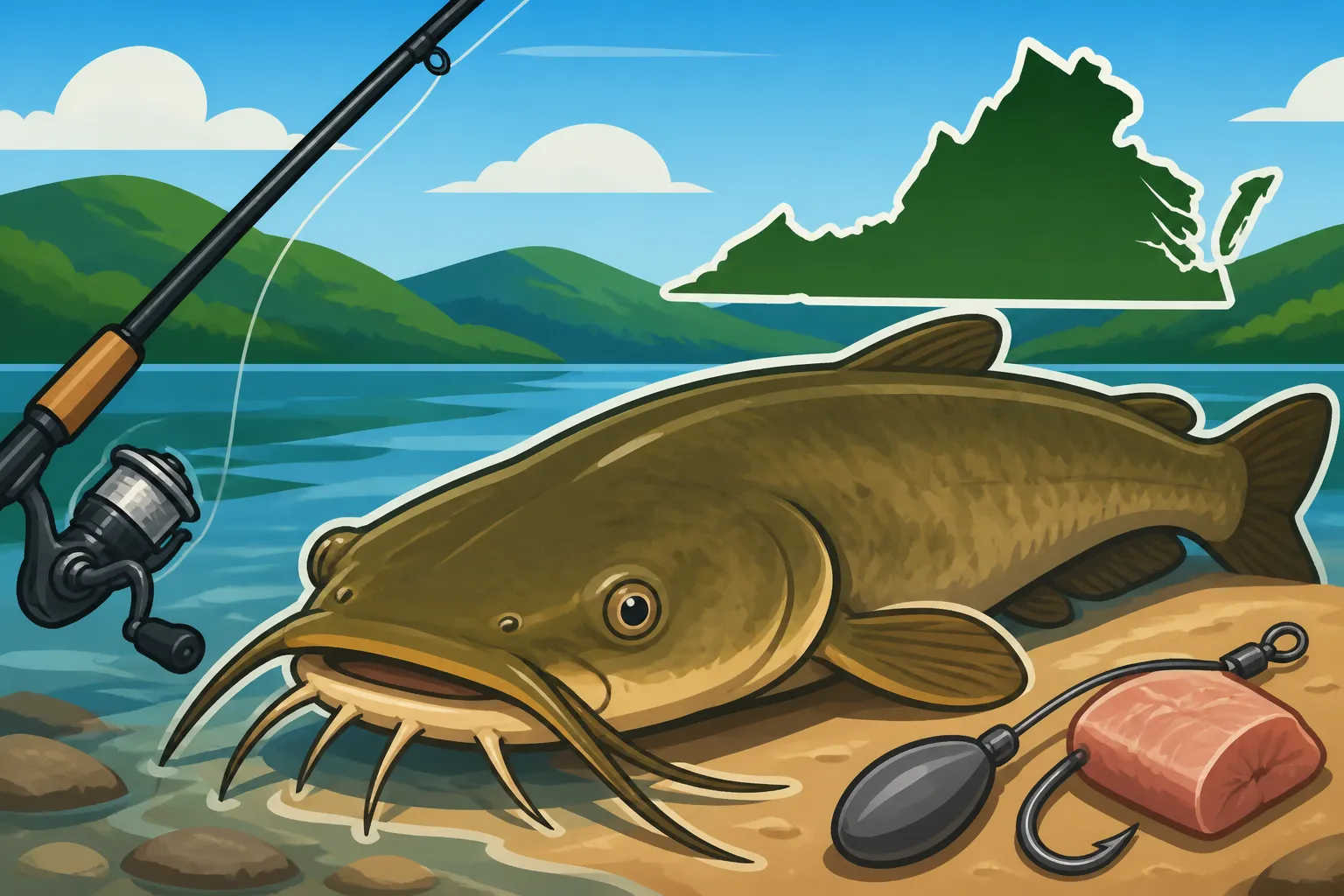
Their physical characteristics are built for power. They have a flattened, broad head (hence the name!), a lower jaw that protrudes beyond the upper, and small eyes set high on their head, indicating their bottom-dwelling, nocturnal lifestyle. They are known for their incredible strength and endurance once hooked, often making long, powerful runs and diving deep, turning any encounter into a true test of your gear and your grit. If you've ever wondered How Big Do Flathead Catfish Get at Claytor Lake?, you know the potential for truly massive fish is there, which is why they are such a sought-after trophy.
Claytor Lake, nestled in the mountains of Southwest Virginia, is an impoundment of the New River, offering a unique blend of riverine and reservoir characteristics. This diverse environment, with its steep drop-offs, rocky points, submerged timber, and a consistent flow from the New River, creates a fantastic ecosystem for flatheads. They thrive in areas with good current and plenty of cover, which Claytor Lake provides in spades. Understanding these fundamental aspects of the flathead's biology and preferred environment is the first step toward successful angling.
Prime Claytor Lake Habitats and Seasonal Movements
Flatheads are creatures of structure. They love to hide out, tucked away in submerged timber, nestled amongst rock piles, along deep ledges, or in the deepest holes they can find. These spots aren't just for cover; they are prime ambush points where a flathead can wait patiently for its next meal. On Claytor Lake, this means focusing your efforts around old creek channels that are now submerged, the remnants of former trees left standing when the lake was filled, or significant rocky outcroppings and bluff walls that plunge into deep water. Anywhere you find complex structure in deeper water, a flathead is likely nearby.
The seasons play a huge role in where these fish will be. In the spring, as water temperatures begin to rise, flatheads will often move shallower, particularly into tributary arms and shallower coves, as they prepare for their spawning period. They'll be on the lookout for suitable nesting sites, typically around submerged logs or undercut banks. This can be a great time to find them, as they're often more concentrated. However, once summer truly sets in and the surface waters heat up, flatheads will retreat to deeper, cooler waters during the day, becoming far more active under the cloak of darkness.
For Claytor Lake specifically, the influence of the New River is key. Areas near the dam and where major creeks feed into the lake often have more consistent currents and oxygen levels, which flatheads appreciate. These spots also tend to concentrate baitfish, drawing in the predators. As fall approaches, flatheads will often go on a feeding frenzy, bulking up for the leaner winter months. They can be found in a wider range of depths during this period, often following schools of baitfish. Knowing these general patterns will help you narrow down your search and focus your efforts on the most productive areas of Claytor Lake's Big Flathead Catfish habitat.
Gearing Up for Battle: Essential Tackle for Claytor Lake Flatheads
Flatheads are not for the faint of heart, and neither is the tackle required to consistently land them. Trying to fight a 30-pound flathead with gear designed for bass or crappie is a recipe for heartbreak and lost fish. You need heavy-duty equipment that can withstand powerful runs, sharp snags, and the sheer brute force of these impressive fish. Investing in the right gear upfront will save you frustration and increase your success significantly.
Rods, Reels, and Line: Building Your Foundation
When you're chasing flatheads, you need a rod that can handle serious abuse. Think heavy to extra-heavy action rods, typically between 7 and 9 feet long. This length gives you leverage for fighting big fish and provides the backbone needed to pull them out of heavy cover. A robust conventional reel, often called a baitcaster, is the preferred choice for many flathead anglers. These reels are designed for power, offering excellent cranking torque and a strong, reliable drag system that is absolutely crucial when a big flathead decides to make a run. While some anglers use large spinning reels, a conventional setup generally offers more power and line capacity.
Your line choice is equally critical. Many experienced flathead anglers opt for braided line due to its incredible strength-to-diameter ratio, zero stretch for maximum sensitivity, and excellent abrasion resistance. You'll want to spool up with at least 50-80 pound test braid. Some prefer a monofilament or fluorocarbon leader, usually 50-100 pound test, to offer a bit of shock absorption or extra abrasion resistance in rocky areas. The lack of stretch in braid means you'll feel every bump and subtle bite, which can make a huge difference, especially in deep water or at night.
Trying to cut corners with cheap, flimsy gear is a common mistake that often leads to disappointment. A big flathead can easily snap a light rod, strip a weak reel's gears, or bust a cheap line. Think of your gear as an investment in a rewarding fishing experience. While you don't need the absolute most expensive items, choosing reputable brands known for durability in their heavy-duty offerings will serve you well. For example, when outfitting my boat with a new heavy-duty rod, I often check out trusted brands available on Amazon for durability and good reviews.
Terminal Tackle: The Business End of Your Rig
The components at the very end of your line, known as terminal tackle, are what actually connect you to the fish. Getting these right is non-negotiable for flathead fishing.
When it comes to hooks, circle hooks are paramount for flatheads. These hooks are designed to naturally slide into the corner of the fish's mouth when tension is applied, making them incredibly effective for jaw hooking. This not only significantly increases your hook-up ratio but also greatly reduces deep hooking, which is vital if you practice catch and release for larger fish. Sizes can range from 8/0 to 12/0, depending on the size of your live bait. Ensure they are strong, high-quality hooks that won't straighten under pressure.
To keep your live bait on the bottom in Claytor Lake's varying currents, heavy weights are essential. You'll typically need anywhere from 2 to 8 ounces, and sometimes even more in strong currents or deeper water. No-roll sinkers or flat, pyramid-style sinkers are popular choices because they resist being swept away by current better than round weights. The goal is to keep your bait stationary right where you want it.
Don't overlook the importance of swivels, leaders, and beads. Heavy-duty barrel or ball-bearing swivels (around 100-200 lb test) prevent line twist, especially when your live bait is actively swimming. They also connect your main line to your leader. For the leader material, a strong monofilament or fluorocarbon (50-100 lb test) is often preferred, as it offers excellent abrasion resistance against rocks, wood, and the flathead's rough mouth. A small plastic bead placed between your sinker and swivel helps protect the knot from being abraded by the sliding weight. For a deeper dive into how to set up robust bottom fishing rigs, check out Catfish Bottom Fishing Techniques.
| Component | Description | Typical Size/Strength | Why it's Important |
|---|---|---|---|
| Rod | Heavy to Extra-Heavy Action | 7-9 feet | Power for fighting large fish, leverage, backbone |
| Reel | Conventional (Baitcaster) or large Spinning | 6000-10000 series | Strong drag, high line capacity, cranking power |
| Main Line | Braided Line | 50-80 lb test | No stretch, high strength, abrasion resistance |
| Leader | Monofilament or Fluorocarbon | 50-100 lb test | Abrasion resistance, knot protection, shock absorp. |
| Hooks | Circle Hooks (Heavy Duty) | 8/0 – 12/0 | Jaw hooking, reduced deep hooking, strong hold |
| Weights | No-Roll, Pyramid, or Flat Sinkers | 2-8+ ounces | Keep bait on bottom in current, precise placement |
| Swivel | Heavy Duty Barrel or Ball-Bearing | 100-200 lb test | Prevent line twist, connect main line to leader |
| Bead | Plastic | Small | Protect knot from sliding sinker |
The Golden Rule: Live Bait is King for Flatheads at Claytor Lake
If there's one piece of advice that stands above all others for flathead catfish fishing, it's this: use live bait. Flatheads are opportunistic predators, and while they might occasionally hit cut bait out of desperation, their primary instinct is to hunt and devour living, struggling prey. This fundamental truth will guide your bait selection and presentation strategies on Claytor Lake.
The Flathead's Preferred Menu: Claytor Lake Baitfish
As mentioned, flatheads are predominantly piscivores. They're not sifting through the mud for decaying scraps; they're actively chasing down and ambushing fish. This makes a huge difference compared to targeting channel catfish or blue catfish, which are often more willing to take prepared baits or cut bait. Understanding this distinction is key, and it's a major factor in why Channel Catfish vs Flathead Catfish: How Virginia Anglers Tell Them Apart isn't just about identification, but about entirely different fishing approaches.
For Claytor Lake, there's a smorgasbord of excellent baitfish species that flatheads love. Bluegill and sunfish are arguably the most popular and effective choices. They're hardy, active on the hook, and readily available. Creek chubs, suckers, and even small carp can also be incredibly effective, especially for targeting truly large flatheads. The key is to use fresh, lively bait that is native to the waters you're fishing. A struggling baitfish sends out vibrations and distress signals that a flathead can detect from a surprisingly long distance, drawing them out of their cover.
Catching your own bait can be a rewarding part of the experience, and it ensures your bait is as fresh and lively as possible. Small cast nets are excellent for catching schools of shad or small panfish in shallower areas. Minnow traps are another option for collecting smaller baitfish. Just be sure to check local regulations regarding the use of cast nets and bait collection on Claytor Lake and in Virginia. Having a sturdy bait bucket with an aerator is crucial for keeping your precious bait alive and active throughout your fishing trip. You can find reliable cast nets and aerators, and even some robust bait buckets, by browsing fishing supplies on Amazon.
Presentation is Everything: Rigging Your Live Bait
Once you've got your prime live bait, presenting it correctly is crucial. The goal is to keep your bait alive and active while positioning it directly in a flathead's strike zone, which is usually right on the bottom or just a few inches above it, often near heavy cover.
The most popular and effective rig for flathead catfish is the Carolina Rig, sometimes called a slip-sinker rig. It's simple, yet deadly. Here's how it works: you thread your heavy sinker onto your main line first, followed by a small plastic bead. Then, you tie a heavy-duty barrel swivel to the end of your main line. To the other eye of the swivel, you tie a leader (typically 12-24 inches long) of heavy monofilament or fluorocarbon. Finally, to the end of your leader, you tie your large circle hook. This setup allows the fish to pick up the bait and run with it for a short distance before feeling the weight, giving the circle hook time to set properly in the corner of its mouth.
Properly hooking your live bait is critical for keeping it lively and effective.
- Through the lips: This is a common method, allowing the baitfish to swim naturally. Hook it through both lips, being careful not to hit its brain.
- Through the dorsal fin: Hooking just under the dorsal fin can make the bait swim erratically, often triggering a strike. Again, be mindful of the bait's spine.
- Through the tail: This method can be effective, especially if you want the bait to swim away from the hook, creating a more natural presentation.
Always handle your bait gently to minimize stress and keep it alive longer. A lively baitfish struggling on the hook is an irresistible meal for a flathead. Experiment with different hooking methods to see what works best on a given day or with specific baitfish. You might also consider a three-way swivel rig, especially in areas with significant current. This rig allows you to attach a heavy sinker to one eye, your main line to another, and a leader with your bait to the third. This can keep your bait suspended just off the bottom, making it highly visible and accessible to cruising flatheads. For those looking to explore more advanced rigging, a read-through of Catfish Trotline Setup and Tips can offer insights into sturdy, effective line setups, even if you’re not using a trotline specifically.
Strategic Angling: When and How to Target Flatheads at Claytor Lake
Catching flathead catfish isn't just about having the right gear and bait; it's about understanding their behavior patterns and deploying effective strategies. These fish operate on their own schedule, and if you're not on it, you'll likely be fishing in vain. Claytor Lake offers excellent opportunities, but timing and technique are paramount.
Night Owls of the Water: Why Darkness is Your Ally
Without a doubt, flathead catfish are primarily nocturnal predators. While you might catch one during the day, especially in deeper, shaded areas or during overcast conditions, your chances of success skyrocket once the sun dips below the horizon. Under the cover of darkness, flatheads venture out from their daytime lairs in search of food. Less light means they can use their highly developed senses of smell and lateral line system (which detects vibrations in the water) to their full advantage, making them far more active and aggressive.
This shift to night fishing demands preparation. You'll need reliable headlamps or spotlights, plenty of bug spray, and clear communication with anyone on board. Safety should be your top priority. Ensure you have all required navigation lights, life jackets easily accessible, and a thorough understanding of the lake's layout, especially if you're venturing into new areas in the dark. A clear, well-lit workspace for handling fish and re-rigging lines is also essential. For more detailed advice on safety and strategy, delving into Night Fishing Techniques can provide valuable insights.
Fishing Claytor Lake at night offers a unique and serene experience, free from the daytime boat traffic and sun exposure. The stillness of the lake, punctuated only by the sounds of nature and the splash of a fish, is truly magical. However, this also means you need to be extra vigilant and organized. Have everything you need within easy reach, from extra hooks and weights to a camera and a measuring board. When that big flathead bites in the darkness, you'll want to be ready.
Positioning and Patience: Tactics for Success
Once you've identified a promising area on Claytor Lake – perhaps a deep hole near submerged timber, a rocky point with a steep drop-off, or a stretch of river channel with good current – positioning your boat correctly is your next critical step. Anchoring is usually the preferred method for flathead fishing, allowing you to present your baits precisely where you want them and keep them stationary. In areas with current, using two anchors (one off the bow, one off the stern) can help stabilize your boat and prevent it from swinging, ensuring your baits stay put.
Once anchored, the strategy of "fan casting" comes into play. This involves deploying multiple lines (within legal limits, of course) at various distances and angles around your boat. This broadens your strike zone and allows you to cover more of the bottom structure. You might place one bait right against a log, another in a nearby deep hole, and a third on the edge of a drop-off. Different depths and positions increase your chances of finding where the active fish are holding.
Perhaps the most crucial virtue for a flathead angler is patience. These fish are not always aggressive biters. Sometimes, a flathead will mouth a bait, testing it, before committing. The initial "thump" on your rod might be subtle, or it could be a rod-bending, drag-screaming strike. Resist the urge to constantly check your lines or reel them in too soon. Give the fish time to take the bait, especially with circle hooks, which set themselves more effectively when a fish moves away with the bait. This isn't a numbers game where you're catching dozens of small fish; it's about targeting a few, often very large, trophy-sized flatheads. Be prepared to wait, watch, and be ready when that powerful bite finally comes.
Claytor Lake's Specific Challenges and Rewards
Every body of water has its unique characteristics, and Claytor Lake is no exception. Understanding these specific features and adapting your strategy accordingly can make all the difference when targeting flathead catfish here. Beyond the fishing techniques, responsible angling practices ensure that Claytor Lake remains a fantastic fishery for years to come.
Navigating Claytor's Unique Features for Flatheads
Claytor Lake is a sprawling, 4,500-acre impoundment of the New River, characterized by its deep, clear waters and a diverse shoreline. Because it's a hydropower lake, water levels can fluctuate, and currents can be significant, especially near the dam and in narrower sections. These dynamics create excellent habitat for flatheads but also present navigational challenges. Steep bluff walls, submerged rock piles, and old river channels winding through the lake basin are all prime real estate for flatheads.
When scouting for flathead spots, pay close attention to where the New River or major creeks like Peak Creek and Little River feed into the main lake. These inflow points often create current breaks, deposit debris that forms submerged structure, and bring in fresh baitfish and oxygen – all magnets for flatheads. Using your boat's electronics, such as a fish finder with GPS and mapping capabilities, is invaluable for locating these subtle underwater features. Look for sharp drop-offs, depressions, and clusters of baitfish on your sonar. Claytor's rocky shores and sudden deep points are not just scenic; they're vital hiding spots for these predators. For those looking for more specific coordinates and advice, Fishing Spots on Claytor Lake and Tips can be an excellent resource to start your scouting mission.
Navigating Claytor Lake, particularly at night, requires a keen awareness of your surroundings. Rocks and submerged hazards can be difficult to see. Always run at a safe speed, keep a close watch, and rely on your GPS and lake maps. Knowing the lake beforehand, perhaps through daytime scouting trips or detailed maps, is a distinct advantage. The unique mix of river current and lake structure makes Claytor a truly dynamic and rewarding environment for flathead fishing.
Responsible Flathead Angling
Catching a giant flathead catfish is an incredible accomplishment, but with great power comes great responsibility. Flatheads are long-lived fish, and it takes many years for them to reach trophy sizes. To ensure that future generations of anglers can experience the thrill of battling a big Claytor Lake flathead, practicing responsible angling is crucial.
For truly large specimens, especially those over 20-30 pounds, catch and release is highly encouraged. These big fish are often the prime breeders, and releasing them allows them to continue contributing to the fishery's health. If you do plan to keep a fish, be absolutely certain you understand and adhere to all current Virginia Department of Wildlife Resources (DWR) regulations for catfish, including any size or creel limits specific to Claytor Lake. Always carry a measuring device and know the rules before you go.
When handling flatheads, particularly large ones, be gentle. Support their entire body weight, especially if lifting them for a photo, to prevent internal injury. Avoid dragging them on rough surfaces. If releasing, ensure the fish is fully revived before letting it go. Hold it gently in the water, facing into any current, until it kicks its tail strongly and swims away on its own. These powerful fish deserve our respect and conservation efforts. By practicing ethical angling, you help preserve the quality of the flathead fishery in Claytor Lake for everyone.
Claytor Lake offers some truly spectacular flathead catfish opportunities. With the right knowledge of their habits, the proper heavy-duty tackle, a focus on lively bait, and a strategic approach, you'll be well on your way to experiencing the thrill of tangling with one of Virginia's most formidable freshwater predators. So, rig up, head out, and prepare for battle – the Claytor Lake flatheads are waiting!
Disclaimer
This article is for general informational purposes only and does not constitute professional advice. Laws, prices and regulations vary by location and change over time. Consult a qualified professional for guidance on your specific situation.