How to Identify a Black Crappie
For many Virginia anglers, the thrill of reeling in a crappie is unmatched, but sometimes distinguishing between the different species can be a real head-scratcher. You might be holding what you think is a black crappie, only to wonder if it's actually its cousin, the white crappie. This guide is here to clear up that confusion, diving deep into the tell-tale signs that will help you confidently identify a black crappie in Virginia's abundant waters.
Black Crappie vs. White Crappie: The Key Differences
When you're out on the water, especially in a state like Virginia where both black and white crappie thrive, knowing the subtle differences can make all the difference. While they might look similar at first glance, there are distinct features that separate these two popular panfish. It's not just about bragging rights; understanding which species you've caught can inform your fishing strategy and help you adhere to local regulations. For a broader look at both, check out Crappie Identification: Black Crappie vs White Crappie in Virginia.
Fin Spines and Dorsal Fin Base
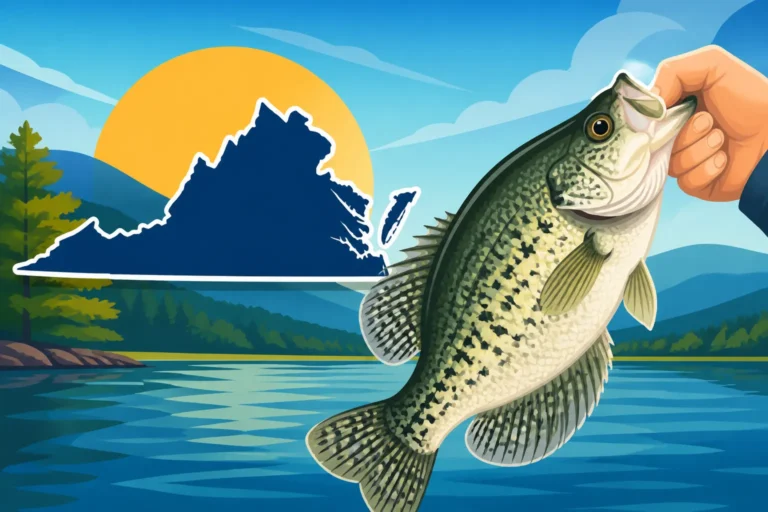
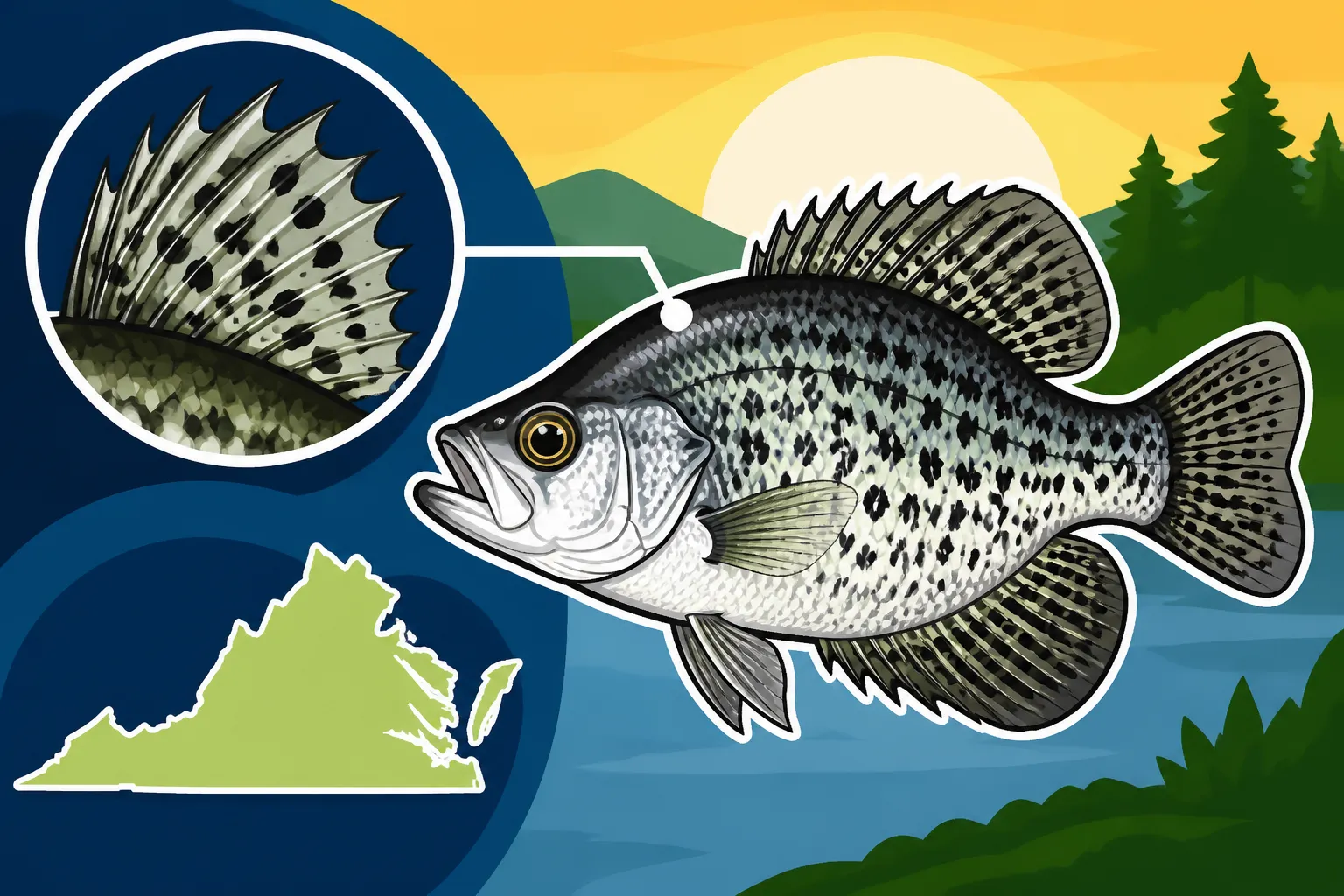
One of the most reliable ways to differentiate between a black crappie and a white crappie lies in counting the spines on their dorsal fin. This isn't just a fun fact; it's a critical anatomical difference. A black crappie typically has 7 to 8 dorsal spines. When you run your finger lightly across the fin, you'll feel these distinct, sharp points. The dorsal fin base itself is often roughly the same length as the anal fin base, giving the fish a somewhat more compact, disc-like appearance.
In contrast, a white crappie usually has 5 to 6 dorsal spines. This seemingly small difference can be quite noticeable once you've trained your eye. The white crappie's dorsal fin base is generally shorter than its anal fin base, which contributes to its slightly more elongated body profile compared to its black crappie counterpart. This spine count is often the quickest and most accurate way to tell them apart, especially when other features might vary due to age, diet, or habitat.
Coloration and Pattern
Beyond the fin spines, the coloration and pattern of a crappie's body offer significant clues. Black crappie are known for their somewhat mottled or speckled appearance, often displaying irregular, scattered dark spots or blotches across their silvery or golden flanks. These spots don't typically form distinct vertical bands; instead, they appear more random and diffused, giving the fish a "peppered" look. Their overall color can range from a dark olive green on the back to lighter sides, sometimes with a yellowish tint, especially in clearer waters.
White crappie, on the other hand, usually exhibit more organized vertical bars or stripes along their sides. While they also have dark spots, these spots tend to coalesce into 7 to 9 distinct vertical bands running from their back down towards their belly. Their base color is often a lighter silver-white, particularly on their flanks, though they can also take on darker hues depending on their environment. If you're comparing two fish side-by-side, these pattern differences are usually quite apparent, almost like comparing abstract art to a striped shirt.
Mouth Shape and Size
Another subtle but important distinction can be found in the mouth of each species. While both crappie have relatively large mouths for their body size, the black crappie tends to have a slightly larger mouth. More notably, when you look at the upper jaw relative to the eye, a black crappie's upper jaw will usually extend past the center of its eye. This gives it a more "gaping" or aggressive look to its mouth.
The white crappie's mouth, while still substantial, is typically a bit smaller in proportion to its head, and its upper jaw usually does not extend past the front margin of its eye. This difference, though subtle, can be a useful confirmatory sign once you've checked the dorsal fin spines and body patterns. Experienced anglers often notice these nuances almost subconsciously, but for beginners, it's a helpful point of comparison to cement the identification.
Where to Find Black Crappie in Virginia (Habitat and Behavior)
Knowing what a black crappie looks like is one thing, but knowing where to find them and how they behave is key to actually catching them. Black crappie are widely distributed across Virginia, offering fantastic angling opportunities, but they do have specific preferences when it comes to their home turf. Understanding their habitat and behavior is crucial for any successful crappie fishing trip. For general crappie fishing advice in the state, consider reading Crappie Fishing in Virginia.
Preferred Water Conditions and Structure
Black crappie are generally more tolerant of clear, cool water compared to white crappie, which can often thrive in murkier conditions. They prefer lakes, ponds, and slow-moving rivers that have abundant submerged vegetation, brush piles, fallen trees, and other forms of structure. These structures provide excellent ambush points for feeding and protection from predators. You'll often find them lurking around docks, bridge pilings, old submerged roadbeds, and even man-made fish attractors. They love areas where there's a good mix of shallow cover for spawning and deeper water nearby for refuge during harsh weather or bright daylight.
Virginia's lakes like Smith Mountain Lake, Lake Anna, and Kerr Lake are prime examples where black crappie congregate around these types of structures. Anglers targeting them often look for areas with standing timber or dense weed beds, understanding that these spots provide the ideal environment for black crappie to thrive. If you're exploring new waters, investing in a good depth finder can help you locate these hidden underwater havens that black crappie call home.
Seasonal Movements and Feeding Patterns
Black crappie exhibit distinct seasonal movements that savvy anglers learn to anticipate. In the spring, as water temperatures rise (typically into the 50s and 60s Fahrenheit), they move into shallower waters to spawn. This is a fantastic time for shore anglers or those fishing from kayaks, as crappie can be found in water as shallow as 2-5 feet deep, often around woody cover or emergent vegetation. They become very aggressive during this pre-spawn and spawning period, making them relatively easier to catch.
As summer approaches and water temperatures climb, black crappie retreat to deeper, cooler waters, often suspending over structure or congregating in cooler thermoclines. They become more elusive, requiring different techniques like deep jigging or trolling. In the fall, they transition back to more moderate depths, actively feeding to bulk up for winter, often becoming quite catchable again. During winter, they typically hold in deeper basins or channels, near submerged structures, becoming less active but still catchable with slow, vertical presentations. Understanding these seasonal shifts is key to consistent success, and you can learn more about specific timing in Best Time of Year for Crappie Fishing in Virginia.
Why Proper Identification Matters for Anglers
You might wonder, why bother with all these intricate details of crappie identification? After all, a crappie is a crappie, right? Not quite! Proper identification isn't just an academic exercise; it has real-world implications for your fishing success and your adherence to ethical and legal angling practices.
Understanding Habitat and Behavior
Knowing whether you're dealing with a black crappie or a white crappie can significantly influence your fishing strategy. As we've discussed, black crappie generally prefer clearer water and denser, more intricate cover like brush piles and submerged timber. White crappie, while also enjoying structure, are often more comfortable in slightly murkier water and might be found in more open water column areas or around less dense cover. If you mistakenly assume all crappie behave the same, you might be fishing the wrong spots or using the wrong techniques for the predominant species in a particular area.
By accurately identifying the crappie you're catching, you start to build a mental map of their preferences in that specific body of water. If you consistently catch black crappie in one type of cover, you'll know to seek out similar spots. This knowledge translates directly into more successful and enjoyable fishing trips. It helps you refine your approach, from choosing the right lure color to selecting the ideal depth to present your bait.
Adhering to Virginia Fishing Regulations
Perhaps the most critical reason for accurate identification is compliance with Virginia's fishing regulations. While both crappie species often fall under general panfish regulations, there can be specific rules concerning creel limits (how many fish you can keep) or length limits (minimum or maximum size) that might differ by species or by specific body of water. Imagine you're fishing a lake that has a slightly different length limit for white crappie compared to black crappie – a misidentification could lead to an unintentional violation. To stay on the right side of the law, a thorough understanding of Virginia Fishing Regulations Explained is always recommended.
Game wardens and wildlife officials are well-versed in these distinctions, and ignorance of the law is rarely an excuse. By being able to confidently identify your catch, you ensure you're harvesting within legal limits, contributing to sustainable fishing practices, and avoiding potential fines or penalties. It demonstrates responsible angling and respect for the conservation efforts that keep Virginia's waters teeming with fish for everyone to enjoy.
Essential Gear for Targeting Black Crappie
Once you can confidently tell a black crappie from its cousins, it's time to talk about the fun part: catching them! Black crappie are a joy to target, offering a spirited fight for their size, and they're delicious on the dinner table. Having the right gear certainly makes the experience more productive and enjoyable. Whether you're a seasoned angler or just starting out, a few key pieces of equipment will set you up for success.
Rods, Reels, and Line
For black crappie, a lightweight and sensitive setup is crucial. You want to feel those subtle bites that often characterize crappie fishing. A light to ultra-light action spinning rod, typically 5 to 7 feet long, is ideal. These rods provide the necessary sensitivity to detect faint strikes and enough backbone to handle a good-sized crappie. Many anglers prefer a graphite rod for its superior sensitivity. You can find excellent options on platforms like Amazon that offer a good balance of quality and affordability for crappie-specific rods.
Pair your rod with a small spinning reel, typically in the 1000 or 2000 size range. This keeps the setup light and balanced, preventing fatigue during a long day of casting. Spool your reel with light monofilament or fluorocarbon line, generally 4 to 6-pound test. Monofilament offers good knot strength and shock absorption, while fluorocarbon is nearly invisible underwater and has less stretch for better sensitivity. Some anglers even use braided line with a fluorocarbon leader for ultimate sensitivity and strength.
Baits and Lures
Black crappie are opportunistic feeders, meaning they'll hit a wide variety of baits and lures. Live minnows are a classic choice and often hard to beat. They can be rigged under a bobber or fished tight-lined near cover. Small jigs are another highly effective option, ranging from 1/32 to 1/8 ounce. These can be tipped with tiny plastic grubs, tubes, or creature baits. Colors vary, but chartreuse, white, black, and various shad patterns are consistently productive. You can often find multipacks of crappie jigs and soft plastics on Amazon, allowing you to experiment with different colors and styles. For more specific lure recommendations, check out Best Bait for Crappie Fishing in Virginia.
Small crankbaits, especially those designed for shallow water, can also entice aggressive crappie. These mimic small baitfish and can be effective when trolled or cast around schooling fish. Fly fishermen also have success with small streamers and nymphs, particularly in clearer waters. The key with any lure is to match the hatch – use baits that resemble the natural food sources in the crappie's environment, whether it's tiny minnows, insects, or aquatic invertebrates. Experimentation is often the name of the game, so don't be afraid to try different presentations until you find what the crappie are biting on that day. If you're looking for active methods, Crappie Jigging Techniques provides some great tips.
| Feature | Black Crappie | White Crappie |
|---|---|---|
| Dorsal Fin Spines | 7-8 distinct spines | 5-6 distinct spines |
| Dorsal Fin Base | Roughly equal to anal fin base length | Shorter than anal fin base length |
| Body Pattern | Irregular, scattered dark spots/blotches | 7-9 distinct vertical bars/stripes |
| Overall Coloration | Darker, mottled, olive-green to silvery/gold | Lighter, silvery-white base with defined bars |
| Mouth Position | Upper jaw extends past center of eye | Upper jaw does not extend past front of eye |
| Preferred Habitat | Clearer water, dense structure, vegetation | More tolerant of murky water, less dense cover |
Disclaimer
This article is for general informational purposes only and does not constitute professional advice. Laws, prices and regulations vary by location and change over time. Consult a qualified professional for guidance on your specific situation.