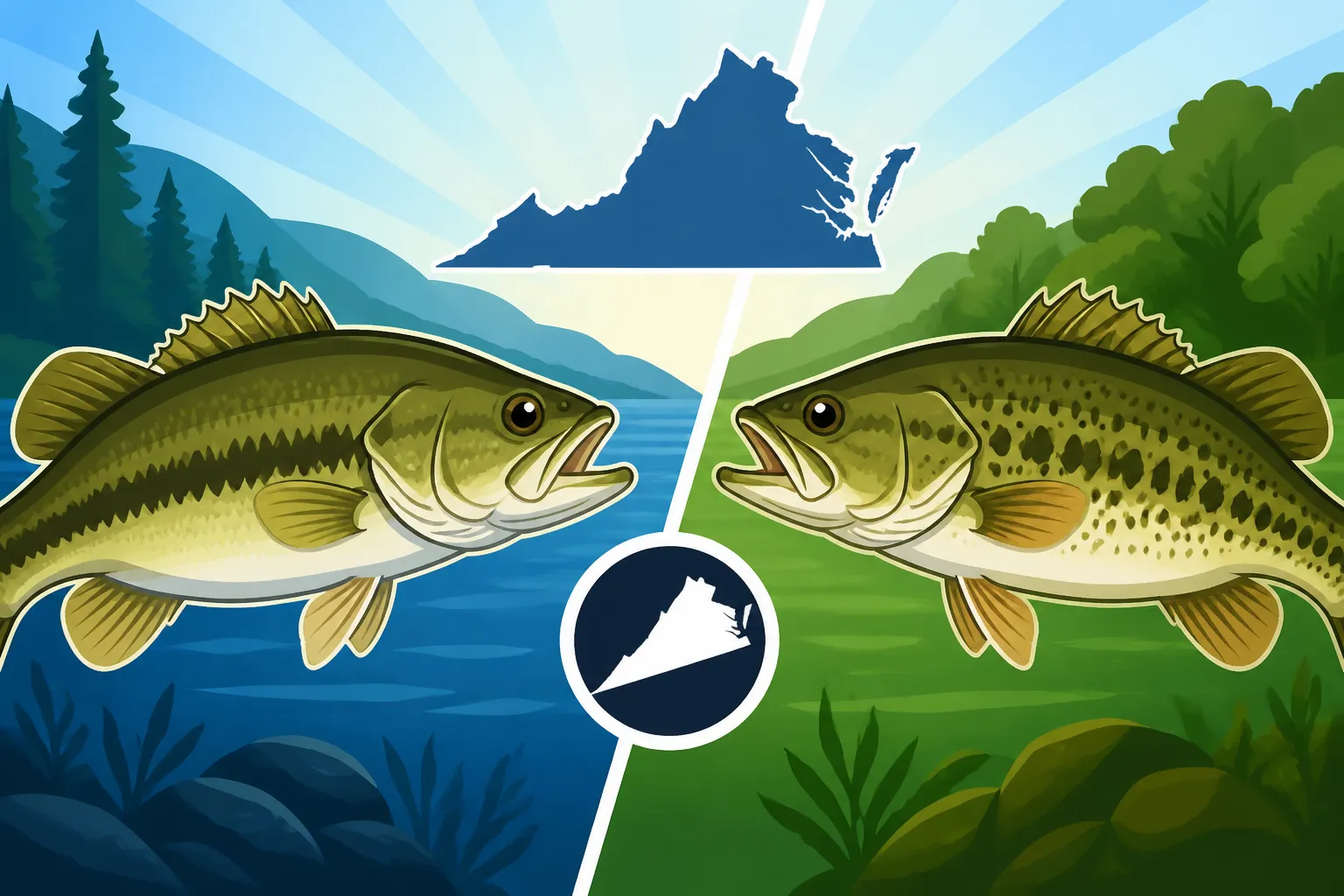
Alabama Bass vs Spotted Bass: How to Tell Them Apart
There’s nothing quite as frustrating as reeling in a beautiful bass, admiring its fight and markings, and then realizing you’re not entirely sure which species it actually is. For anglers in Virginia, this confusion often crops up between the Alabama Bass and the Spotted Bass. These two species, while distinctly different to the trained eye, share enough similarities to make identification a real head-scratcher, especially when you're just trying to enjoy your day on the water. This guide is here to untangle that confusion, offering clear, practical ways to tell these two exciting bass apart so you can confidently identify your catch, understand local regulations, and appreciate the nuances of Virginia’s diverse bass fisheries.
Why Accurate Bass Identification Matters in Virginia
Knowing precisely what kind of fish you've just landed isn't just about bragging rights (though that's certainly part of the fun!). It's actually a pretty big deal for a few crucial reasons, especially when you consider the delicate balance of Virginia's aquatic ecosystems and the rules designed to protect them. Misidentification can lead to inadvertently breaking regulations or, worse, unknowingly contributing to ecological imbalances.
Navigating Regulations and Conservation Efforts
Every fish species, particularly bass, often comes with its own set of rules. Think about it: length limits, daily creel limits, and even seasonal restrictions can vary significantly from one species to another, and even from one body of water to the next. For instance, while you might be allowed to keep a certain number of Largemouth Bass, the rules for another bass species, especially an invasive one, could be entirely different, or even mandate immediate release. The Virginia Department of Wildlife Resources (DWR) sets these regulations with specific conservation goals in mind, aiming to protect native populations and manage fisheries responsibly. If you confuse an Alabama Bass, which is considered an invasive species in some Virginia waters, with a native Spotted Bass, you might miss a regulation that's critical to preventing the spread of the non-native fish. It’s not about being a rule-breaker; it’s about having the right information to make the right choices on the water. Virginia's Fishing License and Catch Limit Basics provides a great overview of the regulatory landscape you'll want to be familiar with.
Protecting Virginia's Native Bass Species
This is where the distinction between Alabama Bass and Spotted Bass becomes particularly vital. Spotted Bass are native to certain parts of Virginia, particularly in the southwestern drainages, and are a cherished part of our natural heritage. Alabama Bass, on the other hand, are not native to Virginia. They've been introduced, often unintentionally, and pose a significant threat to native bass populations, including our beloved Largemouth and Smallmouth Bass, as well as the native Spotted Bass. This is a classic invasive species scenario, where a non-native fish can outcompete native species for food and habitat, and even hybridize with them, which can dilute the genetic purity of the native stock. Imagine finding an Alabama Bass in Virginia: What Anglers Need to Know – knowing how to identify it means you can take appropriate action, like reporting the catch if required, and certainly not moving the fish to another waterbody. Your ability to correctly identify these species contributes directly to the DWR's efforts to manage and contain invasive species, safeguarding the future of Virginia's native fisheries. It's a way for every angler to be a conservationist.
Key Visual Differences: Unmasking the Alabama and Spotted Bass
While both Alabama and Spotted Bass belong to the "black bass" family and share some general characteristics, there are a few tell-tale signs that, once you know them, can help you confidently distinguish between the two. Forget the broad strokes; we're diving into the finer details that separate these look-alikes.
The Telling Tongue Patch and Jawline Clues
One of the most reliable ways to differentiate between an Alabama Bass and a Spotted Bass lies in two specific anatomical features: the tongue and the jaw.
Firstly, let's talk about the tongue patch. If you gently open the fish's mouth and look at its tongue, you might find a small, rough patch of teeth right in the middle.
- Alabama Bass: These bass almost always have a distinct, rough patch of teeth on their tongue. It might not be huge, but it's usually very noticeable when you run your finger across it. This is a strong indicator.
- Spotted Bass: It's quite rare for a true Spotted Bass to have a tongue patch. If one is present, it's usually very small, barely perceptible, or completely absent. If you feel a smooth tongue, you're likely looking at a Spotted Bass.
This tongue patch is often considered the "gold standard" for field identification because it's so consistently present (or absent) and easy to check.
Secondly, consider the jawline. This is another helpful cue, though it requires a bit of comparison to a familiar species like the Largemouth Bass.
- Alabama Bass and Spotted Bass: For both of these, when the mouth is closed, the upper jaw (maxillary) typically does not extend past the back edge of the eye. It usually aligns roughly with the middle of the eye, or just slightly past it.
- Largemouth Bass: In contrast, a Largemouth Bass's jaw will almost always extend significantly past the back edge of its eye, giving it that characteristic "large mouth."
So, if you catch a bass with a jaw that doesn't extend far beyond the eye, and it has a tongue patch, you're leaning heavily towards an Alabama Bass. If it lacks that tongue patch, it’s most likely a Spotted Bass. You can find excellent visual guides on Amazon that illustrate these features clearly. For a deeper dive into the bass family, check out Virginia Bass Identification: Largemouth, Smallmouth, Spotted, and Alabama Compared.
Body Shape, Scale Counts, and Other Subtle Hints
Beyond the tongue and jaw, there are other, more subtle clues that can help confirm your identification, though these might require a bit more practice or even a close-up photo.
One detail is the lateral line scale count. This is definitely more for the keen-eyed or the scientific-minded angler, as it involves counting the individual scales along the lateral line (the visible line running along the side of the fish).
- Alabama Bass: Tend to have a higher count, typically ranging from 68 to 78 scales.
- Spotted Bass: Generally have a slightly lower count, usually between 60 and 68 scales.
This isn't always easy to do accurately on a wriggling fish, but if you're taking photos, it can be a useful confirmatory detail later.
Another set of features relates to body shape and markings:
- Overall Body Shape: While similar, Alabama Bass can sometimes appear a bit more streamlined or slender compared to the more robust, deeper-bodied appearance that some Spotted Bass exhibit. However, this can vary greatly depending on the individual fish, its age, and its environment, so it's not a primary identifier.
- Spots Below Lateral Line: Both species get their "spotted" name from the rows of dark spots or dots that run in horizontal lines below the lateral line, especially on their lower flanks. This is a common feature, and not a reliable differentiator between the two. However, the overall pattern can sometimes feel a bit more distinct or "peppery" on one versus the other, but this is highly subjective.
- Pyloric Caeca: For the truly dedicated (or those involved in research), the pyloric caeca are internal, finger-like projections at the junction of the stomach and intestine. Alabama Bass have unbranched pyloric caeca, while Spotted Bass have branched ones. This is obviously not a field identification method, but it's a definitive biological distinction that underscores their separate species status.
Remember, no single characteristic should be relied upon exclusively. It's often a combination of these features that builds a confident identification. If you're serious about your fish ID, carrying a small, waterproof field guide (many are available on Amazon) can be invaluable. It's a great tool to help solidify your understanding of Claytor Lake's Diverse Virginia Fish Species Guide and other unique fisheries.
Here’s a quick comparison table to help visualize the key differences:
| Feature | Alabama Bass | Spotted Bass | Largemouth Bass (for reference) |
|---|---|---|---|
| Tongue Patch | Usually present and rough to the touch | Rarely present, or very small/absent | Never present |
| Upper Jaw Extends | Typically to the middle or just past the eye | Typically to the middle or just past the eye | Significantly past the back edge of the eye |
| Lateral Line Scales | Generally 68-78 scales | Generally 60-68 scales | Generally 59-65 scales |
| Pyloric Caeca | Unbranched (internal) | Branched (internal) | Branched (internal) |
| Dorsal Fins | Connected, appears as one | Connected, appears as one | Deep notch, appears almost separated |
| Origin in Virginia | Introduced (invasive in some waters) | Native to some southwestern drainages, expanded | Native and widespread |
Where You're Most Likely to Encounter Them in Virginia
Understanding where these fish typically reside in Virginia can also be a huge clue to their identity. After all, if you're fishing a body of water where one species is prevalent and the other isn't, your chances of catching a particular bass shift dramatically. Knowing the general distribution helps narrow down the possibilities and supports your visual identification efforts.
Spotted Bass: Their Traditional Haunts and Expanding Presence
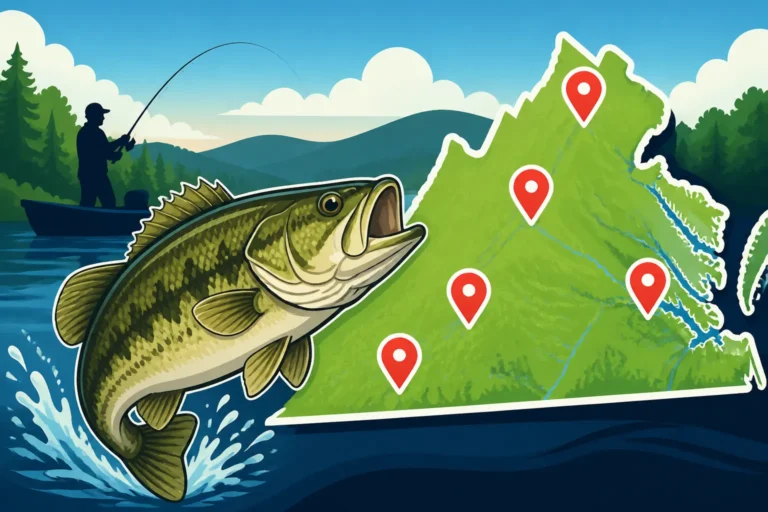
Spotted Bass, often simply called "spots" by anglers, have a more established, though sometimes localized, presence in Virginia. Historically, they're considered native to the upper Tennessee River drainage in southwestern Virginia. Think of rivers like the Holston and Clinch, where they've been part of the natural fish community for a long time. These clear, rocky river systems provide ideal habitat for them.
However, like many fish species, Spotted Bass have expanded their range in Virginia, often through accidental introductions by anglers or natural migration. You might find them in various reservoirs and rivers beyond their native range, particularly in those with rocky bottoms and clearer waters, though perhaps not in the same abundance as Largemouth Bass. While they might not be as common statewide as Largemouth, finding a healthy population of Spotted Bass can make for some fantastic angling. They put up a respectable fight, often schooling and chasing baits with aggressive strikes. For tips on targeting them, Spotted Bass Fishing Tips for Virginia Anglers can be a useful read.
When fishing in areas known for Spotted Bass, keep a keen eye out for those subtle differences. If you catch a bass that feels like a "spot" and matches the jawline and lack of a tongue patch, you're likely right on the money.
Alabama Bass: An Emerging Presence in Virginia Waters
Now, this is where the story gets a bit more complex from a conservation perspective. Alabama Bass are not native to Virginia and are, unfortunately, an invasive species in several key Virginia reservoirs. Their introduction is largely attributed to unauthorized stocking, likely from anglers moving fish from other states where Alabama Bass are more prevalent. These fish can grow larger and reproduce more rapidly than native Spotted Bass, posing a significant threat through competition and hybridization.
The most well-known area in Virginia where Alabama Bass have become established and are a major concern is Claytor Lake. In fact, Claytor Lake's Mixed Bass Fishery: Largemouth, Smallmouth, Spotted, and Alabama highlights the distinct presence of this species in its waters. Anglers fishing Claytor Lake need to be particularly vigilant in identifying their catches, not just for personal knowledge, but for the health of the entire fishery. You're much more likely to encounter an Alabama Bass here than in, say, a central Virginia river system where they haven't been introduced.
Because of their invasive status and potential to displace native bass, identifying Alabama Bass accurately is incredibly important. If you catch a bass in Claytor Lake or any other water body where Alabama Bass are known to exist, and it exhibits that distinctive tongue patch, you can be fairly confident in your identification. Understanding their distribution helps you anticipate what you might catch and prepares you to identify it correctly.
Practical Tips for On-the-Water Identification
So, you're out on a beautiful Virginia lake or river, you've just hooked a spirited bass, and now it's time for the moment of truth: is it an Alabama or a Spotted Bass? It can be tricky, especially when the fish is flopping around, but with a few simple steps and tools, you can become much more confident in your identification skills.
A Step-by-Step Field Guide for Anglers
Let's walk through a quick process you can use right on the boat or bank to make that crucial ID:
- Examine the Jawline: As soon as you land the fish, take a look at its mouth. Does the upper jaw (maxillary) extend significantly beyond the back edge of the eye, or does it stop roughly in line with the middle of the eye, or just slightly behind it? If it goes way past the eye, you've likely got a Largemouth Bass. If it stops short, you're in the Spotted/Alabama/Smallmouth territory. This quickly rules out one major contender.
- Check the Tongue: This is your next, and often most definitive, step. Gently pry open the fish's mouth and look at its tongue. Run a clean finger (or the back of a small hook if you're careful) across the middle of the tongue.
- Feel for a patch of teeth: If it feels distinctly rough, like sandpaper, you're almost certainly holding an Alabama Bass.
- Feel for smoothness: If it's smooth, or has only a minuscule, barely noticeable patch, you're leaning heavily towards a Spotted Bass.
- Observe Body Markings and Shape (Secondary): While not as definitive, these can offer supporting evidence.
- Look for the rows of dark spots below the lateral line, common to both, but don't rely solely on them for differentiation between these two specific species.
- Note the overall body shape. Is it deeper-bodied or more torpedo-shaped? Again, this is subjective but can add to your assessment.
- Consider Location: Think about where you are fishing. Are you on Claytor Lake, where Alabama Bass are known to be present? Or are you in a more traditional Spotted Bass habitat in southwest Virginia? While not an ID method itself, it influences the probability and can reinforce your visual findings. For those specifically targeting Alabama Bass Identification for Claytor Lake Anglers, this context is crucial.
Practicing these steps on every bass you catch, even if you think you know what it is, will sharpen your skills over time.
Tools and Resources for Confident Identification
Don't feel like you have to be a fish biologist from day one! There are plenty of resources out there to help you become a confident bass identifier:
- Field Guides: A small, waterproof fish identification guide is an angler's best friend. You can often find excellent regional guides that focus on Virginia fish species. These books typically have clear illustrations or photos highlighting key identification features. Many fishing gear stores or online retailers like Amazon carry these.
- Smartphone Apps: There are numerous fish identification apps available that allow you to take a photo of your catch and get an immediate suggestion. While not always 100% accurate, they can be a great starting point for confirmation, especially when combined with your personal observation.
- Online Resources: The Virginia Department of Wildlife Resources (DWR) website is an invaluable resource. They often have detailed species profiles, photos, and even videos to help anglers with identification. Searching for "Virginia DWR Alabama Bass vs Spotted Bass" will likely yield official guides.
- Local Bait Shops and Guides: Don't underestimate the wisdom of local experts. Your friendly bait shop owner or an experienced fishing guide has likely seen thousands of these fish and can offer real-world advice and visual examples. If you're ever on a guided trip, don't hesitate to ask your guide to show you the key differences. They're often happy to share their knowledge, especially when it comes to Virginia's Saltwater and Freshwater Fishing Guide Options.
- Take Photos: When in doubt, snap a clear photo of the fish, focusing on its jawline and, crucially, a clear shot of its open mouth and tongue. You can then review these photos later, consult your field guide, or even ask a more experienced angler for their opinion without stressing the fish for too long.
By combining these hands-on steps with readily available resources, you'll soon be able to confidently distinguish between Alabama Bass and Spotted Bass, making you a more knowledgeable and responsible angler in Virginia's diverse waters.
Disclaimer
This article is for general informational purposes only and does not constitute professional advice. Laws, prices and regulations vary by location and change over time. Consult a qualified professional for guidance on your specific situation.