Rock Bass vs Largemouth Bass: How to Tell Them Apart
It can be surprisingly tricky to tell apart different fish species when you're out on the water, especially when two fish might look similar at first glance. If you've ever hauled in a bass and paused, wondering if it was a largemouth or something else entirely, you're not alone. Many anglers, new and experienced, sometimes get confused between rock bass and largemouth bass. This guide is here to clear up that confusion once and for all, helping you confidently identify your catch and understand why those distinctions matter.
The Basics: What Even Are Rock Bass and Largemouth Bass?
Before we dive into the nitty-gritty of telling these two apart, let's establish a foundational understanding of each fish. They both belong to the sunfish family, but they occupy very different niches and display distinct characteristics that anglers quickly learn to recognize. Understanding their fundamental nature is the first step in appreciating what makes each one special.
Rock Bass: The Overlooked Panfish Cousin
Rock bass, sometimes affectionately called "goggle-eyes" by folks who've spent a lot of time on the water, are often thought of as a smaller, stockier cousin to other bass species. While they might not grow to the trophy sizes of a largemouth, they're feisty little fighters on light tackle and can provide a ton of fun, especially for younger anglers or those just looking for consistent action. They're built for ambush, often hunkering down near structure.
These fish are truly underrated. They're part of the sunfish family, specifically Ambloplites rupestris, and their name really tells you a lot about them – they love rocks! You'll often find them lurking around rocky bottoms, submerged timber, and other structures in clear, cool water. They typically don't get much larger than a pound or two, but don't let their size fool you. A rock bass on the end of a light spinning rod can put a respectable bend in your pole, and they’re surprisingly aggressive for their stature. If you're fishing a creek or river with good current and plenty of rocks, chances are you've got some rock bass nearby. They're often seen as a panfish, a perfect target for a leisurely afternoon. You can learn more about these interesting fish in Rock Bass: The Overlooked Panfish-Sized Bass in Virginia Waters.
Largemouth Bass: The Classic Game Fish
Now, the largemouth bass – what can we say about them that hasn't already been said? They are, without a doubt, one of the most iconic and sought-after freshwater game fish in North America, and certainly here in Virginia. Anglers spend countless hours, dollars, and dreams chasing these powerful predators. From the casual weekend angler to the seasoned tournament pro, the largemouth holds a special place in the hearts of many.
Scientifically known as Micropterus salmoides, the largemouth bass is recognized by its aggressive feeding habits, impressive growth potential, and thrilling fight. These fish are true apex predators in their freshwater domains, dominating lakes, ponds, and slow-moving rivers. They can grow to significant sizes, with trophy catches often weighing in the double digits, offering a truly memorable angling experience. Their pursuit forms the backbone of a huge segment of the fishing industry, from specialized boats and electronics to an endless array of lures and techniques. Catching a big largemouth is a rite of passage for many, and the stories of their battles are often exaggerated, but always cherished. You'll find them in diverse Virginia waterways, from our large reservoirs to the quiet backwaters of our tidal rivers. Check out Largemouth Bass Fishing in Virginia's Chesapeake Bay Tributaries for more specific locations.
Key Visual Differences You Can't Miss
When you've got a fish in your hand, or even just in view next to the boat, there are a few tell-tale signs that immediately distinguish a rock bass from a largemouth. These aren't subtle nuances but rather obvious physical markers that, once you know what to look for, make identification a breeze.
Mouth Size and Jaw Extension
This is arguably the most crucial and easiest-to-spot difference, hence the "largemouth" in one fish's name! Grab your fish carefully and observe its mouth.
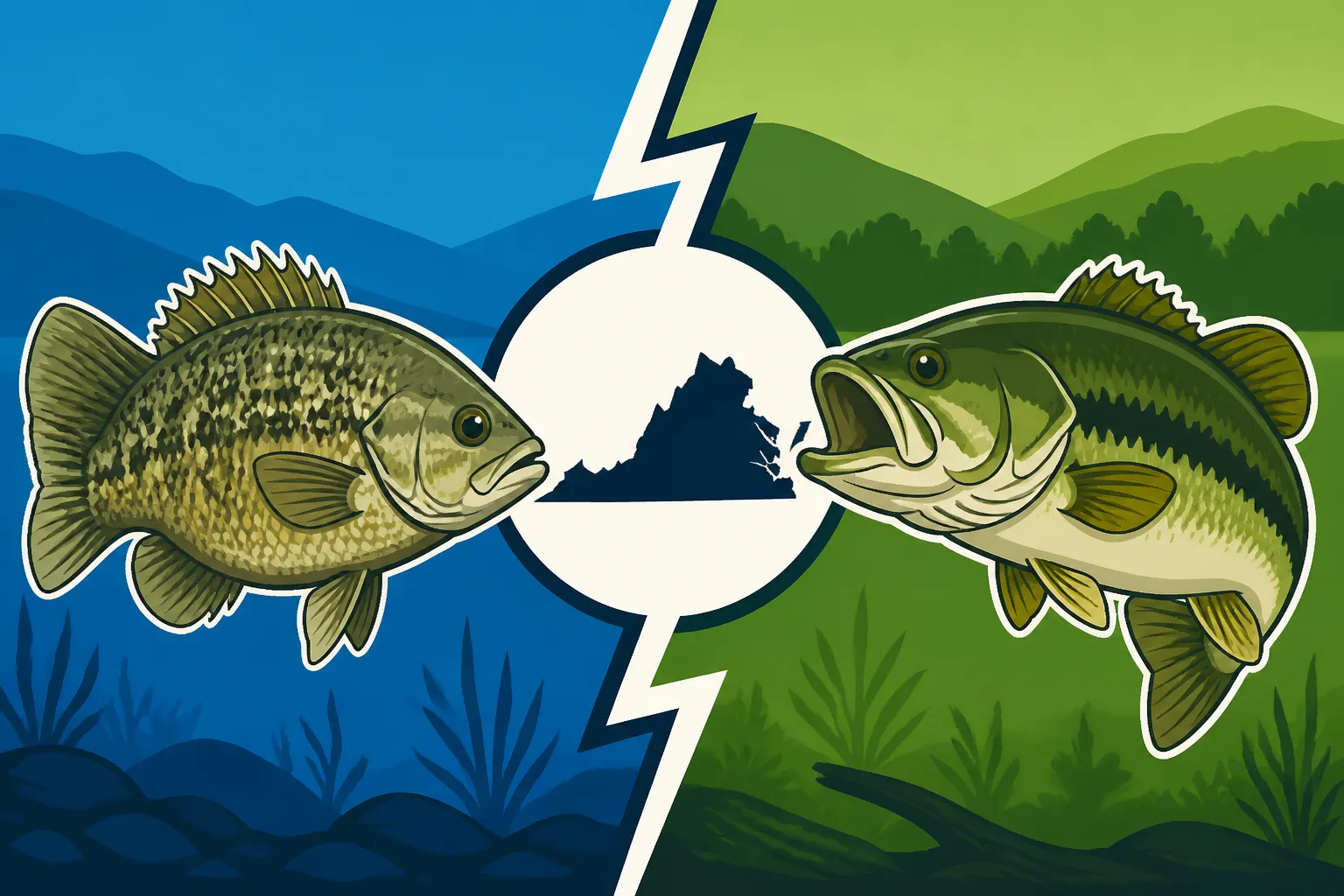
On a largemouth bass, the upper jaw (maxilla) extends significantly past the rear edge of its eye when its mouth is closed. Imagine a straight line dropped down from the back of the eye; the largemouth's jaw will typically extend well beyond that line. This gives it that distinctive "big mouth" appearance, perfect for engulfing prey whole. It's built for snatching frogs, minnows, and even small birds and rodents from the surface or heavy cover. When you see that gaping maw, you know you've got a largemouth. This massive mouth is precisely why they can hit such a wide variety of larger lures that mimic their preferred food sources.
In contrast, the rock bass has a much smaller mouth relative to its head size. Its upper jaw will not extend past the middle of its eye, and certainly not past the back edge. It's a more proportionate mouth, designed for picking off smaller prey items like insects, crayfish, and smaller minnows that lurk among the rocks and crevices. If the jaw doesn't reach back to the eye, you're almost certainly looking at a rock bass. This smaller mouth size directly influences the kind of baits and lures you'll use when targeting them, favoring smaller presentations that mimic their natural diet.
Body Shape and Fin Characteristics
Beyond the mouth, the overall body shape and the appearance of their fins offer immediate clues to their identity. Think about how they're built and what kind of environment that build suits them for.
A largemouth bass generally has a more streamlined, elongated body shape. While it can be deep-bodied, especially a healthy, older fish, it still tapers more elegantly towards the tail. Their dorsal fin (the one on their back) is almost, but not entirely, split into two distinct sections. The spiny front section and the softer-rayed rear section are joined by a very deep notch, making it look almost like two separate fins. This allows for powerful, agile movements through water, whether they're darting into cover or chasing down prey in open water.
The rock bass, on the other hand, is built much more stoutly. It has a deeper, more compressed body, giving it a chunkier, panfish-like appearance. It looks less like a torpedo and more like a thick disc. Their dorsal fin is one continuous unit with a much shallower notch between the spiny and soft-rayed sections. It's a single, robust fin, typical of many sunfish. This compact body is perfect for maneuvering in tight, rocky spaces and hiding effectively, allowing them to ambush unsuspecting food items from behind boulders or logs. They don't need the same open-water speed as a largemouth; their survival strategy is more about quick bursts from cover.
Eye Color and Markings
Sometimes the subtle details are the most telling. The eyes and body markings of these two species offer beautiful, yet distinct, differences.
The most striking feature of a rock bass is often its eyes. They typically have prominent, bright red eyes that really stand out. This "goggle-eye" trait is so distinctive that it's given them one of their most common nicknames. Their body coloration can vary but often includes mottled patterns of dark spots or bars against a bronze or olive background, without a strong horizontal stripe. These markings help them blend into the rocky, dappled environments they prefer, acting as camouflage against the shadows and textures of their habitat.
A largemouth bass, while having expressive eyes, does not typically have red eyes. Their eye color is usually dark, ranging from black to a brownish-gold. The most famous marking on a largemouth bass is its distinct, often broken, horizontal dark stripe or series of blotches running along its flanks from head to tail. This stripe can be very pronounced or somewhat faded depending on the fish's specific habitat, water clarity, and overall health. In some very dark or clear waters, the largemouth might appear almost uniformly dark green, but that lateral line pattern is almost always subtly present, even if just as a series of smudged spots.
Habitat and Behavior: Where You'll Find Them (and How They Act)
Knowing where each fish prefers to live is another huge clue, even before you cast a line. Their natural environments dictate not only where you'll look for them but also the tackle and techniques you'll employ.
Rock Bass Preferred Environments
If you're looking for rock bass, you'll want to seek out environments that offer plenty of hard structure and clear water. Think about those beautiful, flowing mountain streams with rocky bottoms, or clear-water lakes where boulders and submerged logs are abundant.
Rock bass absolutely thrive in cool, clear water with a noticeable current, making many of Virginia's rivers and streams prime habitat. They're not huge fans of stagnant, warm, or overly murky conditions. They are true bottom dwellers, preferring to hug the cover of rocks, riprap, downed trees, and even old tires. They use these structures as ambush points, darting out to snatch unsuspecting prey that passes by. This is why you'll often find them clustered around bridge pilings, rocky outcroppings, or the deep edges of submerged brush piles. When you're fishing these areas, think about presenting your bait right into the heart of that cover, or letting it tumble naturally with the current close to the bottom. Their preference for these environments means they're not usually found in the same soft-bottomed, heavily vegetated shallows where a largemouth might dominate.
Largemouth Bass Preferred Environments
The largemouth bass is far more adaptable to a wider range of conditions, but they definitely have their preferences for cover and warmer water. When you envision classic bass fishing, you're usually thinking about largemouth territory.
Largemouth bass are masters of camouflage and ambush, typically preferring warmer, shallower water with an abundance of aquatic vegetation, submerged timber, or other forms of dense cover. In lakes, you'll find them lurking in lily pads, hydrilla beds, cattails, fallen trees, and docks. In rivers, they'll gravitate towards slower-moving backwater eddies, oxbows, and areas with submerged stumps and brush. They use this cover to hide from predators and to ambush their own prey. They can tolerate a much wider range of water clarity than rock bass, often thriving in slightly murkier conditions, though they are certainly present in clear lakes too. When targeting largemouth, you're often casting into or around this heavy cover, trying to entice a strike from a fish hiding in plain sight. This adaptability is part of what makes them such a dominant species across so many freshwater ecosystems.
Fishing for Rock Bass vs. Largemouth Bass
The differences in their size, mouth structure, and habitat preferences naturally lead to different fishing strategies. While you might occasionally catch one while targeting the other, understanding their specific behaviors will greatly improve your success.
Lures and Techniques for Rock Bass
Given their smaller size, smaller mouths, and preference for tight, rocky cover, fishing for rock bass requires a more finessed approach with lighter tackle. You're not going to be throwing huge crankbaits or heavy jigs for these guys.
When targeting rock bass, think small! Tiny jigs, micro-spinners, small inline spinners like a Rooster Tail or Mepps, and small soft plastic baits rigged on a light jig head are all excellent choices. Live bait, such as a small worm (like a red wiggler), a grub, or a piece of nightcrawler, fished under a bobber or on a small hook with a split shot, is incredibly effective. The key is to present these baits slowly and methodically, right into the cover where they hide. Think about bouncing a small jig off rocks or letting a worm drift naturally into a pocket of current next to a log. Ultralight or light spinning tackle with 4-6 pound test line is ideal, as it allows for precise casting of small lures and still provides a fun fight. You can find a huge variety of these smaller lures on platforms like Amazon, making it easy to stock up. To really dial in your approach for them, check out Best Bait for Rock Bass.
Lures and Techniques for Largemouth Bass
Largemouth bass are typically targeted with more robust tackle and a much wider array of lures, many of which are designed to imitate larger prey. Their aggressive nature and larger mouth mean they'll strike at presentations that a rock bass wouldn't even consider.
For largemouth bass, your tackle box should be full of options! Spinnerbaits, crankbaits, topwater lures (like frogs and poppers), jigs with trailers, and various soft plastics (worms, creature baits, flukes) are all staples. The technique often involves casting to specific cover – alongside a log, into a lily pad field, under a dock – and working your lure to entice a reaction strike. Heavy baitcasting gear or medium-heavy spinning rods with 10-20 pound test line are common, allowing you to handle larger fish and pull them out of thick cover. Speed and presentation are often key; sometimes a fast retrieve triggers a chase, while other times a slow, methodical crawl is necessary. Experimentation is crucial, and you'll find endless discussions on specific tactics for largemouth bass, especially related to the seasons. Many anglers keep their tackle boxes well-stocked by ordering a diverse range of lures from online retailers like Amazon. For a deeper dive into specific techniques, consider reading How to Fish a Plastic Worm for Bass.
Rock Bass vs. Largemouth Bass: A Quick Comparison
To help solidify these differences in your mind, here's a handy table summarizing the key characteristics we've discussed. Keep this in mind next time you're trying to identify your catch!
| Feature | Rock Bass (Ambloplites rupestris) | Largemouth Bass (Micropterus salmoides) |
|---|---|---|
| Mouth Size | Upper jaw does not extend past middle of eye. | Upper jaw extends past the rear edge of the eye. |
| Body Shape | Stocky, deep-bodied, panfish-like. | More elongated, streamlined. |
| Dorsal Fin | Single, continuous fin with shallow notch. | Deep notch, almost appearing as two separate fins. |
| Eye Color | Often prominent red eyes ("goggle-eye"). | Typically dark; not red. |
| Body Markings | Mottled pattern, dark spots/bars; no strong horizontal stripe. | Distinctive horizontal dark stripe or blotches. |
| Typical Size | Up to 1 pound, generally smaller. | Can exceed 10+ pounds, generally much larger. |
| Preferred Habitat | Cool, clear water; rocky bottoms, streams, rivers, submerged timber. | Warmer water; heavy vegetation, docks, fallen trees, calmer lake/river sections. |
| Common Lures | Small jigs, spinners, worms, grubs. | Crankbaits, spinnerbaits, soft plastics, topwater lures. |
The next time you're enjoying a day of Virginia Fishing, whether you're casting into a clear mountain stream or working the lily pads on a calm lake, you'll be able to tell with confidence whether you've hooked into a feisty rock bass or a powerful largemouth. Both offer fantastic angling experiences, but knowing which is which not only helps you understand your local fisheries better but also allows you to tailor your approach for maximum success and enjoyment. Happy fishing!
Disclaimer
This article is for general informational purposes only and does not constitute professional advice. Laws, prices and regulations vary by location and change over time. Consult a qualified professional for guidance on your specific situation.