White Perch vs Yellow Perch: How to Tell Them Apart
It's incredibly common to reel in a fish in Virginia and wonder, "Is this a white perch or a yellow perch?" For many anglers, especially those just getting started or venturing into new waters, these two popular panfish can be quite a puzzle to distinguish. This guide is here to walk you through the clear, unmistakable differences between white perch and yellow perch, making sure you can identify your catch with confidence and understand what makes each species unique.
Why the Perch Identification Confusion is So Common
Let's be real, out there on the water, with the sun glaring, excitement high, and maybe a little mud on your hands, identifying fish quickly can be tougher than it looks in a pristine picture book. White perch and yellow perch, while distinctly different once you know what to look for, share a few characteristics that can trick the untrained eye. They both tend to be smaller, schooling fish, often caught with similar light tackle, and they both put up a fun fight for their size. This overlap in general behavior and fishing methods is often where the initial confusion sets in, especially if you're pulling them from a mixed fishery.
Many anglers just starting out will lump all smaller, silvery, or slightly yellowish fish into one "perch" category until they learn the nuances. It’s a completely understandable mistake, and one that even seasoned folks have made in a moment of haste. The key is to slow down, take a closer look at the details, and remember that these fish, despite sharing a common "perch" name, are actually quite different species with distinct features and habits.
A Common Misconception: Are They Related?
Despite the shared "perch" in their names, white perch and yellow perch aren't as closely related as you might think, and this is a crucial point that helps clear up some of the confusion. The yellow perch is a true perch, belonging to the family Percidae, which includes walleye and darters. They're often referred to as "yellows" or "ringed perch." The white perch, on the other hand, is actually a member of the temperate bass family, Moronidae, making it a cousin to striped bass (which we often call rockfish here in Virginia!). This difference in lineage is why they have such distinct body shapes and features despite their sometimes similar size and preferred habitats.
Knowing this fundamental difference, that one is a true perch and the other a bass, is the first step in truly understanding their individual characteristics. It helps to anchor the visual cues you'll be looking for, making it easier to remember what sets them apart. Think of it like distinguishing between a smallmouth bass and a largemouth bass – same general family, but distinct enough to warrant different approaches and identification.
Key Physical Distinctions Between White and Yellow Perch
When you pull a fish out of the water and you're wondering if it's a white perch or a yellow perch, there are a few tell-tale signs to look for. These aren't subtle differences; once you train your eye, they're quite obvious. Focus on body shape, coloration, and fin structure.
Body Shape and Size: The First Clue
The very first thing you'll notice when comparing these two species side-by-side, or even just having handled one before, is their overall body shape.
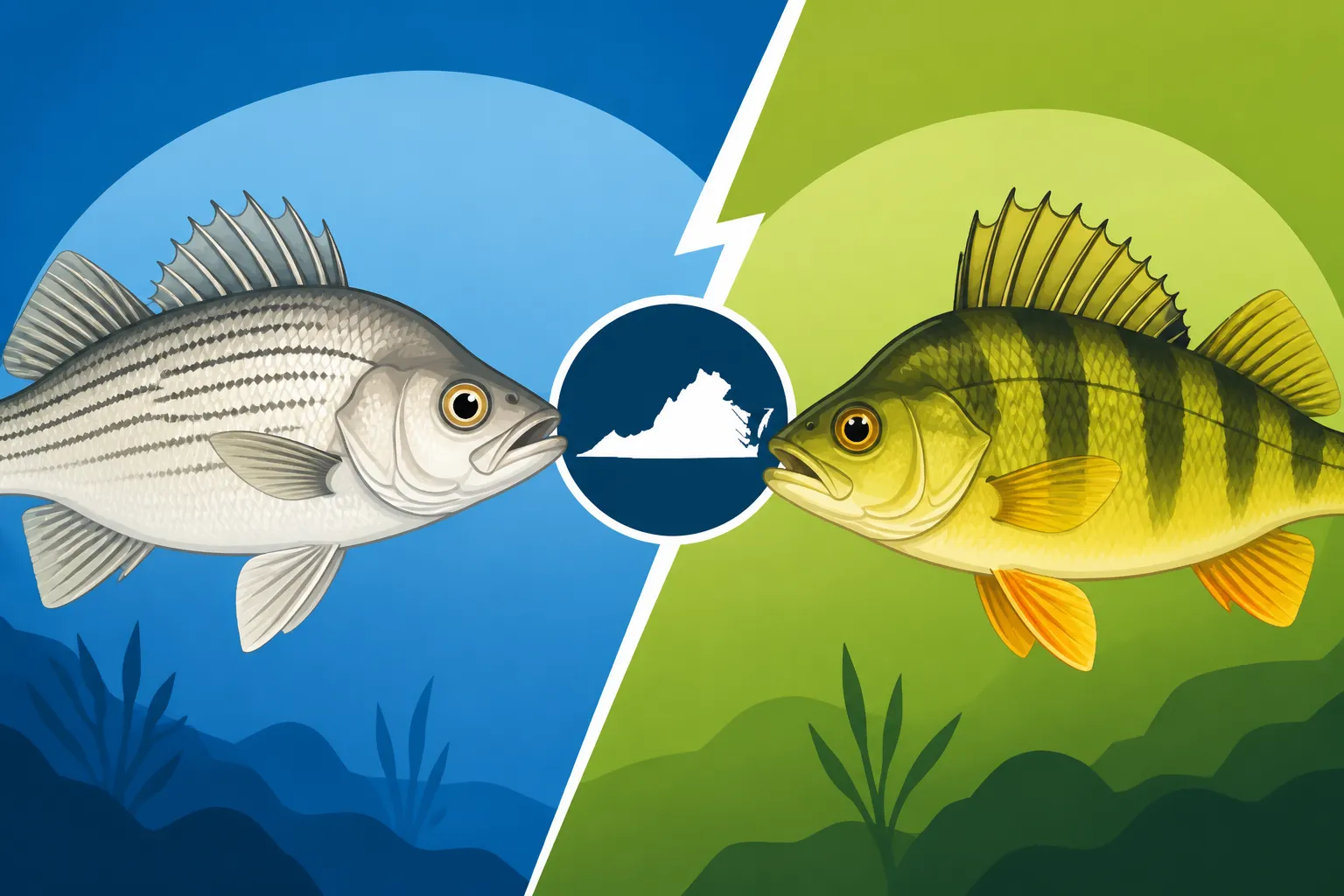
- White Perch: These fish have a much more compressed, oval, or "panfish-like" body. They tend to be deeper from back to belly and flatter from side to side. Think of a classic sunfish shape, but perhaps a bit more streamlined. Their body is generally silver, sometimes with a greenish or brownish tint on the back, fading to white on the belly. They also tend to have a small, almost pug-like mouth. While they can grow to respectable sizes, especially in certain tidal rivers or the Chesapeake Bay, they are typically smaller than some of the larger yellow perch you might encounter in colder, northern waters. However, here in Virginia, a good-sized white perch can still be a hefty catch. You might catch them frequently if you're fishing White Perch Fishing Along Virginia's Tidal Rivers.
- Yellow Perch: In contrast, yellow perch have a much more elongated, torpedo-shaped body. They are longer and skinnier for their size, with a more pronounced arch to their back. Their mouth is also proportioned to their head, not as small as the white perch's. They typically feature a distinct humped back just behind the head, especially larger specimens. These physical differences mean they move through the water differently and have slightly varied feeding habits.
Coloration and Markings: The Obvious Indicators
This is probably the easiest way to tell them apart, especially the yellow perch. Their names actually give you a massive hint!
- White Perch: As their name suggests, white perch are predominantly silvery-white, particularly on their sides and belly. Their backs might have a darker, olive-green or grayish hue, sometimes with faint, indistinct stripes or mottling. But the overall impression is one of shimmering silver. You won't see any bold, distinct vertical bars on a white perch.
- Yellow Perch: This is where the yellow perch truly stands out. They have a vibrant, golden-yellow or brassy-yellow body, especially on their sides, fading to a lighter, often white, belly. But the most striking feature, and what makes them instantly recognizable, are the 6-9 dark, vertical bars that run down their sides. These bars are usually quite prominent and extend from their back down to their belly, making them look almost tiger-striped. Their fins, particularly the pectoral and pelvic fins, often have an orange or reddish tint, adding to their colorful appearance. Learning to spot these patterns is key when you're focusing on Yellow Perch Fishing Tips for Virginia Anglers.
Dorsal Fin Structure: A Critical Distinction
Anglers often overlook the dorsal fin, but it’s a crucial identifier for many fish species, and white and yellow perch are no exception.
- White Perch: The white perch has two dorsal fins, but they are typically connected at the base, forming what looks like one long fin that's deeply notched or indented in the middle. The front part is spiny, and the back part is soft-rayed. This connected-but-notched appearance is characteristic of the temperate bass family.
- Yellow Perch: Yellow perch also have two distinct dorsal fins, but these fins are completely separate. There’s a clear gap between the spiny first dorsal fin and the soft-rayed second dorsal fin. The first dorsal fin is usually larger and more triangular, while the second is smaller and more rounded. This separated dorsal fin is a classic trait of the true perch family.
Here's a quick comparison table to help solidify these visual cues:
| Feature | White Perch | Yellow Perch |
|---|---|---|
| Body Shape | Compressed, oval, deep-bodied, flatter sides | Elongated, torpedo-shaped, more rounded body, humped back |
| Coloration | Silvery-white, darker back (olive/gray) | Golden-yellow with 6-9 prominent dark vertical bars |
| Dorsal Fins | Two, but connected at the base (deeply notched) | Two, completely separate |
| Mouth | Smaller, almost pug-like | Proportionate to head, not as small |
| Family | Temperate Bass (Moronidae) | True Perch (Percidae) |
Habitat and Behavior Differences in Virginia Waters
Beyond their physical appearance, white perch and yellow perch also tend to occupy slightly different niches and display varied behaviors, especially here in Virginia. Understanding these tendencies can help you predict which species you're more likely to encounter in certain fishing spots.
Freshwater vs. Brackish/Saltwater Preferences
While both species can tolerate a range of salinities, they have definite leanings when it comes to where they thrive.
- White Perch: These guys are incredibly adaptable. While you can find them in purely freshwater lakes and ponds, they truly excel in brackish and saltwater environments. This means tidal rivers leading into the Chesapeake Bay, the Bay itself, and coastal estuaries are prime white perch territory. They can tolerate high salinity but are often found in areas where freshwater runoff mixes with saltwater. This adaptability is part of why they are such a prolific species in Virginia's coastal plain. If you're fishing the lower James River or anywhere near the Chesapeake Bay, you're almost guaranteed to encounter them. They are a staple of Virginia's White Perch Fishing Spots.
- Yellow Perch: Yellow perch, on the other hand, are primarily freshwater fish. They prefer cooler, clearer waters of lakes, ponds, and slow-moving rivers. While they can sometimes be found in very low-salinity brackish water, especially during spawning migrations into tidal areas, they generally do not thrive in high-salinity saltwater like white perch do. In Virginia, you'll find them more commonly in the upper reaches of our river systems and many of our freshwater impoundments. If you're focused on identifying Panfish Species Every Virginia Angler Should Know, understanding this habitat difference is a huge help.
Feeding Habits and Foraging Behavior
Their different body shapes and environments often correlate with distinct feeding strategies.
- White Perch: Being part of the temperate bass family, white perch are opportunistic predators. They'll eat just about anything that fits in their mouth: small fish, crabs, shrimp, worms, aquatic insects, and fish eggs. They are often found near structure, drop-offs, or oyster reefs in brackish water, where they can ambush prey. They're typically schooling fish, so where you catch one, you're likely to find more. This makes them a fantastic target for light tackle fishing. They respond well to small jigs, spinnerbaits, and even bits of bait like bloodworms or pieces of shrimp. You can find a good selection of these small baits and ultralight rods on Amazon, perfect for tackling a school of hungry white perch.
- Yellow Perch: Yellow perch are also opportunistic, but their diet leans a bit more towards invertebrates, though they will readily eat small fish. They'll consume insect larvae, crustaceans, snails, and fish eggs. They are often found near weed beds, submerged timber, or other cover in freshwater lakes and rivers. Like white perch, they are schooling fish, which can lead to fast and furious action when you find a school. Their foraging behavior is often a bit more subtle, preferring to pick off smaller prey. Minnows, worms, and small jigs are incredibly effective for them. Understanding their feeding habits is crucial for Crappie Fishing Techniques for Beginners as well, since crappie often share similar forage.
Fishing Strategies and Culinary Notes
Knowing how to tell these two species apart isn't just for bragging rights; it can also influence your fishing techniques and what you expect from your catch, both on the line and on the plate.
Best Techniques for Each Species
While there's certainly overlap in how you might catch white and yellow perch, tailoring your approach can lead to more consistent success.
- Targeting White Perch: Because white perch are so prevalent in brackish and tidal waters, they are often caught by anglers targeting other species like striped bass or even bottom fish. However, if you specifically want to target white perch, light tackle is the way to go. Small jigs (1/16 to 1/8 ounce) tipped with a piece of Gulp! or a small plastic grub work wonders. You can also use small Sabiki rigs (available on Amazon) with a weight at the bottom, jigging them near bridges, piers, or oyster beds. Live bait like small minnows, bloodworms, or even grass shrimp are also incredibly effective. They tend to be aggressive biters, making them a fun target for anglers of all skill levels, including kids. Remember, knowing their habits can greatly improve your success, and checking Best Bait for White Perch Fishing will provide even more specific tips.
- Targeting Yellow Perch: Yellow perch, favoring freshwater, are often targeted through ice in colder climates, but in Virginia, they're a popular open-water target. Similar to white perch, light tackle is ideal. Small jigs, particularly those tipped with a minnow, are highly effective. Small spoons or spinnerbaits can also entice a strike. They often hang around submerged structures like brush piles, docks, or weed lines. Look for them in slightly deeper water during hotter months or during their spring spawning runs into shallower creeks. They can be a bit more finicky than white perch at times, requiring a more subtle presentation. If you're considering a trip for these, Virginia Panfish Fishing for Beginners and Kids often includes tips for both species.
Culinary Quality and Eating Experience
Ah, the age-old question: "Are they good to eat?" For both white perch and yellow perch, the answer is a resounding yes! However, there are subtle differences in their taste and texture that some anglers appreciate.
- White Perch (The Temperate Bass): Many anglers swear by white perch as excellent table fare. Their flesh is typically white, flaky, and has a mild, sweet flavor. They're often compared to larger panfish or even striped bass in taste. They can be filleted, fried whole (if small enough), baked, or broiled. The key, as with most fish, is to keep them on ice immediately after catching to preserve their quality. If you're unsure how to prepare them, researching Is White Perch Good to Eat? will give you plenty of ideas.
- Yellow Perch (The True Perch): Yellow perch are considered a delicacy by many, especially those who grew up fishing for them in the Midwest or Great Lakes region. Their flesh is firm, white, and exceptionally sweet, often described as having a cleaner, slightly richer flavor than white perch. They are highly prized for frying, and small fillets from yellow perch are often considered some of the best-tasting freshwater fish available. They also fillet easily, even smaller ones. For more specific details, you can look up Is Yellow Perch Good to Eat?.
Ultimately, both species provide a delicious meal, and many anglers would be happy to have either on their dinner plate. The choice often comes down to personal preference and what you're able to catch most reliably in your local Virginia waters. Just make sure you're up-to-date on Virginia Fishing Regulations Explained and have your Virginia Fishing License Guide sorted before you head out!
Disclaimer
This article is for general informational purposes only and does not constitute professional advice. Laws, prices and regulations vary by location and change over time. Consult a qualified professional for guidance on your specific situation.