Where to Catch Crappie on Lake Gaston
There's nothing quite like the thrill of a successful crappie trip, but trying to pinpoint exactly where those elusive slabs are hiding on a sprawling lake like Gaston can feel like searching for a needle in a haystack. Many anglers get frustrated spending hours casting into empty water, wondering if they're even in the right zip code. This guide is here to cut through that guesswork, giving you a detailed roadmap to the prime crappie real estate on Lake Gaston, helping you fill your livewell with those delicious panfish.
Unlocking Lake Gaston's Crappie Hotspots: The Best Locations to Target
Lake Gaston, straddling the border of Virginia and North Carolina, is a massive reservoir known for its fantastic fishing, and crappie are definitely high on that list. However, its sheer size can be intimidating. The secret to consistently catching crappie here isn't just about showing up; it's about understanding the diverse underwater structure and knowing where these fish prefer to congregate throughout the year. From winding creeks to open main lake areas, each offers unique opportunities for the diligent angler.
Navigating the Major Creeks and Coves for Crappie
When you're chasing crappie on Lake Gaston, your best bet for consistent action often lies within the lake's numerous creeks and coves. These areas provide the perfect blend of protective cover, abundant forage, and varied depths that crappie adore. They act as natural nurseries and feeding grounds, especially during the crucial spring and fall transitions.
One of the standout locations is Pea Hill Creek, situated on the Virginia side. This creek is a perennial favorite for crappie anglers, boasting extensive dock structures, submerged brush piles, and plenty of standing timber in its upper reaches. During the spring, crappie move into the shallower back sections of Pea Hill Creek to spawn, staging around any available cover like fallen trees or residential docks. As the water warms, they'll often retreat to the slightly deeper water near creek channels, still holding tight to structure. Another excellent choice is Poplar Creek, also on the Virginia side. Similar to Pea Hill, Poplar Creek features numerous docks and private brush piles that hold fish. Look for creek channel bends and points within Poplar Creek, as these often concentrate baitfish, which in turn attract crappie.
Further down the lake, you’ll find Hubquarter Creek and Stonehouse Creek, both offering similar crappie habitat. Hubquarter, with its expansive coves and gradual depth changes, can be fantastic for spider rigging, allowing you to cover wide areas. Stonehouse Creek is known for its abundant timber and deeper pockets, making it a good target for winter and summer crappie when they seek stable temperatures. Always pay close attention to the depth where you're getting bites. Crappie can be incredibly depth-sensitive, and finding that magic number in one cove often translates to success in similar areas across the lake. If you’re unsure where to start, looking at maps on platforms like FishingBooker can often highlight popular fishing spots or areas where guides frequent, giving you a valuable head start on these productive creeks.
Finding Crappie Around Main Lake Structures
While the creeks and coves are undeniably productive, don't overlook the main lake structures of Lake Gaston. Crappie aren't exclusively shallow-water dwellers; they frequently relate to deeper, more pronounced features, especially outside of the spawning season. These main lake structures offer different challenges and rewards, often holding larger, more stable schools of fish.
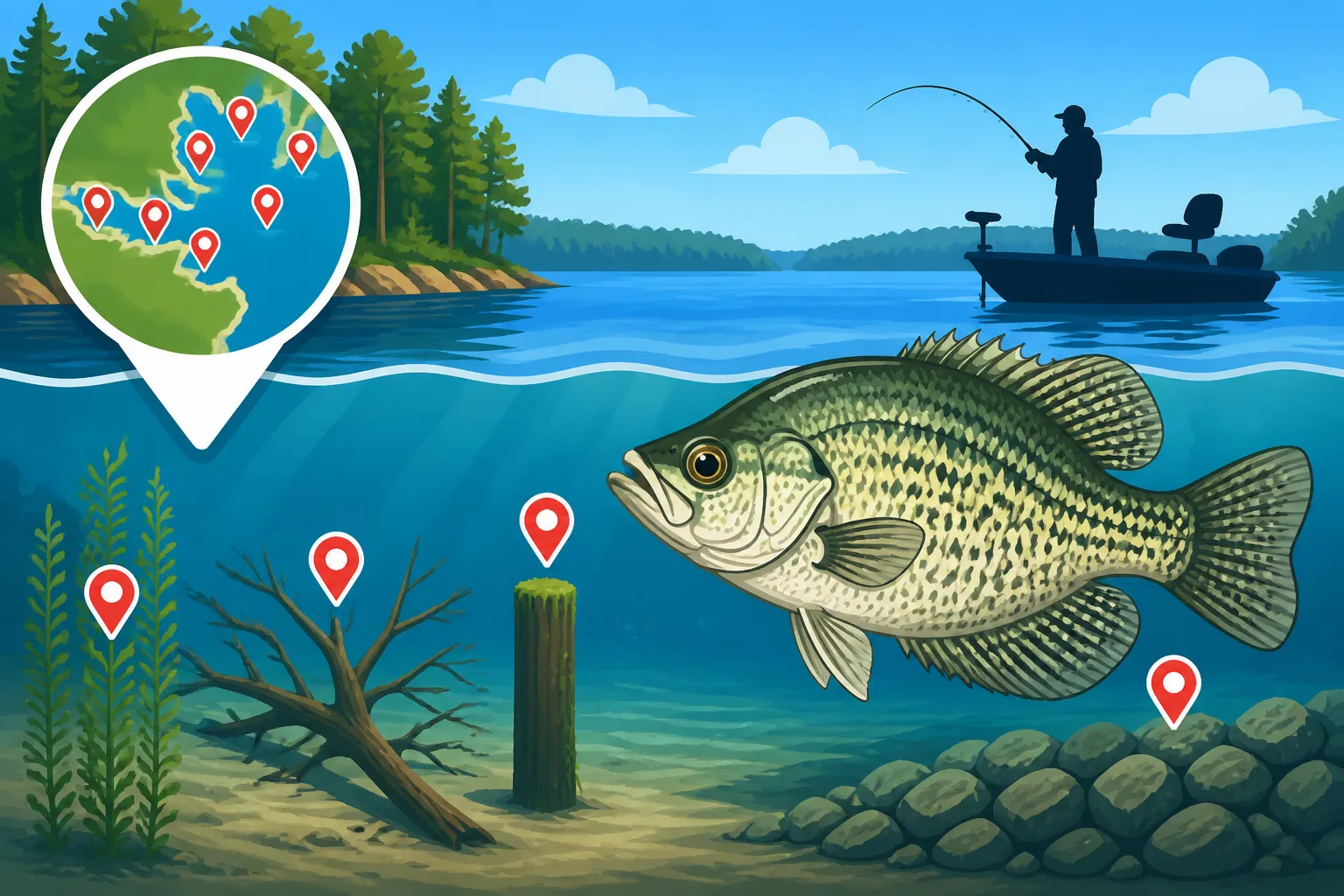
Bridge pilings are absolute magnets for crappie. The bridges spanning Lake Gaston, particularly those carrying US-1 and I-85, create significant underwater structure. The pilings themselves provide vertical cover, attracting baitfish and offering ambush points for crappie. Furthermore, the riprap (rocky banks) surrounding the bridge approaches offers additional habitat. During the colder months or when crappie are transitioning between deep and shallow water, these pilings can be incredibly productive. Anglers often fish vertically around these structures, dropping small jigs or live minnows straight down. The depth around bridge pilings can vary significantly, so a good fish finder is essential to locate schools suspended at different levels.
Beyond bridges, keep an eye out for submerged timber and man-made brush piles on the main lake. Many local anglers and guides have sunk brush piles over the years, creating crappie condos that hold fish year-round. These can be challenging to locate without good electronics or local knowledge, but once found, they can be incredibly productive. Docks, especially those with lights that attract baitfish at night, can also hold crappie. Look for deeper docks with cross-bracing or adjacent brush piles. Lastly, don't forget buoy lines and channel markers. While less structure-rich than other spots, crappie will often suspend around these in open water, particularly if baitfish are present. Remember, crappie often relate to the thermocline in summer, so finding main lake structures that extend into this cooler, oxygenated layer can be key. For a broader understanding of where these fish thrive, check out our guide on Best Crappie Fishing Lakes in Virginia.
The Importance of Deep Water Access
Crappie are masters of adapting to water conditions, and their relationship with deep water access on Lake Gaston is critical for year-round success. While they'll certainly venture shallow to spawn, they almost always have a path back to deeper, more stable environments, making these transition zones and deep-water refuges incredibly important. Understanding this movement is crucial for finding them throughout the various seasons.
During the warmer summer months, when surface temperatures soar and oxygen levels can decrease in the shallows, crappie will retreat to deeper areas where the water is cooler and more oxygenated. This often means finding them relating to the main lake channel or deeper creek channels, usually suspended over or near submerged timber, brush piles, or bluff walls. They'll hold tightly to structure in these deeper zones, often at specific depths corresponding to the thermocline. Anglers targeting summer crappie often employ vertical jigging or slow trolling techniques to present baits precisely at the fish's depth. Our article on How to Find Crappie in Summer offers more detailed strategies for this time of year.
Conversely, in the winter, crappie also seek the thermal stability of deeper water. While the entire water column cools, the deepest parts of the lake remain more stable than the highly fluctuating shallow areas. Winter crappie will often school up tightly in major creek channels or the main lake basin, typically near sharp drop-offs, humps, or large brush piles in 20-30 feet of water or more. They can be sluggish, but finding a tightly packed school can lead to incredible action. Even during the spring and fall transitions, when crappie are moving between their shallow spawning grounds and deeper holding areas, they use these deep-water access points as highways. Key areas to focus on are creek channel bends, points that drop quickly into deep water, and any piece of cover (natural or artificial) that offers both shallow and deep access.
| Location Type | Prime Seasons | Key Features to Look For | Recommended Techniques |
|---|---|---|---|
| Major Creeks/Coves | Spring, Fall, Summer | Docks, brush piles, submerged timber, creek channel bends | Jigging, spider rigging, bobber fishing |
| Bridge Pilings | Year-round | Vertical pilings, riprap, deep water adjacent to structure | Vertical jigging, live minnows, trolling |
| Main Lake Brush Piles | Year-round | Man-made structure, often near channel edges or humps, usually deep | Vertical jigging, slow trolling |
| Deep Channel Edges | Winter, Summer | Sharp drop-offs, humps, transitions from shallow to deep | Trolling, vertical jigging |
| Points & Bluffs | Year-round | Structure extending into deep water, current breaks | Casting jigs, trolling, live bait |
Understanding Crappie Patterns on Lake Gaston
Catching crappie isn't just about knowing where they are, but why they are there. Crappie, like most fish, are creatures of habit, and their patterns are heavily influenced by the seasons, water conditions, and their primary forage. By learning to "read the water" and understand these fundamental behaviors, you can predict their movements and dramatically improve your success rate on Lake Gaston. It's a bit like being a detective, piecing together clues to find your quarry.
Seasonal Movements of Crappie on Lake Gaston
The seasonal shift dictates almost everything about crappie behavior, from their depth preferences to their feeding habits. Lake Gaston crappie follow a predictable annual cycle, and tailoring your approach to each season is paramount. This insight can turn a frustrating day into a memorable one.
Spring on Lake Gaston is arguably the most anticipated time for crappie anglers, as these fish move shallow to spawn. As water temperatures climb into the 50s and then into the 60s Fahrenheit, crappie will migrate from their deeper wintering holes into shallower creeks, coves, and protected pockets. They seek out horizontal cover like fallen trees, brush piles, dock pilings, and even submerged vegetation in depths ranging from 2 to 10 feet. The pre-spawn period sees them staging on the first available structure near their spawning grounds, aggressively feeding to build energy. During the actual spawn, they become highly concentrated and can be caught relatively easily using simple techniques like a small jig under a bobber. Once the spawn is complete, they disperse somewhat but often remain in the vicinity of the creeks for a while before retreating to deeper haunts.
As summer fully sets in, the crappie on Lake Gaston head for deeper, cooler, and more oxygenated water. This is when they often suspend in the main lake basin or deep creek channels, frequently relating to the thermocline (the layer where warm surface water meets cooler deep water). You'll find them around submerged timber, deep brush piles, and bridge pilings in 15 to 30+ feet of water. They might be suspended anywhere from 8 to 20 feet down, depending on the specific conditions. This is a time when good electronics become invaluable for locating schools. In the fall, as water temperatures begin to drop, crappie become more active and start to scatter, feeding heavily to prepare for winter. They can be found moving back into creek mouths, around main lake points, and again, congregating around brush piles and docks that offer varying depths. The key here is that they are often more spread out, making trolling or covering water an effective strategy. Our guide to Best Time of Year for Crappie Fishing in Virginia delves deeper into these seasonal nuances.
Finally, winter sees Lake Gaston crappie grouped up in their deepest, most stable holding areas. This means main lake channels, the deepest sections of large creeks, and concentrated brush piles in 25 to 40 feet of water. They will be very lethargic, requiring subtle presentations and slower retrieves. Vertical jigging directly over a marked school is often the most productive method. Knowing these movements allows you to adjust your tactics and increase your chances significantly.
Reading Water Conditions and Cover on Lake Gaston
Beyond the calendar, crappie patterns on Lake Gaston are profoundly influenced by real-time water conditions and the availability of suitable cover. Being able to interpret these factors on the fly can mean the difference between a productive day and a frustrating one. It's not just about temperature; it's about clarity, current, and even wind.
Water temperature is a primary driver. As mentioned, the spring spawn is entirely temperature-dependent, usually kicking off in the low to mid-60s. During summer, crappie seek cooler temps in deeper water, and in winter, they seek the most stable (relatively warmer) deep water. Carrying a good thermometer is a simple but effective tool. Water clarity also plays a huge role. In clearer water, crappie can be more skittish and might prefer deeper cover or more subtle lure colors. In stained or murky water, they might move shallower, and brighter, more vibrant lure colors or those that create more vibration can be more effective. For example, after a heavy rain, the influx of muddy water might push crappie to the edges of the stained water or into areas where clarity is still decent.
Cover is paramount for crappie year-round. They are ambush predators and also seek protection. On Lake Gaston, this includes natural cover like standing timber, submerged trees, stump fields, and brush piles, as well as man-made structures such as docks, bridge pilings, and even boat ramps. During sunny days, crappie will often burrow deep into thick cover for shade. On cloudy days, they might roam more freely or suspend just above the cover. Wind can also influence where you find them. A steady breeze can push baitfish into certain coves or against a particular bank, concentrating crappie there. It can also create a "crappie chop" on the water's surface, which can actually make crappie more active by breaking up light penetration and making them feel more secure. Learning How to Catch Crappie Around Brush Piles is a fundamental skill for Lake Gaston success.
Forage and Feeding Habits of Lake Gaston Crappie
Understanding what crappie eat and how they hunt for it is crucial for selecting the right bait and presentation. On Lake Gaston, crappie primarily feed on small baitfish, such as threadfin and gizzard shad, as well as various insect larvae and small crustaceans. Their feeding habits are directly tied to the availability and movement of this forage.
Crappie are sight feeders, meaning they rely heavily on their vision to detect prey. This explains their preference for clear to moderately stained water and their tendency to hold close to cover, allowing them to ambush unsuspecting baitfish. When baitfish schools are present, crappie will often position themselves beneath or around the edges of the school, picking off stragglers. You might even see baitfish "nervous water" or flicking on the surface, which is a sure sign crappie (or other predators) are nearby.
Matching the hatch, so to speak, is important. If the crappie are feeding on very small baitfish, a tiny jig or minnow imitation will be more effective than a larger presentation. The slow, deliberate nature of crappie feeding, especially when temperatures are cold, means that a slow retrieve or a still presentation (like a live minnow under a bobber) often works best. During warmer periods, when their metabolism is higher, they might be more aggressive and chase down a faster-moving jig or trolled bait. Keep an eye on your fish finder for schools of baitfish; where you find the food, you'll often find the crappie. Platforms like FishingBooker can sometimes provide insights into recent local catches, giving you an idea of what baits or forage might be active.
Effective Techniques and Gear for Lake Gaston Crappie
Once you've zeroed in on the right locations and understand the crappie's seasonal movements and feeding habits, the next step is to employ the right techniques and gear. Lake Gaston offers diverse conditions, and having a versatile toolkit of methods can make all the difference. From simple bobber fishing to advanced spider rigging, there's a technique for every angler and every situation.
Go-To Lures and Baits for Crappie
When it comes to tempting Lake Gaston crappie, simplicity and subtlety often rule the day. You don't need a tackle box full of exotic lures; a few key items will consistently put fish in the boat.
Small jigs are the bread and butter for crappie fishing. Think 1/32 to 1/8 ounce, paired with tiny plastic grubs, tube jigs, or soft plastic minnow imitations. Colors can be critical and often vary based on water clarity and sunlight. In clear water, natural colors like shad, white, or smoke with glitter are often effective. In stained or murky water, brighter colors such as chartreuse, orange, or pink can stand out better. Many anglers swear by two-tone jigs, like a chartreuse body with a black or red head. The action of these small plastics, whether retrieved slowly, jigged vertically, or allowed to flutter on the fall, perfectly mimics the small baitfish and insect larvae crappie feed on. Our Crappie Jigging Techniques guide provides more details on mastering these presentations.
Live minnows are another unbeatable bait, especially when crappie are finicky or during colder months. A small shiner or fathead minnow hooked through the lip or back and suspended under a bobber or fished vertically on a small hook (size 4 or 6) is often irresistible. The natural movement and scent of a live minnow can draw strikes when artificials fail. Pairing a live minnow with a small jig head, known as "tipping," combines the best of both worlds: the visual appeal of the jig with the natural allure of live bait. Don't be afraid to experiment with different sizes of minnows; sometimes a slightly larger bait can entice a bigger crappie.
For those who prefer covering more water, small crankbaits designed for crappie can also be effective, particularly during the summer and fall when crappie are more aggressive. Look for shallow-diving models in natural baitfish patterns. These are often trolled slowly to locate scattered schools. Ultimately, having a variety of jig colors and a good supply of live minnows in your arsenal will prepare you for almost any crappie scenario on Lake Gaston.
Mastering the Art of Crappie Jigging and Tightlining
Two of the most popular and effective techniques for catching crappie on Lake Gaston are jigging and tightlining. Both methods allow for precise bait presentation and are incredibly versatile for various depths and types of cover.
Crappie jigging involves vertically presenting a small jig directly to crappie that you've located on your fish finder or around visible cover. This is particularly effective in winter when crappie are schooled tightly in deep water, or during summer when they are suspended. The key is subtlety. Drop your jig to the depth where you're seeing fish, then impart a gentle up-and-down motion, often just a twitch of the wrist, allowing the jig to flutter. Pay close attention to your line for any unusual movement – a slight tic, slackening, or sudden weight could indicate a bite. Sometimes, simply holding the jig still at the fish's depth can be the most effective presentation. A sensitive rod is crucial for detecting these subtle takes.
Tightlining, or "spider rigging," is a method where multiple rods are deployed simultaneously, each with a different length of line, allowing you to present baits at various depths and cover a wide swath of water. This is an excellent technique for locating scattered fish, especially in large creek mouths or over expansive flats. Anglers often use specialized rod holders to spread out 6 to 10 rods around the boat, each rigged with a small jig or a minnow. The boat is then propelled very slowly (often under 0.5 mph) using a trolling motor. This allows you to slowly drag baits through brush piles, along channel edges, or over humps. Each rod is "tight" to the bait, so any bite causes the rod tip to load up or twitch unmistakably. Our Crappie Tightlining Basics article offers a great starting point for this method. Both jigging and tightlining require patience and an understanding of how crappie react to different presentations, but mastering them will make you a formidable crappie angler on Lake Gaston.
Essential Gear for a Successful Crappie Trip
Having the right equipment not only makes your crappie fishing more effective but also more enjoyable. While you don't need to break the bank, investing in a few key pieces of gear will greatly enhance your Lake Gaston crappie adventures.
First and foremost, a sensitive crappie rod is essential. Look for light or ultra-light spinning rods, typically 6 to 8 feet long, with a fast action tip. This sensitive tip allows you to detect the often incredibly subtle bites of crappie. Pair this with a small, lightweight spinning reel (size 1000 or 2000) spooled with 4 to 6-pound test monofilament or fluorocarbon line. Many experienced crappie anglers are now opting for thin braided line with a fluorocarbon leader for even greater sensitivity. Monofilament, however, remains a popular choice for its stretch, which can prevent hooks from pulling out of a crappie's soft mouth.
Next up, electronics are your best friend on Lake Gaston. A quality fish finder/chartplotter combo is invaluable for locating submerged brush piles, identifying creek channels, marking schools of baitfish, and most importantly, pinpointing crappie. Modern units with side imaging and down imaging capabilities can reveal detailed underwater structure and fish schools that traditional 2D sonar might miss. GPS functionality is also crucial for marking productive spots and navigating safely. For those serious about crappie, investing in forward-facing sonar like Garmin LiveScope or Lowrance ActiveTarget can be a game-changer, allowing you to see fish and your lure in real-time.
Finally, consider your boat setup. While you can certainly catch crappie from the bank or a kayak, a boat equipped with a reliable trolling motor (preferably with GPS spot-lock capabilities) is incredibly helpful for maintaining precise boat control, especially when spider rigging or hovering over a brush pile. Don't forget basic safety gear, a quality landing net designed for crappie, and a livewell or cooler to keep your catch fresh. Remember that you will likely need a fishing license to fish from a boat. If you’re ever curious about Virginia's fishing license regulations, we have a comprehensive Virginia Fishing License Guide available to help you.
Planning Your Crappie Adventure on Lake Gaston
Planning is just as important as the fishing itself when it comes to a successful crappie trip on Lake Gaston. Knowing the best times to go, understanding the rules, and tapping into local knowledge can significantly improve your chances and make your outing far more enjoyable and productive.
Best Times of Year for Consistent Crappie Action
While crappie can be caught year-round on Lake Gaston, certain seasons offer more consistent action and are generally considered prime time for targeting these popular panfish. Timing your trip correctly can mean the difference between a few bites and a full livewell.
Spring (March-May) is hands-down the most popular and often most productive time for crappie on Lake Gaston. As the water warms, crappie move into the shallow creeks and coves to spawn, making them highly accessible and concentrated. The pre-spawn period, when water temperatures are in the low to mid-50s, offers some of the most aggressive fishing as crappie gorge themselves before spawning. During the spawn itself, when temps reach the low to mid-60s, crappie are actively on beds and can be caught in very shallow water around any available cover. Post-spawn, they might linger in the creeks for a while before dispersing. This period often sees anglers catching large numbers of fish.
Fall (October-November) is another fantastic time for crappie. As water temperatures begin to cool, crappie become much more active again, feeding heavily in preparation for winter. They can be found in a variety of depths, often moving in and out of creek mouths, around main lake points, and concentrating on brush piles. This period offers excellent opportunities for both numbers and size. While the fish might be more scattered than during the spring spawn, their aggressive feeding makes them eager biters.
Winter (December-February) can be challenging but incredibly rewarding. Crappie school up tightly in their deep wintering holes, making them hard to find but often easy to catch once located. This is primarily a vertical jigging game with electronics. If you can pinpoint a large school, you can often catch multiple fish from the same spot. Finally, Summer (June-September) fishing requires more effort, as crappie retreat to deeper, cooler waters. Success in summer often relies heavily on electronics to find suspended fish or those holding tight to deep structures. Night fishing under lights can also be productive in summer, as the lights attract baitfish and subsequently crappie. For more specific insights into seasonal variations, you might find our article on Virginia Fishing Seasons Explained helpful.
Navigating Regulations and Licensing for Lake Gaston Crappie
Fishing on Lake Gaston means dealing with both Virginia and North Carolina regulations, as the lake spans both states. While many rules are similar, it's absolutely crucial to be aware of the specific requirements to avoid any legal issues.
First and foremost, you will need a valid fishing license. If you are fishing on the Virginia side of the lake, you'll need a Virginia Fishing License Guide. If you're on the North Carolina side, you'll need an NC license. If you plan to fish both sides, or if you're uncertain, the safest bet is to purchase a license for both states or to ensure you have a reciprocal license where applicable. It's often easier to stick to one state's waters for the day if you only have one license. For example, Virginia's Department of Wildlife Resources (DWR) and North Carolina's Wildlife Resources Commission (WRC) both offer various license types, including resident and nonresident options, and short-term passes like a Virginia's 5-Day Freshwater Fishing Pass. Always carry your license with you when fishing.
Beyond licensing, pay close attention to creel limits (how many fish you can keep) and size limits for crappie. These regulations are designed to protect fish populations and ensure sustainable fishing for everyone. While the general crappie limit is often generous, it's always best to check the current regulations published by the Virginia DWR and North Carolina WRC before each trip, as they can change. For example, Virginia generally has a statewide crappie creel limit, but specific bodies of water can have special regulations. Penalties for fishing without a license or exceeding limits can be steep, so always err on the side of caution.
Utilizing Local Knowledge and Resources
Even with the best gear and a solid understanding of crappie behavior, local knowledge can give you a significant edge on Lake Gaston. The locals who fish these waters day in and day out have an intimate understanding that can take years to acquire on your own.
Start by visiting local bait and tackle shops around Lake Gaston. Places like Gaston Tackle & Marine or Poplar Creek Marine & Tackle are goldmines of current information. The folks working there are often anglers themselves, and they can tell you what baits are working, what depths fish are being caught at, and even point you to specific areas that have been hot recently. They rely on satisfied customers, so they're usually happy to share tips. They can also be a great source for updated regulations or any temporary closures.
Joining online fishing forums or social media groups dedicated to Lake Gaston fishing can also provide a wealth of real-time information. Anglers often share their successes and challenges, providing insights into current patterns, productive techniques, and even photos of recent catches. Just remember to treat specific locations shared online with respect and discretion.
Finally, consider hiring a local fishing guide. While an investment, a guide can fast-track your learning curve on Lake Gaston, showing you specific hotspots, teaching you effective techniques, and providing invaluable insights into crappie behavior on that particular lake. They often have sophisticated electronics and deep knowledge of the lake's ever-changing conditions. Platforms like FishingBooker can help you find and book experienced guides who specialize in crappie fishing on Lake Gaston. Even a half-day trip with a good guide can dramatically improve your success on future solo trips. They can often provide insights into how Virginia Fishing Rules Every Angler Should Know apply specifically to Lake Gaston.
Disclaimer
The information provided in this guide is for informational purposes only and is subject to change. Fishing regulations, seasons, and local conditions can vary. Always consult the official Virginia Department of Wildlife Resources (DWR) and North Carolina Wildlife Resources Commission (WRC) websites or publications for the most current and accurate fishing regulations before heading out on Lake Gaston. Adhere to all local, state, and federal laws. Fishing inherently involves risks; please prioritize safety and wear appropriate personal flotation devices.